Texas Affidavit (MSA Ddivorceivorce- No Childdren)
What this document covers
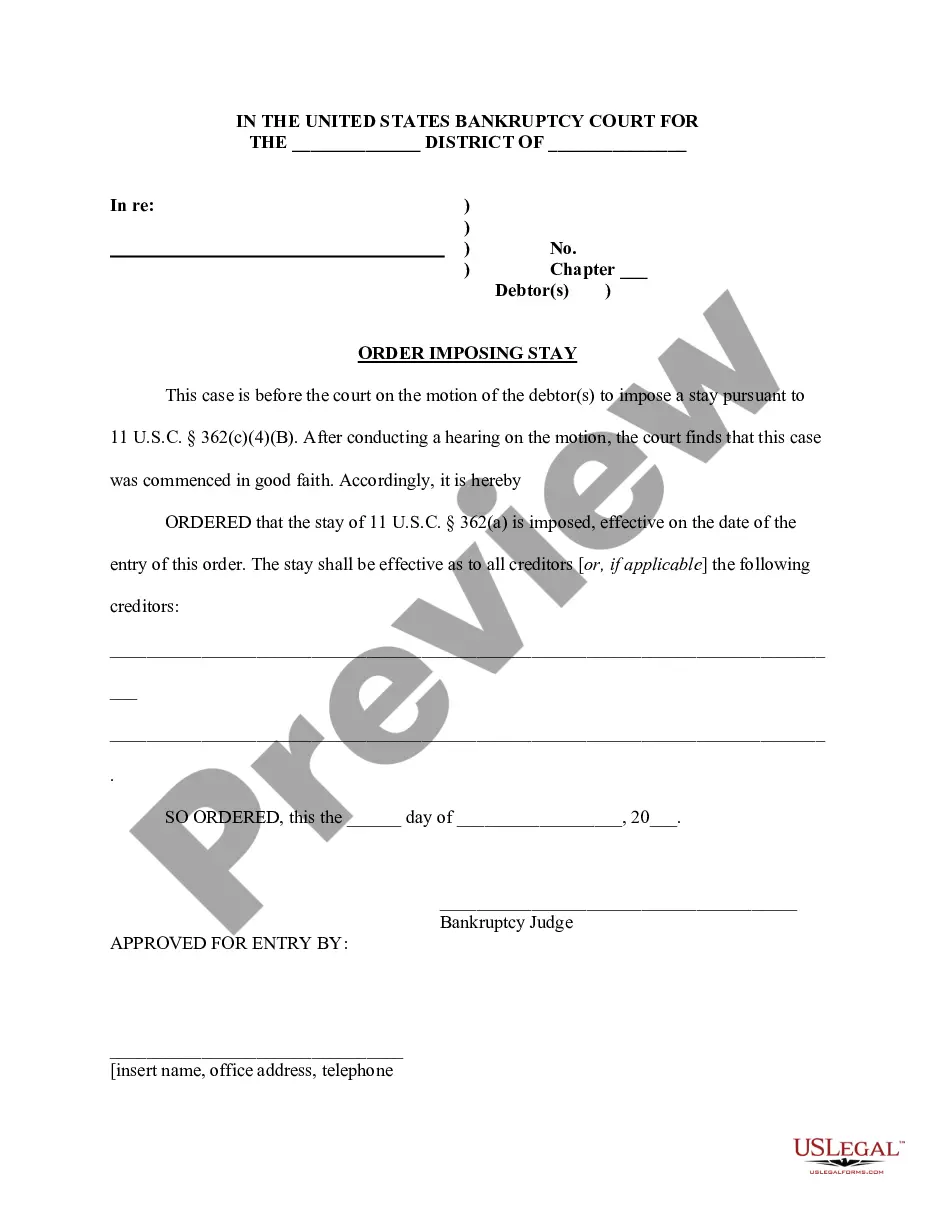
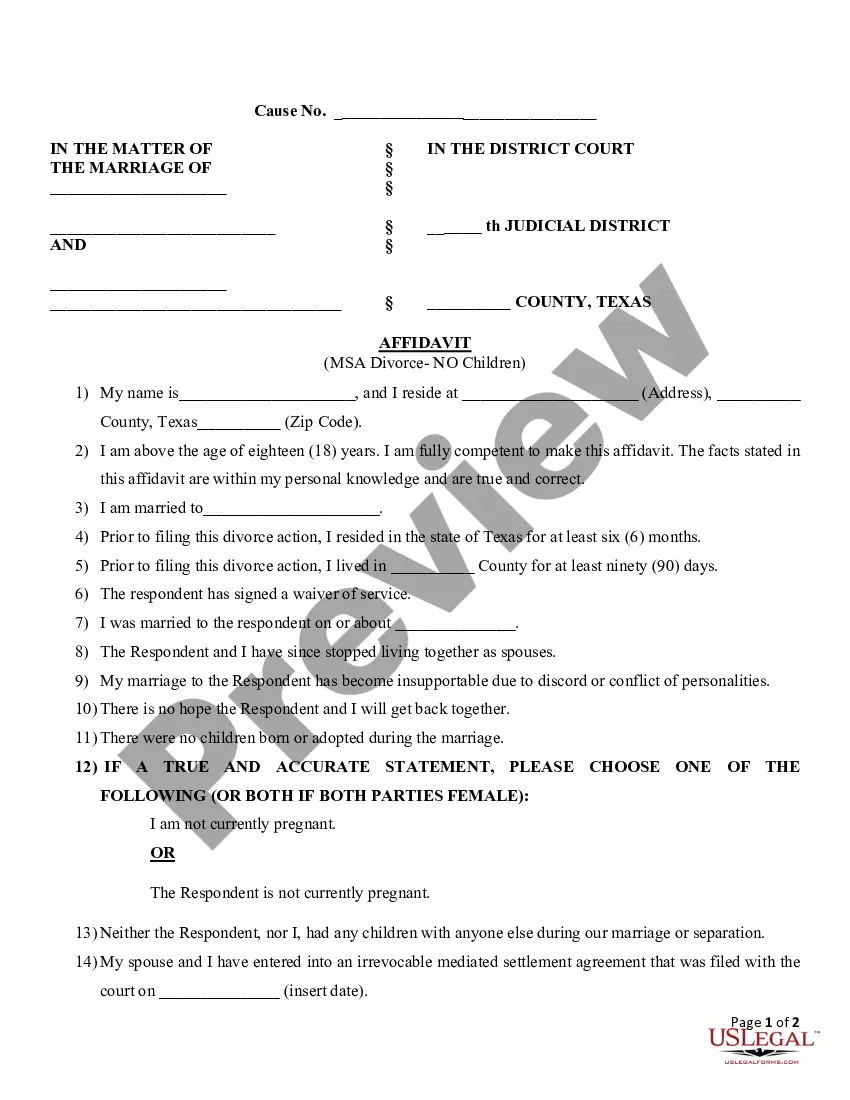
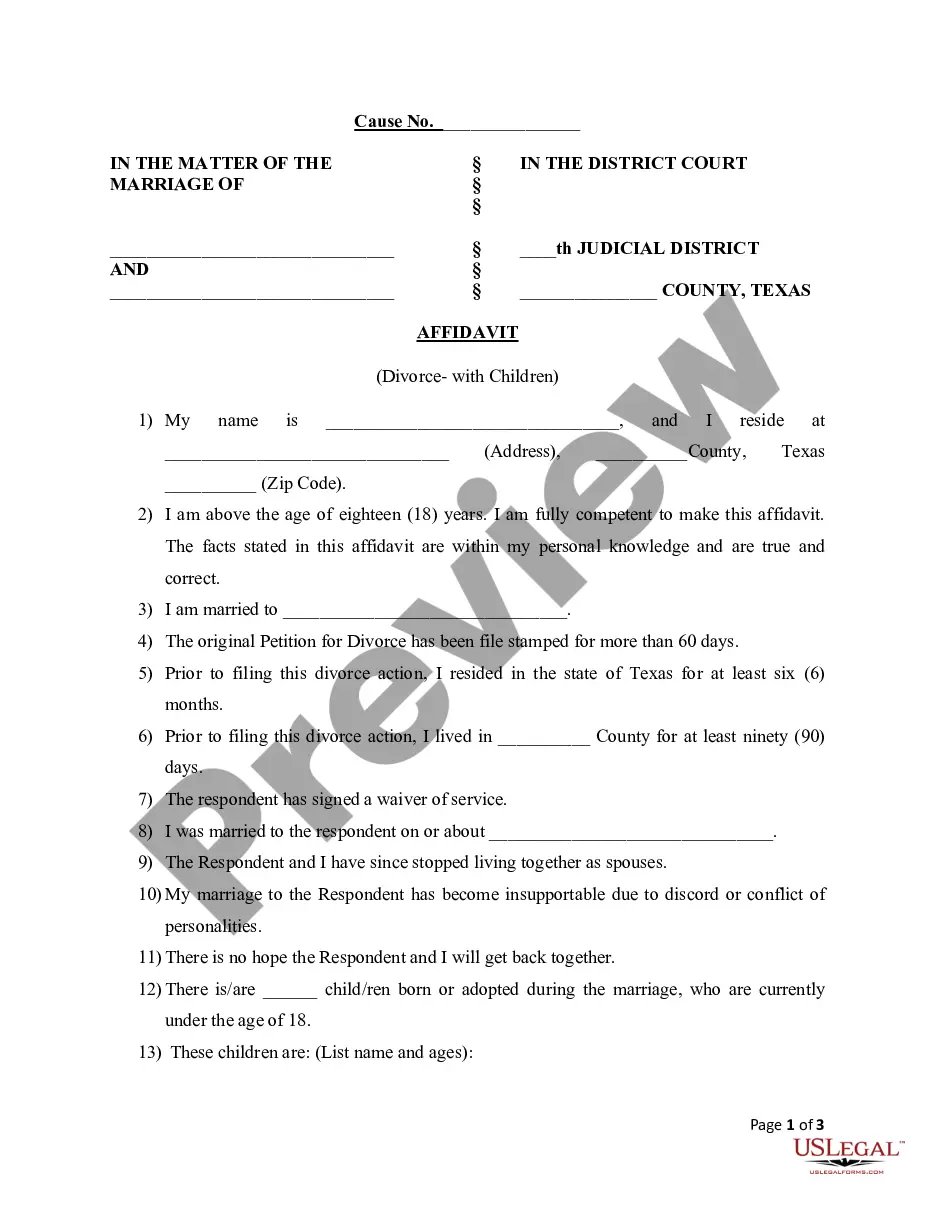
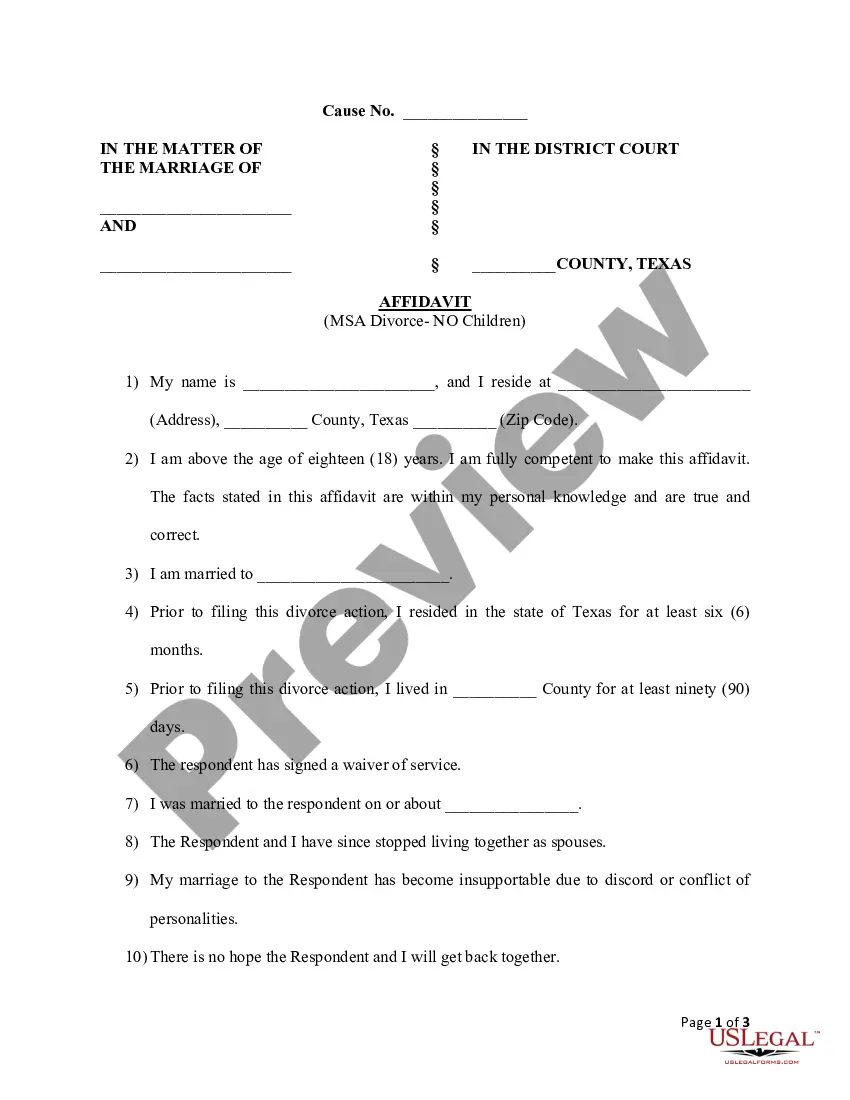
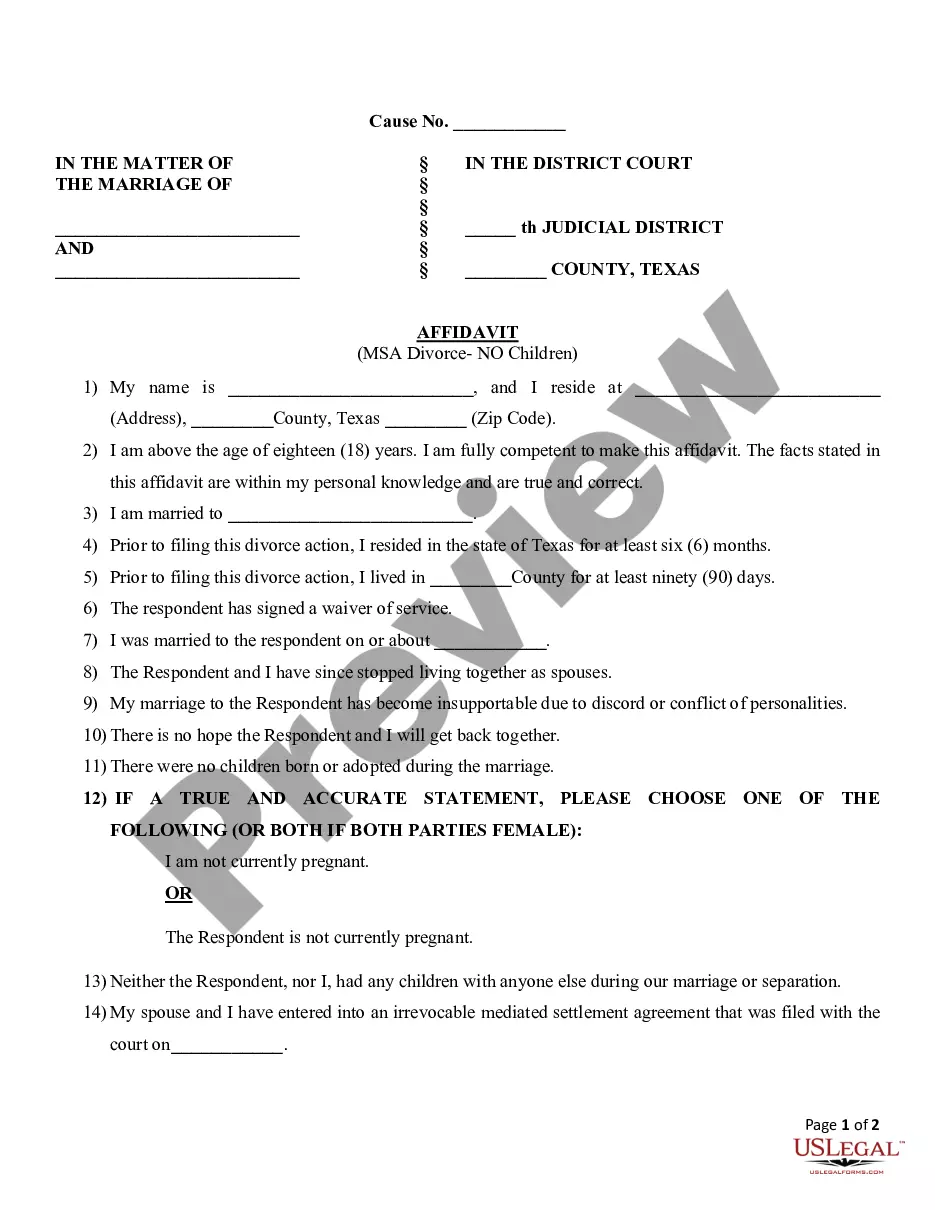
The Affidavit (MSA Divorce - No Children) is a legal document used in Texas that confirms there is no reasonable expectation of reconciliation between spouses who are seeking a divorce. This form is pertinent when a marriage has ended, and no children were born or adopted during that marriage. It also establishes that an irrevocable mediated settlement agreement has been reached regarding the division of property and debts. This affidavit differs from other divorce-related forms because it specifically addresses situations without children and reassures the court of the finality of the parties' decision to separate.
What’s included in this form
- Identification of the parties involved, including their addresses.
- Confirmation of residency requirements prior to filing for divorce.
- Declaration of the absence of children born or adopted during the marriage.
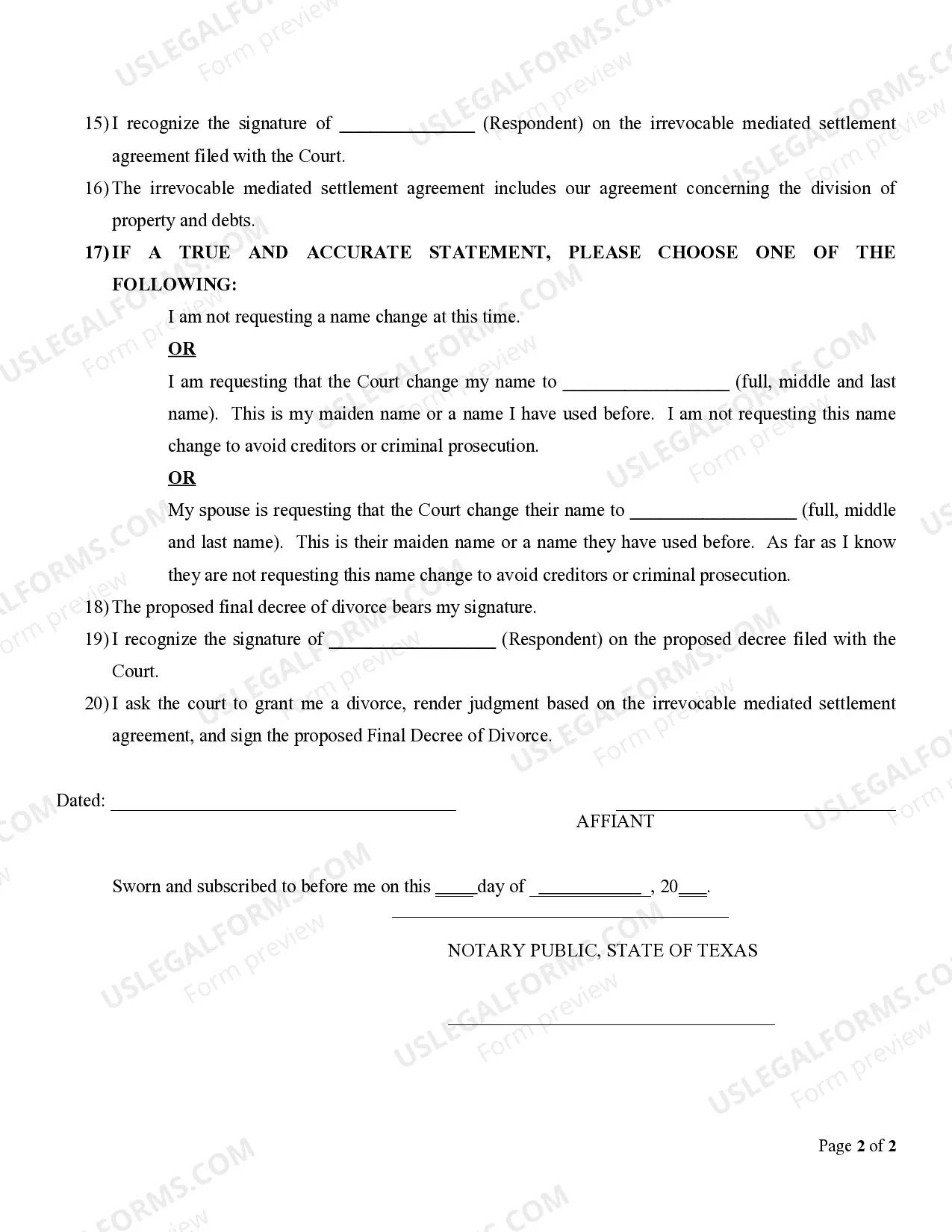
- Communication of the irrevocable mediated settlement agreement details.
- Requests regarding name changes for either or both spouses.
- Acknowledgment of the signatures on the settlement agreement and proposed final decree.
When to use this document
This form should be used when a married couple in Texas decides to divorce without having any minor children. It is applicable when both parties agree that reconciliation is not feasible and have already established a mediated settlement regarding the division of their assets and debts. The affidavit helps streamline the divorce process by affirming important details to the court, ensuring clarity and reducing delays.
Who needs this form
- Spouses seeking divorce in Texas who do not have children together.
- Couples who have reached an agreement on property and debt division without the need for children considerations.
- Individuals who want to affirm that there is no reasonable expectation of reconciliation.
Steps to complete this form
- Enter the cause number and court details at the beginning of the affidavit.
- Fill in your name and address, ensuring compliance with residency requirements.
- Declare that you and your spouse do not have children and confirm the absence of pregnancy.
- Include the date of your marriage and confirm the separation status.
- Identify and date the irrevocable mediated settlement agreement and confirm the recognition of signatures involved.
- Complete any name change requests, if applicable, and finalize with your signature.
Notarization guidance
Yes, this form must be notarized to be legally valid. It requires the signature of a notary public to confirm that the affidavit is executed properly. US Legal Forms offers integrated online notarization services, allowing you to complete this process easily and securely via a video call at any time.
Get your form ready online
Our built-in tools help you complete, sign, share, and store your documents in one place.
Make edits, fill in missing information, and update formatting in US Legal Forms—just like you would in MS Word.
Download a copy, print it, send it by email, or mail it via USPS—whatever works best for your next step.
Sign and collect signatures with our SignNow integration. Send to multiple recipients, set reminders, and more. Go Premium to unlock E-Sign.
If this form requires notarization, complete it online through a secure video call—no need to meet a notary in person or wait for an appointment.
We protect your documents and personal data by following strict security and privacy standards.

Make edits, fill in missing information, and update formatting in US Legal Forms—just like you would in MS Word.

Download a copy, print it, send it by email, or mail it via USPS—whatever works best for your next step.

Sign and collect signatures with our SignNow integration. Send to multiple recipients, set reminders, and more. Go Premium to unlock E-Sign.

If this form requires notarization, complete it online through a secure video call—no need to meet a notary in person or wait for an appointment.

We protect your documents and personal data by following strict security and privacy standards.
Mistakes to watch out for
- Filling out the form with incorrect or incomplete names and addresses.
- Failing to acknowledge the required residency duration in Texas.
- Not including details of the mediated settlement agreement.
- Omitting signatures where needed, particularly from both parties.
Advantages of online completion
- Convenience of downloading and completing the form at your own pace.
- Editability allows you to make changes as needed before final submission.
- Access to reliable templates drafted by licensed attorneys, ensuring legal validity.
- A streamlined process that helps to avoid potential delays in your divorce proceedings.
Looking for another form?
Form popularity
FAQ
In conclusion, the wife in a divorce case in Texas is entitled to an equal division of the community property, spousal support, and a portion of her husband's retirement benefits. Additionally, she may also be entitled to a fair and reasonable custody arrangement for any children from the marriage.
A spouse can waive their right to be personally served with a copy of the divorce lawsuit by signing a Waiver of Service. They do this by signing the waiver of service in the presence of a notary, notarized, and then filing it with the court.
This means that we will not be having a constable or private process server take the petition and citation and hand it to the person. Instead, the opposing party is acknowledging receipt of the petition, providing up-to-date contact information for the court, and saying that he does not need to be served.
From a legal standpoint, signing a waiver means you voluntarily enter a lawsuit without requiring the opposing party to serve you with a summons and petition. Never give up a right without advice of legal counsel.
You must file your petition for divorce before you can submit a waiver of service to your spouse. By filing a signed Specific or Global waiver with the court, the respondent acknowledges receipt of the petition for divorce and waives the right to be formally served with divorce papers.
Ing to the Texas Young Lawyer's Pro Se Divorce Handbook PDF, a "prove-up" is a short hearing in an uncontested divorce. At the prove-up, "you appear before the judge and give evidence and testimony as to the terms of your divorce."
In addition, the parties must sign a divorce waiver of final hearing, which tells the court that both parties are aware that they have a right to have the judge decide any contested issues, but they have elected to waive that right because they have reached a mutually satisfactory agreement.
There are only two exceptions to the 60-day waiting period. Both exceptions involve family violence. The 60-day waiting period is waived: If your spouse has been convicted of or received deferred adjudication for family violence against you or a member of your household.