Texas Affidavit (Divorce -with Children)
What is this form?
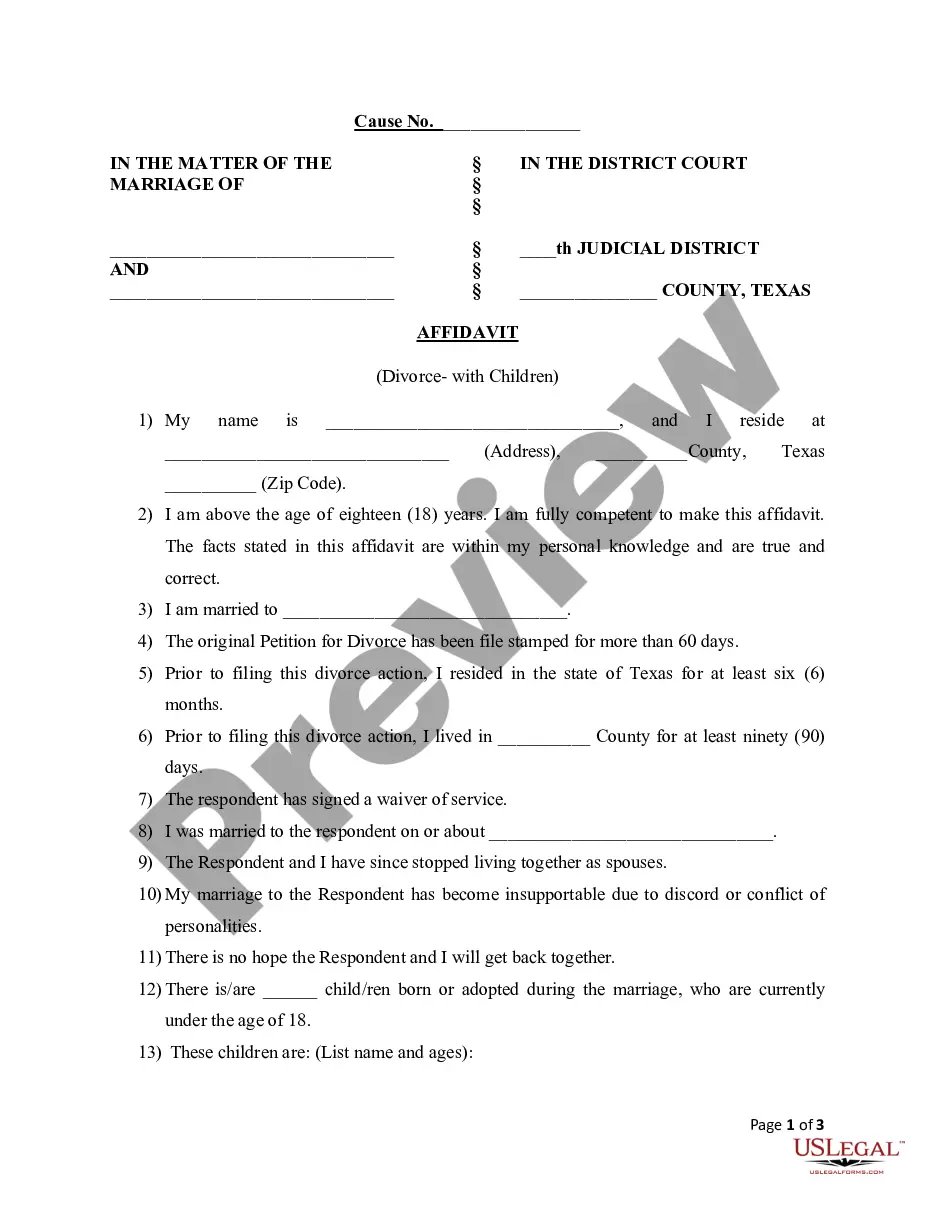
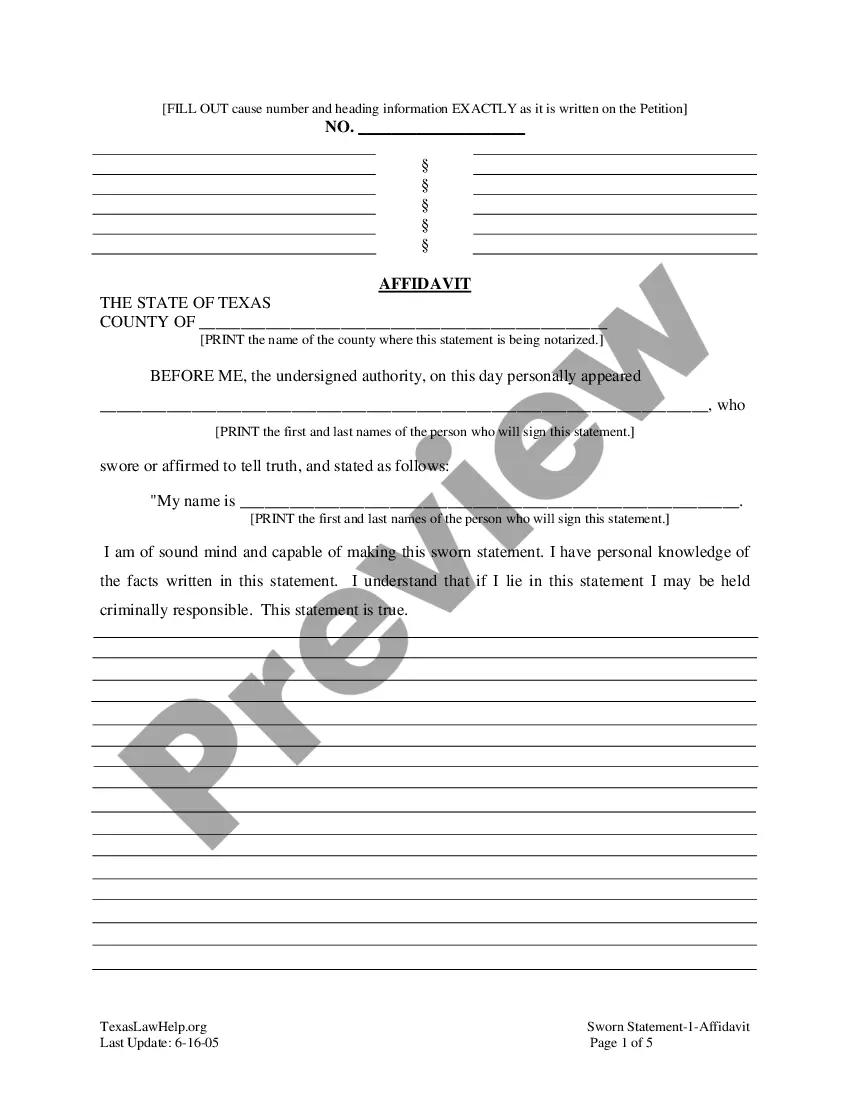
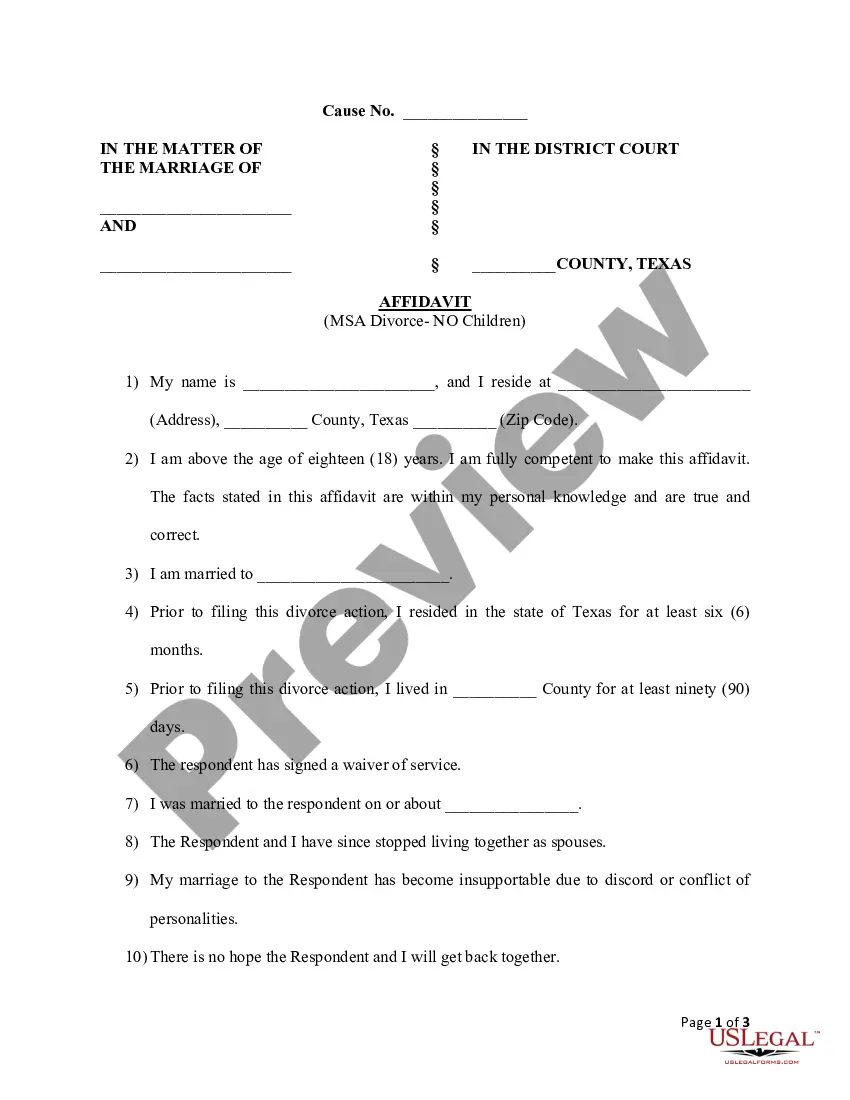
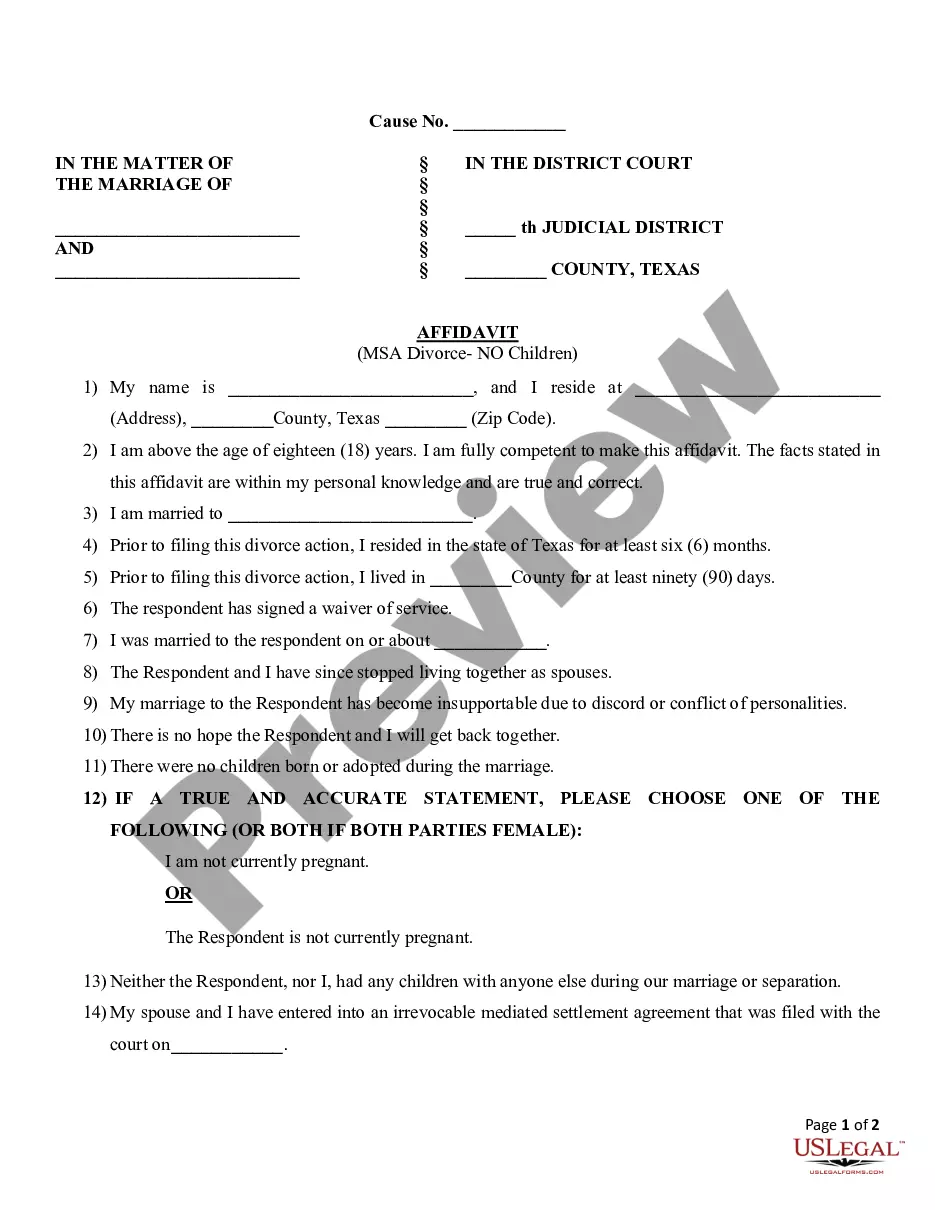
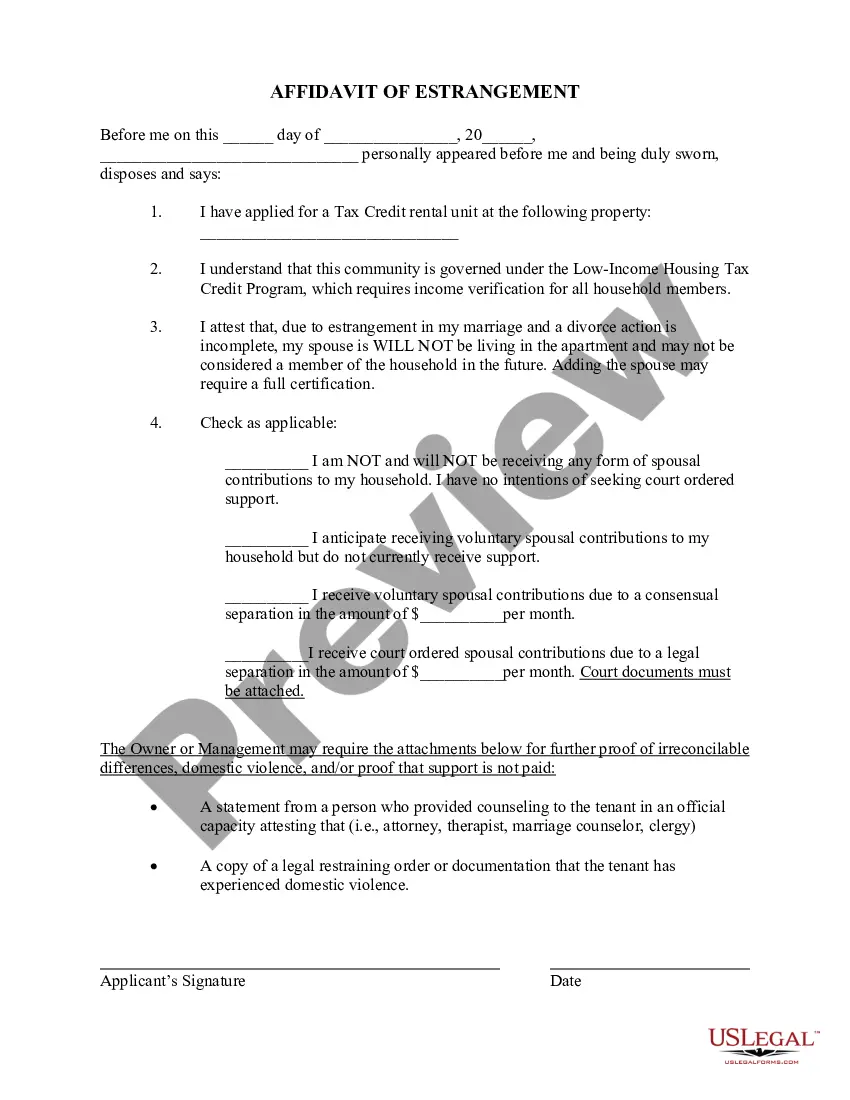
The Affidavit (Divorce - with Children) is a sworn legal document in which one party, known as the affiant, provides a declaration of facts surrounding their divorce and custody arrangements. It serves as a necessary testimony in a divorce case to confirm details such as the marriage duration, children involved, and agreements between the parties. This form is particularly important when children are involved, as it outlines arrangements regarding custody and support, distinguishing it from other divorce affidavits that may not include children.
Form components explained
- Affiant's personal details, including name and address.
- Confirmation of the marriage and the period of residency in Texas.
- Details about the children born or adopted during the marriage.
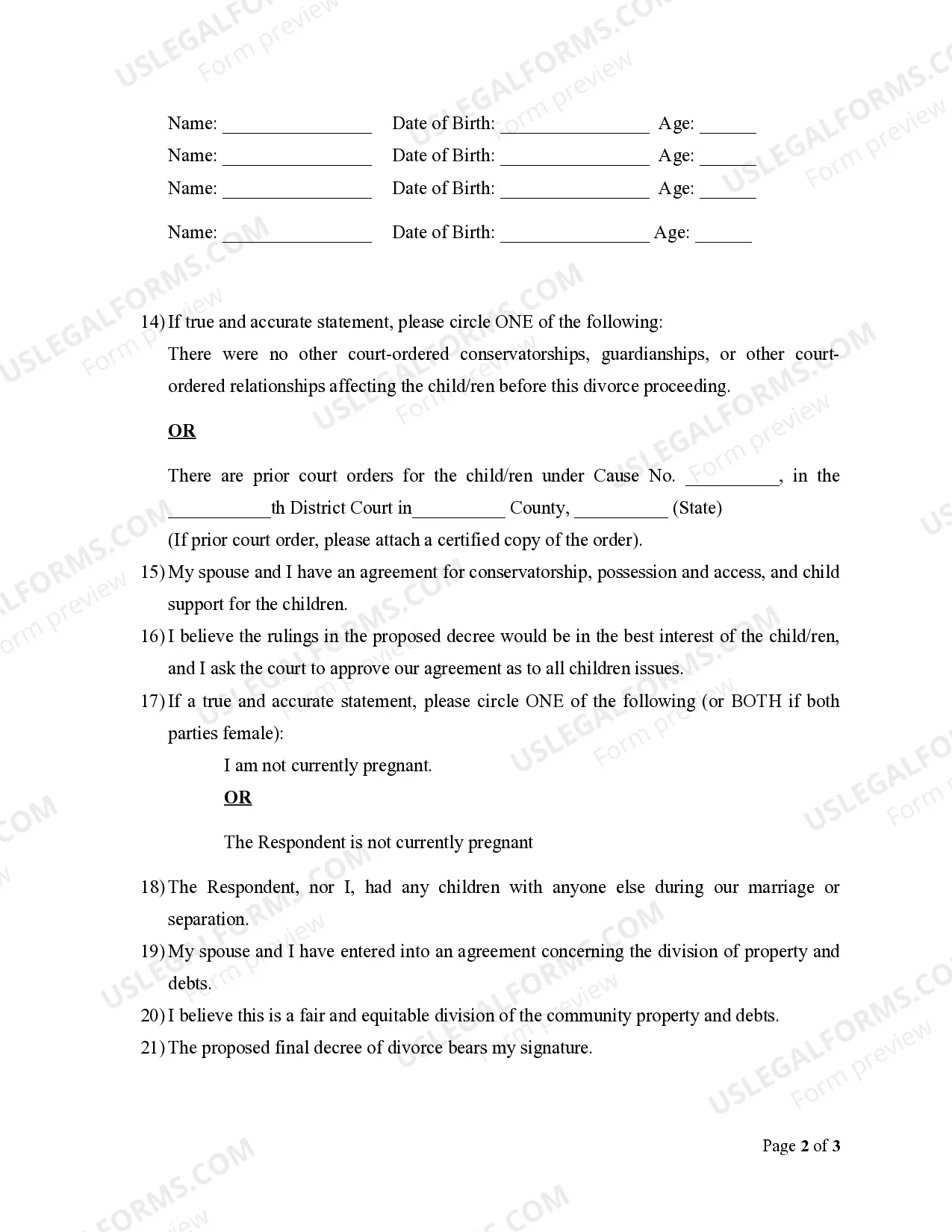
- Statements regarding prior court orders affecting the children.
- Agreement on conservatorship, possession, and child support.
- Affiant's declaration about property and debt division.
Common use cases
Use this affidavit when initiating a divorce that involves children. It is essential under Texas law if both parties have reached an agreement regarding custody and child support, and if there are no prior court orders affecting the children. This form helps present clear and sworn testimony to the court regarding the affiant's circumstances and agreements with the other spouse, aiding in the divorce process.
Who should use this form
- Individuals initiating a divorce in Texas with children involved.
- Those who have reached a mutual agreement regarding child custody, visitation, and support.
- Affiants seeking to affirm the facts of their divorce to the court.
How to prepare this document
- Begin by entering your personal information and the details of your marriage.
- List information about any children born or adopted during the marriage.
- Confirm any previous court orders affecting the children, if applicable.
- State your agreements regarding custody, visitation, and child support.
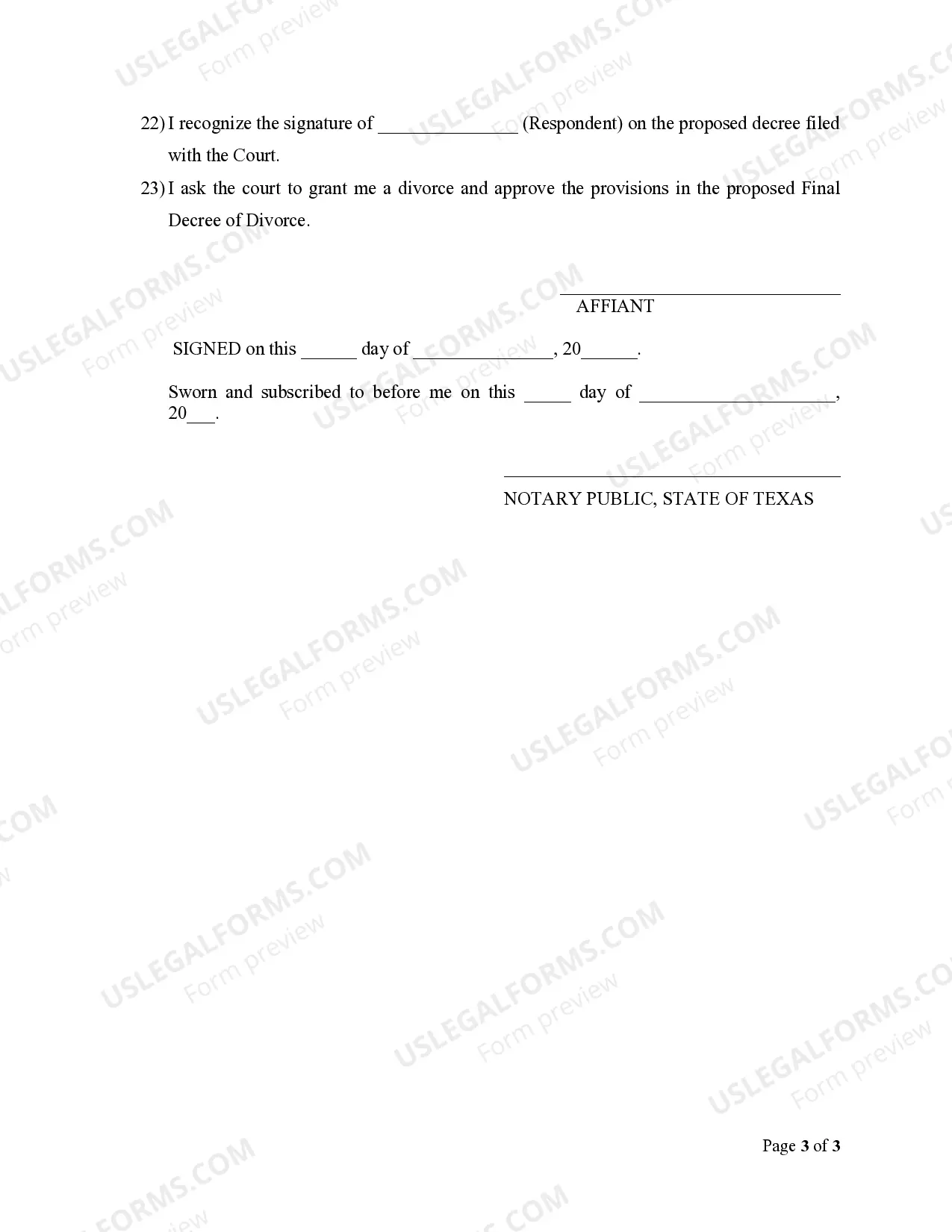
- Sign the affidavit in front of a notary public to ensure its legality.
Does this form need to be notarized?
Yes, this form must be notarized to be legally valid. Notarization ensures that the statements made in the affidavit are sworn before an official witness, adding credibility and legal weight to the document. US Legal Forms offers an integrated online notarization service for your convenience, available 24/7 through secure video calls, ensuring a smooth process without the need for physical travel.
Get your form ready online
Our built-in tools help you complete, sign, share, and store your documents in one place.
Make edits, fill in missing information, and update formatting in US Legal Forms—just like you would in MS Word.
Download a copy, print it, send it by email, or mail it via USPS—whatever works best for your next step.
Sign and collect signatures with our SignNow integration. Send to multiple recipients, set reminders, and more. Go Premium to unlock E-Sign.
If this form requires notarization, complete it online through a secure video call—no need to meet a notary in person or wait for an appointment.
We protect your documents and personal data by following strict security and privacy standards.

Make edits, fill in missing information, and update formatting in US Legal Forms—just like you would in MS Word.

Download a copy, print it, send it by email, or mail it via USPS—whatever works best for your next step.

Sign and collect signatures with our SignNow integration. Send to multiple recipients, set reminders, and more. Go Premium to unlock E-Sign.

If this form requires notarization, complete it online through a secure video call—no need to meet a notary in person or wait for an appointment.

We protect your documents and personal data by following strict security and privacy standards.
Mistakes to watch out for
- Failing to include all children involved in the divorce proceedings.
- Not providing accurate information about prior court orders.
- Neglecting to have the affidavit notarized, which can lead to legal issues.
Why complete this form online
- Convenient access to downloadable legal templates.
- Editable content allows for easy customization according to individual circumstances.
- Peace of mind knowing the form is drafted based on legal standards.
Legal use & context
- This affidavit is used in divorce proceedings to support claims in court.
- It must be accurate and truthful, as any false statements can lead to legal repercussions.
- Proper completion and notarization are critical for the affidavit to be accepted by the court.
Summary of main points
- The Affidavit (Divorce - with Children) is vital for confirming agreements in a divorce involving children.
- It must be completed accurately and notarized to be valid.
- This form helps facilitate a smoother divorce process by documenting essential facts and agreements.
Looking for another form?
Form popularity
FAQ
How Much Does an Uncontested Divorce Cost in Texas? The average cost of uncontested divorce in Texas ranges between $300 and $5,000, depending on whether lawyers are involved. In general, it is the cheapest and the quickest option available in any state.
Except for situations involving domestic abuse or where one spouse has been convicted of a crime, sixty days is the shortest possible time frame for a Texas quickie divorce. The sixty-day waiting period allows you and your spouse to reflect on your decision to get divorced.
In Texas, it is possible to divorce without appearing in Court or by just appearing one time to finalize the divorce. To achieve this, the divorce must be amicable, and both parties should be represented by skilled attorneys who help them to mediate their differences and arrive at amicable agreements.
Ing to the Texas Young Lawyer's Pro Se Divorce Handbook PDF, a "prove-up" is a short hearing in an uncontested divorce. At the prove-up, "you appear before the judge and give evidence and testimony as to the terms of your divorce."
Uncontested divorces are not granted to couples with minor children in Texas. Rather, a form of "agreed divorce" is granted. This means you both must agree on all issues related to the divorce (including child custody and child support), and you are both willing to sign all court forms.
Section 161.106 - Affidavit of Waiver of Interest in Child (a) A man may sign an affidavit disclaiming any interest in a child and waiving notice or the service of citation in any suit filed or to be filed affecting the parent-child relationship with respect to the child.
In Texas, one spouse refusing to sign divorce papers does not completely stop a divorce from proceeding. If one spouse is seeking a divorce, they can still achieve it whether or not the other spouse cooperates and signs the papers.
An average divorce in Texas usually takes six months to a year, depending on the complexity of the case. A simple uncontested divorce could take as little as two-to-three months. A contested divorce in Texas, on the other hand, could take anywhere from 9 months to two years.