Consultant Confidentiality Agreement
What is this form?
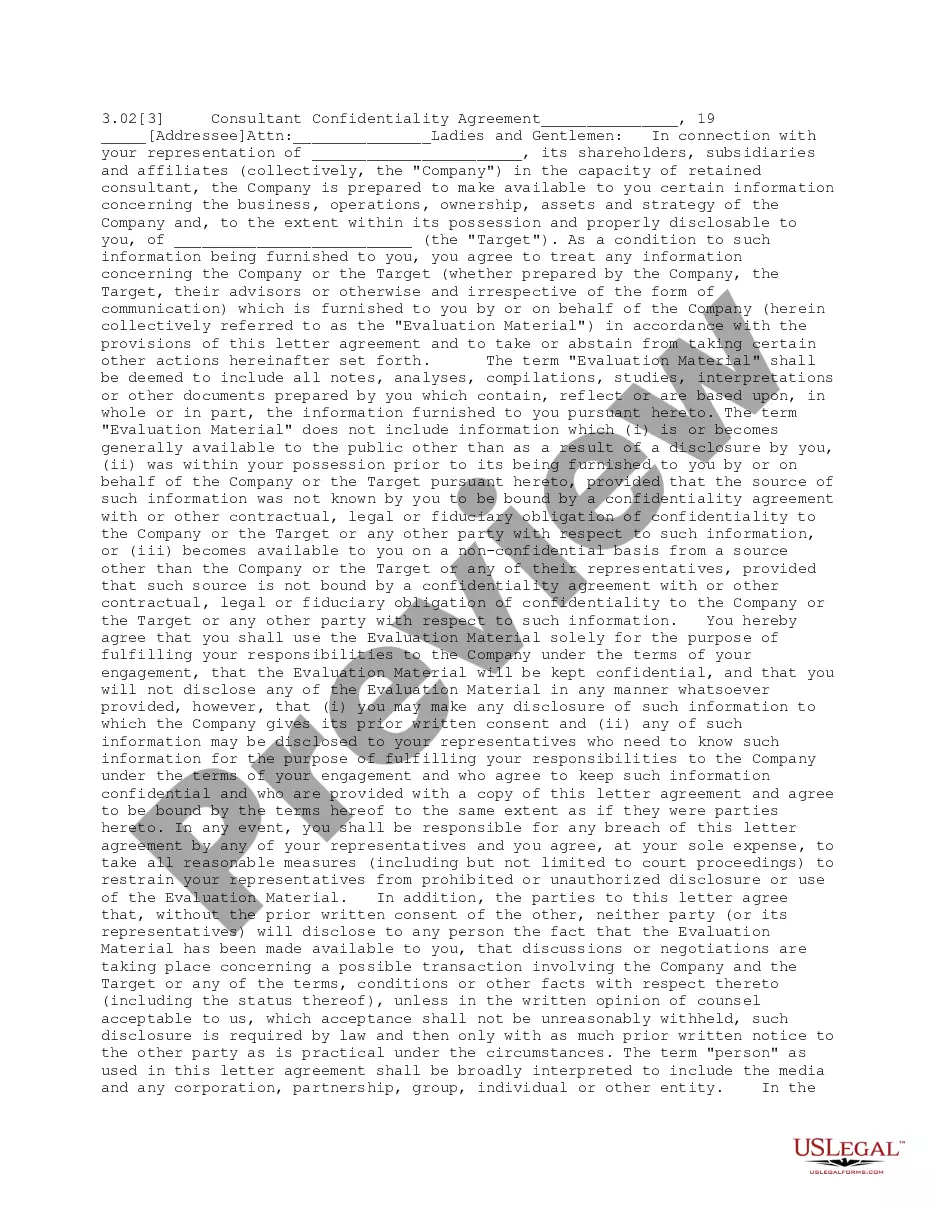
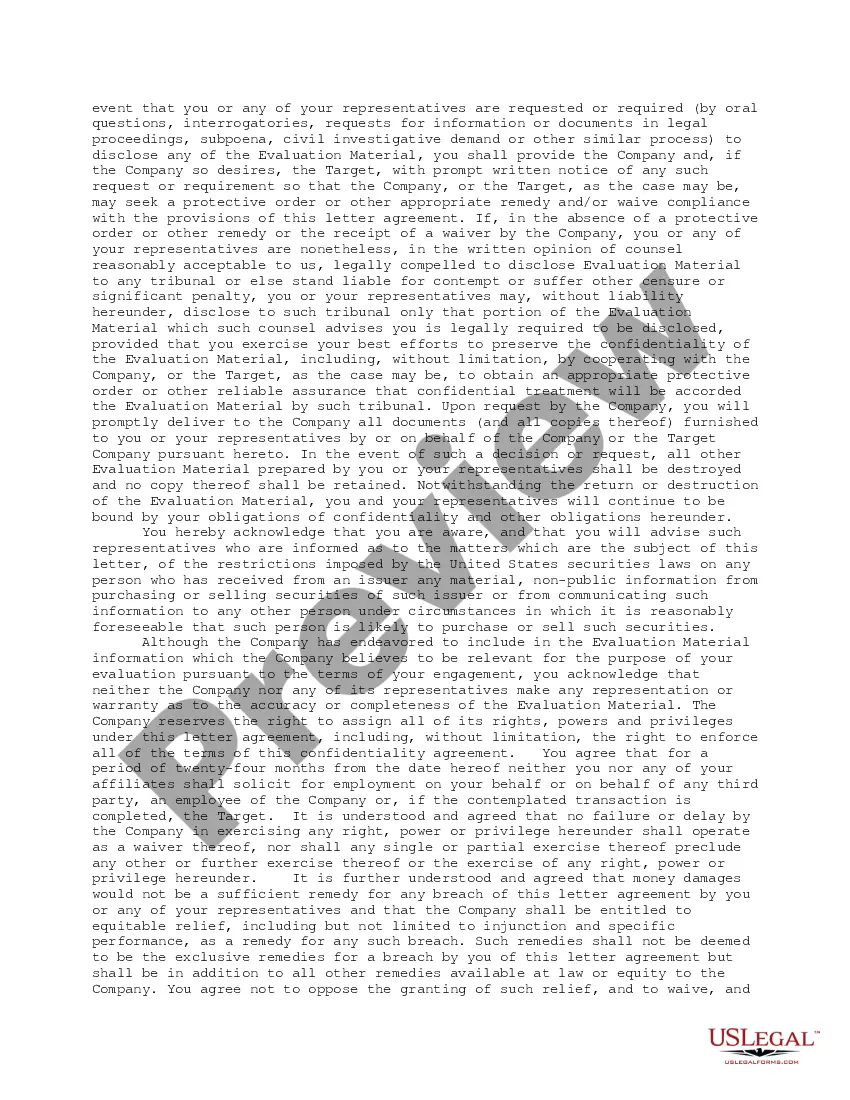
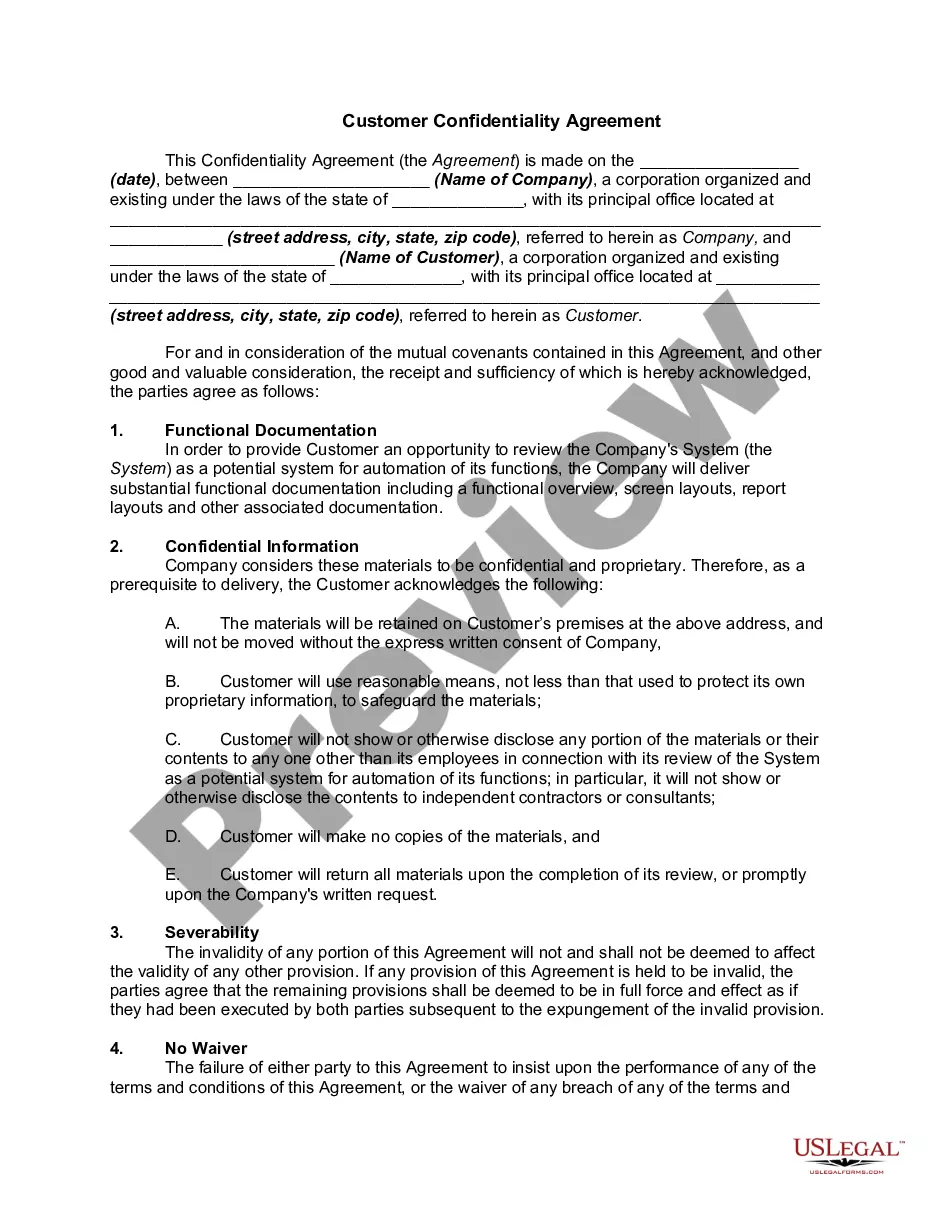
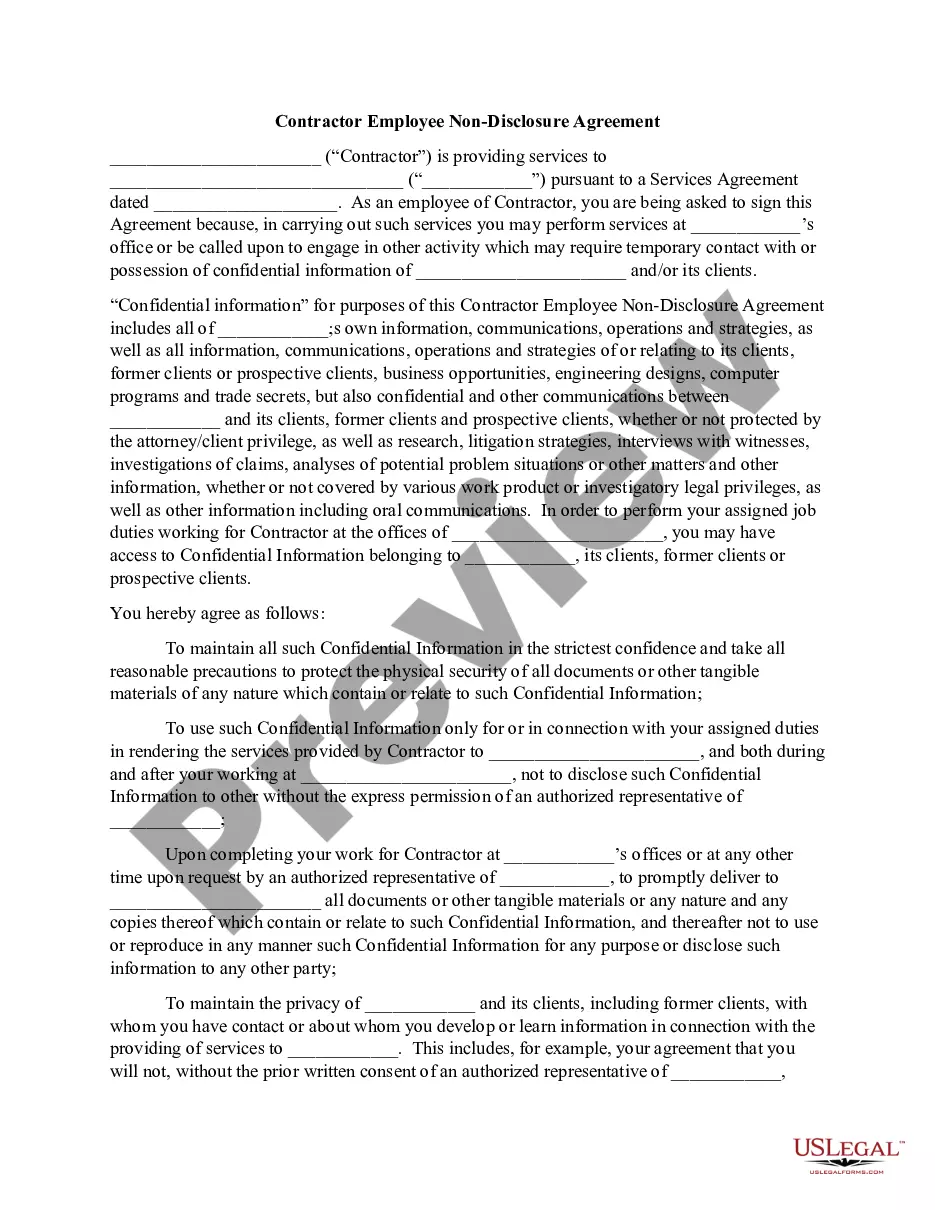
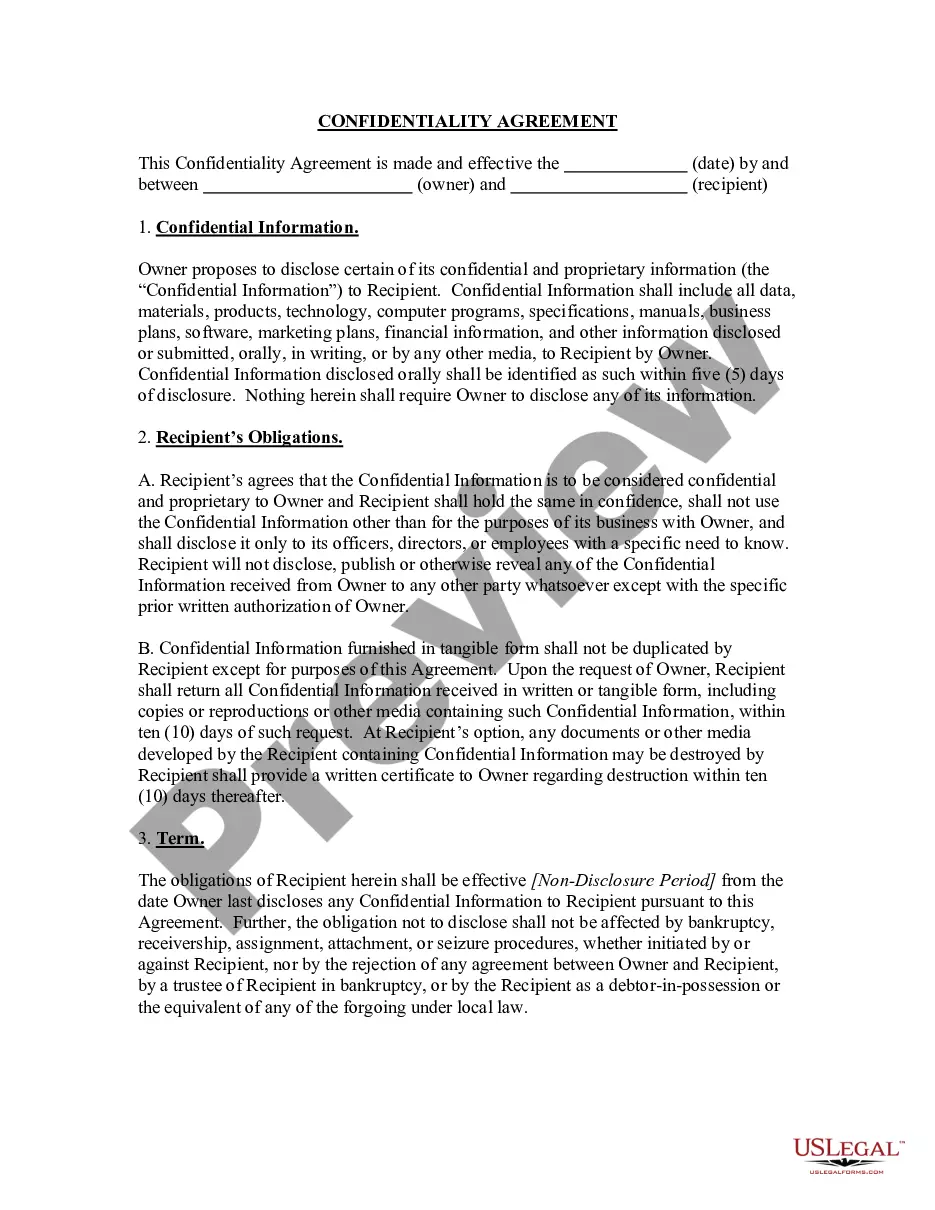
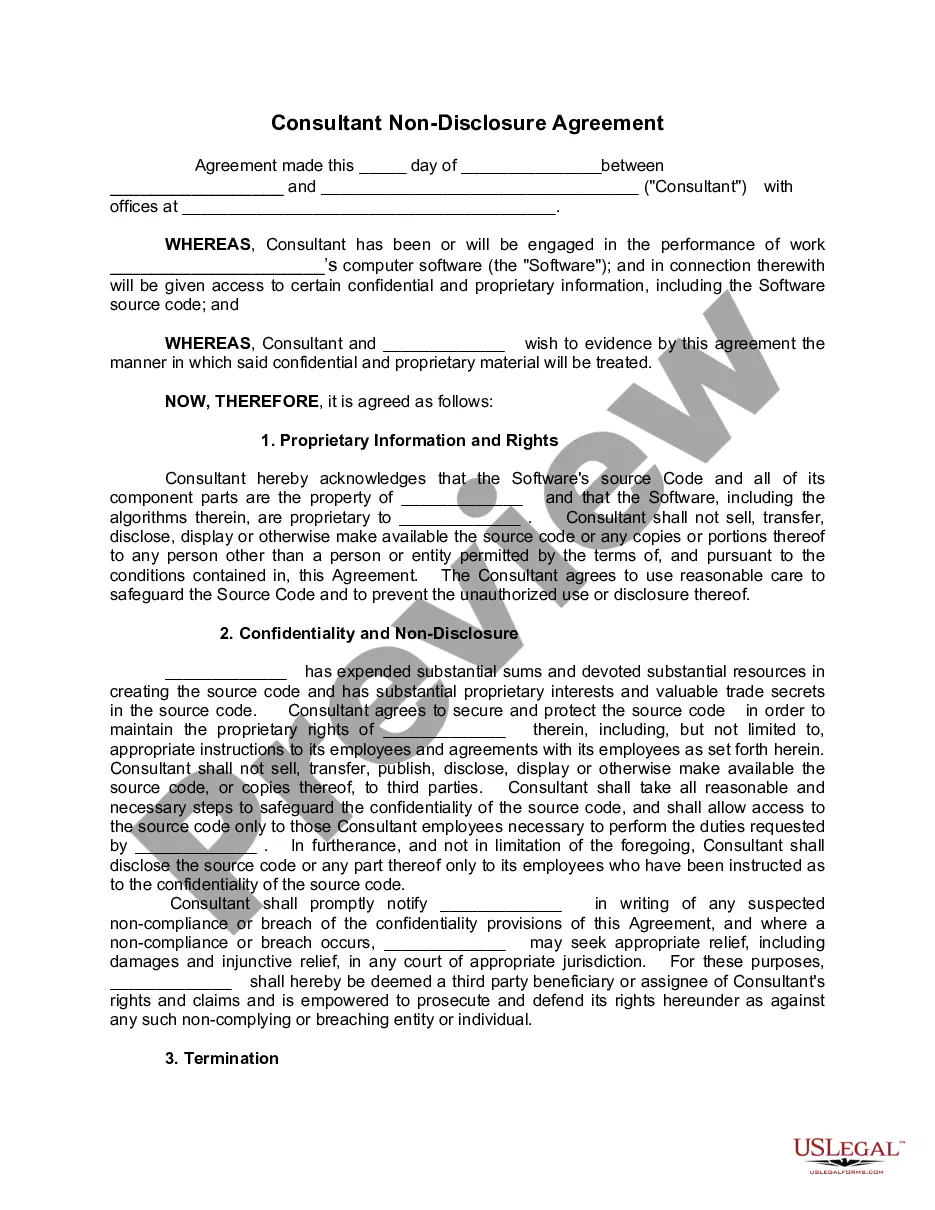
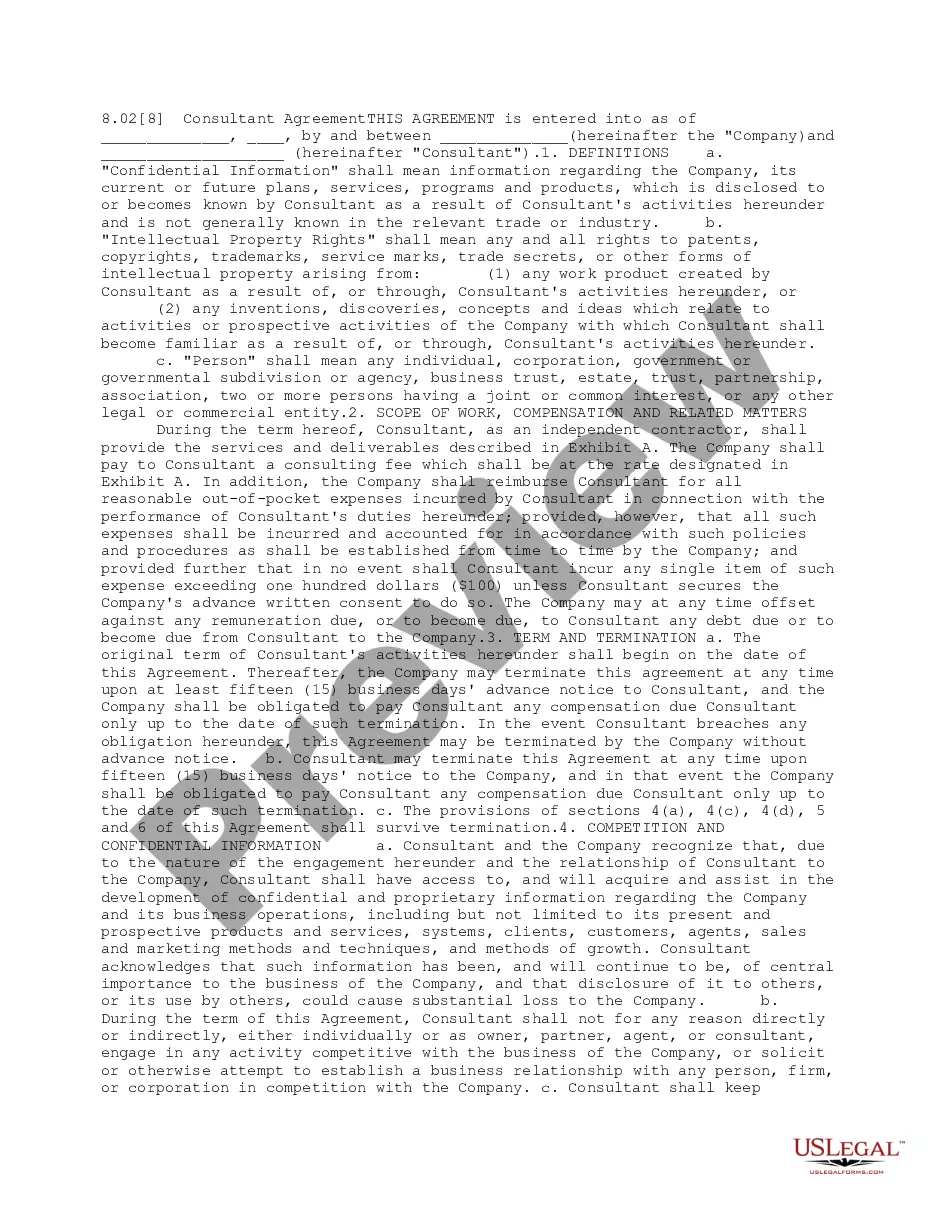
The Consultant Confidentiality Agreement is a legal document that ensures confidentiality between a consultant and a company. It defines the terms under which sensitive information about the company's operations, ownership, and strategy can be shared. This form is essential for protecting proprietary information during consulting engagements, setting it apart from other confidentiality agreements that may not be specifically tailored for consultancy relationships.
Main sections of this form
- Definition of Evaluation Material: Specifies what constitutes confidential information.
- Obligations of the Consultant: Outlines the duty to keep shared information confidential and the conditions under which disclosure is permitted.
- Terms of Use: Dictates that the Evaluation Material can only be used for specific purposes related to the consultancy engagement.
- Return or Destruction of Information: Details the actions required upon termination of the consultant's engagement, such as returning or destroying confidential material.
- Non-solicitation Clause: Prevents the consultant from soliciting the company's employees for a specified period.
Common use cases
Who can use this document
- Businesses engaging consultants where confidential information will be exchanged.
- Consultants who require assurance about the confidentiality of the material they receive.
- Corporate legal teams needing a formalized agreement to protect proprietary information.
How to complete this form
- Identify the parties: Fill in the names and addresses of both the company and the consultant.
- Specify the date: Enter the effective date of the agreement at the top of the document.
- Define Evaluation Material: Clearly outline what types of information will be considered confidential.
- Fill in the non-solicitation clause: Specify the duration for which the consultant cannot solicit company employees.
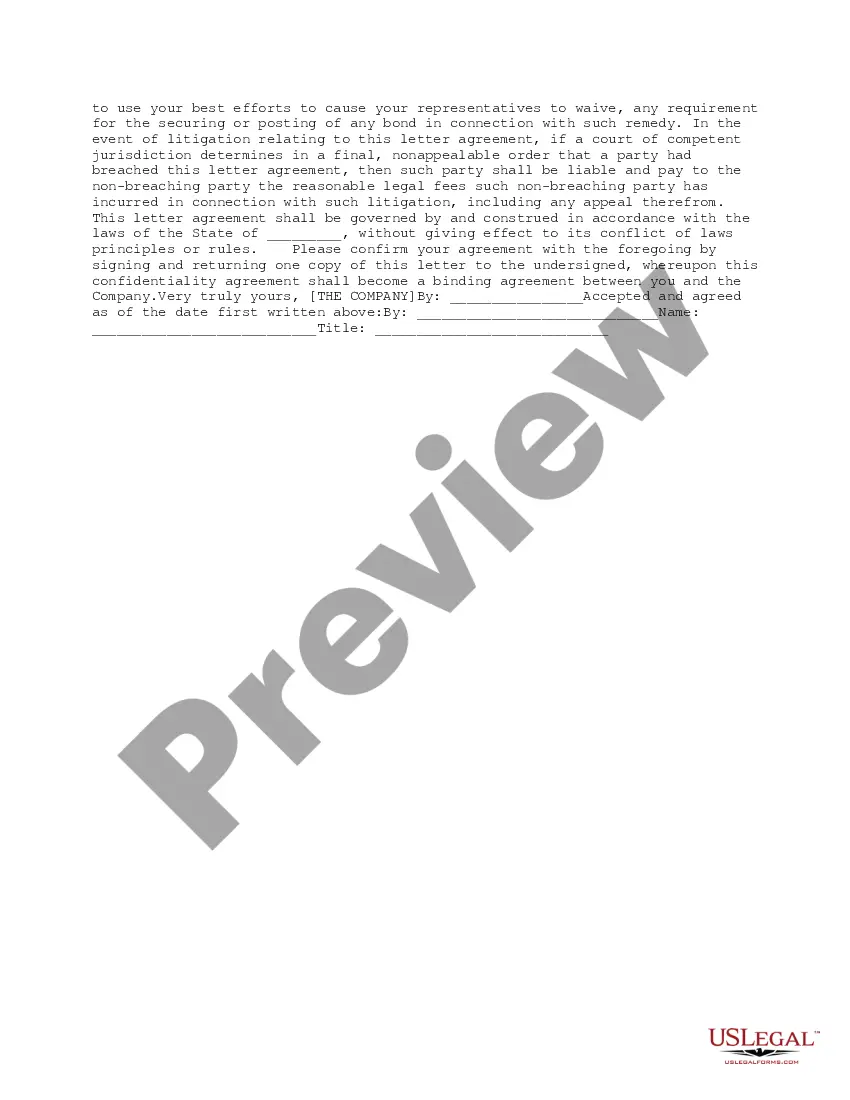
- Sign and date the agreement: Ensure that both parties sign and date the document to make it legally binding.
Does this document require notarization?
In most cases, this form does not require notarization. However, some jurisdictions or signing circumstances might. US Legal Forms offers online notarization powered by Notarize, accessible 24/7 for a quick, remote process.
Get your form ready online
Our built-in tools help you complete, sign, share, and store your documents in one place.
Make edits, fill in missing information, and update formatting in US Legal Forms—just like you would in MS Word.
Download a copy, print it, send it by email, or mail it via USPS—whatever works best for your next step.
Sign and collect signatures with our SignNow integration. Send to multiple recipients, set reminders, and more. Go Premium to unlock E-Sign.
If this form requires notarization, complete it online through a secure video call—no need to meet a notary in person or wait for an appointment.
We protect your documents and personal data by following strict security and privacy standards.

Make edits, fill in missing information, and update formatting in US Legal Forms—just like you would in MS Word.

Download a copy, print it, send it by email, or mail it via USPS—whatever works best for your next step.

Sign and collect signatures with our SignNow integration. Send to multiple recipients, set reminders, and more. Go Premium to unlock E-Sign.

If this form requires notarization, complete it online through a secure video call—no need to meet a notary in person or wait for an appointment.

We protect your documents and personal data by following strict security and privacy standards.
Typical mistakes to avoid
- Failing to specify what constitutes confidential information.
- Not including a non-solicitation clause when needed.
- Neglecting to have both parties sign and date the agreement.
- Using vague language that could lead to misinterpretation.
Why complete this form online
- Convenience: Easily download and complete the form at your own pace.
- Editability: Customize the document to suit your specific needs and circumstances.
- Reliability: Access professionally drafted templates created by licensed attorneys.
Legal use & context
- This agreement helps ensure compliance with confidentiality laws and protects sensitive information.
- Failure to adhere to the terms can result in legal repercussions, including potential lawsuits for breach of contract.
Quick recap
- The Consultant Confidentiality Agreement safeguards confidential information shared during the consultancy.
- Clearly defining terms is crucial to avoid misunderstandings.
- Ensure that both parties understand and comply with the obligations set forth in the agreement.
Looking for another form?


Form popularity
FAQ
Confidentiality agreements usually allow the recipient to disclose confidential information if required to do so by court order or other legal process.
Consultant agreements are important because they outline what work will be done, as well as the terms of the agreement between the client and the consultant. A consultant agreement should be detailed and include compensation terms, contract termination, intellectual property ownership and confidentiality agreements.
A confidentiality agreement is a legally binding contract that states two parties will not share or profit from confidential information. A business usually gives a confidentiality agreement to an employee or contractor to make sure its trade secrets or proprietary information remains private.
Confidential information is generally defined as information disclosed to an individual employee or known to that employee as a consequence of the employee's employment at a company.Confidential information can include information in any form, such as written documents/records or electronic data.
Employers must be prepared to terminate any employee who refuses to sign the agreement. If an employer allows even one employee to refuse and remain employed, the agreements signed by the other employees will not be legally binding.
A confidentiality agreement is a legal contract or clause that is used to protect the owner proprietary or sensitive information from disclosure by others.
Set the date of the agreement. Describe the two parties, sometimes called the Disclosing Party and the Receiving Party.7feff Include names and identification, so there can be no misunderstanding about who signed the agreement.
The cold hard truth is that most NDAs do not hold up in court. Non-Disclosure Agreements are most effective in establishing a paper trail of confidential information as it relates to partnerships, and discouraging partners from misappropriating proprietary information.
A definition of confidential information. Who is involved. Why the recipient knows the information. Exclusions or limits on confidential information. Receiving party's obligations. Time frame or term. Discloser to the recipient.