North Carolina Personal Representative's Deed to an Individual
What this document covers
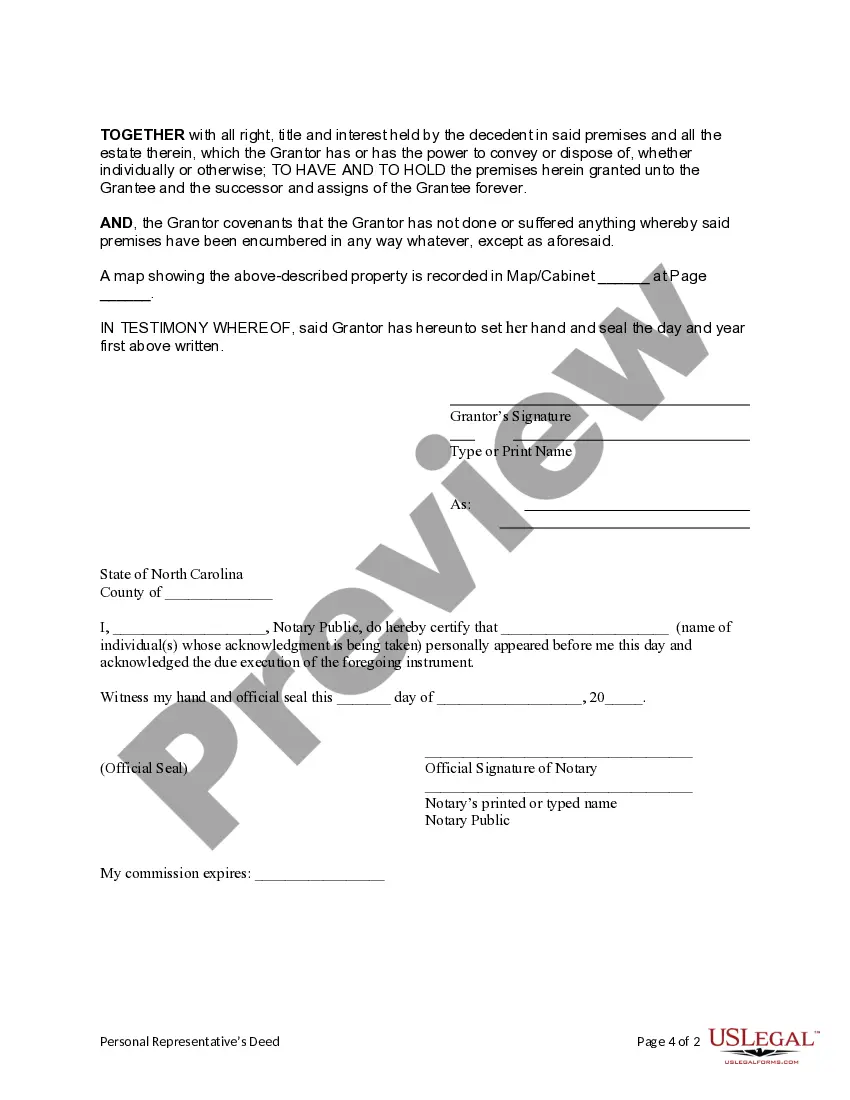
The Personal Representative's Deed to an Individual is a legal document used by a personal representative of an estate to transfer property ownership to a designated beneficiary. This form ensures that the property is conveyed according to the authority granted by the court, while protecting the grantor from any claims related to encumbrances during their service. It serves a unique purpose in estate management, distinguishing it from other property transfer documents by focusing specifically on the role of the personal representative in the context of estate administration.
Form components explained
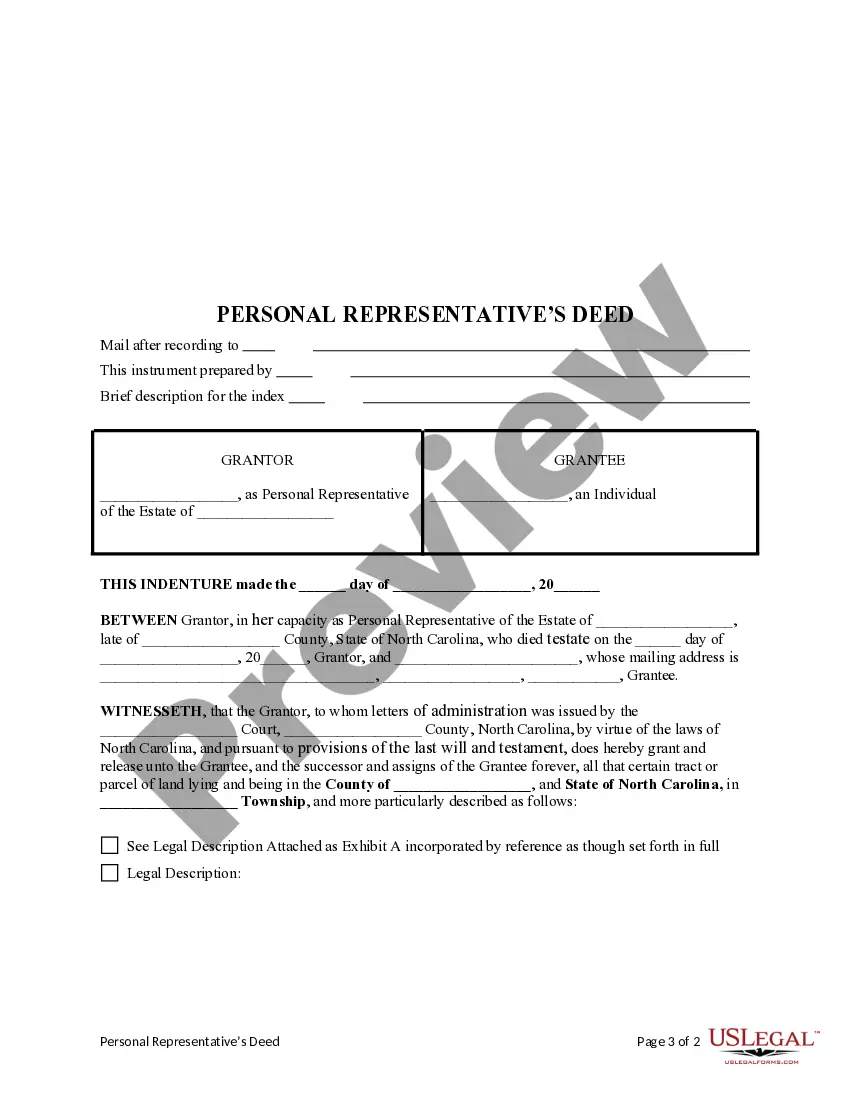
- Grantor information: The personal representative's details and their role in the estate.
- Grantee information: The beneficiary who is receiving the property.
- Property description: A detailed description of the property being transferred.
- Covenants: Statements ensuring no encumbrances were placed on the property by the grantor during their administration.
- Date of transfer: The specific date on which the transfer is executed.



When this form is needed
You should use the Personal Representative's Deed when you need to transfer real estate from the estate of a deceased individual to beneficiaries as specified by the court. This is typically required after the probate process has confirmed the entitlement of the beneficiaries to the property. It is essential in ensuring legal ownership is conveyed in accordance with estate laws.
Who this form is for
- Individuals appointed as personal representatives or executors of an estate.
- Beneficiaries designated to receive property under a will or trust.
- Heirs who need to finalize property transfers following the completion of the probate process.
Completing this form step by step
- Identify the grantor: Enter the personal representative's name and estate details.
- Specify the grantee: Fill in the beneficiary's name and mailing address.
- Describe the property: Provide a detailed description of the property being conveyed.
- Enter relevant dates: Input the date of the transfer and the date of the grantor's acknowledgment.
- Sign the deed: The grantor must sign the deed to complete the transfer.
Does this document require notarization?
To make this form legally binding, it must be notarized. Our online notarization service, powered by Notarize, lets you verify and sign documents remotely through an encrypted video session.
Get your form ready online
Our built-in tools help you complete, sign, share, and store your documents in one place.
Make edits, fill in missing information, and update formatting in US Legal Forms—just like you would in MS Word.
Download a copy, print it, send it by email, or mail it via USPS—whatever works best for your next step.
Sign and collect signatures with our SignNow integration. Send to multiple recipients, set reminders, and more. Go Premium to unlock E-Sign.
If this form requires notarization, complete it online through a secure video call—no need to meet a notary in person or wait for an appointment.
We protect your documents and personal data by following strict security and privacy standards.

Make edits, fill in missing information, and update formatting in US Legal Forms—just like you would in MS Word.

Download a copy, print it, send it by email, or mail it via USPS—whatever works best for your next step.

Sign and collect signatures with our SignNow integration. Send to multiple recipients, set reminders, and more. Go Premium to unlock E-Sign.

If this form requires notarization, complete it online through a secure video call—no need to meet a notary in person or wait for an appointment.

We protect your documents and personal data by following strict security and privacy standards.
Avoid these common issues
- Failing to include a complete and accurate property description.
- Not verifying the grantor's legal authority to transfer the property.
- Omitting signature dates or other critical information.
- Not following state-specific requirements for the execution of the deed.
Advantages of online completion
- Convenience: Easily download the form and complete it at your own pace.
- Editability: Modify the document as needed without making a new copy.
- Reliability: Forms are drafted by licensed attorneys to ensure compliance with legal standards.
Looking for another form?


Form popularity
FAQ
As an Executor, what you cannot do is go against the terms of the Will, Breach Fiduciary duty, fail to act, self-deal, embezzle, intentionally or unintentionally through neglect harm the estate, and cannot do threats to beneficiaries and heirs.
Before distributing assets to beneficiaries, the executor must pay valid debts and expenses, subject to any exclusions provided under state probate laws.The executor must maintain receipts and related documents and provide a detailed accounting to estate beneficiaries.
Yes you can. This is called a transfer of equity but you will need the permission of your lender. If you are not married or in a civil partnership you may wish to consider creating a deed of trust and a living together agreement which we can explain to you.
A personal representative is appointed by a judge to oversee the administration of a probate estate.In most cases, the judge will honor the decedent's wishes and appoint this person. When a personal representative is nominated to the position in a will, he's commonly called the executor of the estate.
Recording All deeds must be filed in the Register of Deeds in the County where the real estate is located. Signing (§ 47-38) All deeds must be signed with the Grantor(s) signing in front of a Notary Public.
You can do this by simply signing your name and putting your title of executor of the estate afterward. One example of an acceptable signature would be Signed by Jane Doe, Executor of the Estate of John Doe, Deceased. Of course, many institutions may not simply take your word that you are the executor of the estate.
Adding someone to your house deed requires the filing of a legal form known as a quitclaim deed. When executed and notarized, the quitclaim deed legally overrides the current deed to your home. By filing the quitclaim deed, you can add someone to the title of your home, in effect transferring a share of ownership.
When signing on behalf of the estate the proper signature is Name, Title with regard to the estate. Depending on the language you want to use or the language the the document appointing you use it could be John Smith, Personal Representative; John Smith, Executor; Jane Smith Executrix; John Smith, Administrator; or
The court will force the executor to return the property to the estate or pay restitution to the beneficiaries of the estate.The executor cannot transfer estate property to himself because the property belongs to someone else unless he pays the full price for it.