Sports Physical Form
What this document covers
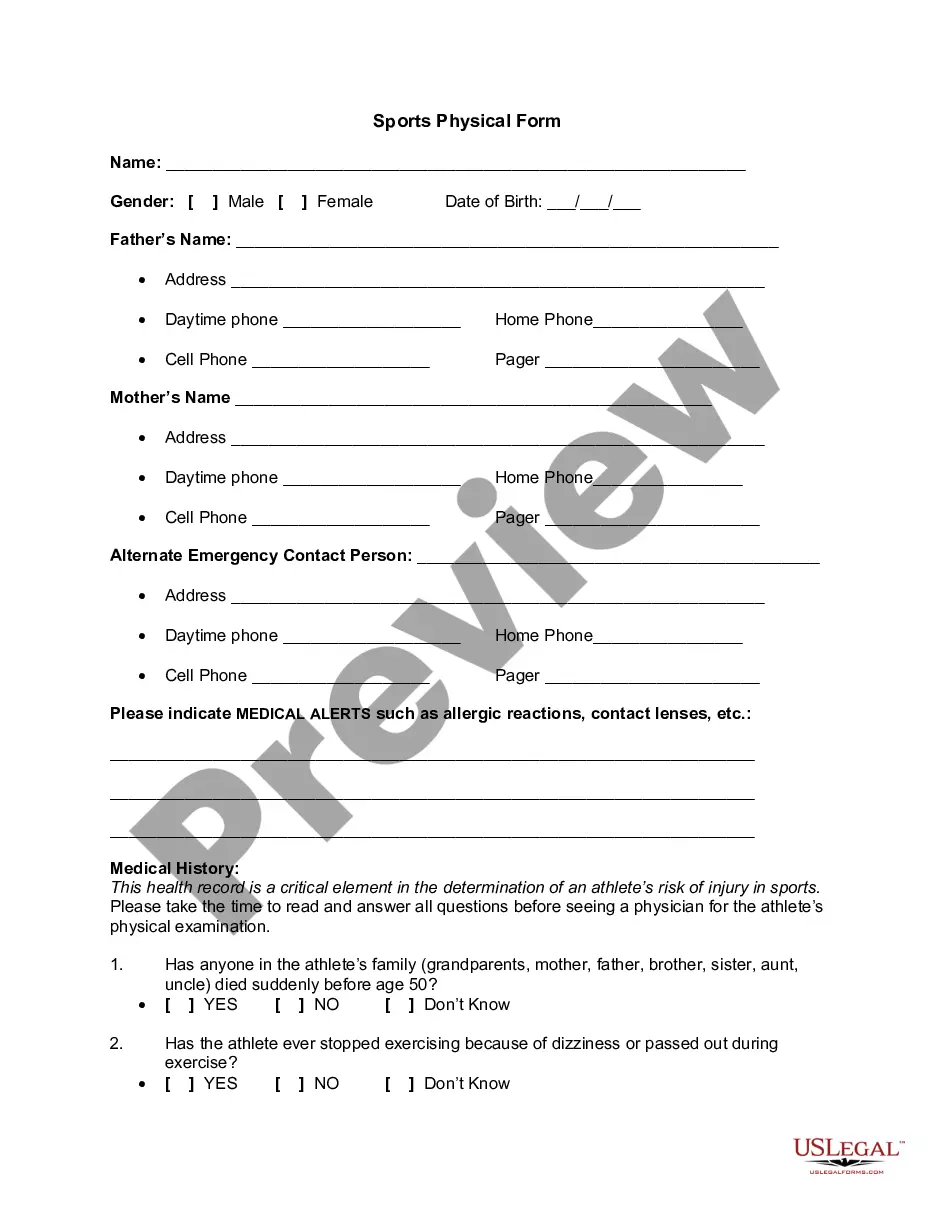
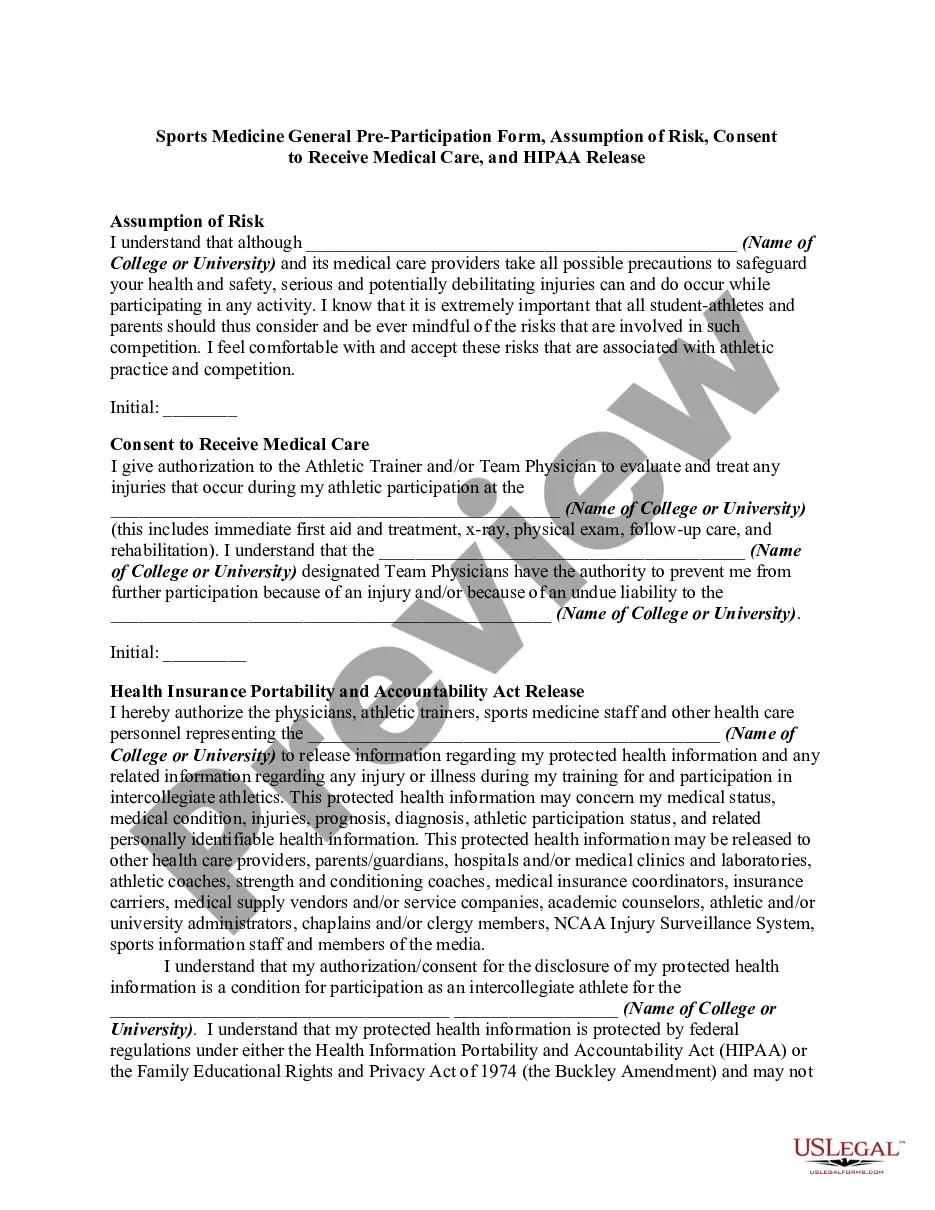
The Sports Physical Form is a document used to ensure that athletes are physically fit to participate in sports activities. This form collects vital health information, including medical history and emergency contacts, and is essential for assessing health risks associated with sports participation. It differs from standard medical forms by specifically addressing sports-related health concerns and requirements.
What’s included in this form
- Personal information such as name, gender, and date of birth.
- Emergency contact details for parents and alternate contacts.
- A section for listing medical alerts and health conditions.
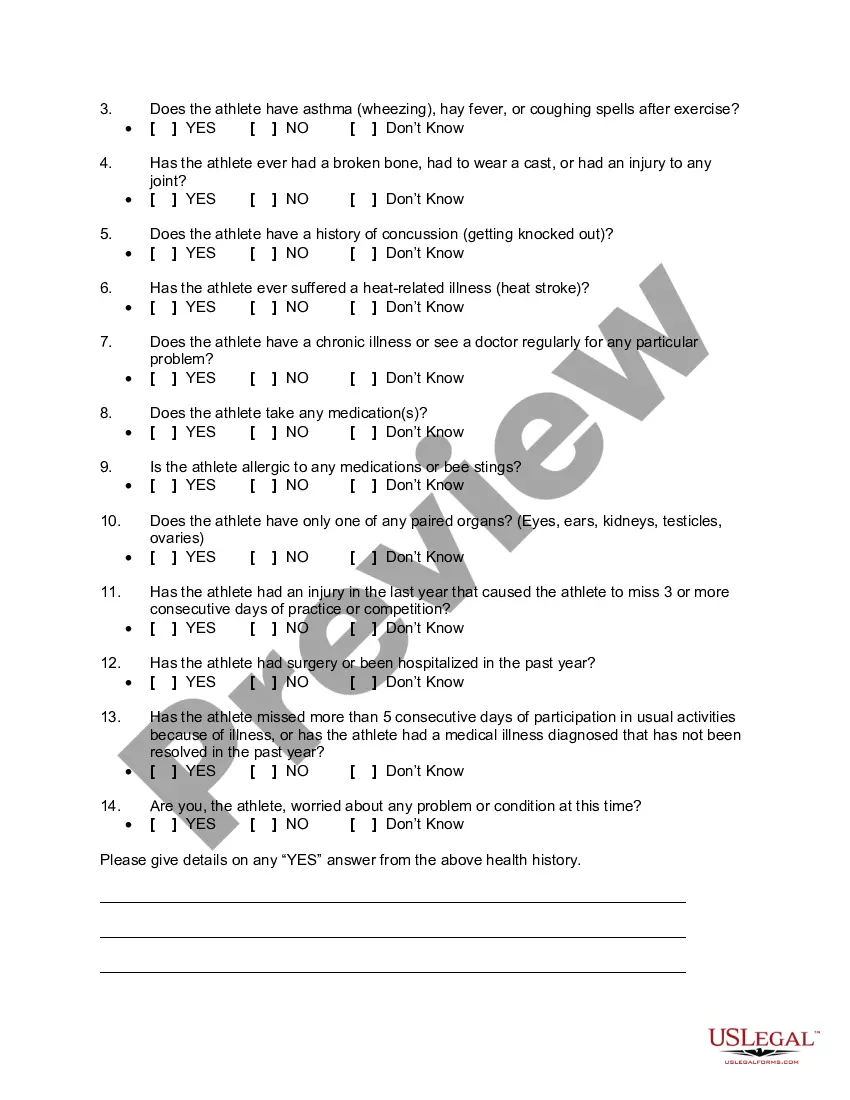
- A comprehensive medical history questionnaire related to physical fitness.
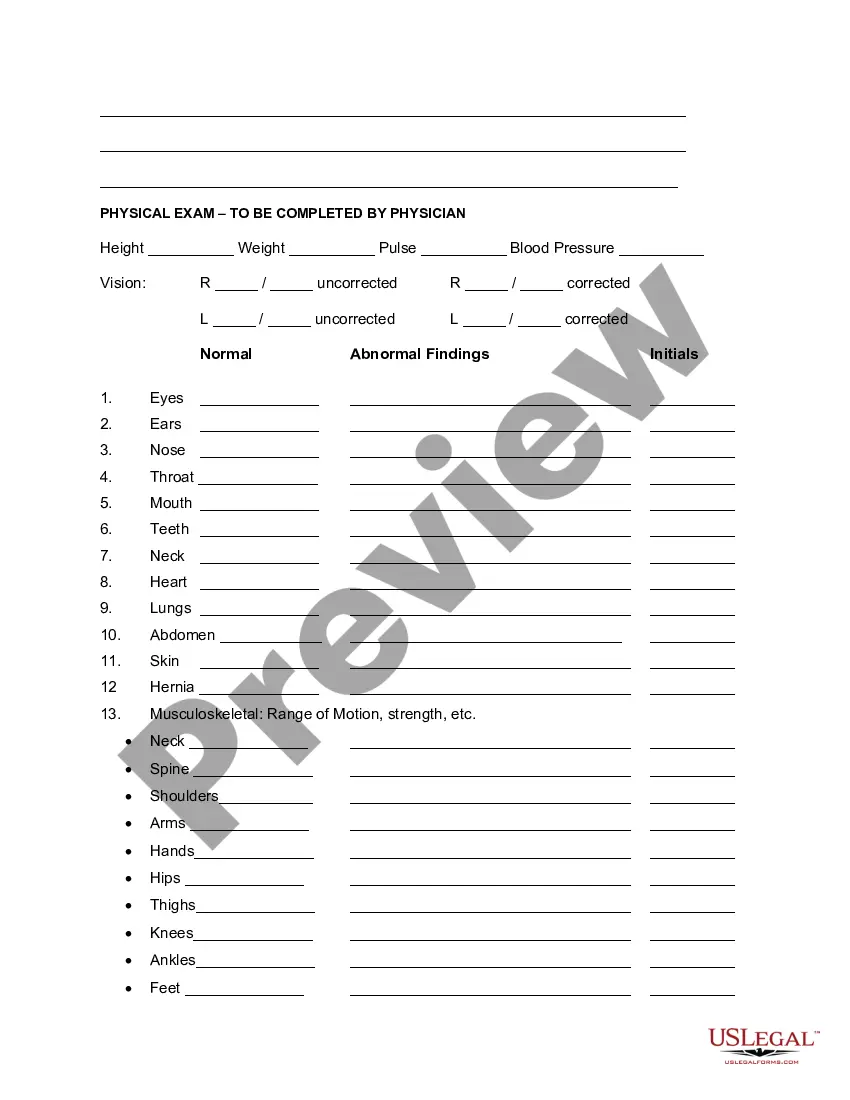
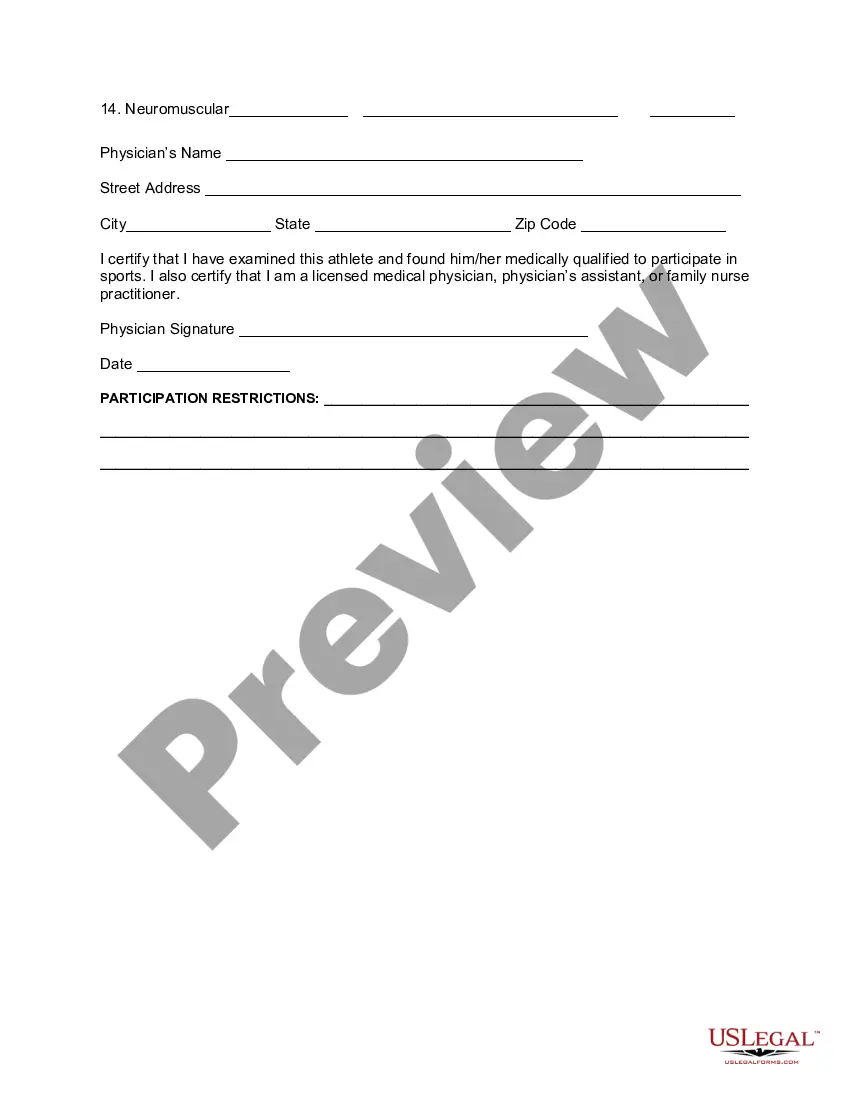
- Space for the physician to complete a physical exam report with findings.
- Physician's signature and participation restrictions if necessary.
Situations where this form applies
This form should be used before participating in school sports, community athletics, or any organized sporting events. It is particularly important for children and teens to ensure their health and safety. Coaches, schools, and sports organizations may require this form to confirm that participants have completed a thorough physical examination.
Who needs this form
- Athletes of all ages wanting to participate in sports.
- Parents or guardians completing the form for minors.
- Coaches and sports administrators needing a health report for participants.
- Medical professionals involved in sports physical examinations.
Completing this form step by step
- Fill in personal information for the athlete, including name and contact details.
- Provide emergency contact information for parents or guardians.
- Complete the medical history section, answering all questions thoroughly.
- Have a physician conduct a physical examination and document the findings on the form.
- Ensure the physician signs the form to validate the examination.
- Submit the completed form to the appropriate sports authority or organization.
Does this document require notarization?
This form does not typically require notarization unless specified by local law or specific sports organizations.
Get your form ready online
Our built-in tools help you complete, sign, share, and store your documents in one place.
Make edits, fill in missing information, and update formatting in US Legal Forms—just like you would in MS Word.
Download a copy, print it, send it by email, or mail it via USPS—whatever works best for your next step.
Sign and collect signatures with our SignNow integration. Send to multiple recipients, set reminders, and more. Go Premium to unlock E-Sign.
If this form requires notarization, complete it online through a secure video call—no need to meet a notary in person or wait for an appointment.
We protect your documents and personal data by following strict security and privacy standards.

Make edits, fill in missing information, and update formatting in US Legal Forms—just like you would in MS Word.

Download a copy, print it, send it by email, or mail it via USPS—whatever works best for your next step.

Sign and collect signatures with our SignNow integration. Send to multiple recipients, set reminders, and more. Go Premium to unlock E-Sign.

If this form requires notarization, complete it online through a secure video call—no need to meet a notary in person or wait for an appointment.

We protect your documents and personal data by following strict security and privacy standards.
Mistakes to watch out for
- Failing to provide complete or accurate medical history information.
- Omitting emergency contact details.
- Not having the physician sign the form.
- Submitting the form after deadlines set by schools or sports organizations.
Why use this form online
- Easy access and convenient download from any device.
- Editable fields allowing for personalized information entry.
- High reliability and accuracy, reducing the risk of errors.
- Time-saving, as it eliminates the need to collect physical copies.
Legal use & context
- This form is recognized as a legal document that provides proof of an athlete's health clearance.
- It serves as a safeguard for both the athlete and managing entities, minimizing the risk of injuries due to undisclosed health issues.
Main things to remember
- The Sports Physical Form is essential for ensuring athlete safety in sports participation.
- Complete the form accurately and thoroughly to avoid participation issues.
- Consult local regulations for any state-specific requirements for hormone clearance.
Looking for another form?


Form popularity
FAQ
Physical Examination take a blood pressure and pulse (heart rate and rhythm) test your vision. check your heart, lungs, abdomen, ears, nose, and throat. evaluate your posture, joints, strength, and flexibility.
During the physical examination, the doctor will examine the genitals, including the penis and testicles.
Elements of a Physical Exam It measures important vital signs -- temperature, blood pressure, and heart rate -- and evaluates your body using observation, palpitation, percussion, and auscultation.
Measure your height and weight. Measure your blood pressure and pulse. Test your vision. Check your heart, lungs, belly, ears, nose, and throat.
Physical Examination record your height and weight. take a blood pressure and pulse (heart rate and rhythm) test your vision. check your heart, lungs, abdomen, ears, nose, and throat.
If you perform a comprehensive physical, choose a procedure code from the Preventive Medicine codes CPT 99381-99387 for a new patient, or CPT 99391-99397 for an established patient, and select the code based on the patient's age.
Elements of a Physical Exam It measures important vital signs -- temperature, blood pressure, and heart rate -- and evaluates your body using observation, palpitation, percussion, and auscultation. Observation includes using instruments to look into your eyes, ears, nose, and throat.
It includes a routine check of vitals like blood pressure, heart rate, respiration, and temperature. Your doctor may also examine your abdomen, extremities, and skin for any signs of health changes.