Financial Services Agent Agreement - Self-Employed Independent Contractor
What this document covers
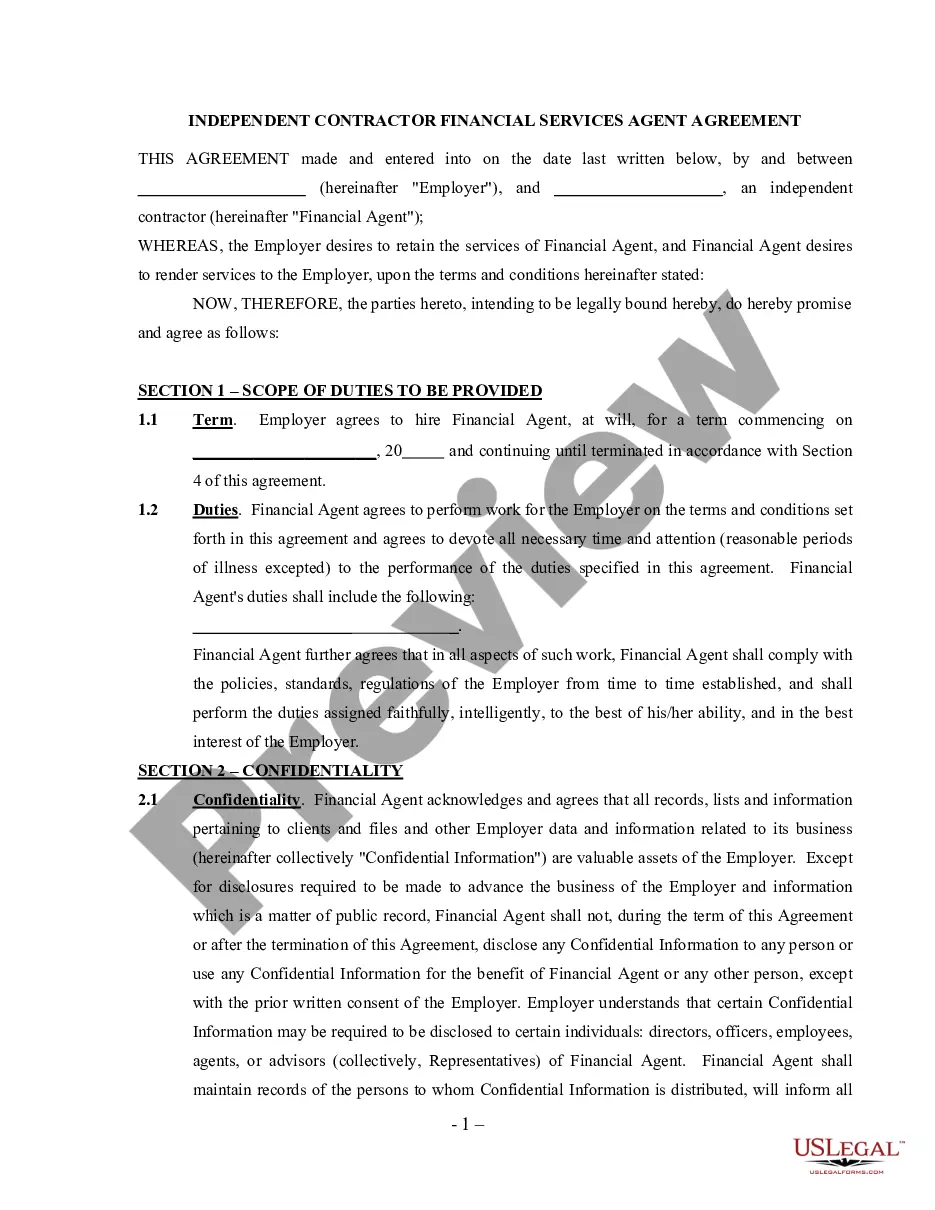
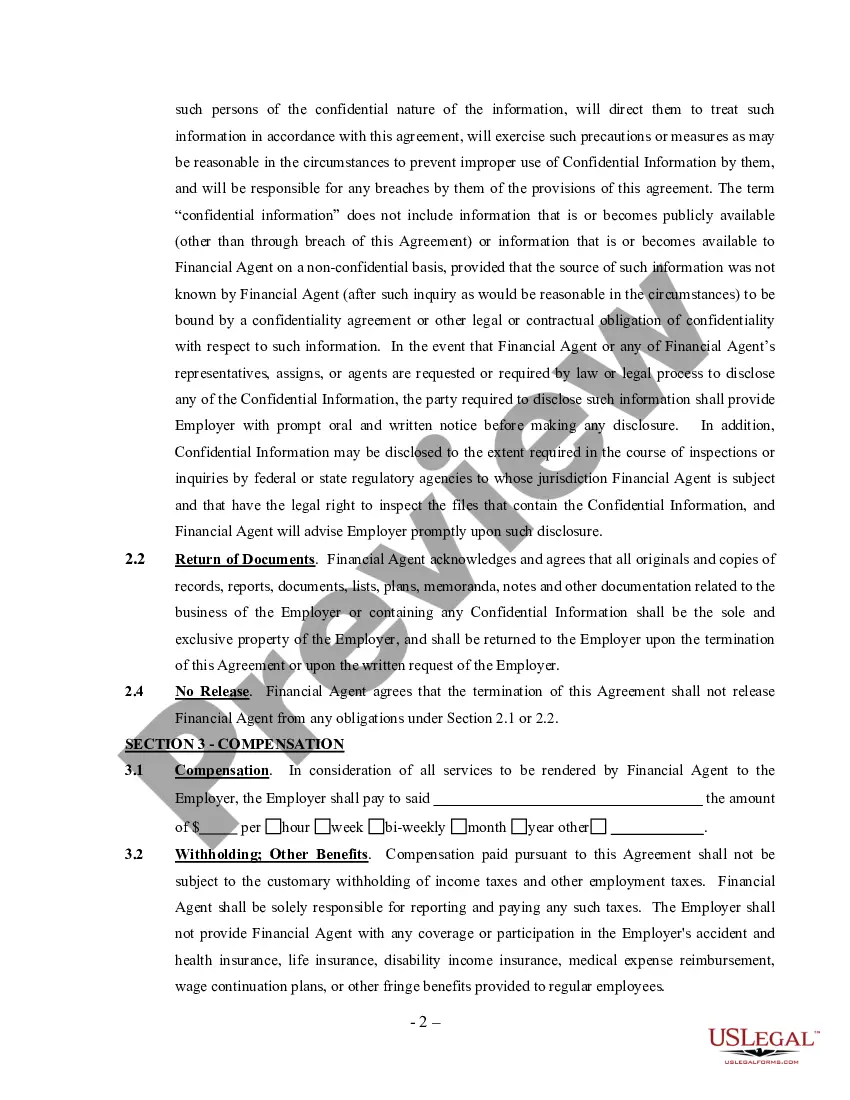
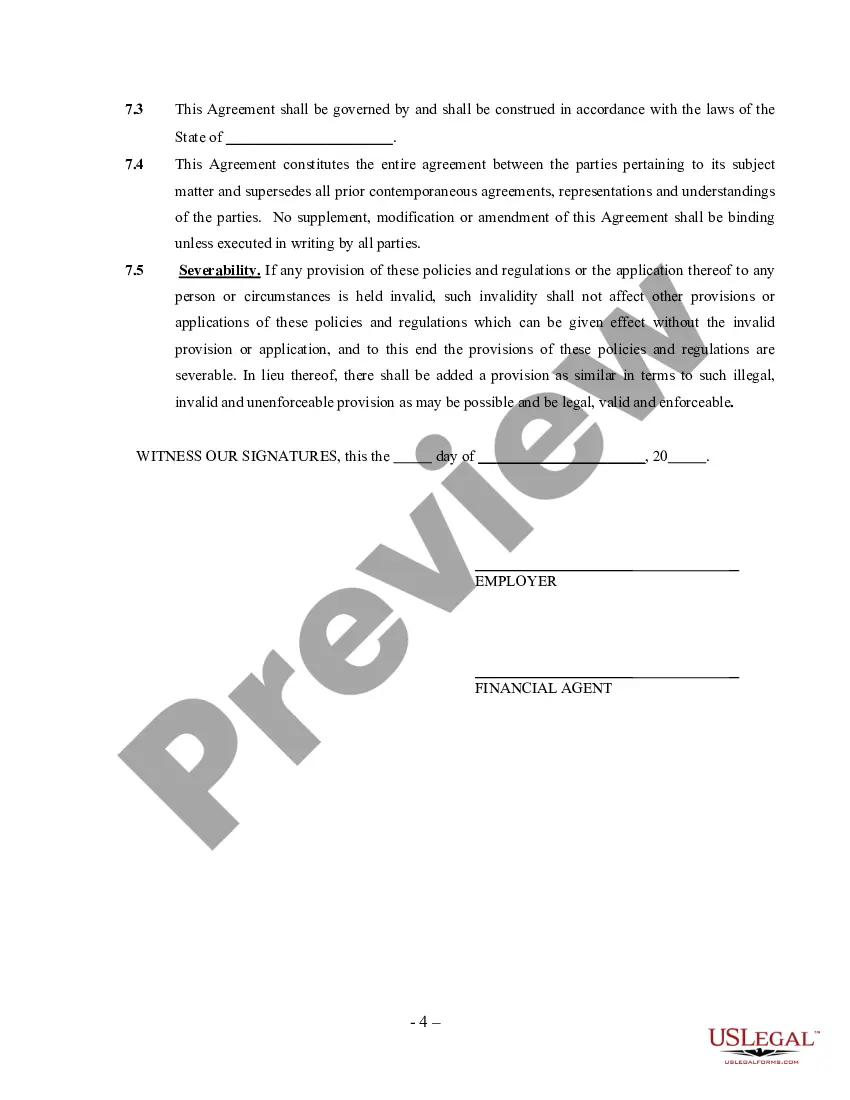
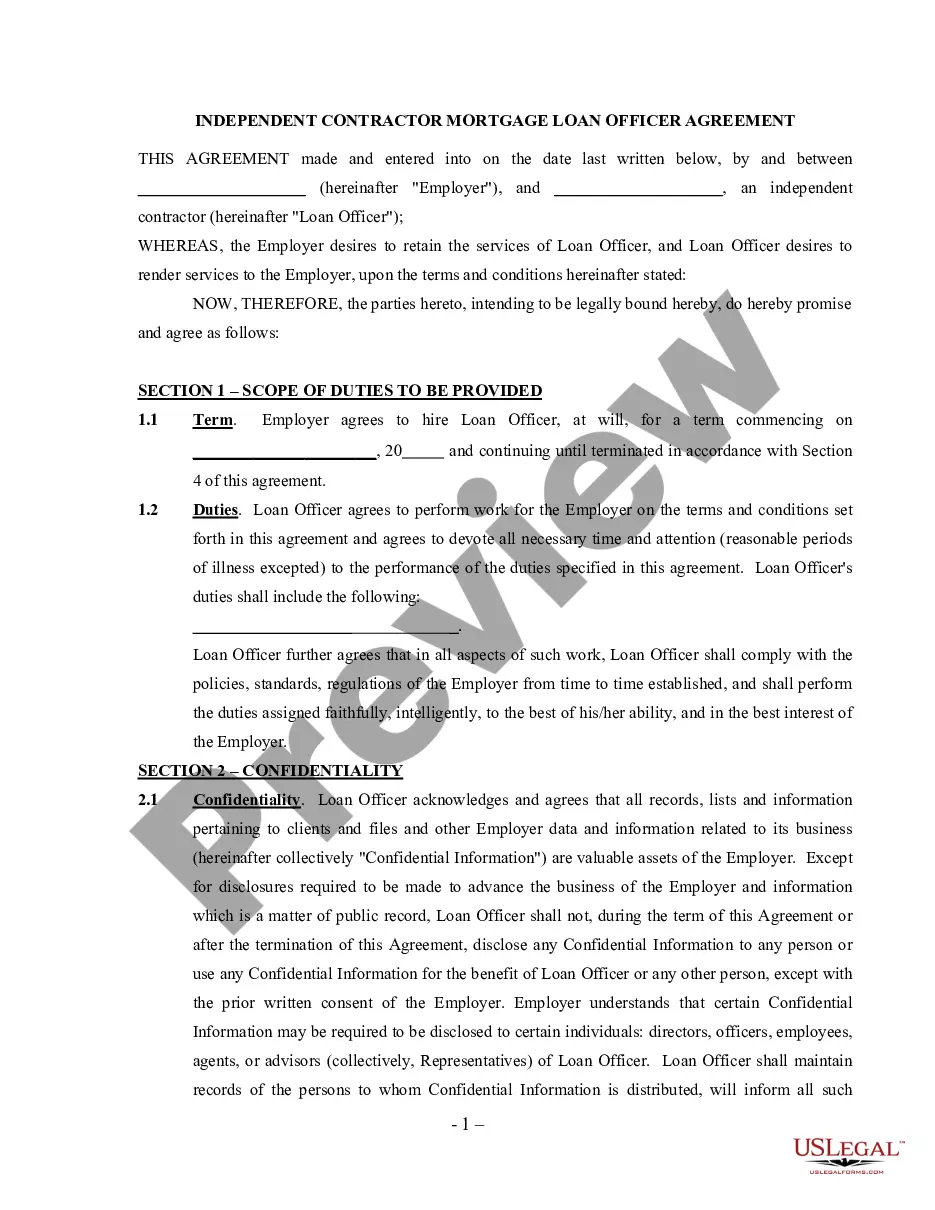
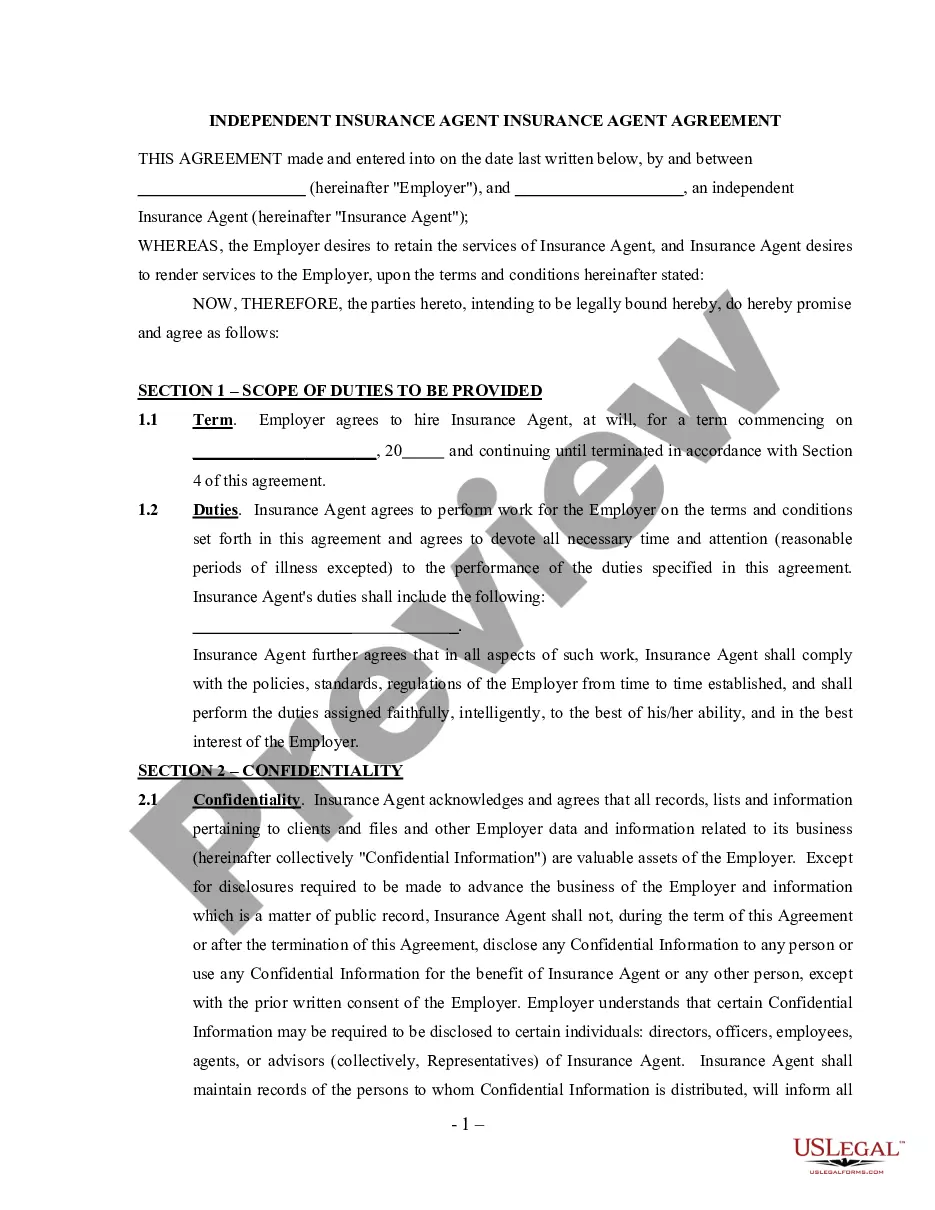
The Financial Services Agent Agreement - Self-Employed Independent Contractor is a legal document that establishes a working relationship between an employer and an independent financial services agent. This agreement outlines the duties of the financial agent, compensation, confidentiality obligations, and other essential terms. It is specifically tailored for individuals working as independent contractors in the financial services sector, distinguishing it from other employment agreements that might entail different responsibilities or benefits.
Key components of this form
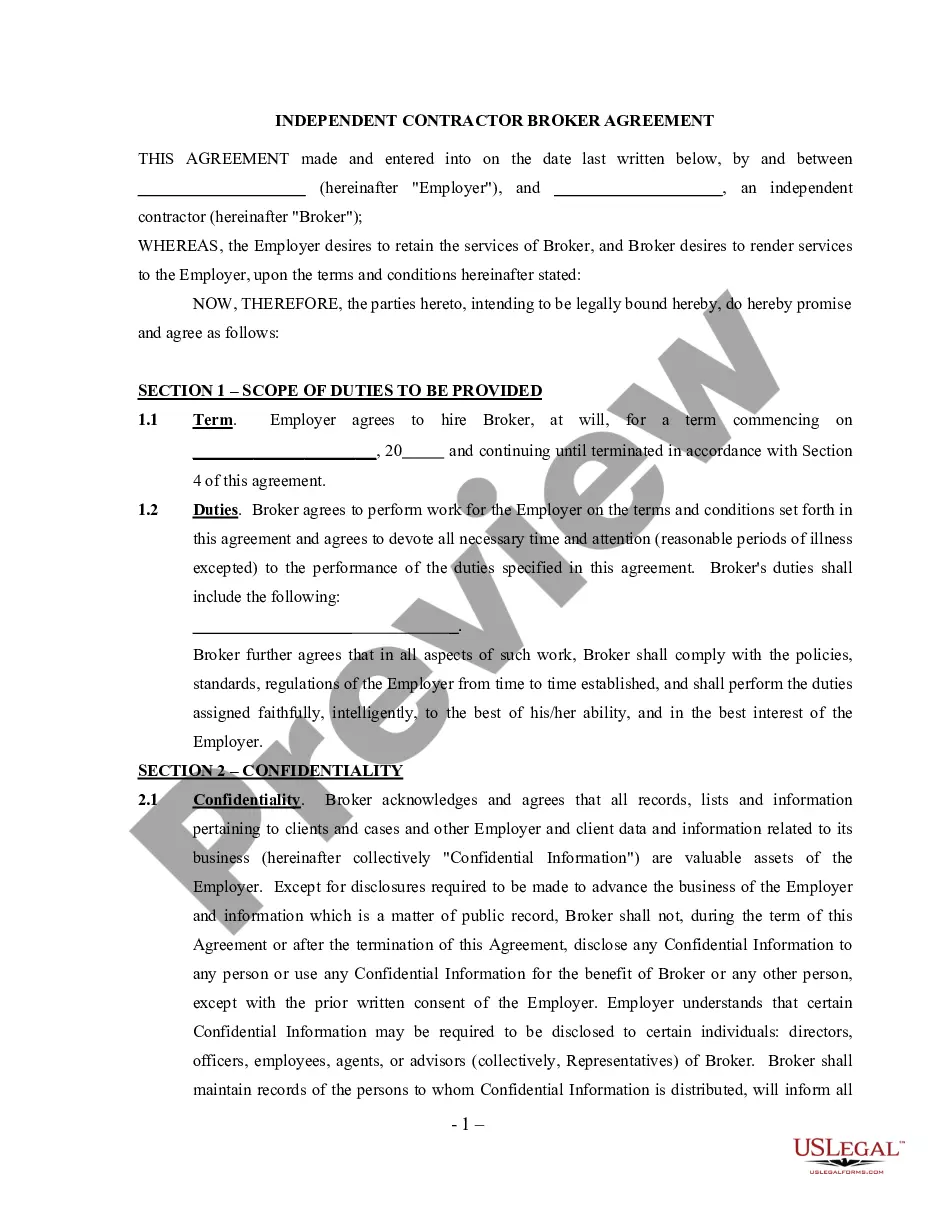
- Scope of Duties: Details the specific services the financial agent is expected to provide.
- Confidentiality: Outlines the financial agent's responsibility to protect the employer's sensitive information.
- Compensation: Specifies how the financial agent will be compensated for their services.
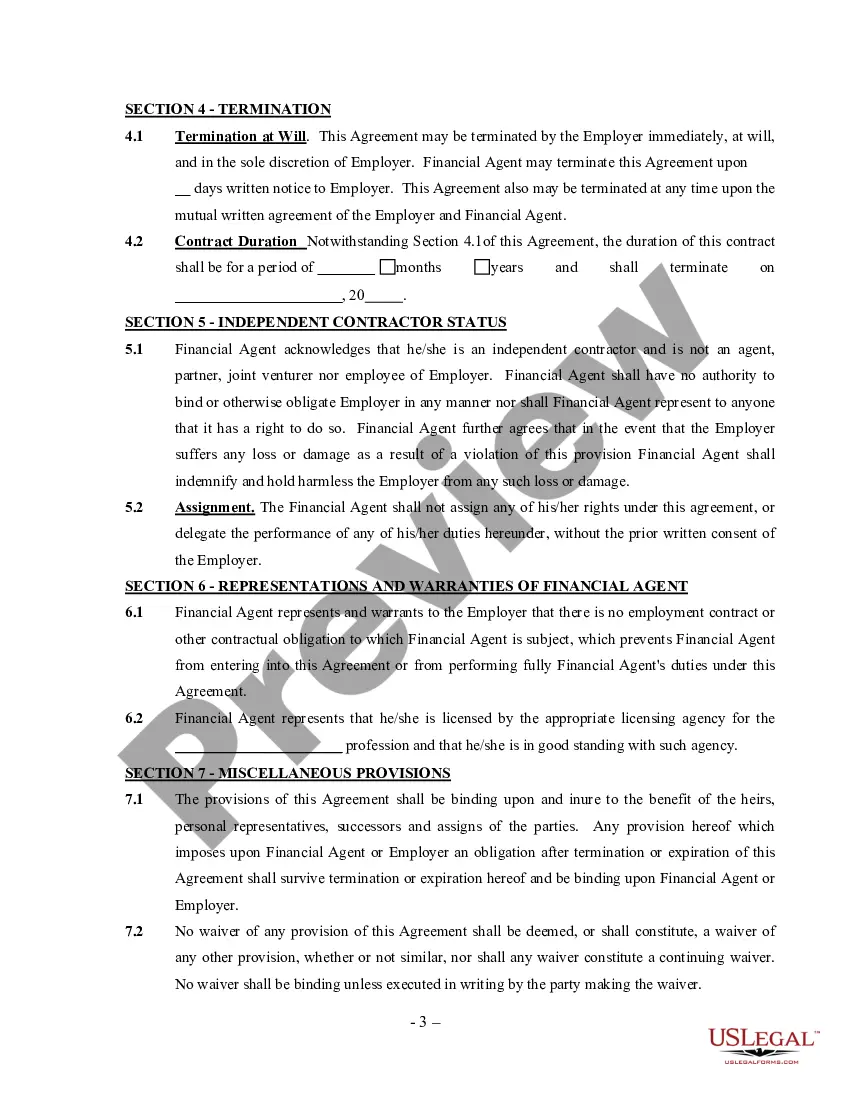
- Termination: Describes the conditions under which either party can terminate the agreement.
- Representations and Warranties: Affirms the financial agent's qualifications and absence of conflicting obligations.

When to use this form
This agreement is appropriate when an employer seeks to hire a financial services agent as an independent contractor rather than an employee. Use this form when you need to outline the terms of engagement for services like investment advice, insurance sales, or financial planning. It is essential in situations where the independent contractor will have access to confidential business information and where clarity in roles and responsibilities is necessary to protect both parties.
Who needs this form
This form is designed for:
- Employers in the financial services industry looking to contract with independent agents.
- Self-employed financial agents seeking to formalize their relationship with an employer.
- Businesses wishing to ensure compliance with confidentiality and legal obligations when hiring independent contractors.
Completing this form step by step
- Identify the parties: Enter the full name of the employer and the financial agent.
- Specify the scope of duties: Clearly define the services the financial agent will provide.
- Include compensation details: Describe how and when the financial agent will be paid.
- Review confidentiality obligations: Ensure both parties understand their responsibilities regarding confidential information.
- Sign and date the agreement: Both parties should sign the document to make it legally binding.
Does this form need to be notarized?
This form does not typically require notarization unless specified by local law. It's recommended to check specific state requirements before finalizing the agreement.
Get your form ready online
Our built-in tools help you complete, sign, share, and store your documents in one place.
Make edits, fill in missing information, and update formatting in US Legal Forms—just like you would in MS Word.
Download a copy, print it, send it by email, or mail it via USPS—whatever works best for your next step.
Sign and collect signatures with our SignNow integration. Send to multiple recipients, set reminders, and more. Go Premium to unlock E-Sign.
If this form requires notarization, complete it online through a secure video call—no need to meet a notary in person or wait for an appointment.
We protect your documents and personal data by following strict security and privacy standards.

Make edits, fill in missing information, and update formatting in US Legal Forms—just like you would in MS Word.

Download a copy, print it, send it by email, or mail it via USPS—whatever works best for your next step.

Sign and collect signatures with our SignNow integration. Send to multiple recipients, set reminders, and more. Go Premium to unlock E-Sign.

If this form requires notarization, complete it online through a secure video call—no need to meet a notary in person or wait for an appointment.

We protect your documents and personal data by following strict security and privacy standards.
Common mistakes to avoid
- Failing to clearly define the scope of duties, which can lead to misunderstandings.
- Not specifying compensation terms, leaving payments ambiguous.
- Neglecting to address confidentiality obligations, which may expose sensitive information.
- Signing the agreement without ensuring all parties understand its terms.
Advantages of online completion
- Convenience: Easily access and download the form at any time.
- Editability: Customize the agreement to meet specific needs before finalizing.
- Reliability: Use a legally vetted document drafted by licensed attorneys.
Legal use & context
The Financial Services Agent Agreement is legally enforceable if completed correctly and both parties agree to its terms. Ensure compliance with applicable state laws regarding independent contractor relationships to maintain enforceability.
Quick recap
- This agreement formalizes the relationship between the employer and the financial services agent.
- Correctly specifying duties and compensation is crucial for a successful partnership.
- Understanding confidentiality provisions protects the employer's proprietary information.
Looking for another form?

Form popularity
FAQ
An Independent Contractor Agreement should contain all of these basic terms: Description of the services to be provided.Explanation of what the hiring party will provide or not provide, such as equipment, for the independent contractor to use. Ownership of work product if that is relevant to the work being performed.
Generally stated, an independent contractor is a separate and distinct business.An agent is a person or entity that can be an employee or independent contractor providing service for the principal on an ongoing basis. However, a totally independent third party can be an agent and nothing else.
As nouns the difference between agent and employee is that agent is one who exerts power, or has the power to act; an actor while employee is an individual who provides labor to a company or another person.
Length of Contract. Each client contractor agreement should outline the length of the working relationship. Project Description. Payment Terms. Nondisclosure Terms. Rights and Responsibilities. Termination Clause. Disclaimers.
In the real estate industry in the United States, real estate agents, while under the supervision of real estate brokers, are not generally considered employees unless this employer/employee has been expressly stated. Instead, in most cases, real estate agents are considered independent contractors.
The terms agent and independent contractor are not necessarily mutually exclusive. In fact, by definition, 2026 an independent contractor is an agent in the broad sense of the term in undertaking, at the request of another, to do something for the other.
Agents and independent contractors sell products or provide services within different legal boundaries. Agents are employees, while independent contractors are self-employed; this difference affects how services are performed.
An agent, in legal terminology, is a person who has been legally empowered to act on behalf of another person or an entity. An agent may be employed to represent a client in negotiations and other dealings with third parties.