Contract with Independent Contractor to Perform Advertising Services to a Financial Services Business
What this document covers
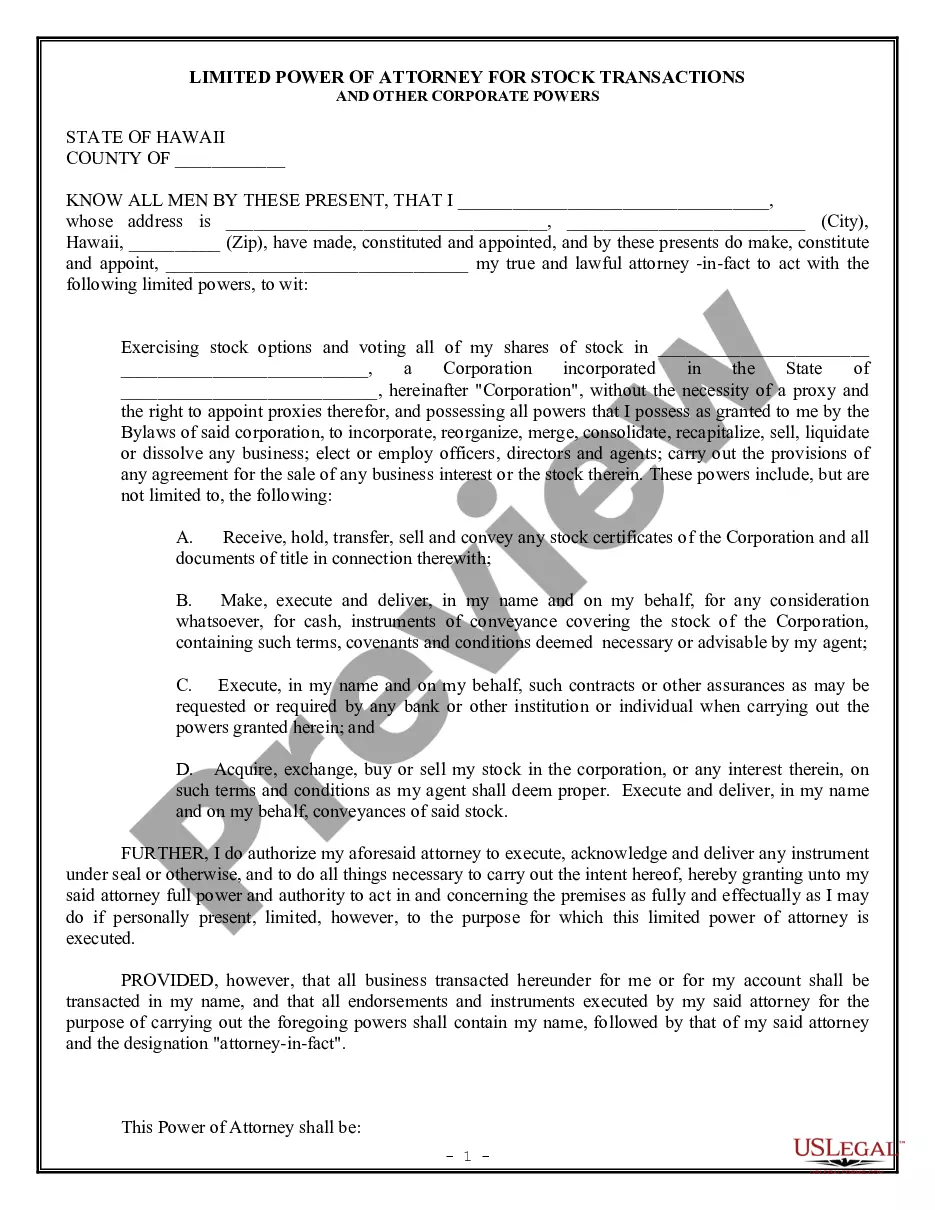
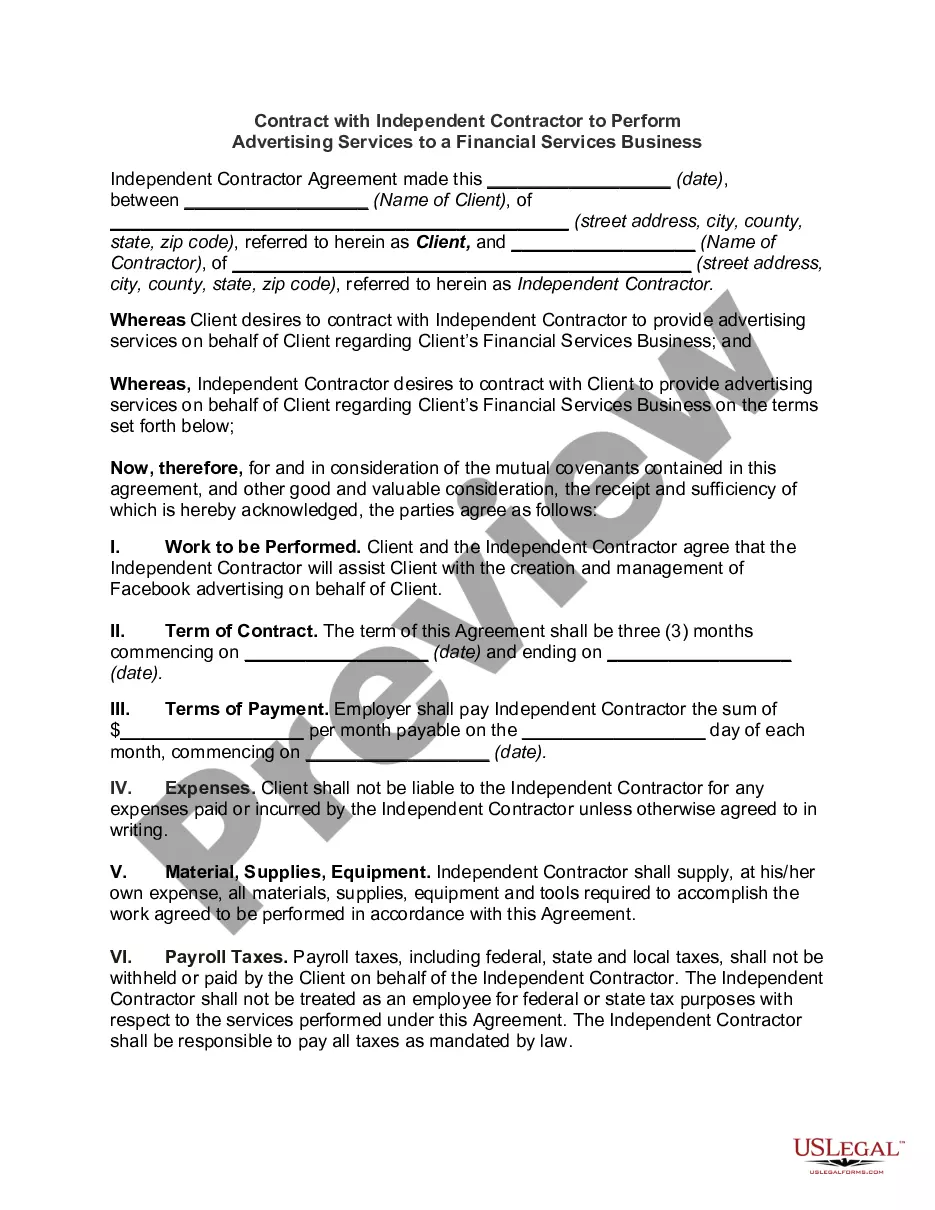
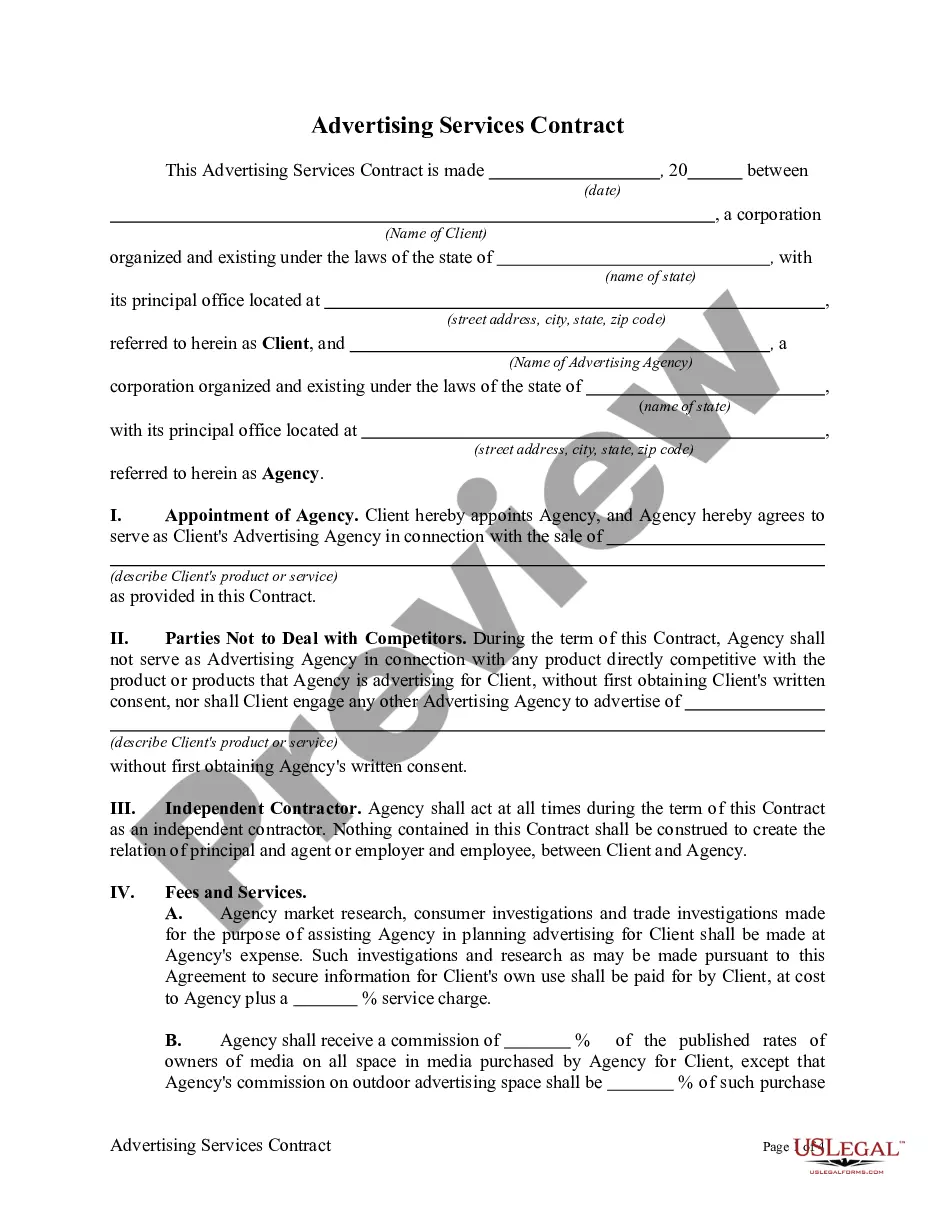
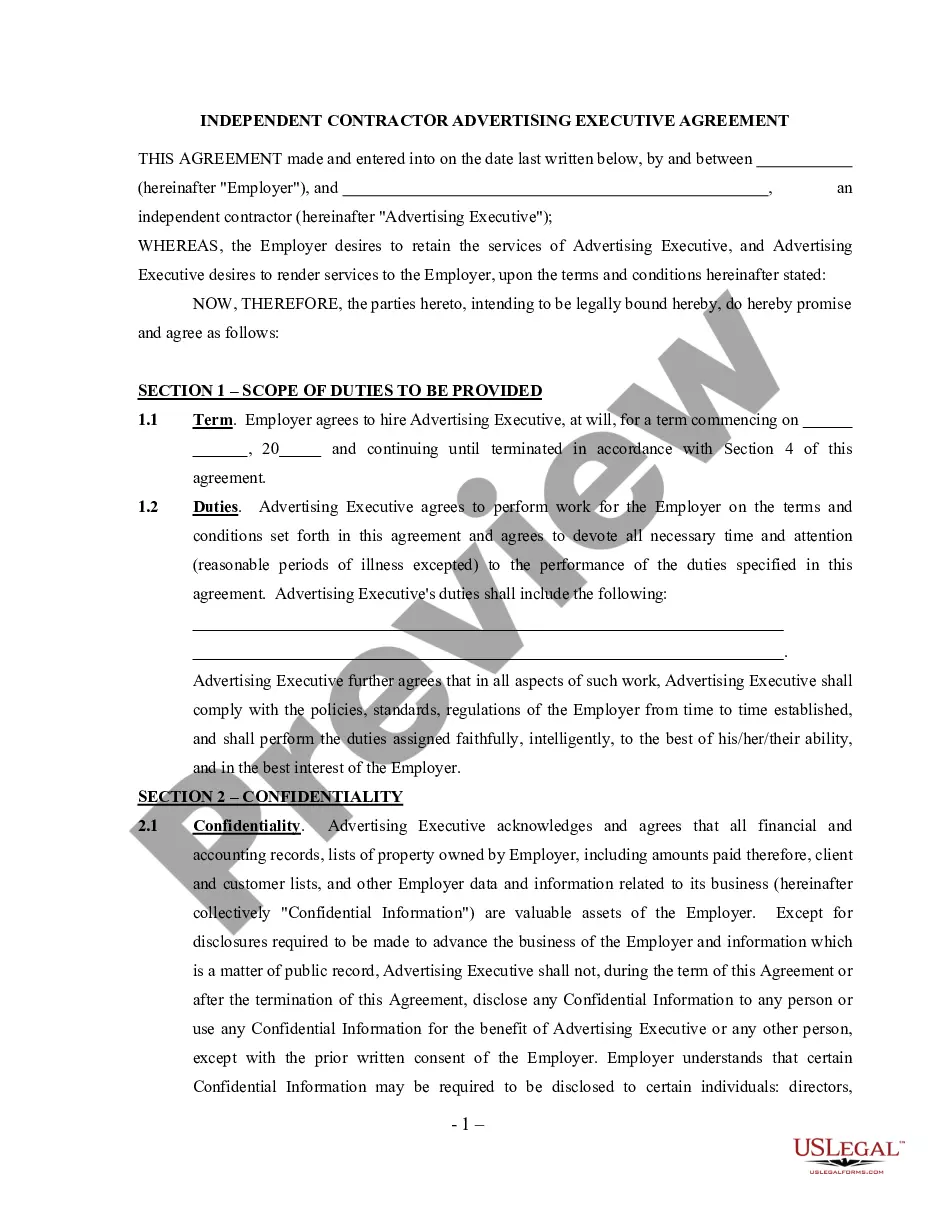
This form is a Contract with Independent Contractor to Perform Advertising Services to a Financial Services Business. It establishes a formal agreement between a client and an independent contractor for advertising services specifically tailored for financial services. This contract outlines the responsibilities, payment terms, and confidentiality agreements, differentiating it from other service contracts by its focus on advertising within the financial sector.
Key components of this form
- Date of the agreement
- Name and address of the client
- Name and address of the independent contractor
- Work to be performed, including management of Facebook advertising
- Contract term of three months
- Payment terms including amount and due dates
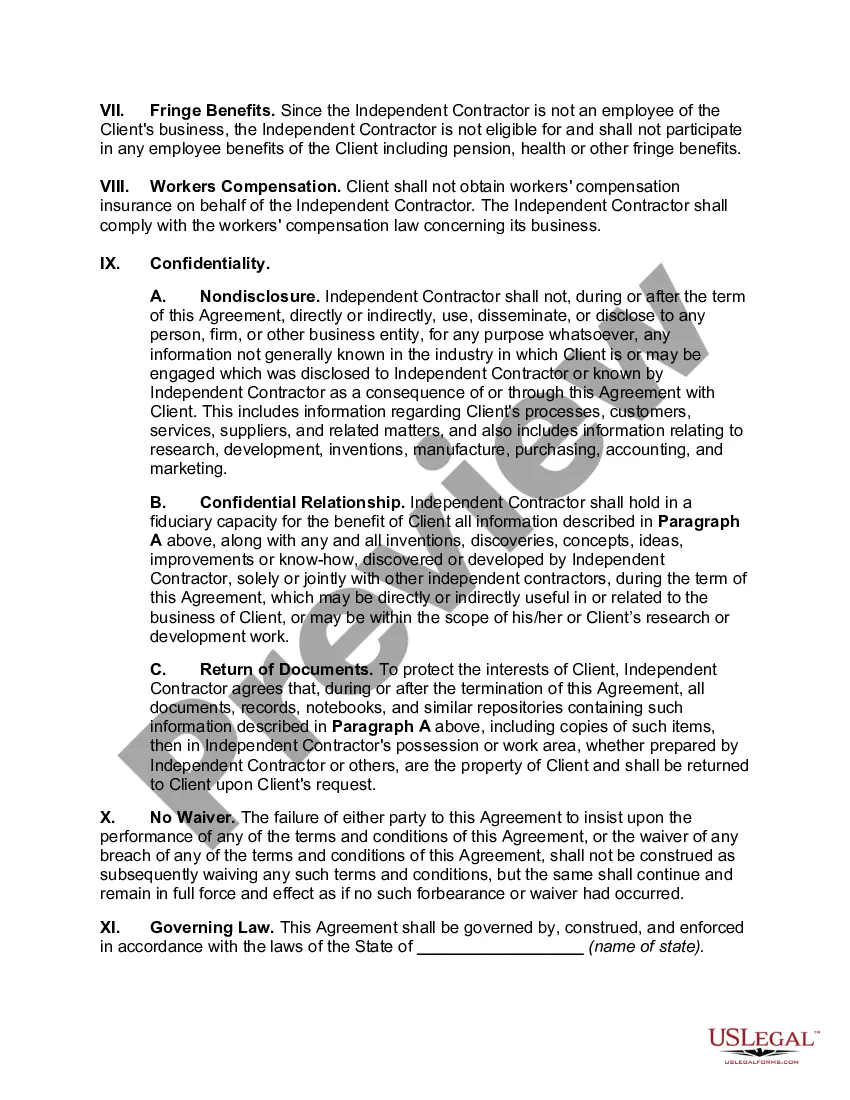
- Confidentiality obligations
- Governing law clause
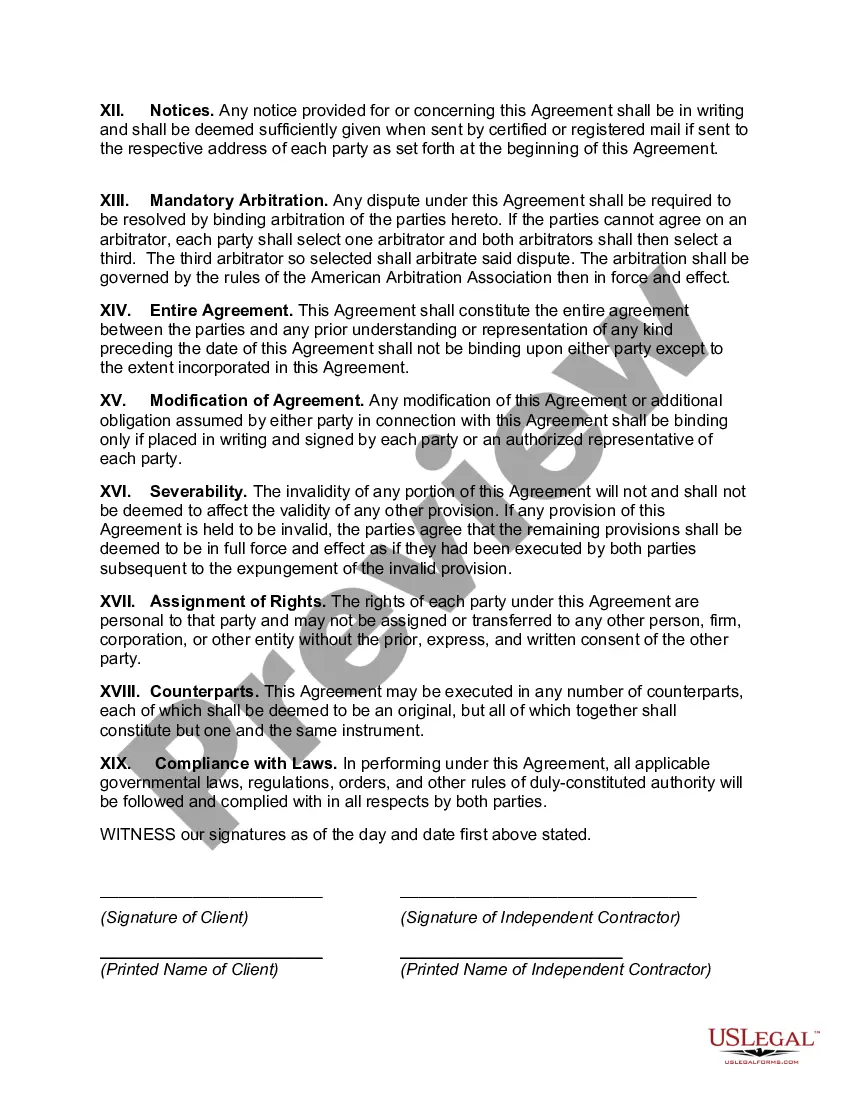
- Mandatory arbitration for dispute resolution

When to use this form
This form is essential when a financial services business seeks to engage an independent contractor for advertising tasks. It should be used when there is a need for clarity on the scope of work, payment, and confidentiality to protect sensitive information in the highly regulated financial industry.
Who this form is for
This form is intended for:
- Financial services businesses looking to contract independent advertising professionals
- Independent contractors specializing in advertising for financial services
- Business owners who want to formalize their working relationship with contractors
Instructions for completing this form
To complete this form, follow these steps:
- Identify and enter the date of the agreement.
- Fill in the names and addresses of both the client and the independent contractor.
- Specify the work to be performed, focusing on advertising tasks.
- Define the term of the contract, including start and end dates.
- Outline payment details, including the total amount and due date each month.
- Both parties should sign and print their names to finalize the agreement.
Notarization guidance
This form does not typically require notarization unless specified by local law. However, having it notarized can add an extra layer of validation, ensuring that signatures are genuine and agreements are taken seriously.
Get your form ready online
Our built-in tools help you complete, sign, share, and store your documents in one place.
Make edits, fill in missing information, and update formatting in US Legal Forms—just like you would in MS Word.
Download a copy, print it, send it by email, or mail it via USPS—whatever works best for your next step.
Sign and collect signatures with our SignNow integration. Send to multiple recipients, set reminders, and more. Go Premium to unlock E-Sign.
If this form requires notarization, complete it online through a secure video call—no need to meet a notary in person or wait for an appointment.
We protect your documents and personal data by following strict security and privacy standards.

Make edits, fill in missing information, and update formatting in US Legal Forms—just like you would in MS Word.

Download a copy, print it, send it by email, or mail it via USPS—whatever works best for your next step.

Sign and collect signatures with our SignNow integration. Send to multiple recipients, set reminders, and more. Go Premium to unlock E-Sign.

If this form requires notarization, complete it online through a secure video call—no need to meet a notary in person or wait for an appointment.

We protect your documents and personal data by following strict security and privacy standards.
Mistakes to watch out for
- Failing to clearly define the scope of work, which can lead to misunderstandings.
- Not specifying the payment schedule and terms, leading to potential disputes.
- Neglecting to address confidentiality, which can result in data breaches.
- Overlooking the need for signatures, making the agreement unenforceable.
Advantages of online completion
- Easy to customize for specific needs and circumstances.
- Provides a clear framework to protect both parties' interests.
- Legally binding and enforceable under state law.
- Streamlined process to ensure all necessary terms are included.
Legal use & context
- This contract is legally binding, provided that it meets all necessary legal requirements for contracts in your jurisdiction.
- Incorporating thorough confidentiality clauses helps protect business interests and trade secrets.
- Ensure compliance with local labor laws when engaging independent contractors.
Main things to remember
- The contract formalizes the relationship between the client and independent contractor.
- Clarity in terms helps prevent disputes and miscommunication.
- Understanding state-specific requirements is essential for enforceability.
- Completing this form accurately ensures legal protections for all parties involved.
Looking for another form?
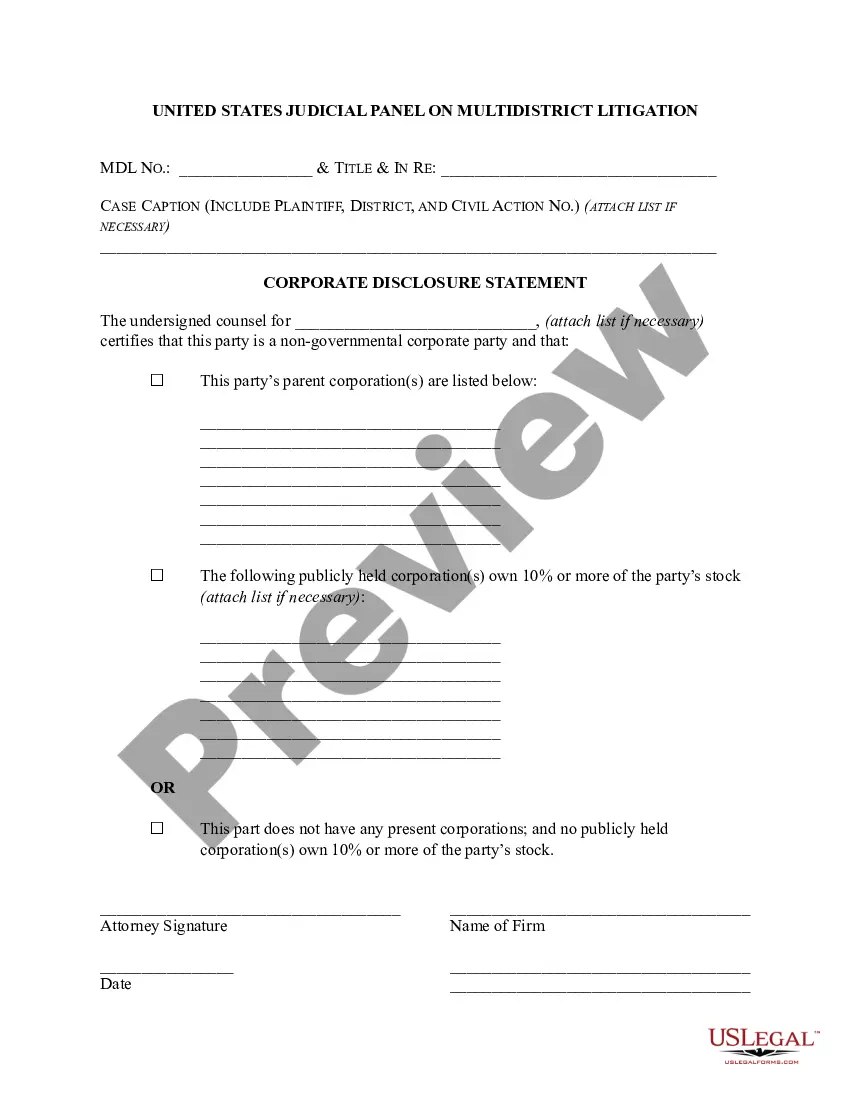
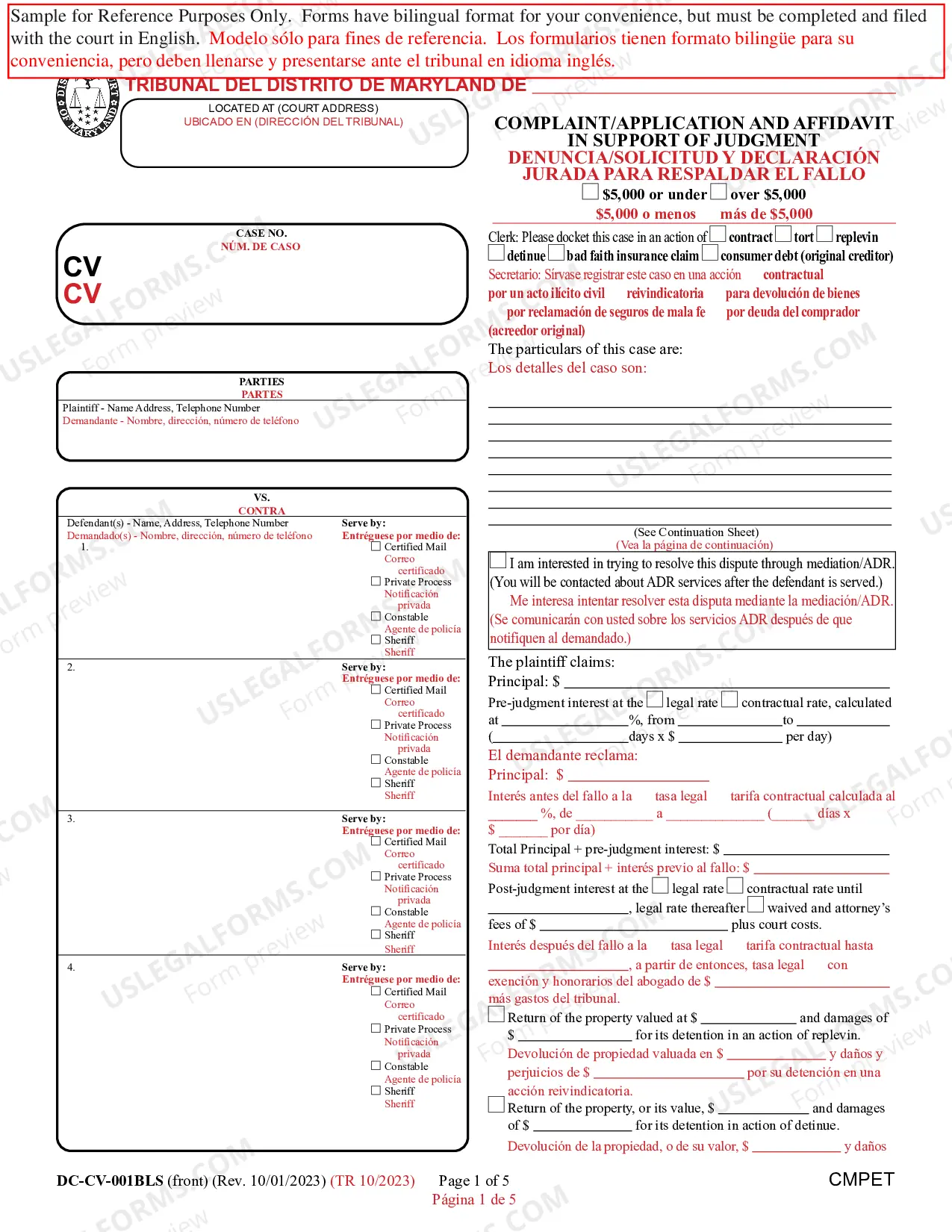
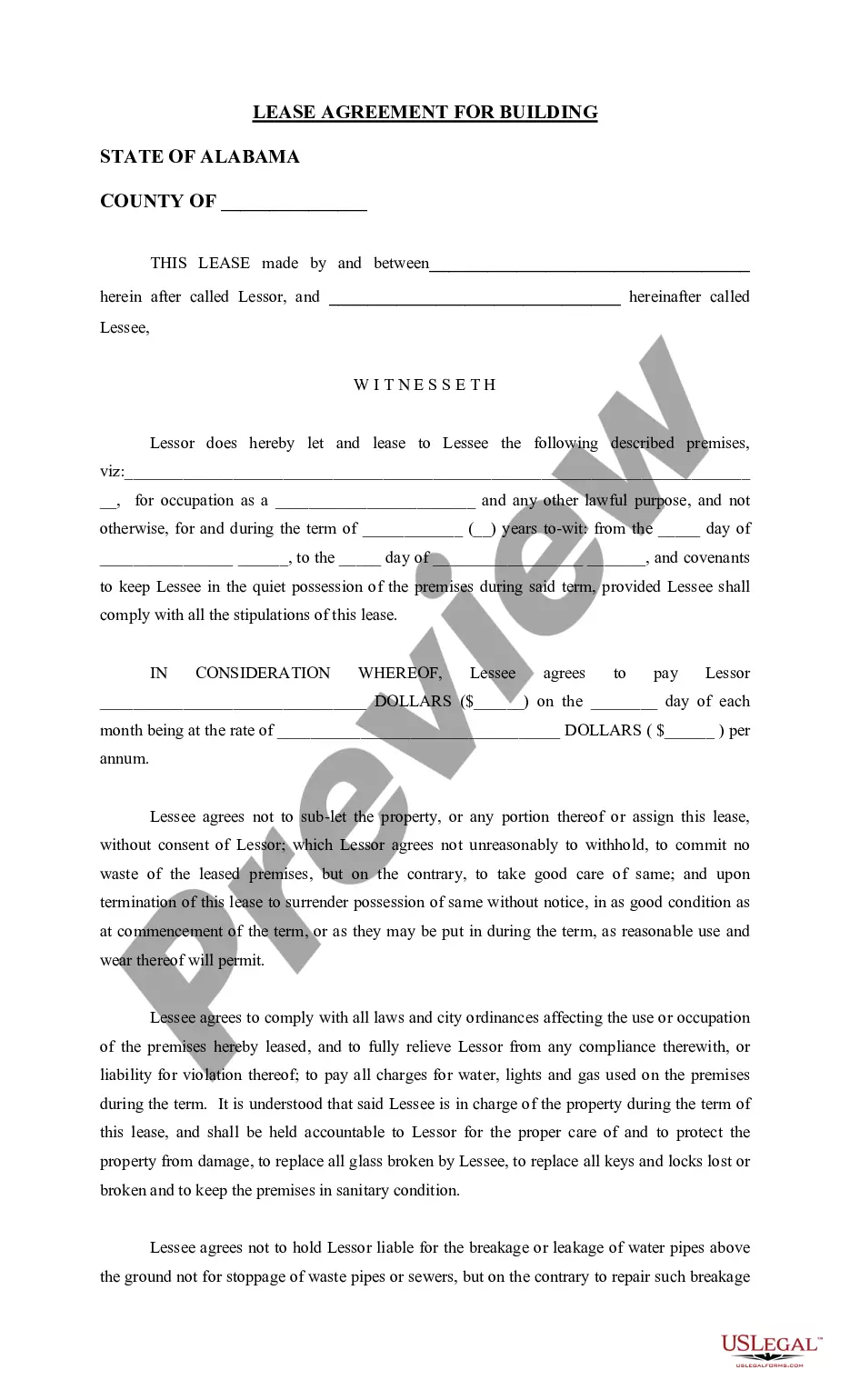


Form popularity
FAQ
Name of contractor and contact information. Name of homeowner and contact information. Describe property in legal terms. List attachments to the contract. The cost. Failure of homeowner to obtain financing. Description of the work and the completion date. Right to stop the project.
Simply put, being an independent contractor is one way to be self-employed. Being self-employed means that you earn money but don't work as an employee for someone else.An independent contractor is someone who provides a service on a contractual basis.
Do not designate someone as a 1099 Employee if: Company provides training on a certain method of job performance. Tools and materials are provided. Employees must follow set schedule. You provide benefits such as vacation, overtime pay, etc.
Finally, the new stimulus bill provides independent contractors with paid sick and paid family leave benefits through March 14, 2021.Under CARES Act II, unemployed or underemployed independent contractors who have an income mix from self-employment and wages paid by an employer are still eligible for PUA.
Terms. This is the first section of any agreement or contract and states the names and locations of the parties involved. Responsibilities & Deliverables. Payment-Related Details. Confidentiality Clause. Contract Termination. Choice of Law.
Liaising with the client to elucidate job requirements, as needed. Gathering the materials needed to complete the assignment. Overseeing the assignment, from inception to completion. Tailoring your approach to work to suit the job specifications, as required.
Get established as a business. Obtain professional materials like business cards and fliers. Build a social media presence. Set up a website.
The earnings of a person who is working as an independent contractor are subject to Self-Employment Tax. If you are an independent contractor, you are self-employed.You are not an independent contractor if you perform services that can be controlled by an employer (what will be done and how it will be done).