North Carolina General Warranty Deed from three Individuals to an Individual
Overview of this form
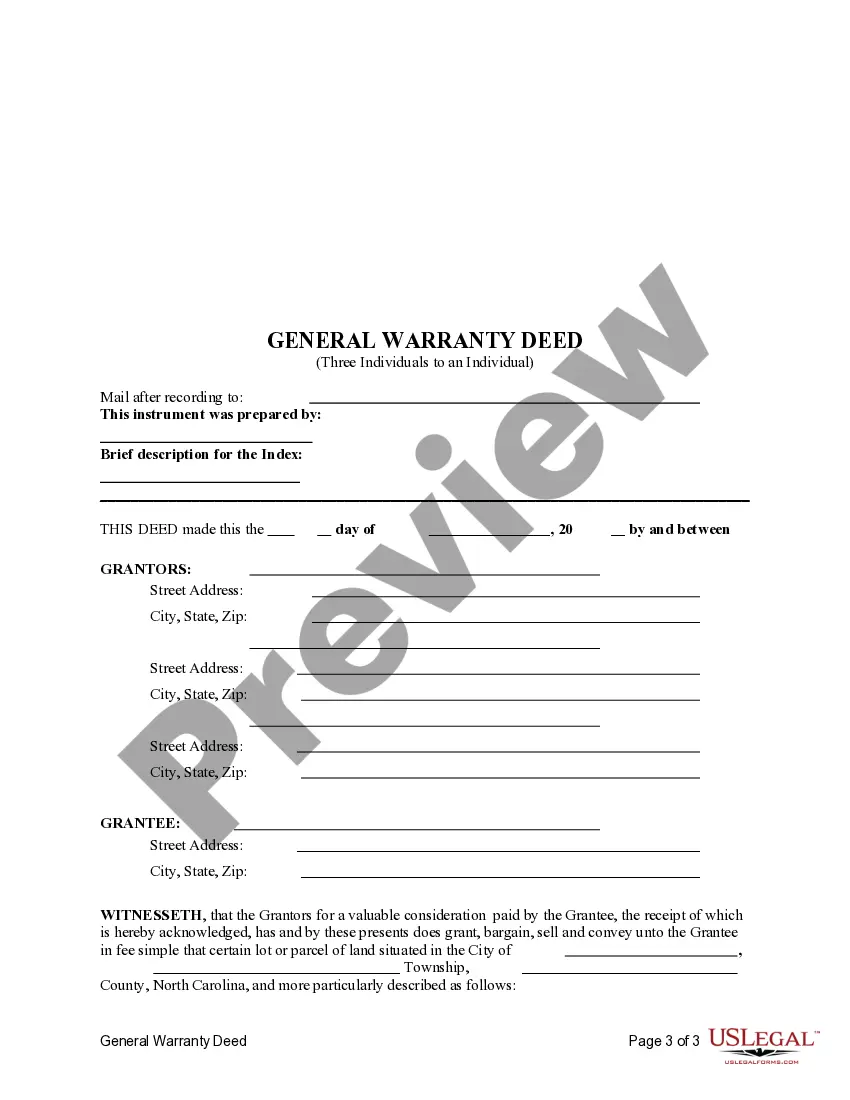
The General Warranty Deed from three individuals to an individual is a legal document that allows three Grantors to convey property to one Grantee while providing a guarantee of clear title. This deed ensures that the Grantors defend the title against future claims, differentiating it from less comprehensive deeds, such as quitclaim deeds. It is vital for securing property transfers and protecting the interests of the Grantee.
Key components of this form
- Identification of the Grantors (three individuals) and the Grantee (an individual).
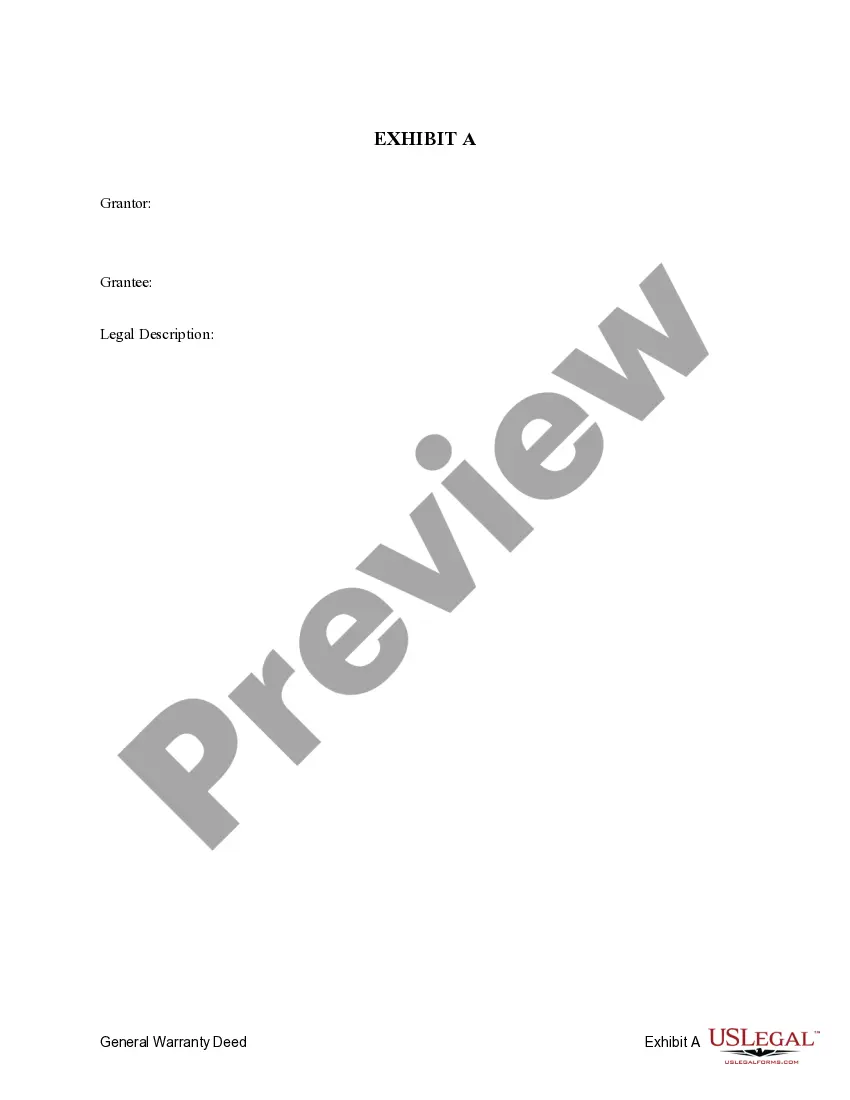
- Description of the property being transferred.
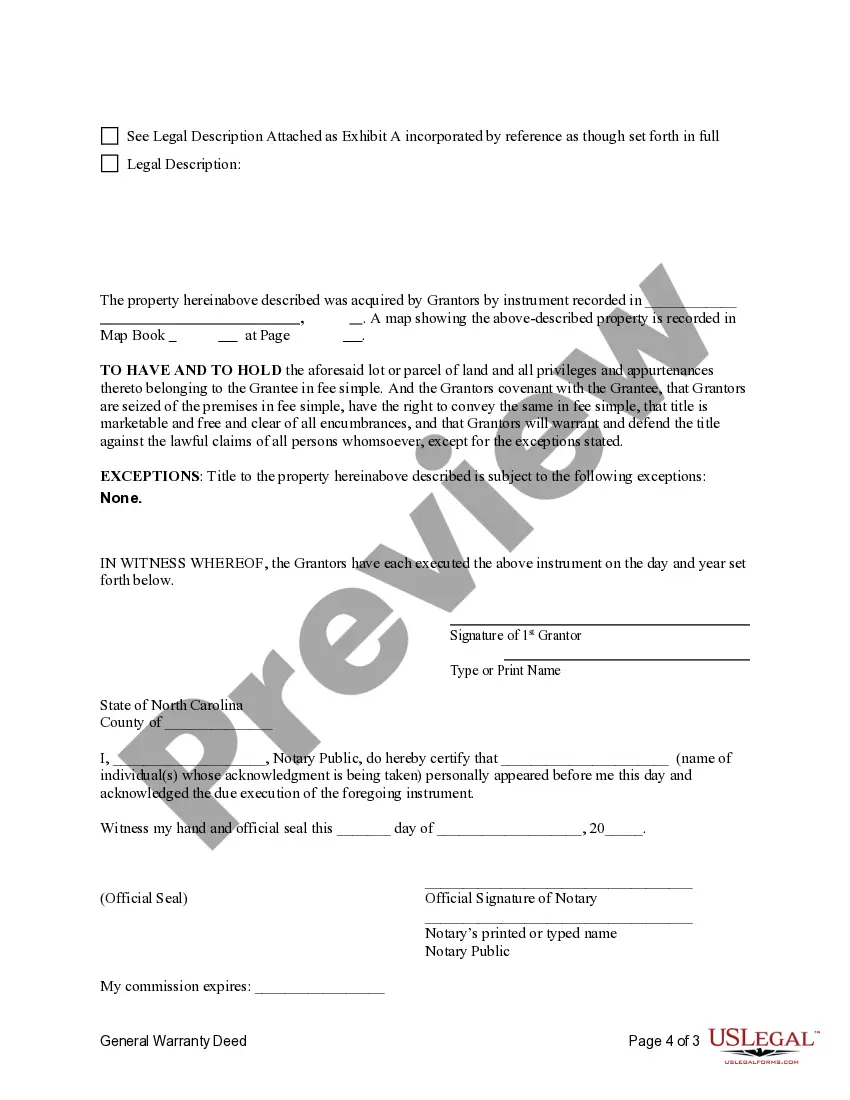
- Warranties and assurances regarding the title's validity.
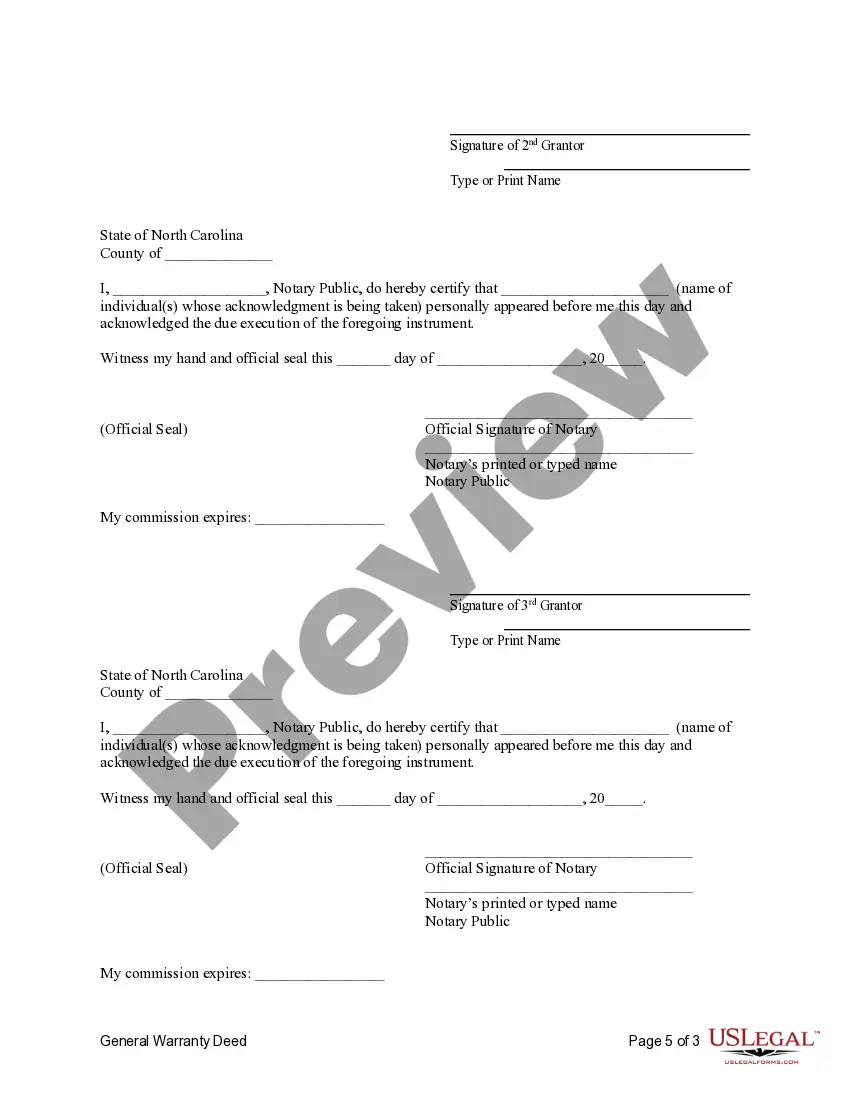
- Execution section where Grantors sign and date the deed.
- State compliance clause that confirms adherence to local statutory laws.





Situations where this form applies
This form is necessary when three individuals wish to transfer ownership of property to one individual. It is commonly used in real estate transactions, such as when transferring family property, consolidating ownership, or formalizing a property settlement after a divorce. Utilizing a General Warranty Deed ensures the Grantee receives the highest level of protection against future claims to the property.
Who can use this document
This form is intended for:
- Property owners looking to transfer ownership to another individual.
- Individuals involved in estate plans or settlements requiring a formal deed transfer.
- Real estate professionals facilitating transactions on behalf of clients.
Completing this form step by step
- Identify the three Grantors by providing their full names and addresses.
- Specify the Grantee's full name and address.
- Enter a detailed description of the property being transferred, including its boundaries.
- Review the warranties and ensure that all necessary clauses are included.
- Have all three Grantors sign the deed and include the date of signing.
- Make sure the form is properly formatted and storage instructions are followed.
Is notarization required?
Notarization is required for this form to take effect. Our online notarization service, powered by Notarize, lets you verify and sign documents remotely through an encrypted video session, available 24/7.
Get your form ready online
Our built-in tools help you complete, sign, share, and store your documents in one place.
Make edits, fill in missing information, and update formatting in US Legal Forms—just like you would in MS Word.
Download a copy, print it, send it by email, or mail it via USPS—whatever works best for your next step.
Sign and collect signatures with our SignNow integration. Send to multiple recipients, set reminders, and more. Go Premium to unlock E-Sign.
If this form requires notarization, complete it online through a secure video call—no need to meet a notary in person or wait for an appointment.
We protect your documents and personal data by following strict security and privacy standards.

Make edits, fill in missing information, and update formatting in US Legal Forms—just like you would in MS Word.

Download a copy, print it, send it by email, or mail it via USPS—whatever works best for your next step.

Sign and collect signatures with our SignNow integration. Send to multiple recipients, set reminders, and more. Go Premium to unlock E-Sign.

If this form requires notarization, complete it online through a secure video call—no need to meet a notary in person or wait for an appointment.

We protect your documents and personal data by following strict security and privacy standards.
Typical mistakes to avoid
- Incorrectly identifying Grantors or Grantee.
- Failing to include a clear and accurate property description.
- Omissions in the signing and dating process.
- Not verifying compliance with local laws.
Advantages of online completion
- Convenience of accessing and completing the form from anywhere.
- Editability allows users to ensure accurate and complete information is entered.
- Reliability of legally compliant templates drafted by licensed attorneys.
Legal use & context
- The General Warranty Deed guarantees the Grantee against future claims on the property.
- It is enforceable in a court of law, providing legal protection for the Grantee.
- Ensure all local requirements are met to avoid potential disputes over ownership.
Looking for another form?
Form popularity
FAQ
The answer is yes. Parties to a transaction are always free to prepare their own deeds. If you do so, be sure your deed measures up to your state's legal regulations, to help avert any legal challenge to the deed later.
To make the form legally binding, you must sign it in front of a notary public. You must then file your signed and notarized deed with the county office that's in charge of recording property documents. Once the grantee signs the warranty deed, he/she legally has ownership and claim to the property.
The name and address of the seller (called the grantor) The name and address of the buyer (called the grantee) A legal description of the property (found on the previous deed) A statement that the grantor is transferring the property to the grantee.
To transfer ownership of land in North Carolina, the owner must execute and file a new deed with the register of deeds for the North Carolina county where the property is located.
The name and address of the seller (called the grantor) The name and address of the buyer (called the grantee) A legal description of the property (found on the previous deed) A statement that the grantor is transferring the property to the grantee.
Under the Grantor section of the deed, write the name of the person transferring title. Under Grantee, write the name of the person receiving title. Describe the parcel of land. Use the street address and include the North Carolina County where the land is located.