Sample Privacy Policy Notice Provisions Appropriate for Web Site Directed Toward Children
Overview of this form
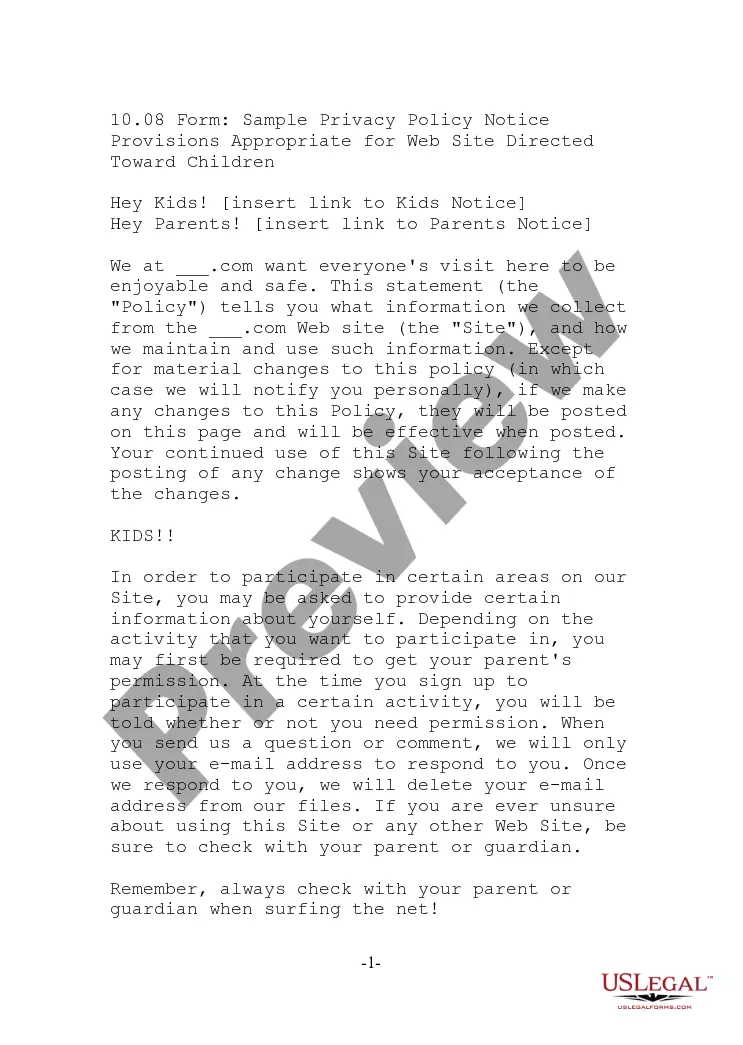
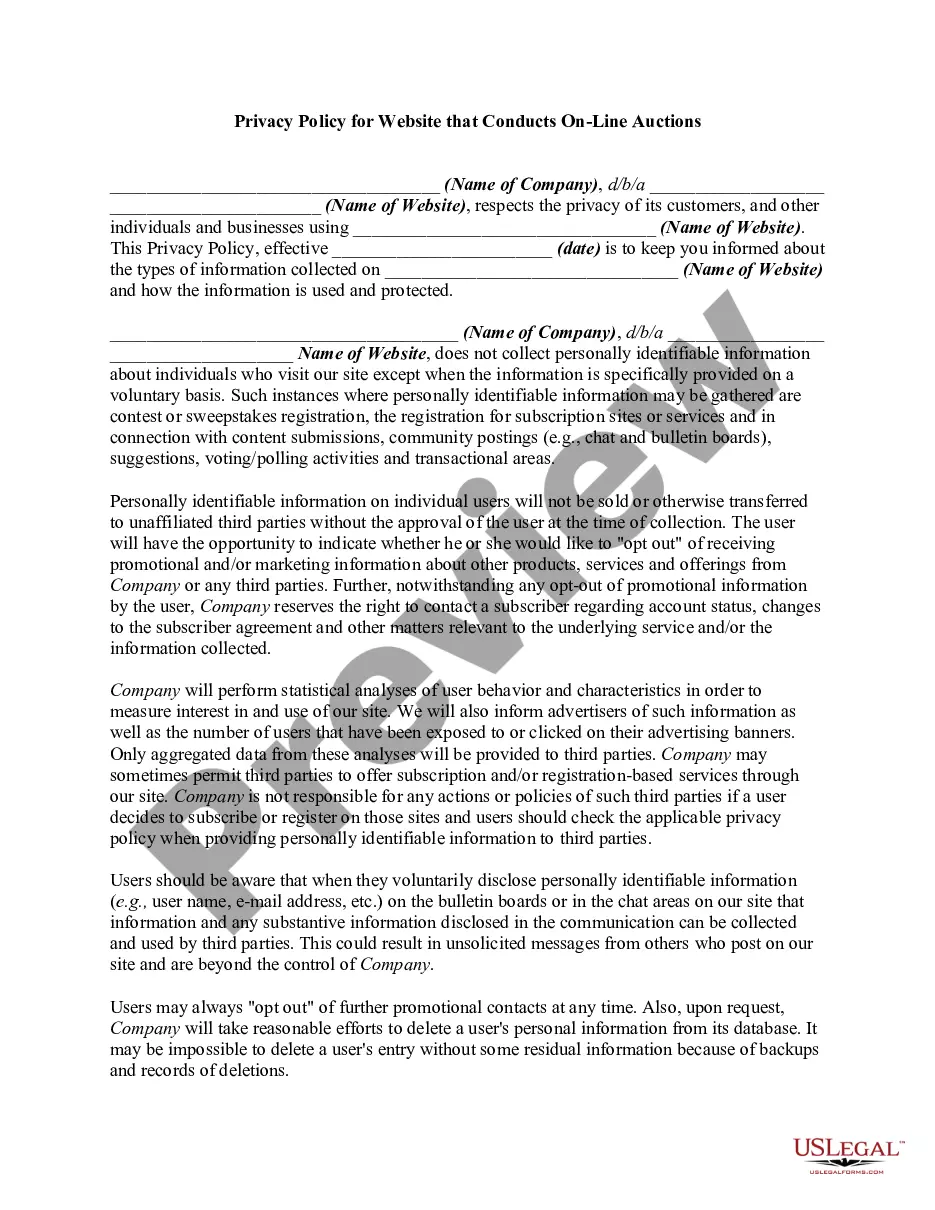
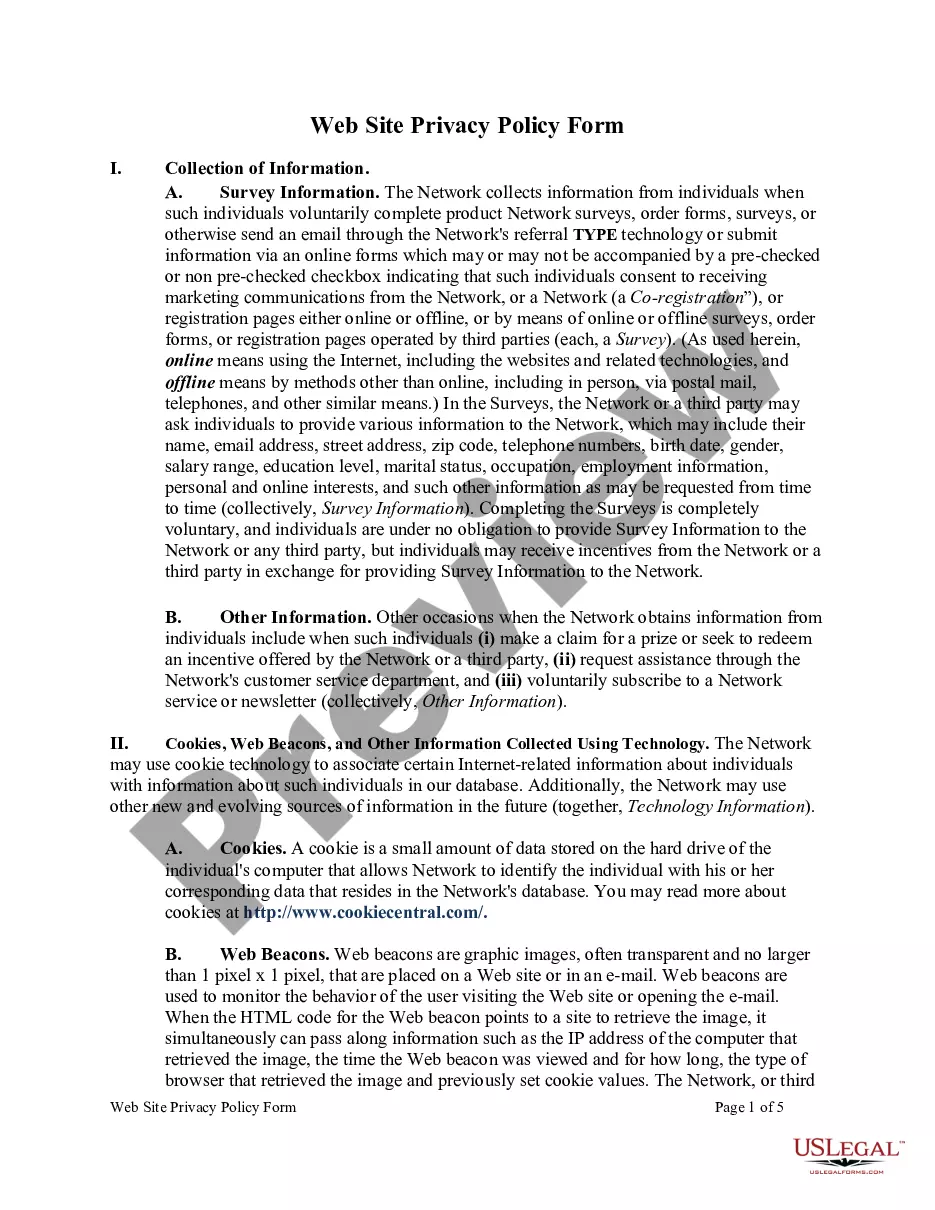
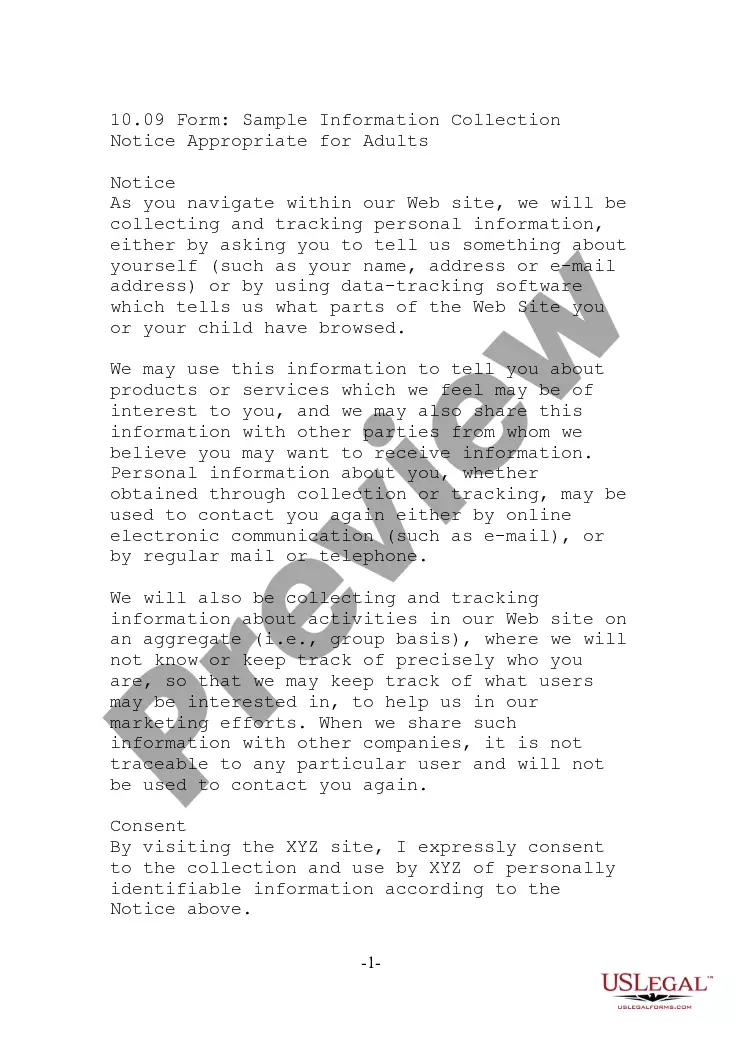
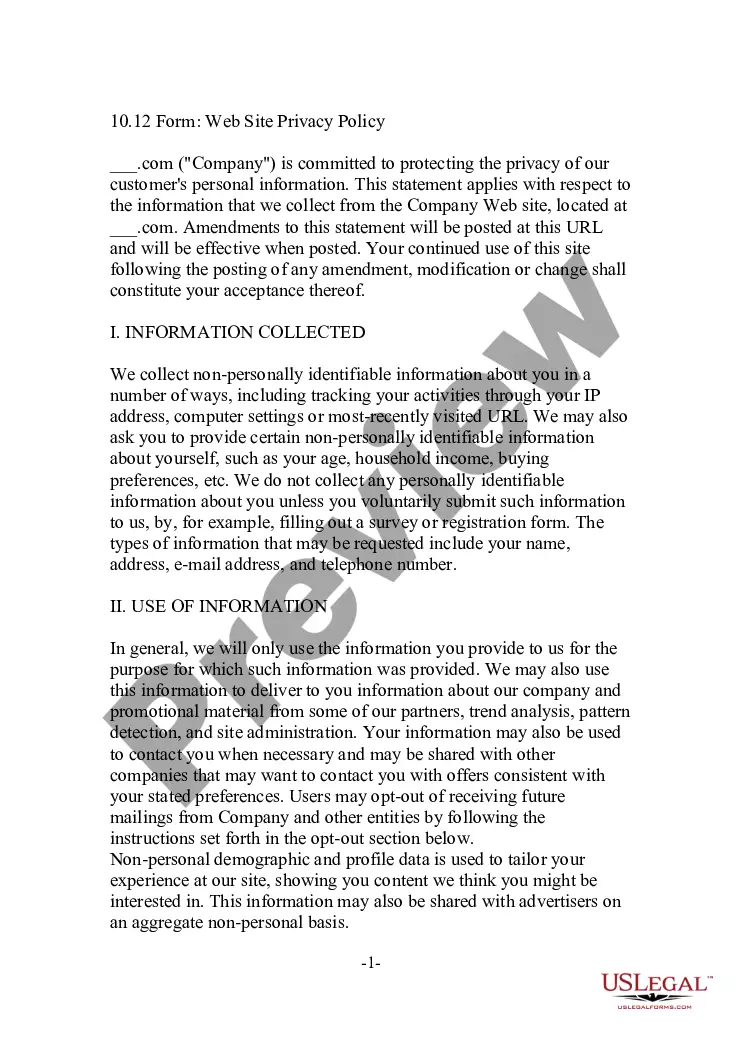
The Sample Privacy Policy Notice Provisions Appropriate for Web Site Directed Toward Children is a legal document designed to help websites communicate their privacy practices clearly to children and their parents. This form outlines how each site collects, uses, and protects personal information from young users, ensuring compliance with child privacy laws. It differs from other privacy policy templates by focusing specifically on practices for websites that anticipate interaction with children, ensuring that adequate safeguards are in place.
Main sections of this form
- Introduction: A welcoming statement that establishes the purpose of the privacy policy.
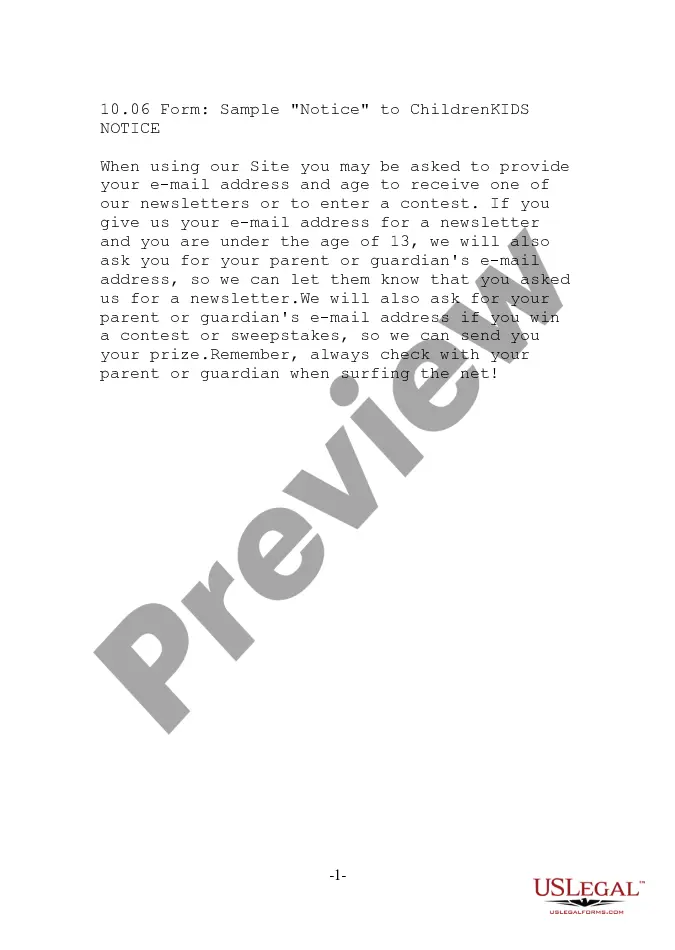
- Kids Notice: Instructions for children regarding participation and personal information collection.
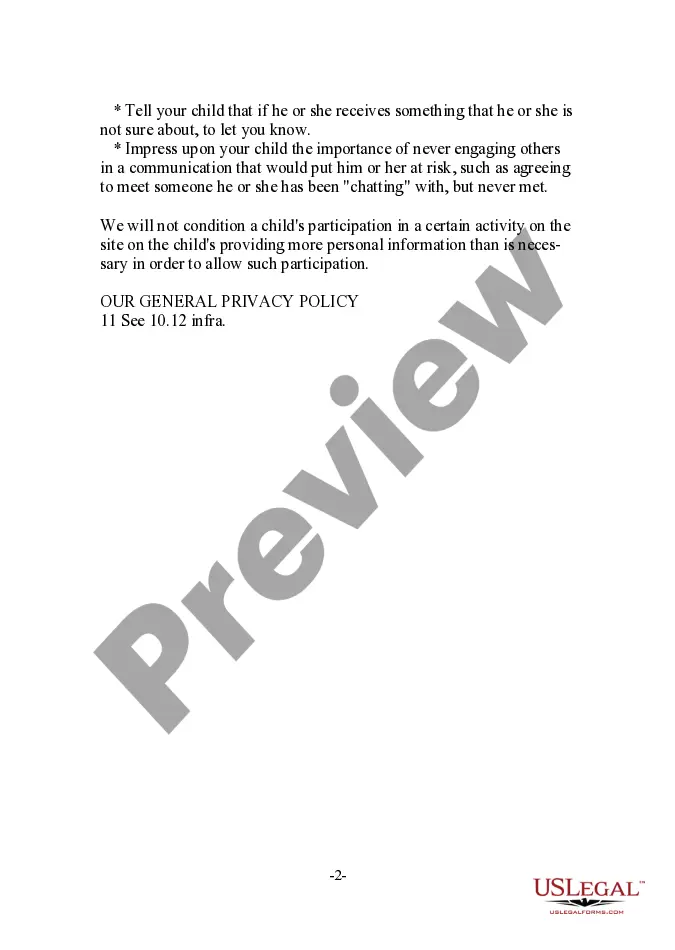
- Parents Notice: Guidance for parents on discussing internet safety and their child's participation.
- Information collection outline: Details on what information is collected and how it will be used.
- Policy update procedure: Explanation of how users will be notified of changes to the policy.
When to use this document
This privacy policy form should be used by any website that is aimed at children or has sections that are accessible to younger audiences. If your site allows children to engage in activities such as requesting information, signing up for newsletters, or submitting questions, this form is essential to ensure you meet federal and state privacy regulations. It serves to protect both the site operator and the children's privacy rights.
Who this form is for
Website owners and operators, particularly those who:
- Target children as part of their audience.
- Offer content, services, or products for children.
- Individuals or businesses providing educational resources for young users.
- Parents looking to safeguard their children's online interactions.
Steps to complete this form
- Identify your website and insert the name where indicated.
- Include specific details on childrenâs activities that may require parental permission.
- Outline how personal information will be used and safeguarded.
- Provide updates on how users will be notified of changes to the privacy policy.
- Ensure that content is reviewed by legal counsel to ensure compliance with local laws.
Does this form need to be notarized?
This form does not typically require notarization unless specified by local law. It is sufficient to complete and publish it on your website as part of your privacy practices.
Get your form ready online
Our built-in tools help you complete, sign, share, and store your documents in one place.
Make edits, fill in missing information, and update formatting in US Legal Forms—just like you would in MS Word.
Download a copy, print it, send it by email, or mail it via USPS—whatever works best for your next step.
Sign and collect signatures with our SignNow integration. Send to multiple recipients, set reminders, and more. Go Premium to unlock E-Sign.
If this form requires notarization, complete it online through a secure video call—no need to meet a notary in person or wait for an appointment.
We protect your documents and personal data by following strict security and privacy standards.

Make edits, fill in missing information, and update formatting in US Legal Forms—just like you would in MS Word.

Download a copy, print it, send it by email, or mail it via USPS—whatever works best for your next step.

Sign and collect signatures with our SignNow integration. Send to multiple recipients, set reminders, and more. Go Premium to unlock E-Sign.

If this form requires notarization, complete it online through a secure video call—no need to meet a notary in person or wait for an appointment.

We protect your documents and personal data by following strict security and privacy standards.
Common mistakes to avoid
- Failing to obtain parental permission when required by the policy.
- Using overly complicated legal language that may confuse users.
- Neglecting to update the policy when there are changes in information collection practices.
- Not providing clear instructions for children on internet safety.
Benefits of completing this form online
- Convenient download: Access the privacy policy quickly and easily online.
- Editability: Tailor the form to your specific needs and circumstances.
- Comprehensive guidance: The form covers essential areas to protect childrenâs privacy effectively.
- Legal Assurance: Created by licensed attorneys, ensuring compliance with applicable laws.
Legal use & context
- This policy is necessary to comply with COPPA regulations aimed at protecting children's privacy online.
- Clear communication about data usage helps in building trust with parents.
- Failure to have a compliant privacy policy can result in legal repercussions for the website owner.
What to keep in mind
- The form provides essential privacy protection for sites directed at children.
- It's important to involve parents in discussions about childrenâs online safety.
- Regular updates to the policy are crucial for compliance and transparency.
- Adapting this form to meet specific legal requirements in your state can enhance its effectiveness.
Looking for another form?
Form popularity
FAQ
The first thing to include in your privacy notice is the name, address, email address and telephone number of your organisation. If you've appointed a DPO (data protection officer) or EU representative, you should also include their contact details.
Write your Privacy Policy in plain, easy-to-understand language. Update your policy regularly to reflect changes in the law, in your business, or within your protocols. Notify users of these updates, and include the effective date with your policy. Be transparent and remain true to your commitment to user privacy.
Log in to your WP site backend and open your Dashboard: Hover your mouse over Pages and select Add New in the Pages submenu that opens: Name your page "Privacy Policy" and paste your Policy text in the body of the page:
Your policy should disclose that your site will collect and maintain personal information provided by its users, including their names, addresses, mobile telephone numbers, email addresses, and so forth.
The first thing to include in your privacy notice is the name, address, email address and telephone number of your organisation. If you've appointed a DPO (data protection officer) or EU representative, you should also include their contact details.
Your policy should disclose that your site will collect and maintain personal information provided by its users, including their names, addresses, mobile telephone numbers, email addresses, and so forth.
Use of Information. This section should explain to your users how and why you use the information that you collect from them. Third Party Disclosure. Information Protection. Cookies. Notification of Changes. Contact Information.
Inform your store visitors about the private data you collect and manage. Give your visitors a choice to opt in and opt out. Give your visitors access to the information you and third parties collect. Inform your visitors of how you secure their data.
Write your Privacy Policy in plain, easy-to-understand language. Update your policy regularly to reflect changes in the law, in your business, or within your protocols. Notify users of these updates, and include the effective date with your policy. Be transparent and remain true to your commitment to user privacy.