Sample Letter to Client - Deposition of Client Scheduled
Overview of this form
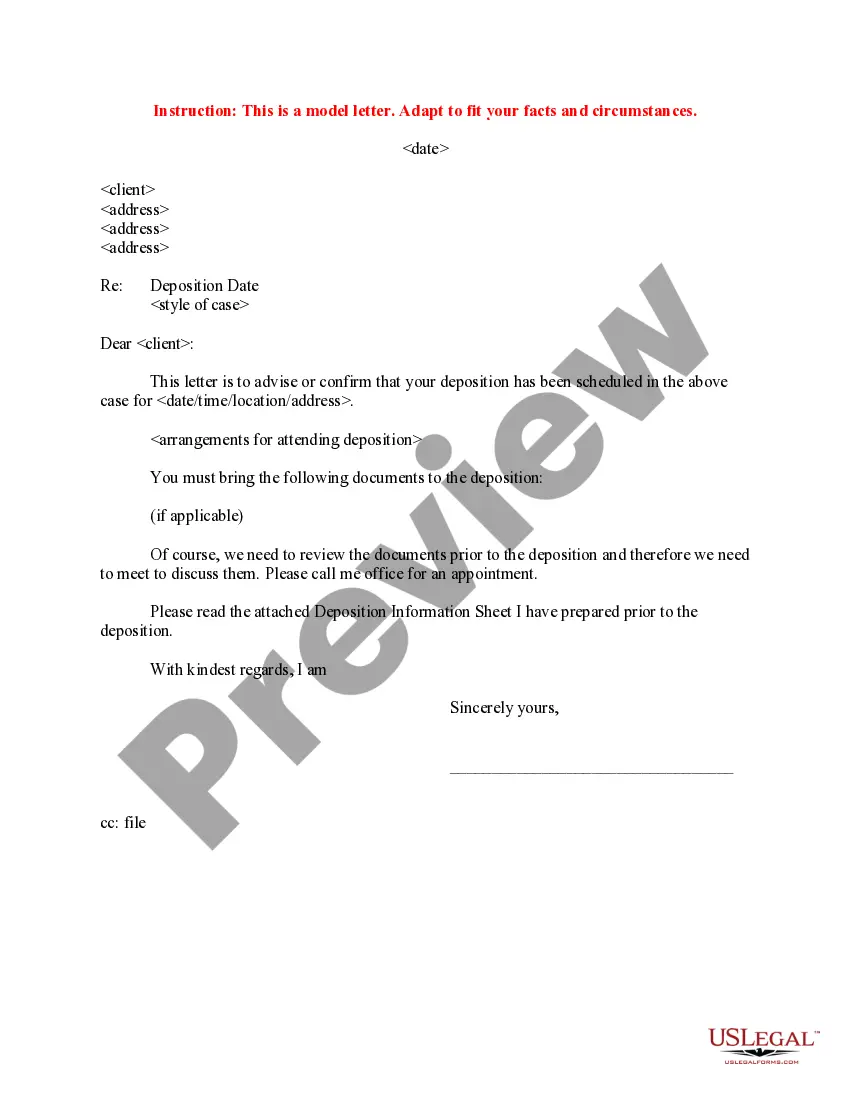
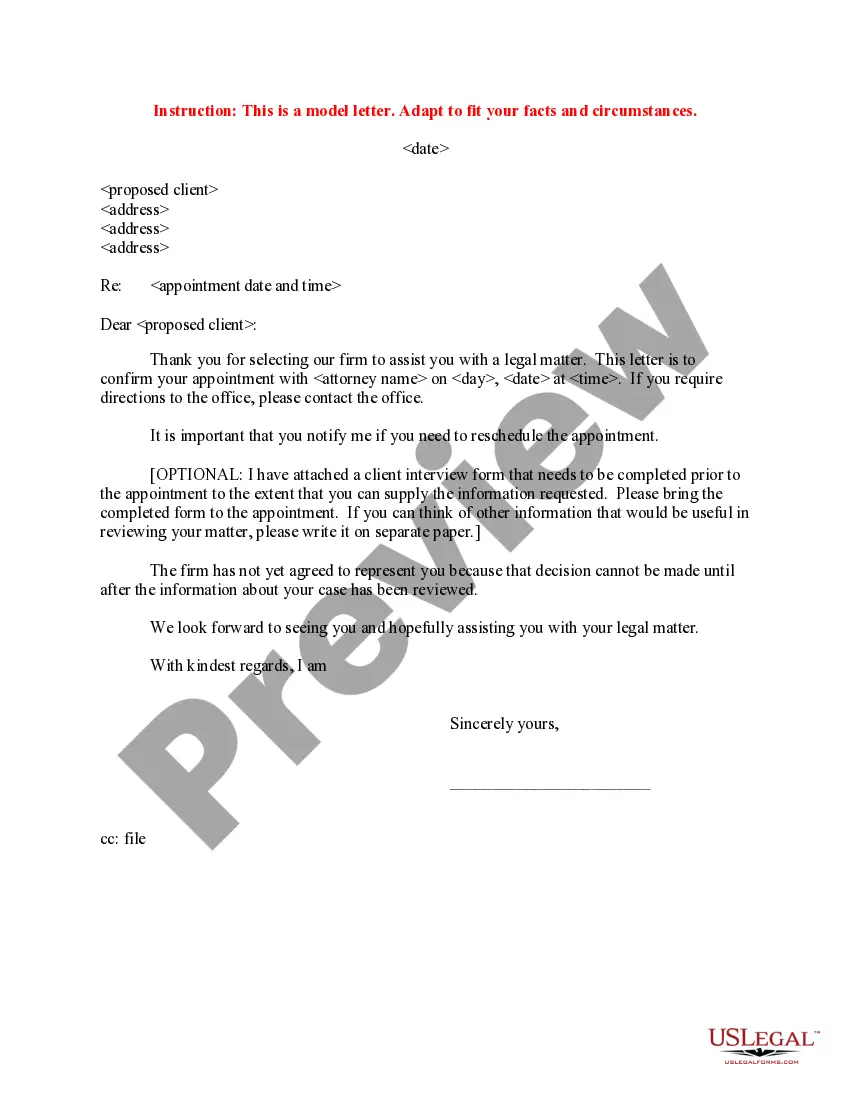
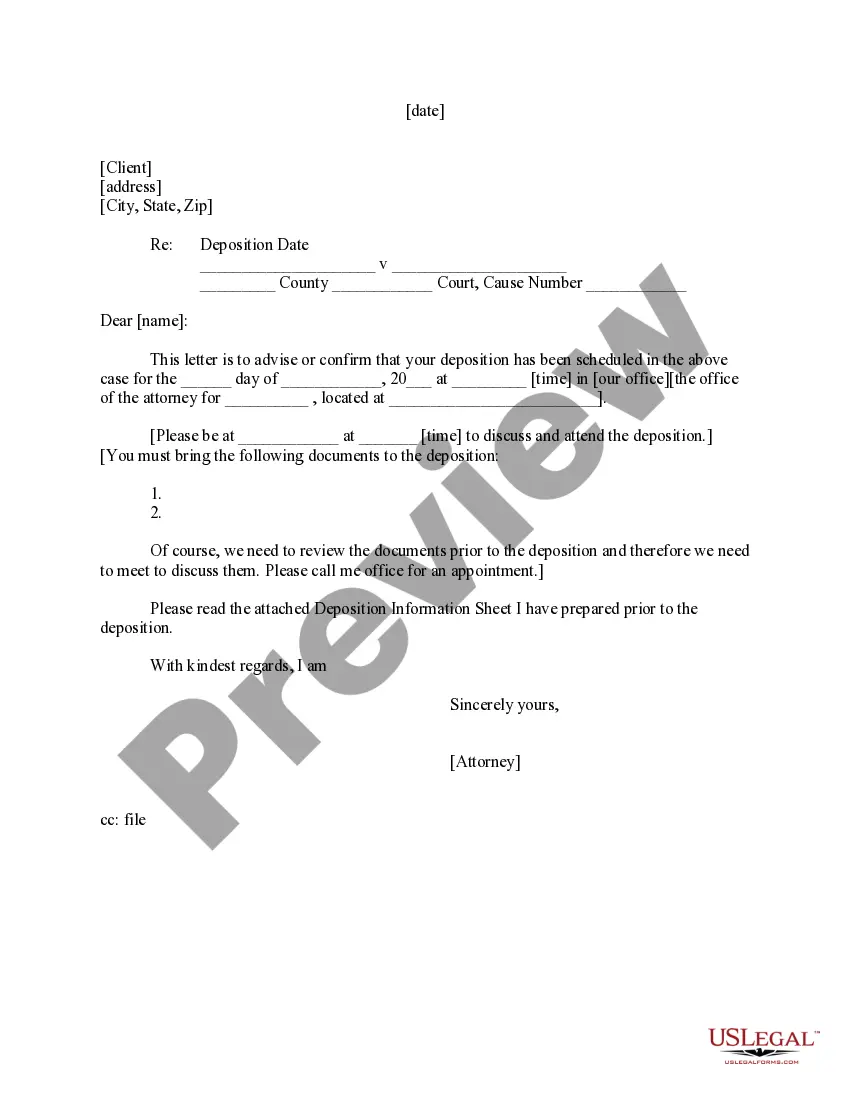
The Sample Letter to Client - Deposition of Client Scheduled is a crucial document that formally notifies a client of their upcoming deposition in a legal case. Unlike generic correspondence, this letter is tailored to assure the client that their participation is essential and outlines important details, including date, time, and location. It serves as a clear guide to help clients prepare adequately for their deposition session.
What’s included in this form
- Date of the deposition.
- Client's full name and address.
- Case style and title.
- Date, time, and location of the deposition.
- List of documents the client must bring.
- Instructions for scheduling a preparatory meeting.
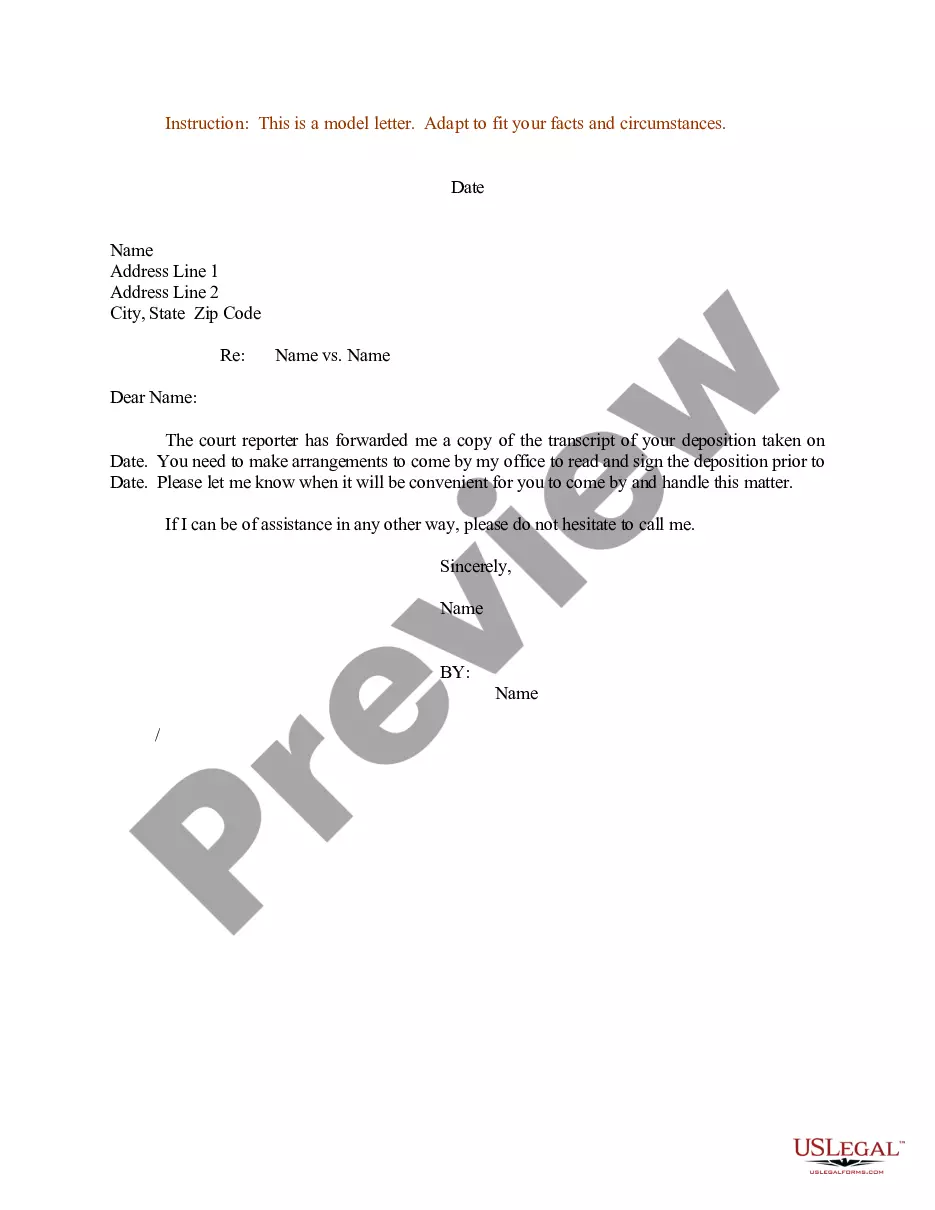
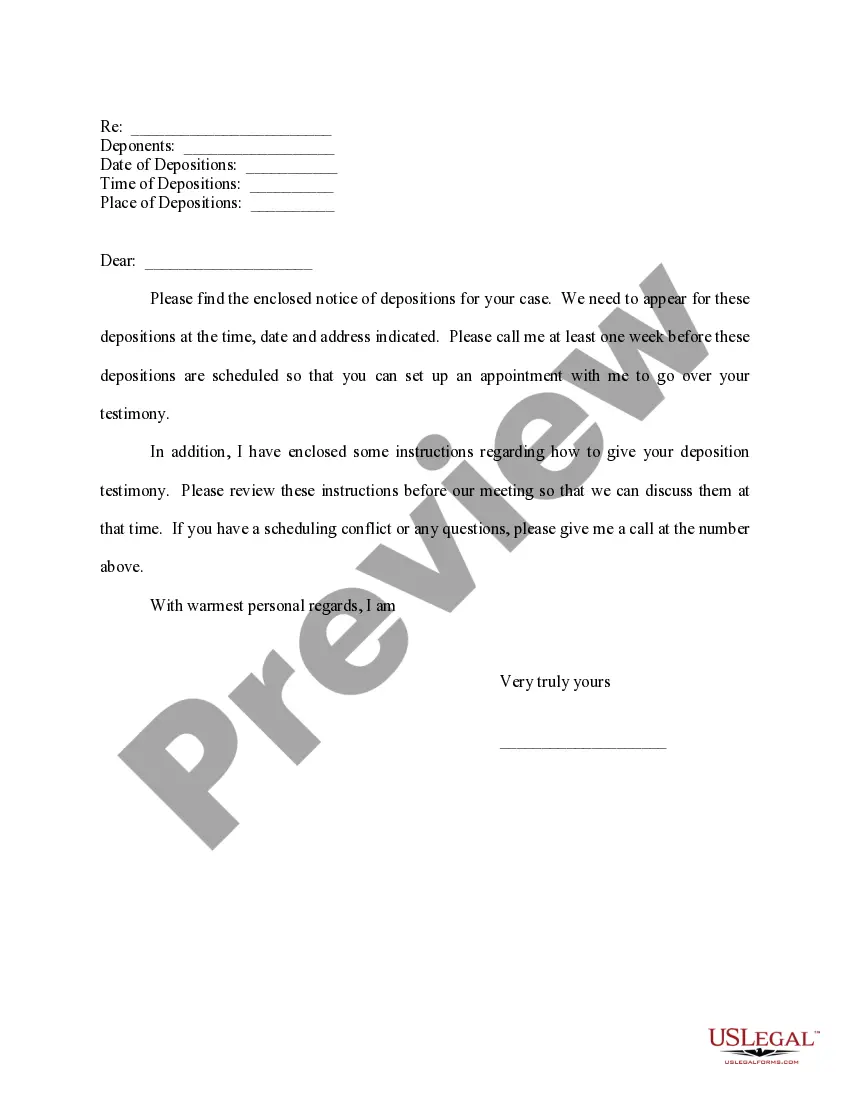
When to use this form
This form is useful whenever a client is involved in a legal case that requires a deposition. It ensures clear communication of the scheduling details, allowing the client to prepare mentally and gather necessary documentation. This letter is particularly important in civil litigation where the deposition plays a key role in evidence gathering.
Who can use this document
- Attorneys preparing for a deposition with their clients.
- Legal assistants responsible for client communications.
- Law firms that need to keep clients informed about deposition schedules.
Steps to complete this form
- Enter the date of the letter in the designated field.
- Fill in the client's name and address accurately.
- Specify the case style and title for clarity.
- Clearly state the date, time, and location of the deposition.
- List any documents that the client needs to bring to the deposition.
- Provide contact information for arranging a preparatory meeting as needed.
Notarization guidance
This form does not typically require notarization to be legally valid. However, some jurisdictions or document types may still require it. US Legal Forms provides secure online notarization powered by Notarize, available 24/7 for added convenience.
Get your form ready online
Our built-in tools help you complete, sign, share, and store your documents in one place.
Make edits, fill in missing information, and update formatting in US Legal Forms—just like you would in MS Word.
Download a copy, print it, send it by email, or mail it via USPS—whatever works best for your next step.
Sign and collect signatures with our SignNow integration. Send to multiple recipients, set reminders, and more. Go Premium to unlock E-Sign.
If this form requires notarization, complete it online through a secure video call—no need to meet a notary in person or wait for an appointment.
We protect your documents and personal data by following strict security and privacy standards.

Make edits, fill in missing information, and update formatting in US Legal Forms—just like you would in MS Word.

Download a copy, print it, send it by email, or mail it via USPS—whatever works best for your next step.

Sign and collect signatures with our SignNow integration. Send to multiple recipients, set reminders, and more. Go Premium to unlock E-Sign.

If this form requires notarization, complete it online through a secure video call—no need to meet a notary in person or wait for an appointment.

We protect your documents and personal data by following strict security and privacy standards.
Common mistakes
- Failing to include the correct date and time of the deposition.
- Not specifying the documents the client should bring.
- Using vague or unclear language that may confuse the client.
Advantages of online completion
- Convenient downloading of the ready-to-use template.
- Editability allows for quick customization based on specific cases.
- Reliability as the letter is drafted by licensed attorneys.
Legal use & context
Using a well-structured deposition notice like this reflects professionalism and ensures that all parties are adequately informed, thereby streamlining the legal process. Proper notice is essential for the legal enforceability of the deposition.
Summary of main points
- This form serves as a formal notification for a scheduled deposition.
- It includes essential information that clients need for preparation.
- Understanding when and how to use this form is critical for effective legal communication.
Looking for another form?
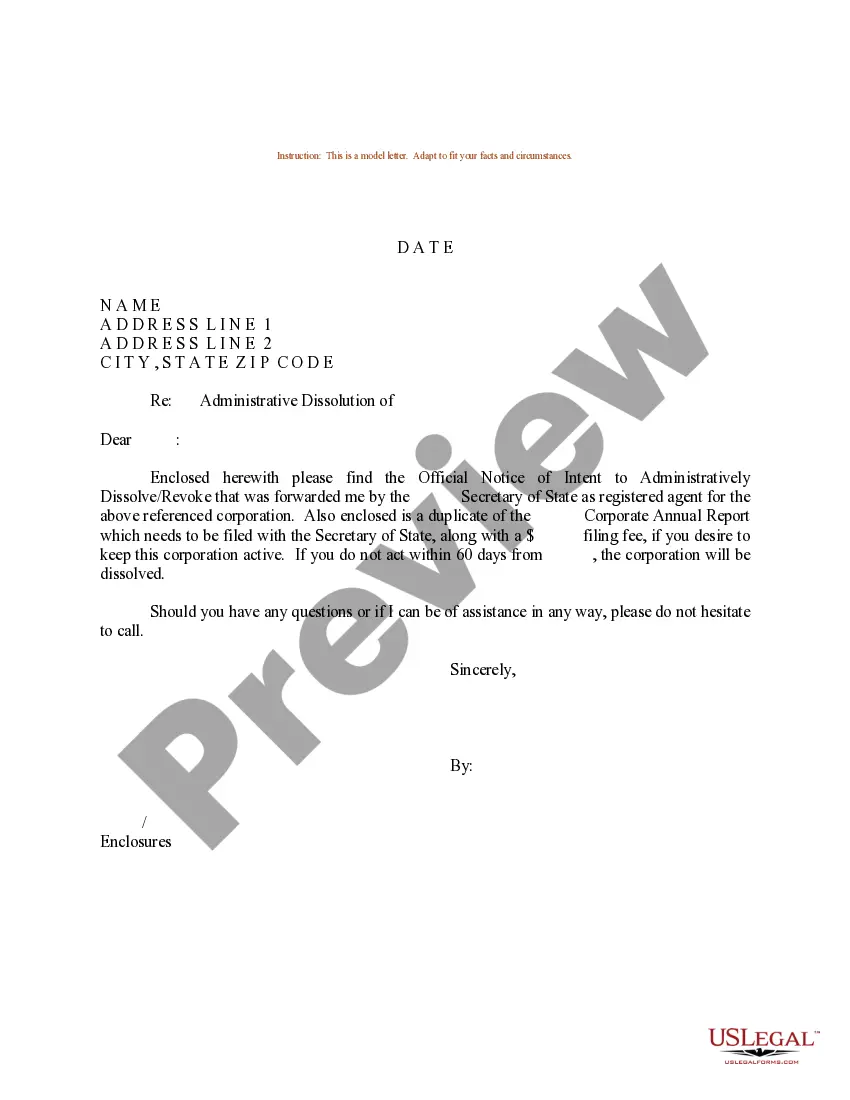
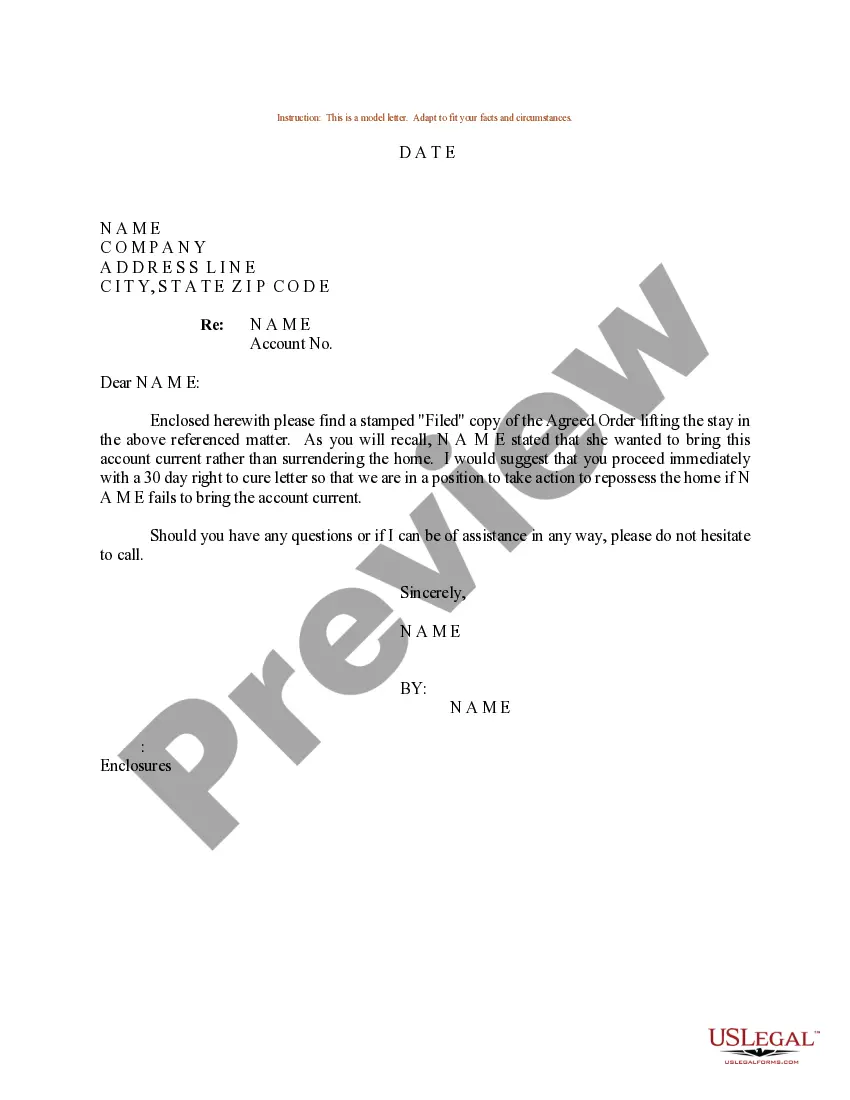
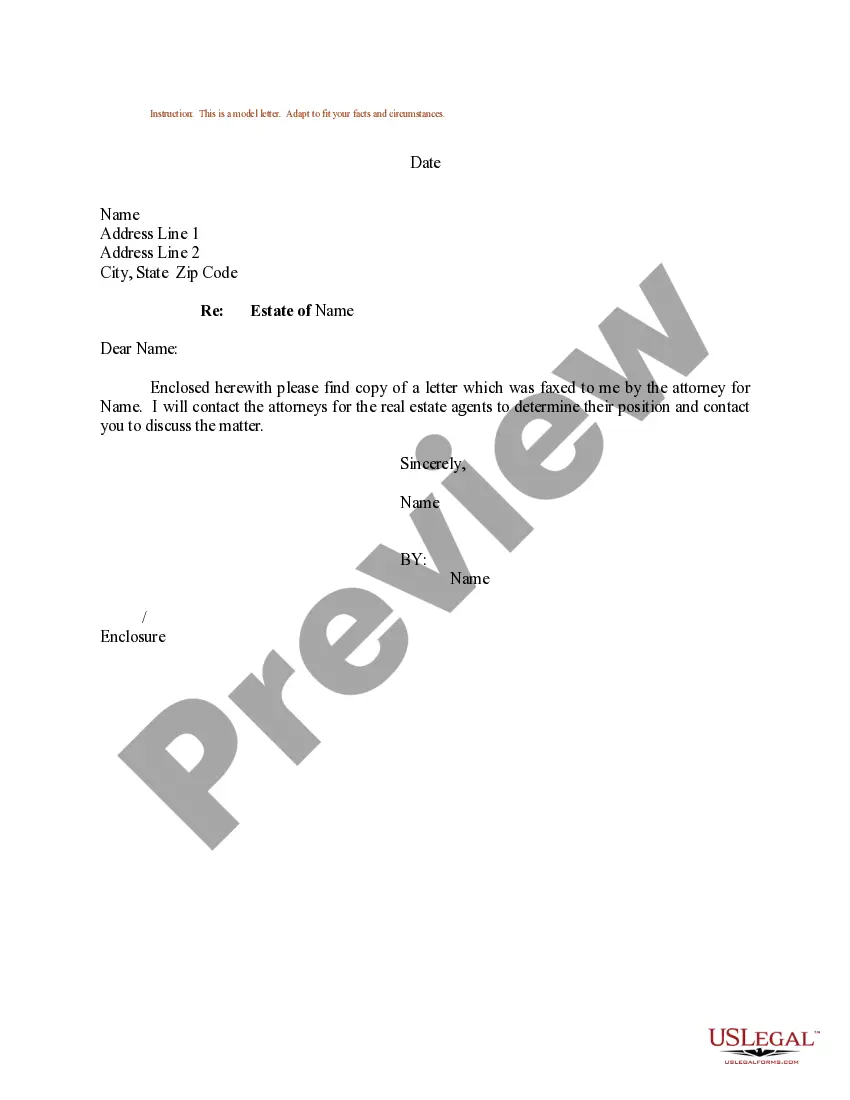
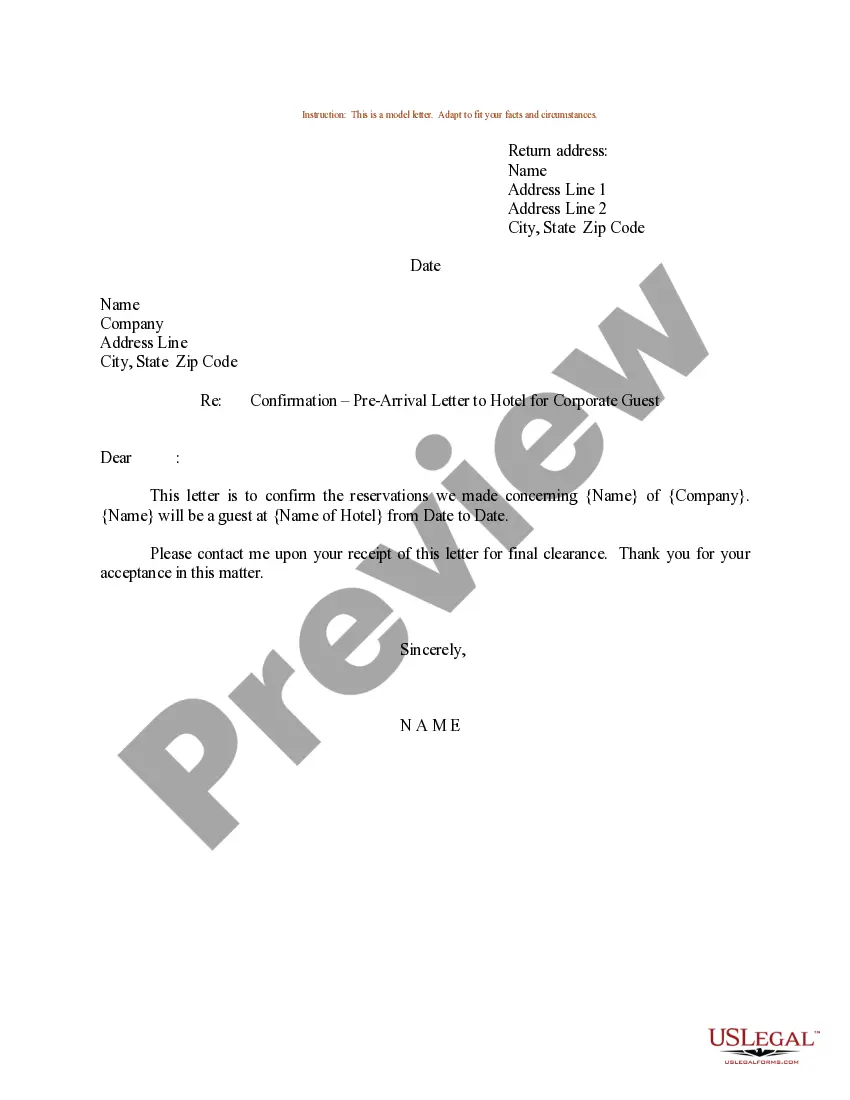
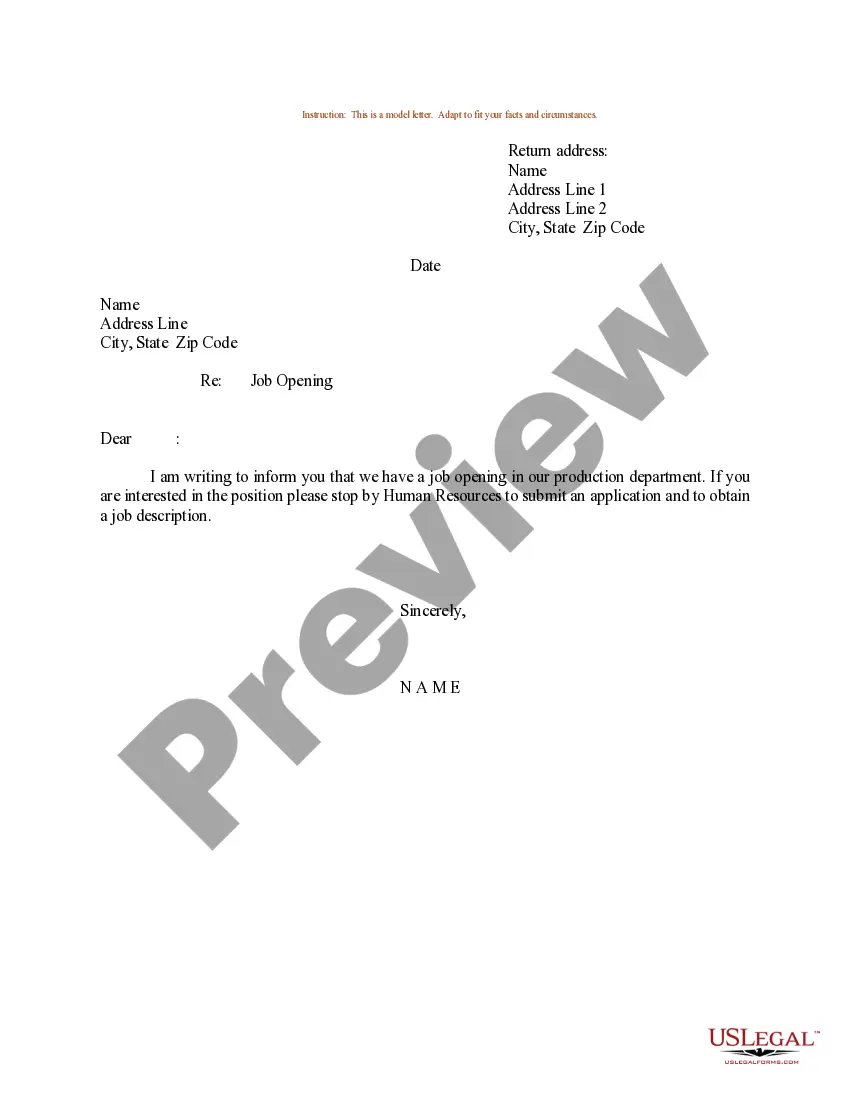

Form popularity
FAQ
Skip three lines and enter "Deposition of name of person being questioned." Skip one line and enter "Court Reporter:" justified to the left and the name, address and phone number of the court reporter justified to the right. Set up your word processor to number lines and pages beginning on the second page.
Use Clear Language. Whether in court or in a conference room for a deposition, it is always advantageous to rely on using clear, concise language instead of a building complex, jargon-filled questions. Ask About the Basics. Don't allow the basics of the case to simply be assumed. Anticipate Answers.
Deposition by written questions is essentially the same as an in-person, oral deposition, only the attorney's questions are written down and approved before the deposed person is required to answer them.
Don't guess, speculate, or play a hunch. A deposition is sworn testimony; only say what you know to be true. On the other hand, don't use this tip to avoid giving testimony that you know. If you don't understand a question, ask for the questioner to rephrase it.
Prepare. Tell the Truth. Be Mindful of the Transcript. Answer Only the Question Presented. Answer Only as to What You Know. Stay Calm. Ask to See Exhibits. Don't Be Bullied.
Start a deposition by explaining the process to the witness. Always be professional and courteous. Use an outline so you do not forget anything, but do not tie yourself to it. Be curious. Listen to the witness. Make sure you get the sound bite. Leave well enough alone.
Don't guess, speculate, or play a hunch. A deposition is sworn testimony; only say what you know to be true. On the other hand, don't use this tip to avoid giving testimony that you know. If you don't understand a question, ask for the questioner to rephrase it.
Never Guess to Answer a Question. Avoid Any Absolute Statements. Do Not Use Profanity. Do Not Provide Additional Information. Avoid Making Light of the Situation. Never Paraphrase a Conversation. Do Not Argue or Act Aggressively. Avoid Providing Privileged Information.
Tell the truth. Speak audibly. Talk slowly. Think before you speak. Do not volunteer information; answer only the question that is asked. Be professional and polite. Take breaks as necessary (usually one per hour) If you do not understand the question, then ask for clarification.