Rights Not Assigned
About this form
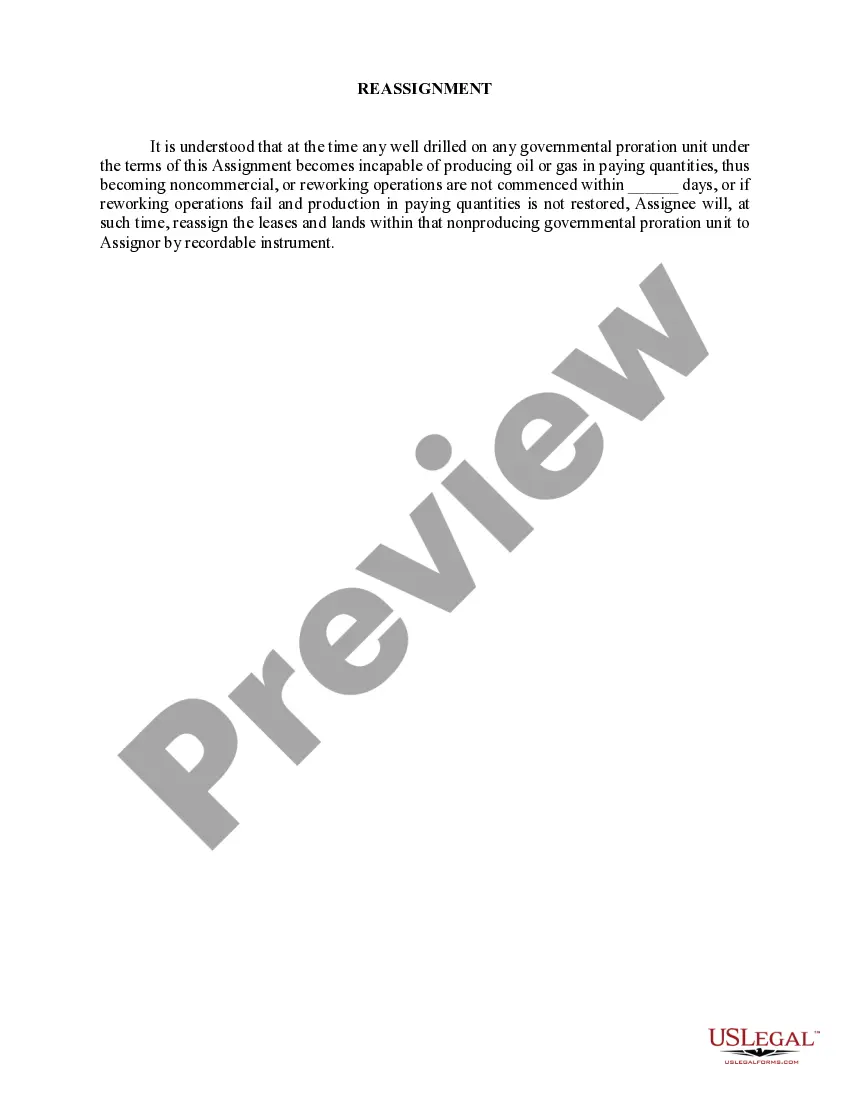
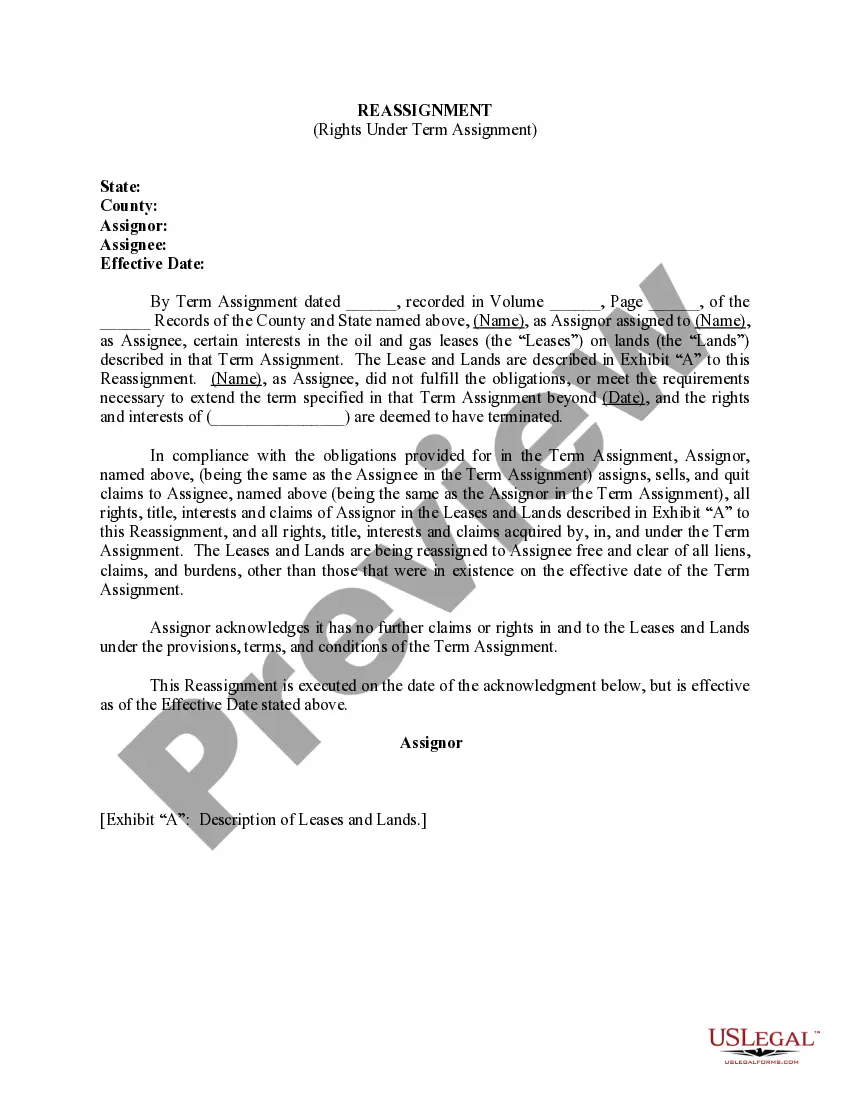
The Rights Not Assigned form allows the assignor to retain all oil and gas rights that are not explicitly mentioned in the assignment. This form also ensures that all mineral and leasehold rights at any depth, as well as surface rights necessary for accessing those resources, remain with the assignor. It is important to understand that this form is distinct from standard assignment forms by reserving specific rights that the assignor wishes to keep.
What’s included in this form
- Identification of the assignor and assignee involved in the transaction.
- Specific details regarding the oil and gas rights being reserved.
- Clauses outlining mineral and leasehold rights at various depths.
- Provisions for ingress and egress rights and other surface rights related to oil and gas leases.
Situations where this form applies
This form is utilized when an individual or entity (the assignor) wants to transfer certain rights related to oil and gas operations while specifically retaining other rights. It is ideal in scenarios where the assignor wishes to ensure they maintain the benefits and access to all mineral and surface rights, particularly in ongoing or future developments.
Who this form is for
- Individuals or businesses involved in oil and gas transactions.
- Landowners looking to lease their land for mineral extraction while retaining specific rights.
- Investors or companies wishing to enter into assignments with reservations of rights.
Completing this form step by step
- Identify the parties: Clearly state who the assignor and assignee are.
- Specify the retained rights: Outline which oil and gas rights are reserved by the assignor.
- Detail the applicable mineral and leasehold rights: Indicate the depth and scope of these rights.
- Include clauses for access rights: Ensure that ingress and egress rights are defined.
- Sign and date the form: All parties must sign to finalize the agreement.
Does this form need to be notarized?
This form does not typically require notarization unless specified by local law. However, verifying local regulations is recommended to ensure compliance.
Get your form ready online
Our built-in tools help you complete, sign, share, and store your documents in one place.
Make edits, fill in missing information, and update formatting in US Legal Forms—just like you would in MS Word.
Download a copy, print it, send it by email, or mail it via USPS—whatever works best for your next step.
Sign and collect signatures with our SignNow integration. Send to multiple recipients, set reminders, and more. Go Premium to unlock E-Sign.
If this form requires notarization, complete it online through a secure video call—no need to meet a notary in person or wait for an appointment.
We protect your documents and personal data by following strict security and privacy standards.

Make edits, fill in missing information, and update formatting in US Legal Forms—just like you would in MS Word.

Download a copy, print it, send it by email, or mail it via USPS—whatever works best for your next step.

Sign and collect signatures with our SignNow integration. Send to multiple recipients, set reminders, and more. Go Premium to unlock E-Sign.

If this form requires notarization, complete it online through a secure video call—no need to meet a notary in person or wait for an appointment.

We protect your documents and personal data by following strict security and privacy standards.
Common mistakes to avoid
- Failing to clearly describe the reserved rights, leading to ambiguity.
- Neglecting to have all parties sign the document, making it unenforceable.
- Not reviewing state-specific requirements that could affect the form's validity.
Advantages of online completion
- Convenience of downloading the form immediately after purchase.
- Editability allows for easy customization to fit specific needs.
- Reliable access to forms drafted by licensed attorneys.
What to keep in mind
- The Rights Not Assigned form preserves important mineral and leasehold rights for the assignor.
- Clear delineation of retained rights is essential for preventing future disputes.
- This form is applicable in multiple jurisdictions without state-specific requirements.
Looking for another form?
Form popularity
FAQ
A contract may contain a non-assignment clause, which prohibits the assignment of specific rights and some various rights, or of the entire contract, to another. However, such a clause does not necessarily destroy the power of either party to make an assignment.
Personal Service Contracts. Partnership Agreements. Patent Licenses. Copyright Licenses. Trademark Licenses. Government Contracts. Franchise Agreements. Limited Liability Company Agreements and Joint Venture Agreements.
An assignment of rights agreement refers to a situation in which one party, known as the assignor, shifts contract rights to another party. The party taking on the rights is known as the assignee.
The delegation would change the entire nature of the agreement. The delegation involves a promise to pay a financial debt. The parties have agreed in their original contract that delegation is not allowed.
No payment due any person under the Plan shall be subject in any manner to anticipation, alienation, sale, transfer, assignment, pledge, encumbrance, or charge. Any attempt to anticipate, alienate, sell, transfer, assign, pledge, encumber, or charge such payment shall be void.
A right cannot be assigned if the assignment will significantly increase or alter the risks to or the duties of the obligor (the party owing performance under the contract).
An assignable contract has a provision allowing the holder to give away the obligations and rights of the contract to another party or person before the contract's expiration date. The assignee would be entitled to take delivery of the underlying asset and receive all of the benefits of that contract before its expiry.
What Is a Non-Assignment Provision and Why Do You Need It? Generally speaking, contracts can be freely assigned to third parties. Non-assignment provisions are designed so that contracts cannot be as freely assigned to third parties; or at least, not without first obtaining the contracting counterparty's consent.