Governing Law
What this document covers
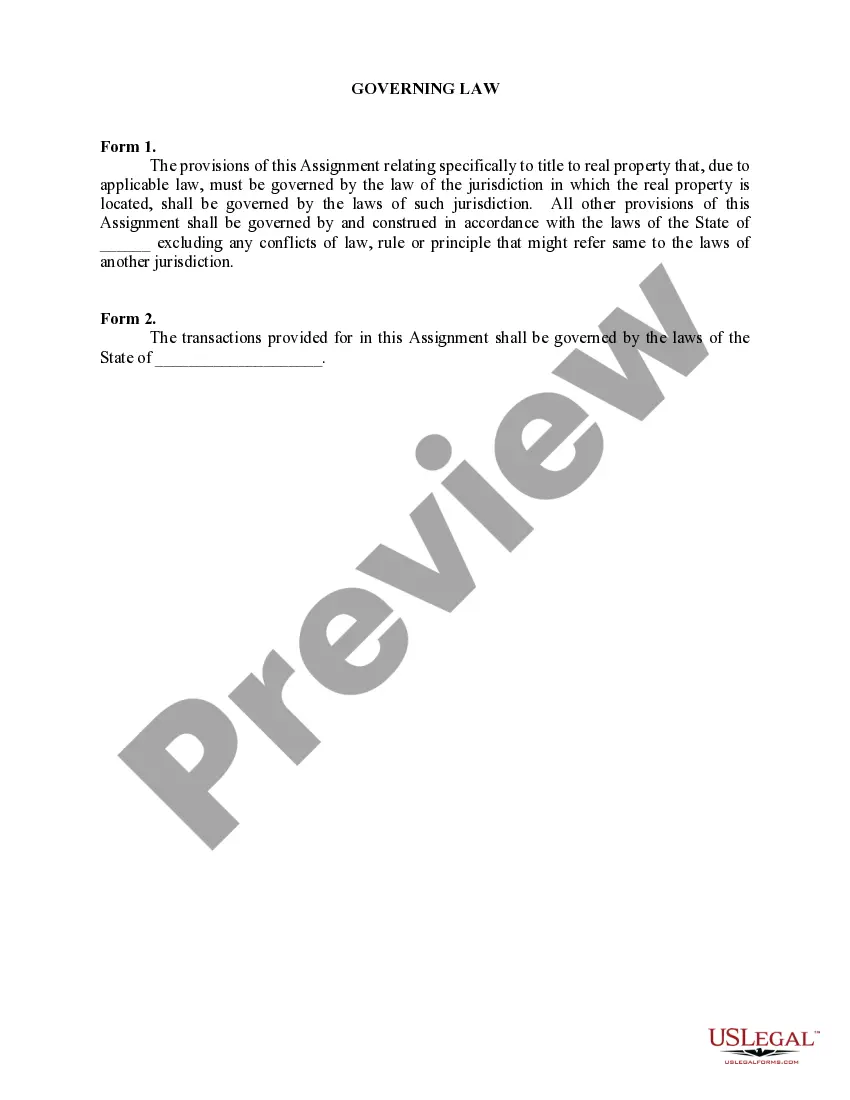
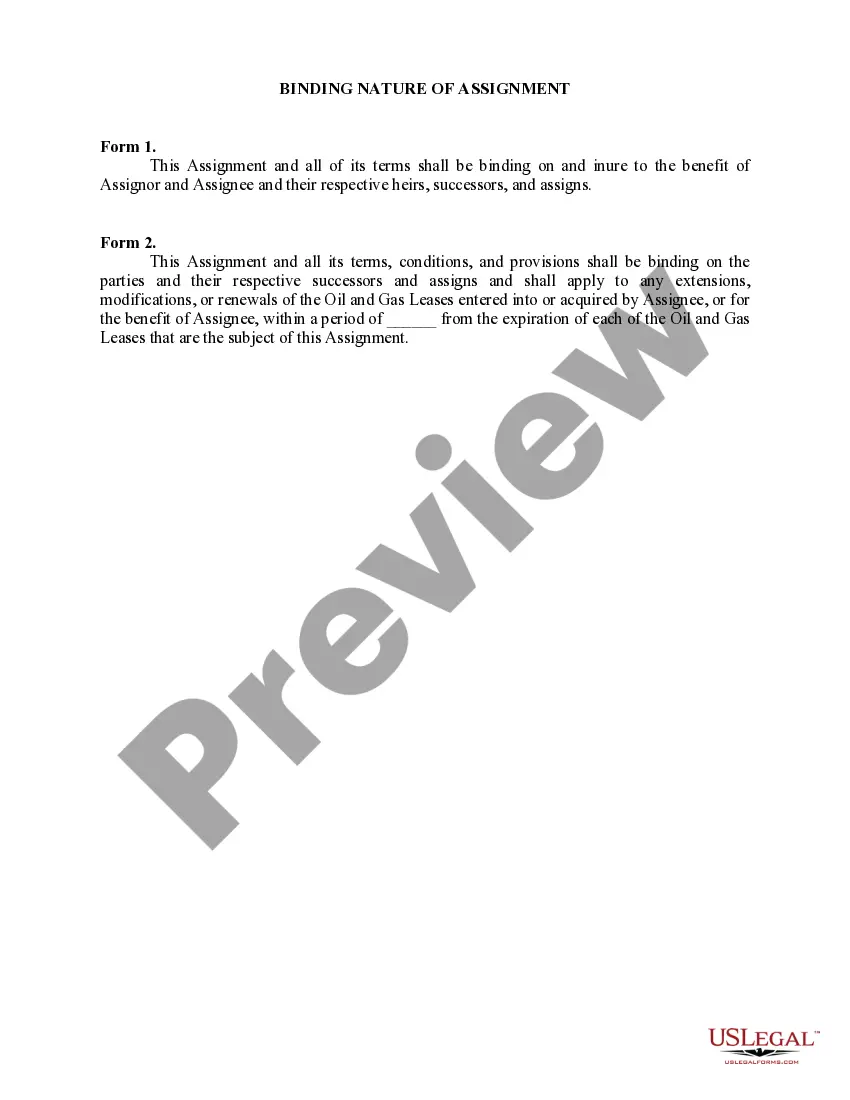
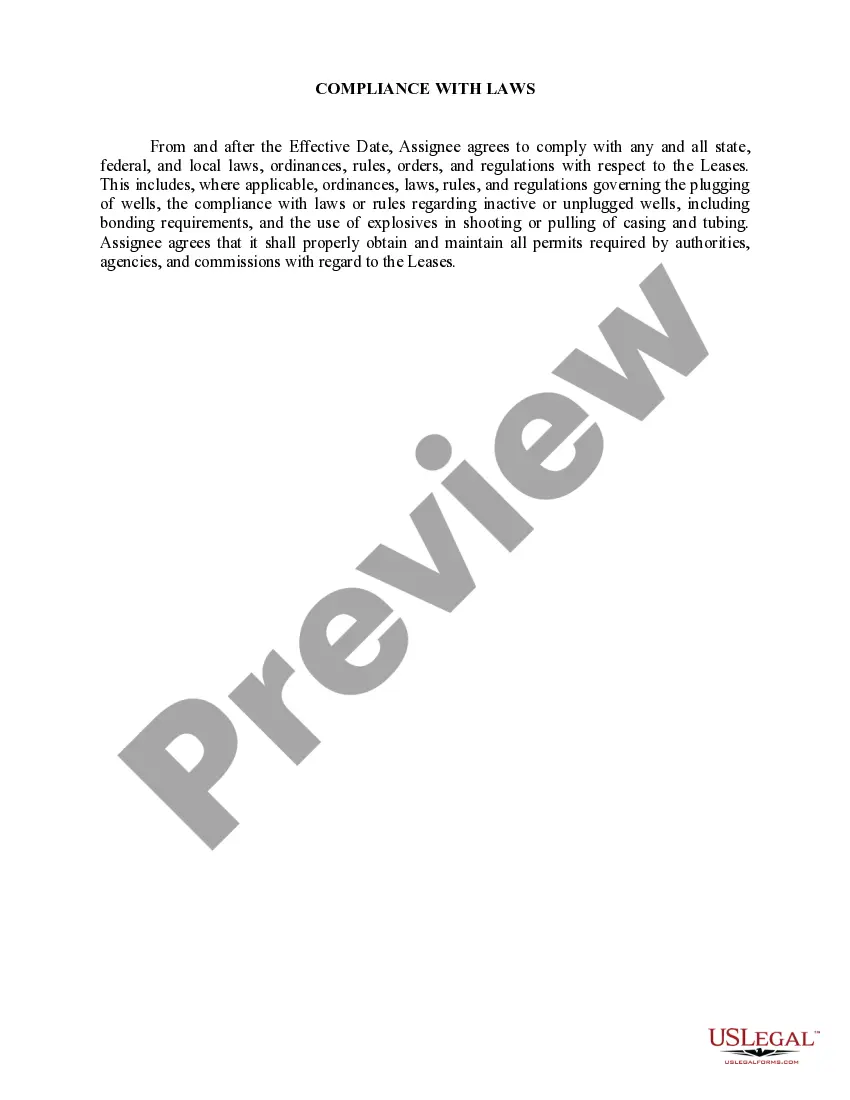
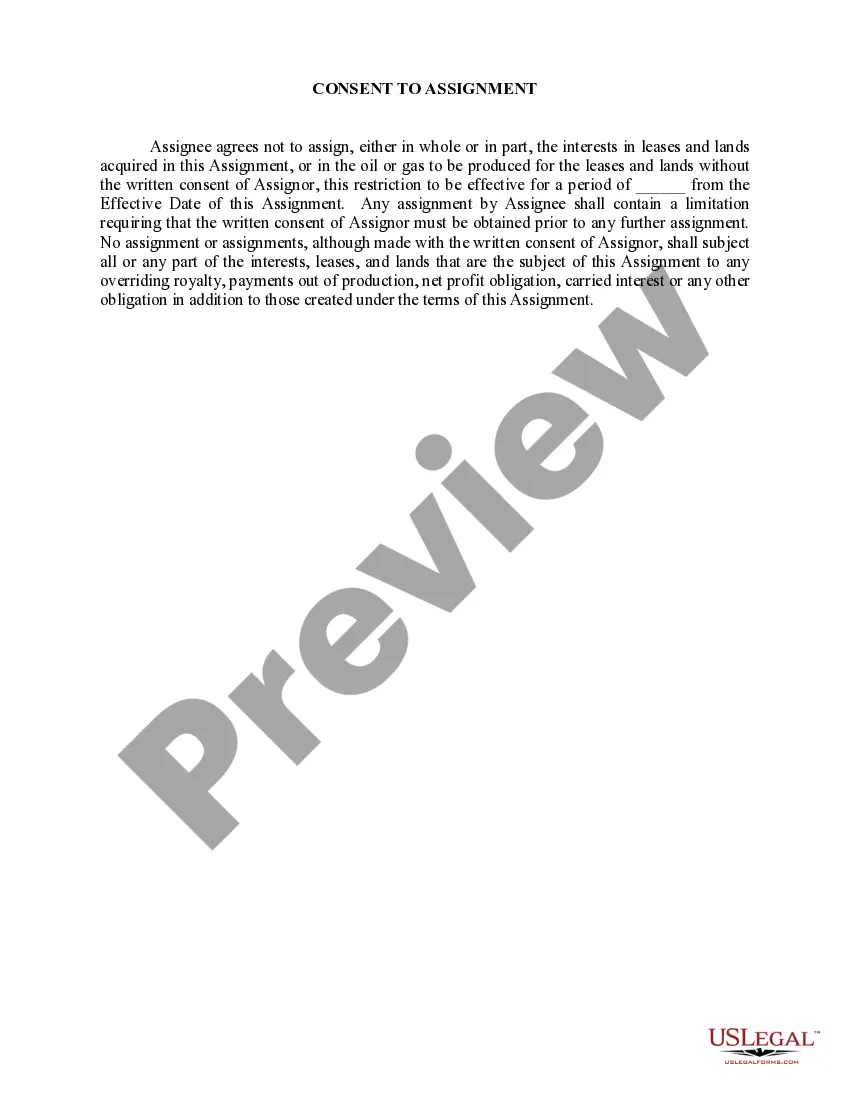
The Governing Law form is a legal document that establishes which jurisdiction's laws will apply to an assignment relating to real property. This form is specifically important when dealing with property title, ensuring that applicable laws of the location where the property is situated are followed. Unlike other contracts, this form clarifies the governing laws for property transactions, making it essential for any legal agreements involving real estate.
Key components of this form
- Provisions relating to real property title governed by the local jurisdiction's laws.
- Clauses specifying other provisions governed by the laws of a selected state.
- Blank fields to identify the relevant state for legal governance.
- Statement clarifying exclusion of conflicting law rules.
- Termination conditions and obligations of the parties involved in the assignment.
Common use cases
This form should be used when you are entering into an assignment that involves real property in a specific jurisdiction. It is necessary for real estate transactions where clarifying the governing laws is essential, ensuring compliance with applicable local regulations. You might need this form in situations involving property transfers, leases, or any legal agreements relating to real estate ownership.
Who should use this form
This form is intended for:
- Property owners entering into assignments related to their real estate.
- Real estate professionals, including agents and attorneys, facilitating property transactions.
- Investors in real estate who want to ensure compliance with jurisdiction-specific laws.
- Anyone involved in legal agreements affecting real property ownership or title.
How to complete this form
- Identify the parties involved in the assignment.
- Specify the real property and its jurisdiction.
- Complete the field indicating the relevant governing state.
- Review all provisions and ensure they align with applicable laws.
- Sign and date the document in accordance with any additional requirements.
Is notarization required?
Notarization is generally not required for this form. However, certain states or situations might demand it. You can complete notarization online through US Legal Forms, powered by Notarize, using a verified video call available anytime.
Get your form ready online
Our built-in tools help you complete, sign, share, and store your documents in one place.
Make edits, fill in missing information, and update formatting in US Legal Forms—just like you would in MS Word.
Download a copy, print it, send it by email, or mail it via USPS—whatever works best for your next step.
Sign and collect signatures with our SignNow integration. Send to multiple recipients, set reminders, and more. Go Premium to unlock E-Sign.
If this form requires notarization, complete it online through a secure video call—no need to meet a notary in person or wait for an appointment.
We protect your documents and personal data by following strict security and privacy standards.

Make edits, fill in missing information, and update formatting in US Legal Forms—just like you would in MS Word.

Download a copy, print it, send it by email, or mail it via USPS—whatever works best for your next step.

Sign and collect signatures with our SignNow integration. Send to multiple recipients, set reminders, and more. Go Premium to unlock E-Sign.

If this form requires notarization, complete it online through a secure video call—no need to meet a notary in person or wait for an appointment.

We protect your documents and personal data by following strict security and privacy standards.
Typical mistakes to avoid
- Failing to specify the correct state, which may lead to legal complications.
- Not considering local laws that might affect the assignment.
- Leaving blank fields that should be filled to ensure clarity and validity.
- Neglecting to review the entire document for accuracy before signing.
Benefits of completing this form online
- Instant access to downloadable templates drafted by licensed attorneys.
- Editable forms to tailor the document to your specific needs.
- Convenience of completing the form at your own pace and from anywhere.
- Reliability of using professionally drafted legal documents.
Legal use & context
- The Governing Law form helps establish the legal framework for property transactions.
- It is enforceable in the selected jurisdiction so long as all parties consent to the terms.
- Clarity on governing laws can prevent future disputes related to the assignment.
Summary of main points
- The Governing Law form clarifies which jurisdiction's laws are applicable to property assignments.
- It is essential for ensuring compliance in real estate transactions.
- Proper completion and accuracy are critical to avoid legal issues.
Looking for another form?
Form popularity
FAQ
This determination is often referred to as choice of law. Typically, if the contract does not address choice of law, the court will use the law of the state in which the transaction was consummated or where a substantial portion of the subject matter of the agreement shall occur.
(a) A contract shall be governed by the law chosen by the parties. The choice shall be made expressly or clearly demonstrated by the terms of the contract or the circumstances of the case. By their choice the parties can select the law applicable to the whole or to only part of the contract.
Governing Law Versus JurisdictionJurisdiction refers to where a dispute will be resolved; governing law indicates which state's law will be used to decide the dispute. It's possible, for example, for a contract to require lawsuits to be filed in California but decided under New York law.
Contracts are usually governed and enforced by the laws in the state where the agreement was made. Depending upon the subject matter of the agreement (i.e. sale of goods, property lease), a contract may be governed by one of two types of state law: The Common Law.
A "Governing Law" clause is a clause used in legal agreements where you can declare which rules and laws will govern the agreement if legal issues arise. A "Governing Law" clause will be found consistently in contracts and legal agreements between companies and their users.
What happens if there is no governing law clause or jurisdiction clause? Before the parties even get to resolve their dispute on the merits, much time and money will be lost not only to find the appropriate court, but also to have a judge decide the applicable law based on the parties and the facts in dispute.
Governing Jurisdiction means the jurisdiction whose law governs the internal affairs of an entity.
A "choice of law" or "governing law" provision in a contract allows the parties to agree that a particular state's laws will be used to interpret the agreement, even if they live in (or the agreement is signed in) a different state.
The clause should be drafted clearly in order that the governing law is easy to determine. Parties are generally able to nominate the governing law of their choice in the contract and this will usually be upheld by the courts of the country where the dispute is to be determined.