Sample of a Collection Letter to Small Business in Advance
Overview of this form
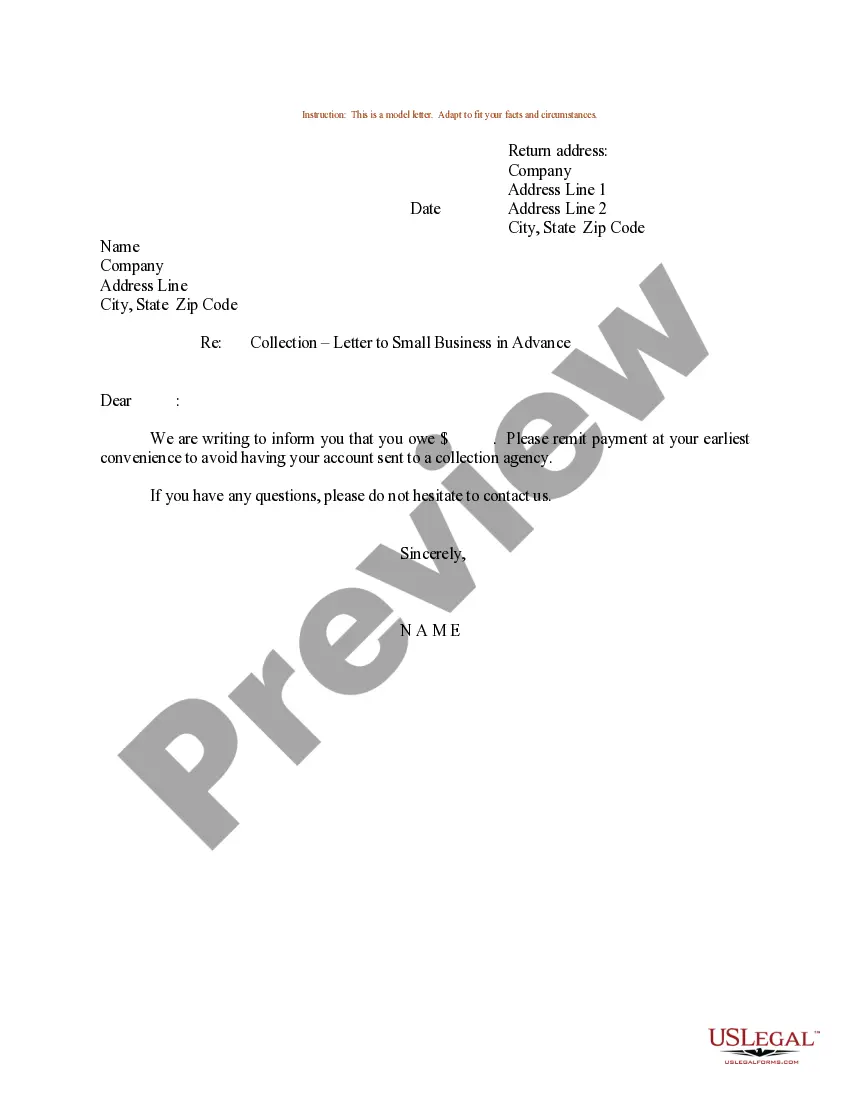
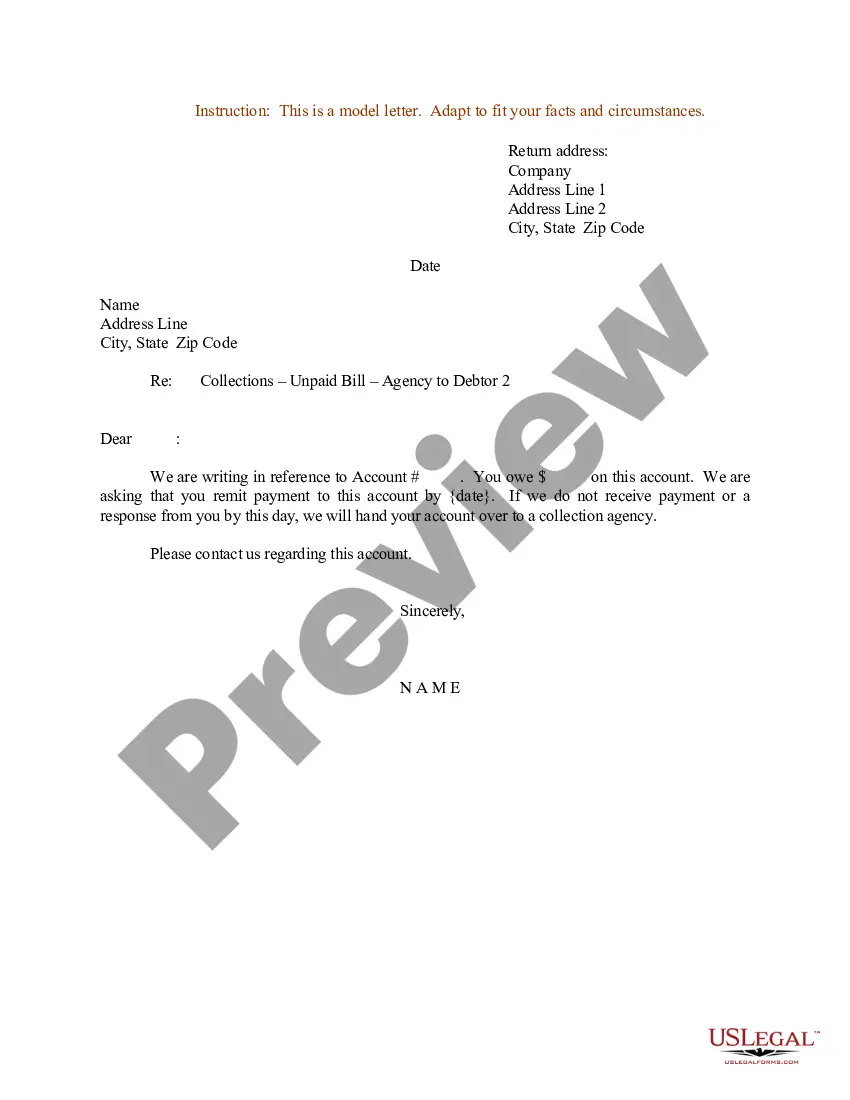
This form is a sample of a collection letter specifically designed for small businesses seeking to recover outstanding payments. It provides a structured approach to formally notify customers about overdue payments and includes essential details necessary for effective communication. This form differs from other collection letters by being tailored to small business needs, ensuring a professional yet friendly tone.
Key parts of this document
- Return address: Clearly indicates the sender's business address.
- Date: The date when the letter is sent, which is crucial for record-keeping.
- Recipient details: Includes the name and address of the client who owes money.
- Subject line: A specific mention of the letter's purpose as a collection notice.
- Content: A polite yet firm request for payment, outlining the amount and due date.
When this form is needed
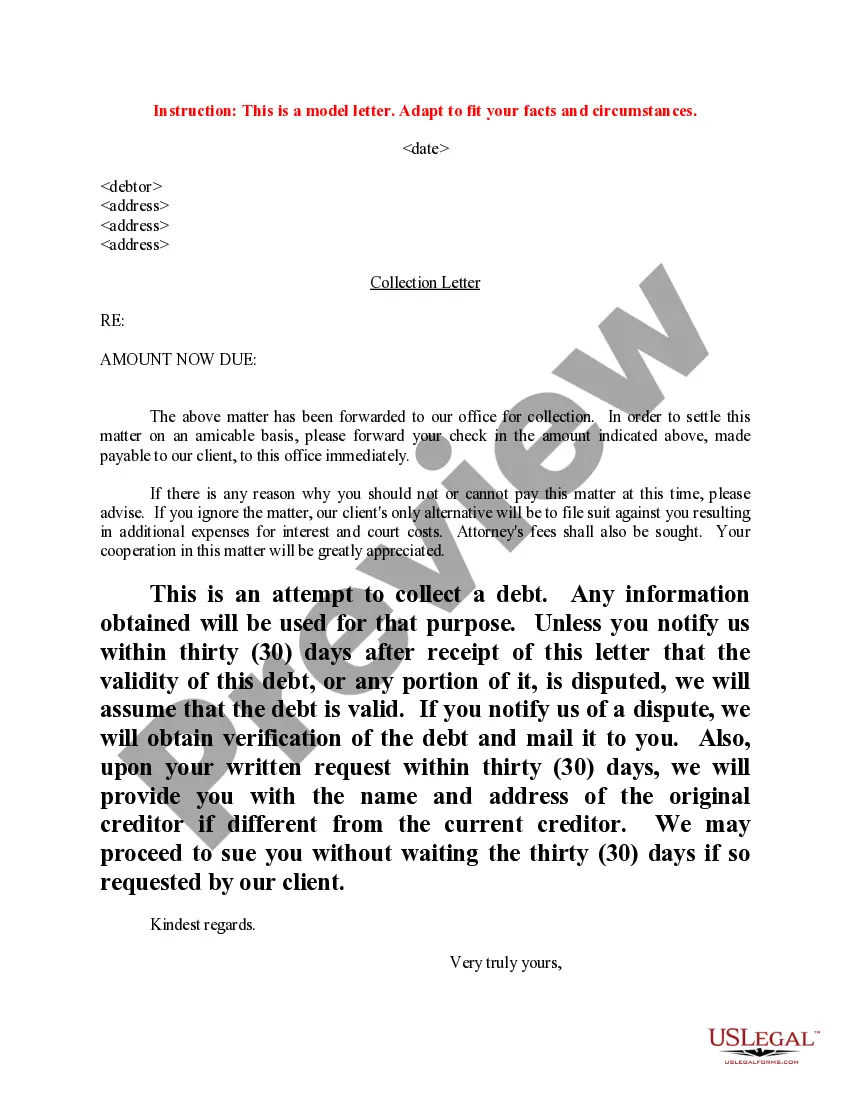
This form should be used when a small business has provided goods or services but has not received payment by the agreed-upon deadline. It is appropriate to send this letter after initial reminders have failed. Utilizing a formal collection letter demonstrates professionalism and can prompt timely payment from clients who may have overlooked their obligations.
Who this form is for
Eligible users of this form include:
- Small business owners who have outstanding accounts receivable.
- Accounts receivable managers overseeing payment collections.
- Financial officers responsible for maintaining cash flow and accounts management.
How to complete this form
To complete this collection letter, follow these steps:
- Identify the parties involved by entering your business name and address at the top.
- Include the date the letter is issued, so the recipient knows its timeliness.
- Enter the recipient's name and address in the designated fields to ensure proper delivery.
- Clearly state the amount due, including any relevant details such as invoice numbers if applicable.
- Conclude with a friendly reminder of the due date and your contact information for questions.
Does this document require notarization?
This form does not typically require notarization unless specified by local law.
Get your form ready online
Our built-in tools help you complete, sign, share, and store your documents in one place.
Make edits, fill in missing information, and update formatting in US Legal Forms—just like you would in MS Word.
Download a copy, print it, send it by email, or mail it via USPS—whatever works best for your next step.
Sign and collect signatures with our SignNow integration. Send to multiple recipients, set reminders, and more. Go Premium to unlock E-Sign.
If this form requires notarization, complete it online through a secure video call—no need to meet a notary in person or wait for an appointment.
We protect your documents and personal data by following strict security and privacy standards.

Make edits, fill in missing information, and update formatting in US Legal Forms—just like you would in MS Word.

Download a copy, print it, send it by email, or mail it via USPS—whatever works best for your next step.

Sign and collect signatures with our SignNow integration. Send to multiple recipients, set reminders, and more. Go Premium to unlock E-Sign.

If this form requires notarization, complete it online through a secure video call—no need to meet a notary in person or wait for an appointment.

We protect your documents and personal data by following strict security and privacy standards.
Common mistakes
- Not including the complete address of the recipient, leading to possible delivery issues.
- Failing to state the amount due clearly, which can create confusion.
- Neglecting to sign the letter, which can make it feel impersonal.
- Using overly harsh language, which can damage business relationships.
Benefits of completing this form online
- Convenience: Easily downloadable and printable for immediate use.
- Editability: Customize the letter to fit specific business needs and client situations.
- Reliability: Form drafted by licensed attorneys, ensuring legal validity.
- The collection letter serves as a formal document that can be presented in court if necessary.
- It demonstrates that the business has made a reasonable effort to recover owed funds.
Quick recap
- A collection letter is essential for maintaining professional relationships while addressing overdue payments.
- Follow the structured format to ensure clarity and effectiveness of communication.
- Utilize this form to seek payment in a professional manner that encourages timely responses.
Looking for another form?
Form popularity
FAQ
Most companies use a series of letters in three stages: gentle reminders, advanced reminders, and urgent reminders.
Reference the products or services that were purchased. Make it very clear what you did for your client and how much it costs. Maintain a friendly but firm tone. Remind the payee of their contract or agreement with you. Offer multiple ways the payee can take action. Add a personal touch. Give them a new deadline.
The letter should address the recipient by name; date should be mentioned on the letter, as it will be a proof of communication between the parties. The letter of collection should be having a reference of the products or the services in concern. The mode and time of payment should be mentioned in the letter.
The amount the debtor owes you. The initial due date of the payment. A new due date for the payment, whether ASAP or longer. Instructions on how to pay the debt.
Mention of all previous attempts to collect. Invoice number and amount. Original invoice due date. Current days past due. Instructions on what they should do next. A warning of the impending consequences.
The amount the debtor owes you. The initial due date of the payment. A new due date for the payment, whether ASAP or longer. Instructions on how to pay the debt.
Dear debt collector: I am responding to your contact about collecting a debt. You contacted me by phone/mail, on date and identified the debt as any information they gave you about the debt. You can contact me about this debt, but only in the way I say below.
Days past due. Amount due. Note previous attempts to collect. Summary of account. Instructions- what would you like them to do next? Due date for payment- it is important to use an actually date, not in the next 7 business days as this can be vauge.
Reference the products or services that were purchased. Make it very clear what you did for your client and how much it costs. Maintain a friendly but firm tone. Remind the payee of their contract or agreement with you. Offer multiple ways the payee can take action. Add a personal touch. Give them a new deadline.