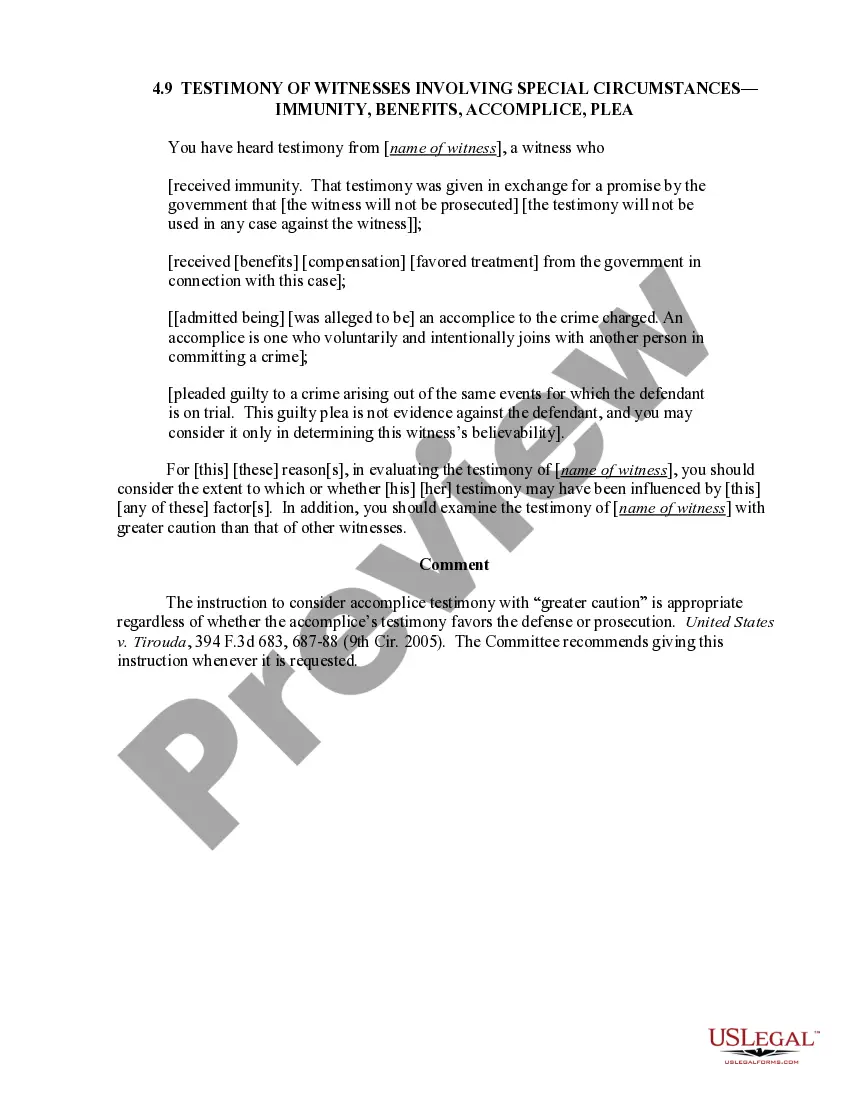
Sample Letter for Collection Efforts
What this document covers
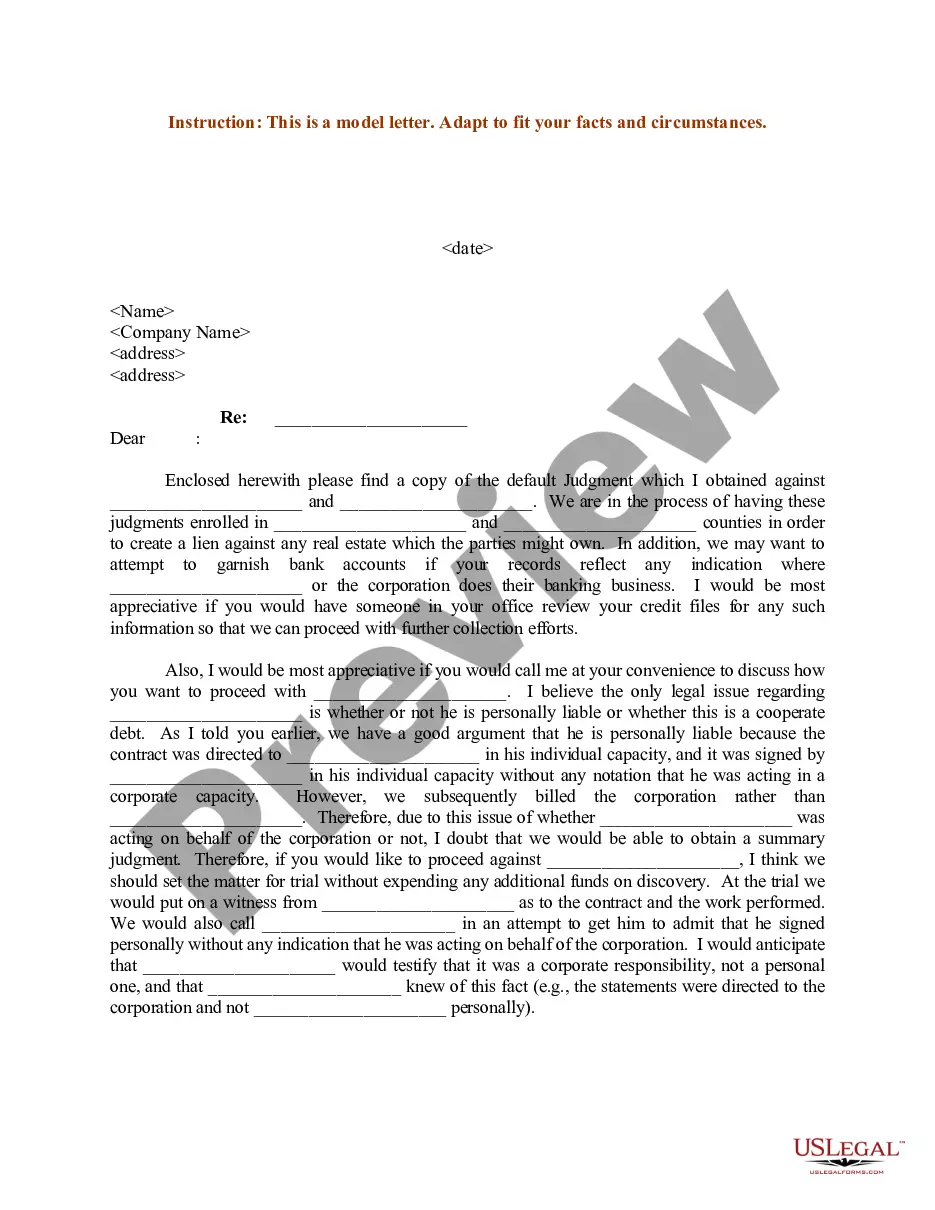
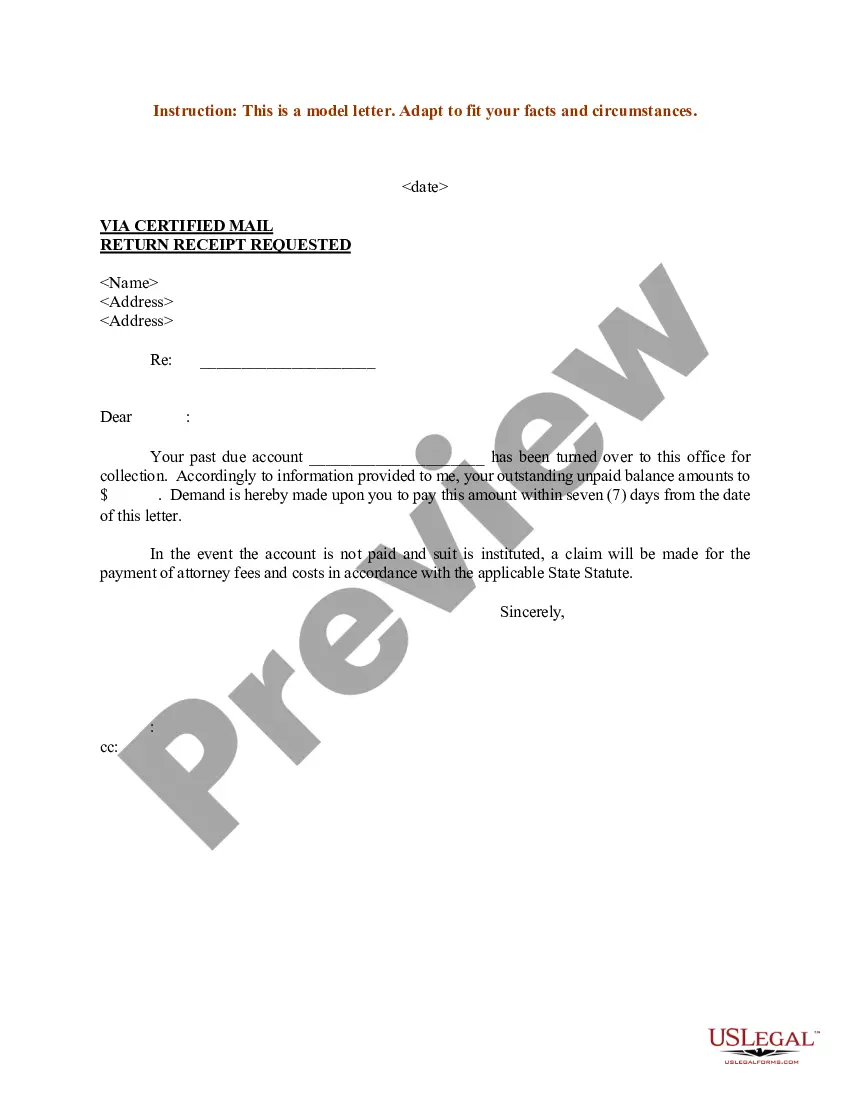
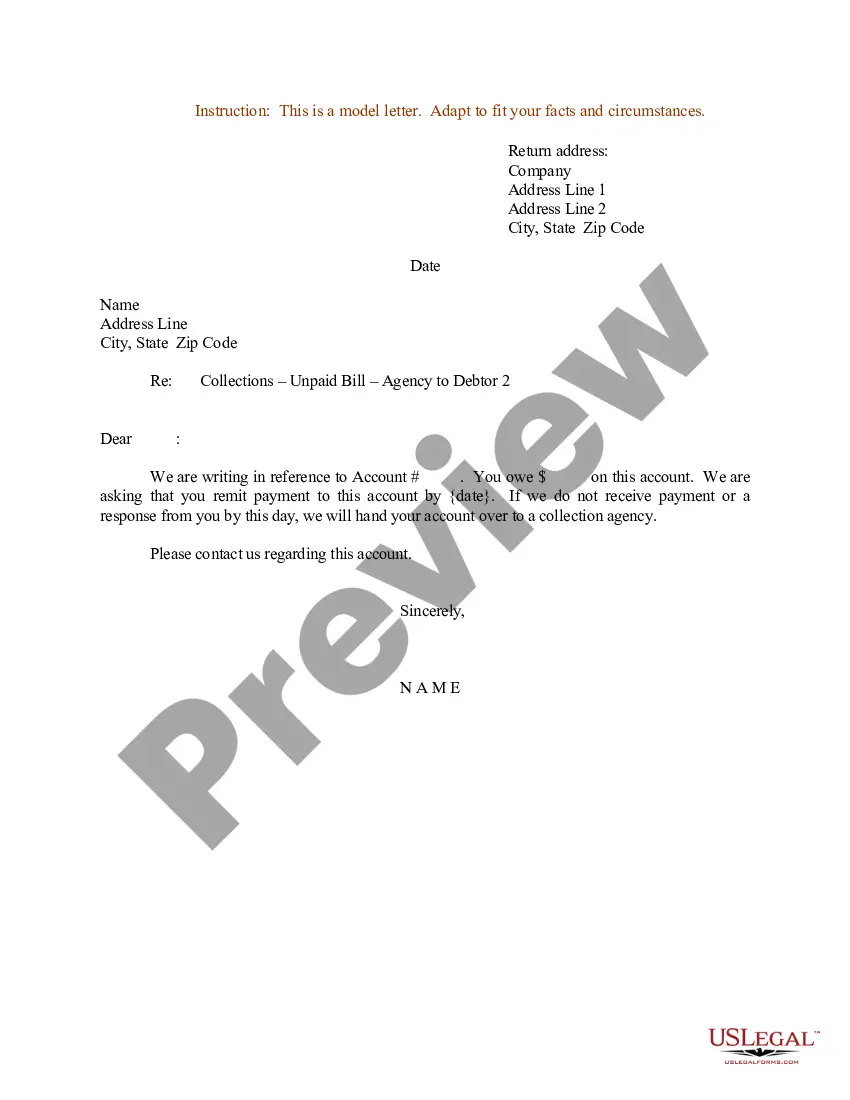
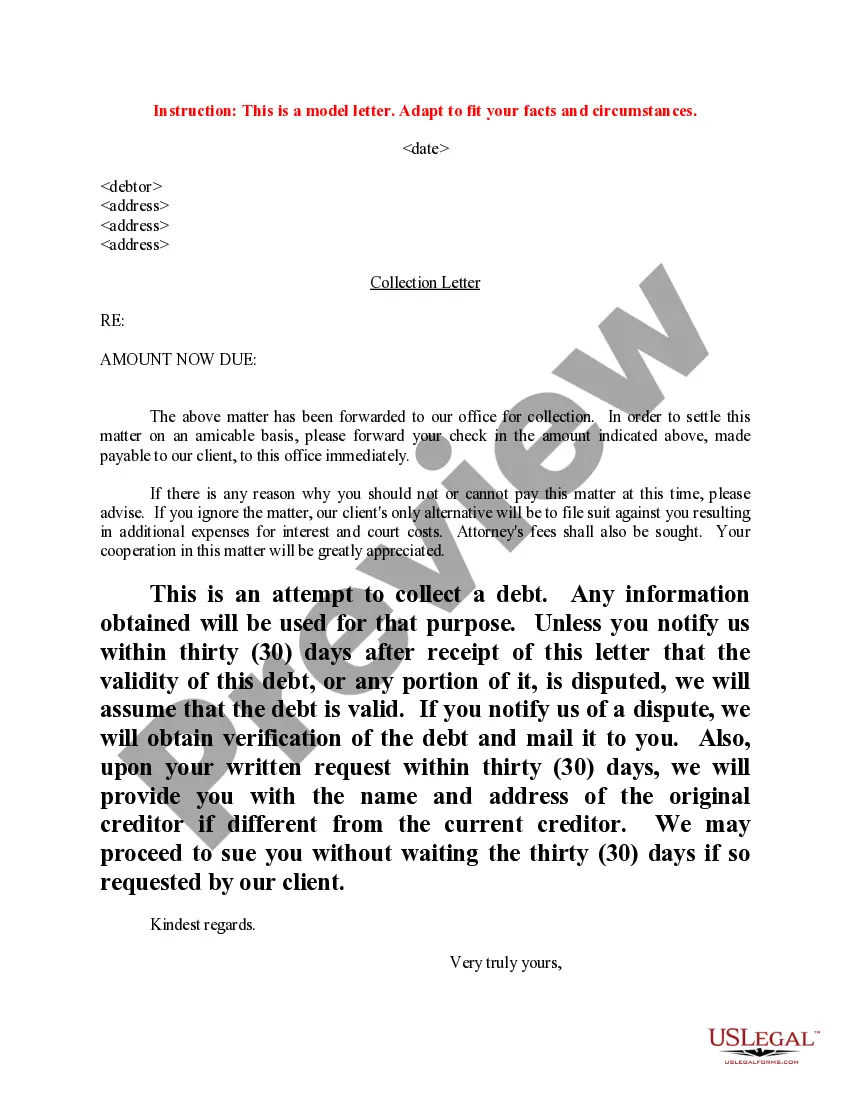
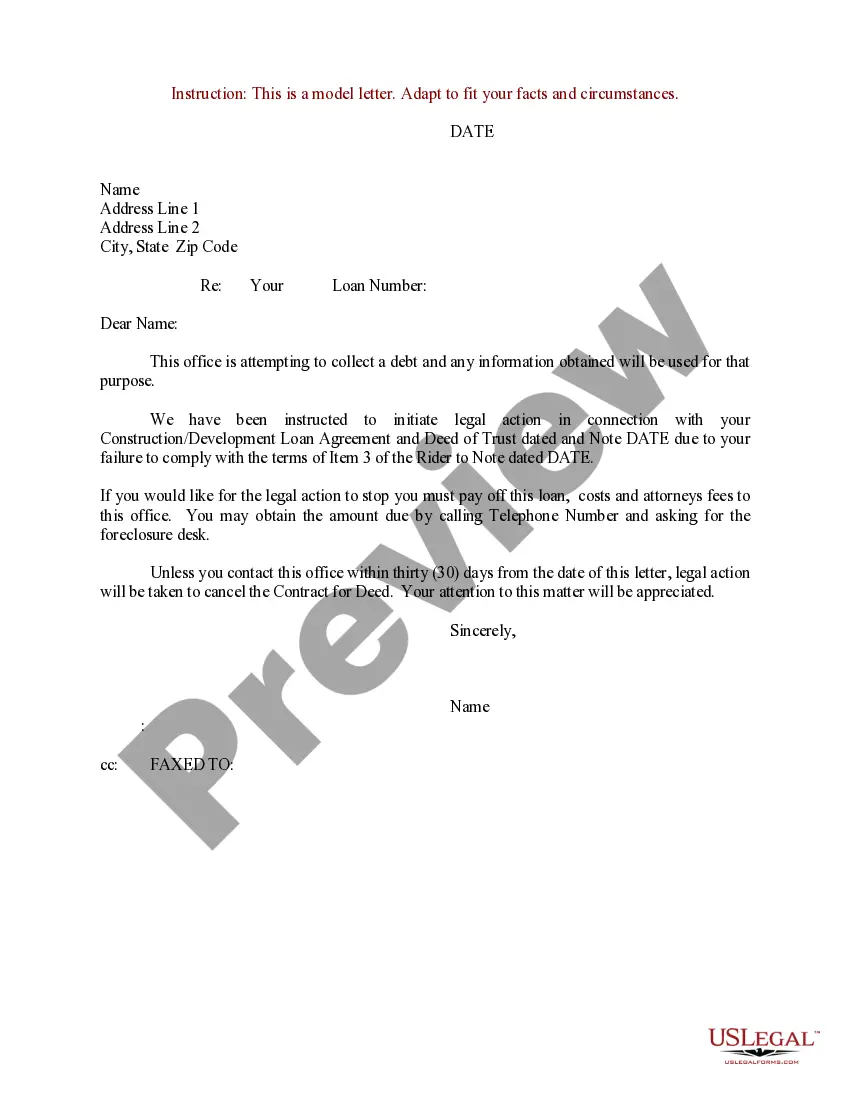
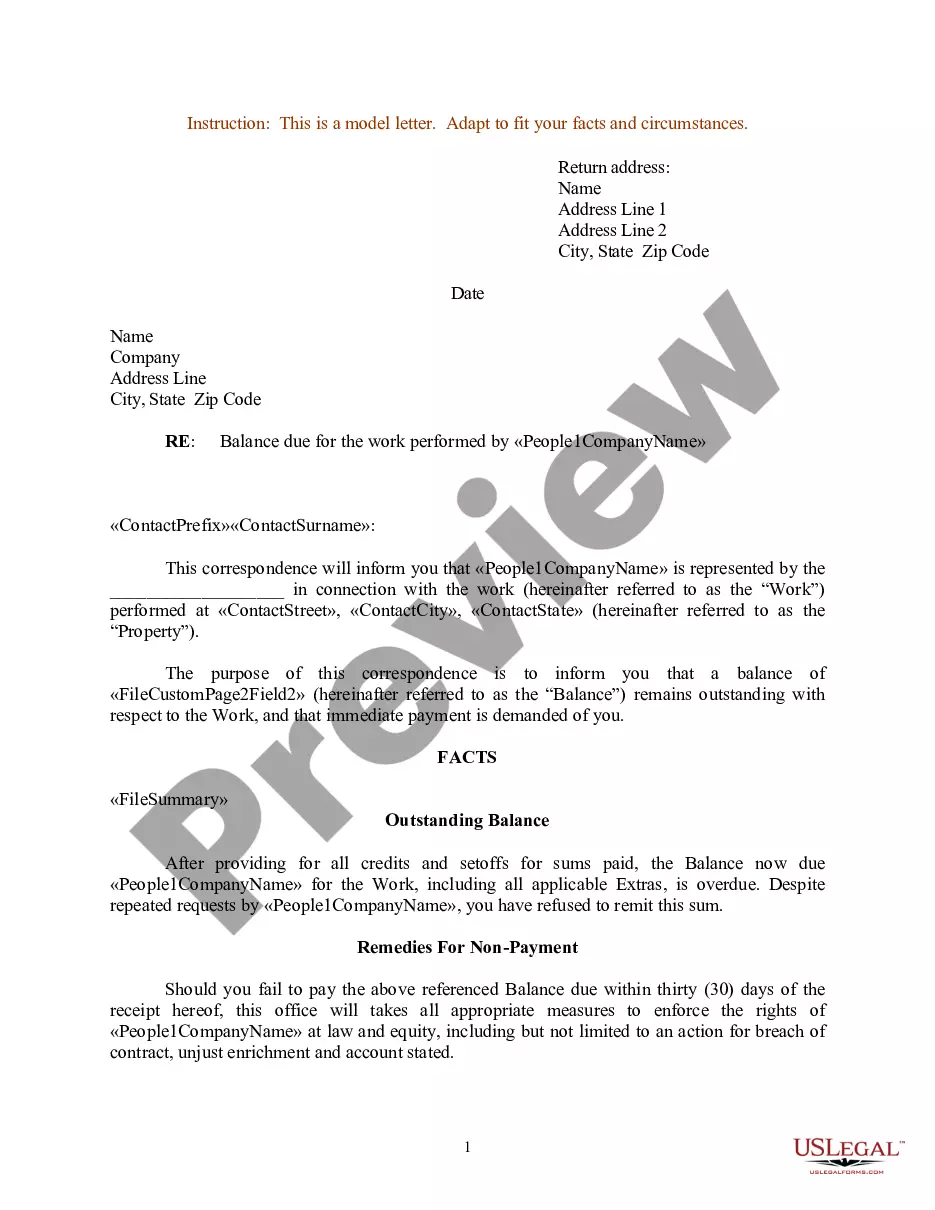
The Sample Letter for Collection Efforts is a template designed to assist in communicating with clients regarding outstanding debts. It serves as a formal written demand for payment while outlining the context of the debt and possible courses of action. This form is particularly useful for businesses or individuals seeking to collect funds due without engaging in more formal legal proceedings initially.
Key parts of this document
- Date of the correspondence
- Contact information of the sender
- Recipient's name and company details
- Subject line indicating the purpose of the letter
- Body outlining the details of the debt and potential liability issues
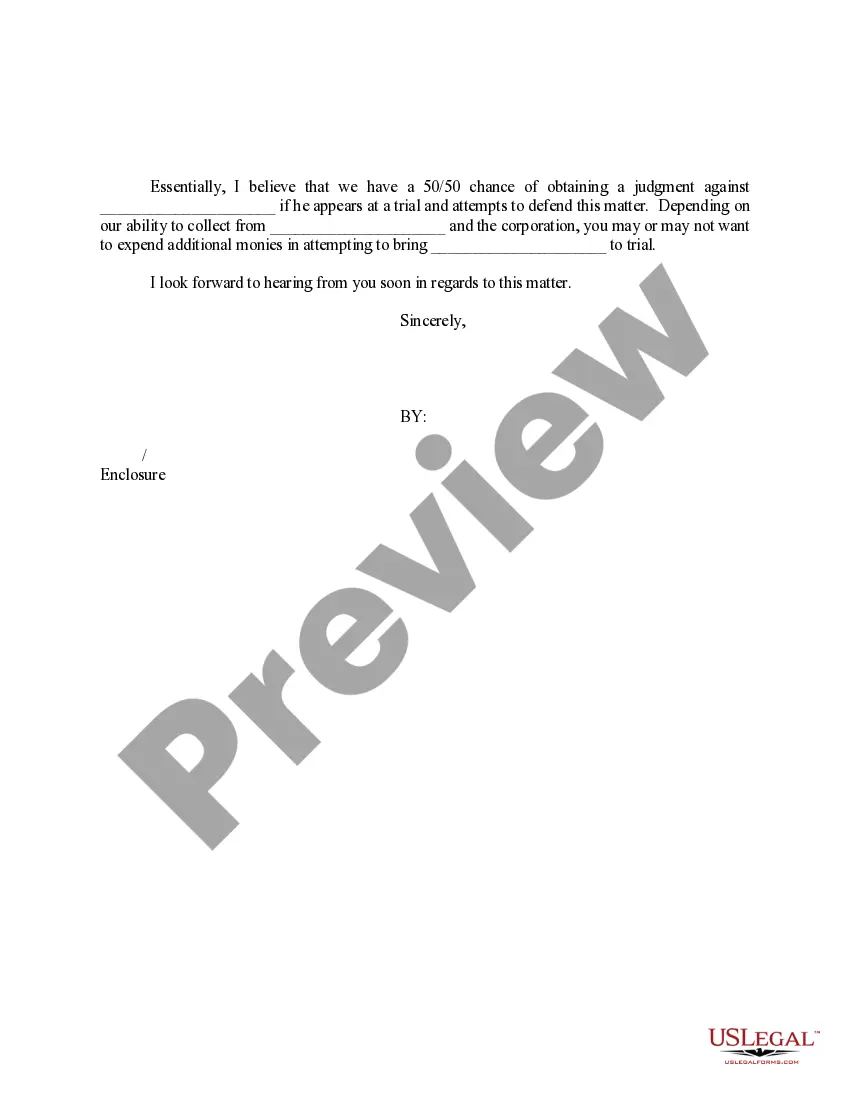
- Closing remarks and a call to action for the recipient
When to use this document
This form is useful in situations where there is a need to formally communicate a debt owed by an individual or company. It can be employed when initial informal collections have failed, or when a more structured communication is necessary to outline the specifics of the debt and the potential implications of not addressing it.
Who can use this document
This form is intended for:
- Businesses seeking to collect overdue payments from clients.
- Individuals who are owed money and need to make a formal request for payment.
- Accountants or financial professionals who manage debt recovery efforts.
- Legal professionals assisting clients in debt collection matters.
Instructions for completing this form
- Enter the date at the top of the letter.
- Provide your name and contact details along with the recipient's name and company information.
- Clearly state the subject of the letter regarding the debt owed.
- Detail the specifics of the debt and any related legal matters.
- Close the letter with a polite but firm request for payment, encouraging the recipient to contact you for further discussion.
Notarization guidance
Notarization is generally not required for this form. However, certain states or situations might demand it. You can complete notarization online through US Legal Forms, powered by Notarize, using a verified video call available anytime.
Get your form ready online
Our built-in tools help you complete, sign, share, and store your documents in one place.
Make edits, fill in missing information, and update formatting in US Legal Forms—just like you would in MS Word.
Download a copy, print it, send it by email, or mail it via USPS—whatever works best for your next step.
Sign and collect signatures with our SignNow integration. Send to multiple recipients, set reminders, and more. Go Premium to unlock E-Sign.
If this form requires notarization, complete it online through a secure video call—no need to meet a notary in person or wait for an appointment.
We protect your documents and personal data by following strict security and privacy standards.

Make edits, fill in missing information, and update formatting in US Legal Forms—just like you would in MS Word.

Download a copy, print it, send it by email, or mail it via USPS—whatever works best for your next step.

Sign and collect signatures with our SignNow integration. Send to multiple recipients, set reminders, and more. Go Premium to unlock E-Sign.

If this form requires notarization, complete it online through a secure video call—no need to meet a notary in person or wait for an appointment.

We protect your documents and personal data by following strict security and privacy standards.
Common mistakes to avoid
- Failing to include accurate contact information for both parties.
- Not clearly stating the amount owed or the origin of the debt.
- Using vague language, which may lead to miscommunication.
- Neglecting to specify a call to action or next steps for the recipient.
Why use this form online
- Convenient access to a ready-made template that saves time.
- Editability allows for customization to match specific situations.
- Professional appearance enhances credibility when communicating with clients.
- Reliable legal language crafted by licensed attorneys ensures compliance with applicable laws.
Looking for another form?



Form popularity
FAQ
The Sample Letter for Collection Efforts is a template you can use to formally demand payment from a client or debtor. It communicates the debt details, outlines potential liability, and includes a clear call to action. Use it to start the collection process before pursuing formal legal action, and adapt the date, sender, recipient, and body as needed.
Two key requirements are: (1) clear debt details in the body, including the amount owed and any liability language, and (2) a clear closing with a call to action telling the recipient what to do next and by when. The form template also includes the date, sender contact, recipient details, and a subject line to structure the notice.
To write a professional collection letter, start with a factual, respectful tone and a clear subject. Use the template’s structure: date, sender and recipient contact information, a concise statement of the debt and amount, mention of liability where appropriate, and a concrete call to action with a deadline. This aligns with the Sample Letter for Collection Efforts components.
This form provides a template for a formal debt collection notice, not a 'letter of collection right.' It guides you to include date, sender and recipient details, a subject line, and a body that describes the debt and any potential liability, finishing with a closing and call to action tailored to the specific debt.
The template does not provide a fixed list of phrases to use with a debt collector. It is designed to be filled with accurate debt details and a professional, factual tone, so you can communicate your request for payment while the letter remains compliant with the form’s sections—date, sender/recipient, subject, debt details, and a call to action.
What differentiates the Sample Letter for Collection Efforts from closer alternatives is that it is designed to start collection without immediate formal legal action, while providing a structured, multi-state friendly format. It includes essential elements—the date, sender and recipient details, a subject line, debt description and liability, and a specific call to action.