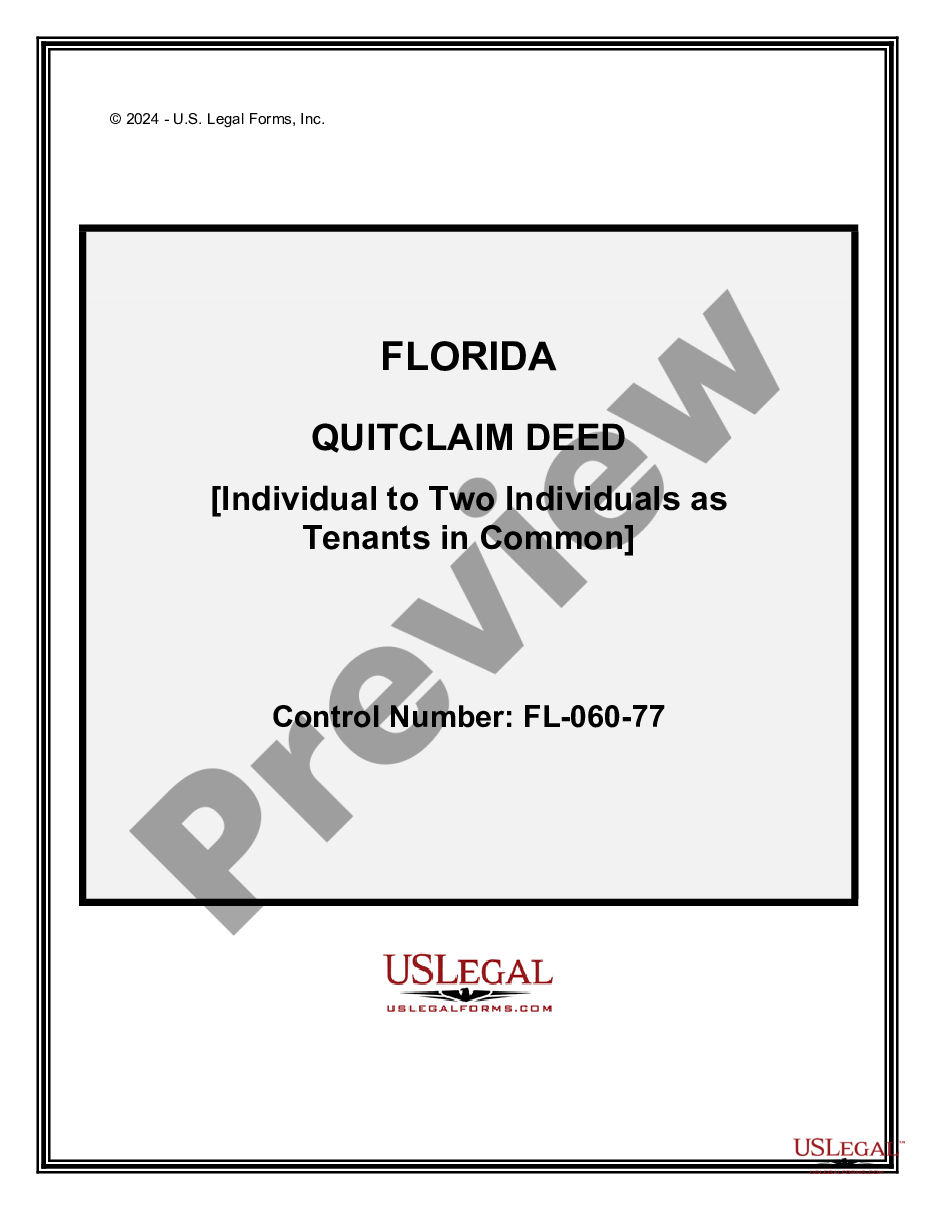
Florida Quitclaim Deed for Condominium - Individual to Two Individuals
Overview of this form
The Quitclaim Deed for Condominium is a legal document that transfers ownership of a condominium from one individual (the Grantor) to two individuals (the Grantees). This deed is unique in that it allows the Grantees to hold the property either as tenants in common or as joint tenants with rights of survivorship. Unlike warranty deeds, quitclaim deeds do not guarantee that the title is free of claims or encumbrances. This form is compliant with statutory laws, ensuring its validity across relevant jurisdictions.
Form components explained
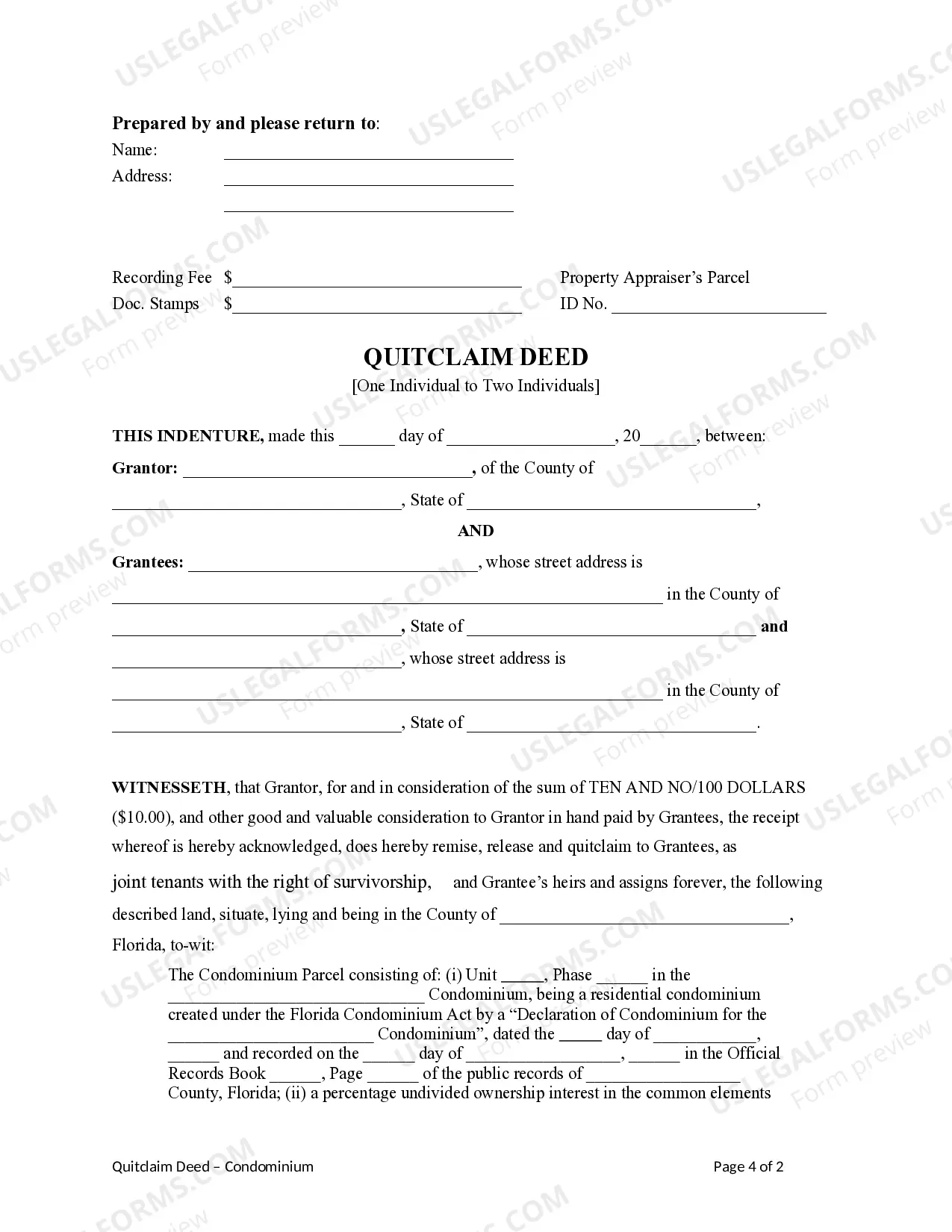
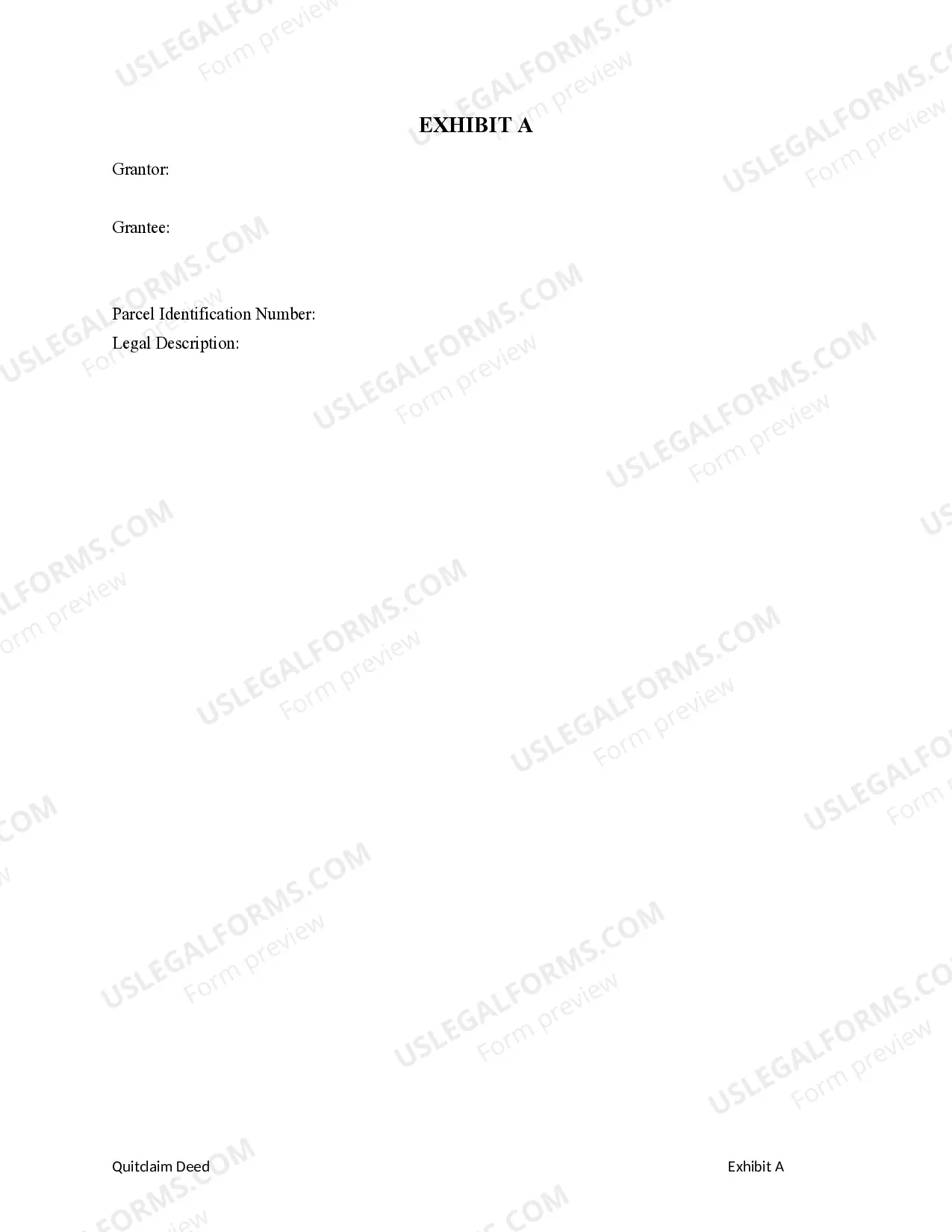
- Grantor information: Complete details regarding the individual transferring the property.
- Grantee information: Names and details of the two individuals receiving the property.
- Description of the property: A clear legal description of the condominium being transferred.
- Terms of ownership: Specification of whether the Grantees will hold title as tenants in common or joint tenants.
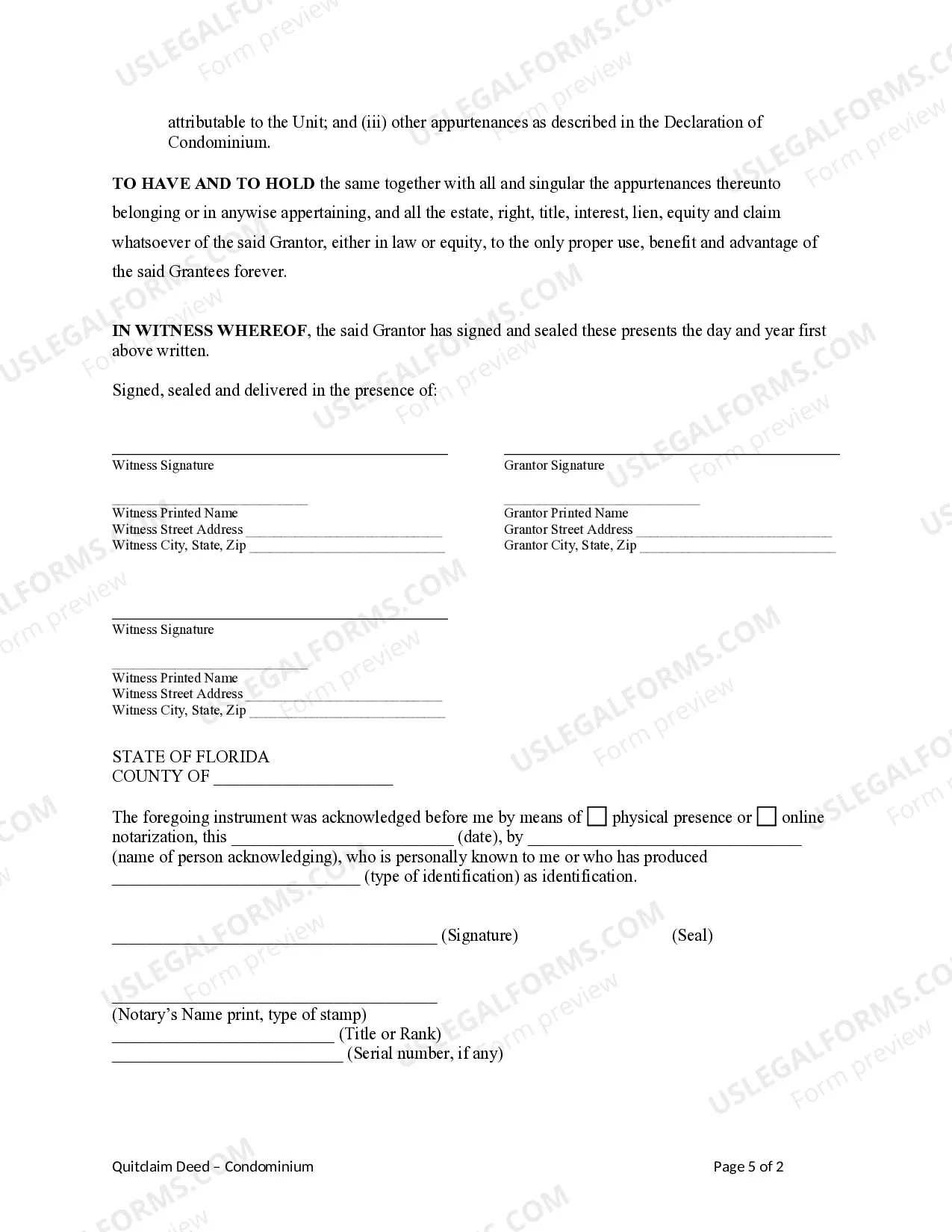
- Signatures: The Grantor must sign in the presence of a witness to validate the deed.




When to use this document
This form is appropriate in situations where an individual wishes to transfer ownership of a condominium to two other individuals. This may occur during family transitions, such as passing property to heirs, or in situations where co-owners want a clear definition of their ownership rights. It may also be suitable for amicable property transfers between friends or business partners.
Who can use this document
- Individuals transferring their interest in a condominium.
- Co-owners looking to clarify their ownership arrangement.
- Heirs receiving property from a deceased relative.
- Those involved in amicable property transactions among friends or business partners.
How to prepare this document
- Identify the parties involved: Fill in the name of the Grantor and the two Grantees.
- Specify the property: Provide a detailed legal description of the condominium being transferred.
- Choose the ownership type: Indicate whether the Grantees will hold the property as tenants in common or as joint tenants.
- Collect signatures: The Grantor must sign the deed in the presence of a witness.
- Store the document safely: Ensure that all parties receive a copy of the completed deed for their records.
Is notarization required?
This form must be notarized to be legally valid. US Legal Forms provides secure online notarization powered by Notarize, allowing you to complete the process through a verified video call.
Get your form ready online
Our built-in tools help you complete, sign, share, and store your documents in one place.
Make edits, fill in missing information, and update formatting in US Legal Forms—just like you would in MS Word.
Download a copy, print it, send it by email, or mail it via USPS—whatever works best for your next step.
Sign and collect signatures with our SignNow integration. Send to multiple recipients, set reminders, and more. Go Premium to unlock E-Sign.
If this form requires notarization, complete it online through a secure video call—no need to meet a notary in person or wait for an appointment.
We protect your documents and personal data by following strict security and privacy standards.

Make edits, fill in missing information, and update formatting in US Legal Forms—just like you would in MS Word.

Download a copy, print it, send it by email, or mail it via USPS—whatever works best for your next step.

Sign and collect signatures with our SignNow integration. Send to multiple recipients, set reminders, and more. Go Premium to unlock E-Sign.

If this form requires notarization, complete it online through a secure video call—no need to meet a notary in person or wait for an appointment.

We protect your documents and personal data by following strict security and privacy standards.
Avoid these common issues
- Failing to include accurate property descriptions, which can lead to disputes.
- Not having the deed signed in the presence of a witness, risking its validity.
- Assuming the form provides title guarantees, which it does not.
- Leaving out critical information about the Grantees, which can complicate ownership rights.
Benefits of using this form online
- Convenience of completing the form from home, saving time and effort.
- Editability allows for easy correction and customization of the document.
- Access to quality legal forms drafted by licensed attorneys to ensure compliance.
- Immediate availability for download, enabling prompt transfers.
Looking for another form?
Form popularity
FAQ
While it is not necessary to hire a lawyer to complete a quitclaim deed in Florida, seeking legal advice can provide added peace of mind. A lawyer can help ensure that the deed complies with state laws and regulations. If you prefer a more straightforward approach, platforms like USLegalForms offer user-friendly tools for creating a Florida Quitclaim Deed for Condominium - Individual to Two Individuals, making it easier to handle the process independently.
To fill out a Florida quitclaim deed, begin by entering the names of the individuals involved in the transfer and the address of the condominium. Next, ensure you include a detailed legal description of the property to avoid any confusion. Finally, both parties will need to sign the document to validate the transfer, especially in the case of a Florida Quitclaim Deed for Condominium - Individual to Two Individuals.
Filling out a quitclaim deed in Florida involves providing specific information about the property and the parties involved. Start by clearly stating the names of the current owner and the new owners. It is also crucial to include a legal description of the property, especially for a Florida Quitclaim Deed for Condominium - Individual to Two Individuals. You might find using templates from trusted platforms like USLegalForms beneficial for guidance.
Yes, you can prepare your own quit claim deed in Florida, but it is essential to follow the state's legal requirements. Many people choose to use templates to ensure accuracy and compliance. Platforms like USLegalForms offer convenient options to help you create a Florida Quitclaim Deed for Condominium - Individual to Two Individuals, simplifying the process.
Yes, a quitclaim deed must be signed by both parties involved in the transaction, specifically the individual transferring the property and the individuals receiving the property. This ensures that the deed is valid and acknowledges the transfer of ownership. In the case of a Florida Quitclaim Deed for Condominium - Individual to Two Individuals, both parties need to provide their signatures to facilitate the ownership change.
A quit claim deed isn't appropriate for transferring property as part of a legal sale with monetary exchange or for properties under dispute in court. For instance, in a Florida Quitclaim Deed for Condominium - Individual to Two Individuals, if there are existing liens or legal claims on the property, a quitclaim deed does not clear those issues. Legal clarity is essential; therefore, consider alternatives if you face such situations.
A quit claim deed effectively transfers property between family members or helps settle informal agreements among friends in situations like property inheritance. In a Florida Quitclaim Deed for Condominium - Individual to Two Individuals, one spouse may transfer ownership to another as part of a friendly arrangement. However, the parties involved should still be aware of any potential risks and seek legal advice if needed to ensure clarity.
A quit claim deed cannot be used in situations involving the transfer of property through a will or when contesting a divorce settlement. Furthermore, a Florida Quitclaim Deed for Condominium - Individual to Two Individuals is not suitable for formally settling disputes over property rights, as it does not resolve issues of ownership. It's important to understand these limitations and consult a legal expert when necessary.
Using a quit claim deed can be risky, as it does not guarantee that the seller holds clear title to the property. For a Florida Quitclaim Deed for Condominium - Individual to Two Individuals, this means that any existing liens or claims against the property may transfer to the new owners. Additionally, if the grantor has unresolved financial issues, the new owners may inherit those problems. Consider utilizing professional services like uslegalforms to evaluate the risks.
A quit claim deed may be considered invalid if it lacks essential elements such as proper signatures, lack of notarization, or failure to record it with the relevant authorities. In the case of a Florida Quitclaim Deed for Condominium - Individual to Two Individuals, if the grantor is not the true owner of the property, the deed can also be challenged. Furthermore, if the language in the deed is unclear or ambiguous, it may create legal challenges down the line. Always seek professional help to ensure validity.