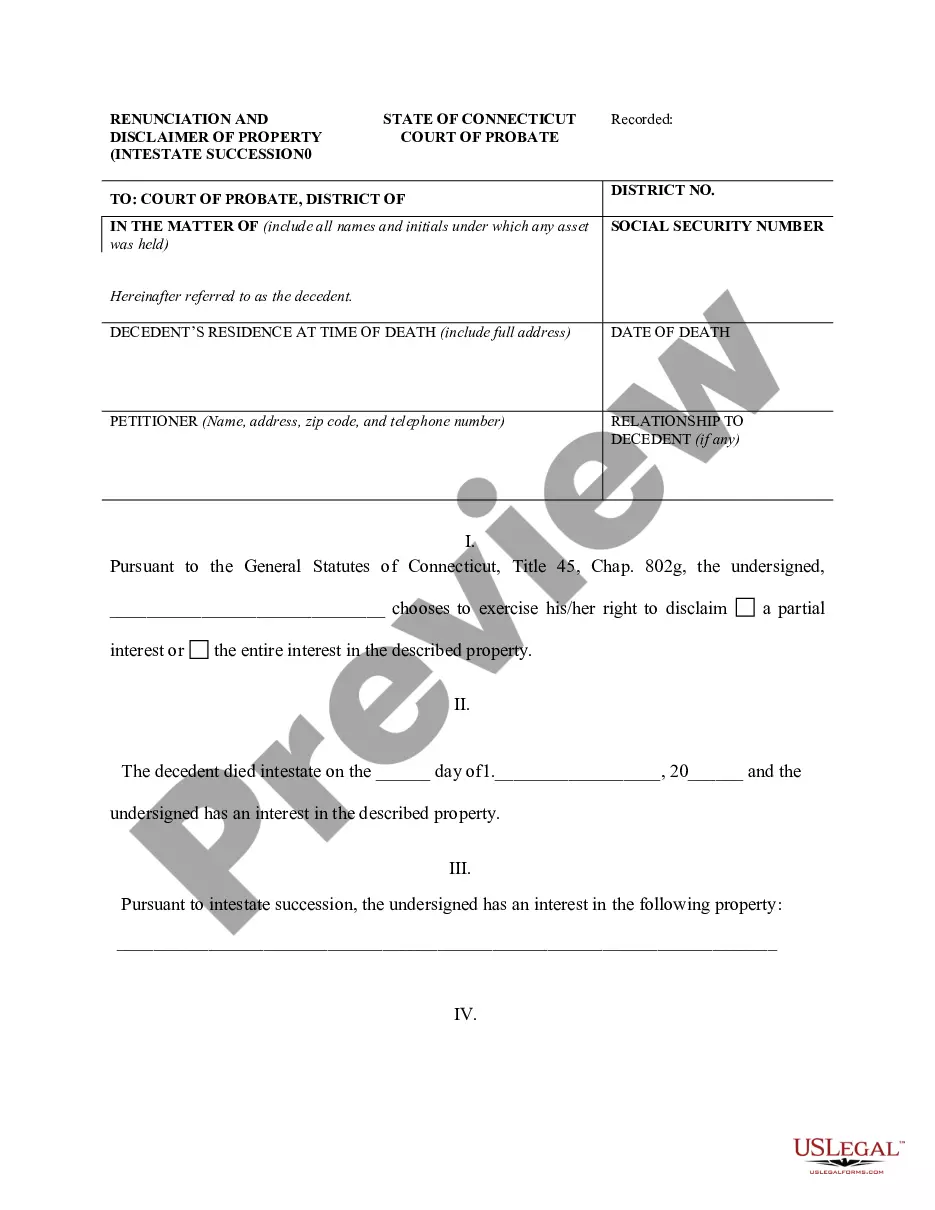
Guidelines for Lease vs. Purchase of Information Technology
What is this form?
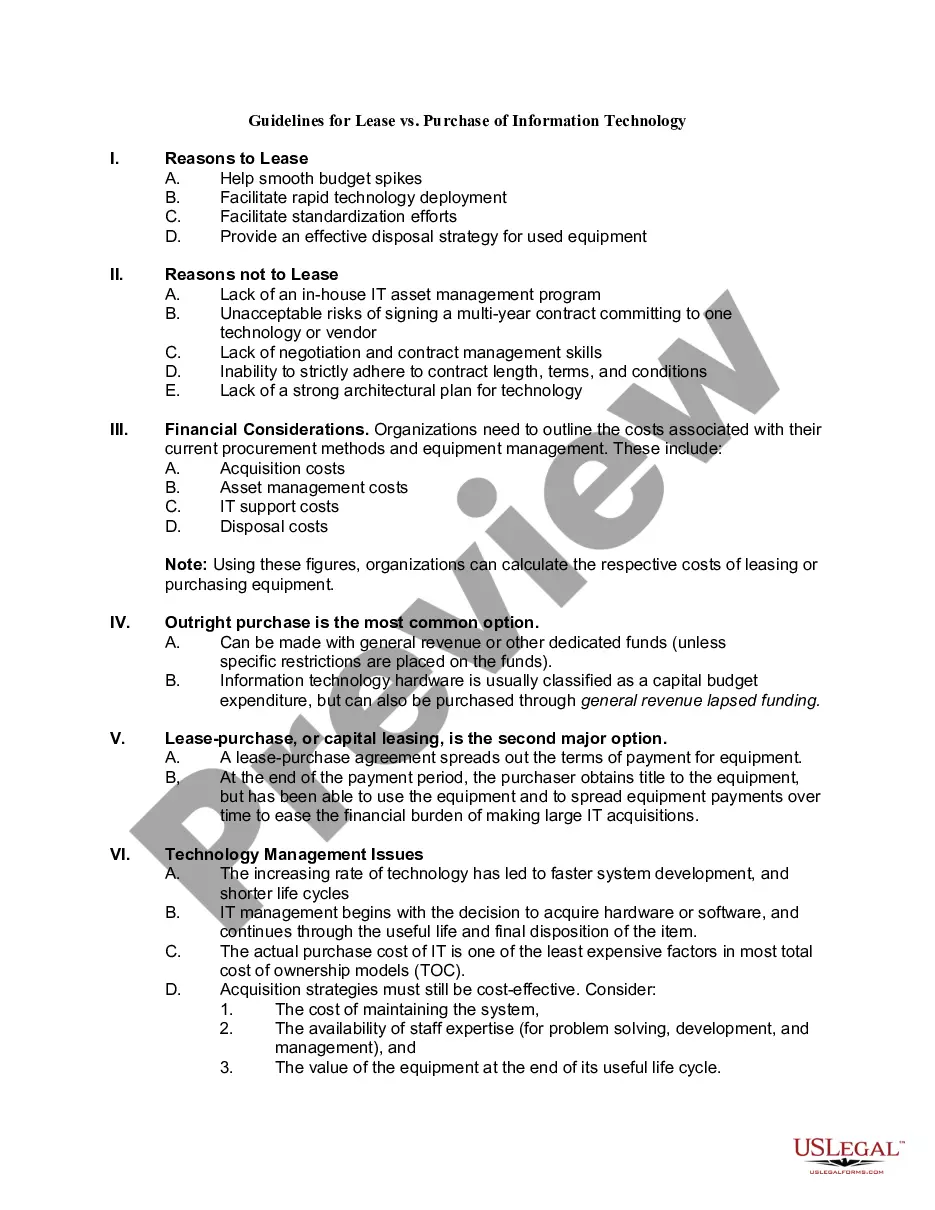
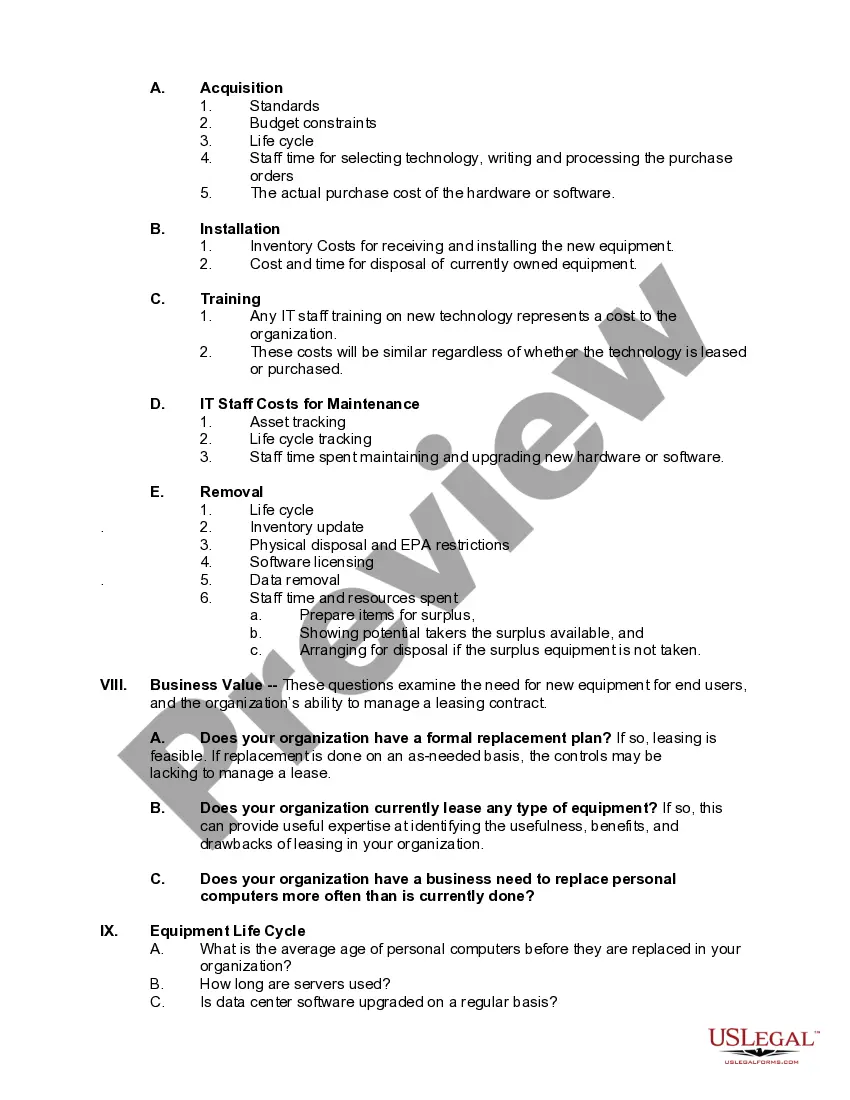
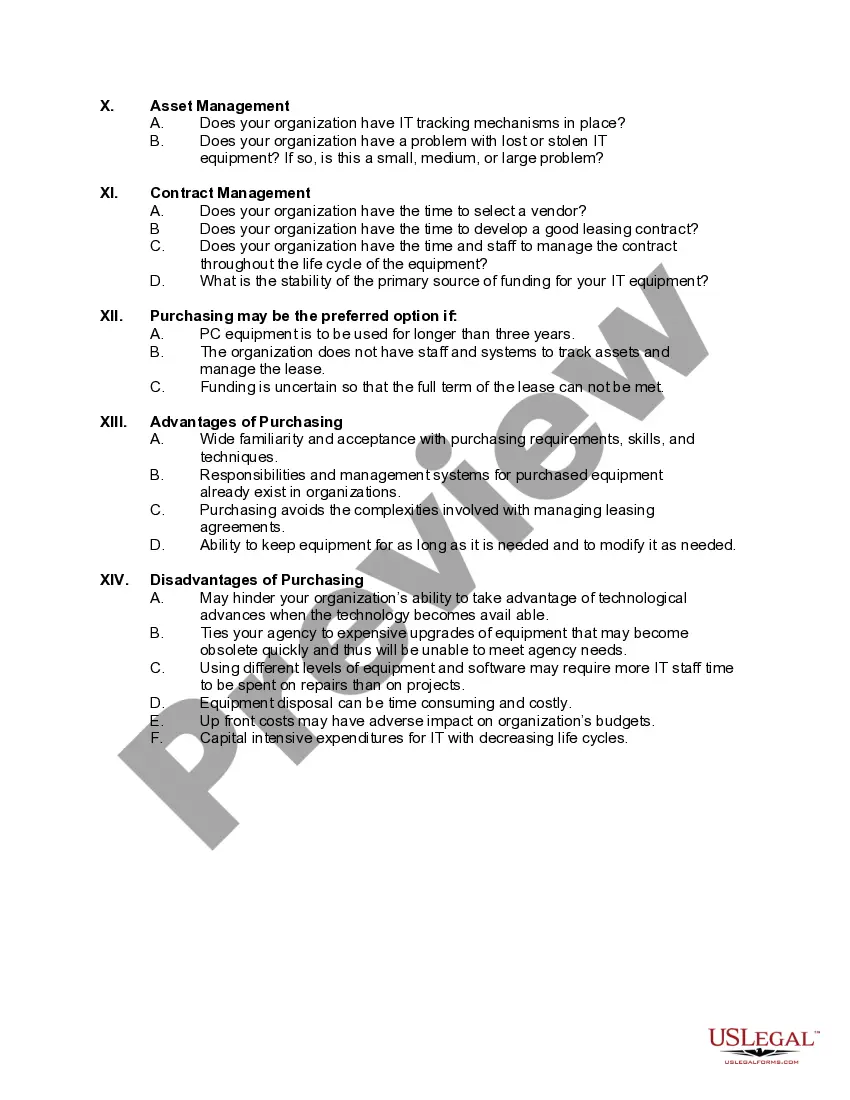
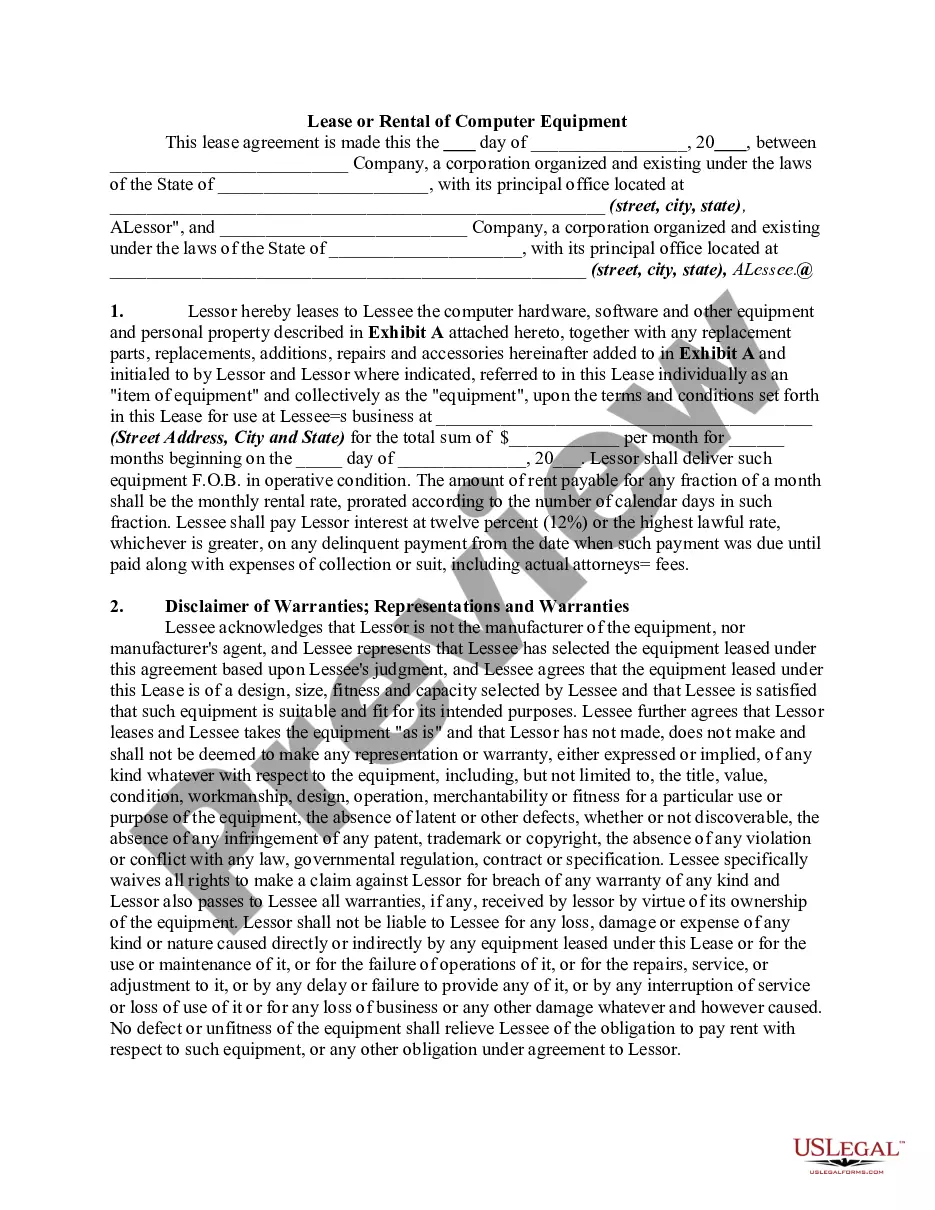
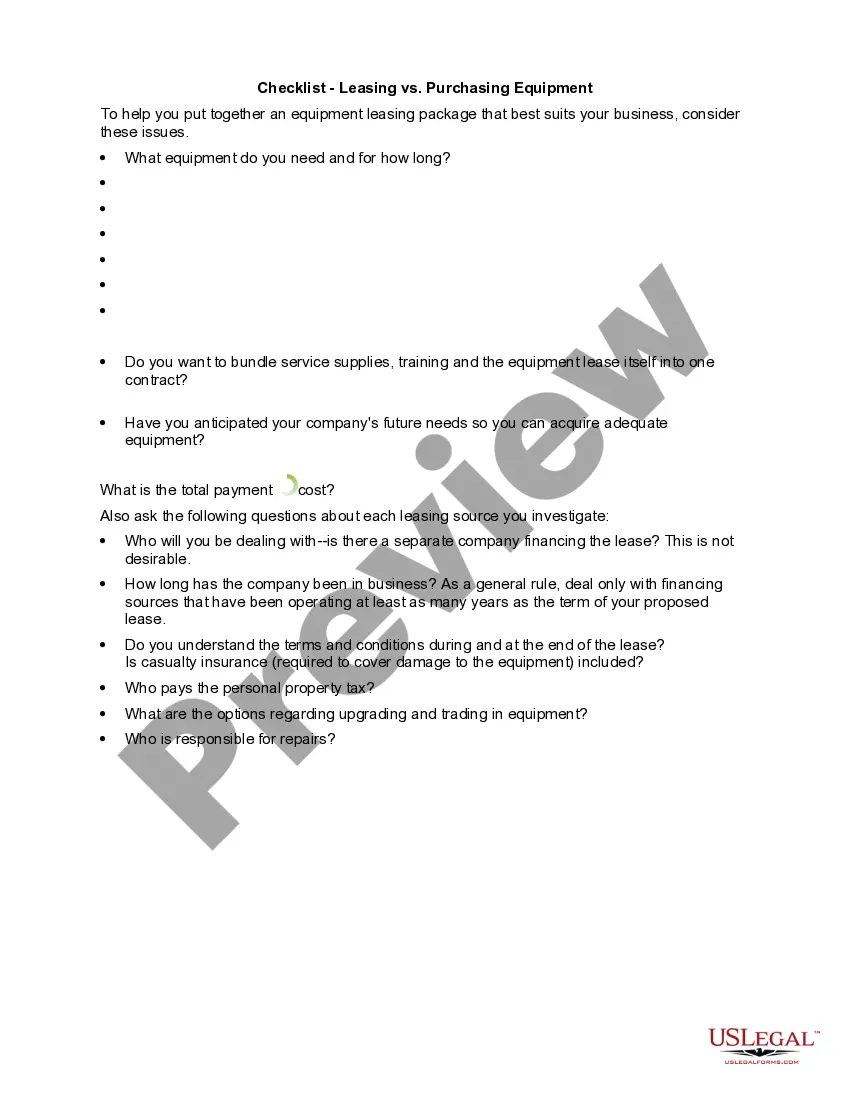
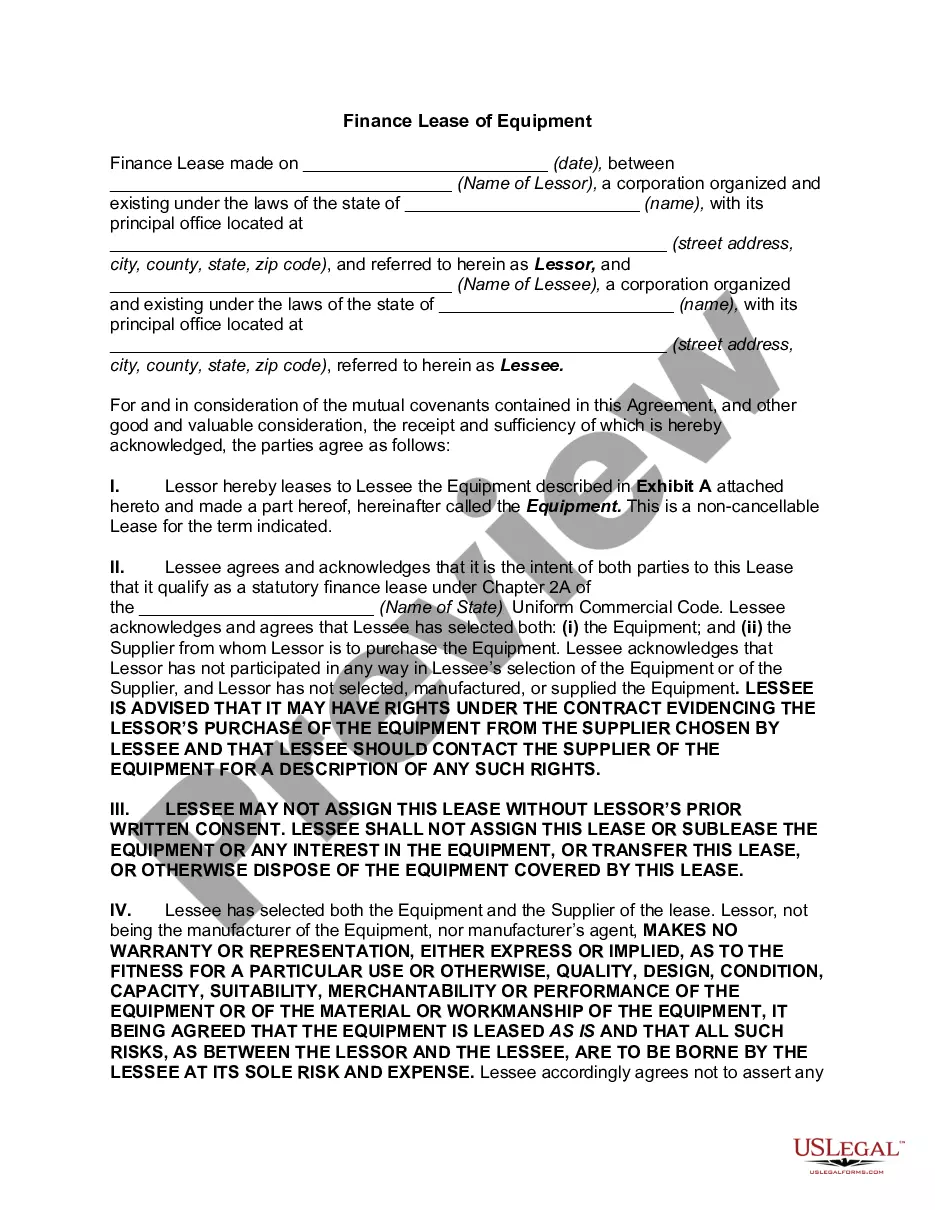
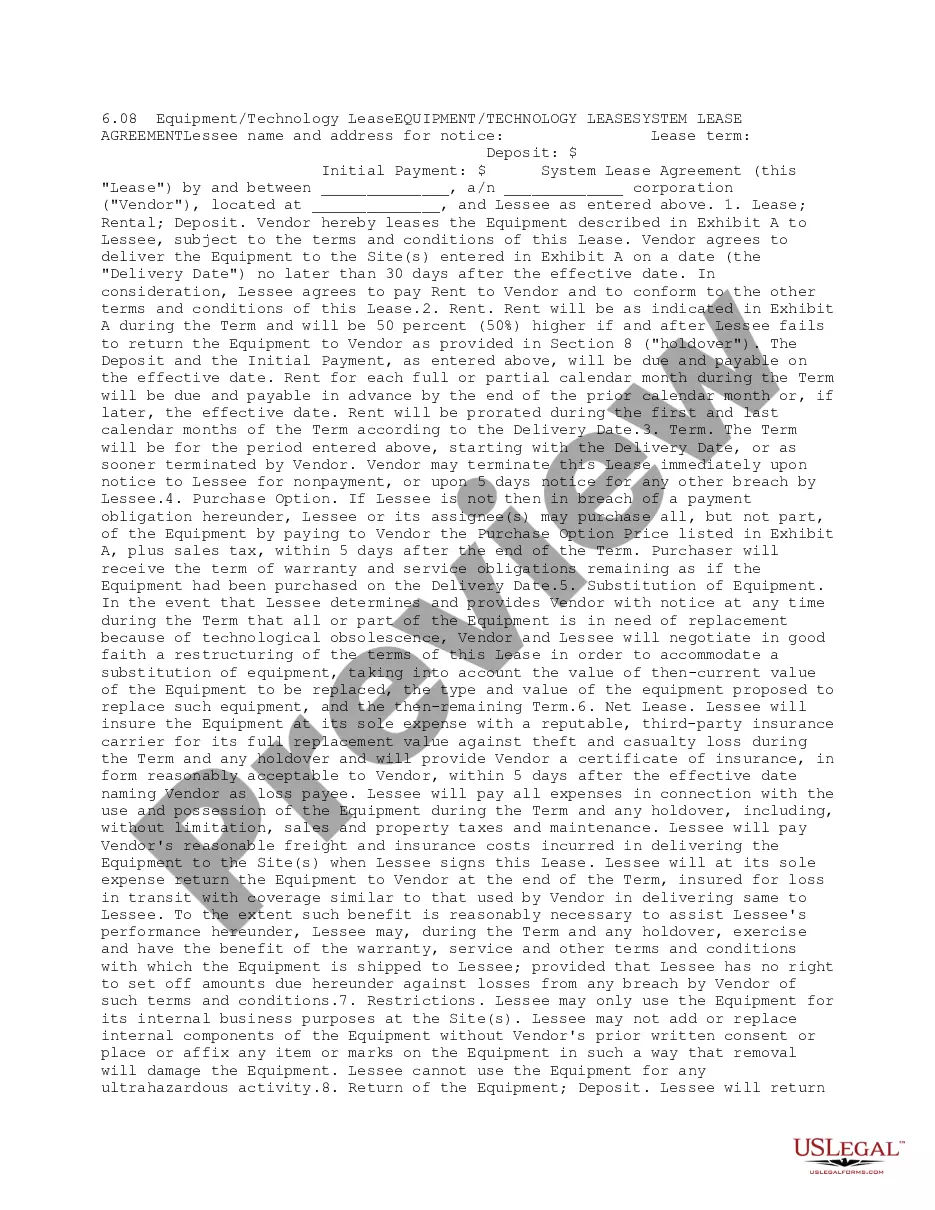
The Guidelines for Lease vs. Purchase of Information Technology form provides organizations with essential information to determine whether to lease or purchase IT equipment. This form helps organizations manage their technology needs amidst rapidly changing IT landscapes, facilitating informed decisions regarding budgeting and equipment management.
Key parts of this document
- Reasons to lease: Includes benefits like budget smoothing and rapid technology deployment.
- Reasons not to lease: Outlines risks such as contract management challenges.
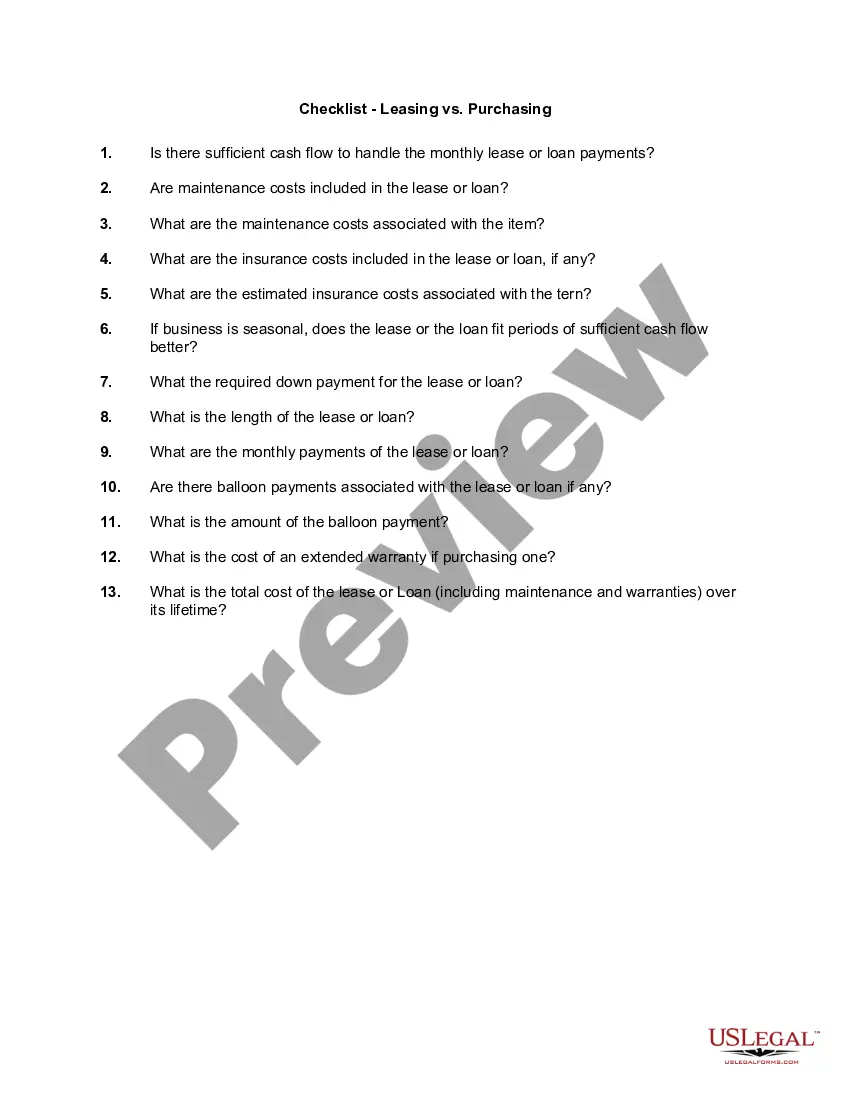
- Financial considerations: Covers acquisition costs and ongoing IT support expenses.
- Technology management issues: Discusses the lifecycle of technology and management strategies.
- Comparative analysis: Reviews the pros and cons of outright purchasing versus leasing.
When to use this document
This form is used when an organization is evaluating its options for acquiring IT equipment. If your organization is experiencing budget fluctuations, is in need of rapid technology upgrades, or is unsure whether leasing or purchasing would be more beneficial, this form can help clarify decisions and outline necessary considerations.
Who this form is for
- IT managers and decision-makers considering new technology acquisitions.
- Financial officers seeking to balance budgets with technological needs.
- Organizations evaluating their asset management practices and strategies for IT equipment.
- Businesses with a formal equipment replacement plan.
How to complete this form
- Assess current and future technology needs within your organization.
- Evaluate the financial implications of leasing versus purchasing equipment.
- Analyze the risks associated with long-term lease commitments.
- Consider the life cycle of the technology and its impact on your operations.
- Make a decision based on data gathered and the operational needs identified.
Does this form need to be notarized?
This form does not typically require notarization to be legally valid. However, some jurisdictions or document types may still require it. US Legal Forms provides secure online notarization powered by Notarize, available 24/7 for added convenience.
Get your form ready online
Our built-in tools help you complete, sign, share, and store your documents in one place.
Make edits, fill in missing information, and update formatting in US Legal Forms—just like you would in MS Word.
Download a copy, print it, send it by email, or mail it via USPS—whatever works best for your next step.
Sign and collect signatures with our SignNow integration. Send to multiple recipients, set reminders, and more. Go Premium to unlock E-Sign.
If this form requires notarization, complete it online through a secure video call—no need to meet a notary in person or wait for an appointment.
We protect your documents and personal data by following strict security and privacy standards.

Make edits, fill in missing information, and update formatting in US Legal Forms—just like you would in MS Word.

Download a copy, print it, send it by email, or mail it via USPS—whatever works best for your next step.

Sign and collect signatures with our SignNow integration. Send to multiple recipients, set reminders, and more. Go Premium to unlock E-Sign.

If this form requires notarization, complete it online through a secure video call—no need to meet a notary in person or wait for an appointment.

We protect your documents and personal data by following strict security and privacy standards.
Avoid these common issues
- Overlooking total cost of ownership, including maintenance and disposal costs.
- Failing to negotiate terms and conditions of lease agreements.
- Ignoring the importance of having a formal asset management program.
- Not considering the expected life cycle of technology before making procurement decisions.
Why complete this form online
- Easy access to up-to-date guidelines and recommendations.
- Ability to customize the form to fit specific organizational needs.
- Quickly downloadable for immediate implementation without delays.
Legal use & context
- This form helps ensure compliance with internal procurement policies.
- Used to establish clear expectations and requirements for technology acquisitions.
- Can serve as documentation in the event of audits or financial reviews.
Summary of main points
- Organizations must weigh the pros and cons of leasing versus purchasing IT equipment.
- Financial considerations are critical in making the right choice for technology acquisition.
- A clear asset management strategy is essential for effective technology deployment.
Looking for another form?

Form popularity
FAQ
The major drawback of leasing is that you don't acquire any equity in the vehicle. It's a bit like renting an apartment. You make monthly payments but have no ownership claim to the property once the lease expires. In this case, it means you can't sell the car or trade it in to reduce the cost of your next vehicle.
If your equipment requirements are relatively small and you have the money--or can get a low-interest loan--then just buy it. You'll save money in the long run. However, if you require a substantial amount of equipment, such as computers for your new company's 10 employees, leasing may be a better option.
In terms of out-of-pocket spending, leasing costs $2,584 less over six years than buying a new car, excluding any maintenance and repair costs the new car might incur. The out-of-pocket cost of buying a used car is $5,547 cheaper than leasing and $8,131 cheaper than buying a new car.
If your equipment requirements are relatively small and you have the money--or can get a low-interest loan--then just buy it. You'll save money in the long run. However, if you require a substantial amount of equipment, such as computers for your new company's 10 employees, leasing may be a better option.
On the surface, leasing can be more appealing than buying. Monthly payments are usually lower because you're not paying back any principal. Instead, you're just borrowing and repaying the difference between the car's value when new and the car's residualits expected value when the lease endsplus finance charges.
Lease payments are generally lower than the monthly loan payments for a new vehicle.Residual Value: This is the value of the vehicle at the end of the lease, with its depreciation figured in. If you decide to purchase the vehicle once the lease expires, this is the amount you will pay.
Leases are usually easier to obtain and have more flexible terms than loans for buying equipment. This can be a significant advantage if you have bad credit or need to negotiate a longer payment plan to lower your costs. Easier to upgrade equipment. Leasing allows businesses to address the problem of obsolescence.
Leases are usually easier to obtain and have more flexible terms than loans for buying equipment. This can be a significant advantage if you have bad credit or need to negotiate a longer payment plan to lower your costs. Easier to upgrade equipment. Leasing allows businesses to address the problem of obsolescence.