Finance Lease of Equipment
About this form
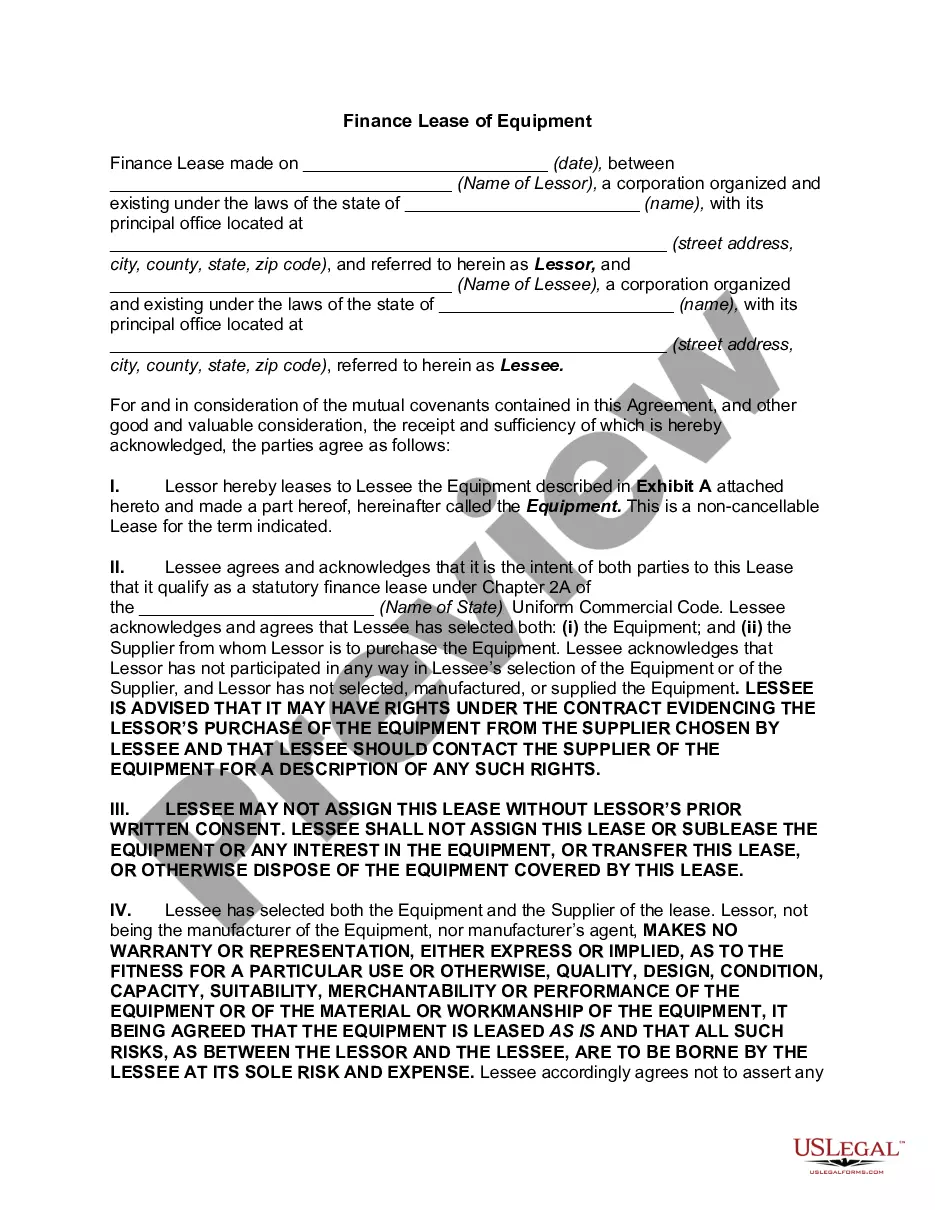
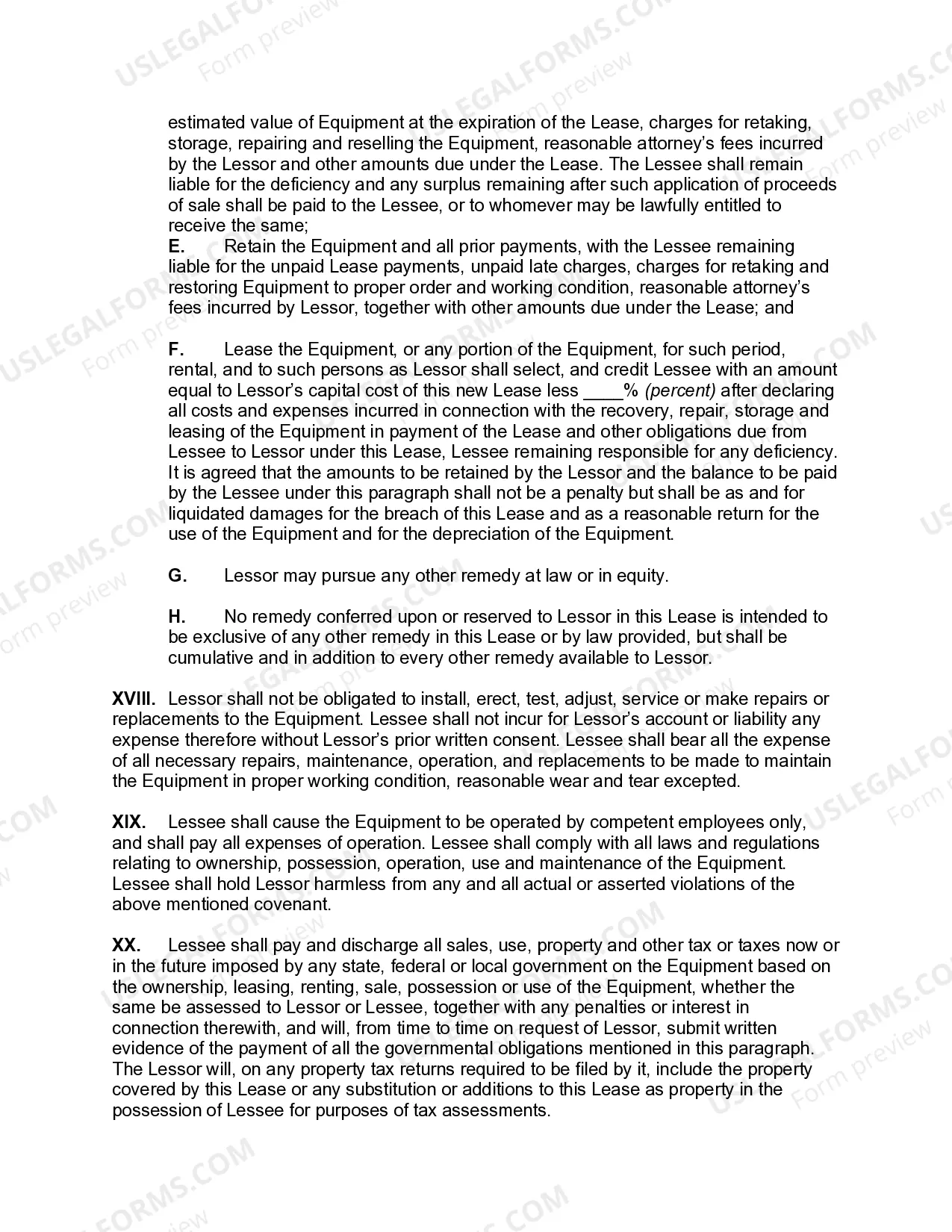
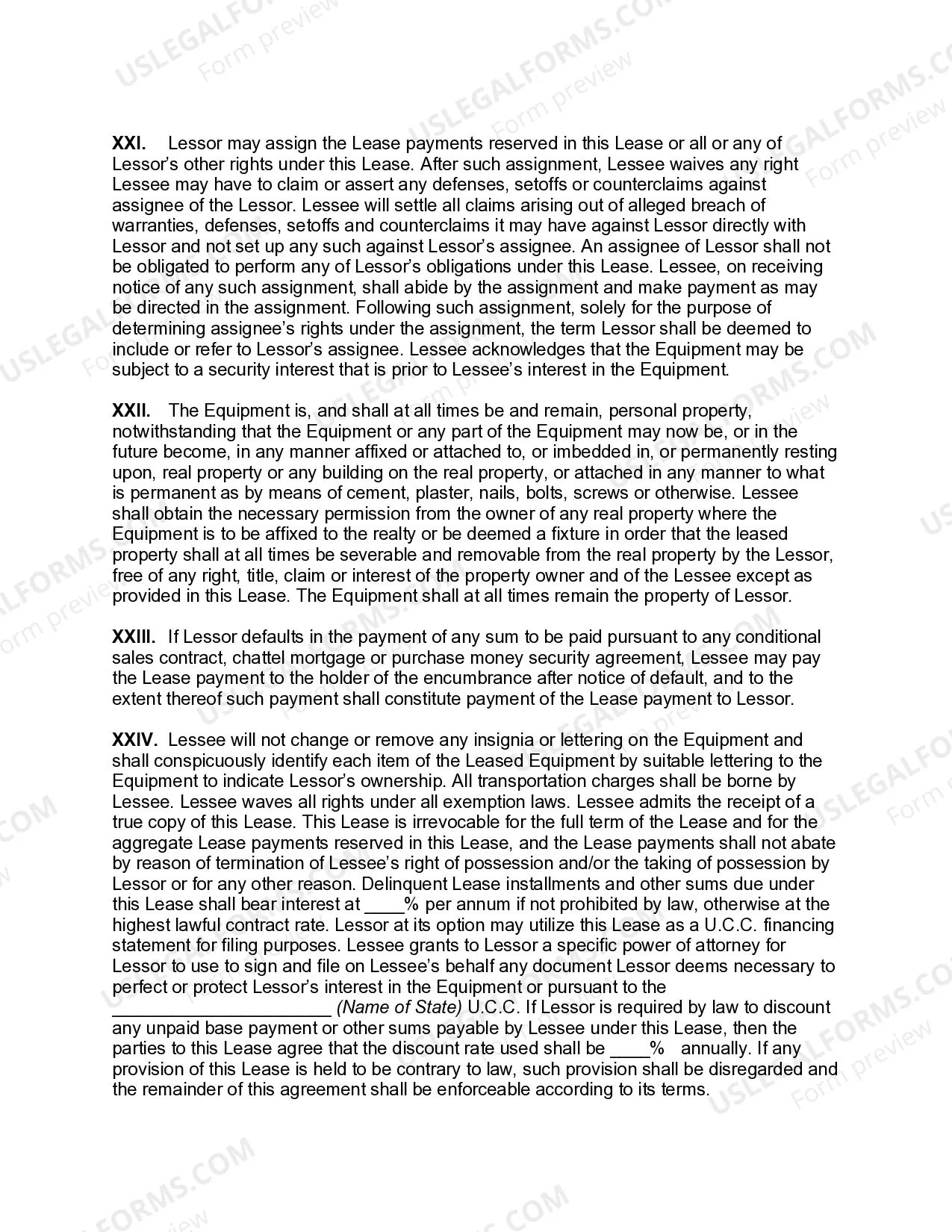
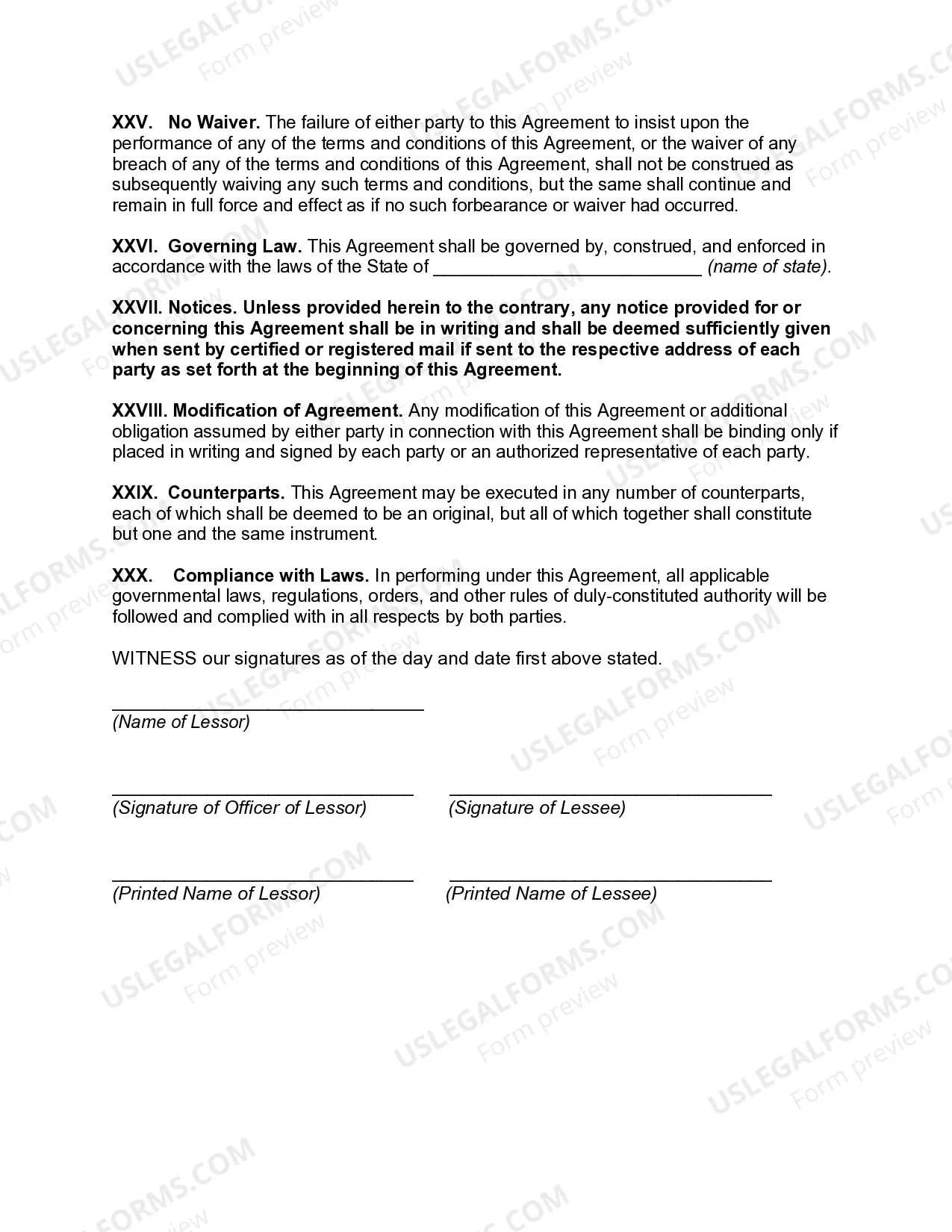
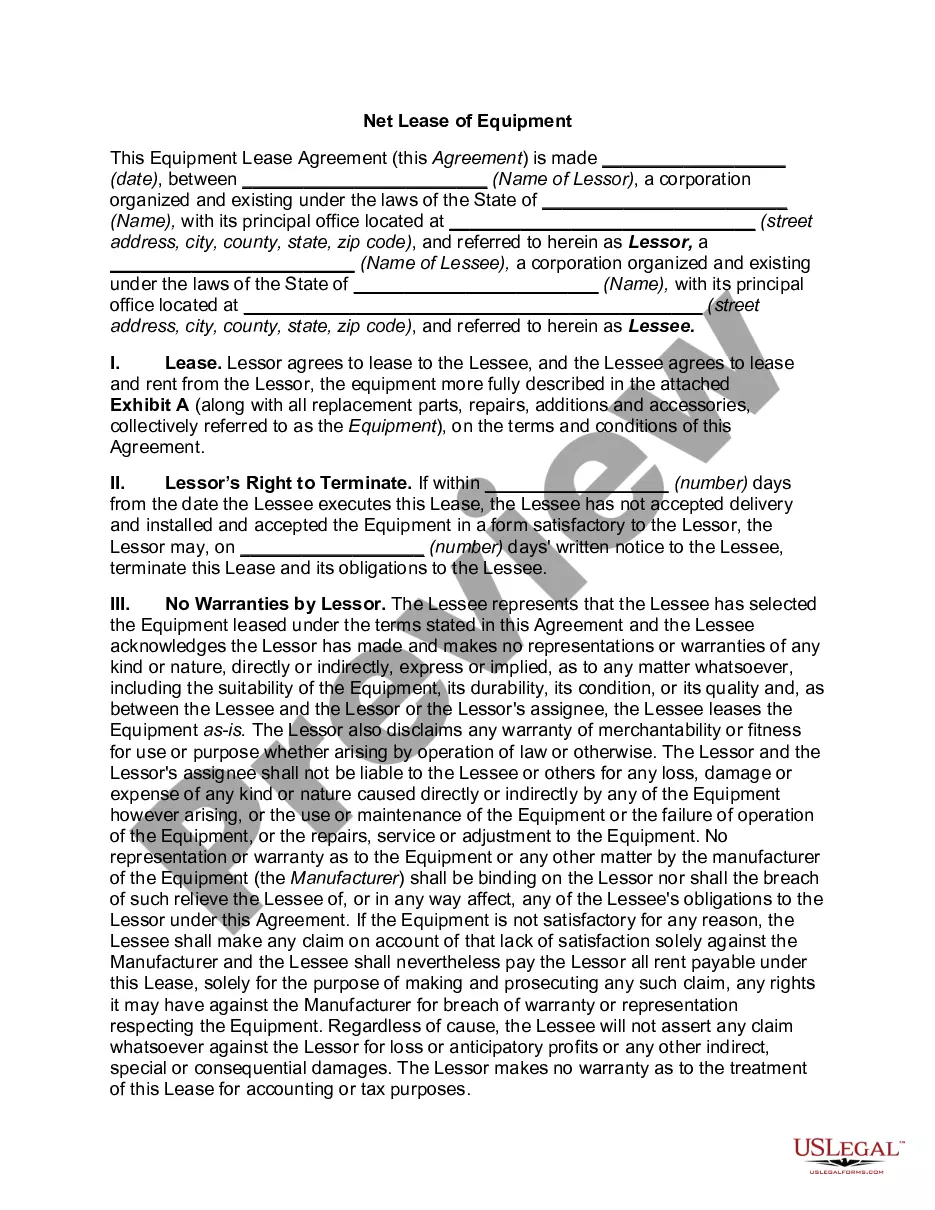
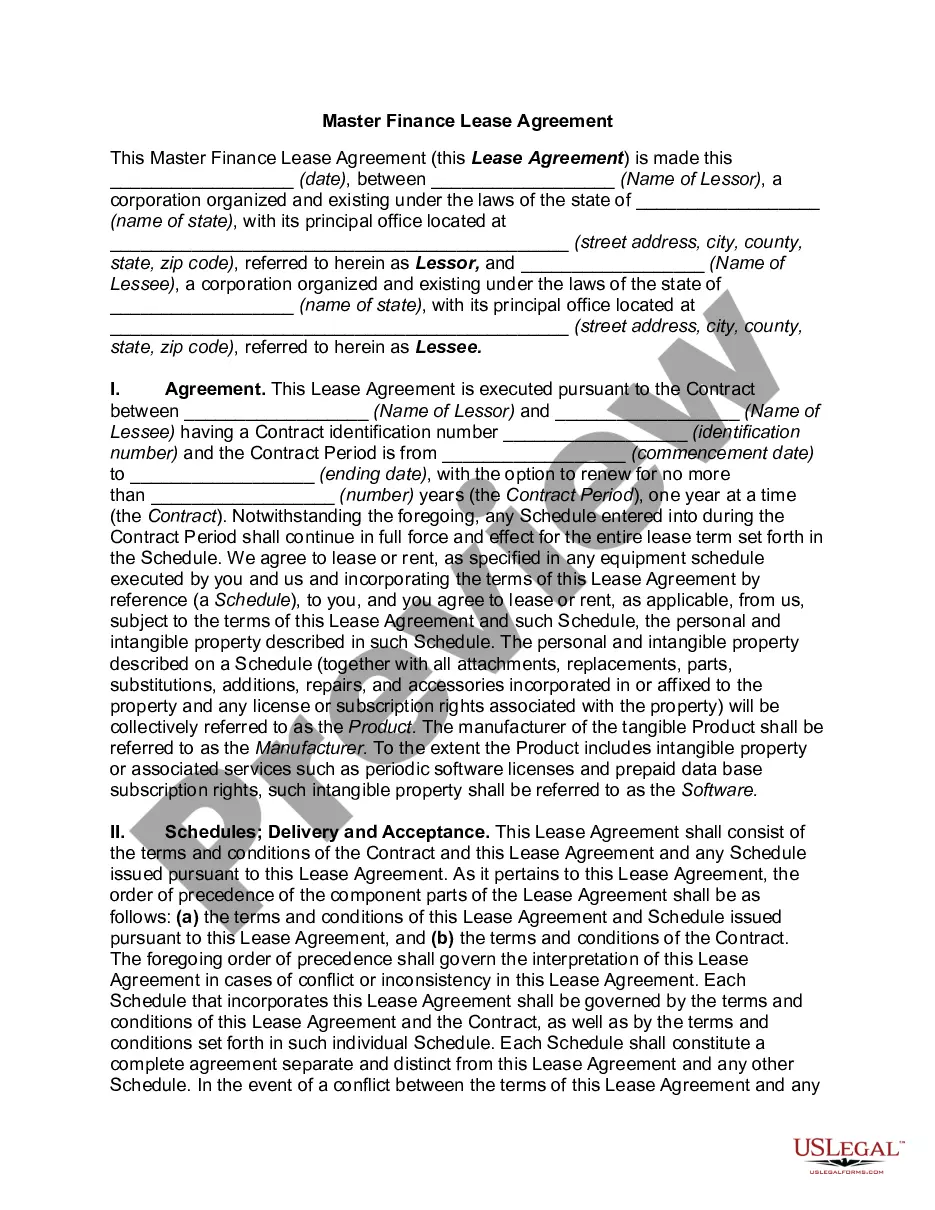
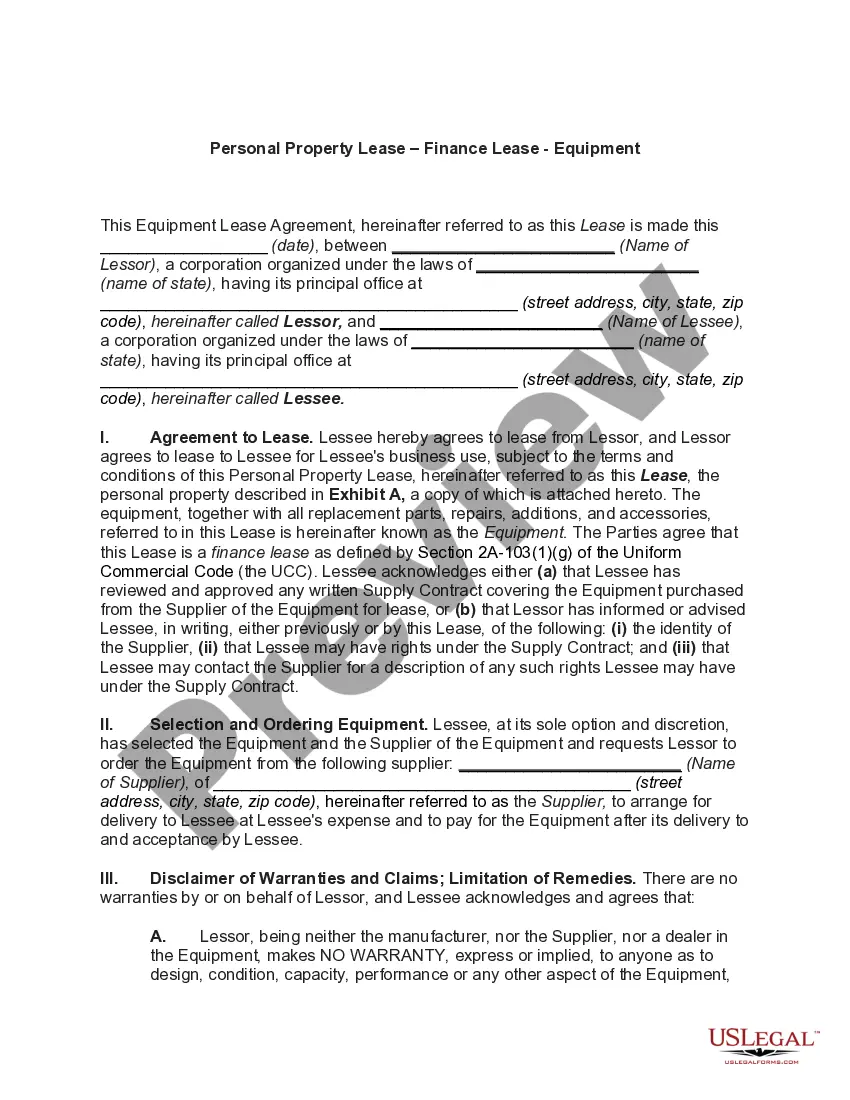
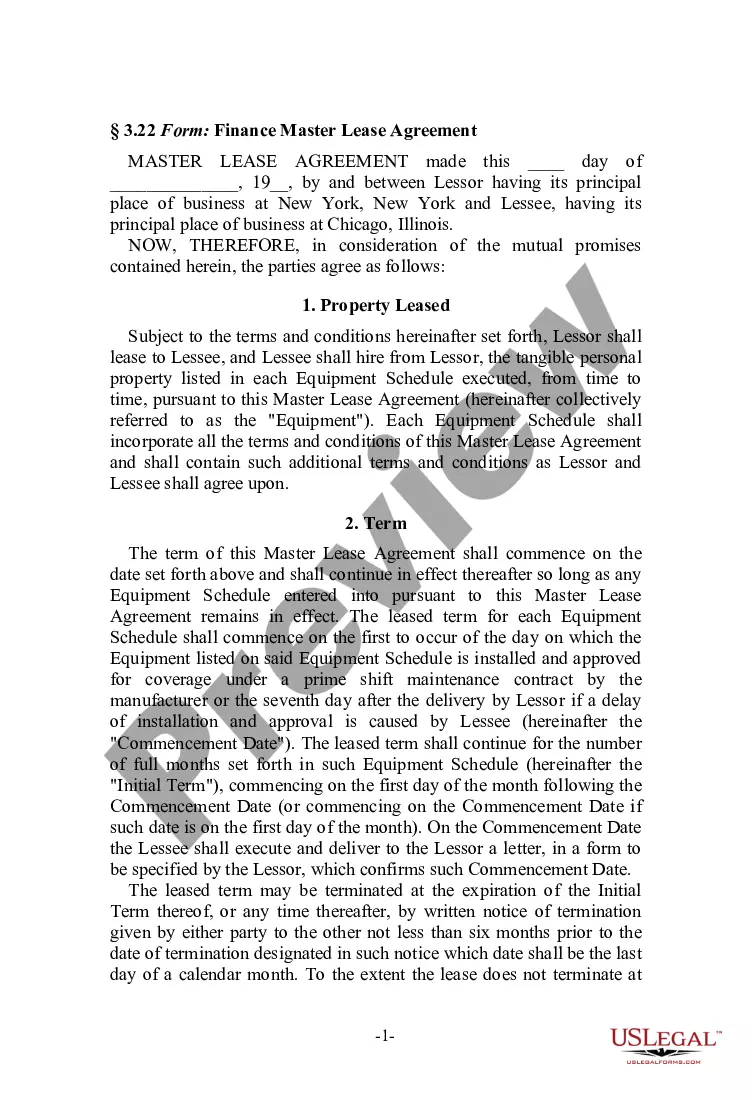
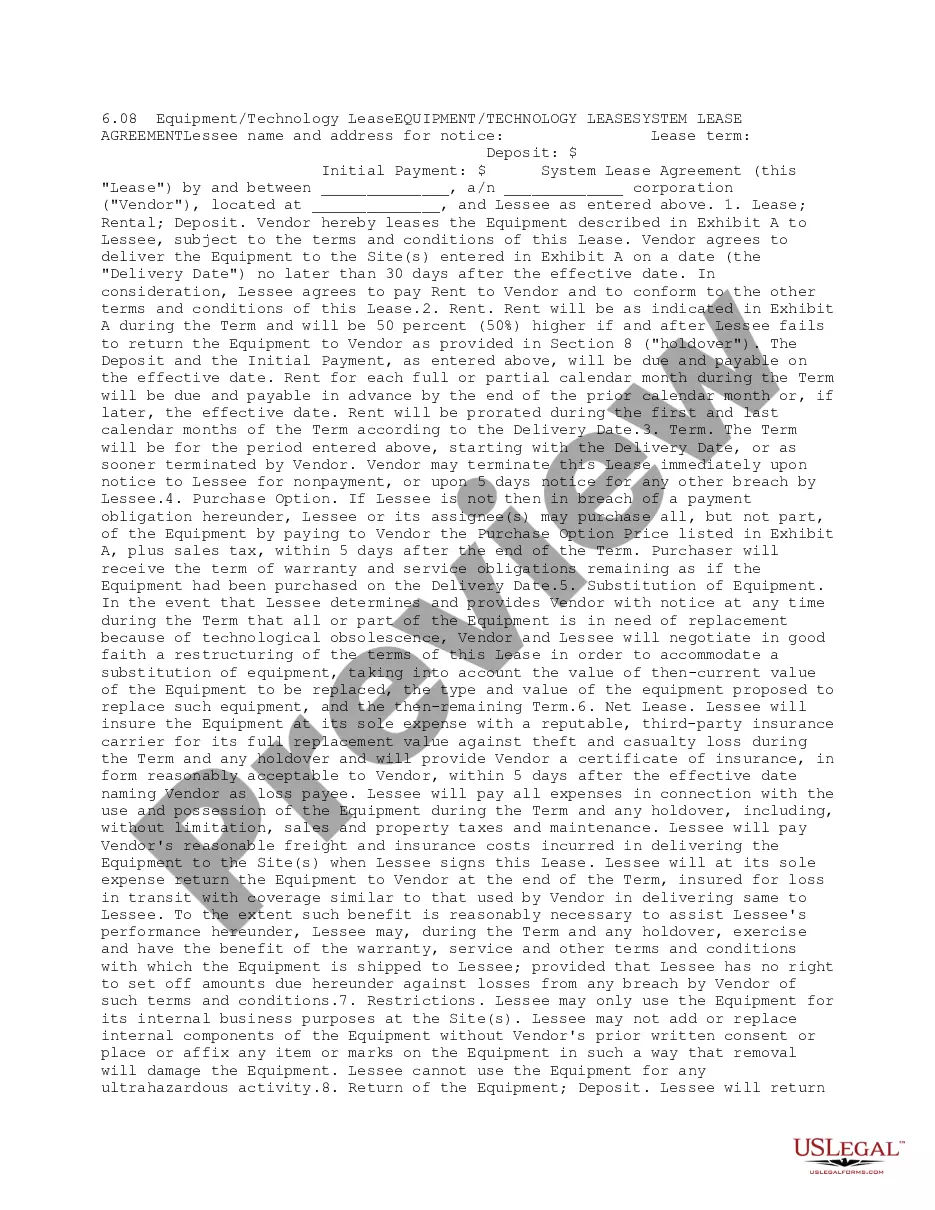
The Finance Lease of Equipment is a binding agreement that enables a lessee to lease equipment for commercial use from a lessor, without assuming ownership. This type of lease differs from traditional leases as it emphasizes the lessee's choice of both the equipment and the supplier, while the lessor remains responsible for financing. It is structured to qualify as a statutory finance lease under the Uniform Commercial Code, providing specific legal protections and obligations for both parties.
Key components of this form
- Date of lease agreement.
- Identification of the lessor and lessee, including their business details.
- Detailed description of the leased equipment.
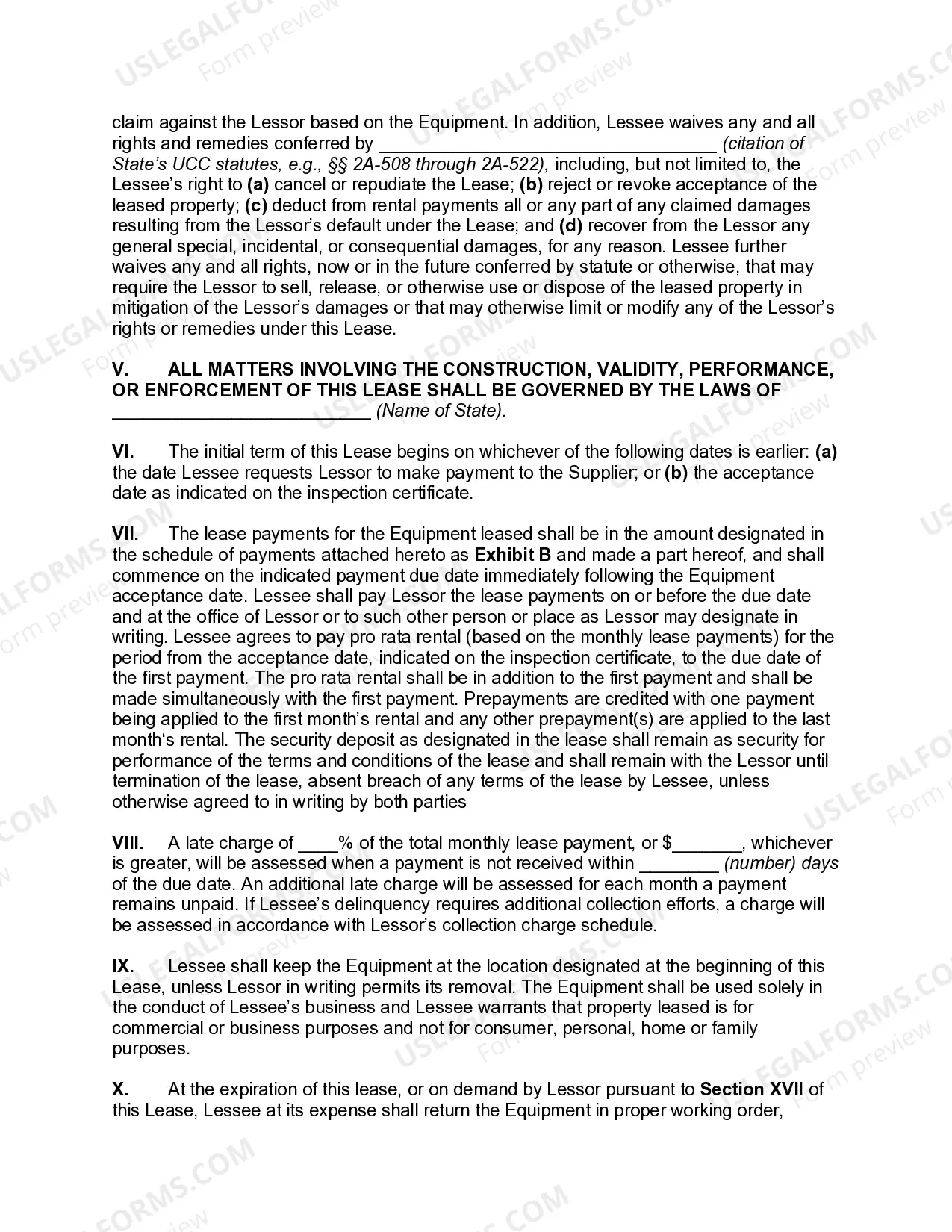
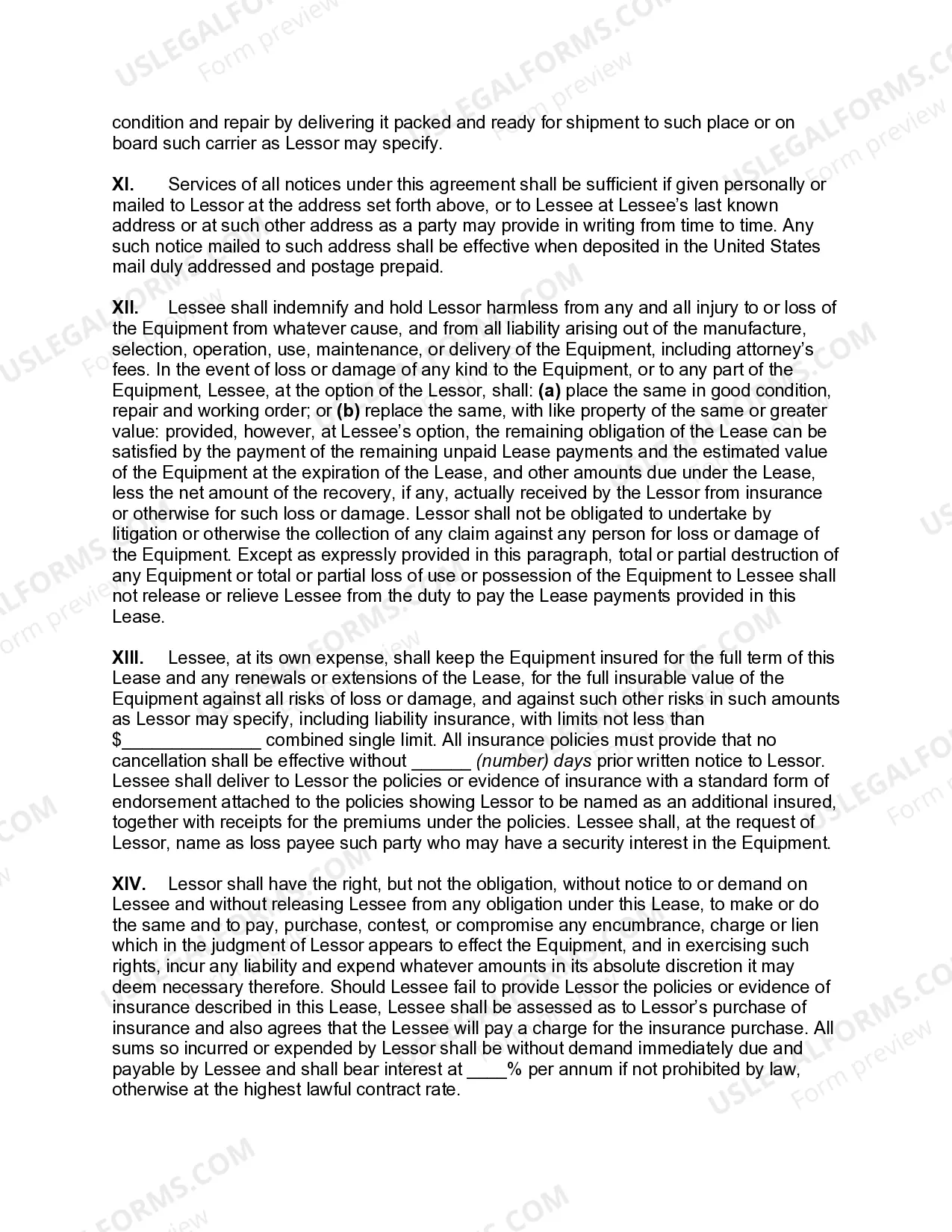
- Lease payment schedule and amounts.
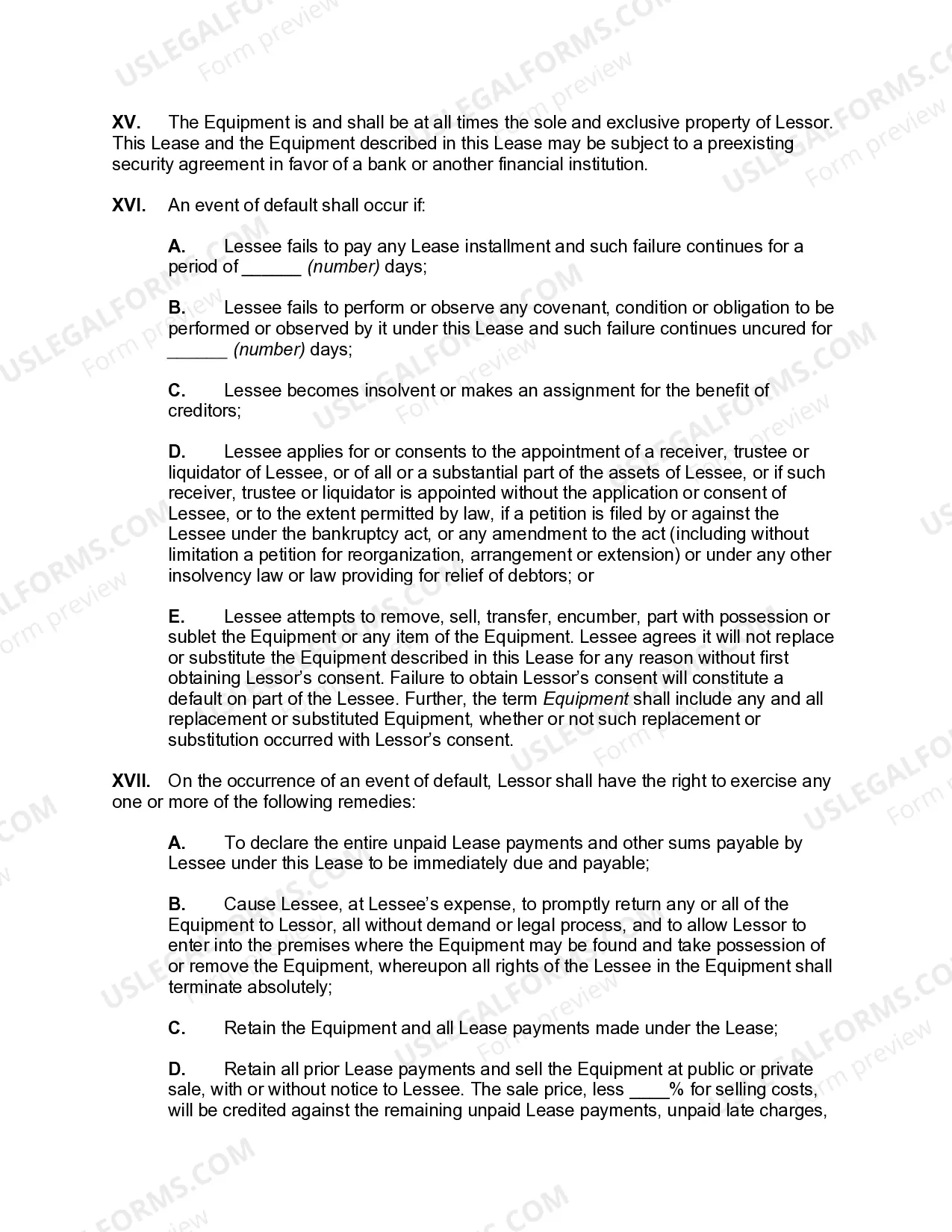
- Terms related to defaults and remedies for the lessor.
- Jurisdiction under which the lease is governed.
Common use cases
This form is necessary when a business wishes to finance the use of equipment through leasing rather than purchasing it outright. It is ideal for companies that prefer to maintain cash flow while acquiring necessary equipment for operations, such as machinery, vehicles, or technology. Using this finance lease helps to define the rights and responsibilities of both the lessor and lessee in a legally binding manner.
Who this form is for
- Businesses looking to acquire equipment without full ownership.
- Lessors providing financing for equipment leases.
- Lessee corporations that need flexibility in asset management.
- Suppliers recommending leasing options to clients.
How to prepare this document
- Identify and enter the names and addresses of both lessor and lessee.
- Specify the date on which the lease is executed.
- Describe the equipment being leased in detail.
- Outline the payment schedule and conditions for payments, including any applicable late fees.
- Ensure both parties sign the document, indicating agreement to all terms.
Does this form need to be notarized?
This form does not typically require notarization unless specified by local law. It is advisable to check any specific jurisdictional requirements that might necessitate notarization for lease agreements.
Get your form ready online
Our built-in tools help you complete, sign, share, and store your documents in one place.
Make edits, fill in missing information, and update formatting in US Legal Forms—just like you would in MS Word.
Download a copy, print it, send it by email, or mail it via USPS—whatever works best for your next step.
Sign and collect signatures with our SignNow integration. Send to multiple recipients, set reminders, and more. Go Premium to unlock E-Sign.
If this form requires notarization, complete it online through a secure video call—no need to meet a notary in person or wait for an appointment.
We protect your documents and personal data by following strict security and privacy standards.

Make edits, fill in missing information, and update formatting in US Legal Forms—just like you would in MS Word.

Download a copy, print it, send it by email, or mail it via USPS—whatever works best for your next step.

Sign and collect signatures with our SignNow integration. Send to multiple recipients, set reminders, and more. Go Premium to unlock E-Sign.

If this form requires notarization, complete it online through a secure video call—no need to meet a notary in person or wait for an appointment.

We protect your documents and personal data by following strict security and privacy standards.
Common mistakes to avoid
- Failing to specify the equipment details may lead to confusion.
- Not including the payment schedule or payment due dates.
- Neglecting to have both parties signed, which can invalidate the lease.
- Overlooking state-specific regulations that may affect lease enforceability.
Why use this form online
- Easy access and download at any time without the need for physical transactions.
- Quick customization to suit specific lease agreements.
- Reliability with templates created by licensed attorneys for legal compliance.
Looking for another form?

Form popularity
FAQ
An EFA is simply a loan and security agreement by another name. Unlike a non-true lease, the transaction is stated to be in the nature of a loan or financing rather than a lease of personal property and an EFA is much clearer on its face as to the parties' intention.
The equipment account is debited by the present value of the minimum lease payments and the lease liability account is the difference between the value of the equipment and cash paid at the beginning of the year. Depreciation expense must be recorded for the equipment that is leased.
The equipment account is debited by the present value of the minimum lease payments and the lease liability account is the difference between the value of the equipment and cash paid at the beginning of the year. Depreciation expense must be recorded for the equipment that is leased.
Leasing companies can make money when a lessee requests for an upgrade to the equipment they currently have or request for the lease contract to be modified. If the upgrade does not have a stand-alone value or is not readily removable, the leasing company will pay for the upgrade.
A lessee must capitalize a leased asset if the lease contract entered into satisfies at least one of the four criteria published by the Financial Accounting Standards Board (FASB). An asset should be capitalized if:The lease runs for 75% or more of the asset's useful life.
Assets being leased are not recorded on the company's balance sheet; they are expensed on the income statement. So, they affect both operating and net income.
A finance lease is a way of providing finance effectively a leasing company (the lessor or owner) buys the asset for the user (usually called the hirer or lessee) and rents it to them for an agreed period. substantially all of the risks and rewards of ownership of the asset to the lessee.
Unlike an outright purchase or equipment secured through a standard loan, equipment under an operating lease cannot be listed as capital. It's accounted for as a rental expense. This provides two specific financial advantages: Equipment is not recorded as an asset or liability.
EFA: An EFA, or equipment finance agreement, is a type of business loan where the customer takes ownership of the equipment upfront, and then pays the lender monthly, annually or under a schedule agreed on by both parties. It's similar to financing a car.