Net Lease of Equipment
Understanding this form
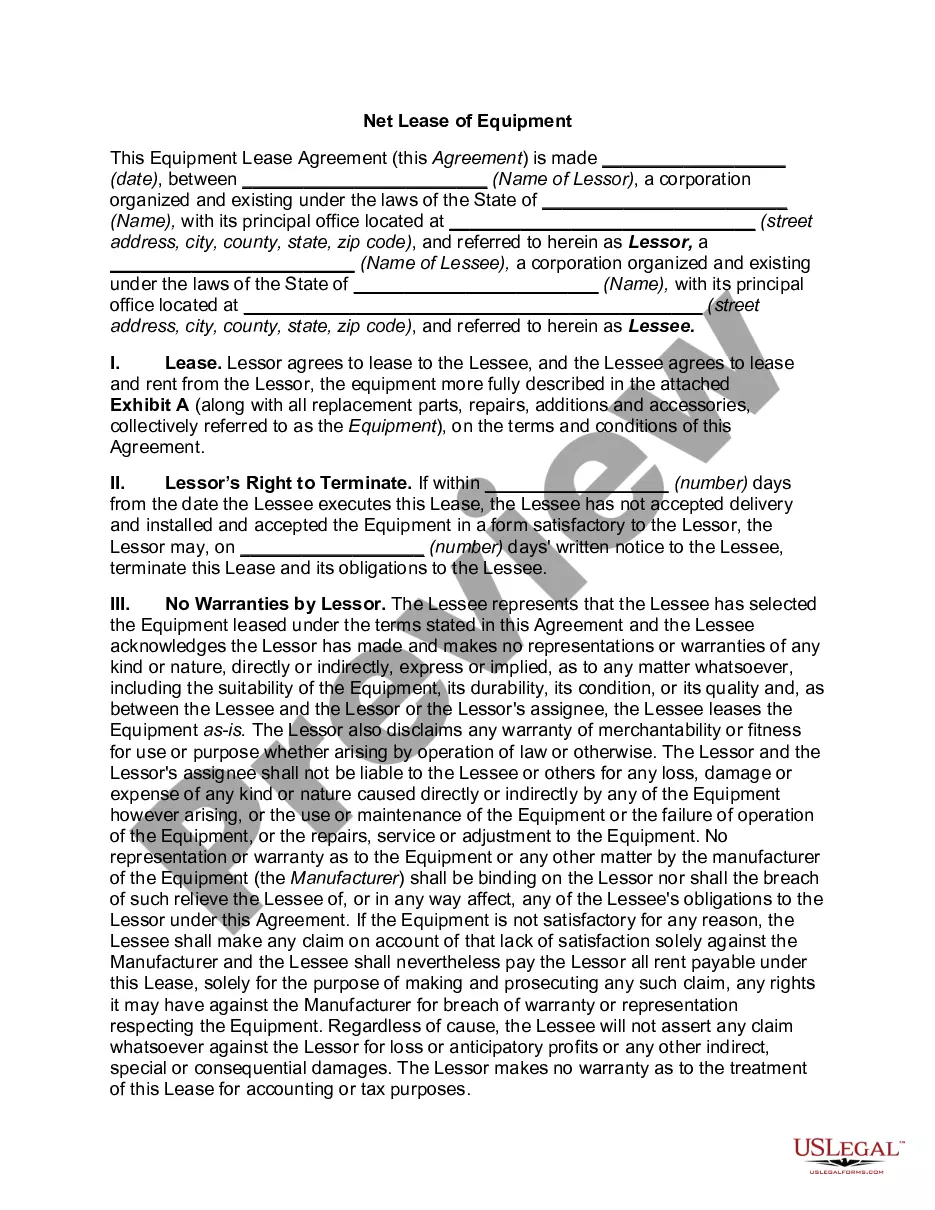
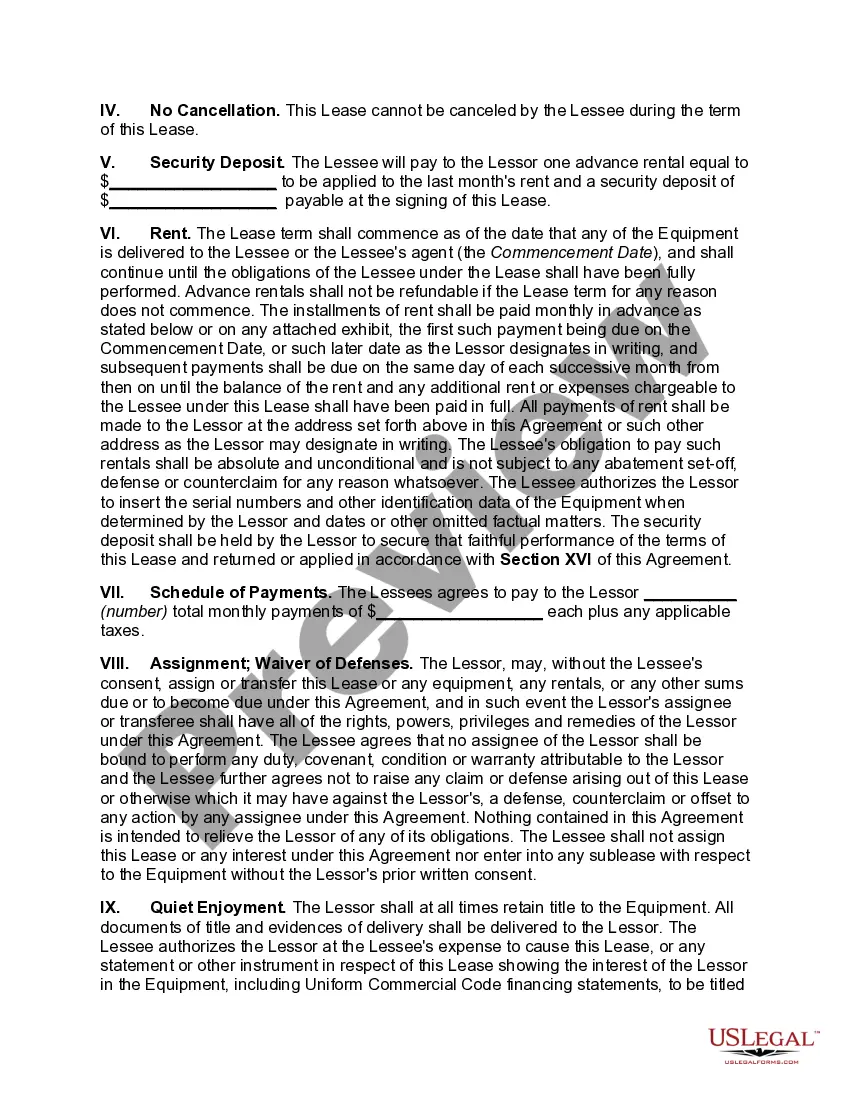
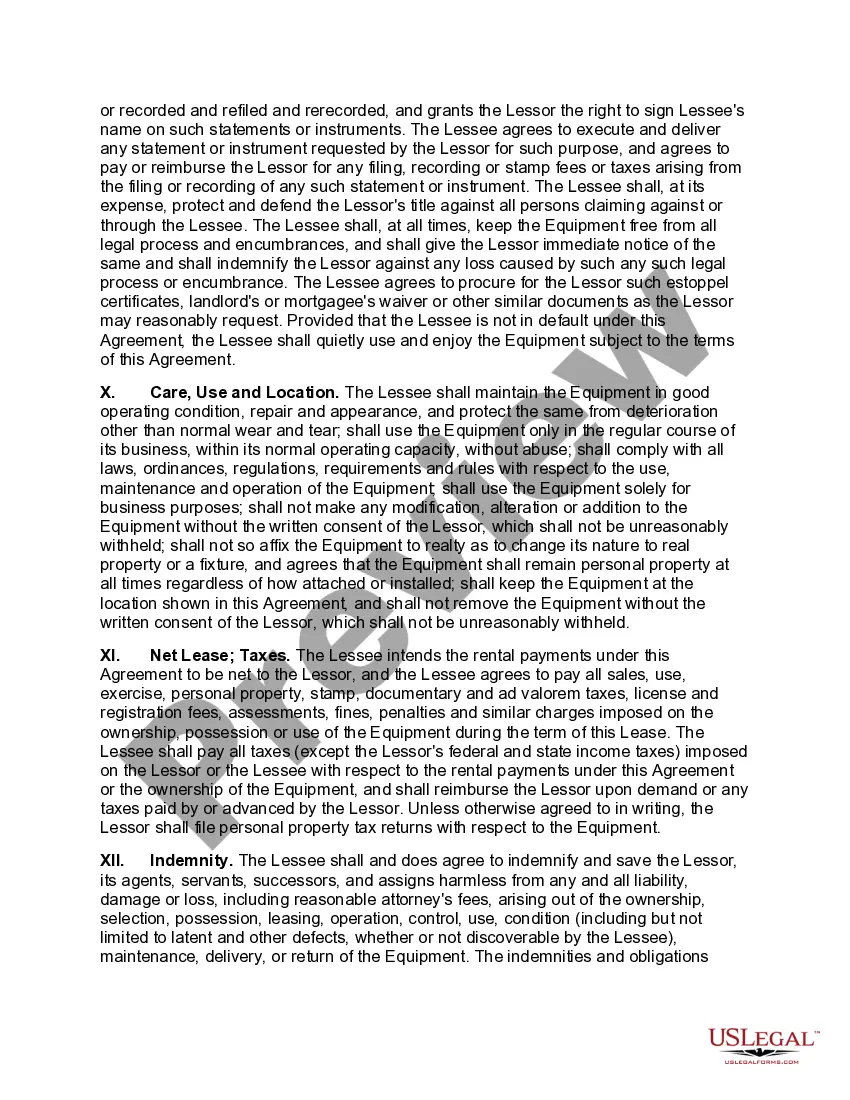
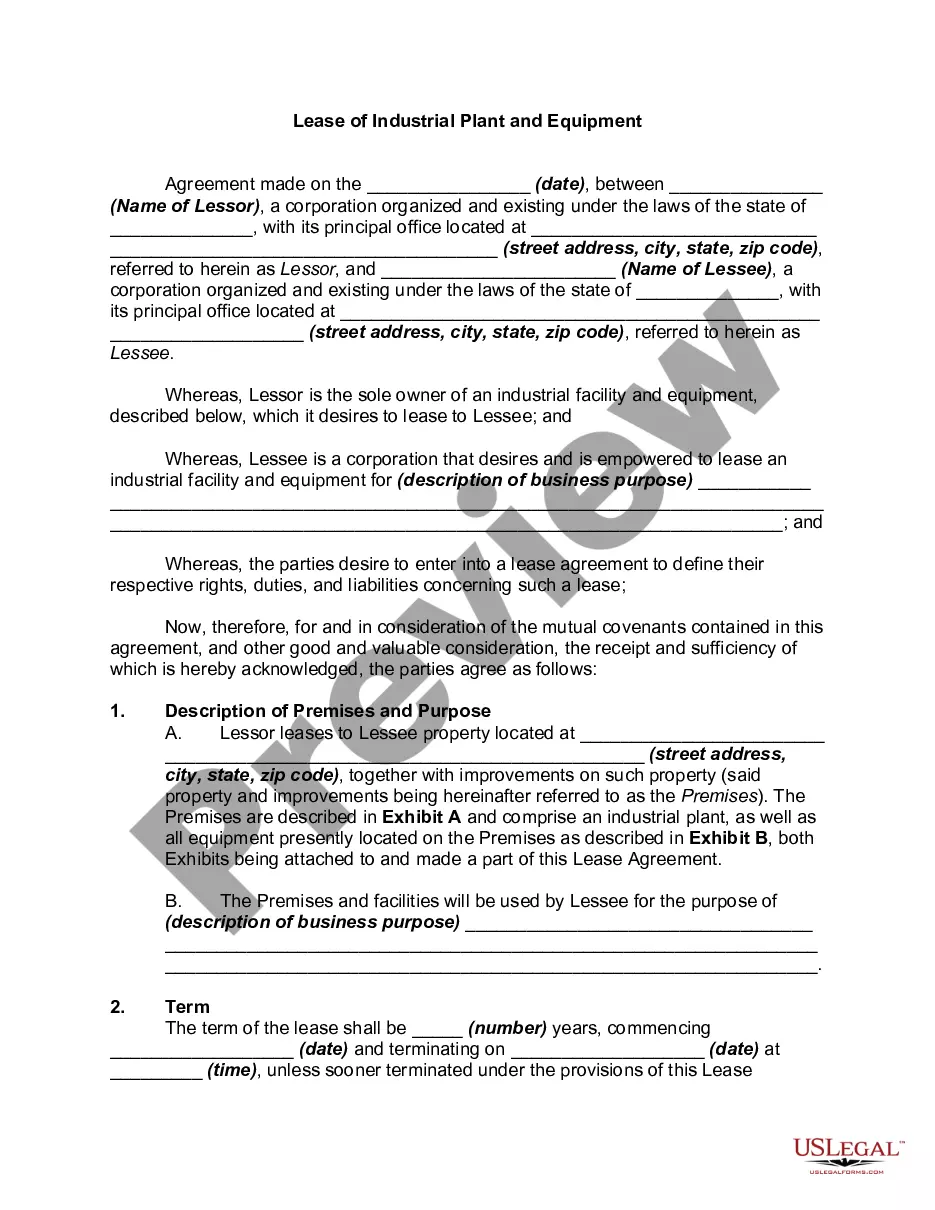
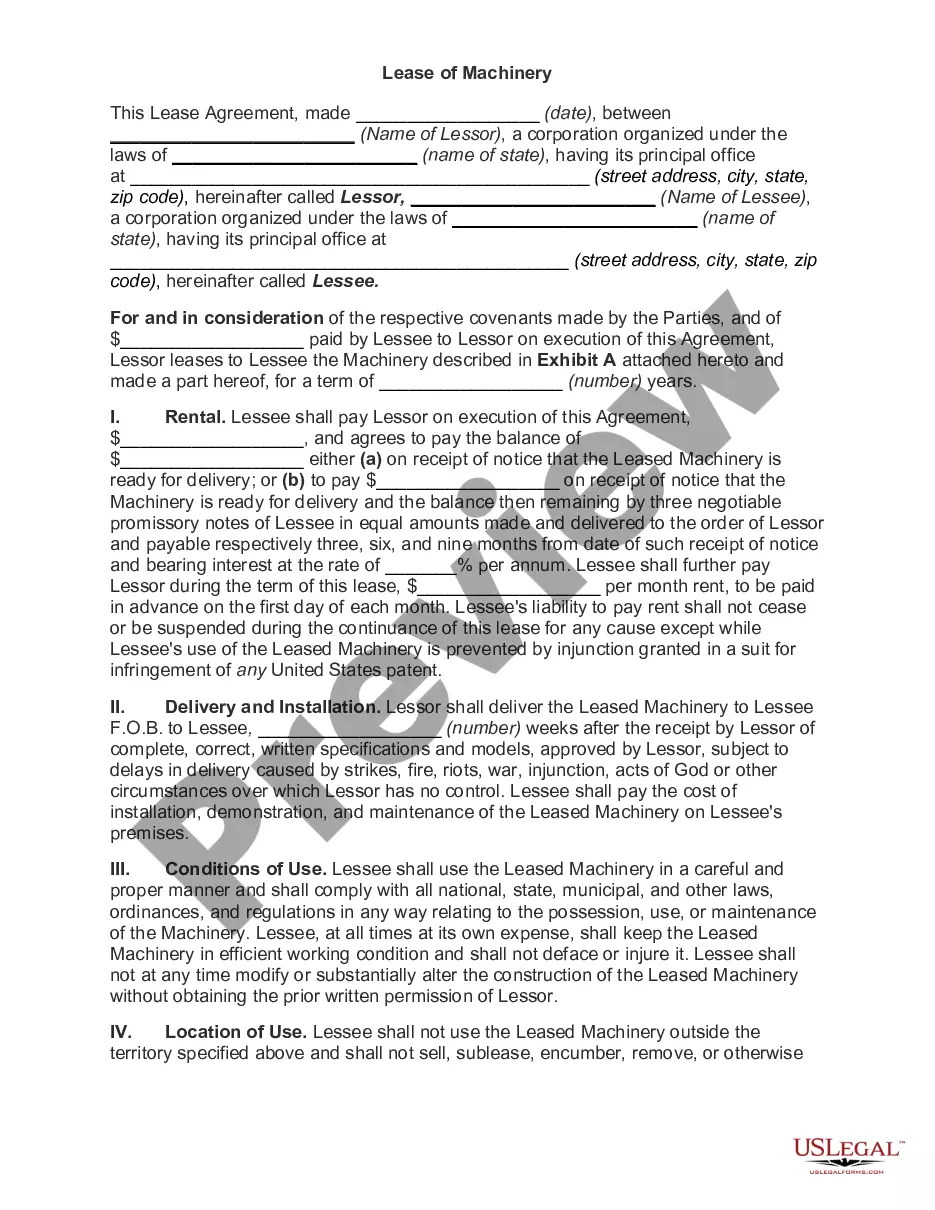
The Net Lease of Equipment is a legal agreement where the lessee (the person or business renting the equipment) agrees to pay not only the rent but also all associated costs such as maintenance, operating expenses, repairs, insurance, and taxes related to the equipment. This form differs from other lease agreements as it places more responsibility on the lessee, making it essential for businesses that frequently lease equipment and want to clarify these obligations upfront.
What’s included in this form
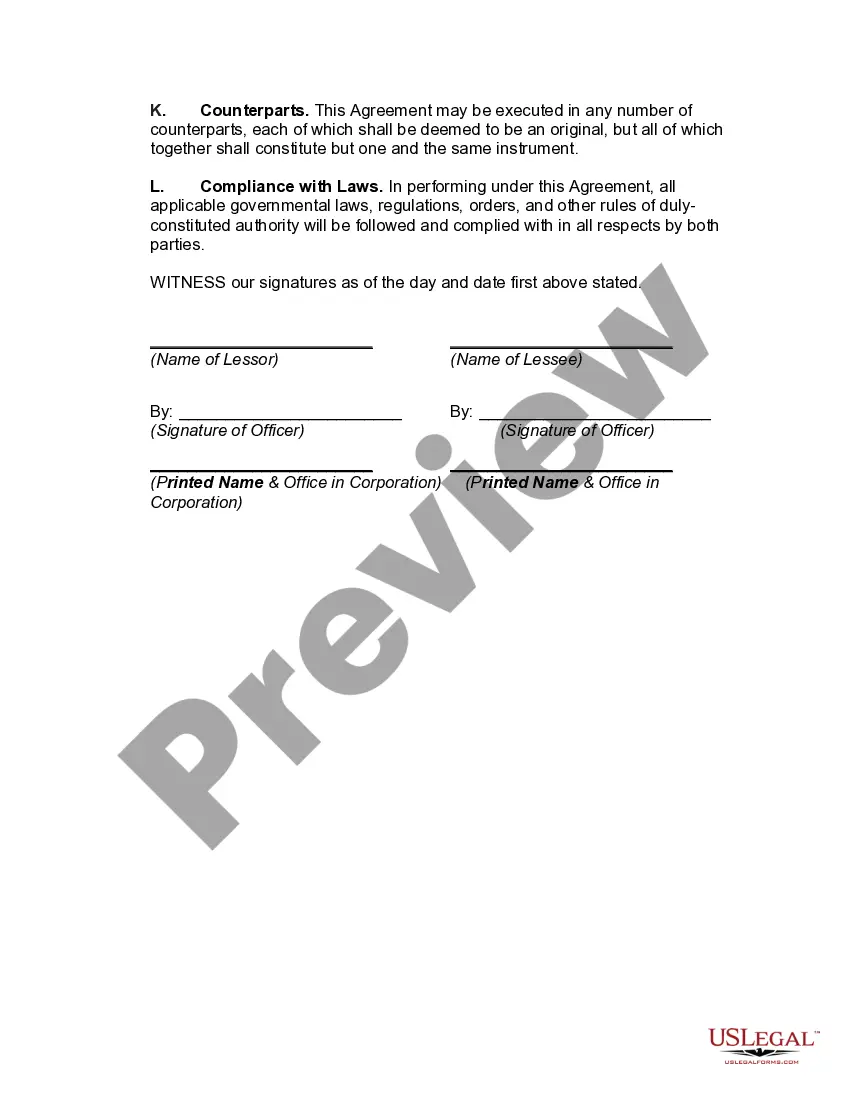
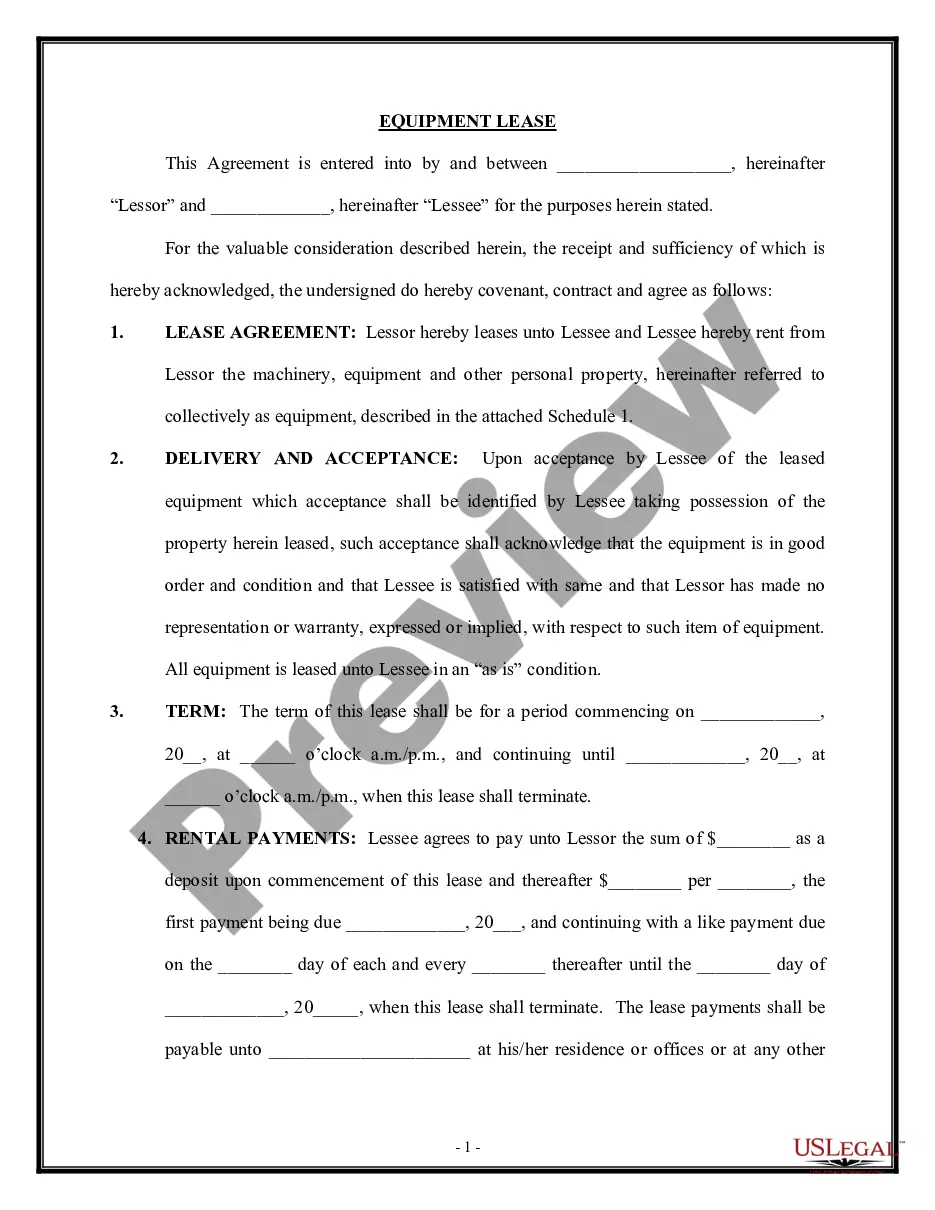
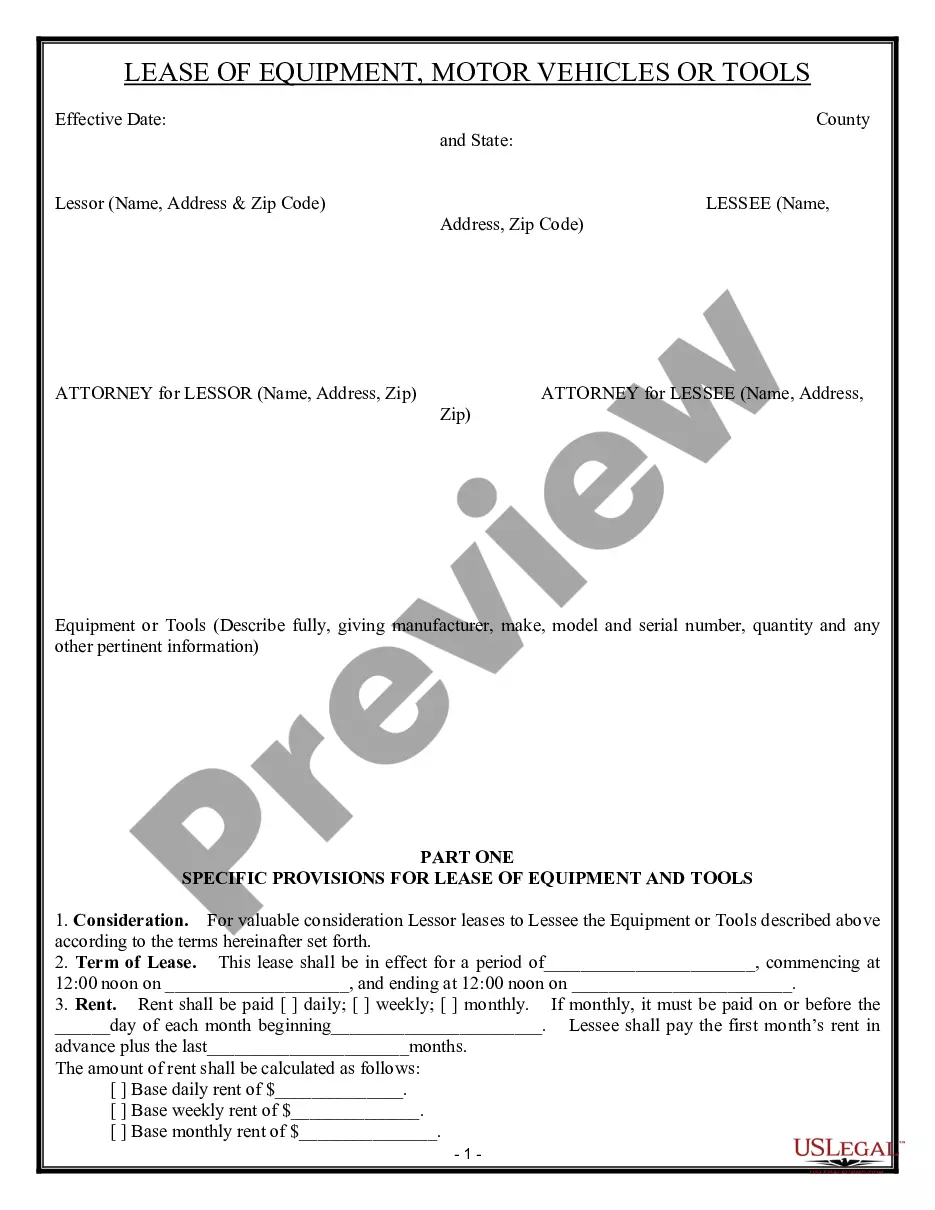
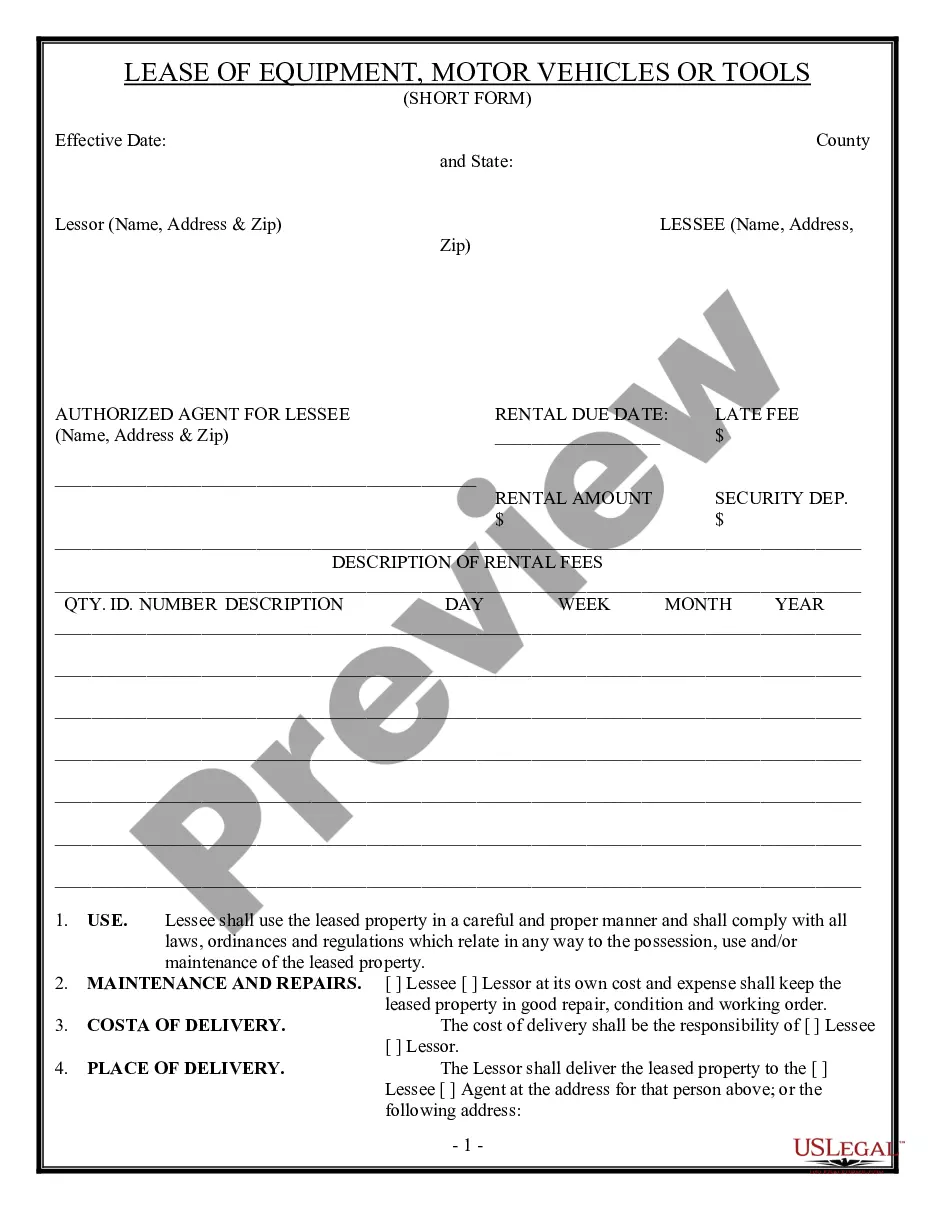
- Identification of the lessor (equipment owner) and lessee (renter).
- Terms of the lease, including rental payments and duration.
- Lessee's responsibilities for maintenance, taxes, and insurance.
- Conditions under which the lessor can terminate the lease.
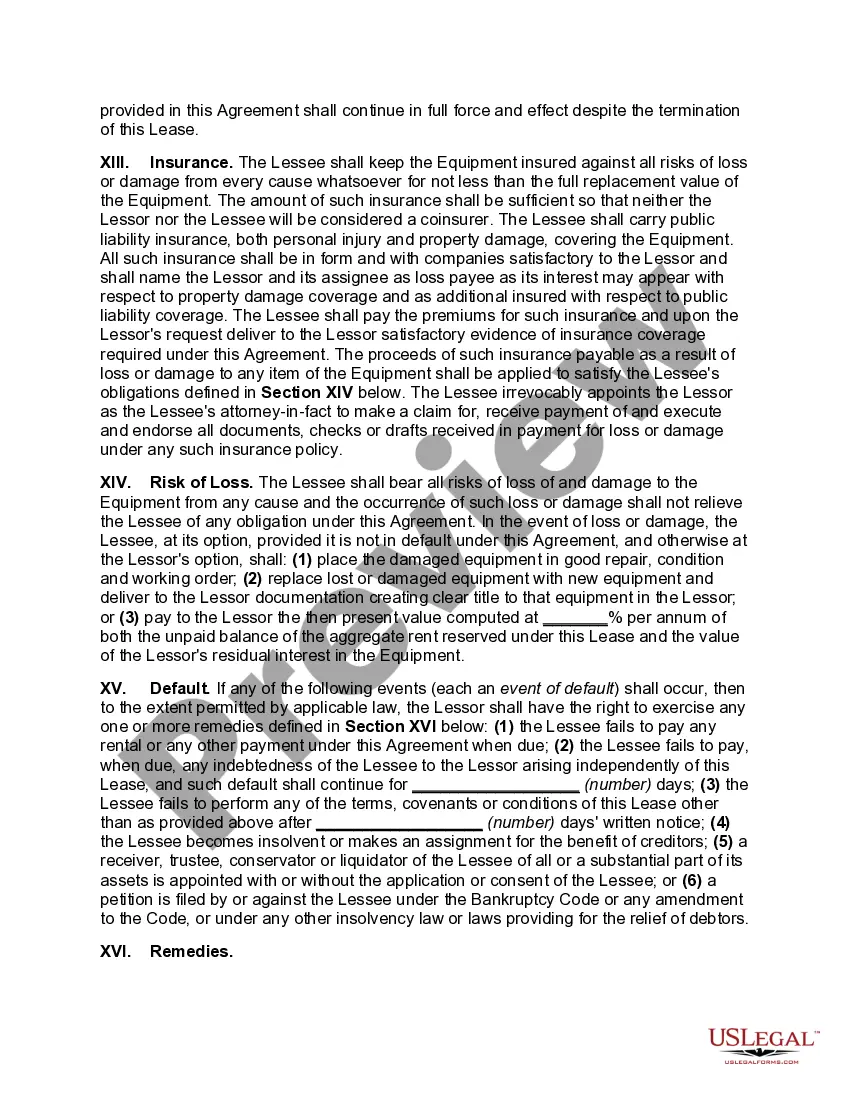
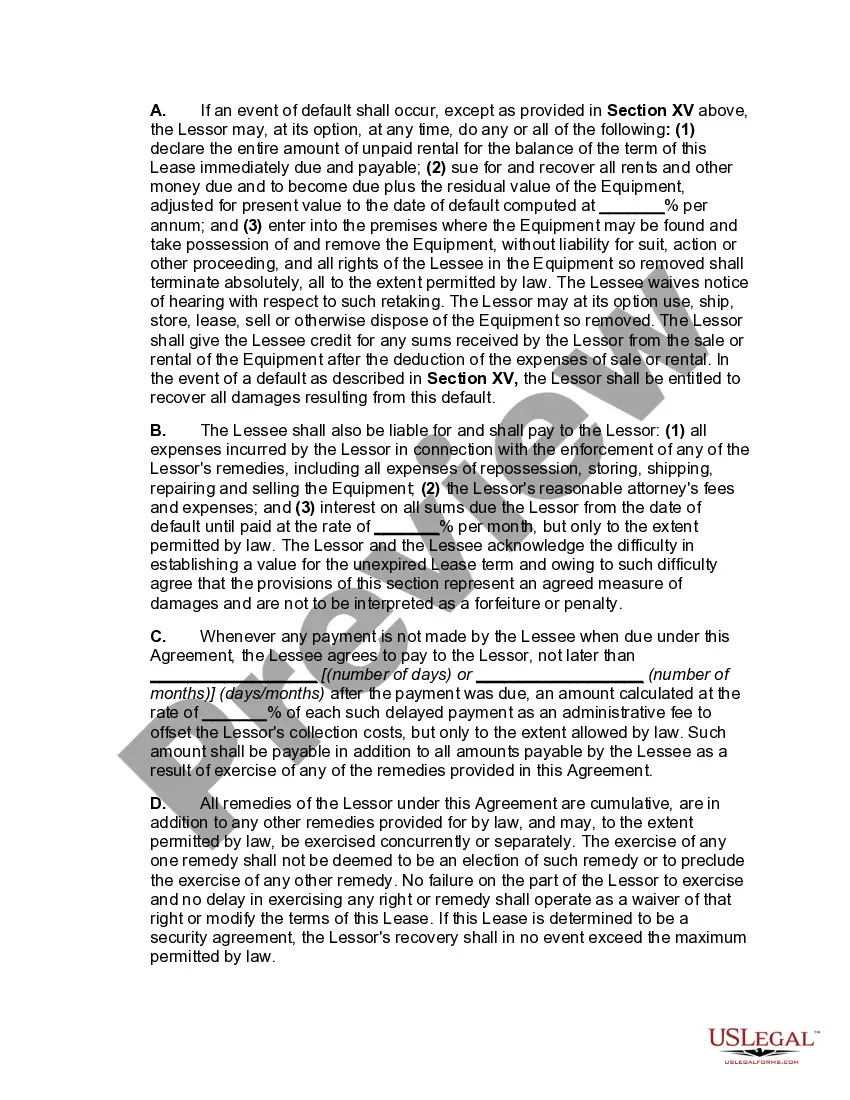
- Provisions regarding default and remedies for the lessor.
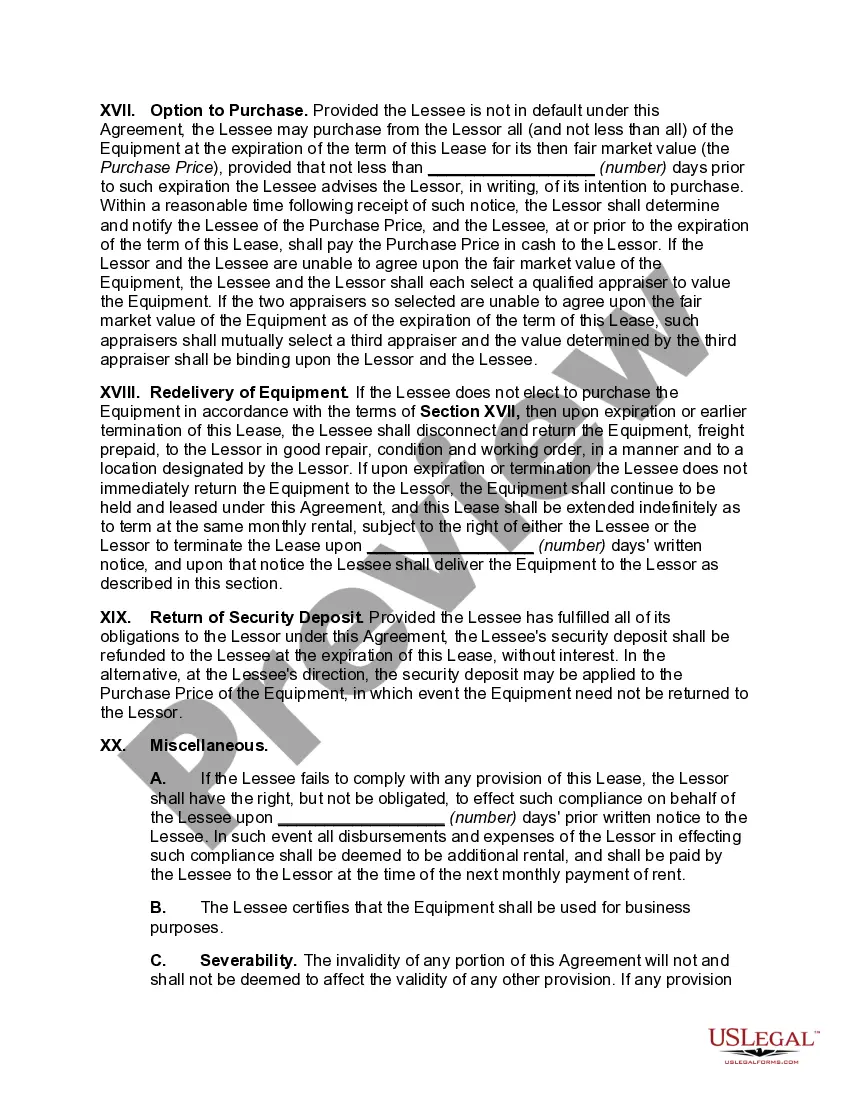
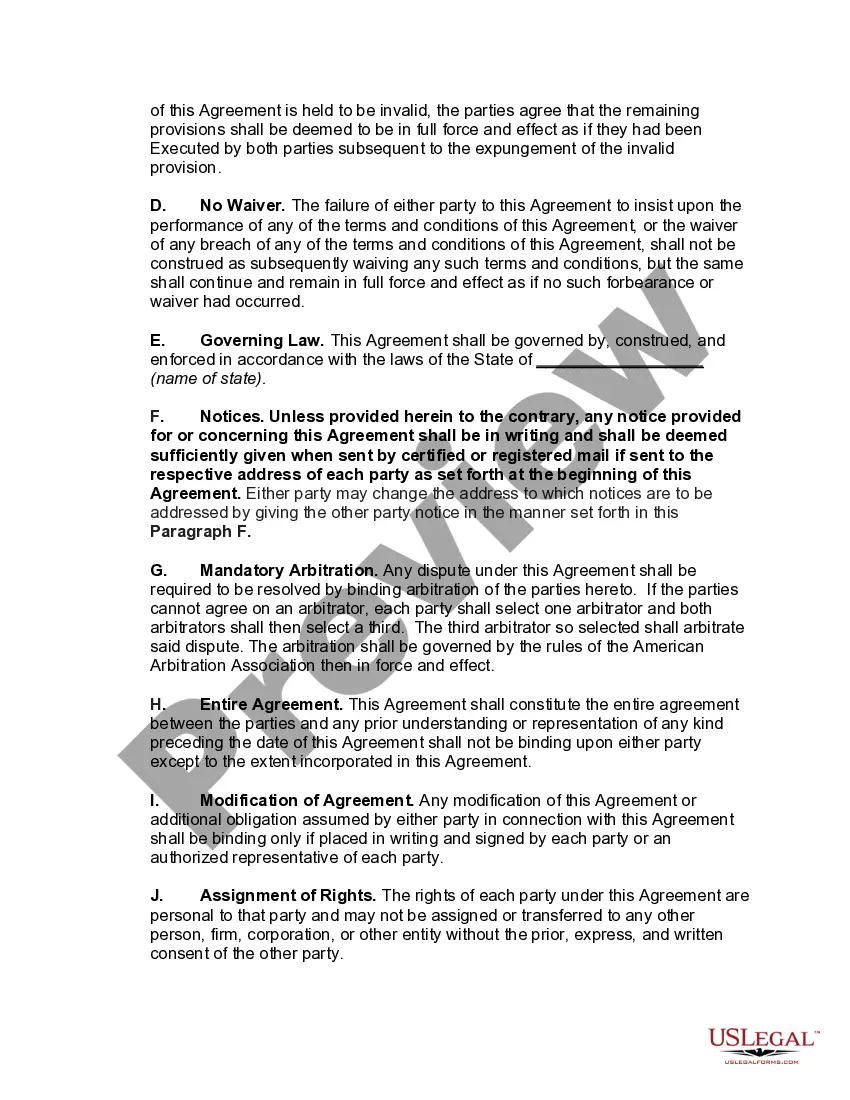
- Option for the lessee to purchase the equipment at lease end.
When to use this document
This form should be used when a business requires equipment on a rental basis and wants to clarify the terms of that rental. It is particularly useful for long-term rentals where the lessee assumes additional responsibilities for maintenance and costs. Scenario examples include leasing machinery for construction projects, equipment for events, or specialized appliances for commercial use.
Intended users of this form
The intended audience for this form includes:
- Business owners leasing equipment for operational purposes.
- Corporations or entities needing temporary access to specialized machinery.
- Entrepreneurs looking for clear agreements regarding equipment rentals.
- Legal professionals assisting clients with equipment leasing arrangements.
How to complete this form
- Fill in the parties involved, including the lessor and lessee names and addresses.
- Specify the equipment involved and include any information required in the attached exhibit.
- Enter the rental payment details, including amounts and payment schedule.
- Indicate the duration of the lease and any termination conditions.
- Outline the responsibilities regarding maintenance, taxes, and insurance.
- Ensure both parties sign and date the agreement to make it legally binding.
Notarization guidance
Notarization is not commonly needed for this form. However, certain documents or local rules may make it necessary. Our notarization service, powered by Notarize, allows you to finalize it securely online anytime, day or night.
Get your form ready online
Our built-in tools help you complete, sign, share, and store your documents in one place.
Make edits, fill in missing information, and update formatting in US Legal Forms—just like you would in MS Word.
Download a copy, print it, send it by email, or mail it via USPS—whatever works best for your next step.
Sign and collect signatures with our SignNow integration. Send to multiple recipients, set reminders, and more. Go Premium to unlock E-Sign.
If this form requires notarization, complete it online through a secure video call—no need to meet a notary in person or wait for an appointment.
We protect your documents and personal data by following strict security and privacy standards.

Make edits, fill in missing information, and update formatting in US Legal Forms—just like you would in MS Word.

Download a copy, print it, send it by email, or mail it via USPS—whatever works best for your next step.

Sign and collect signatures with our SignNow integration. Send to multiple recipients, set reminders, and more. Go Premium to unlock E-Sign.

If this form requires notarization, complete it online through a secure video call—no need to meet a notary in person or wait for an appointment.

We protect your documents and personal data by following strict security and privacy standards.
Common mistakes
- Failing to include specific details about the equipment.
- Not clearly stating payment terms or due dates.
- Overlooking the insurance requirements or maintenance responsibilities.
- Neglecting to secure signatures from both parties.
Benefits of completing this form online
- Convenient access to customizable legal forms without needing to hire an attorney.
- Easily editable fields allow users to tailor the lease to specific needs.
- Streamlined process to download and print forms anytime.
- Assurance of legality, as forms are drafted by licensed attorneys.
What to keep in mind
- The Net Lease of Equipment clarifies the responsibilities of both the lessee and lessor.
- It is essential for businesses that frequently engage in equipment rentals.
- Understanding the complete terms can help avoid disputes later.
- Completing the form accurately ensures a legally binding agreement.
Looking for another form?


Form popularity
FAQ
How do you Calculate a Triple Net Lease. First, add annual property taxes and insurance for the building, then divide the total by the building's total amount of rental square footage.
A Table Of Contents On Triple Net Leases Pros. Reliable Income Source. Tenant Controls Their Vision. Limits Overhead Costs. Passive Management Role. Equity Building Investment. Cons. Earnings Cap. Vacancy Costs. Protecting Your Investment.
These lease agreements are a popular tool for commercial real estate investors who buy properties for the income and do not want the headaches of arranging maintenance, paying municipal taxes, and so on. Property owners use net leases to shift the burden of managing taxes, insurance, and fees to the tenant.
The most obvious benefit of using a triple net lease for a tenant is a lower price point for the base lease. Since the tenant is absorbing at least some of the taxes, insurance, and maintenance expenses, a triple net lease features a lower monthly rent than a gross lease agreement.
Net Lease Example Under a triple net lease, the tenant pays property taxes, insurance, and maintenance costs, plus their monthly rent payment. Property taxes on the building are $1,000 per month, insurance premiums are $500 per month, and maintenance costs are $500 per month for a total of $2,000.
Net Lease. In a net lease, the tenant pays some or all of the expenses. For example, in a triple net lease, the tenant pays all of the expenses in addition to the rent. A net lease, in particular a triple net lease, is commonly used by commercial tenants.
There are two primary types of equipment leases: operating leases and financial leases.
Rents are generally lower with net leases than traditional leases?the more expenses a tenant has to bear, the lower base rent a landlord charges. But triple net leases are usually bondable leases, which means a tenant cannot back out because the costs?especially maintenance costs?may be higher.