Motion to Disclose Confidential Informants - Release
Understanding this form
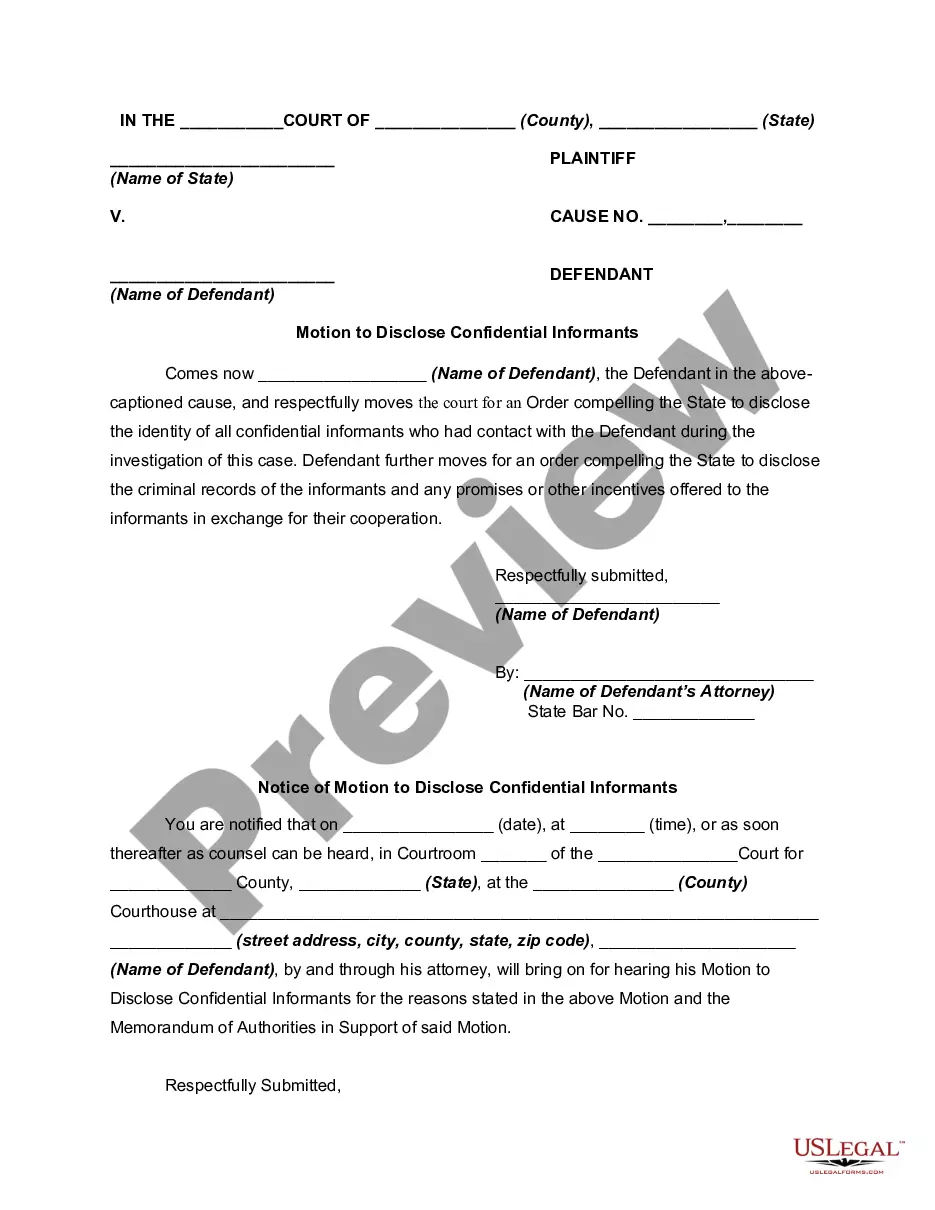
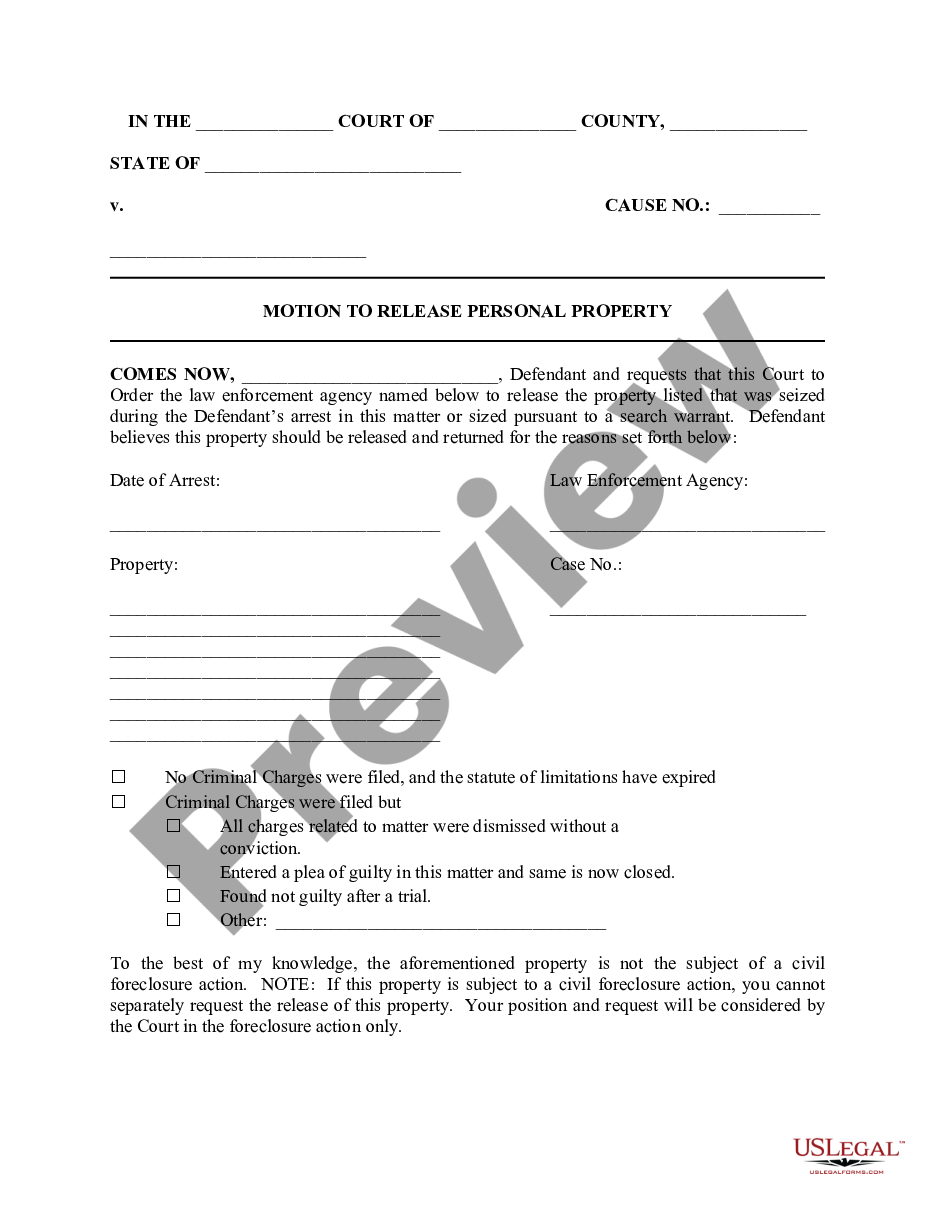
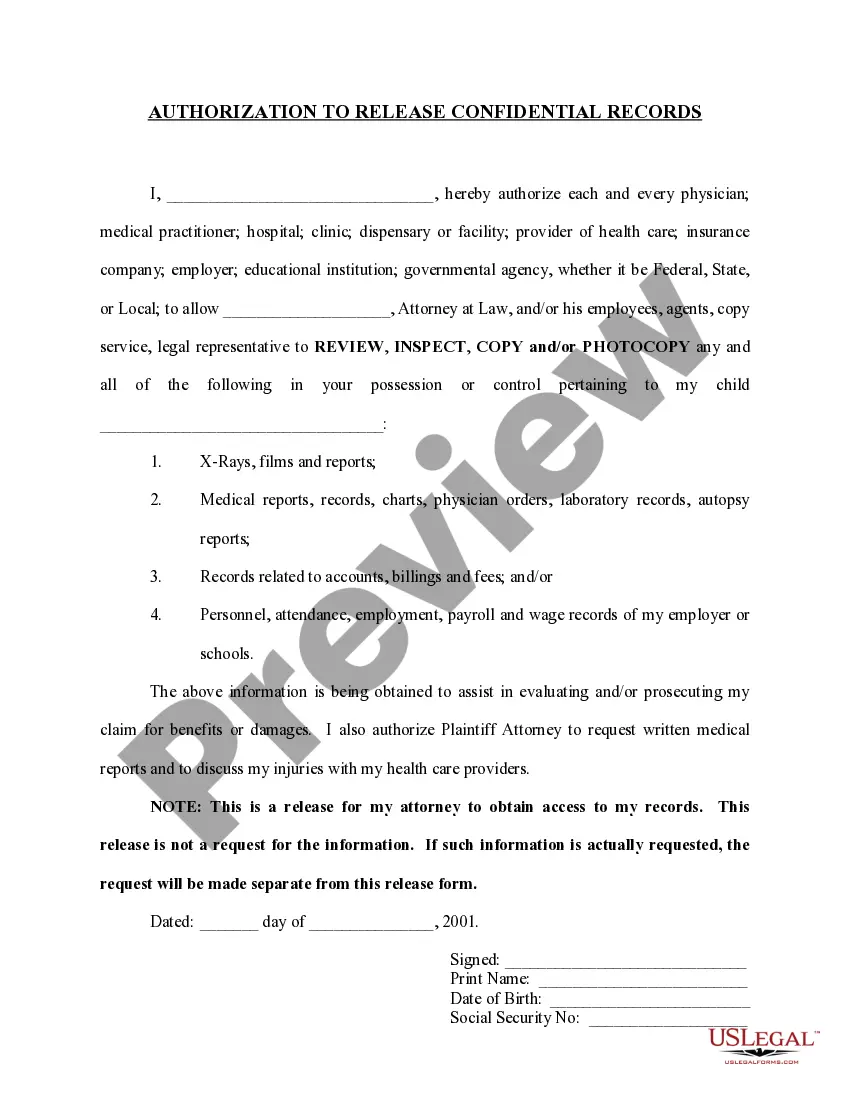
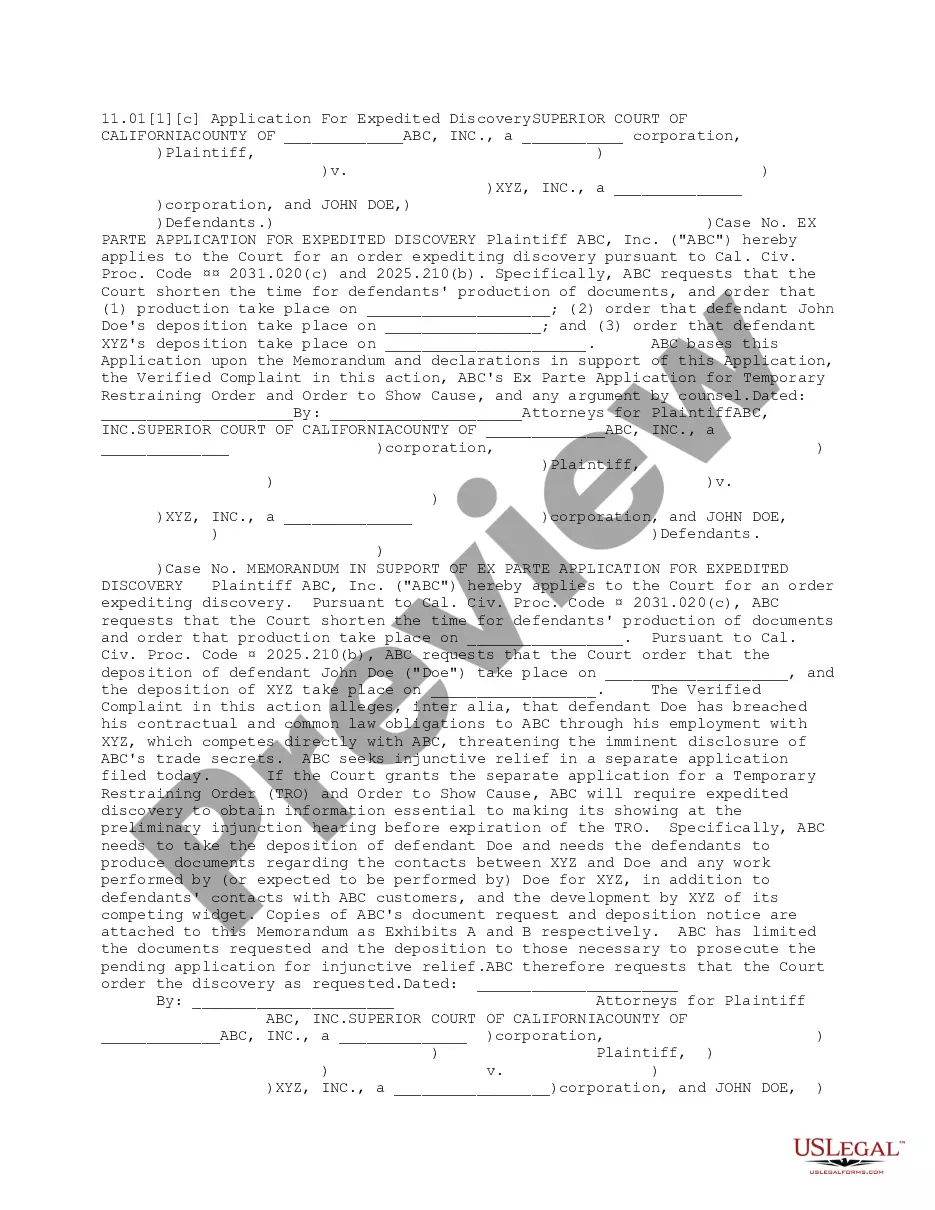
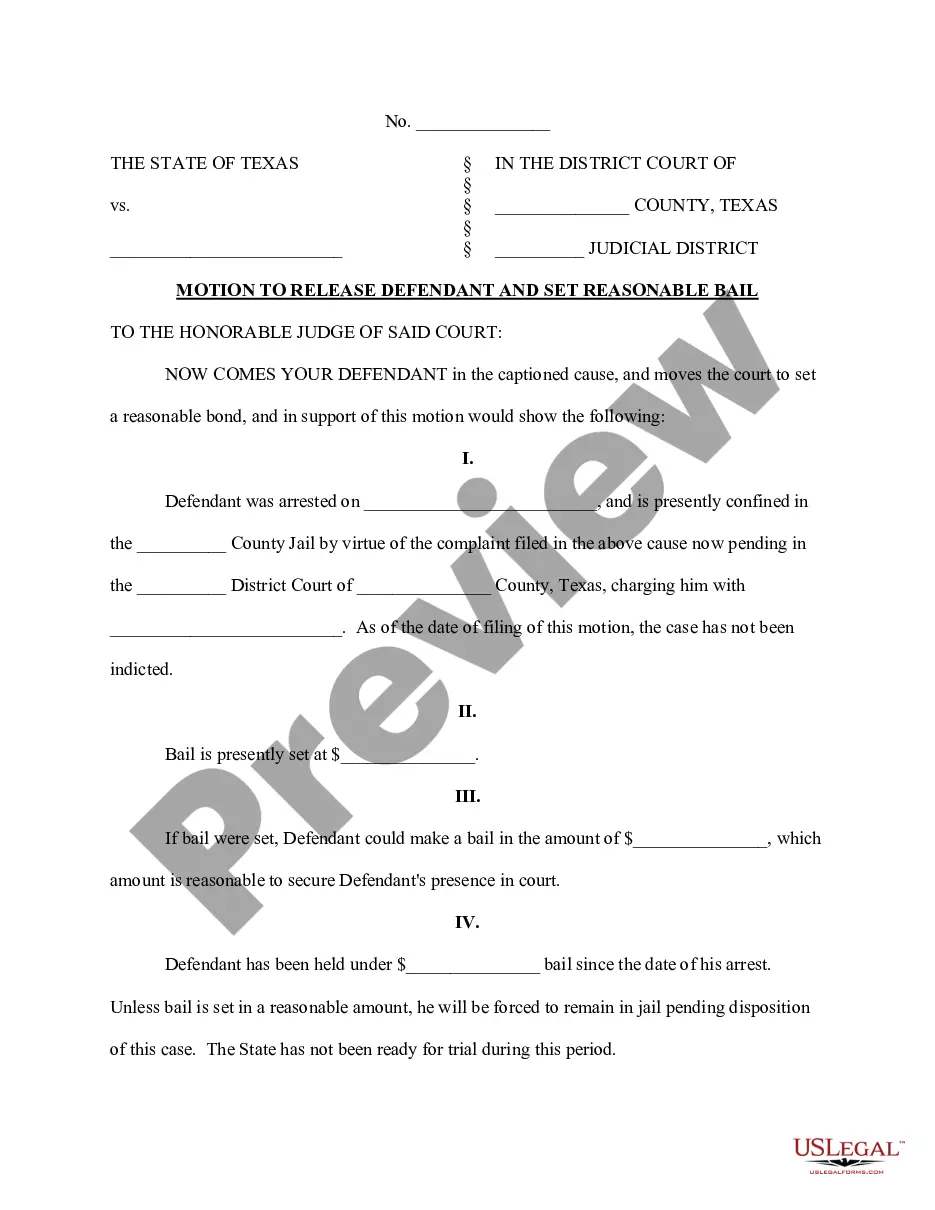
The Motion to Disclose Confidential Informants - Release is a legal request made by a defendant in a criminal case. It seeks to compel the government to reveal the identity of confidential informants involved in the case and any relevant criminal history or incentives offered to those informants. This form is essential for defendants who believe that knowing the identity of these informants is crucial for their defense. Unlike other motions, this form specifically targets the disclosure of confidential informants which can play a significant role in the fairness of the trial process.
Key parts of this document
- Case Identification: Includes the names of the plaintiff (state) and defendant, along with the cause number.
- Motion Details: A statement asserting the need for disclosure of the informants' identities, their criminal records, and any promises made to them.
- Hearing Notification: Provides details about when and where the motion will be heard in court.
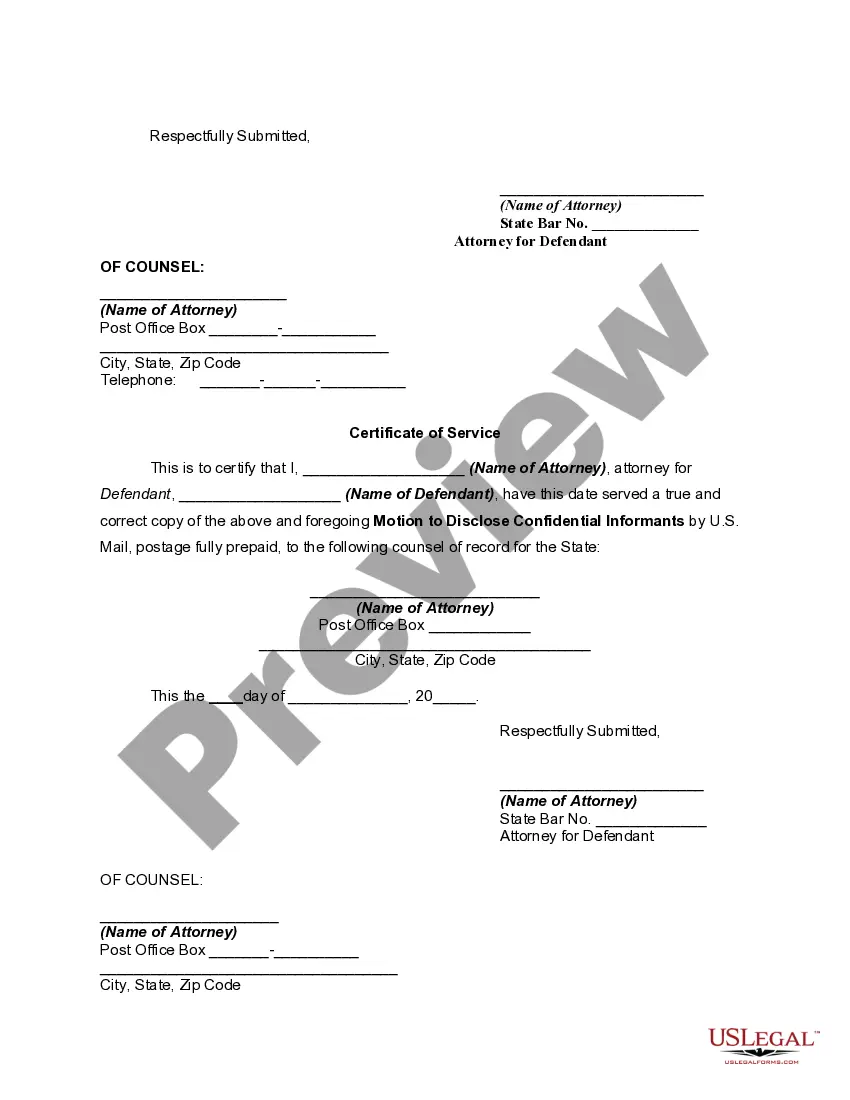
- Certificate of Service: Confirms that the defendant's attorney has served a copy of the motion to the relevant parties.

When this form is needed
This form should be used when a defendant believes that confidential informants have influenced the investigation against them. It is particularly relevant in criminal cases where the identity of informants could affect the outcome of the case, such as in drug offenses, theft, or violence-related charges. When a defendant feels disadvantaged by not knowing the informants involved, this motion can help ensure a fair defense.
Who can use this document
- Defendants in criminal cases who believe that their rights may be compromised due to undisclosed informants.
- Defense attorneys representing clients in cases involving confidential informants.
- Individuals seeking to ensure the integrity of their legal proceedings by requesting disclosure of pertinent information.
Instructions for completing this form
- Identify the case by entering the names of the plaintiff (state) and defendant, along with the cause number.
- Specify the petitioner's name as the defendant and provide a clear statement of the request for disclosure.
- Detail the reasons for the request, including any relevance of the informants' identities to the case.
- Fill in the date and time for the hearing on the motion, along with the courtroom and address.
- Complete the certificate of service to confirm distribution of the motion to the relevant parties.
Notarization guidance
This form does not typically require notarization unless specified by local law. Always check state regulations to ensure legal validity.
Get your form ready online
Our built-in tools help you complete, sign, share, and store your documents in one place.
Make edits, fill in missing information, and update formatting in US Legal Forms—just like you would in MS Word.
Download a copy, print it, send it by email, or mail it via USPS—whatever works best for your next step.
Sign and collect signatures with our SignNow integration. Send to multiple recipients, set reminders, and more. Go Premium to unlock E-Sign.
If this form requires notarization, complete it online through a secure video call—no need to meet a notary in person or wait for an appointment.
We protect your documents and personal data by following strict security and privacy standards.

Make edits, fill in missing information, and update formatting in US Legal Forms—just like you would in MS Word.

Download a copy, print it, send it by email, or mail it via USPS—whatever works best for your next step.

Sign and collect signatures with our SignNow integration. Send to multiple recipients, set reminders, and more. Go Premium to unlock E-Sign.

If this form requires notarization, complete it online through a secure video call—no need to meet a notary in person or wait for an appointment.

We protect your documents and personal data by following strict security and privacy standards.
Mistakes to watch out for
- Failing to include the correct case number or parties involved can lead to delays.
- Omitting the date and time of the hearing can cause issues in scheduling.
- Neglecting to serve the motion to the opposing party may render it invalid.
Advantages of online completion
- Convenience of accessing and completing the form from any location.
- Editability features allow for customization according to specific legal needs.
- Reliable templates drafted by licensed attorneys to ensure compliance with legal standards.
Legal use & context
- This motion serves an essential function in ensuring a fair trial by allowing the defense access to potential evidence.
- Disclosure of confidential informants can impact the credibility of the prosecution's case.
- States may vary in how they handle such requests, so understanding local laws is crucial.
Quick recap
- The Motion to Disclose Confidential Informants - Release is crucial for a defendant's right to fair representation.
- Proper completion and service of this motion can significantly affect the trial's outcome.
- Always consult local laws to ensure compliance when using this form.
Looking for another form?



Form popularity
FAQ
A stranger or casual acquaintance tries to get you to do or advise on illegal activities. A friend suddenly starts pushing you to do or advise on illegal things. A person joins your group and statements he/she makes about his/her background just don't add up.
A stranger or casual acquaintance tries to get you to do or advise on illegal activities. A friend suddenly starts pushing you to do or advise on illegal things. A person joins your group and statements he/she makes about his/her background just don't add up.
The general rule is that the prosecution doesn't have to disclose the identity of a confidential informant. However, this rule has many exceptions; if a criminal defendant can show the importance of the CI's identity to the case, it may be possible to find out who's been talking to the cops.
No, the identity of informants are not public record. If CI's were public record, it would put their lives in danger and the lives of their loved ones. However, the identity of a confidential informant will be revealed to the Defendant if the Defendant goes to trial.
Stay Tight-Lipped. Exceed Performance Expectations. Don't Fight Fire with Fire. Don't Lose Your Temper. Use a Strong Password on Your Computer. Never Reward a Snitch. Explain Why the Behavior is Counterproductive. Pile on Busy Work.
Something feels off. Something about them just doesn't line up. Despite the misgivings of some members, the individual quickly rises to a leadership position. S/he photographs actions, meetings, and people that should not be photographed. S/he is a liar.