Lease Deposit Guarantee Bond
What this document covers
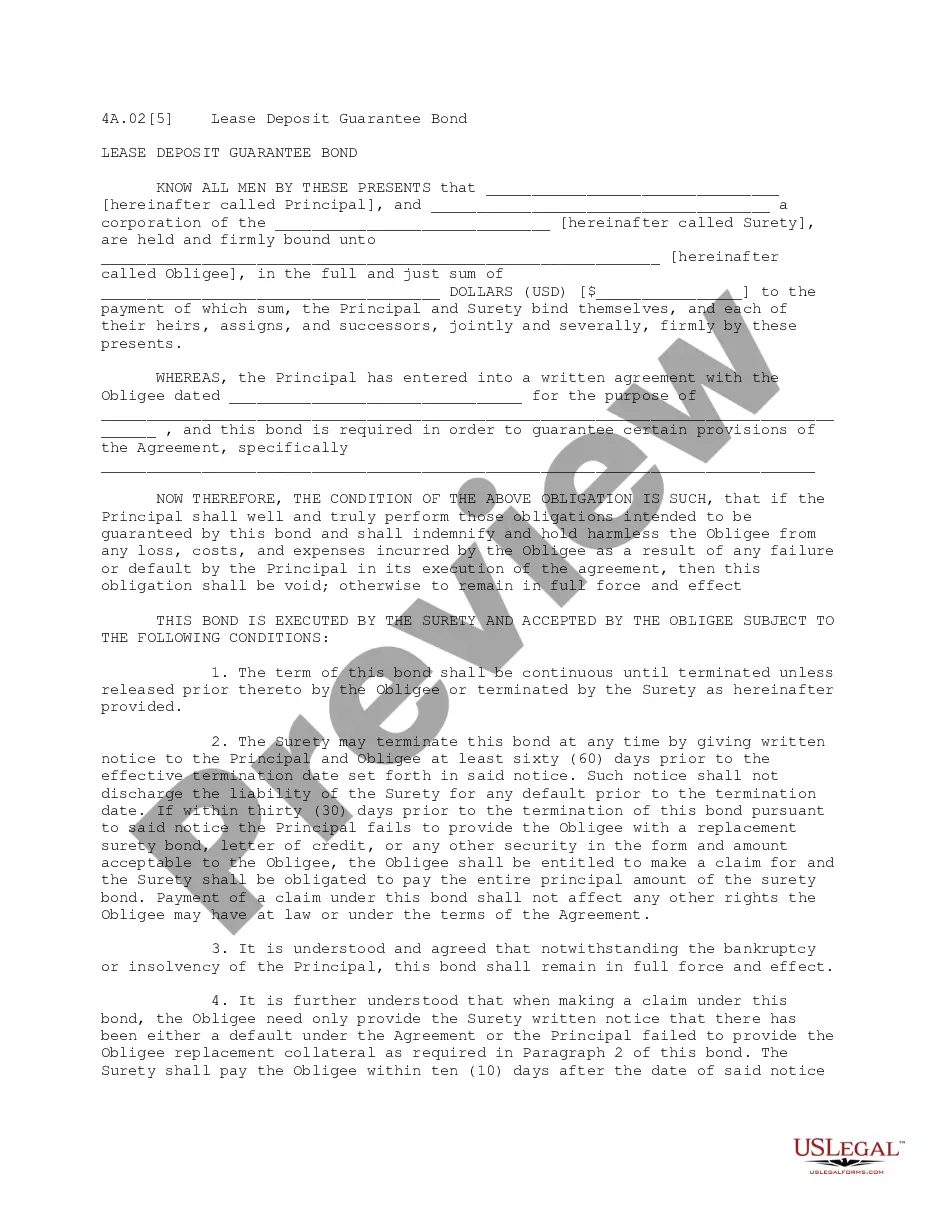
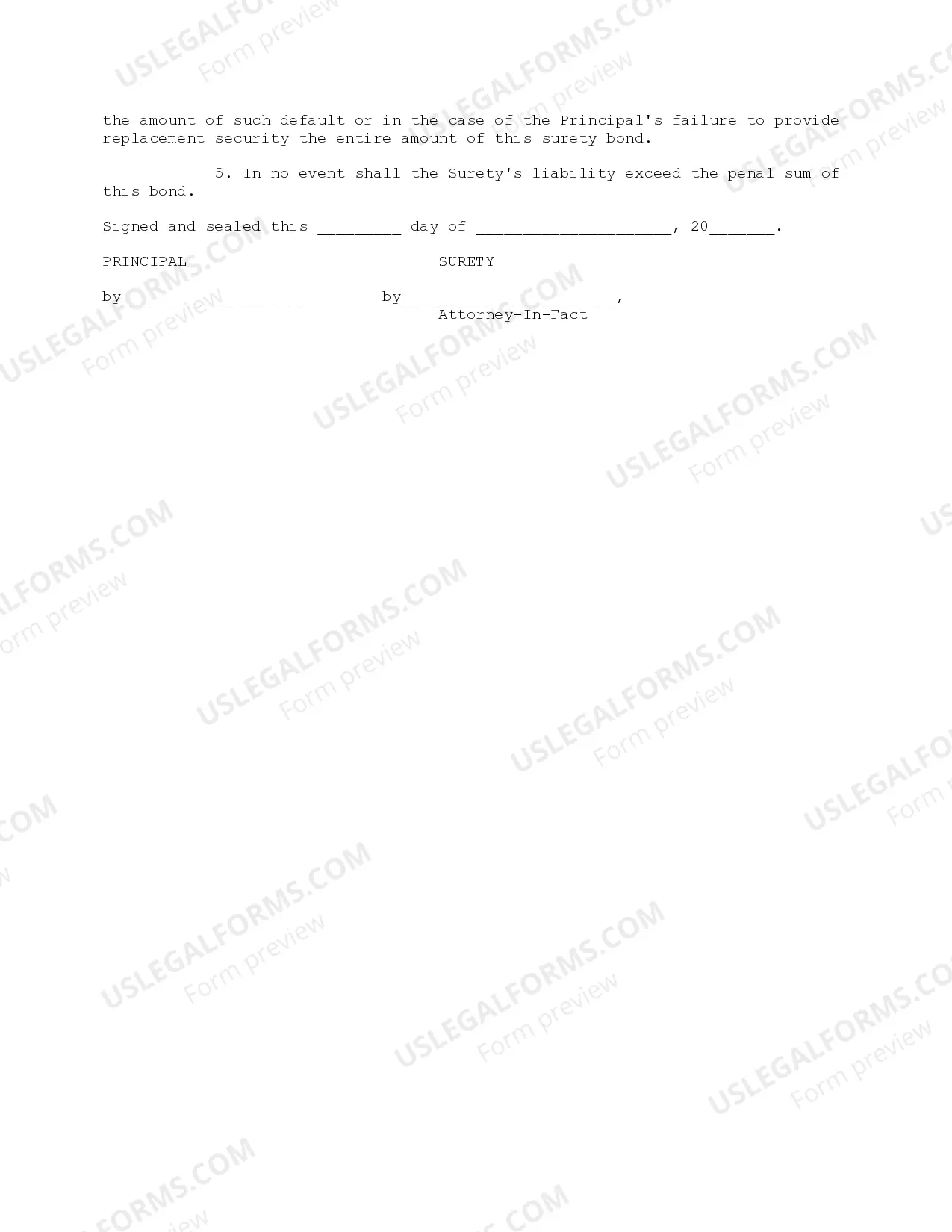
The Lease Deposit Guarantee Bond is a legal document that ensures a principal (often a tenant) fulfills specific obligations outlined in an agreement with an obligee (usually a landlord or property owner). This bond serves as a security guarantee, protecting the obligee from potential financial losses resulting from the principal's failure to meet their obligations. Unlike standard lease agreements, this bond provides financial assurance, allowing landlords to enforce compliance without directly taking possession of property or deposits.
What’s included in this form
- Parties involved: Identifies the principal, surety, and obligee.
- Bond amount: States the financial obligation amount the principal and surety are responsible for.
- Agreement details: References the specific agreement associated with the bond.
- Obligations: Describes the conditions under which the bond remains valid or becomes void.
- Claim process: Outlines how the obligee can make a claim against the bond for default.
- Termination terms: Specifies how the bond may be terminated by the surety or obligee.

When to use this form
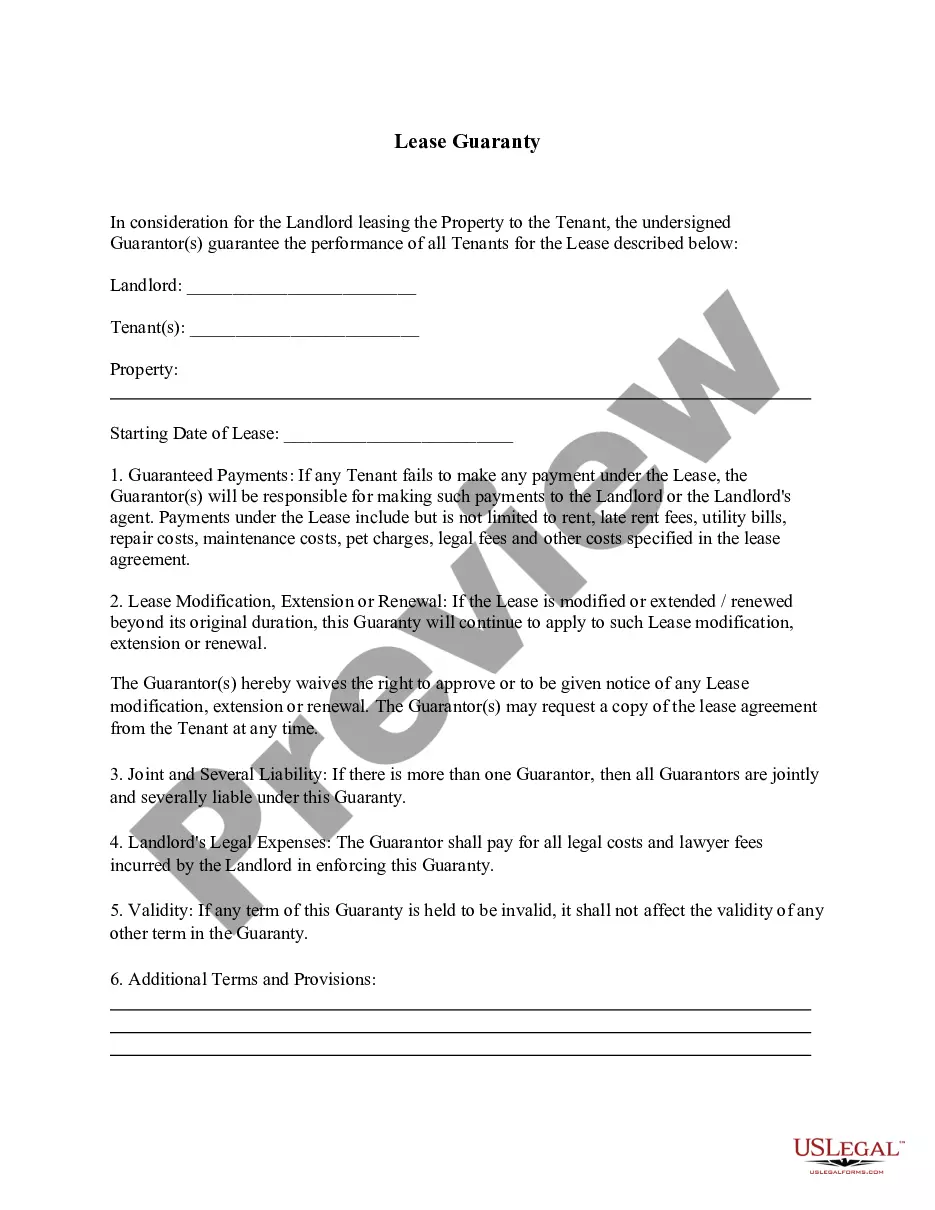
This form is typically used when a tenant is required to guarantee obligations related to an office lease. It is advisable to use this bond when the landlord requires financial assurance that the tenant will comply with lease terms, such as timely rent payments or property maintenance. Additionally, this bond may be necessary if the tenant is unable to provide a traditional security deposit or personal guarantee.
Who should use this form
- Tenants entering into lease agreements looking to assure landlords of their financial commitment.
- Landlords requiring a financial guarantee before leasing property to tenants.
- Surety companies providing bonding services to facilitate lease agreements.
Instructions for completing this form
- Identify the parties: Fill in the names and addresses of the principal, surety, and obligee.
- Specify the bond amount: Clearly state the total financial obligation in U.S. dollars.
- Detail the lease agreement: Include the date and purpose of the agreement that the bond relates to.
- Outline the obligations: Define the specific obligations the principal must fulfill as per the agreement.
- Sign and date the bond: Ensure all parties sign the form and include the date of execution.
Notarization guidance
This form usually doesn’t need to be notarized. However, local laws or specific transactions may require it. Our online notarization service, powered by Notarize, lets you complete it remotely through a secure video session, available 24/7.
Get your form ready online
Our built-in tools help you complete, sign, share, and store your documents in one place.
Make edits, fill in missing information, and update formatting in US Legal Forms—just like you would in MS Word.
Download a copy, print it, send it by email, or mail it via USPS—whatever works best for your next step.
Sign and collect signatures with our SignNow integration. Send to multiple recipients, set reminders, and more. Go Premium to unlock E-Sign.
If this form requires notarization, complete it online through a secure video call—no need to meet a notary in person or wait for an appointment.
We protect your documents and personal data by following strict security and privacy standards.

Make edits, fill in missing information, and update formatting in US Legal Forms—just like you would in MS Word.

Download a copy, print it, send it by email, or mail it via USPS—whatever works best for your next step.

Sign and collect signatures with our SignNow integration. Send to multiple recipients, set reminders, and more. Go Premium to unlock E-Sign.

If this form requires notarization, complete it online through a secure video call—no need to meet a notary in person or wait for an appointment.

We protect your documents and personal data by following strict security and privacy standards.
Typical mistakes to avoid
- Failing to accurately complete all parties' information, leading to disputes.
- Omitting essential obligations that the bond is meant to guarantee.
- Not verifying the bond amount matches the expected obligations, potentially causing financial issues.
Benefits of completing this form online
- Convenience: Downloadable and fillable form available at your convenience.
- Editability: Easily customize the document to fit specific legal requirements.
- Reliability: Ensures compliance with legal standards, drafted by licensed attorneys.
Looking for another form?


Form popularity
FAQ
Write the name of the obligor, or project owner, on the line preceded or followed by are held and firmly bonded to. Write the amount of money at issue in the bond on the line designated for the bond amount. Sign the bond in the presence of a notary public and have the bond notarized.
Examples of these bonds include construction and environmental performance, payment, supply, maintenance, and warranty bonds. Commercial surety helps obtain capacity at the lowest cost for all corporate surety needs.International surety examines the unique surety requirements internationally.
Step 1: Set up a liability account. First, let's setup a liability account. Step 2: Record the deposits you receive. Create a new deposit from the Banking Navigation. Step 3: Record the return of the 'Refundable Deposit' to the customer. Create an new Expense.
A surety bond is a three-party agreement that binds you, a surety company, and your landlord together.If you violate the terms of the lease, trash the rental, etc, then your landlord can make a claim against your bond. If the claim is determined to be valid, the surety company will pay your landlord (up to $1,000).
The deposit itself is a liability owed by the bank to the depositor. Bank deposits refer to this liability rather than to the actual funds that have been deposited. When someone opens a bank account and makes a cash deposit, he surrenders the legal title to the cash, and it becomes an asset of the bank.
SureDeposit is a surety bond. Under the surety bond, SureDeposit promises to pay the landlord in the event the resident does not uphold the financial obligations in the lease agreement or return the apartment in good condition.
If the tenant intends to occupy the rental unit for more than one year, the security deposit should be reported as a long-term asset (or noncurrent asset) under the balance sheet classification "Other assets". The landlord that receives and holds the security deposit should report the amount as a liability.
In a straightforward case where a security deposit is taken by the landlord, held for the period of the tenancy, and returned to the tenant at the end of the rental period, the deposit is not included as income of the property rental business.
The person paying the security deposit would credit the asset account Cash and would debit the asset account Security Deposits. The person receiving the security deposit would debit the asset account Cash and would credit the liability account Security Deposits Returnable.