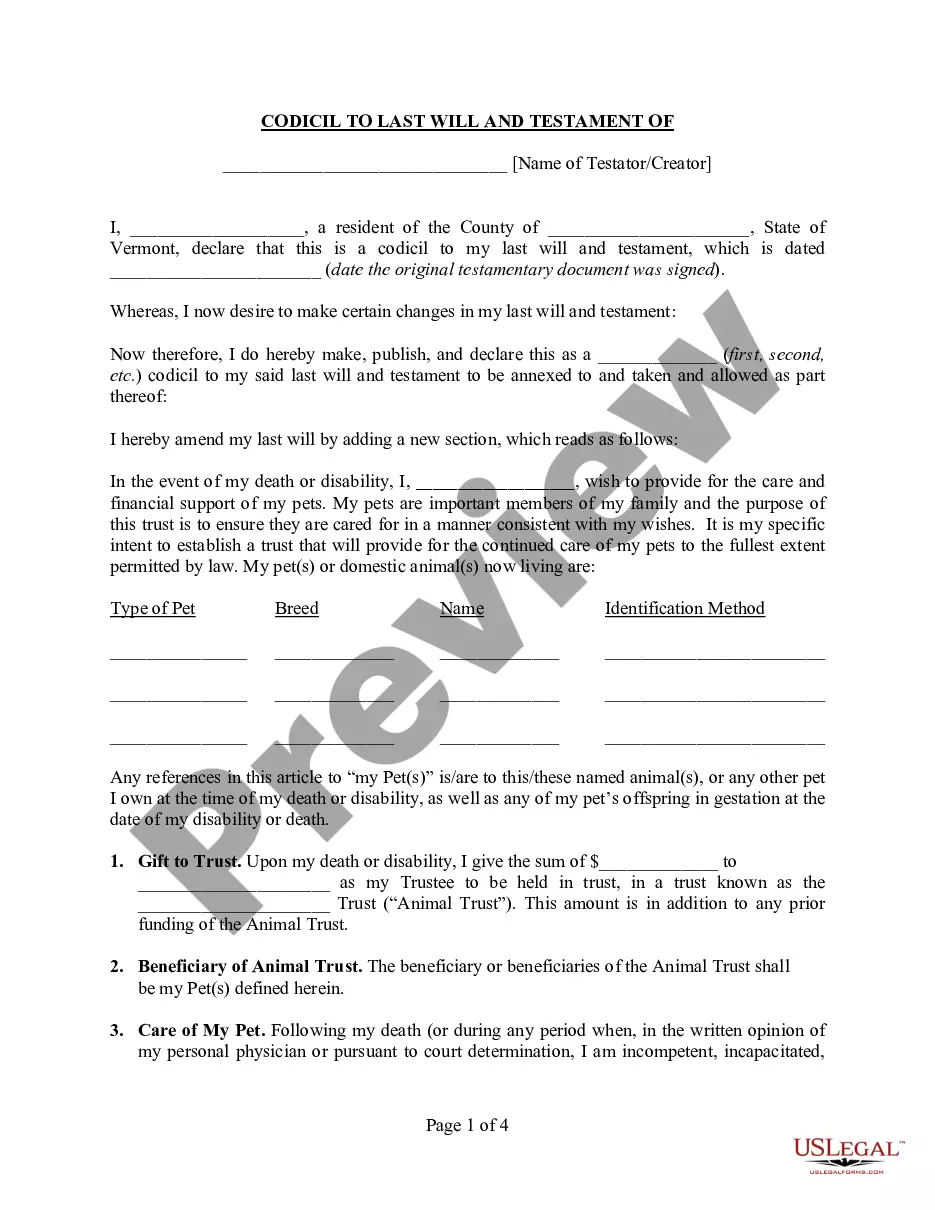
General Form of an Indemnity Agreement
Understanding this form
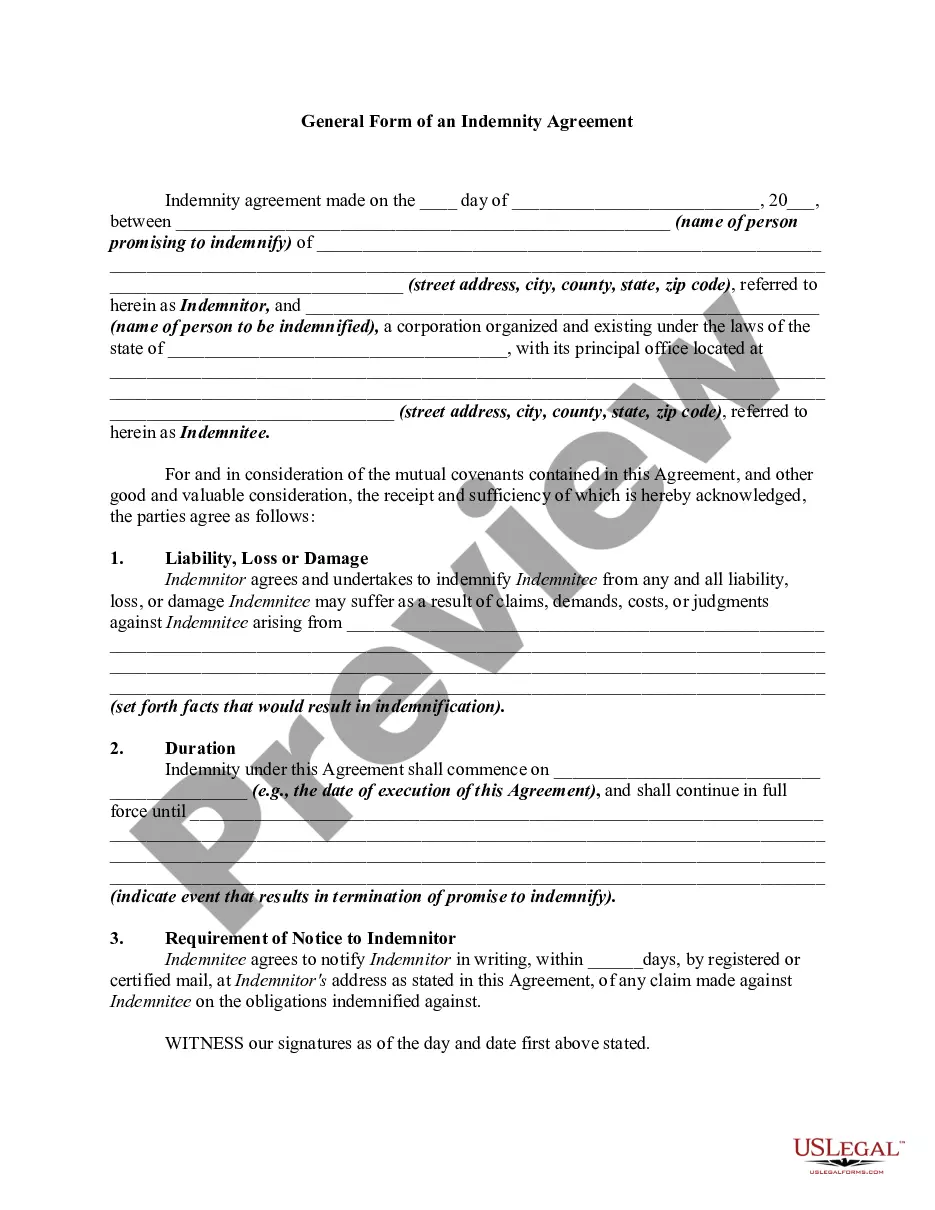
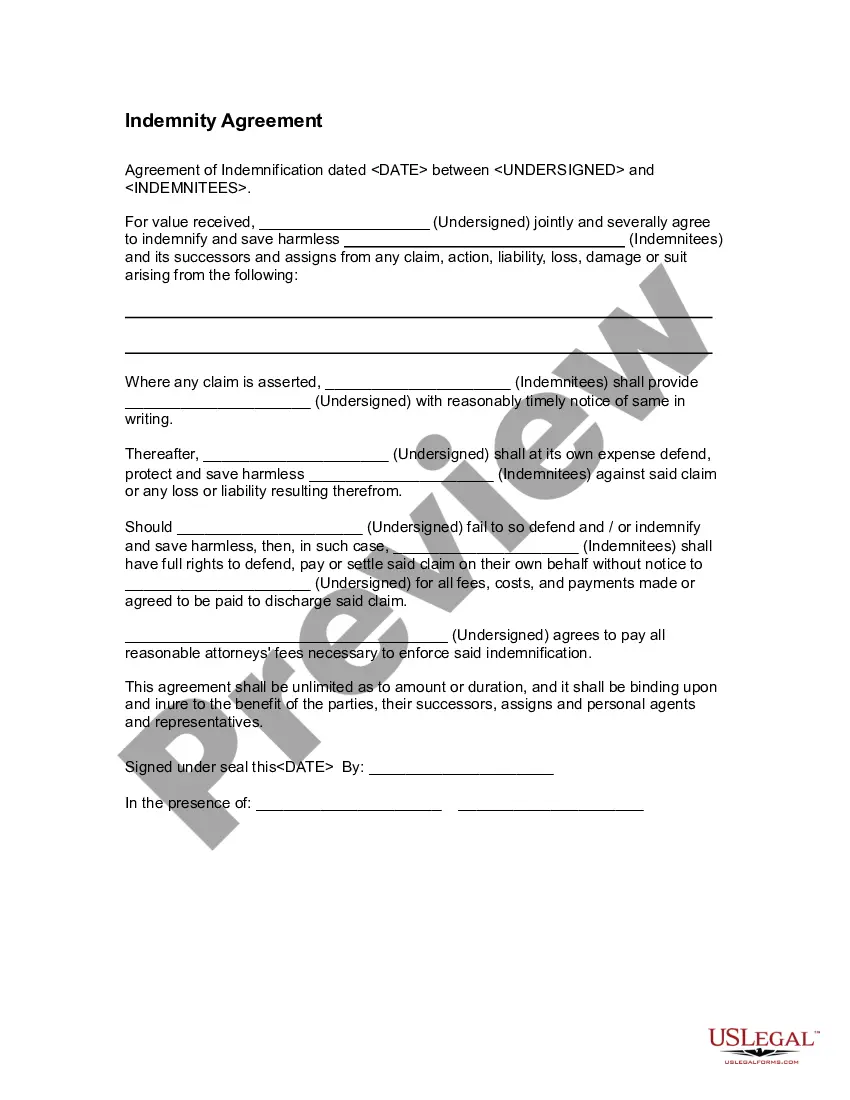
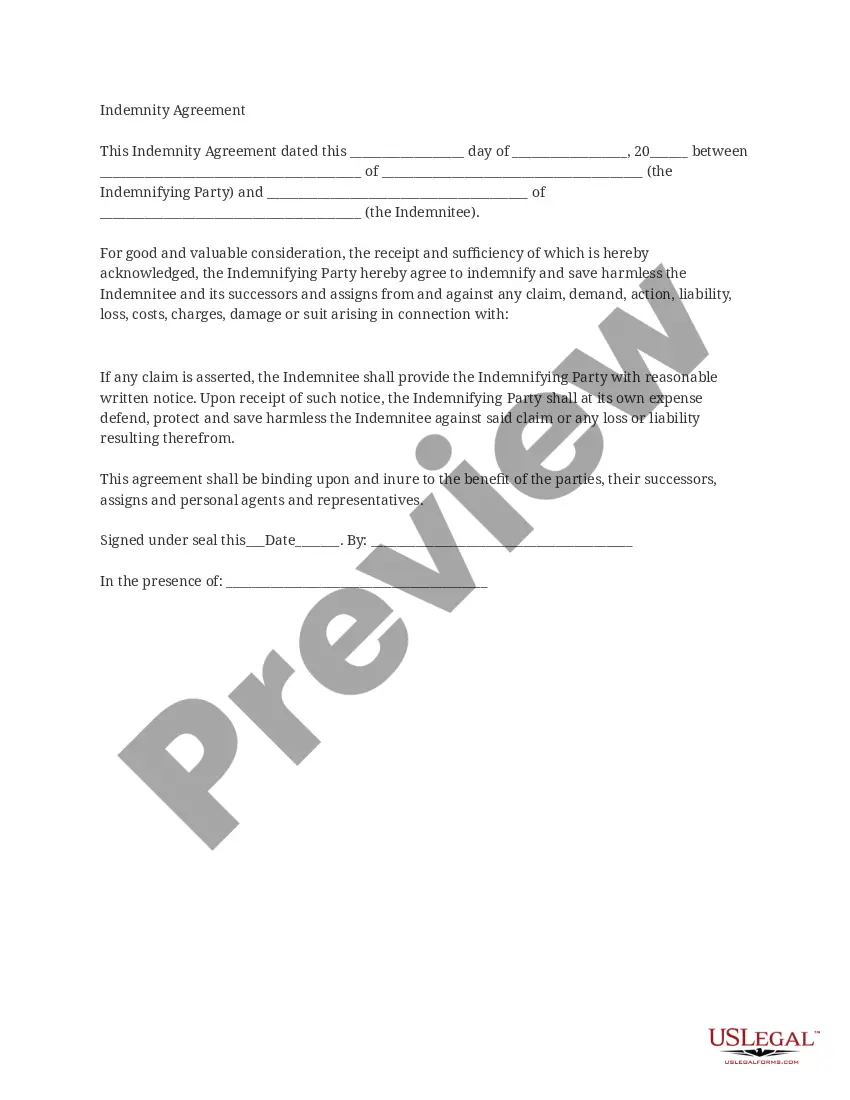
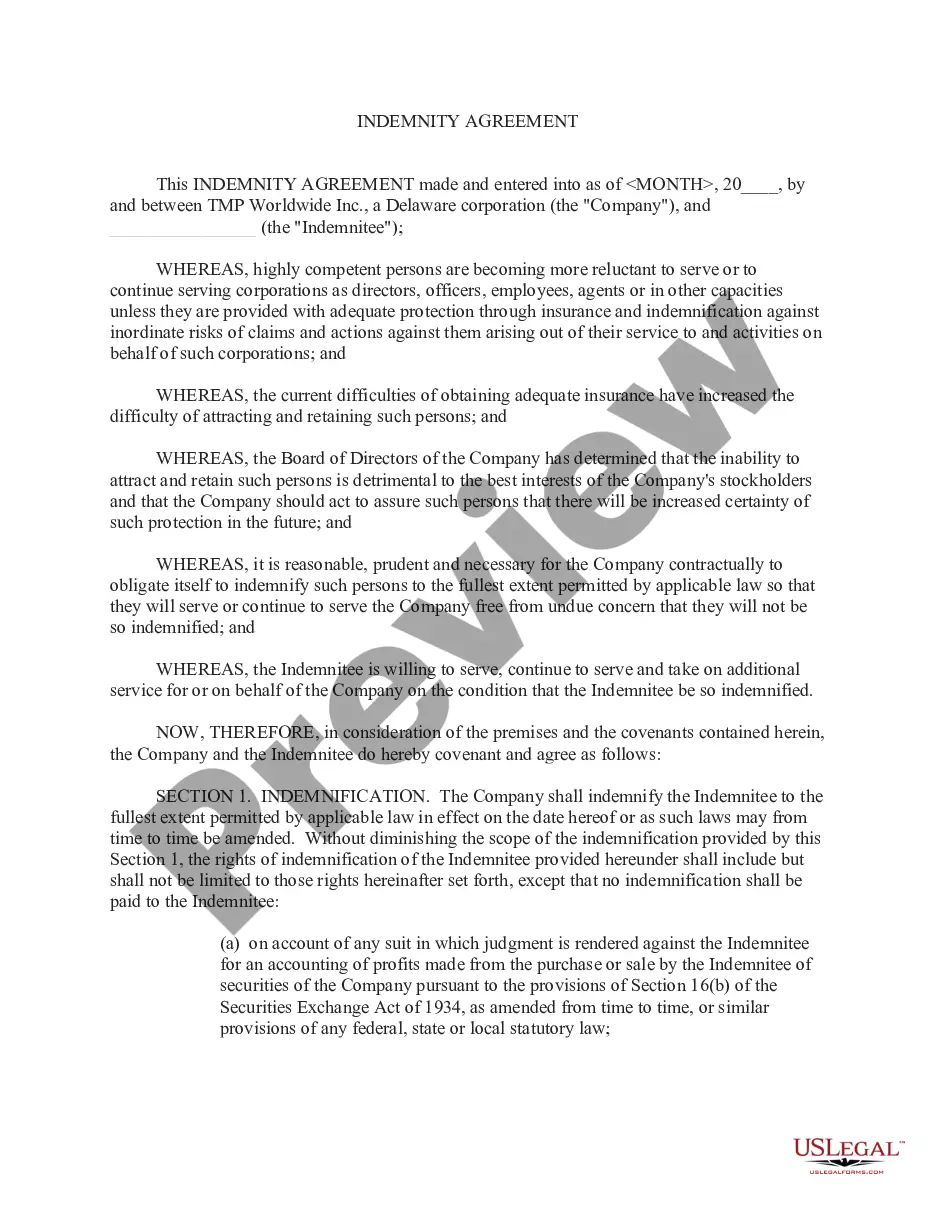
A General Indemnity Agreement is a legal document where one party (the Indemnitor) agrees to compensate another party (the Indemnitee) for any loss, damage, or liability that may arise from a specific event. This form is essential for establishing mutual protection between parties and can be adapted for various situations where indemnification is necessary. Unlike other agreements, this form specifically focuses on reimbursement and liability protection in the case of specified claims or harms.
Main sections of this form
- Parties involved: Details of the Indemnitor and Indemnitee, including their names and addresses.
- Indemnity clause: Specifies the type of claims or damages the Indemnitor will cover.
- Duration of indemnity: States when the indemnity obligations begin and when they end.
- Notice requirements: Outlines the procedure and timeframe for notifying the Indemnitor of any claims.

Common use cases
This form is useful in various scenarios, including business agreements, contractor contracts, and situations where one party may take on risk on behalf of another. It ensures that if a third party makes a claim resulting in loss or damage, the Indemnitee can seek reimbursement from the Indemnitor. This is particularly important in industries like construction or service contracts where liability exposure is significant.
Who can use this document
This form is intended for:
- Business owners seeking to protect themselves from liability in contracts.
- Individuals entering into agreements that involve potential risk sharing.
- Contractors who need to clarify indemnification responsibilities with clients.
- Corporations managing risks in partnerships or joint ventures.
How to prepare this document
- Identify the Indemnitor and Indemnitee by entering their names and addresses.
- Specify the claims or events that would trigger indemnification in the indemnity clause.
- Indicate the start date of the indemnity obligations and any conditions for termination.
- Provide the required notice period that the Indemnitee must follow when notifying the Indemnitor of claims.
- Ensure that both parties sign the agreement and include names and titles where applicable.
Does this document require notarization?
This form usually doesn’t need to be notarized. However, local laws or specific transactions may require it. Our online notarization service, powered by Notarize, lets you complete it remotely through a secure video session, available 24/7.
Get your form ready online
Our built-in tools help you complete, sign, share, and store your documents in one place.
Make edits, fill in missing information, and update formatting in US Legal Forms—just like you would in MS Word.
Download a copy, print it, send it by email, or mail it via USPS—whatever works best for your next step.
Sign and collect signatures with our SignNow integration. Send to multiple recipients, set reminders, and more. Go Premium to unlock E-Sign.
If this form requires notarization, complete it online through a secure video call—no need to meet a notary in person or wait for an appointment.
We protect your documents and personal data by following strict security and privacy standards.

Make edits, fill in missing information, and update formatting in US Legal Forms—just like you would in MS Word.

Download a copy, print it, send it by email, or mail it via USPS—whatever works best for your next step.

Sign and collect signatures with our SignNow integration. Send to multiple recipients, set reminders, and more. Go Premium to unlock E-Sign.

If this form requires notarization, complete it online through a secure video call—no need to meet a notary in person or wait for an appointment.

We protect your documents and personal data by following strict security and privacy standards.
Mistakes to watch out for
- Failing to clearly define the specific events that will trigger indemnification.
- Not including addresses for both parties, which can lead to disputes.
- Missing signatures, which render the agreement unenforceable.
- Overlooking local legal requirements that may affect the validity of the form.
Benefits of completing this form online
- Convenience of immediate access and downloadable format for quick use.
- Editable templates allow for easy customization to fit specific circumstances.
- Designed by licensed attorneys to ensure legal reliability and adherence to standards.
Legal use & context
Indemnity agreements are widely recognized in both contract and tort law. Their enforceability may vary based on jurisdiction and the specific terms outlined within the agreement. It is essential to ensure that the indemnity arrangement complies with local laws to prevent enforcement issues.
Key takeaways
- An indemnity agreement protects parties from specific liabilities arising from defined situations.
- The agreement must be clear and comprehensive to avoid misunderstandings.
- Consult local laws to ensure compliance and enforceability.
Looking for another form?
Form popularity
FAQ
An Indemnity Bond may be drafted as below and executed on a stamp paper of the value which differs for every state. This deed of Indemnity executed on DATE at PLACE by ___________ having its registered office at ___________, through Mr.
Definition: Indemnity means making compensation payments to one party by the other for the loss occurred. Description: Indemnity is based on a mutual contract between two parties (one insured and the other insurer) where one promises the other to compensate for the loss against payment of premiums.
When the term indemnity is used in the legal sense, it may also refer to an exemption from liability for damages. Indemnity is a contractual agreement between two parties. In this arrangement, one party agrees to pay for potential losses or damages caused by another party.
Indemnity is compensation paid by one party to another to cover damages, injury or losses.An example of an indemnity would be an insurance contract, where the insurer agrees to compensate for any damages that the entity protected by the insurer experiences.
Indemnity is compensation paid by one party to another to cover damages, injury or losses.An example of an indemnity would be an insurance contract, where the insurer agrees to compensate for any damages that the entity protected by the insurer experiences.
First, include the date the document is being executed (signed). Title the letter as a "Letter of Indemnity" to make it clear what the document is about. Include a statement that the agreement will be governed by the laws of the specific state (where the agreement would be taken to court).
A general agreement of indemnity, or GIA, is a contract between the surety company and the contractor and the other indemnitors. The GIA obligates the named indemnitors to protect the surety company from any loss or expense that the surety sustains as a result of having issued bonds on behalf of the bond principal.
It's still your business decision whether you sign them or not, but you should do so only where it is a critical contract that you have no way of modifying or negotiating changes. In contrast, the best kind of Indemnity Agreement is commonly called a Mutual Indemnity Agreement or a Mutual Hold Harmless Provision.