Computer Game License Agreement
What is this form?
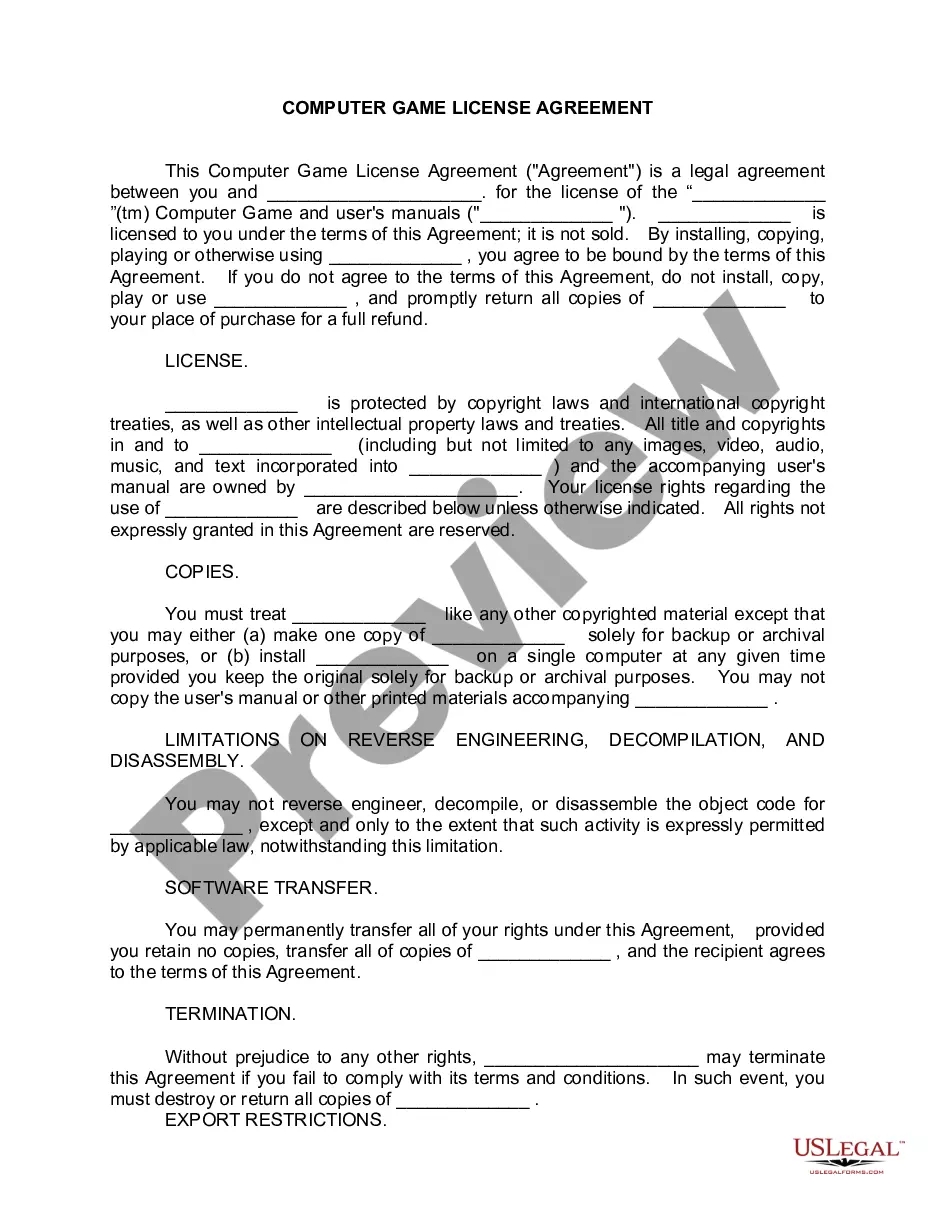
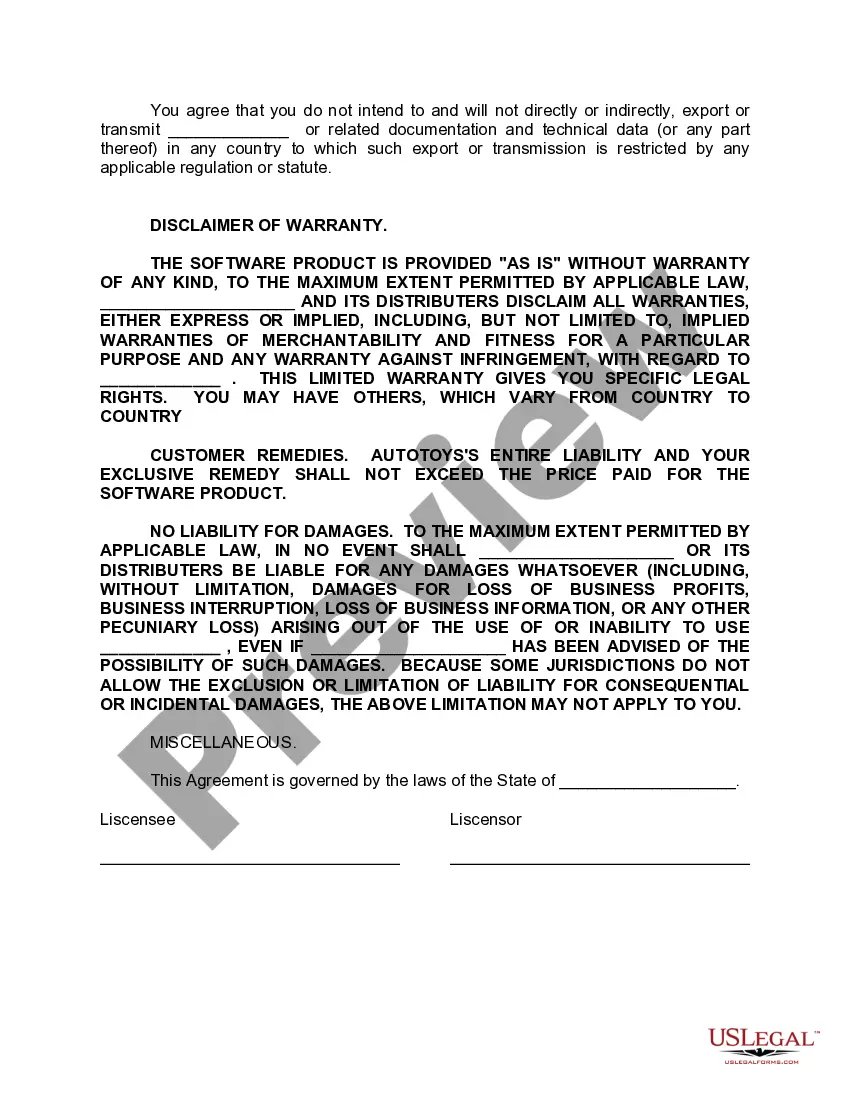
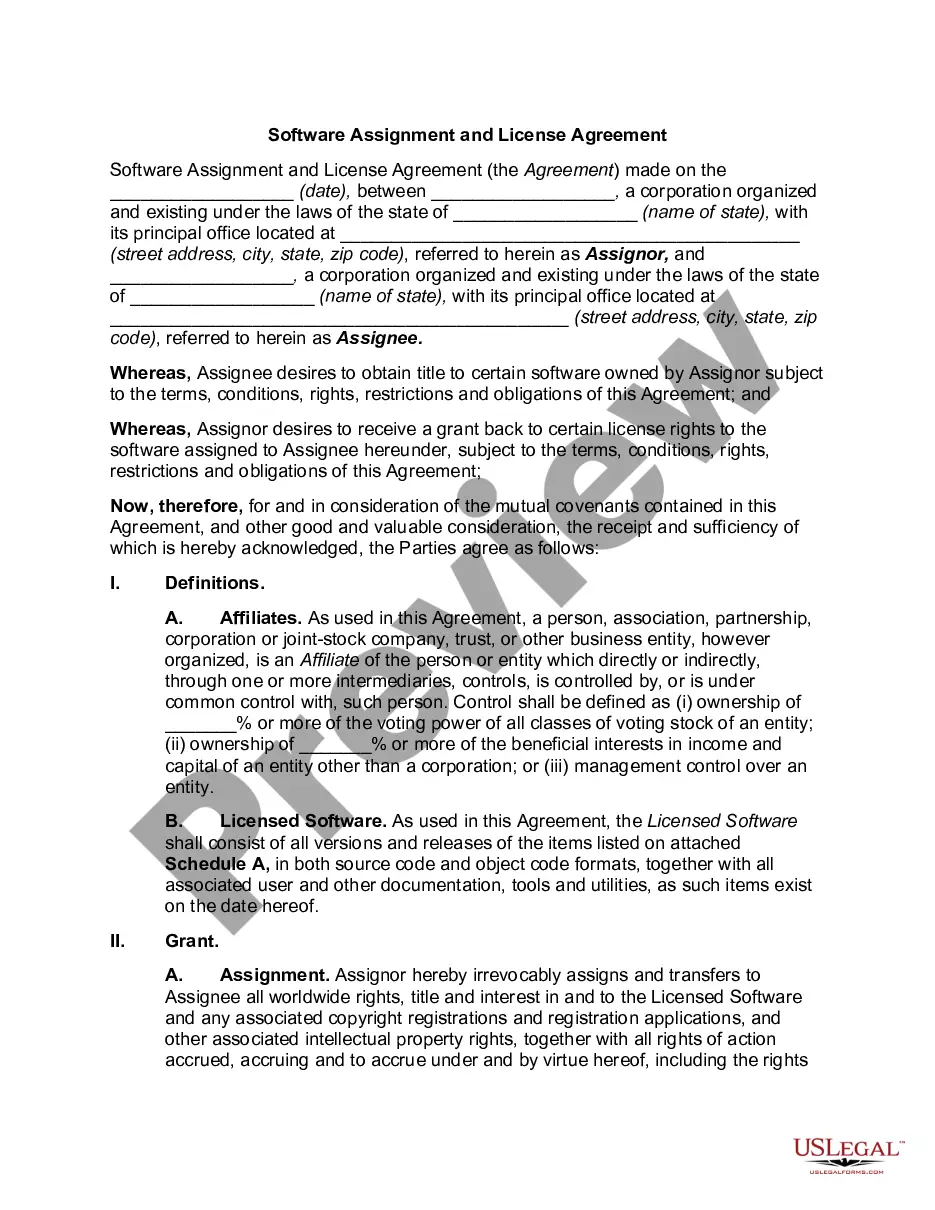
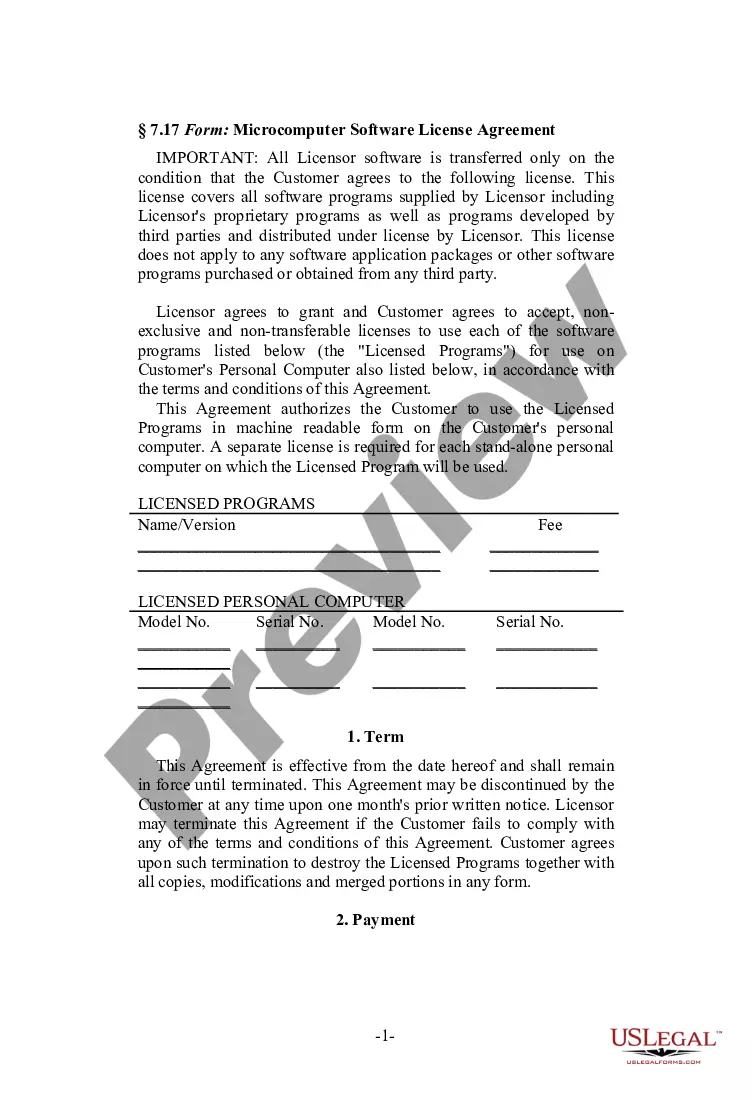
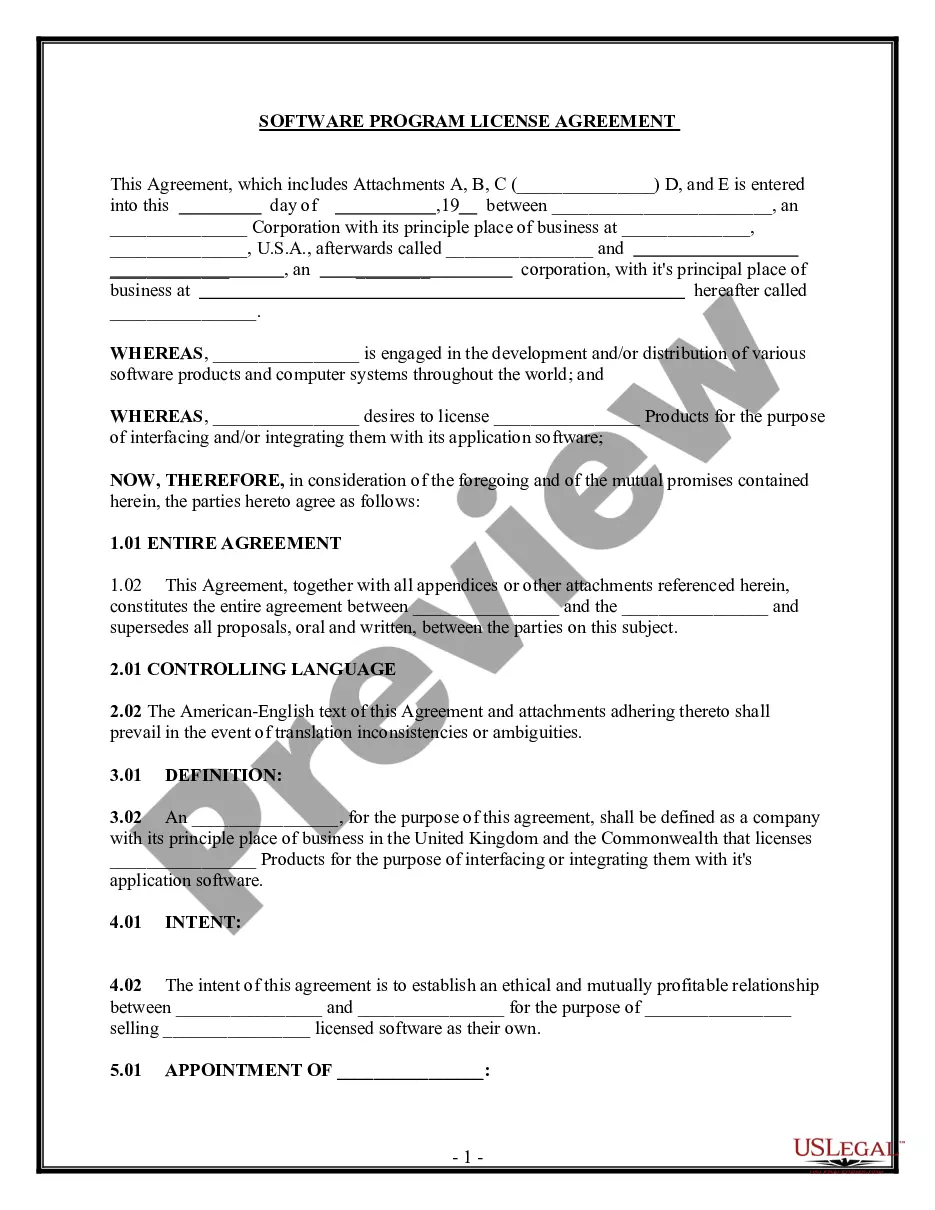
The Computer Game License Agreement is a legal document that outlines the terms under which a user may install and use a computer game. Unlike purchase agreements, this form specifies that the game is licensed, not sold, to the user. By agreeing to the terms of the license, users acknowledge the restrictions on copying and distribution.
Form components explained
- License agreement terms and conditions.
- Restrictions on copying the game and accompanying materials.
- Provisions for termination of the agreement if terms are violated.
- Guidelines on permitted use, including backup copy rights.
- Disclaimers regarding warranties and liabilities.
When to use this form
This form should be used when you are licensing a computer game, which involves agreeing to specific terms of use as defined by the licensor. It is essential before installing or using the game software, ensuring you understand your rights and obligations under the agreement.
Who should use this form
- Individuals purchasing computer games for personal use.
- Businesses licensing games for employee use or commercial purposes.
- Game developers and publishers who need to establish licensing terms.
How to prepare this document
- Identify the parties involved in the agreement.
- Specify the computer game title and version.
- Review and understand the terms of use and restrictions.
- Sign and date the agreement to indicate acceptance of terms.
- Keep a copy for your records once completed.
Notarization guidance
This form does not typically require notarization to be legally valid. However, some jurisdictions or document types may still require it. US Legal Forms provides secure online notarization powered by Notarize, available 24/7 for added convenience.
Get your form ready online
Our built-in tools help you complete, sign, share, and store your documents in one place.
Make edits, fill in missing information, and update formatting in US Legal Forms—just like you would in MS Word.
Download a copy, print it, send it by email, or mail it via USPS—whatever works best for your next step.
Sign and collect signatures with our SignNow integration. Send to multiple recipients, set reminders, and more. Go Premium to unlock E-Sign.
If this form requires notarization, complete it online through a secure video call—no need to meet a notary in person or wait for an appointment.
We protect your documents and personal data by following strict security and privacy standards.

Make edits, fill in missing information, and update formatting in US Legal Forms—just like you would in MS Word.

Download a copy, print it, send it by email, or mail it via USPS—whatever works best for your next step.

Sign and collect signatures with our SignNow integration. Send to multiple recipients, set reminders, and more. Go Premium to unlock E-Sign.

If this form requires notarization, complete it online through a secure video call—no need to meet a notary in person or wait for an appointment.

We protect your documents and personal data by following strict security and privacy standards.
Common mistakes
- Failing to read the entire agreement before installation.
- Neglecting to save a copy of the agreement for personal records.
- Assuming the agreement allows copying of any materials.
Benefits of completing this form online
- Convenient download and access at any time.
- Editable fields allow for customization.
- Reliable source drafted by licensed attorneys.
Legal use & context
- The agreement provides legal protection for both the licensor and licensee.
- It ensures that users understand their rights and limits regarding game usage.
- Violation of terms can lead to termination of the license.
Key takeaways
- The Computer Game License Agreement serves as a legal permission to use the software.
- Users must comply with terms to avoid legal consequences.
- Always read and save a copy of the agreement before use.
Looking for another form?
Form popularity
FAQ
A copyright gives you ownership of your video game. As the legally recognized owner of the game, you can initiate licensing contracts to distribute and sell your work. Licenses must be executed in compliance with various laws and drafted to ensure that the developer's rights and interests are protected.
Download a template for a licensing agreement. Choose your role as the licensor or licensee. Define the license(s) in the agreement. Decide whether the license is exclusive or not. Settle the matter of fees and payment schedule. Add a renewal date and rules.
In order for a contract to be considered binding, it must include the basic elements of a contract, including offer and acceptance, consideration, mutuality or intention, legality, and capacity. If a contract includes all of these elements, it is most likely a binding contract.
Most contracts only need to contain two elements to be legally valid: All parties must be in agreement (after an offer has been made by one party and accepted by the other). Something of value must be exchanged -- such as cash, services, or goods (or a promise to exchange such an item) -- for something else of value.
User agreements like EULAs are legally binding contracts between the software author and the end-user. End User License Agreements are enforceable as long as it is clear that it is a contract and both parties can understand the terms.
Generally speaking, an EULA is a legally binding agreement between the owner of a product (often software) and the end-user more specifically a contract between the licensor of a product and the licensee.
What is a Licensing Agreement? A licensing agreement is a contract between two parties (the licensor and licensee) in which the licensor grants the licensee the right to use the brand name, trademark, patented technology, or ability to produce and sell goods owned by the licensor.
A legitimate terms-of-service agreement is legally binding and may be subject to change. Companies can enforce the terms by refusing service. Customers can enforce by filing a lawsuit or arbitration case if they can show they were actually harmed by a breach of the terms.
Once you get past the basics, a brand licensing agreement accounts for every detail involved in how two companies will work together. For example, the licensee (the company buying rights to license a brand) often pays a portion of each sale of the licensed product back to the licensor (the brand being licensed.)