New York Request for Judicial Intervention (form UD-13)
Description
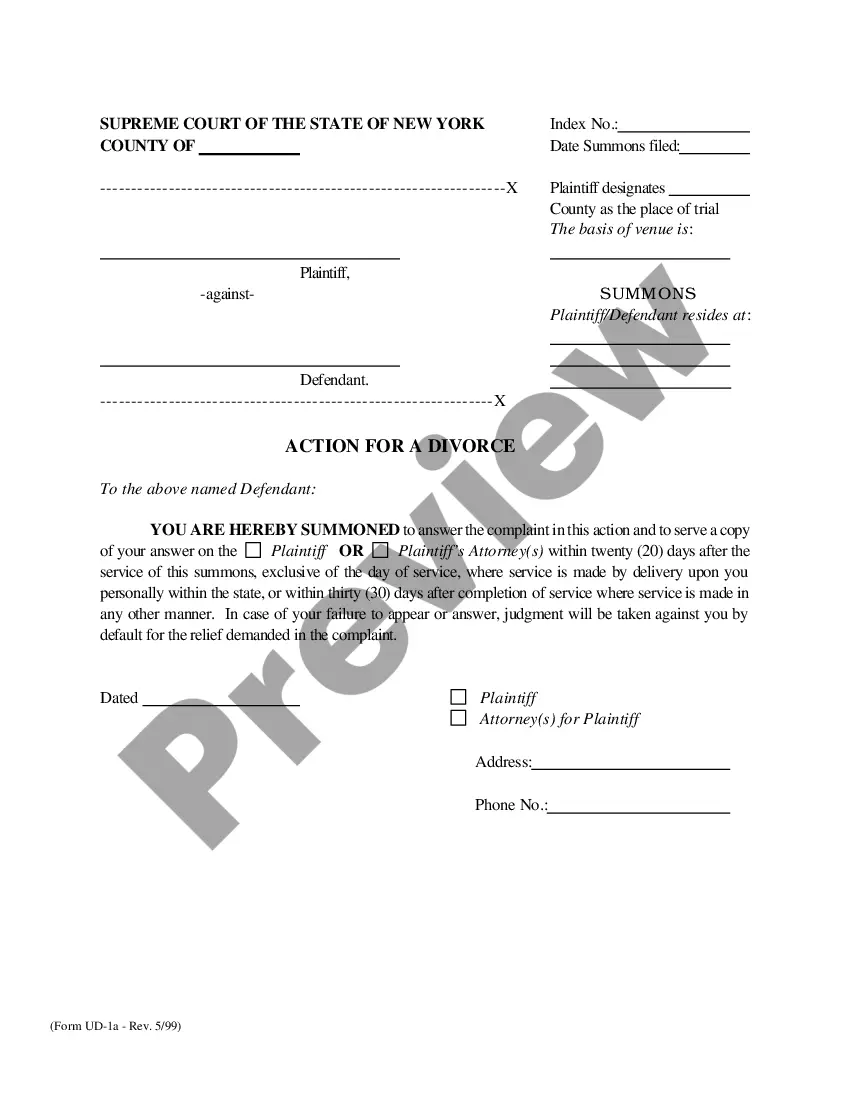
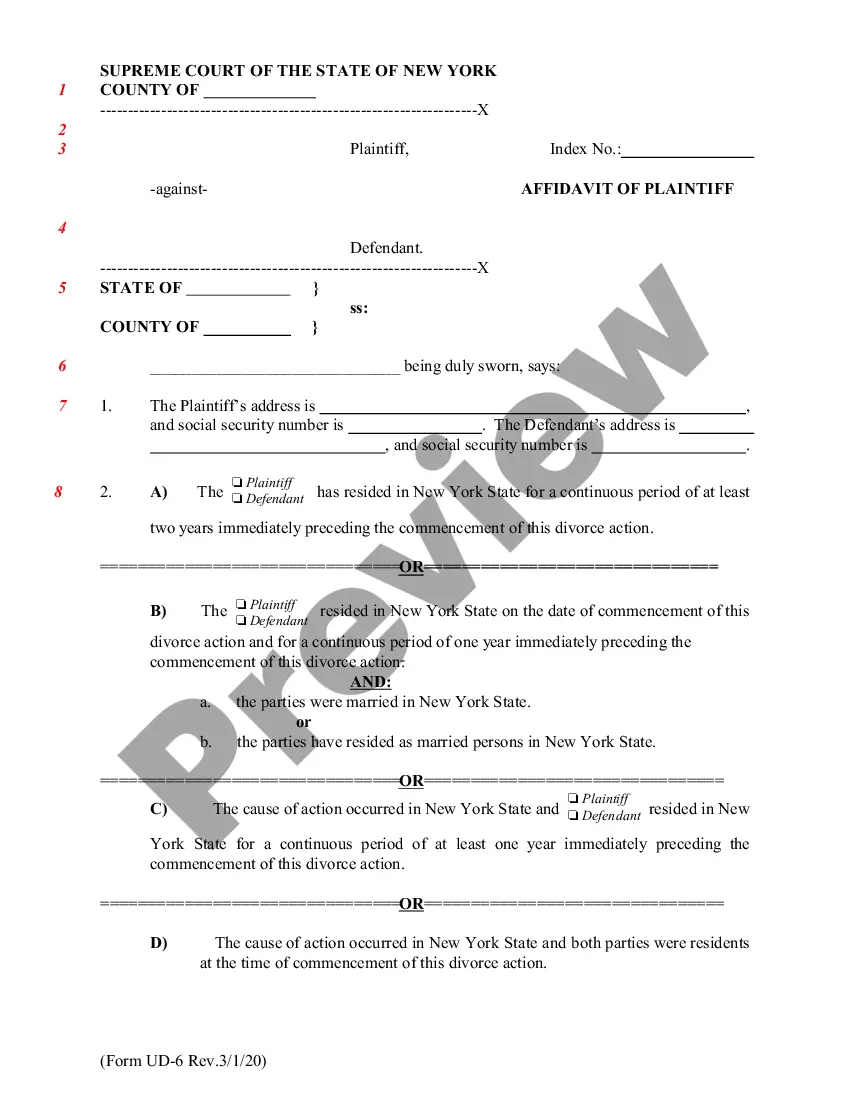

How to fill out New York Request For Judicial Intervention (form UD-13)?
How much time and resources do you often spend on composing official documentation? There’s a greater way to get such forms than hiring legal specialists or spending hours browsing the web for a proper blank. US Legal Forms is the top online library that provides professionally designed and verified state-specific legal documents for any purpose, including the New York Request for Judicial Intervention (form UD-13).
To acquire and prepare an appropriate New York Request for Judicial Intervention (form UD-13) blank, adhere to these easy steps:
- Examine the form content to ensure it meets your state requirements. To do so, read the form description or utilize the Preview option.
- If your legal template doesn’t meet your requirements, find another one using the search bar at the top of the page.
- If you are already registered with our service, log in and download the New York Request for Judicial Intervention (form UD-13). Otherwise, proceed to the next steps.
- Click Buy now once you find the right document. Opt for the subscription plan that suits you best to access our library’s full opportunities.
- Create an account and pay for your subscription. You can make a transaction with your credit card or through PayPal - our service is absolutely reliable for that.
- Download your New York Request for Judicial Intervention (form UD-13) on your device and fill it out on a printed-out hard copy or electronically.
Another advantage of our service is that you can access previously downloaded documents that you safely keep in your profile in the My Forms tab. Get them at any moment and re-complete your paperwork as often as you need.
Save time and effort preparing official paperwork with US Legal Forms, one of the most trustworthy web services. Sign up for us now!
Form popularity
FAQ
A Request for Judicial Intervention (RJI) must be filed no later than 45 days from service of the summons. A Request for Judicial Intervention (RJI) must be filed no later than 120 days from service of the summons if a Notice of No Necessity is filed by both parties.
A form that a party files in a New York state court action that has not yet been assigned to a judge. The RJI is a request for the court to become involved in the matter and will result in the assignment of a judge, who will then preside over the action until its end.
What does ?RJI? mean? Definition: RJI is an abbreviation for ?Request for Judicial Intervention.? It's a form that is filed by either a plaintiff or defendant sometime after the summons and complaint is served on the defendant in a civil case. Filing Effect: When an RJI is filed, the civil case is assigned to a judge.
Related Definitions Judicial Intervention means if the Court or Tribunals has issuedsummons, notice of appearance or any other notice as may be applicable from time to time.
Some uncontested divorces are resolved as quickly as six weeks, while others can take six months or more. Since New York does not have a waiting period, a divorce that both parties agree on takes roughly 3 months for the papers to be filed with the court.
A Request for Judicial Intervention (RJI) must be filed no later than 45 days from service of the summons. OR. A Request for Judicial Intervention (RJI) must be filed no later than 120 days from service of the summons if a Notice of No Necessity is filed by both parties.
Some uncontested divorces are resolved as quickly as six weeks, while others can take six months or more. Since New York does not have a waiting period, a divorce that both parties agree on takes roughly 3 months for the papers to be filed with the court.
Upon the filing of an RJI, cases are identified by action type and then assigned at random by the computer to a Justice from among those designated to handle cases of that type. Each case is generally assigned to an IAS Justice for its life, including for trial purposes, except for City cases.