Agreement by Unmarried Individuals to Purchase and Hold Residence as Joint Tenants
What is this form?
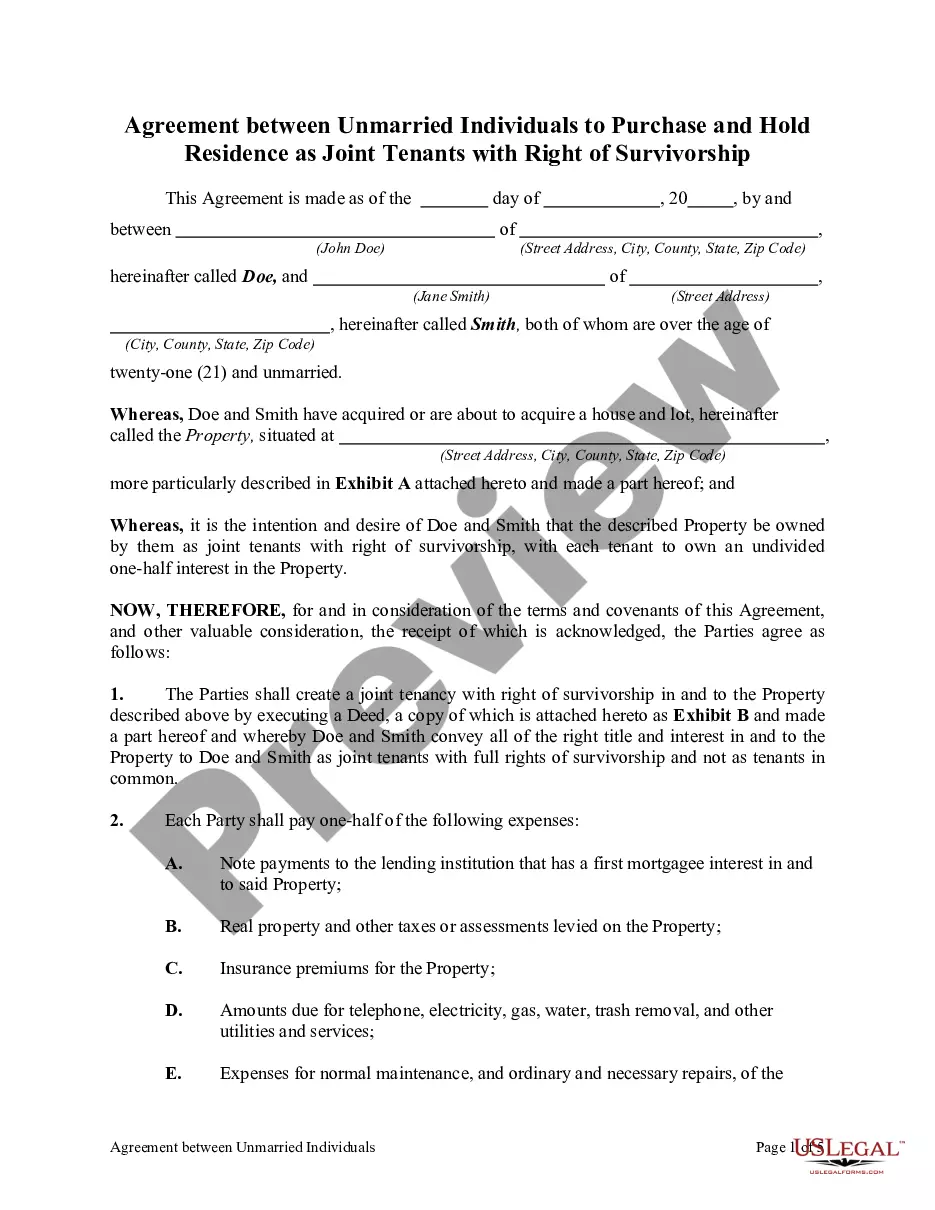
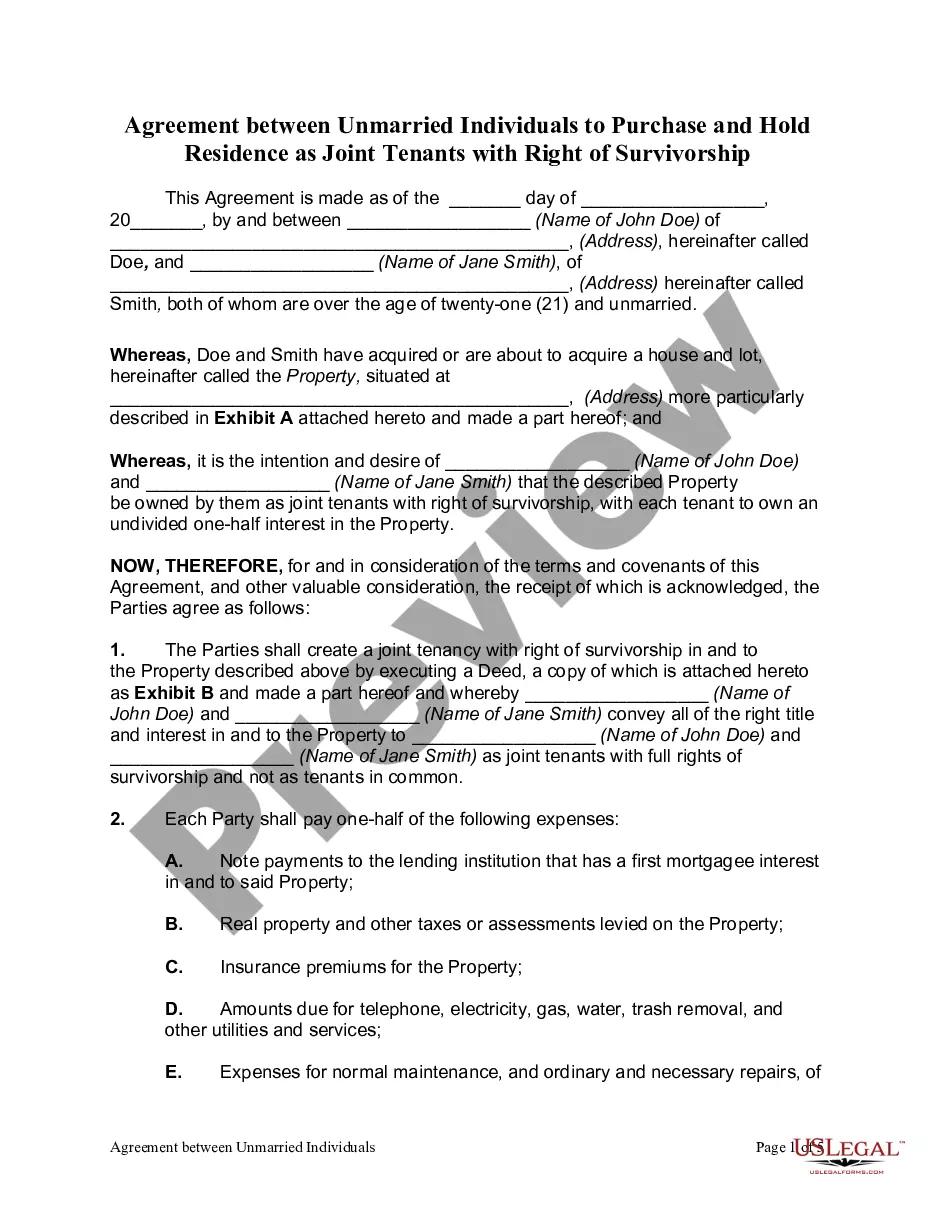
This Agreement by Unmarried Individuals to Purchase and Hold Residence as Joint Tenants is a legal document that allows two unmarried individuals to co-own real property together. Unlike other forms of co-ownership, such as tenancy in common or joint tenancy limited to married couples, this agreement enables unmarried parties to hold the property as joint tenants with rights of survivorship, meaning that if one owner dies, their interest automatically passes to the surviving owner. This form customizes the ownership structure to ensure clarity and protection of both parties' interests.
Key parts of this document
- Parties' identification and marital status.
- Description of the property being jointly purchased.
- Mutual intentions to own the property as joint tenants.
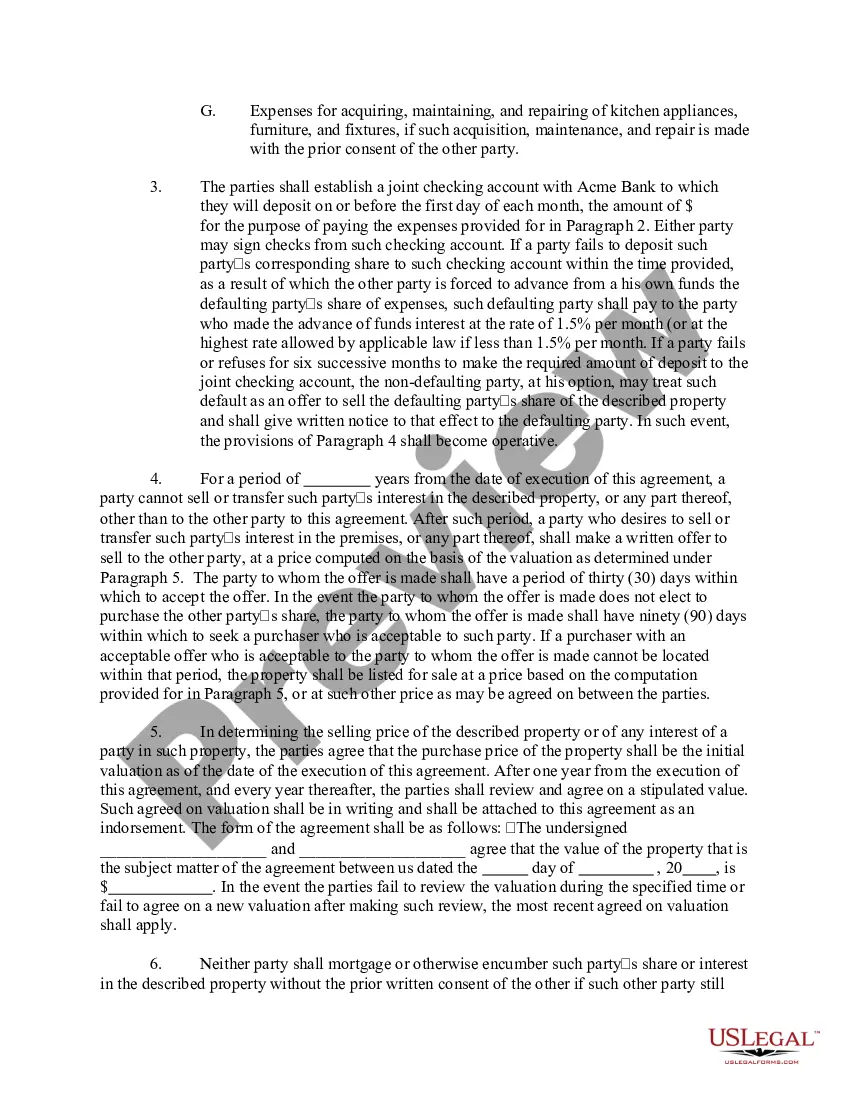
- Provisions for payment of expenses associated with the property.
- Details regarding the establishment of a joint checking account for shared expenses.
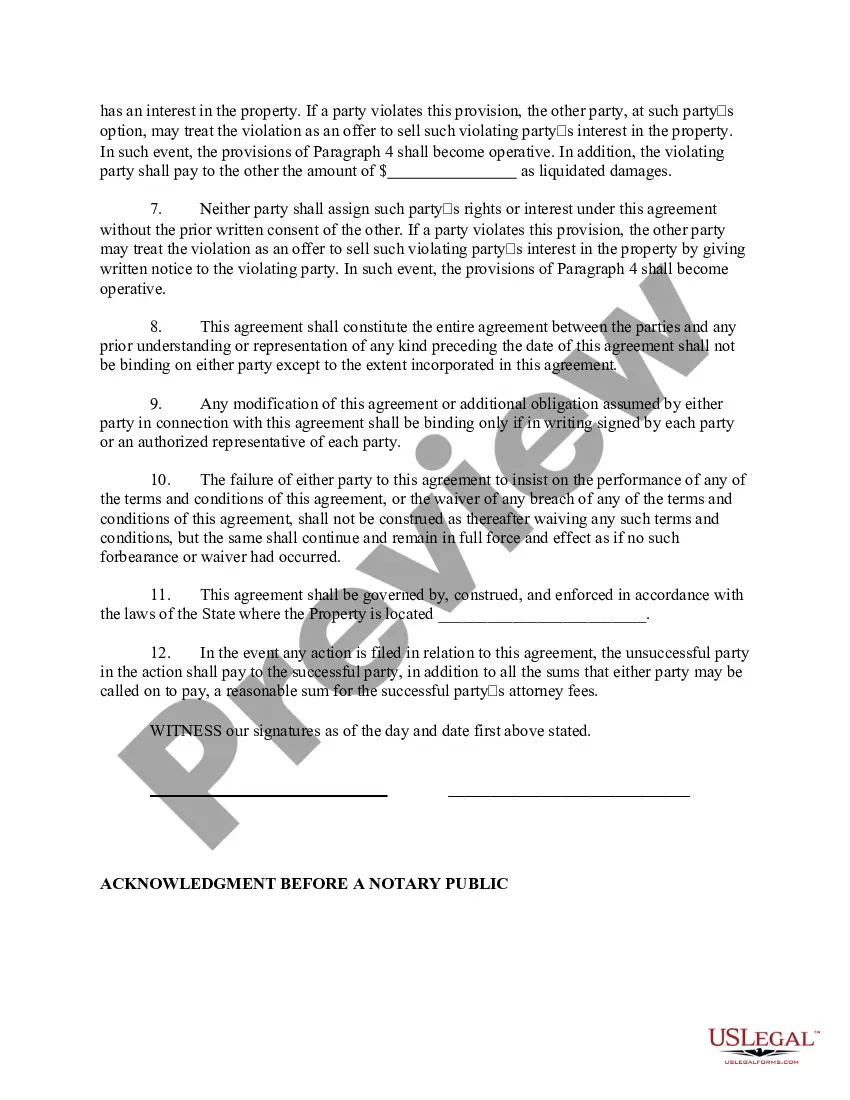
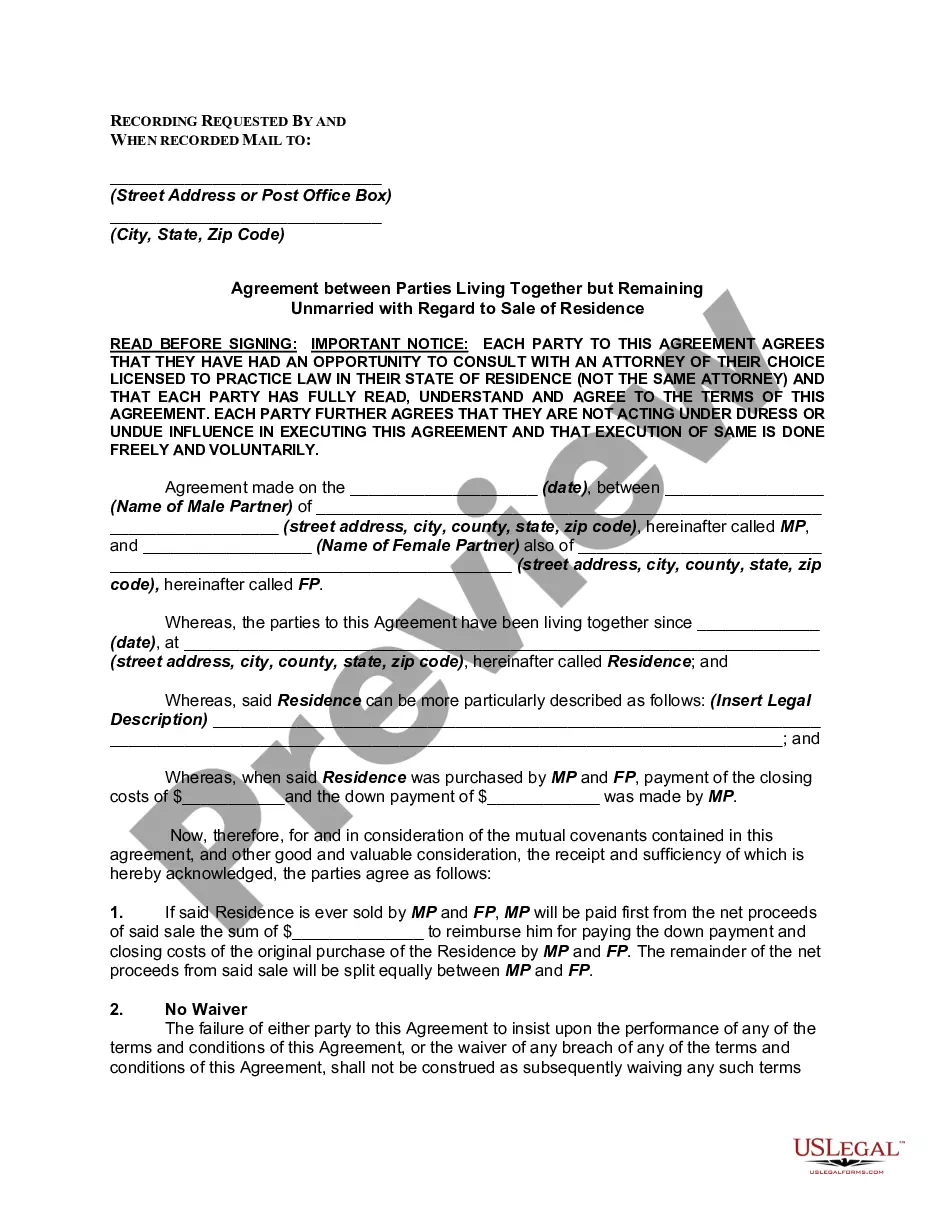
- Guidelines for selling or transferring interests in the property.
- Conditions under which either party may encumber their interest in the property.
- Governing law specific to the state where the property is located.

When to use this form
This form is particularly useful when two unmarried individuals decide to purchase a home together and wish to establish clear legal terms of co-ownership. It is applicable in scenarios where the parties want to ensure that their ownership rights are protected and to avoid complications in the event of one party's death. This agreement is also helpful when both parties plan to contribute to property-related expenses and need a structured approach to manage these costs.
Who can use this document
- Unmarried couples planning to buy real estate together.
- Friends or family members who want to co-invest in property.
- Individuals seeking to clarify their ownership rights in property they jointly acquire.
- Those who wish to establish guidelines for managing shared property expenses.
Instructions for completing this form
- Identify the parties involved in the agreement and confirm they are unmarried.
- Specify the property address and legal description to clarify the property being purchased.
- Detail the shared financial obligations, including the contributions to expenses and how these will be managed.
- Establish terms for selling or transferring ownership interests, including how the property value will be determined.
- Include a provision for joint decision-making on significant actions regarding the property.
Is notarization required?
This document requires notarization to meet legal standards. US Legal Forms provides secure online notarization powered by Notarize, allowing you to complete the process through a verified video call, available 24/7.
Get your form ready online
Our built-in tools help you complete, sign, share, and store your documents in one place.
Make edits, fill in missing information, and update formatting in US Legal Forms—just like you would in MS Word.
Download a copy, print it, send it by email, or mail it via USPS—whatever works best for your next step.
Sign and collect signatures with our SignNow integration. Send to multiple recipients, set reminders, and more. Go Premium to unlock E-Sign.
If this form requires notarization, complete it online through a secure video call—no need to meet a notary in person or wait for an appointment.
We protect your documents and personal data by following strict security and privacy standards.

Make edits, fill in missing information, and update formatting in US Legal Forms—just like you would in MS Word.

Download a copy, print it, send it by email, or mail it via USPS—whatever works best for your next step.

Sign and collect signatures with our SignNow integration. Send to multiple recipients, set reminders, and more. Go Premium to unlock E-Sign.

If this form requires notarization, complete it online through a secure video call—no need to meet a notary in person or wait for an appointment.

We protect your documents and personal data by following strict security and privacy standards.
Common mistakes
- Failing to specify the legal description of the property.
- Neglecting to outline clear terms for financial contributions and expense management.
- Omitting signatures or not dating the agreement.
- Not establishing provisions for what happens if one party wants to sell their interest.
- Forgetting to review state-specific laws that may affect the agreement.
Why complete this form online
- Convenience of downloading and completing the form at your own pace.
- Access to reliable legal templates drafted by licensed attorneys.
- Edit and customize the form easily to fit your unique situation.
- Avoid potential delays associated with in-person meetings with legal professionals.
Looking for another form?



Form popularity
FAQ
Danger #1: Only delays probate. Danger #2: Probate when both owners die together. Danger #3: Unintentional disinheriting. Danger #4: Gift taxes. Danger #5: Loss of income tax benefits. Danger #6: Right to sell or encumber. Danger #7: Financial problems.
The term joint tenancy refers to a legal arrangement in which two or more people own a property together, each with equal rights and obligations. Joint tenancies can be created by married and non-married couples, friends, relatives, and business associates.
As joint tenants (sometimes called 'beneficial joint tenants'): you have equal rights to the whole property. the property automatically goes to the other owners if you die. you cannot pass on your ownership of the property in your will.
The dangers of joint tenancy include the following: Danger #1: Only delays probate. When either joint tenant dies, the survivor usually a spouse or child immediately becomes the owner of the entire property. But when the survivor dies, the property still must go through probate.
For example, joint tenants must all take title simultaneously from the same deed while tenants in common can come into ownership at different times. Another difference is that joint tenants all own equal shares of the property, proportionate to the number of joint tenants involved.