Dog Control Ordinance
Understanding this form
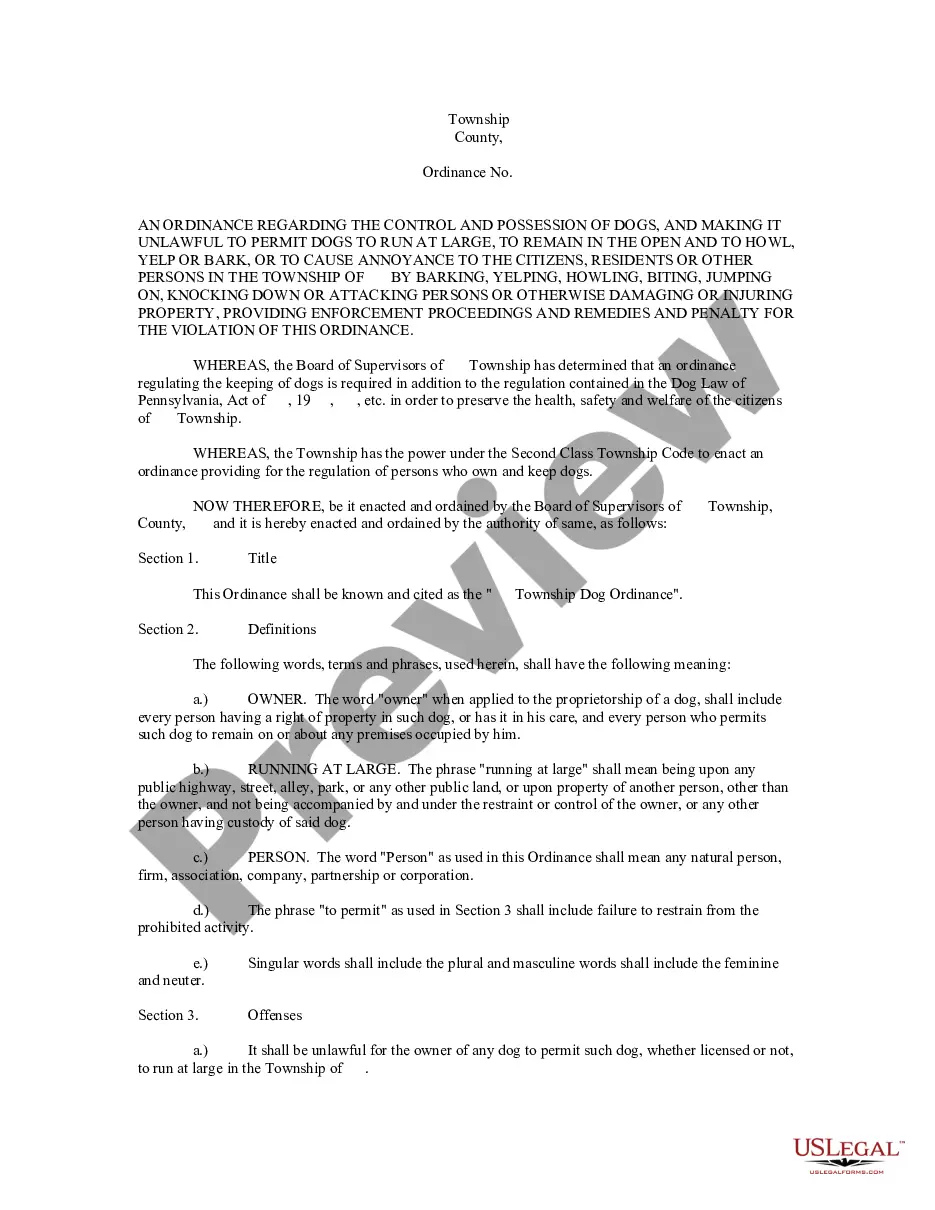
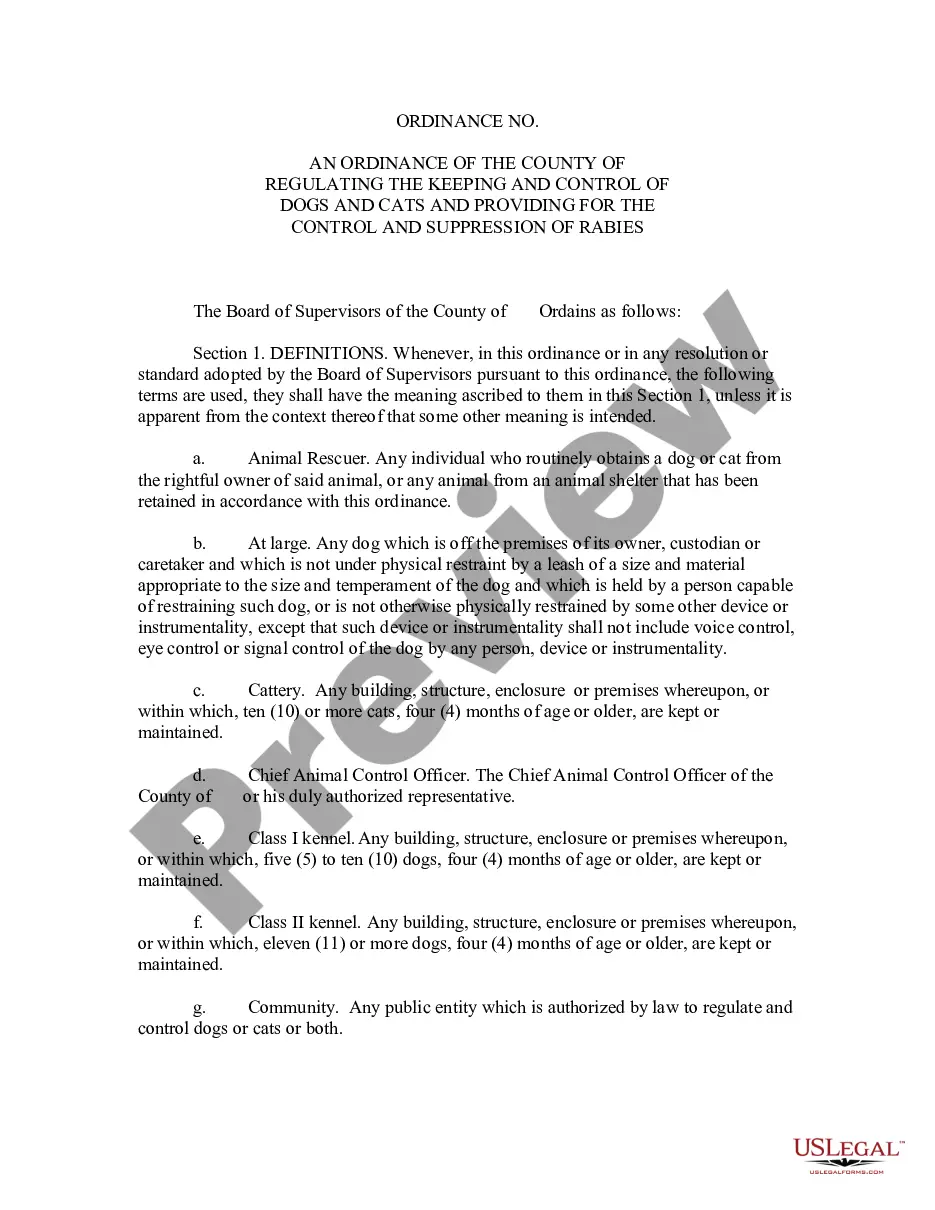
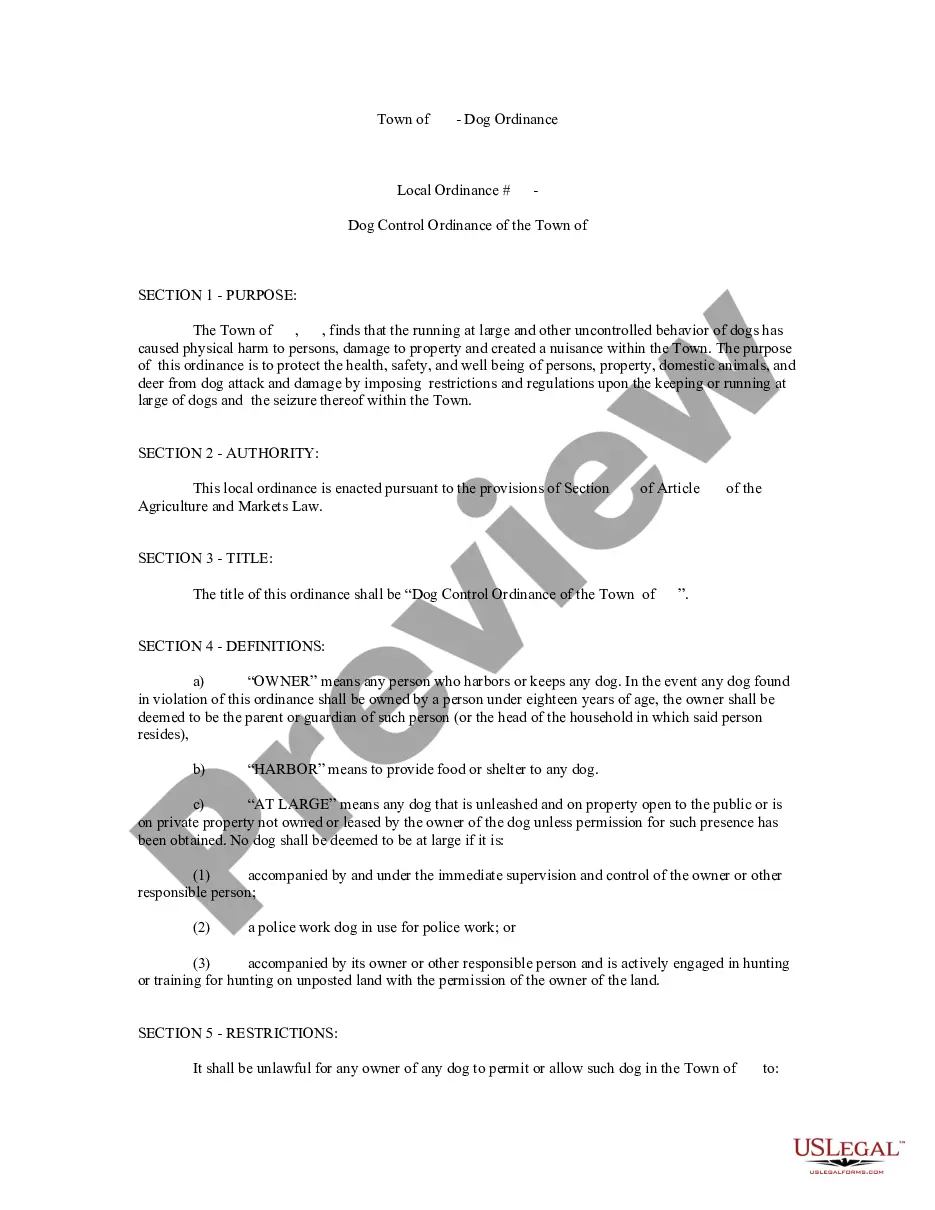
The Dog Control Ordinance is a legal document that defines regulations regarding the ownership and control of dogs within a municipality. This ordinance aims to ensure the safety and welfare of the community by prohibiting dogs from running at large, causing excessive noise, or posing threats to individuals or property. Unlike other pet-related forms, this ordinance is specific to local governance and is tailored to address community-specific issues related to dog control.
Key parts of this document
- Definitions: Clarifies key terms such as "owner," "running at large," and "person."
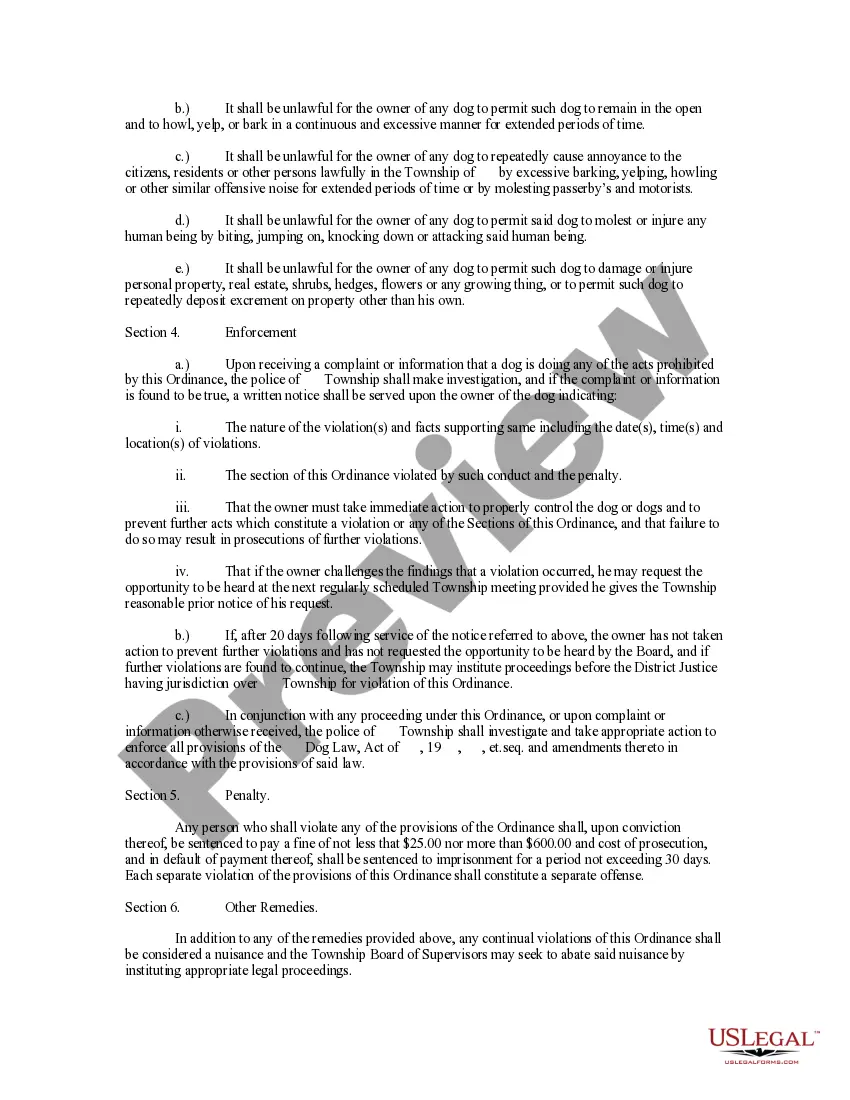
- Offenses: Lists specific activities that are prohibited for dog owners, such as allowing dogs to roam freely or cause disturbances.
- Enforcement: Details the process for handling complaints about dog violations and the actions that may be taken by local authorities.
- Penalties: Specifies fines and penalties for violations of the ordinance.
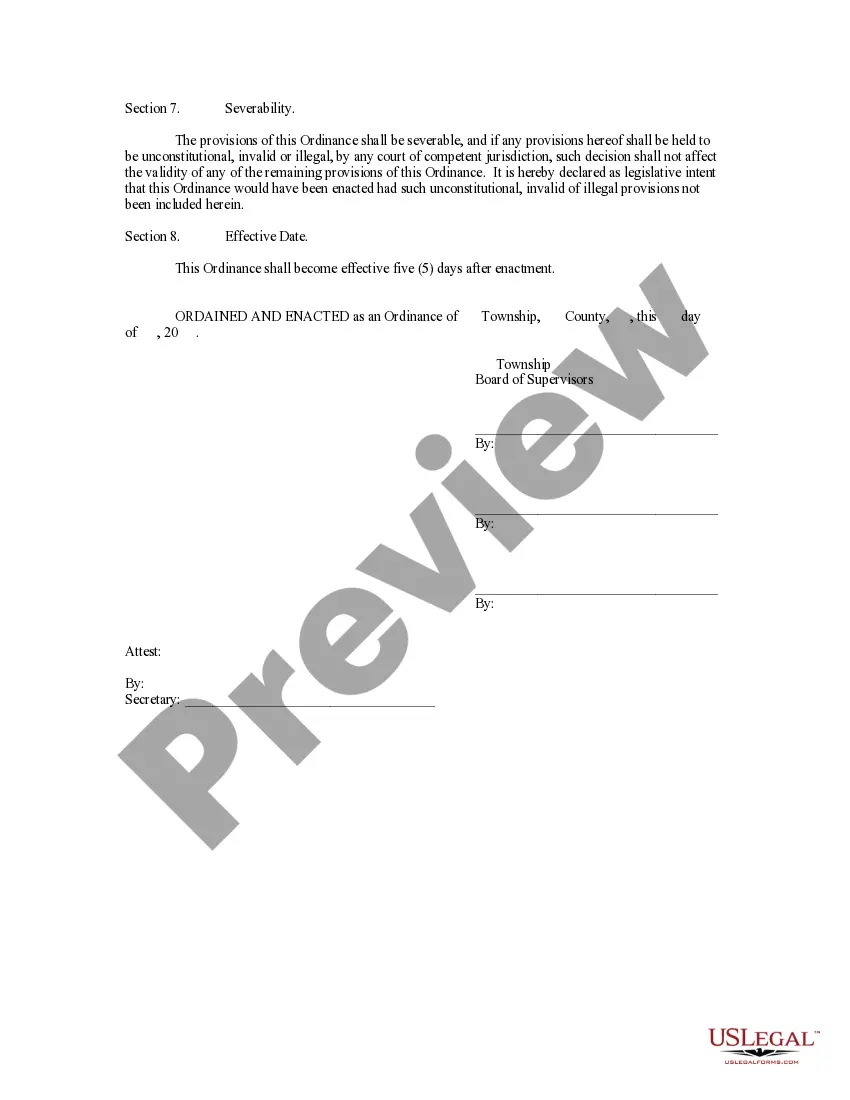
- Severability: Ensures that if any part of the ordinance is found to be invalid, the remainder still stands.
- Effective Date: States when the ordinance comes into force after enactment.
When to use this document
This ordinance should be used when a municipality wishes to establish regulatory measures for dog control. It is necessary in situations where dog-related nuisances affect residents, such as barking, running at large, or aggression towards people or other animals. Local authorities can adopt this ordinance to enhance community safety and promote responsible pet ownership.
Who needs this form
- Municipal government officials looking to implement dog control regulations.
- Township boards seeking to address community concerns related to dog behavior.
- Pet owners wanting to understand local regulations regarding dog ownership.
Instructions for completing this form
- Identify the municipality that will adopt the ordinance.
- Fill in the ordinance number and date of enactment.
- Define specific terms used in the ordinance, ensuring clarity for all residents.
- Clearly outline the offenses associated with dog ownership in the municipality.
- Include the enforcement process that local authorities will follow in case of violations.
Does this form need to be notarized?
Notarization is generally not required for this form. However, certain states or situations might demand it. You can complete notarization online through US Legal Forms, powered by Notarize, using a verified video call available anytime.
Get your form ready online
Our built-in tools help you complete, sign, share, and store your documents in one place.
Make edits, fill in missing information, and update formatting in US Legal Forms—just like you would in MS Word.
Download a copy, print it, send it by email, or mail it via USPS—whatever works best for your next step.
Sign and collect signatures with our SignNow integration. Send to multiple recipients, set reminders, and more. Go Premium to unlock E-Sign.
If this form requires notarization, complete it online through a secure video call—no need to meet a notary in person or wait for an appointment.
We protect your documents and personal data by following strict security and privacy standards.

Make edits, fill in missing information, and update formatting in US Legal Forms—just like you would in MS Word.

Download a copy, print it, send it by email, or mail it via USPS—whatever works best for your next step.

Sign and collect signatures with our SignNow integration. Send to multiple recipients, set reminders, and more. Go Premium to unlock E-Sign.

If this form requires notarization, complete it online through a secure video call—no need to meet a notary in person or wait for an appointment.

We protect your documents and personal data by following strict security and privacy standards.
Common mistakes to avoid
- Failing to include necessary definitions, leading to ambiguity in enforcement.
- Not clearly specifying penalties, which may weaken compliance.
- Omitting the enforcement process, resulting in confusion on how complaints will be handled.
Benefits of using this form online
- Convenient access to a ready-to-use template tailored for local municipalities.
- Edit and customize the ordinance easily to fit specific community needs.
- Reliable source, drafted by licensed attorneys, ensuring compliance with legal standards.
Legal use & context
- This ordinance serves as a guideline for local governments to regulate pet ownership effectively.
- Enforcement of the ordinance can help maintain public safety and neighborhood peace.
- Failure to enforce can lead to increased animal-related problems and community dissatisfaction.
Looking for another form?
Form popularity
FAQ
Ordinances regulating pet ownership usually regulate based on numerical criteria. An ordinance that chooses to limit the number of pets to a certain number (i.e., three dogs per household) will be generally upheld even if it fails to distinguish dogs based on other factors (i.e., size or weight).
Michigan's law says a person has to have "just cause" to kill or intentionally injure an animal but doesn't define what justifies just cause.Yet the owners of dogs involved in vicious attacks on people or other animals are often vilified for not euthanizing their pets.
Although dogs are allowed in all countries without any definitive laws, the number of these dogs are controlled. In American, for example, if you live in a rural area, the amount of dogs you can own is not restricted. However, if you live in a city, there is a general rule of two to three dogs allowed per household.
No. There is no limit on the number of animals that a person can own, provided that the animals are properly cared for and do not pose a nuisance, health or safety risk to other members of the community.
Ordinances regulating pet ownership usually regulate based on numerical criteria. An ordinance that chooses to limit the number of pets to a certain number (i.e., three dogs per household) will be generally upheld even if it fails to distinguish dogs based on other factors (i.e., size or weight).
Generally, most people can comfortably own one or two dogs, although that's often a full-time job! Some folk who maybe have a large family, and live in a vast place with lots of indoor space and land outside may be able to balance four to six .
Shooting a dog in and of itself is not necessarily against the law.The law may regard animals as property, "like a toaster," Halstead said, but veterinarians are not required to put down an animal just because the owner wants it done, though the law recognizes the owners right to make that decision.