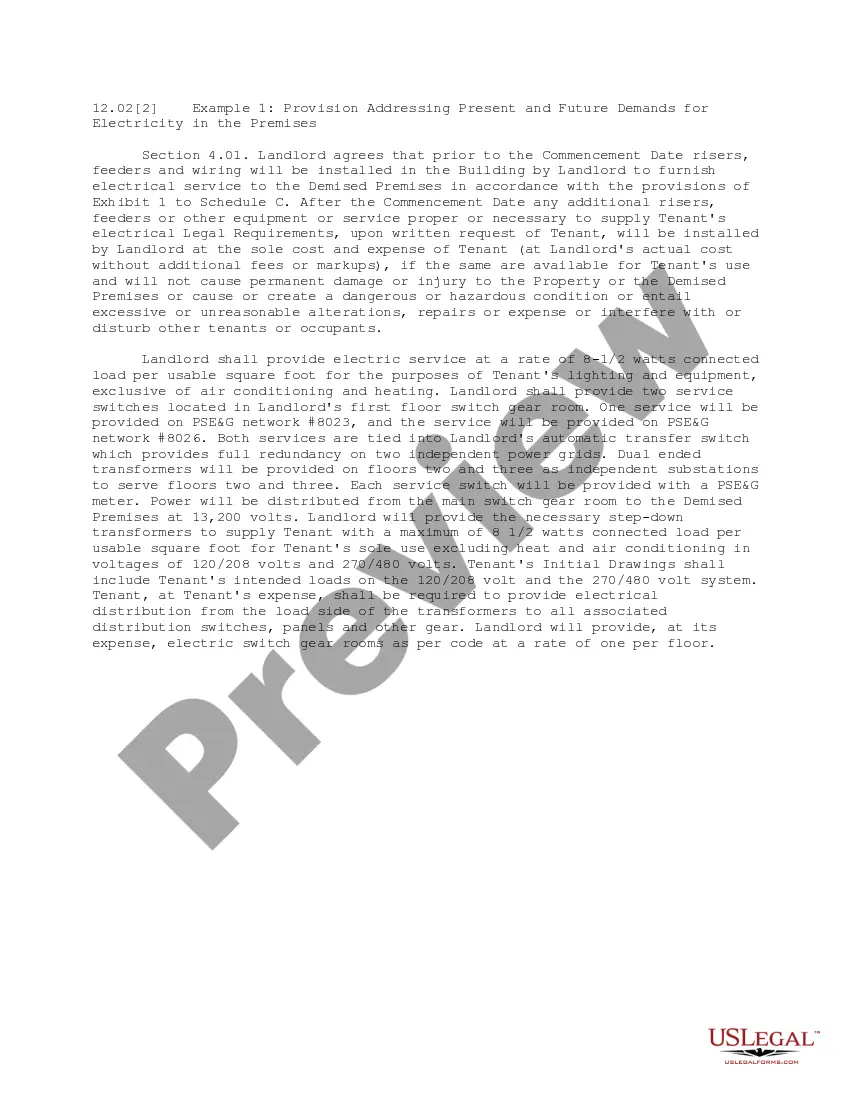
Provision Addressing Present and Future Demands for Electricity in the Premises
Understanding this form
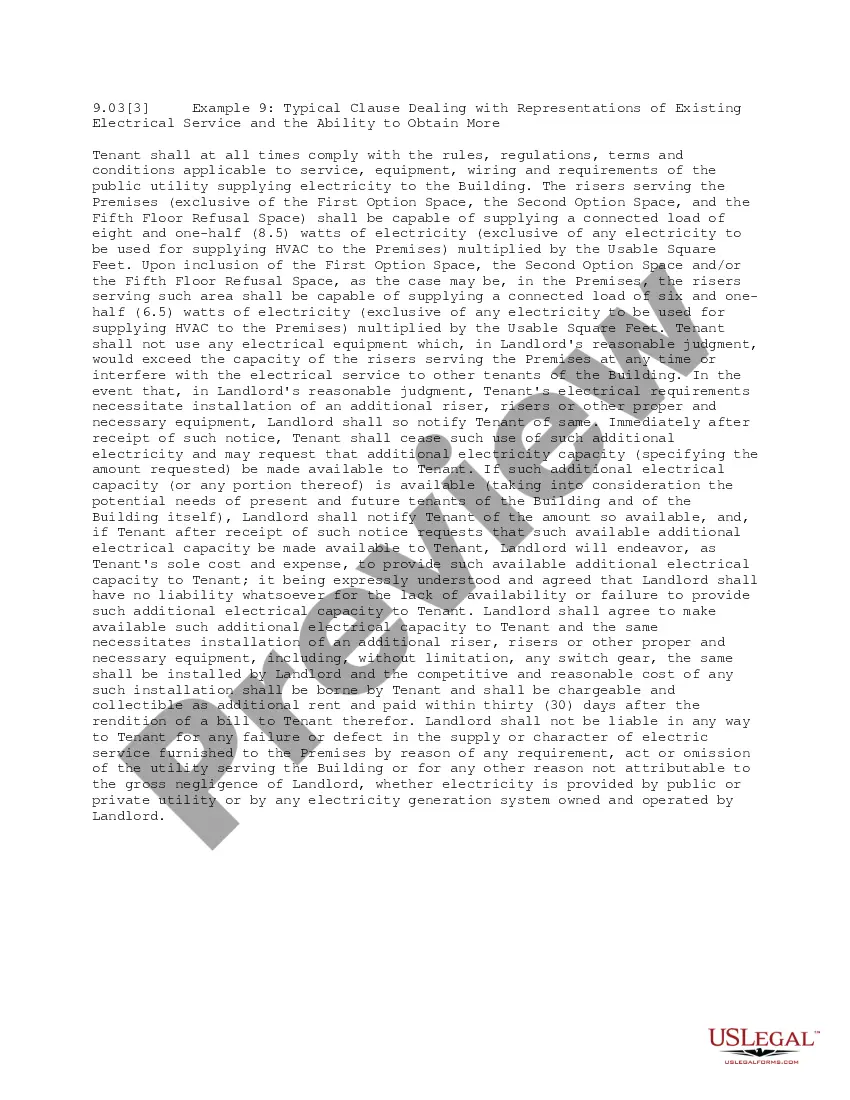
This form is a provision addressing present and future demands for electricity in a leased premises. It outlines the landlord's commitment to install necessary electrical infrastructure before the lease begins and details the tenant's responsibilities for any additional electrical needs after that date. This form is important because it clarifies the electrical service expectations and rights of both the landlord and tenant, ensuring that both parties understand their obligations regarding electrical installations and services.
Main sections of this form
- Landlord's obligation to install risers, feeders, and wiring before the lease commencement.
- Specifications regarding electrical service capacity for tenant use.
- Details on the provision of service switches and redundancy measures for electrical supply.
- Tenant's responsibility for additional electrical equipment and distribution after the lease begins.
- Conditions under which installations for additional electrical needs may occur at tenant's expense.

Situations where this form applies
This form should be used when entering into an office lease where specific electrical service provisions are necessary. It is particularly useful for scenarios in which tenants anticipate needing additional electrical capacity or services to support their operations after the lease begins. Having this provision in place helps avoid disputes regarding electrical service expectations during the term of the lease.
Who should use this form
Who should use this form:
- Landlords who are leasing commercial space and need to outline the provision of electrical services.
- Tenants requiring assurance regarding electrical installations and service levels in the leased premises.
- Real estate professionals involved in the negotiation of office leases.
Steps to complete this form
Follow these steps to complete this form:
- Identify the parties involved in the lease agreementâthe landlord and tenant.
- Specify the property details, including address and relevant identifiers.
- Fill in the commencement date for the lease.
- Outline any additional electrical service requirements the tenant anticipates after the lease begins.
- Ensure all parties review and sign the form to indicate their agreement to the provisions stated.
Does this form need to be notarized?
This form does not typically require notarization unless specified by local law. However, it is always a good practice to check local regulations regarding notary requirements for lease agreements.
Get your form ready online
Our built-in tools help you complete, sign, share, and store your documents in one place.
Make edits, fill in missing information, and update formatting in US Legal Forms—just like you would in MS Word.
Download a copy, print it, send it by email, or mail it via USPS—whatever works best for your next step.
Sign and collect signatures with our SignNow integration. Send to multiple recipients, set reminders, and more. Go Premium to unlock E-Sign.
If this form requires notarization, complete it online through a secure video call—no need to meet a notary in person or wait for an appointment.
We protect your documents and personal data by following strict security and privacy standards.

Make edits, fill in missing information, and update formatting in US Legal Forms—just like you would in MS Word.

Download a copy, print it, send it by email, or mail it via USPS—whatever works best for your next step.

Sign and collect signatures with our SignNow integration. Send to multiple recipients, set reminders, and more. Go Premium to unlock E-Sign.

If this form requires notarization, complete it online through a secure video call—no need to meet a notary in person or wait for an appointment.

We protect your documents and personal data by following strict security and privacy standards.
Avoid these common issues
Common mistakes to avoid:
- Failing to clearly define the specific electrical service needs of the tenant.
- Not including all necessary contact details for both landlord and tenant.
- Overlooking local regulations regarding electrical installations.
- Not ensuring all parties sign and date the document.
Why complete this form online
Benefits of using this form online:
- Convenience of downloading the form directly from your device.
- Editability allows you to fill in specific details tailored to your leasing agreement.
- Access to professionally drafted templates ensures reliability and adherence to legal standards.
Legal use & context:
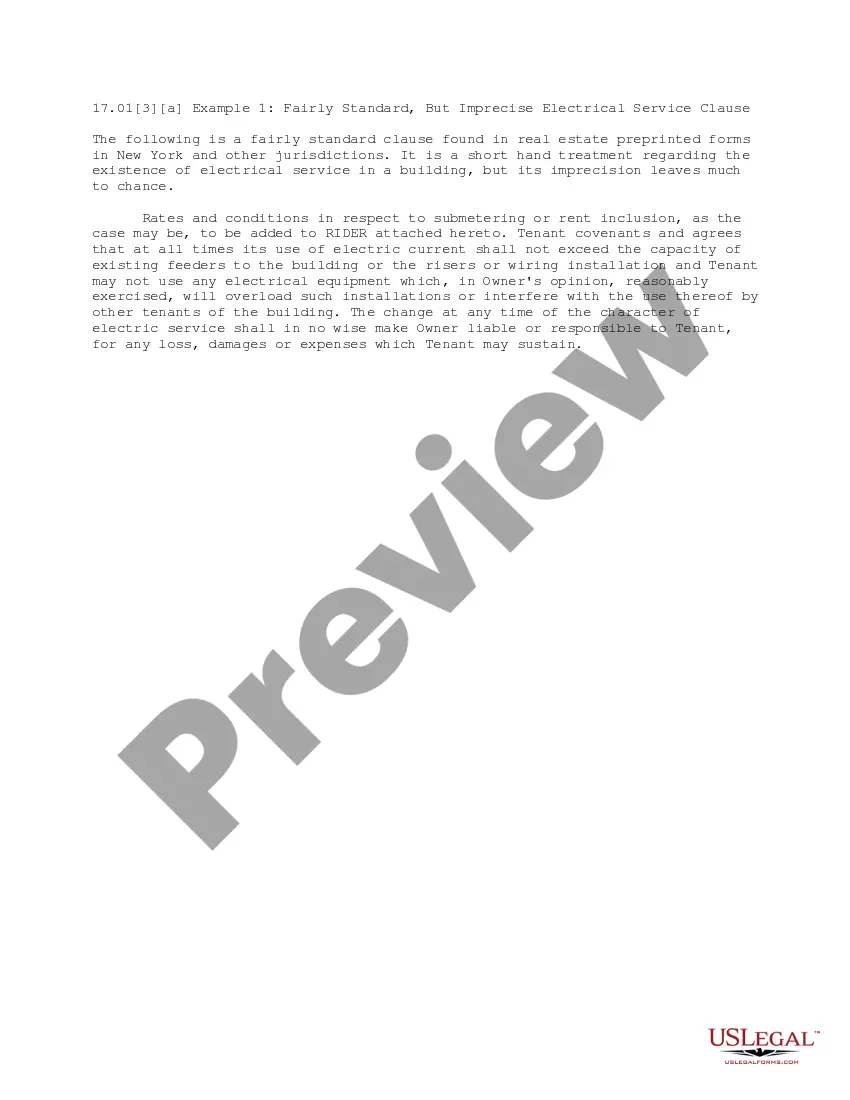
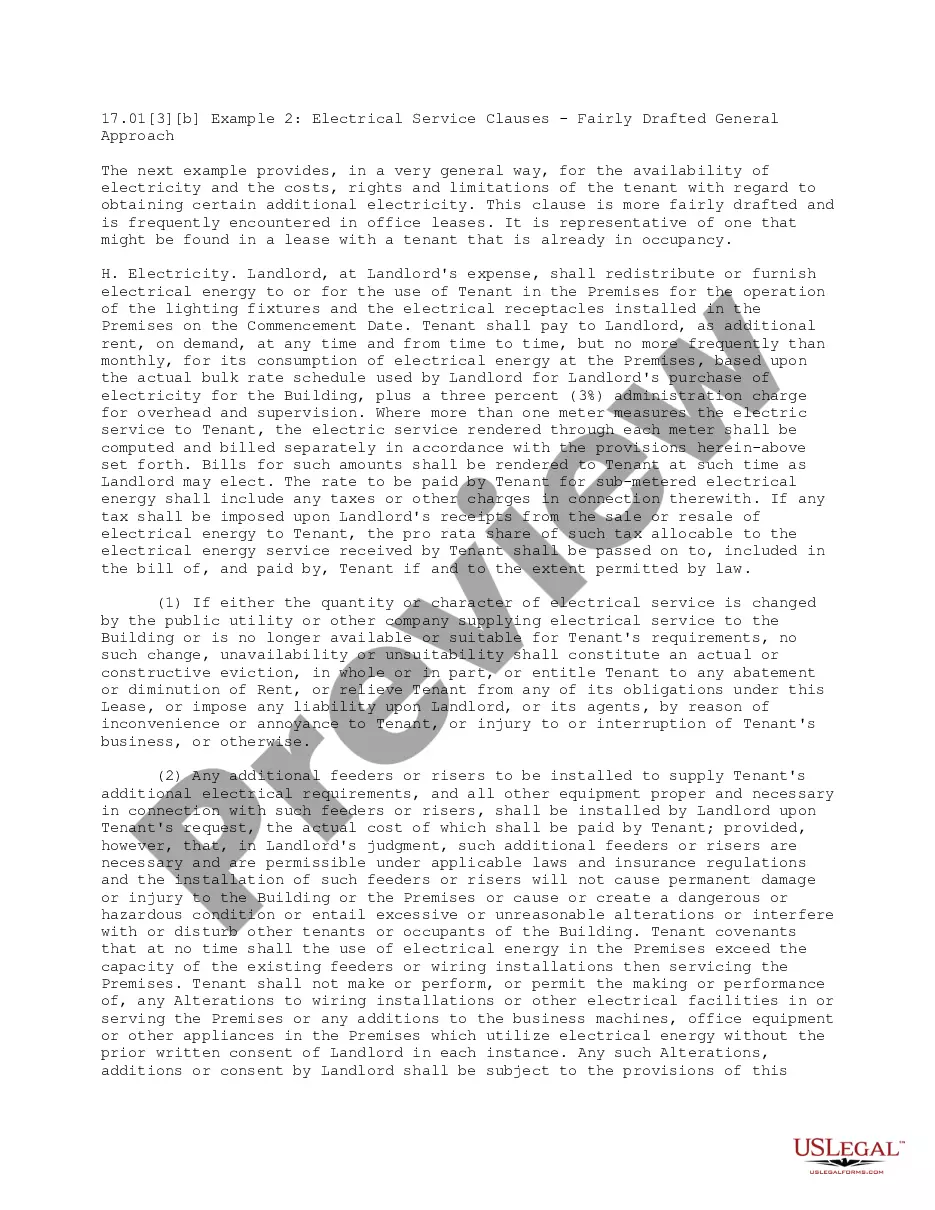
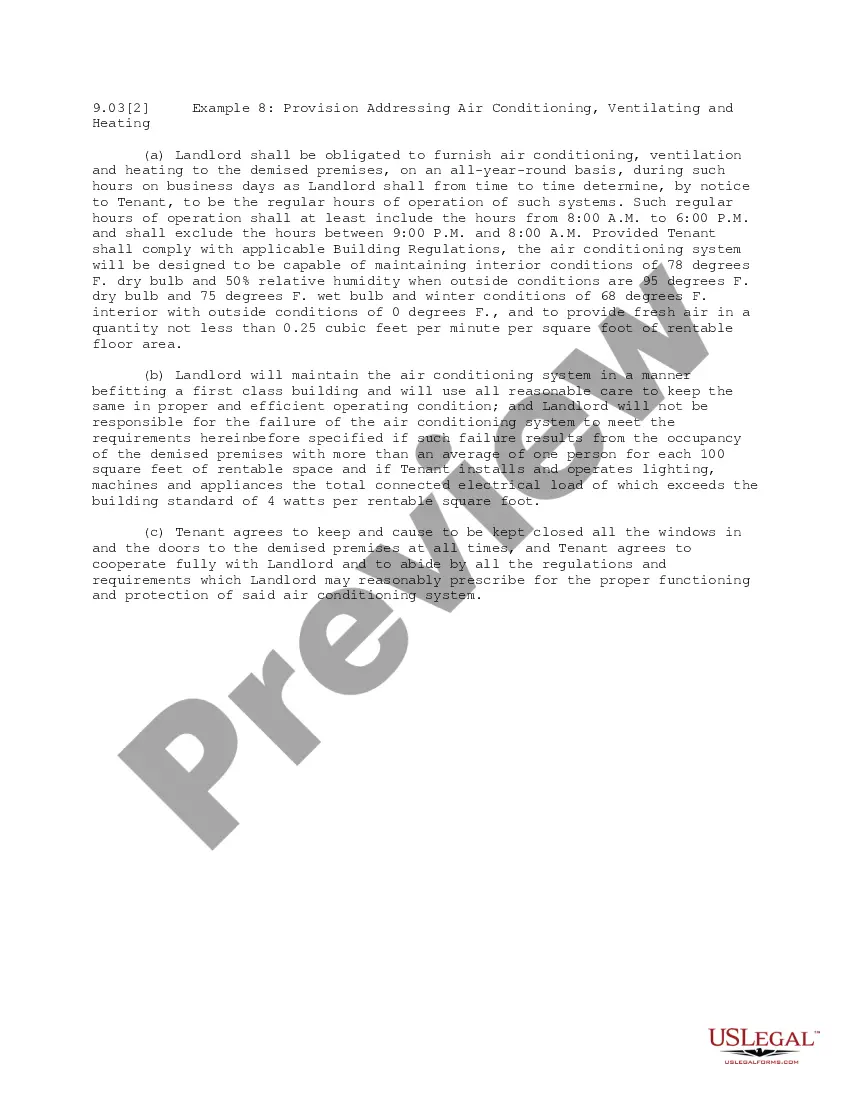
- This provision serves to legally bind the landlord to fulfill their obligations regarding electrical services.
- Helps prevent disputes by clearly outlining responsibilities and expectations related to electricity provision.
- Ensures that tenants have access to adequate electrical service necessary for their business operations.
Summary of main points
Key takeaways:
- This form establishes obligations regarding electrical services in a lease agreement.
- It is vital for clarity between landlords and tenants regarding electrical needs.
- Completing this form correctly can prevent potential legal disputes in the future.
Looking for another form?



Form popularity
FAQ
Now-a-days, AC system is universally adopted for distribution of electric power as it is simpler and more economical than direct current method.
Electricity demand has been steadily increasing this year due to a pickup in economic activity and amid higher temperatures being recorded in March in North India, which could have led to higher use of air conditioning.
By 2050 global final energy consumption is projected to increase by about 30% and electricity production is expected to double. Worldwide, fossil fuels remain the dominant energy source for electricity production at about 63% in 2019, their share having changed little since 1980.
By 2050, global industrial energy consumption reaches about 315 quadrillion British thermal units (Btu).
Global electricity generation will increase between 123% and 150% by 2050.
Global demand for energy is predicted to increase in the coming decades. In the UK in 2015, renewable energy provisionally accounted for 8.3 per cent of final energy consumption.Between 2014 and 2015 electricity generation from renewable sources increased by 29 per cent.
Shutdown your computer. Computers are some of the biggest energy users in office buildings. Choose the right light. LED bulbs are the most energy efficient lighting option. Eliminate vampire power: unplug idle electronics. Use a power strip to reduce your plug load. Turn off the lights.
Electricity is at the heart of modern economies and it is providing a rising share of energy services. Demand for electricity is set to increase further as a result of rising household incomes, with the electrification of transport and heat, and growing demand for digital connected devices and air conditioning.
Global demand for energy is increasing rapidly, because of population and economic growth, especially in emerging market economies. While accompanied by greater prosperity, rising demand creates new challenges. Energy security concerns can emerge as more consumers require ever more energy resources.