Mailing Obscene Material
Overview of this form
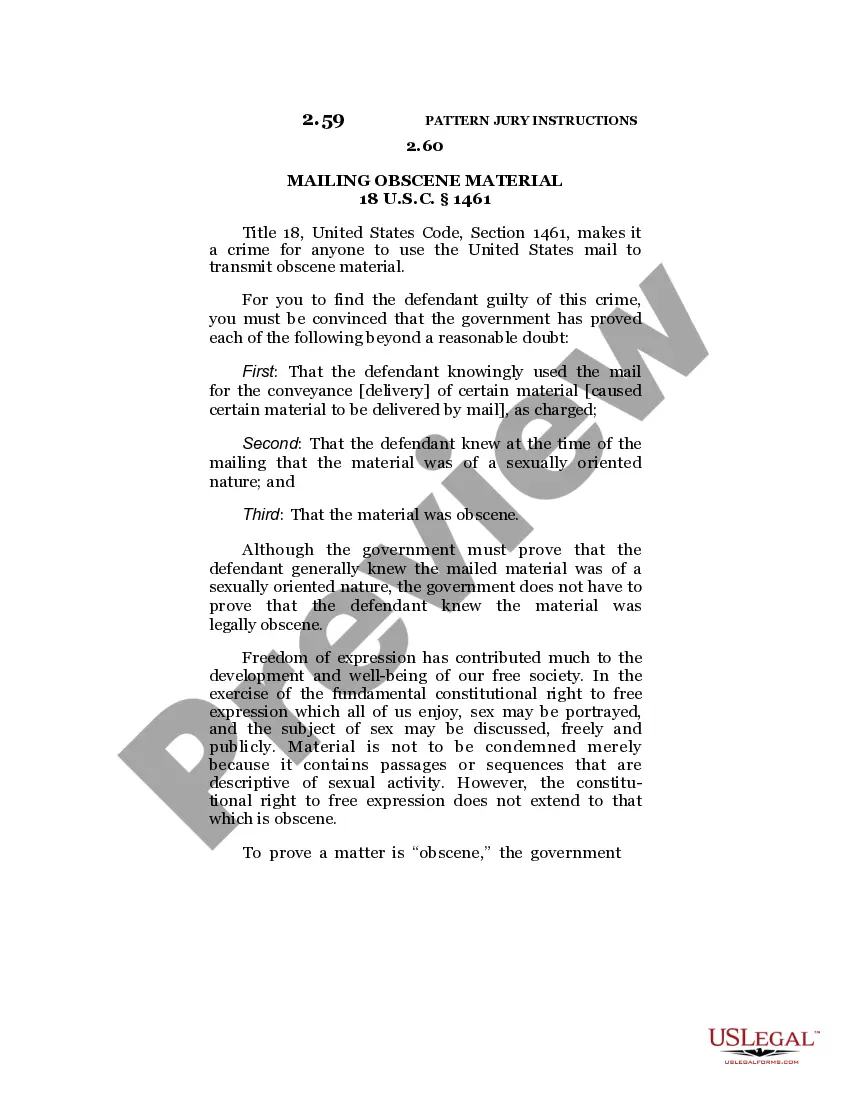
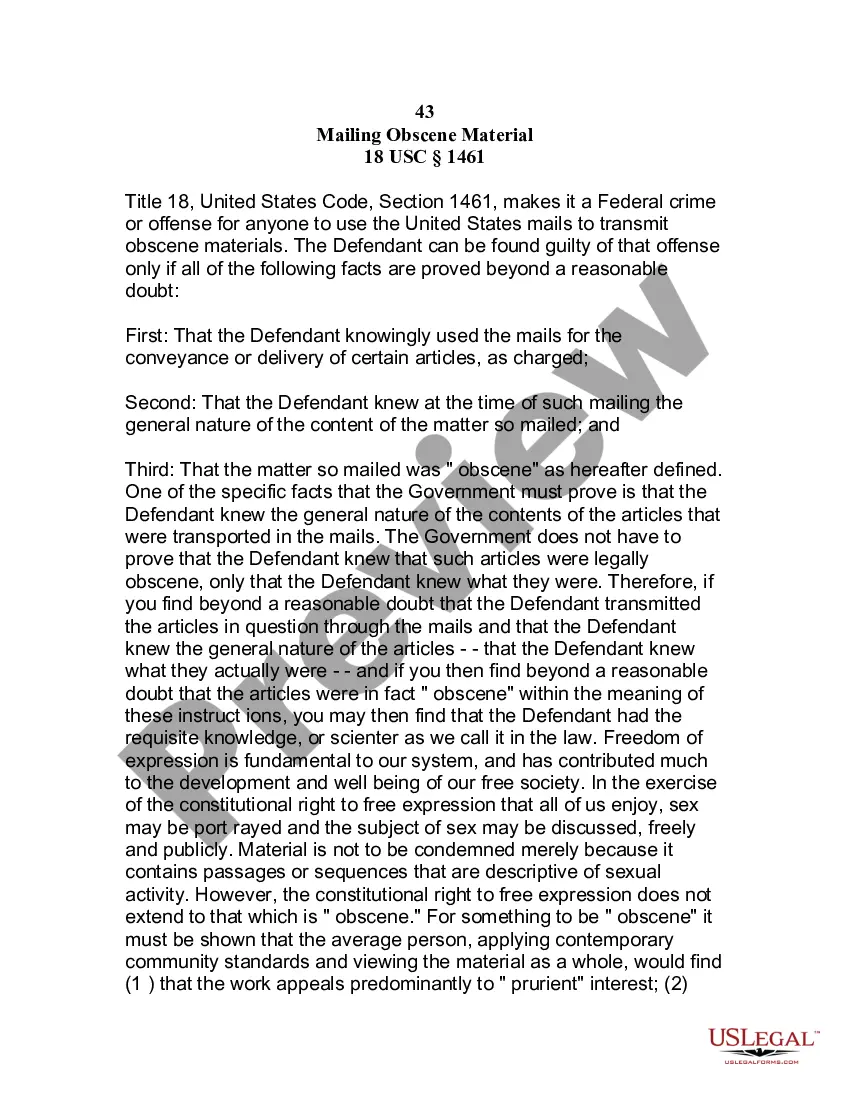
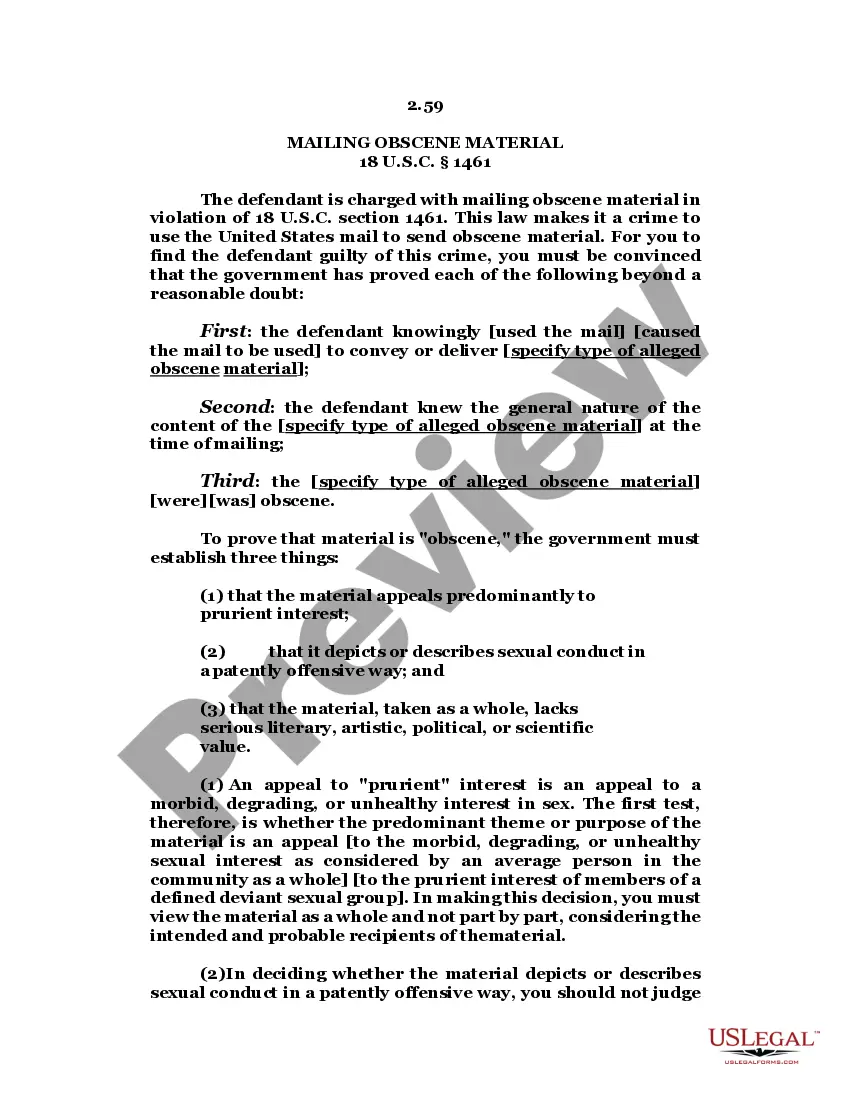
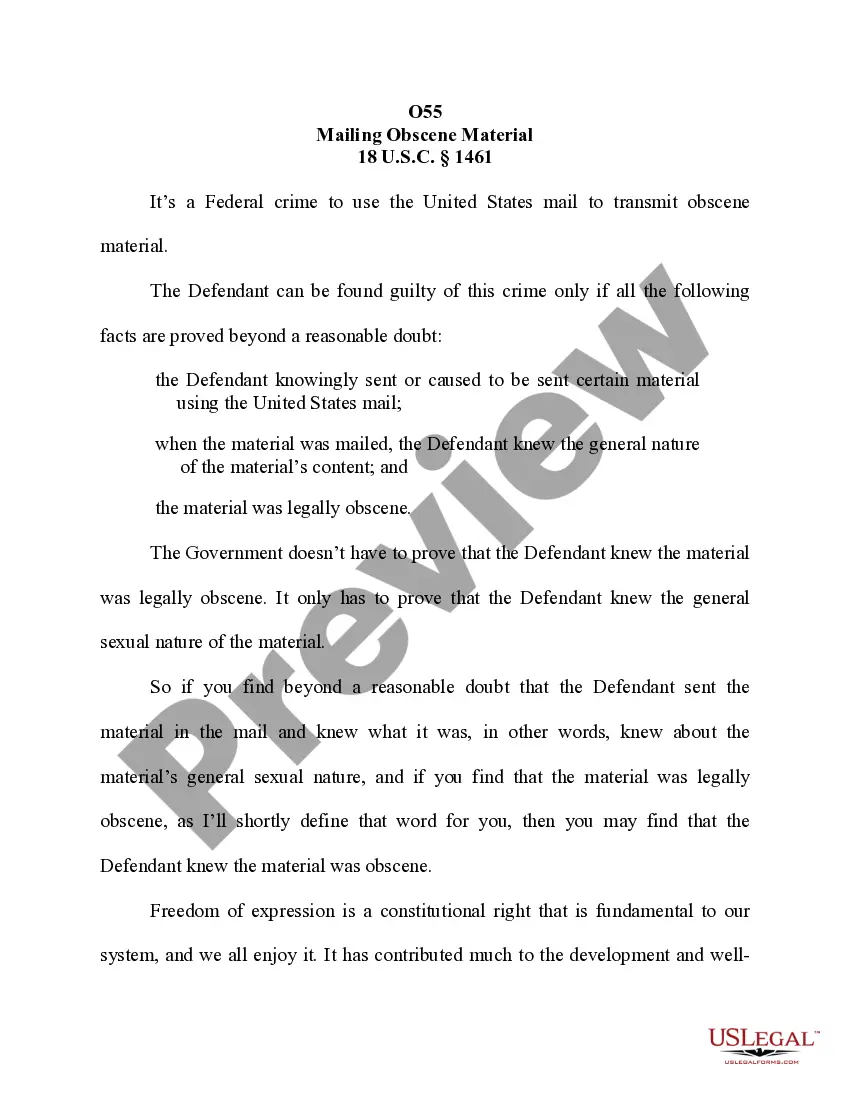
The Mailing Obscene Material form is used to address legal issues related to the transmission of obscene material via the United States mail. This form outlines the legal standards and definitions of obscenity as defined by Title 18, United States Code, Section 1461. It helps users understand the legal implications of mailing materials that may be considered sexually explicit or obscene, differentiating it from other mail-related forms that do not involve criminal liability.
Key parts of this document
- Definition of obscene material according to legal standards
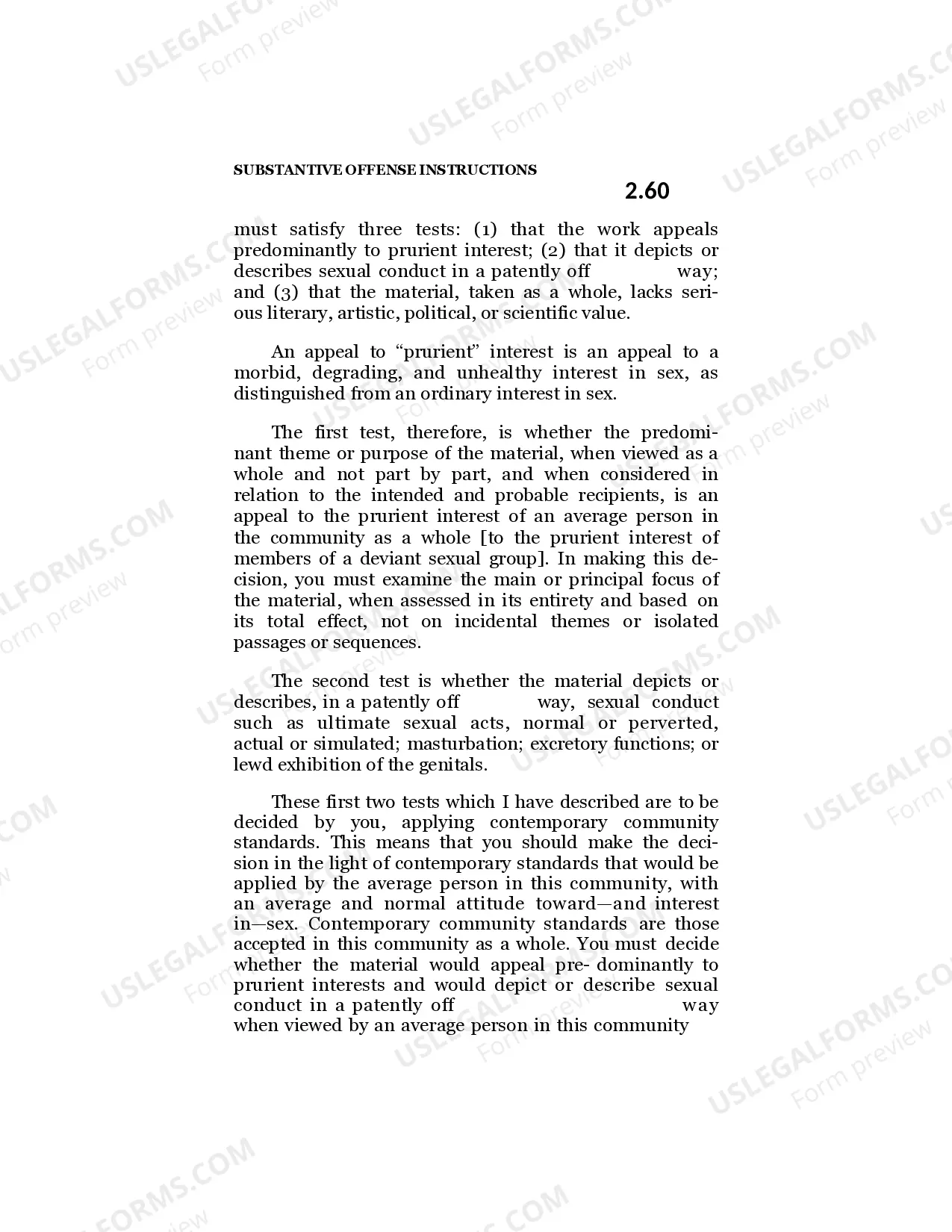
- Criteria for determining whether material is obscene
- Explanation of the prurient interest standard
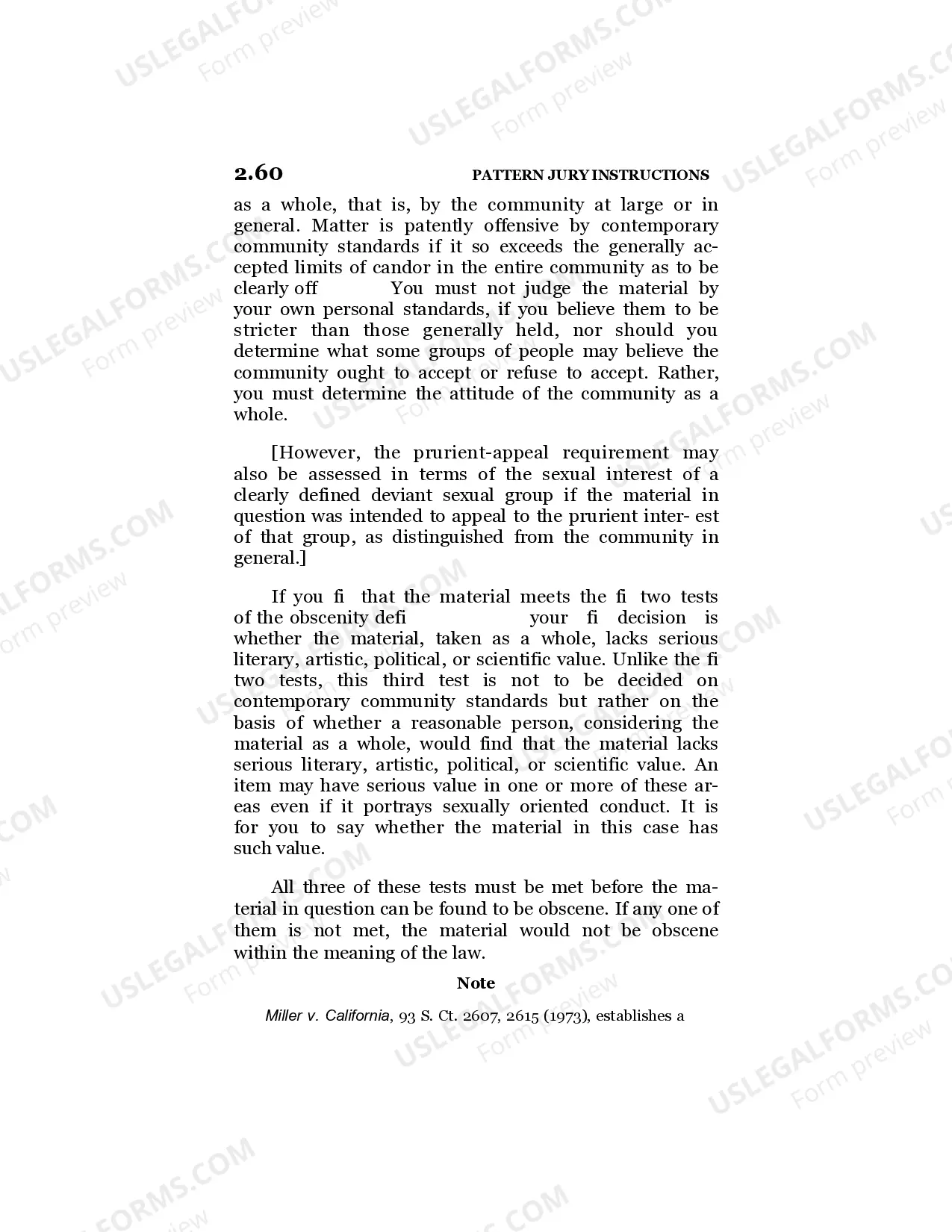
- Overview of community standards used for assessment
- Details on the knowledge requirement for the sender
When to use this document
This form should be used when individuals or entities seek to understand the legal risks associated with mailing materials that may fall into the category of obscenity. It is relevant for those involved in the distribution of adult materials, educators discussing controversial content, or legal professionals assessing the legality of certain transmissions through the mail.
Who needs this form
- Individuals mailing sexually explicit materials
- Publishers or distributors of adult content
- Legal professionals offering advice on obscenity laws
- Educators discussing content with sexual themes
- Anyone interested in understanding the parameters of legal mailing practices related to obscenity
Instructions for completing this form
- Identify the material to be mailed and assess its content for potential obscenity.
- Review the legal definitions and criteria for obscenity as outlined in Section 1461.
- Document the steps taken to determine if the material meets the prurient interest standard.
- Ensure you are aware of the community standards that apply to your specific jurisdiction.
- Consult a legal professional if uncertain about the contents prior to mailing.
Notarization requirements for this form
This form does not typically require notarization unless specified by local law.
Get your form ready online
Our built-in tools help you complete, sign, share, and store your documents in one place.
Make edits, fill in missing information, and update formatting in US Legal Forms—just like you would in MS Word.
Download a copy, print it, send it by email, or mail it via USPS—whatever works best for your next step.
Sign and collect signatures with our SignNow integration. Send to multiple recipients, set reminders, and more. Go Premium to unlock E-Sign.
If this form requires notarization, complete it online through a secure video call—no need to meet a notary in person or wait for an appointment.
We protect your documents and personal data by following strict security and privacy standards.

Make edits, fill in missing information, and update formatting in US Legal Forms—just like you would in MS Word.

Download a copy, print it, send it by email, or mail it via USPS—whatever works best for your next step.

Sign and collect signatures with our SignNow integration. Send to multiple recipients, set reminders, and more. Go Premium to unlock E-Sign.

If this form requires notarization, complete it online through a secure video call—no need to meet a notary in person or wait for an appointment.

We protect your documents and personal data by following strict security and privacy standards.
Common mistakes to avoid
- Assuming all sexually explicit material is obscene without proper assessment.
- Failing to consider community standards when evaluating material.
- Not seeking legal advice when in doubt about the content's legality.
- Overlooking the need to understand the definitions provided by federal law.
Benefits of completing this form online
- Convenient access to legal definitions and requirements from home.
- Edit and download the form at your convenience.
- Up-to-date information reflecting current laws and standards.
- Reliable resource drafted by licensed attorneys for accurate guidance.
Legal use & context
- This form aligns with federal law, specifically 18 U.S.C. § 1461.
- It provides guidelines for the legal interpretation of obscene materials.
- Using the form helps protect against potential legal liabilities when mailing controversial content.
Looking for another form?
Form popularity
FAQ
Obscenity laws are concerned with prohibiting lewd, filthy, or disgusting words or pictures. Indecent materials or depictions, normally speech or artistic expressions, may be restricted in terms of time, place, and manner, but are still protected by the First Amendment.
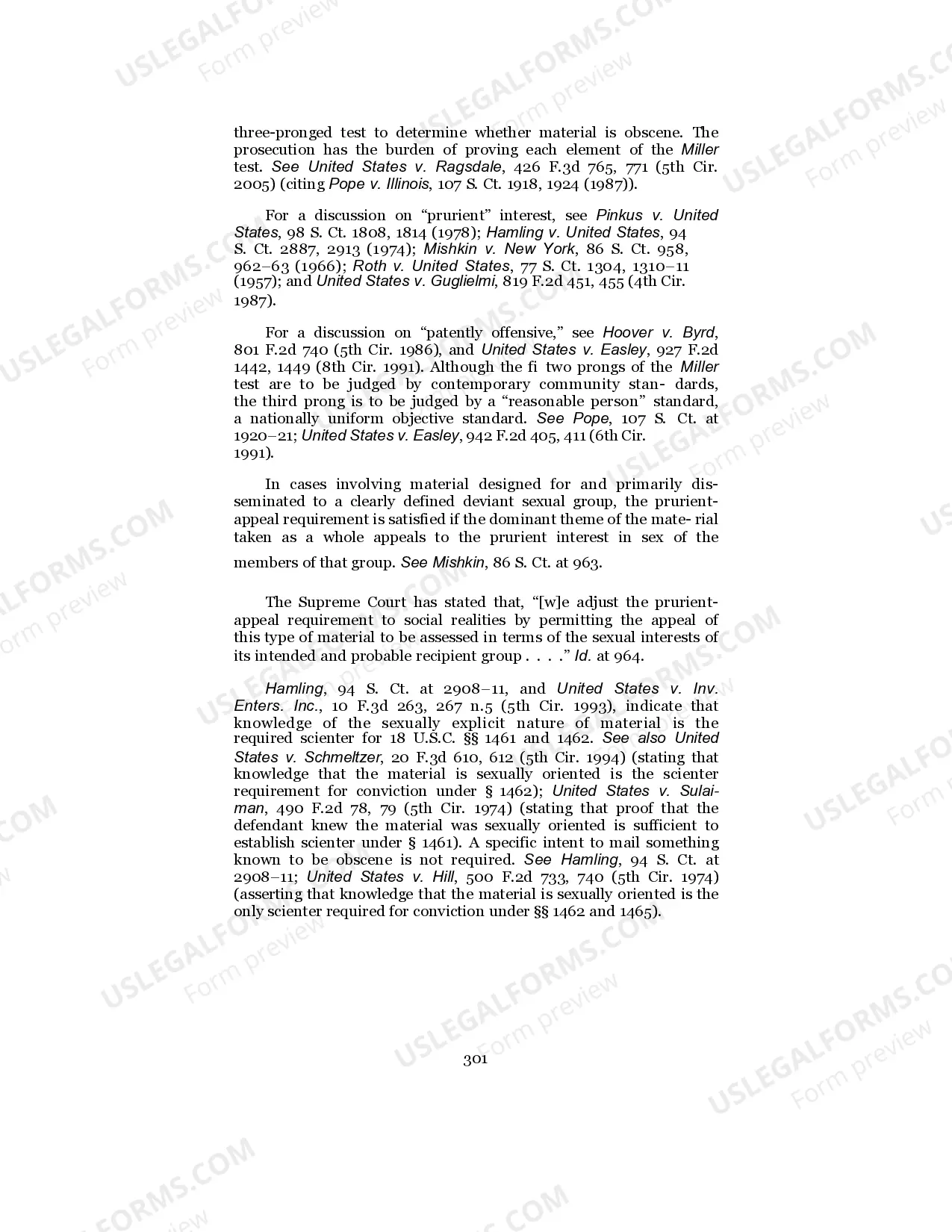
Obscenity is not protected under First Amendment rights to free speech, and violations of federal obscenity laws are criminal offenses. The U.S. courts use a three-pronged test, commonly referred to as the Miller test, to determine if given material is obscene.
Shall be fined under this title or imprisoned not more than five years, or both, for the first such offense and shall be fined under this title or imprisoned not more than ten years, or both, for each such offense thereafter.
?(a) the dominant theme of the material taken as a whole appeals to a prurient interest in sex; (b) the material is patently offensive because it affronts contemporary community standards relating to the description or representation of sexual matters; and (c) the material is utterly without redeeming social value.?
In Miller v. California, the U.S. Supreme Court established the standard for an obscenity conviction under the Constitution. A work will be found to be obscene if 'taken as a whole, (it) lacks serious literary, artistic, political, or scientific value.
The three-part test asked whether the average person, applying contemporary community standards, would find the work appeals on the whole to prurient interests; describes sexual conduct in a patently offensive way; and lacks any serious literary, artistic, political or scientific value.
Indecency should not be confused with obscenity. Obscenity refers to expression that receives no First Amendment protection. By contrast, indecency is often protected by the First Amendment, at least for adults.