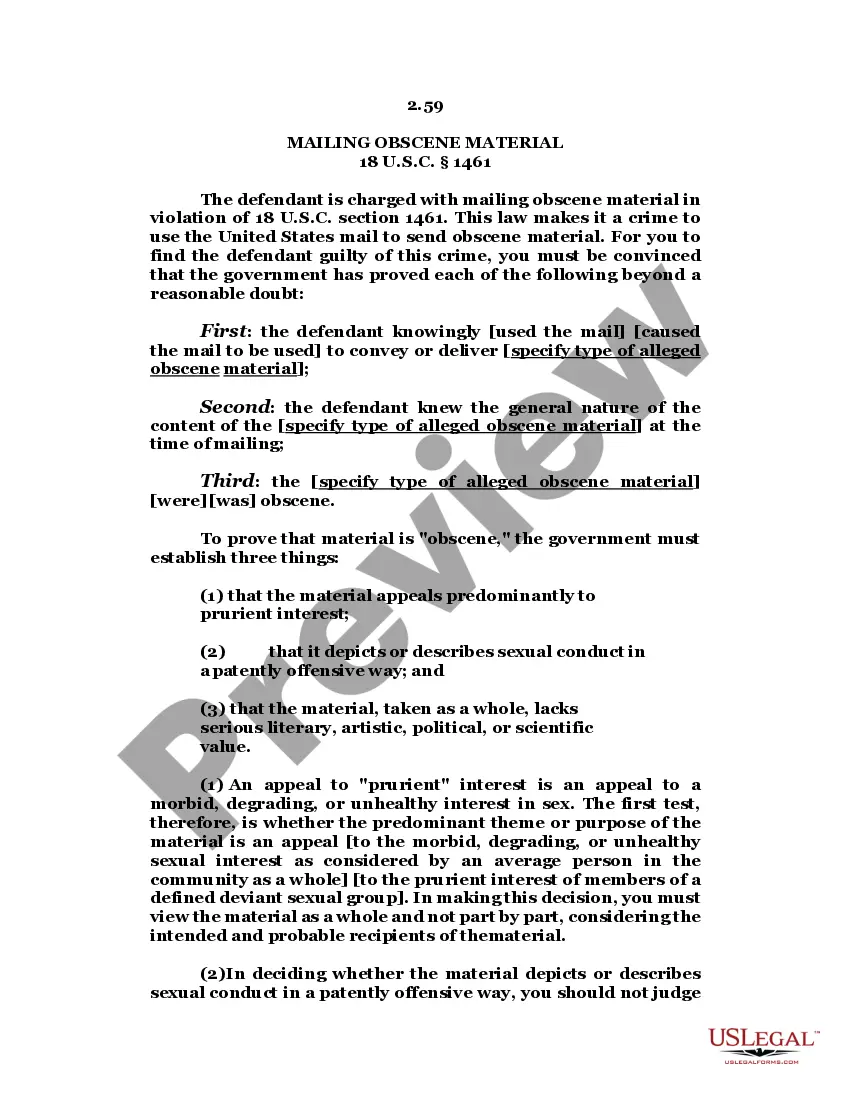
MAILING OBSCENE MATERIAL / 18 U.S.C. Sec. 1461
What is this form?
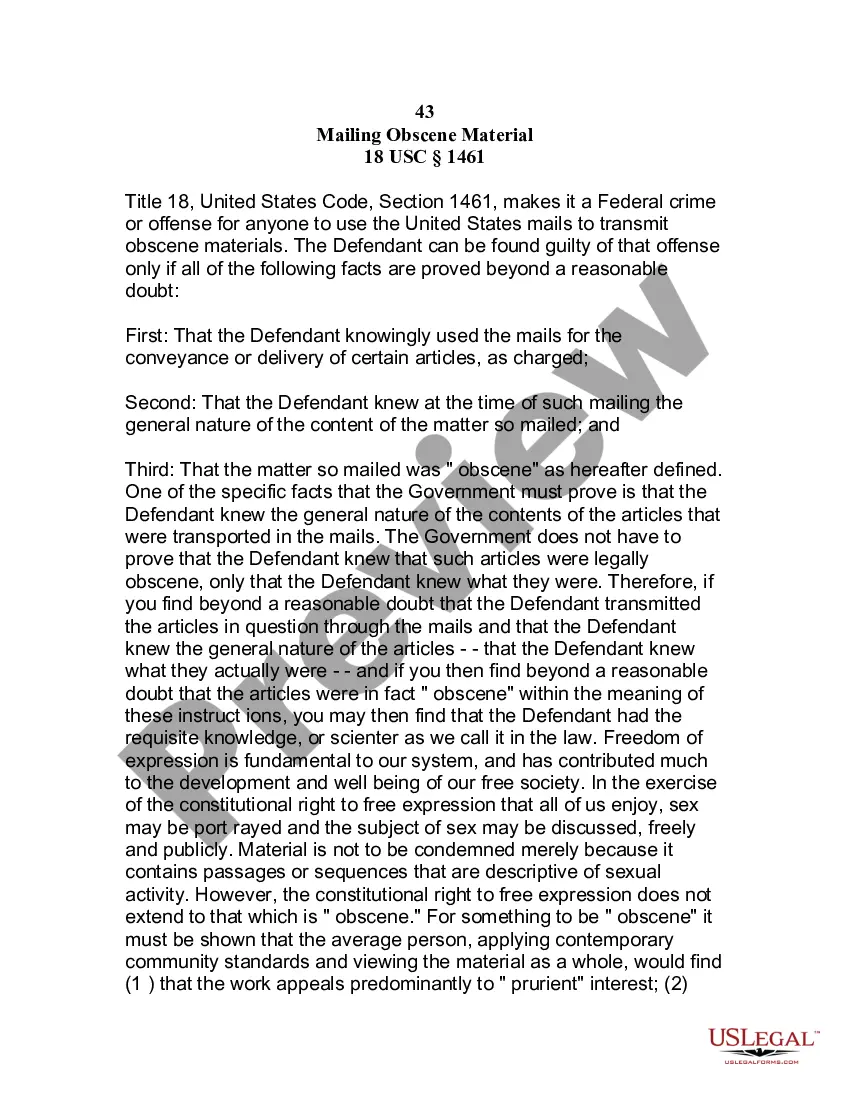
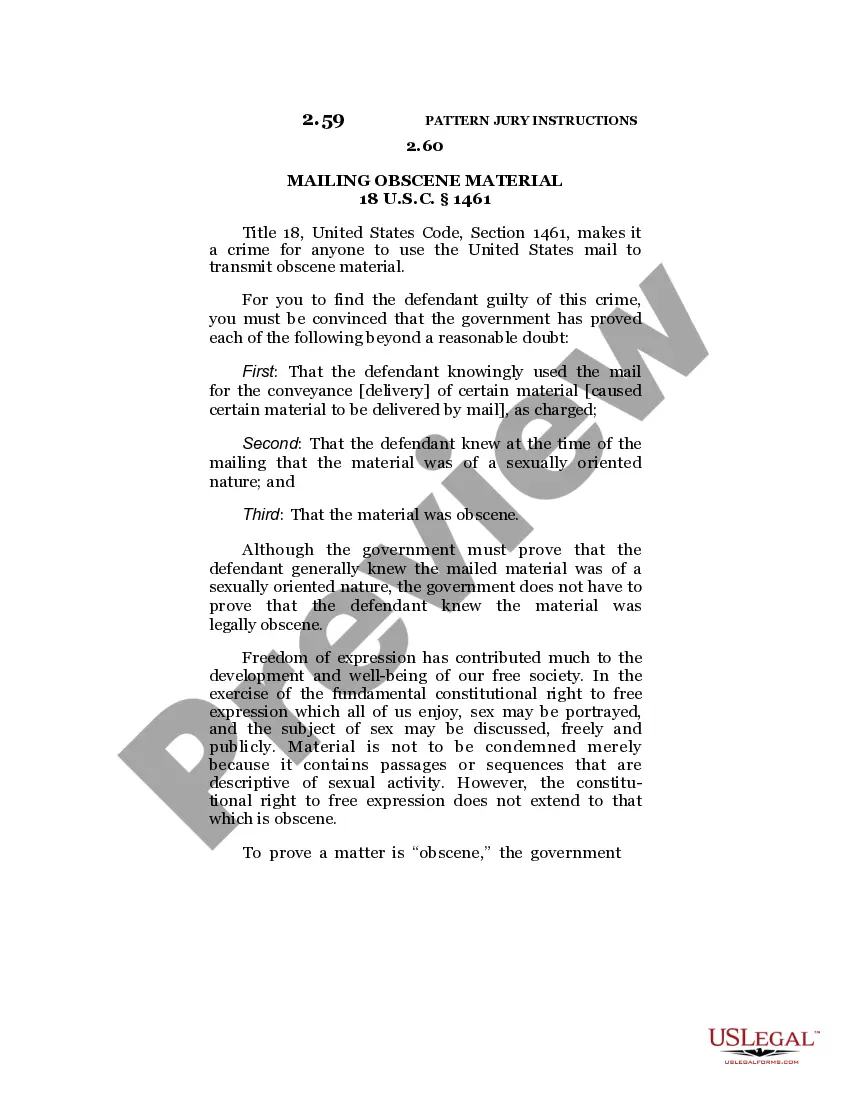
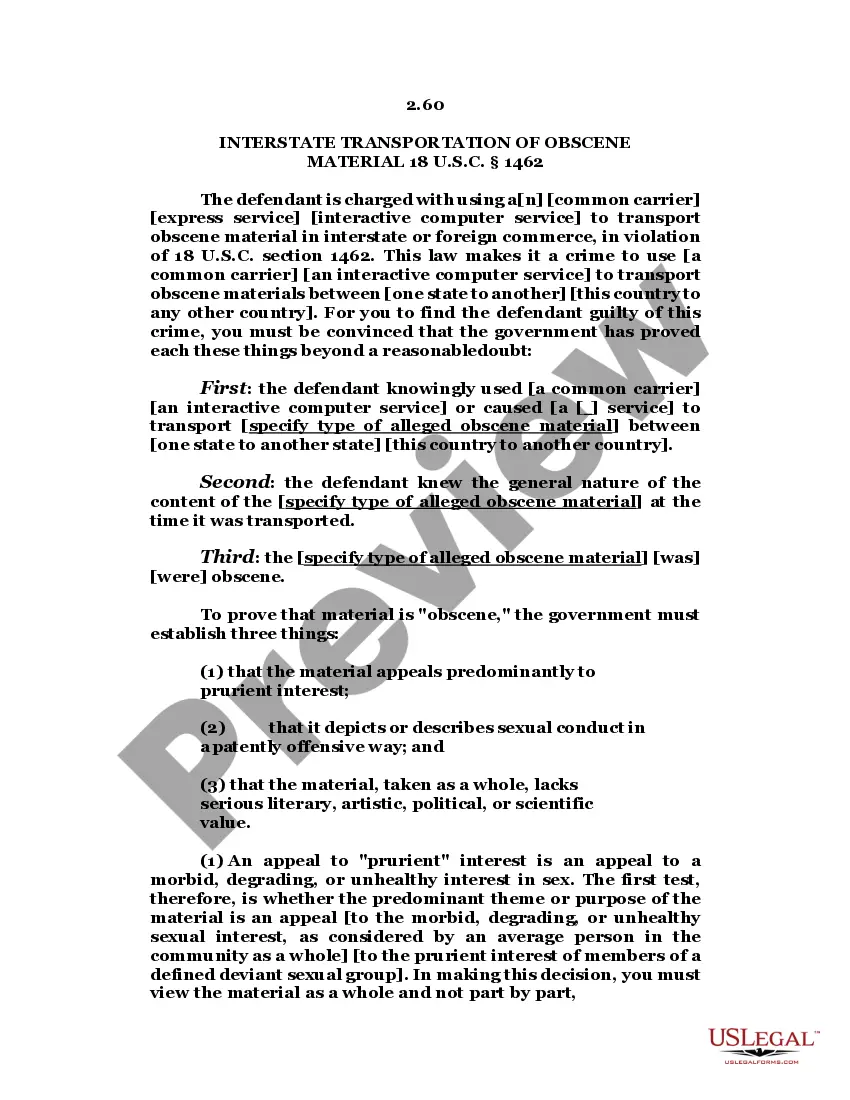
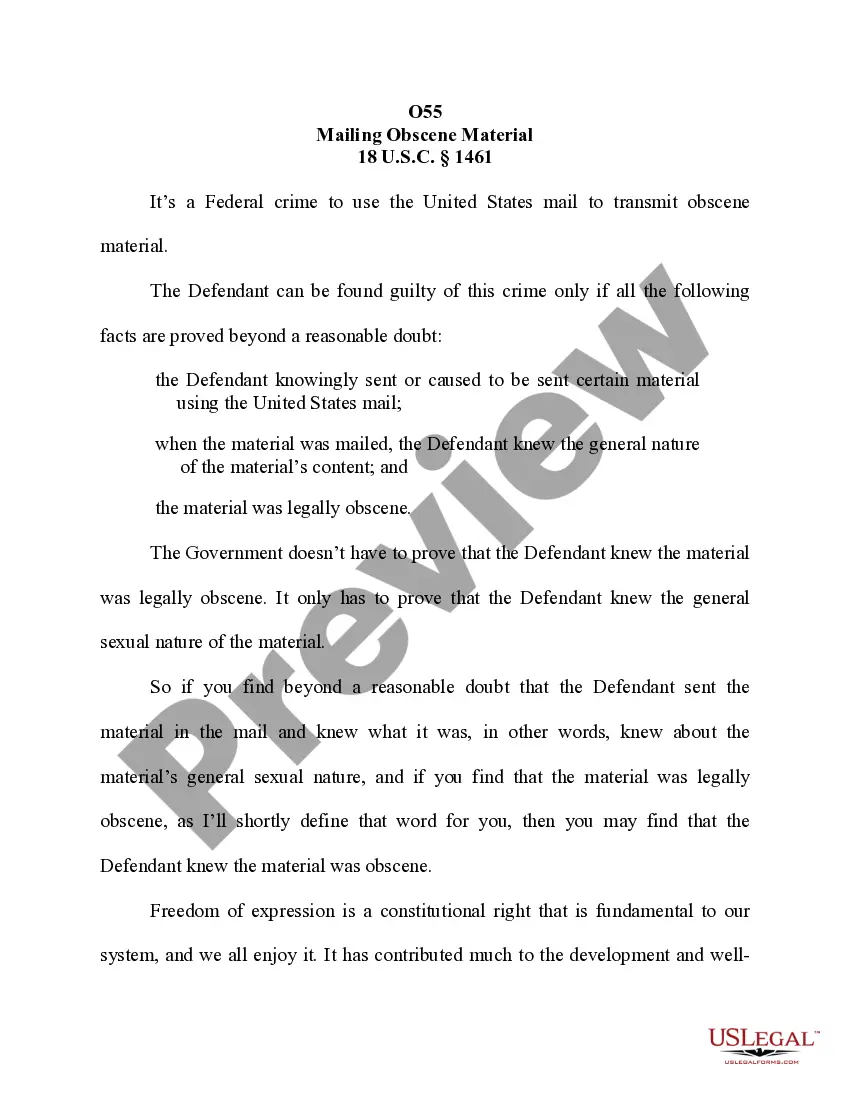
The Mailing Obscene Material form pertains to the legal framework established under 18 U.S.C. Sec. 1461, which makes it unlawful to use the United States mail for sending obscene materials. This form is essential for individuals who need to understand the legal boundaries of distributing materials deemed obscene and the criteria that define such materials. Unlike other legal forms that may address various distribution methods or types of content, this form specifically focuses on the parameters of mailing obscene material and the necessary legal standards.
Form components explained
- Definition of obscene materials based on legal standards.
- Requirements for proving knowledge and intent in mailing obscene materials.
- Criteria to determine if material meets the obscenity test.
- Clarification of prurient interest and community standards.
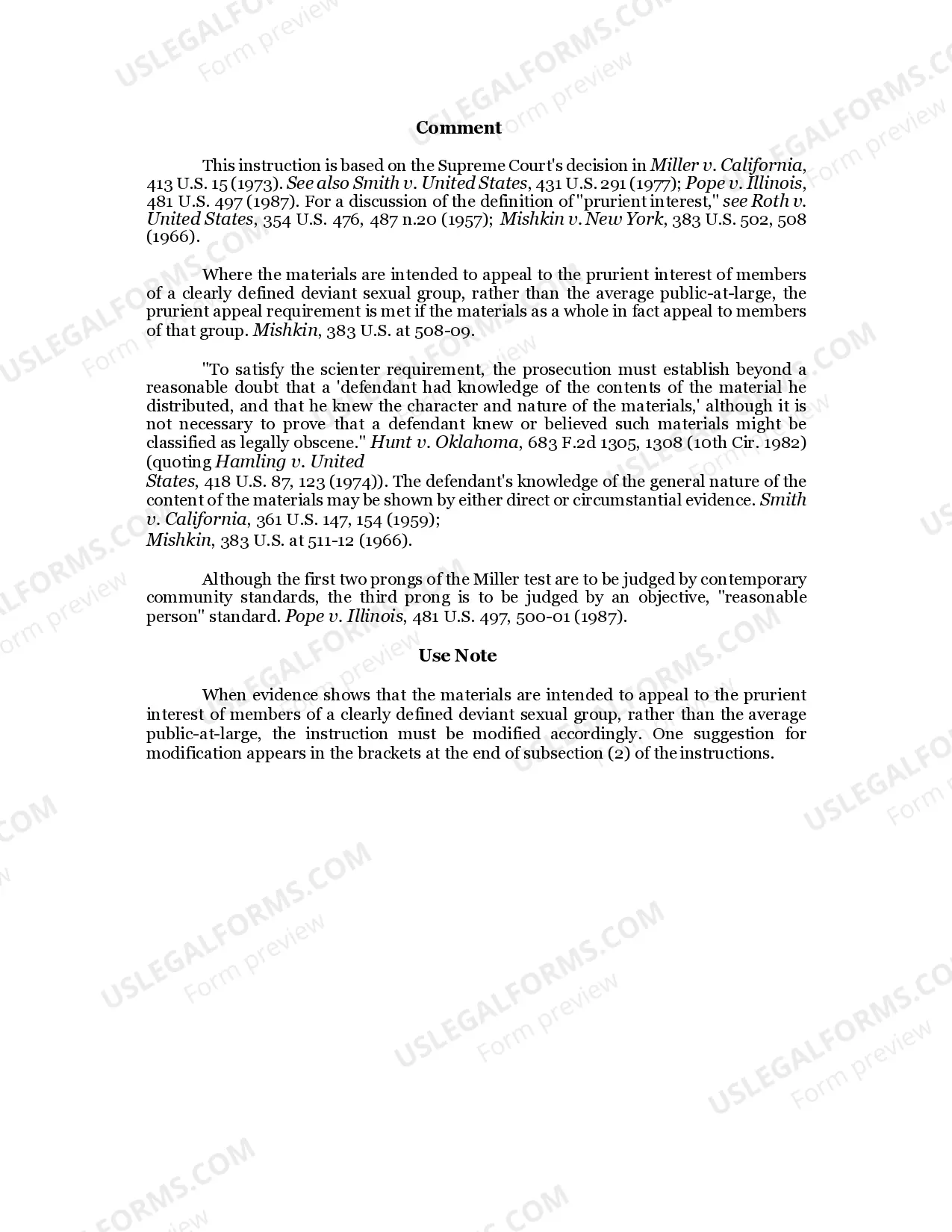
- Legal references and case law related to obscenity.
Situations where this form applies
This form should be used when an individual or entity is involved in the mailing of materials that may be considered obscene under U.S. law. It is applicable in legal proceedings where an accusation of mailing obscene content has been made, whether by a government official or through an investigation. Understanding the form is crucial for those needing to navigate potential legal challenges related to the distribution of such materials.
Who this form is for
- Individuals or businesses accused of mailing obscene materials.
- Defense attorneys working on cases related to obscenity laws.
- Legal professionals seeking to understand the criteria for obscenity.
- Anyone needing clarity on legal obligations related to mailing content.
Steps to complete this form
- Identify the sender and recipient information clearly on the form.
- Include a detailed description of the materials being mailed.
- Specify the context or intent behind mailing the materials, including any relevant disclaimers.
- Gather evidence that supports your claims or defense regarding the nature of the materials.
- Ensure all necessary signatures are included to validate the form.
Notarization guidance
This form does not typically require notarization unless specified by local law. Always verify local requirements to ensure compliance.
Get your form ready online
Our built-in tools help you complete, sign, share, and store your documents in one place.
Make edits, fill in missing information, and update formatting in US Legal Forms—just like you would in MS Word.
Download a copy, print it, send it by email, or mail it via USPS—whatever works best for your next step.
Sign and collect signatures with our SignNow integration. Send to multiple recipients, set reminders, and more. Go Premium to unlock E-Sign.
If this form requires notarization, complete it online through a secure video call—no need to meet a notary in person or wait for an appointment.
We protect your documents and personal data by following strict security and privacy standards.

Make edits, fill in missing information, and update formatting in US Legal Forms—just like you would in MS Word.

Download a copy, print it, send it by email, or mail it via USPS—whatever works best for your next step.

Sign and collect signatures with our SignNow integration. Send to multiple recipients, set reminders, and more. Go Premium to unlock E-Sign.

If this form requires notarization, complete it online through a secure video call—no need to meet a notary in person or wait for an appointment.

We protect your documents and personal data by following strict security and privacy standards.
Common mistakes to avoid
- Failing to fully describe the materials being mailed, which may lead to ambiguity.
- Not obtaining sufficient evidence to demonstrate compliance with obscenity criteria.
- Neglecting to clarify the senderâs or recipient's information accurately.
- Overlooking local laws that might affect the federal statuteâs application.
Benefits of using this form online
- Convenient access to legally vetted document templates tailored to exact legal standards.
- Immediate download enables quick response in urgent situations.
- Editability of the form allows users to customize the information as needed.
- Reliability of having forms drafted by licensed attorneys assures lawful compliance.
Legal use & context
- The Mailing Obscene Material form is integral for cases involving distribution of materials considered obscene.
- Understanding community standards is critical in determining liability under this statute.
- Citations from existing case law help to illustrate how obscenity is determined legally.
Quick recap
- The form is essential for understanding the boundaries of mailing obscene materials.
- There are specific legal criteria to determine if material is obscene.
- Awareness of the legal framework helps mitigate potential litigations.
- Users should remain compliant with both federal and relevant state laws.
Looking for another form?


Form popularity
FAQ
The section provides for a penalty for simple assault of a fine, imprisonment for up to one year, or both, and a penalty in all other cases of a fine, imprisonment for up to eight years, or both.
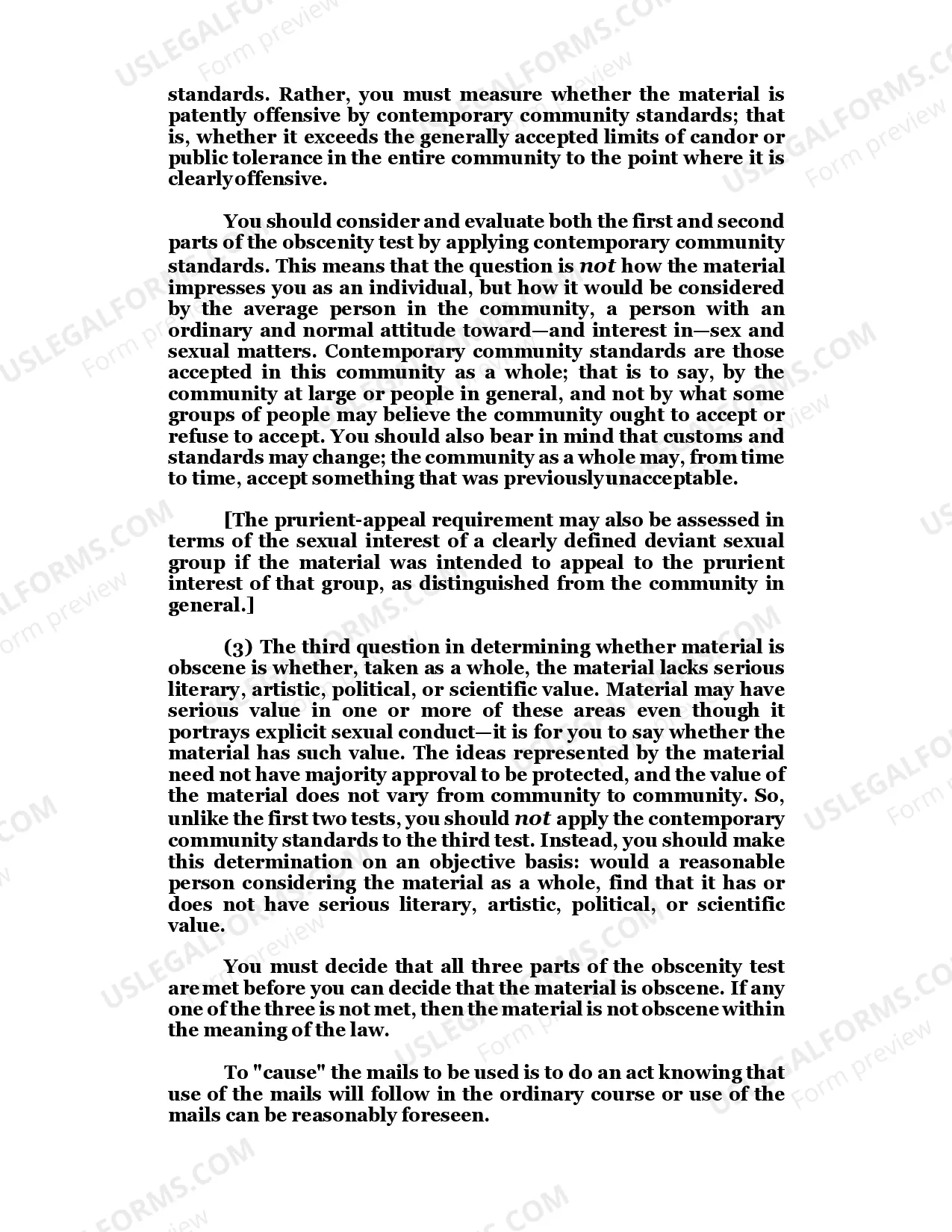
For content to be ruled obscene, it must meet a three-pronged test established by the Supreme Court: It must appeal to an average person's prurient interest; depict or describe sexual conduct in a "patently offensive" way; and, taken as a whole, lack serious literary, artistic, political or scientific value.
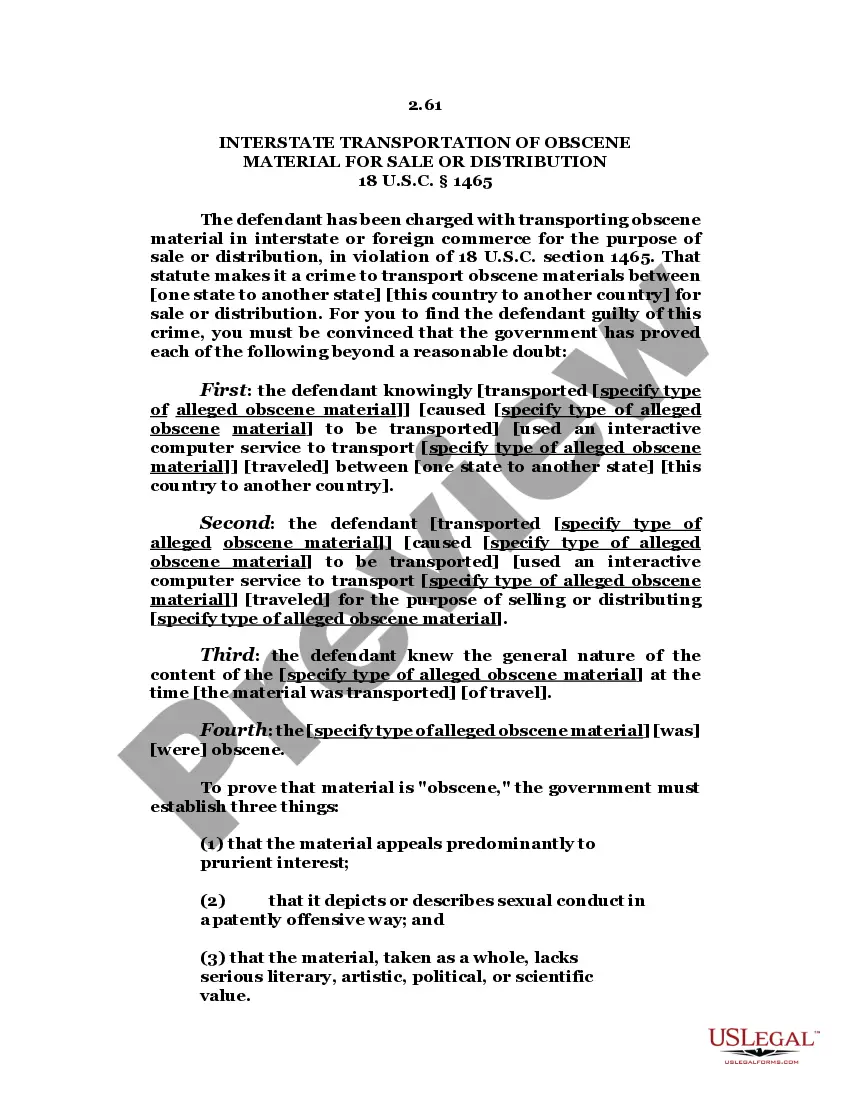
§ 1465; 18 U.S.C. § 1466). For example, it is illegal to sell and distribute obscene material on the Internet. Convicted offenders face fines and up to 5 years in prison.
They are: (1) whether the average person applying contemporary community standards would find the work, taken as a whole, appeals to the prurient interest; (2) whether the work depicts or describes, in a patently offensive way, sexual conduct specifically defined by the applicable state law; and.
California courts qualify matter as ?obscene? if: it shows or describes sexual conduct in an offensive way, a reasonable person would conclude that it lacks serious literary, artistic, political, or scientific value, and.
Obscenity is not protected under First Amendment rights to free speech, and violations of federal obscenity laws are criminal offenses. The U.S. courts use a three-pronged test, commonly referred to as the Miller test, to determine if given material is obscene.
Federal law makes it illegal to distribute, transport, sell, ship, mail, produce with intent to distribute or sell, or engage in a business of selling or transferring obscene matter. Convicted offenders face fines and imprisonment.
Examples of obscene matter include ography videos, pictures, or billboards. Possession of obscene matter can include but is not limited film, filmstrip, photograph, negative, slide, photocopy, videotape, computer hardware, computer software, data storage media.