2.60 INTERSTATE TRANSPORTATION OF OBSCENE MATERIAL / 18 U.S.C. Sec. 1462
What this document covers
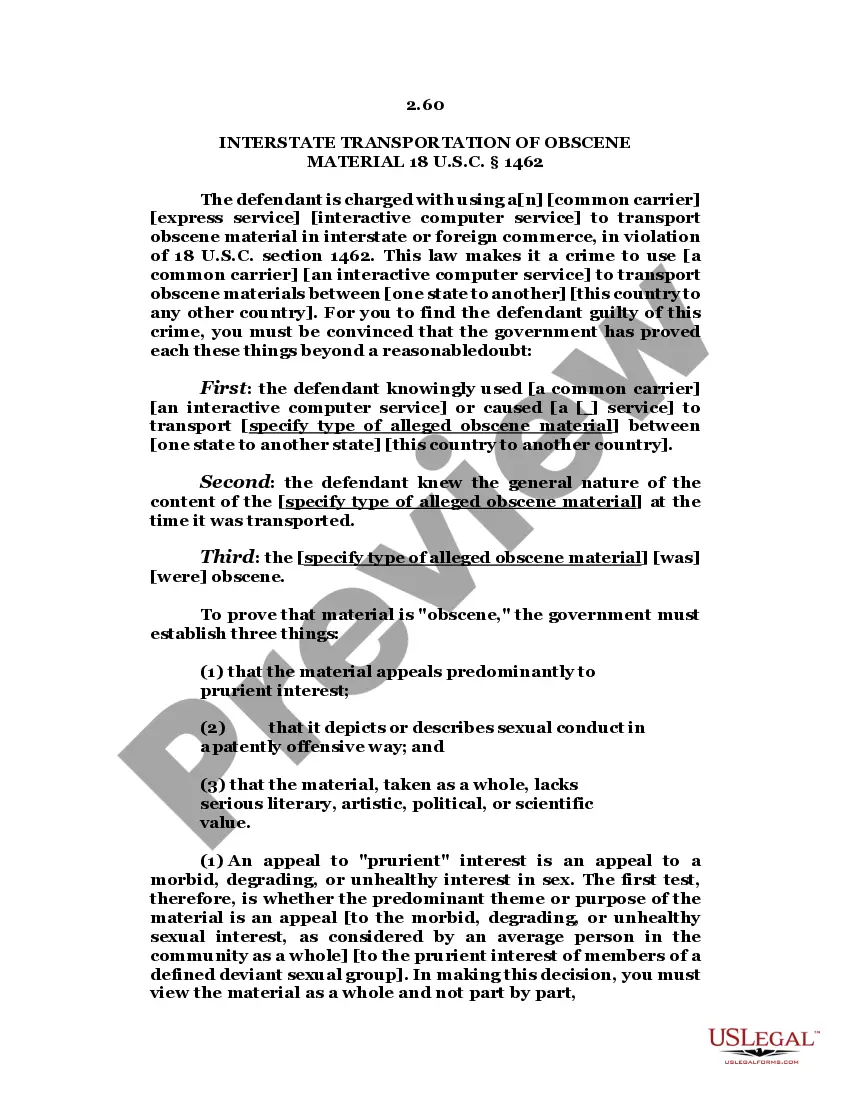
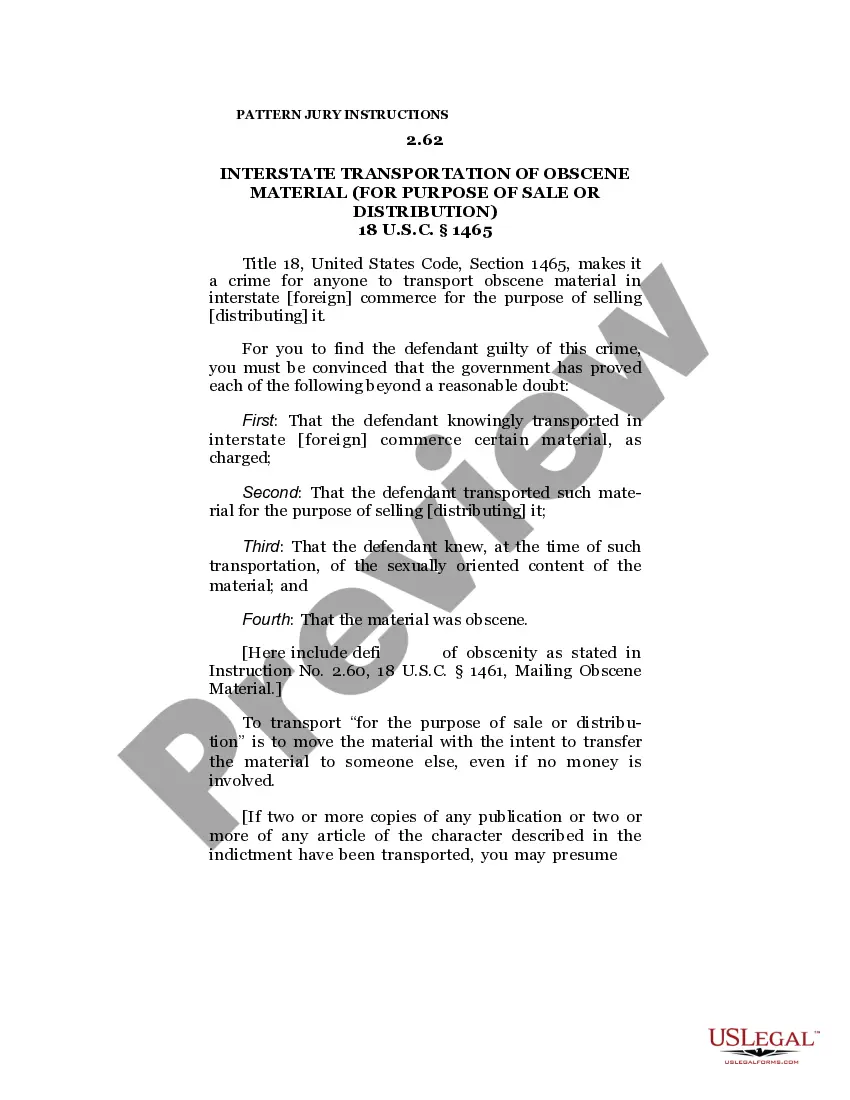
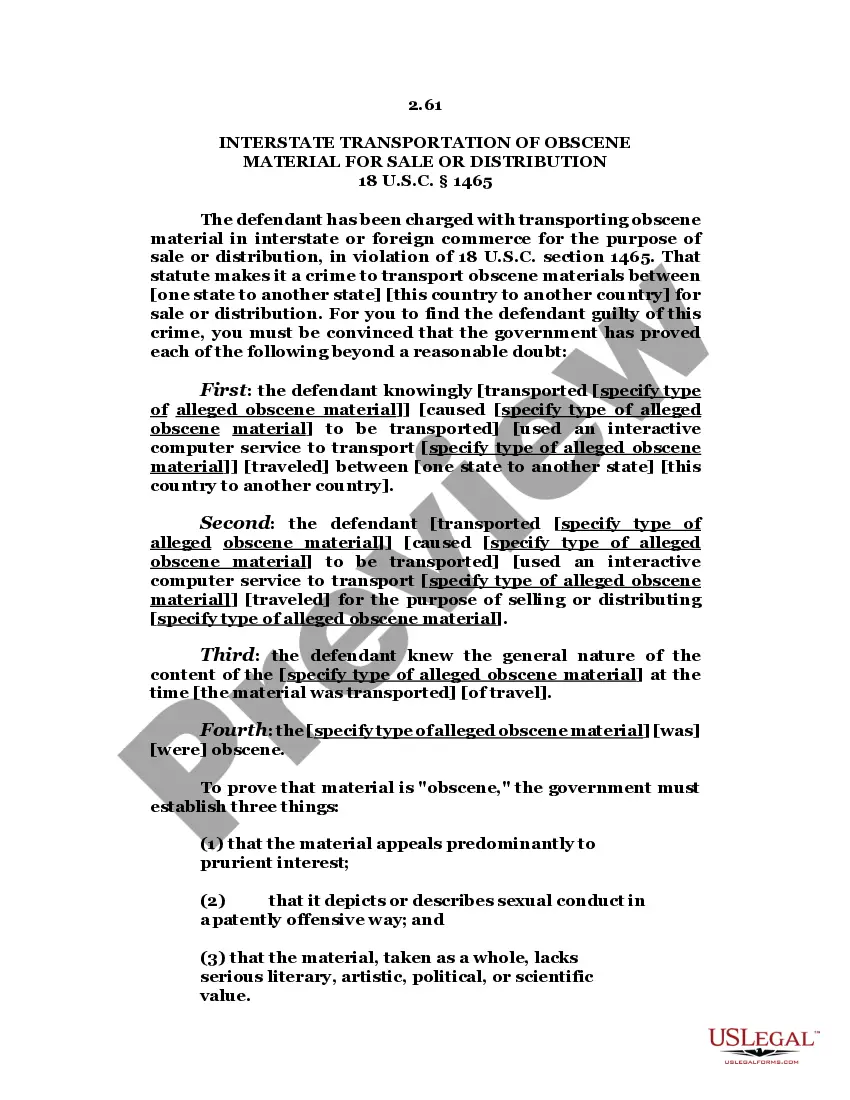
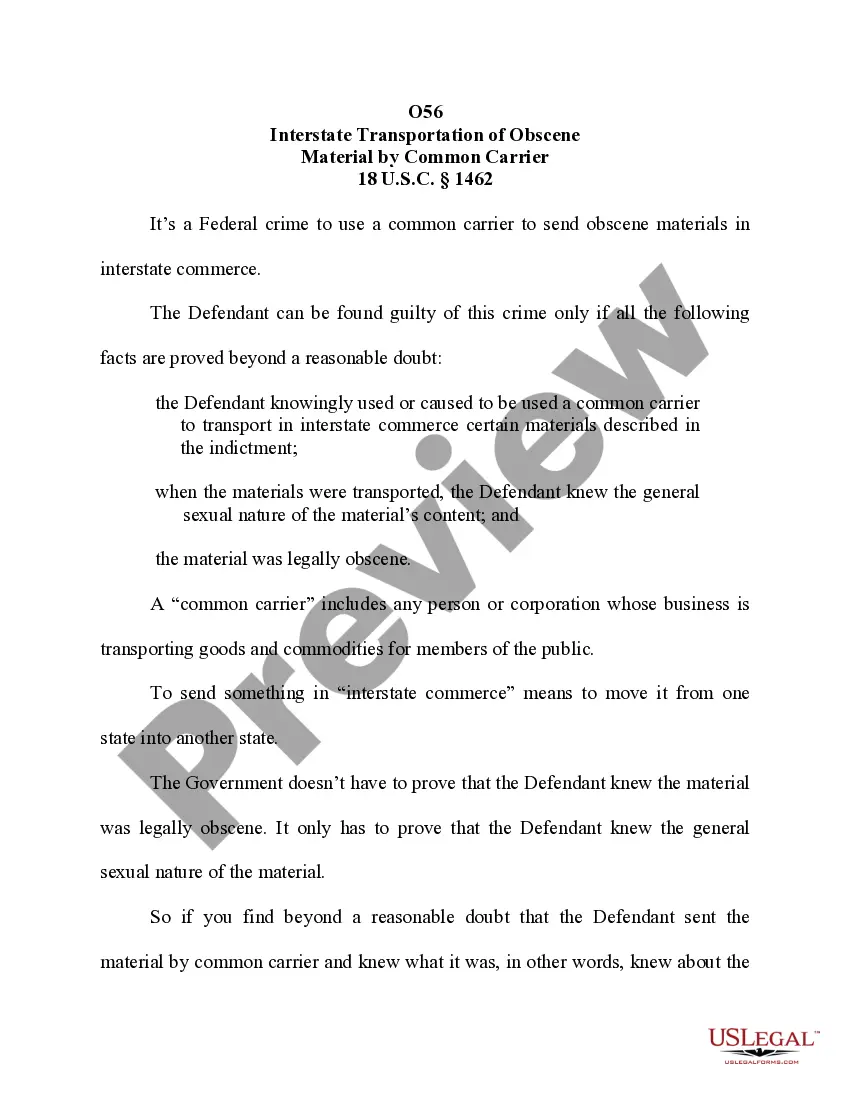
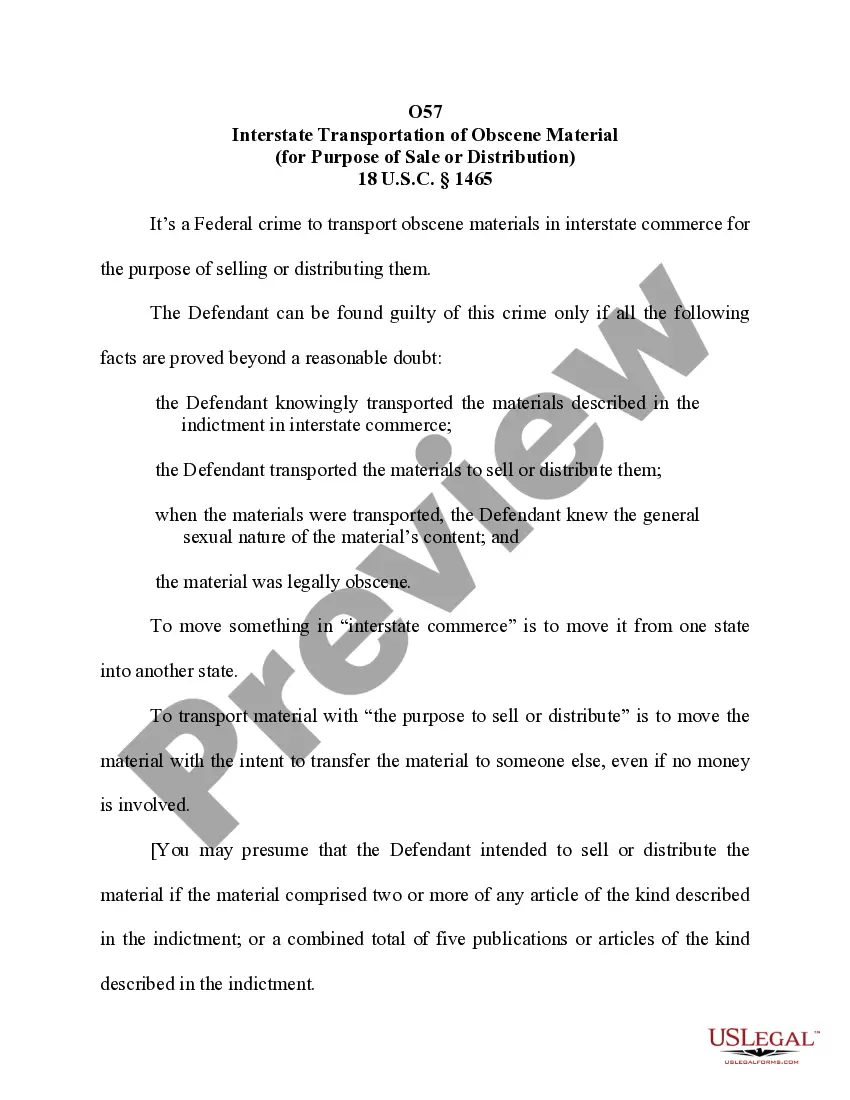
The 2.60 Interstate Transportation of Obscene Material form, as guided by 18 U.S.C. Sec. 1462, addresses the illegal transport of obscene material across state or international lines. This legal form is crucial for those involved in cases concerning violations of federal obscenity laws, as it outlines the specific elements needed to establish a violation. Unlike other legal forms related to obscenity, this document specifically addresses interstate or foreign transportation aspects, making it essential for federal cases.
Key components of this form
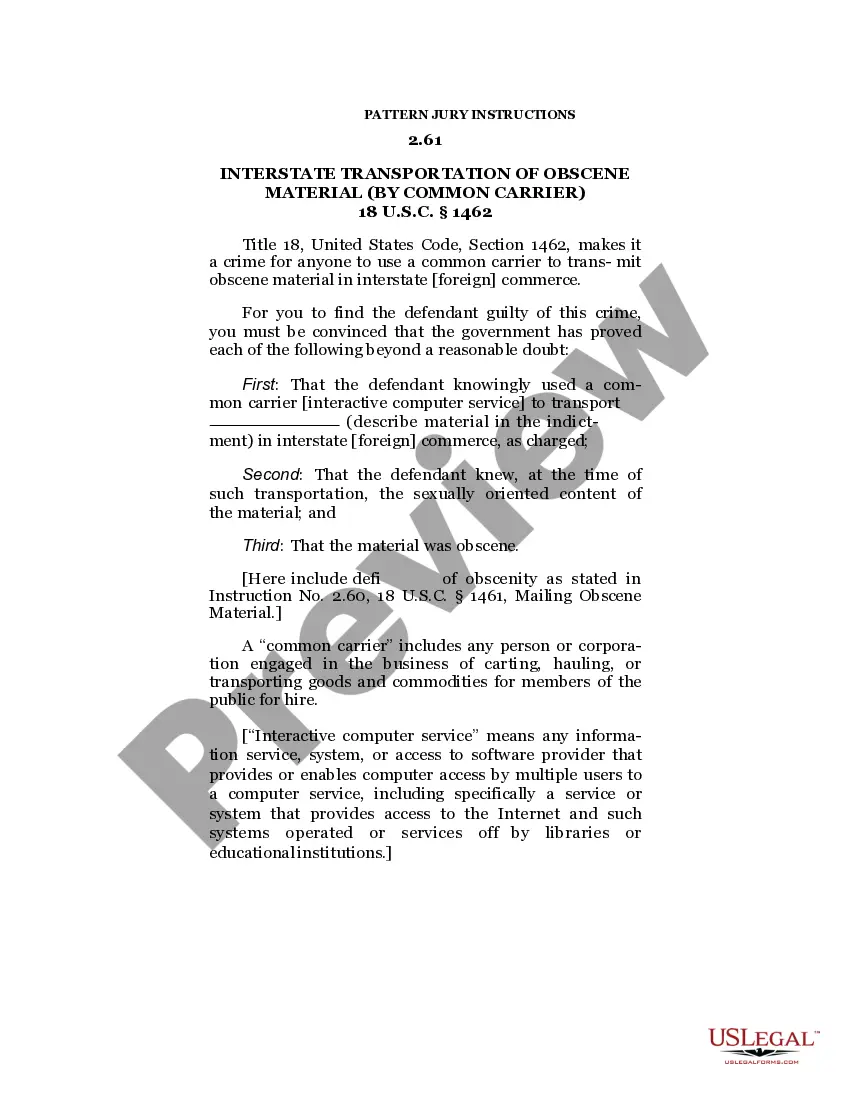
- The defendant's use of a common carrier, express service, or interactive computer service to transport obscene material.
- Specification that the defendant knowingly transported obscene material across state lines or internationally.
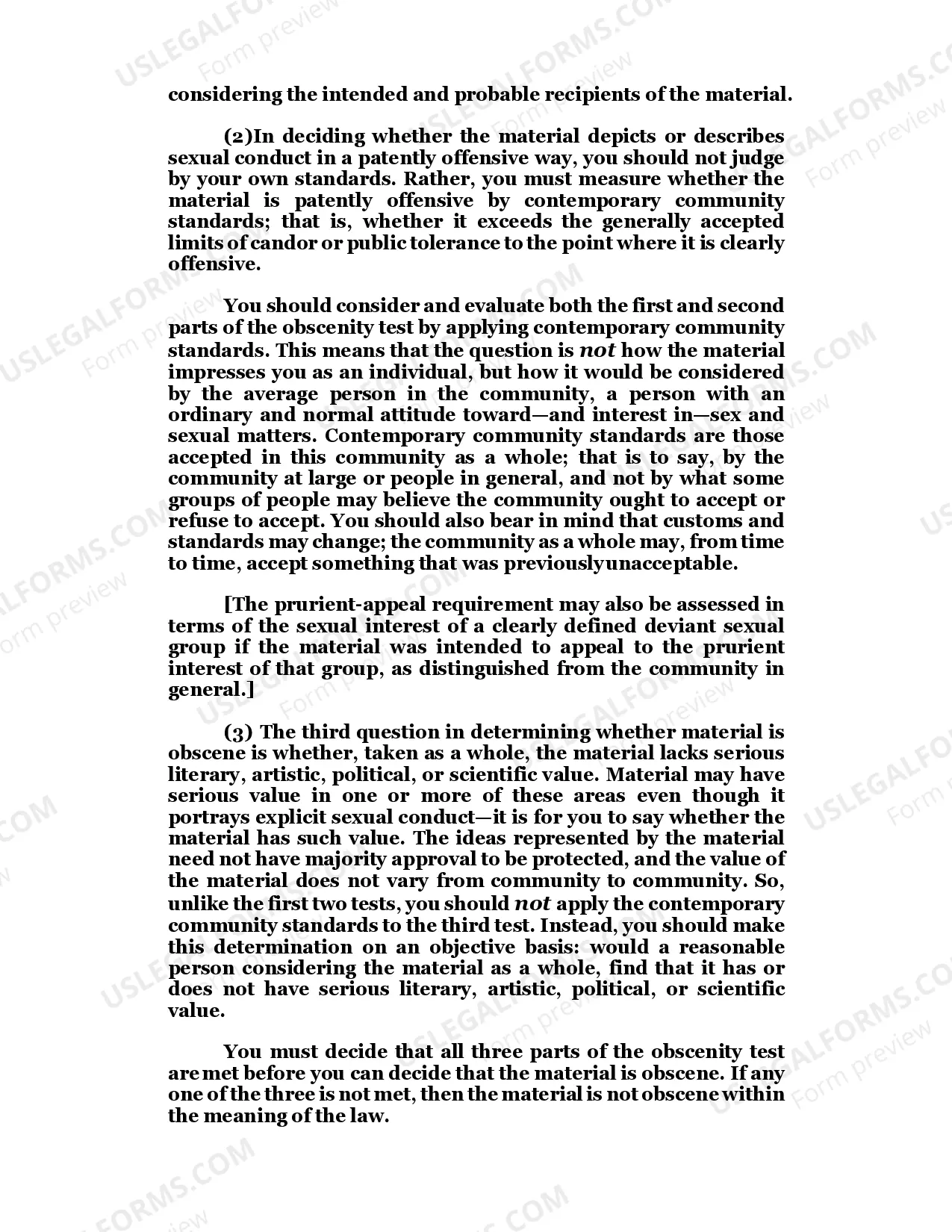
- Criteria for determining whether material is obscene, focusing on community standards for prurient appeal, offensiveness, and lack of serious value.
- Requirements to establish prurient interest and the intended audience for the material.
When to use this form
This form is needed in situations where an individual is charged with transporting obscene material across state lines or to another country. It is commonly used in federal cases involving allegations of obscenity, such as in scenarios involving the distribution of adult content or illegal publications through various mailing or digital services.
Who should use this form
- Defendants accused of violating federal obscenity laws.
- Attorneys representing clients in obscenity-related cases.
- Individuals or entities involved in the shipping or distribution of materials that may be deemed obscene.
How to prepare this document
- Identify the parties involved, including the defendant and the service used for transport.
- Specify the type of allegedly obscene material in question.
- Detail the means of transportation, such as common carrier or interactive computer service.
- Indicate the jurisdictions the material was transported between.
- Review the legal definitions of obscenity to ensure clarity in the context of the case.
Does this document require notarization?
This form does not typically require notarization unless specified by local law. However, it is recommended to confirm any specific jurisdictional requirements before submission.
Get your form ready online
Our built-in tools help you complete, sign, share, and store your documents in one place.
Make edits, fill in missing information, and update formatting in US Legal Forms—just like you would in MS Word.
Download a copy, print it, send it by email, or mail it via USPS—whatever works best for your next step.
Sign and collect signatures with our SignNow integration. Send to multiple recipients, set reminders, and more. Go Premium to unlock E-Sign.
If this form requires notarization, complete it online through a secure video call—no need to meet a notary in person or wait for an appointment.
We protect your documents and personal data by following strict security and privacy standards.

Make edits, fill in missing information, and update formatting in US Legal Forms—just like you would in MS Word.

Download a copy, print it, send it by email, or mail it via USPS—whatever works best for your next step.

Sign and collect signatures with our SignNow integration. Send to multiple recipients, set reminders, and more. Go Premium to unlock E-Sign.

If this form requires notarization, complete it online through a secure video call—no need to meet a notary in person or wait for an appointment.

We protect your documents and personal data by following strict security and privacy standards.
Mistakes to watch out for
- Failing to accurately identify the type of material being transported.
- Neglecting to provide sufficient evidence of the defendant's knowledge of the material's content.
- Overlooking the community standards when determining whether the material is obscene.
- Not specifying both the origin and destination of the transport.
Advantages of online completion
- Convenience of immediate downloads without the need for in-person visits.
- Editability allows customization to meet specific case needs.
- Access to reliable templates drafted by licensed attorneys ensures legal compliance.
- Secure storage and easy retrieval of documents for future reference.
Legal use & context
- This form is used to clarify the legal processes related to the transport of potentially obscene materials.
- Understanding the criteria of obscenity is crucial for both defense and prosecution in related legal cases.
Quick recap
- The form assists in understanding federal regulations regarding the transportation of obscene materials.
- It outlines specific legal standards that must be met to determine whether the material is considered obscene.
- Proper completion of the form can have significant implications in legal cases related to obscenity.
Looking for another form?

Form popularity
FAQ
Obscenity is behavior, art, or language that is sexual and offends or shocks people.
In the 1973 Miller v. California decision, the Supreme Court established a three-part test for identifying obscenity, defining it as: (1) material that appeals to the prurient interest; (2) material that portrays sexual conduct in a patently offensive way; and (3) material that does not have serious literary, artistic,
You can also say that anything offensive or inappropriate is an obscenity. This can include things that are not only dirty, but things that are offensive in other ways. Many say torture and war are obscenities.
Section 1470 of Title 18, United States Code, prohibits any individual from knowingly transferring or attempting to transfer obscene matter using the U.S. mail or any means or facility of interstate or foreign commerce to a minor under 16 years of age. Convicted offenders face fines and imprisonment for up to 10 years.
As used in this chapter, the following definitions apply: (a) "Obscene matter" means matter, taken as a whole, that to the average person, applying contemporary statewide standards, appeals to the prurient interest, that, taken as a whole, depicts or describes sexual conduct in a patently offensive way, and that, taken
Ing to the ruling, which is based on ?the average person, applying contemporary adult community standards,? any matter that ?lacks serious literary, artistic, political, or scientific value? and ?taken as a whole, appeals to prurient interests? is obscene, and thus not protected by the First Amendment.
Obscenity laws are concerned with prohibiting lewd, filthy, or disgusting words or pictures. Indecent materials or depictions, normally speech or artistic expressions, may be restricted in terms of time, place, and manner, but are still protected by the First Amendment.
The three-part test asked whether the average person, applying contemporary community standards, would find the work appeals on the whole to prurient interests; describes sexual conduct in a patently offensive way; and lacks any serious literary, artistic, political or scientific value.