Interstate Transportation of Obscene Material (by Common Carrier)
About this form
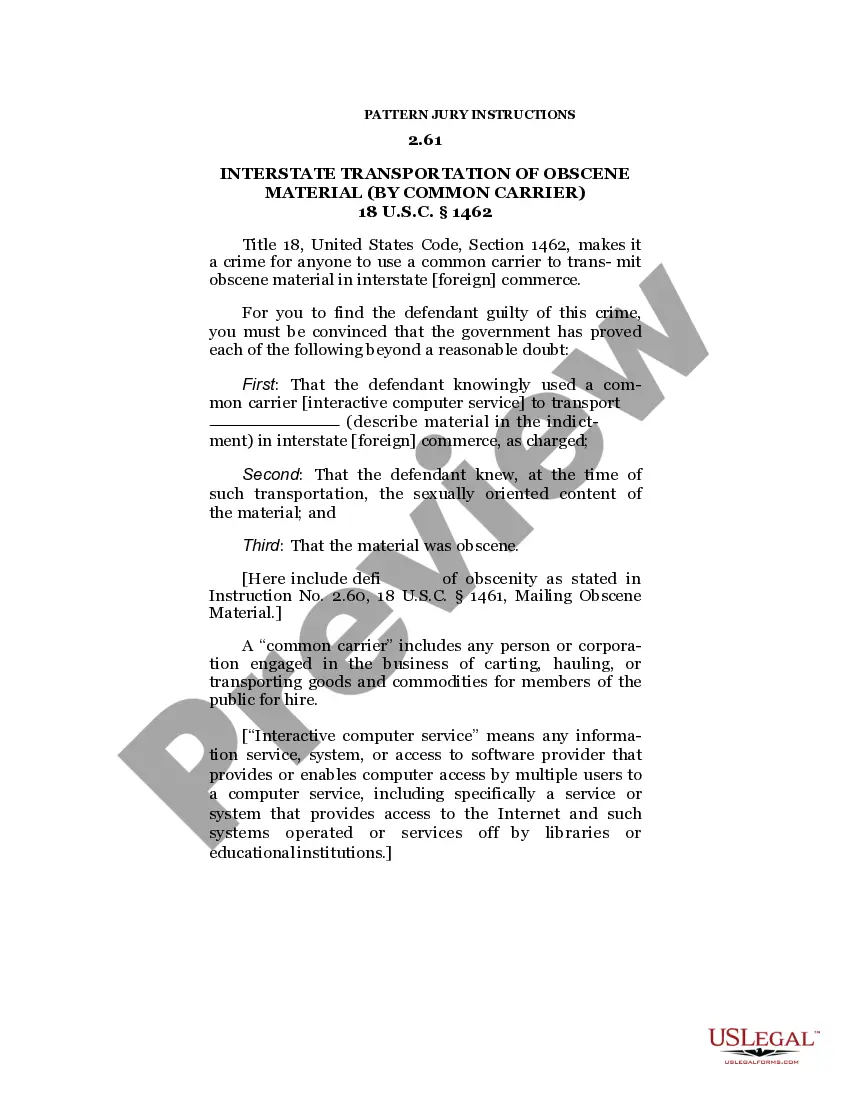
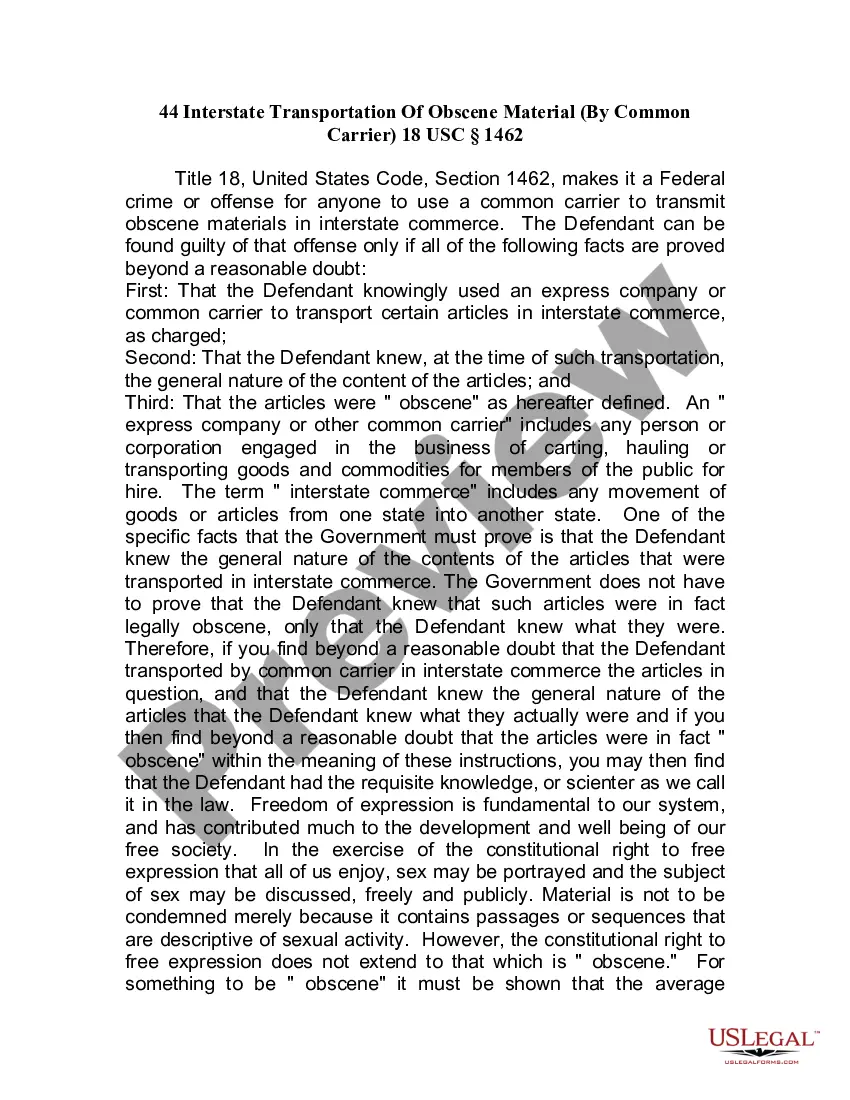
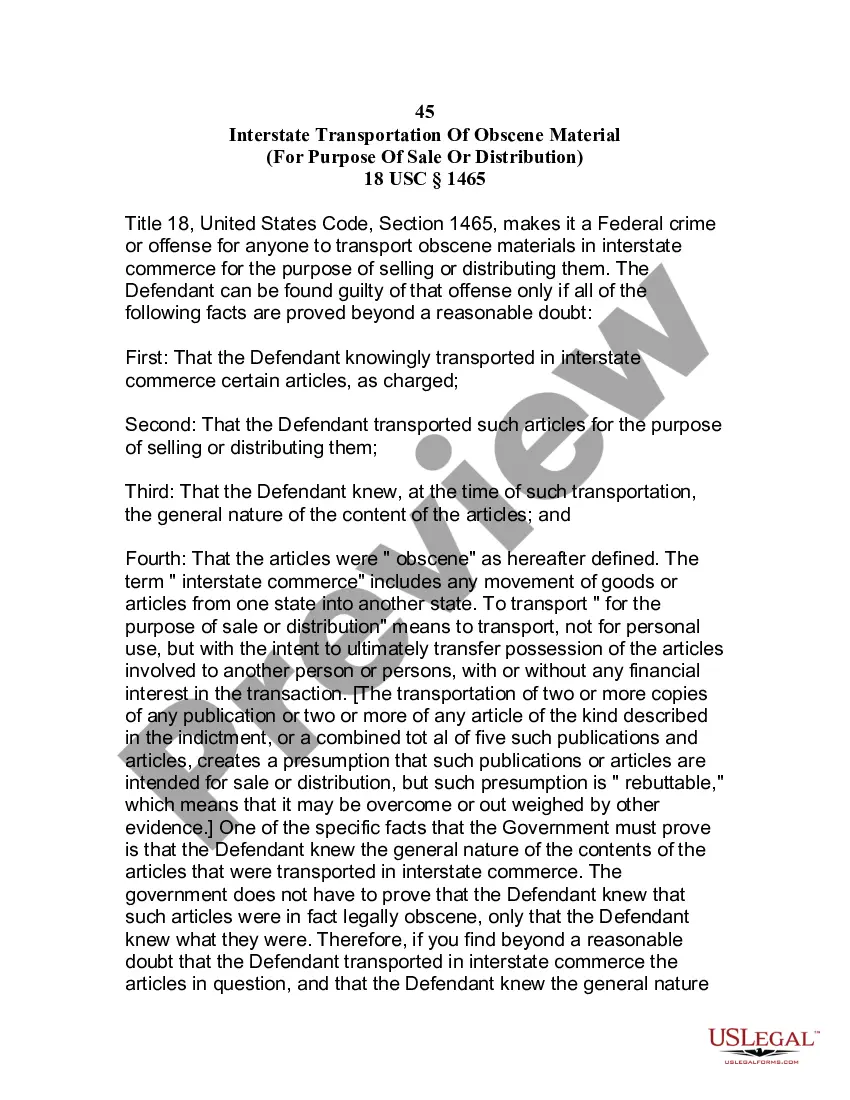
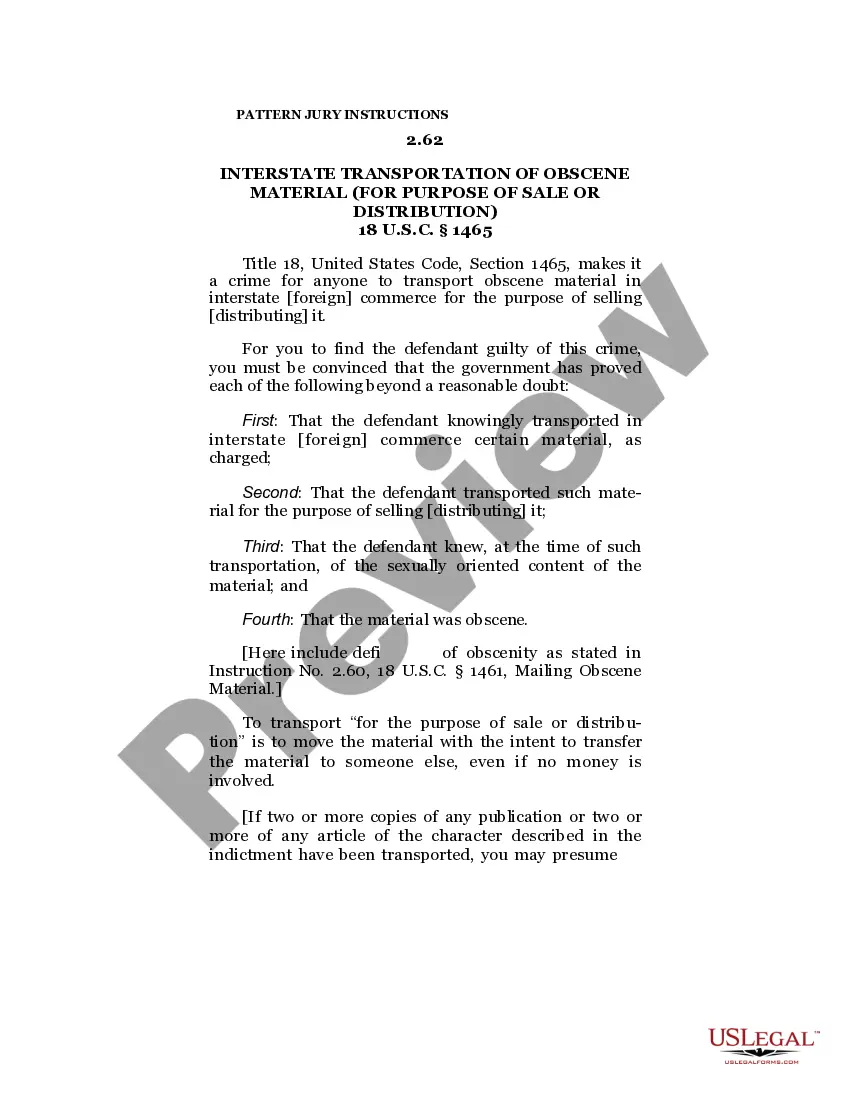
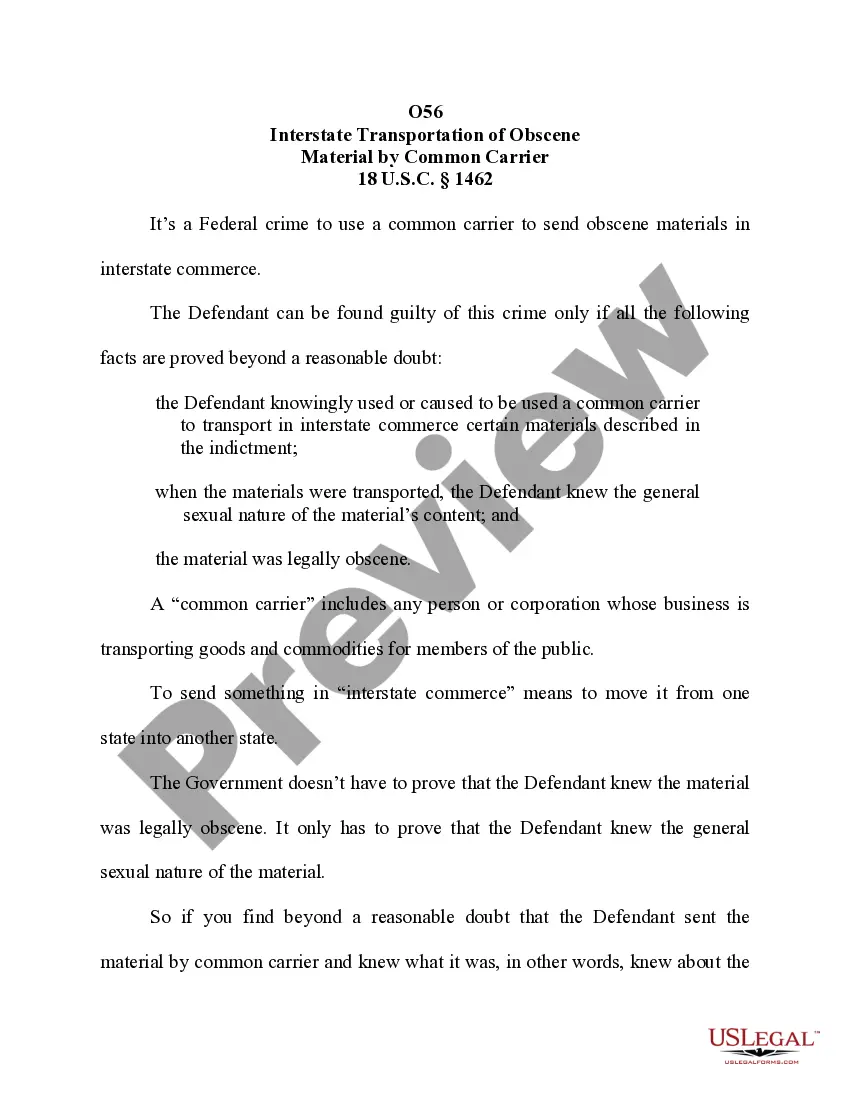
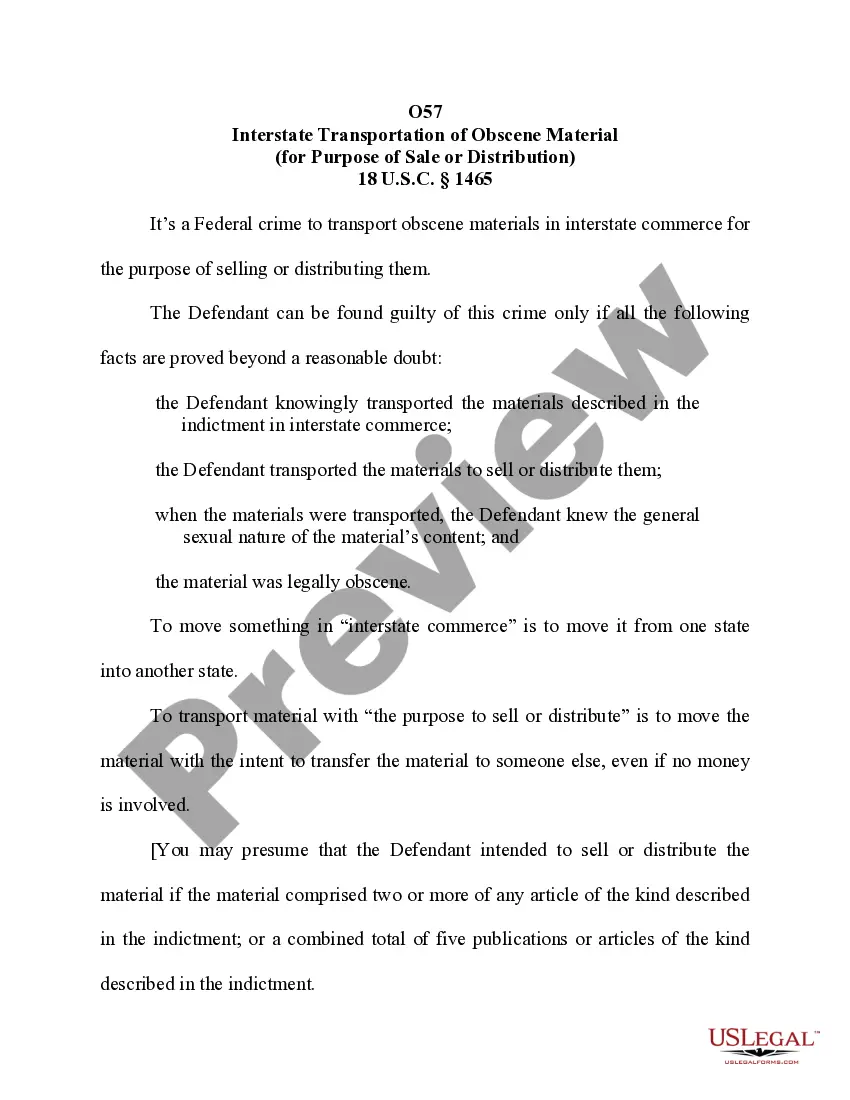
The Interstate Transportation of Obscene Material (by Common Carrier) form is a legal document that addresses the transportation of obscene materials across state lines using common carriers. This form serves to ensure compliance with federal law and clarifies the circumstances under which materials are considered obscene. It is distinct from other legal forms concerning obscenity as it specifically focuses on the medium of transportation and the legal repercussions of such actions.
Form components explained
- Description of the obscene material being transported.
- Details on the common carrier used for the transportation.
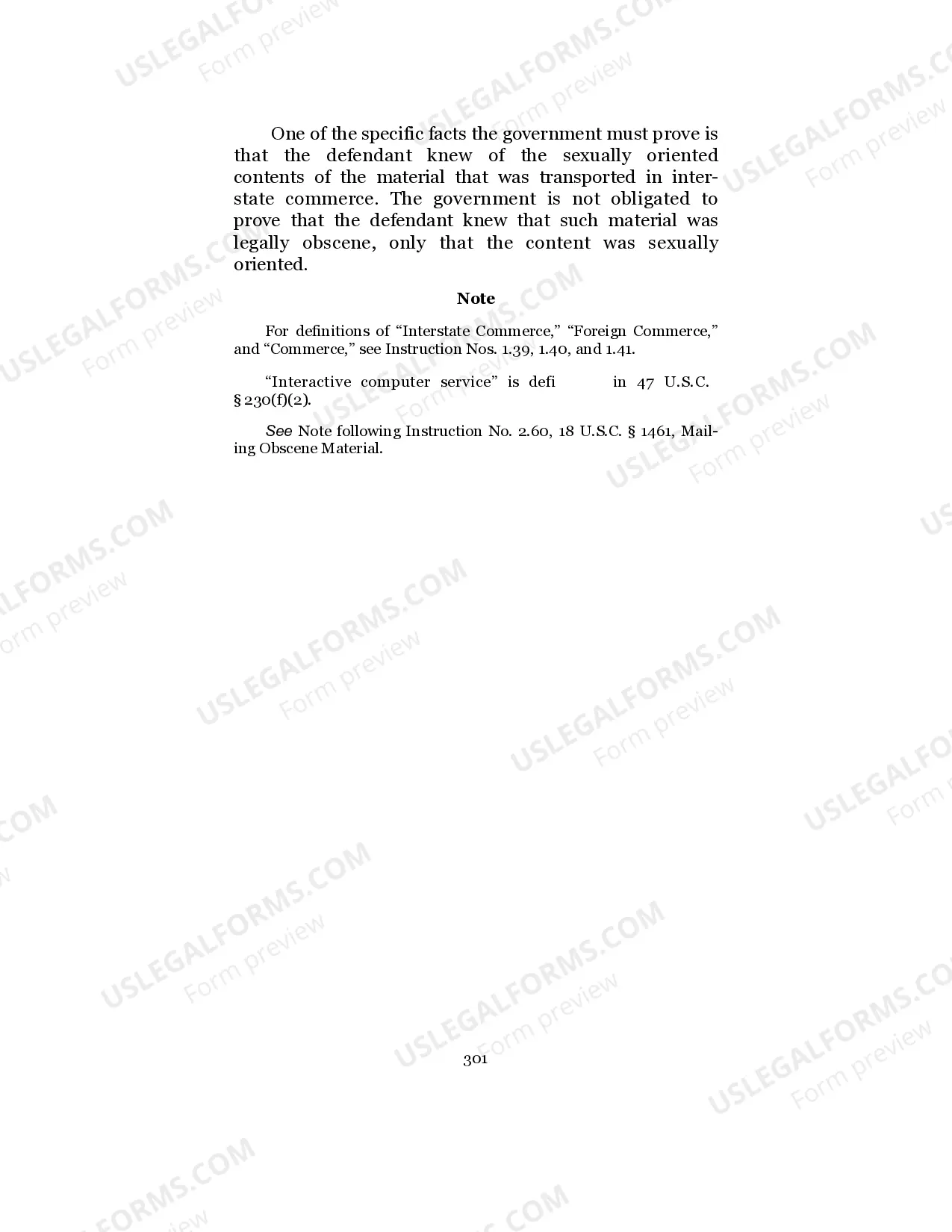
- Declaration of the defendant's knowledge of the material's sexual content.
- Criteria for what constitutes obscenity according to federal law.
- Information on interstate commerce and definitions related to the transport.
Situations where this form applies
This form should be used in situations where an individual or entity is accused of transporting obscene material using a common carrier, such as a freight company or an online service. It is relevant for legal defenses related to charges under Title 18 of the United States Code, Section 1462, which criminalizes this form of transportation.
Intended users of this form
- Individuals or businesses engaged in the transport of materials via common carriers.
- Legal defense teams representing clients accused of transporting obscene materials.
- Individuals seeking to understand their rights and responsibilities under federal obscenity laws.
Steps to complete this form
- Identify the parties involved in the transportation of material.
- Describe the obscene material clearly and specifically.
- Specify the common carrier utilized for the transport.
- Assert the defendant's knowledge of the material's sexual content at the time of transportation.
- Include any relevant definitions and legal stipulations related to obscenity.
Does this document require notarization?
This form does not typically require notarization unless specified by local law. However, it is advisable to verify jurisdictional requirements to ensure compliance.
Get your form ready online
Our built-in tools help you complete, sign, share, and store your documents in one place.
Make edits, fill in missing information, and update formatting in US Legal Forms—just like you would in MS Word.
Download a copy, print it, send it by email, or mail it via USPS—whatever works best for your next step.
Sign and collect signatures with our SignNow integration. Send to multiple recipients, set reminders, and more. Go Premium to unlock E-Sign.
If this form requires notarization, complete it online through a secure video call—no need to meet a notary in person or wait for an appointment.
We protect your documents and personal data by following strict security and privacy standards.

Make edits, fill in missing information, and update formatting in US Legal Forms—just like you would in MS Word.

Download a copy, print it, send it by email, or mail it via USPS—whatever works best for your next step.

Sign and collect signatures with our SignNow integration. Send to multiple recipients, set reminders, and more. Go Premium to unlock E-Sign.

If this form requires notarization, complete it online through a secure video call—no need to meet a notary in person or wait for an appointment.

We protect your documents and personal data by following strict security and privacy standards.
Avoid these common issues
- Failing to accurately describe the material deemed obscene.
- Not providing sufficient details about the common carrier.
- Omitting relevant dates or signatures, which could invalidate the form.
- Misunderstanding the definition of obscenity and how it applies to the material.
Why complete this form online
- Convenient access to legal templates drafted by licensed attorneys.
- Ability to customize the form to fit specific circumstances and ensure accuracy.
- Time-efficient downloads that save users the hassle of in-person visits to legal offices.
- Secure and reliable format that meets legal standards across multiple jurisdictions.
Legal use & context
- This form supports defenses against charges of mailing or transporting obscene materials.
- Understanding federal law regarding obscenity is crucial for legal compliance.
- The form helps clarify the responsibilities of those involved in the transportation of such materials.
What to keep in mind
- The form addresses legal issues related to transporting obscene materials via common carriers.
- It clarifies the legal definitions and obligations regarding the knowledge of material content.
- Using this form can help in preparing effective legal defenses in obscenity cases.
Glossary of terms
- Common carrier: A person or corporation that transports goods for hire and is available to the public.
- Obscene material: Content that is sexually explicit and considered offensive according to community standards.
- Interstate commerce: The movement of goods and services across state lines.
Looking for another form?
Form popularity
FAQ
Examples of obscene matter include ography videos, pictures, or billboards. Possession of obscene matter can include but is not limited film, filmstrip, photograph, negative, slide, photocopy, videotape, computer hardware, computer software, data storage media.
Obscenity refers to a narrow category of ography that violates contemporary community standards and has no serious literary, artistic, political or scientific value. For adults at least, most ography ? material of a sexual nature that arouses many readers and viewers ? receives constitutional protection.
Obscenity laws are concerned with prohibiting lewd, filthy, or disgusting words or pictures. Indecent materials or depictions, normally speech or artistic expressions, may be restricted in terms of time, place, and manner, but are still protected by the First Amendment.
Obscenity Law and Minors For example, using a cartoon character or children´s television program in the domain of a website that contains harmful or obscene material may be punishable under federal law.
The Supreme Court has repeatedly grappled with problematic elements of the Miller test for obscenity. However, to date, no standard has replaced it. In 1997, Reno v. American Civil Liberties Union (?ACLU I?) addressed obscenity in the field of new media.
Obscenity is the intentional exposure of the private parts in any public place or place open to the public view, or in any prison or jail, with the intent of arousing sexual desire or which appeals to prurient interest or is patently offensive.
Federal law makes it illegal to distribute, transport, sell, ship, mail, produce with intent to distribute or sell, or engage in a business of selling or transferring obscene matter. Convicted offenders face fines and imprisonment.
In its ruling in Miller v. California (1973), the Supreme Court reconsidered the precedent set in Memoirs v. Massachusetts (1966), which had determined that obscene materials must be found to be "utterly without redeeming social value."