Mailing Obscene Material
What is this form?
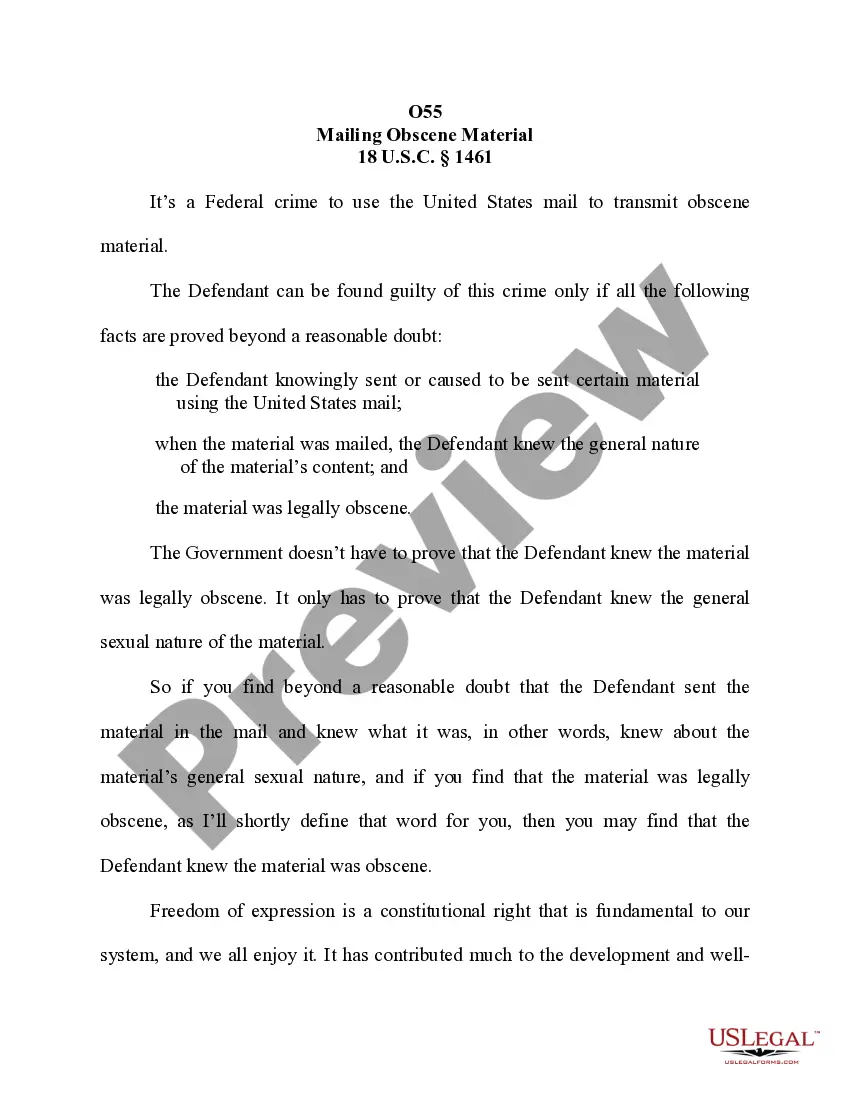
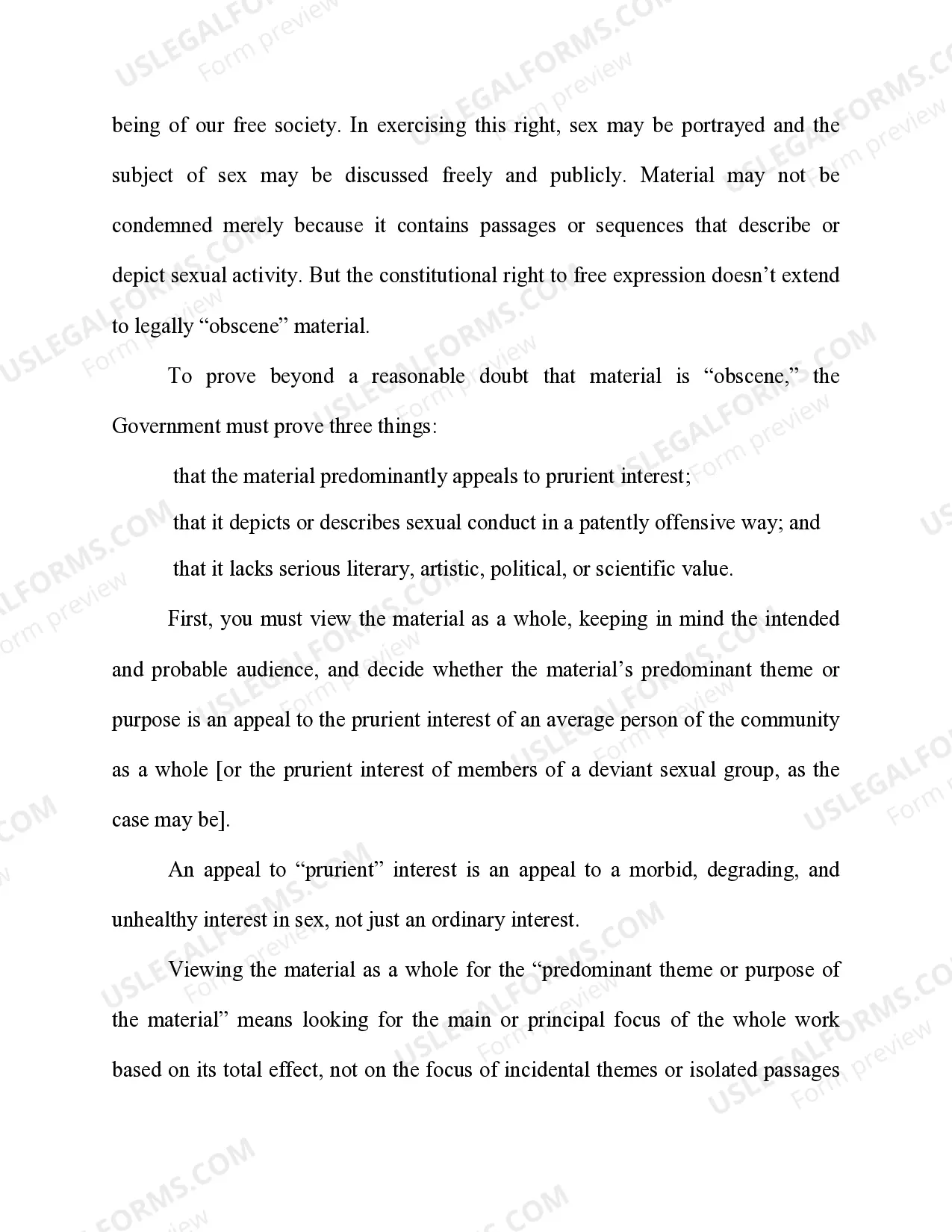
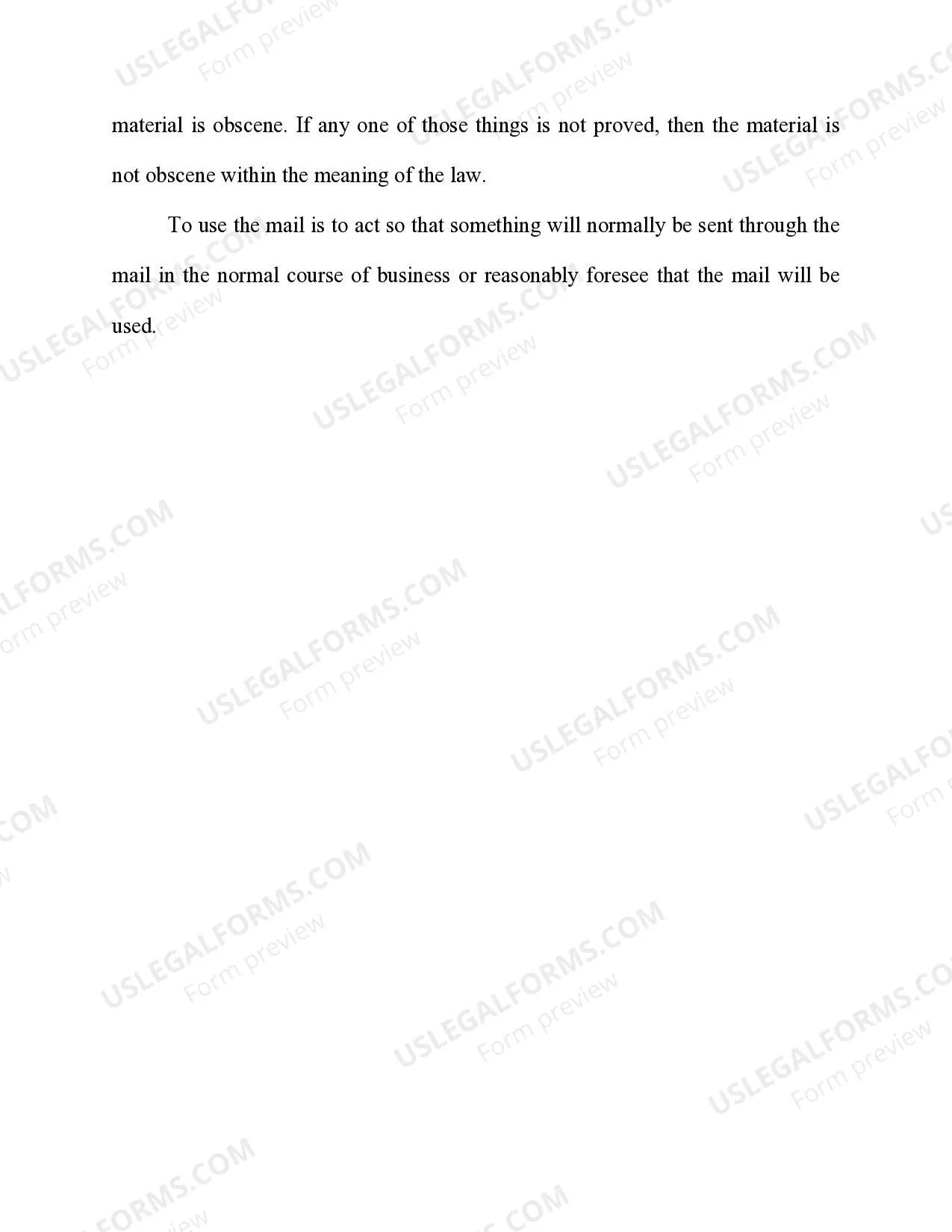
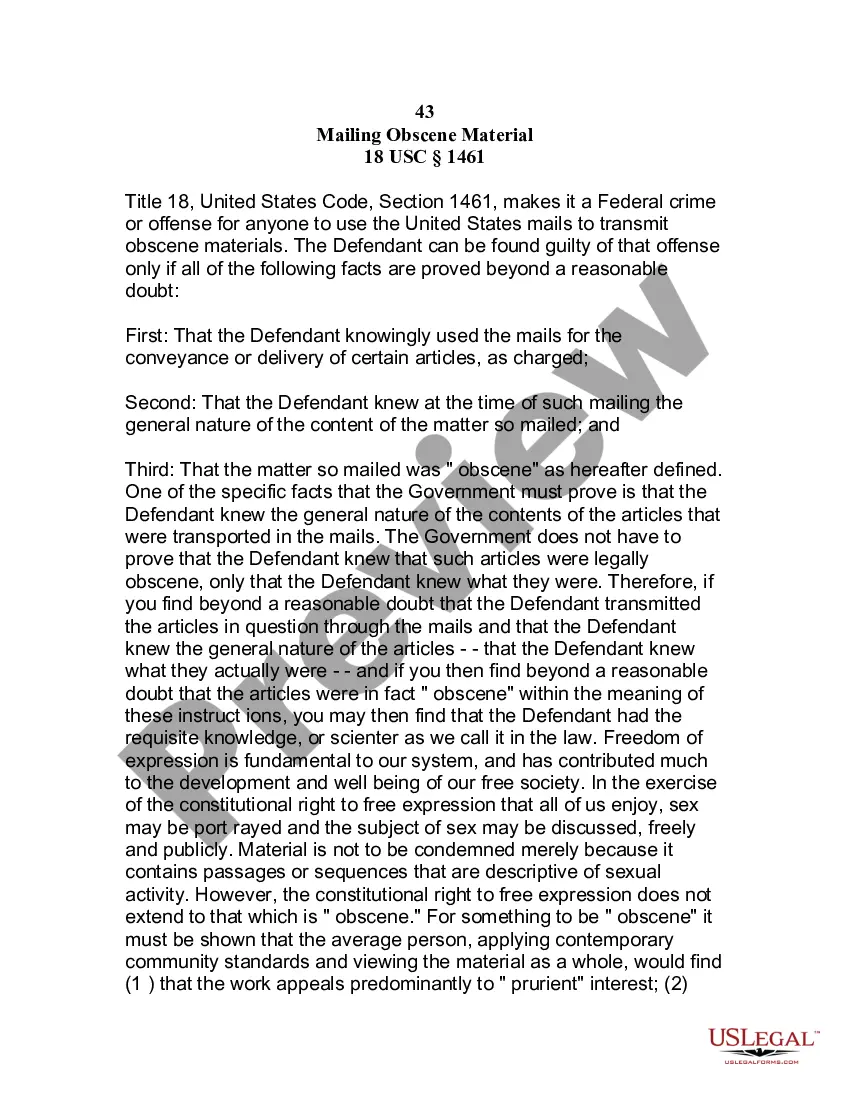
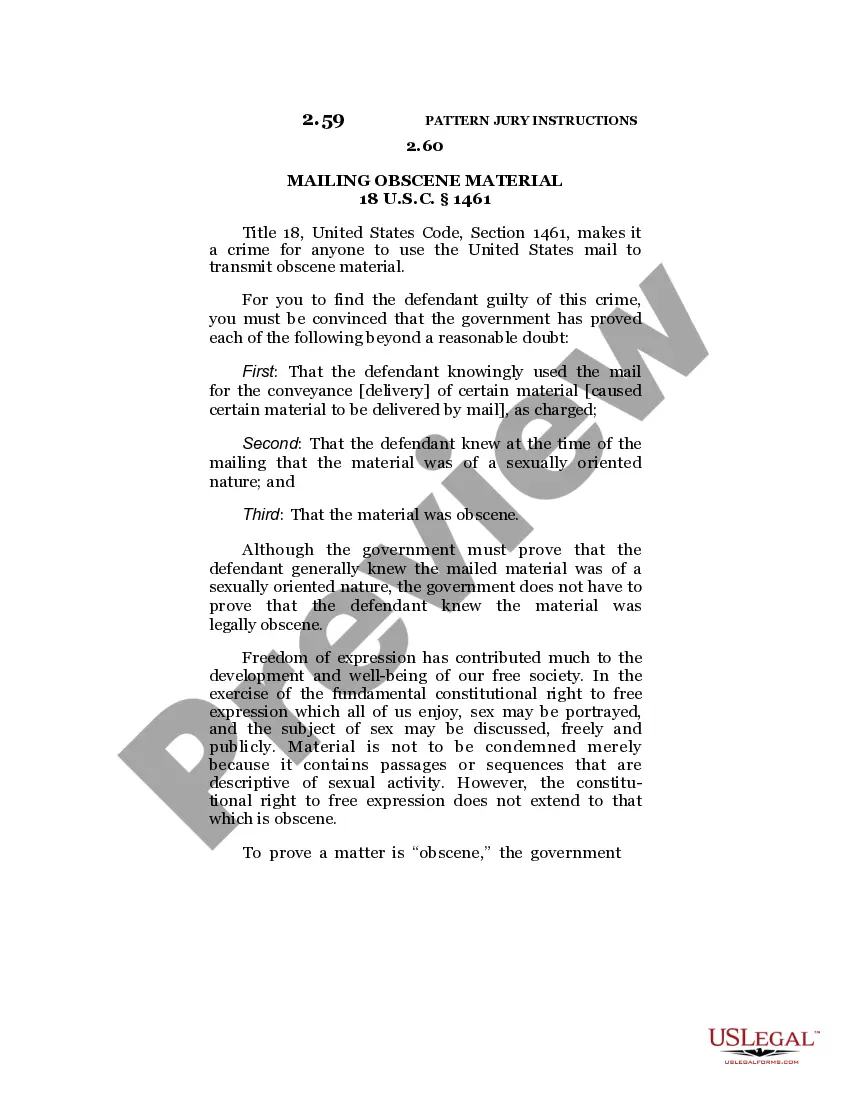
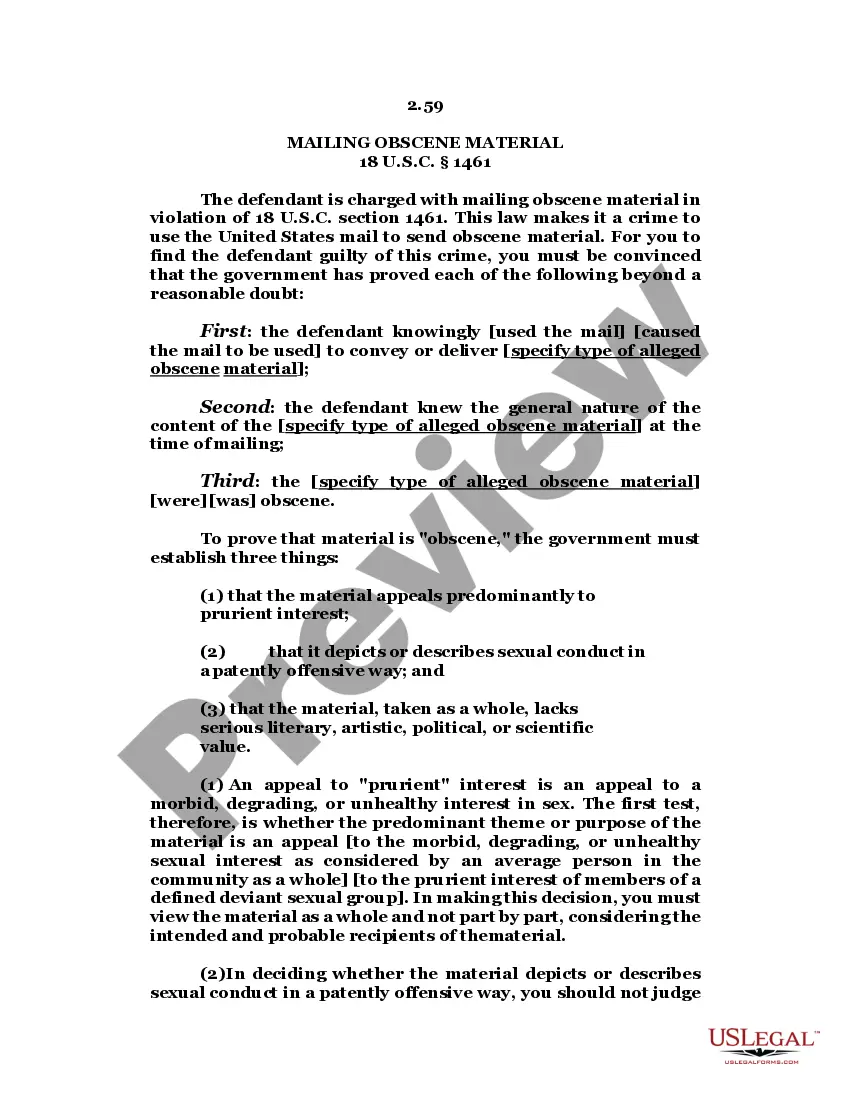
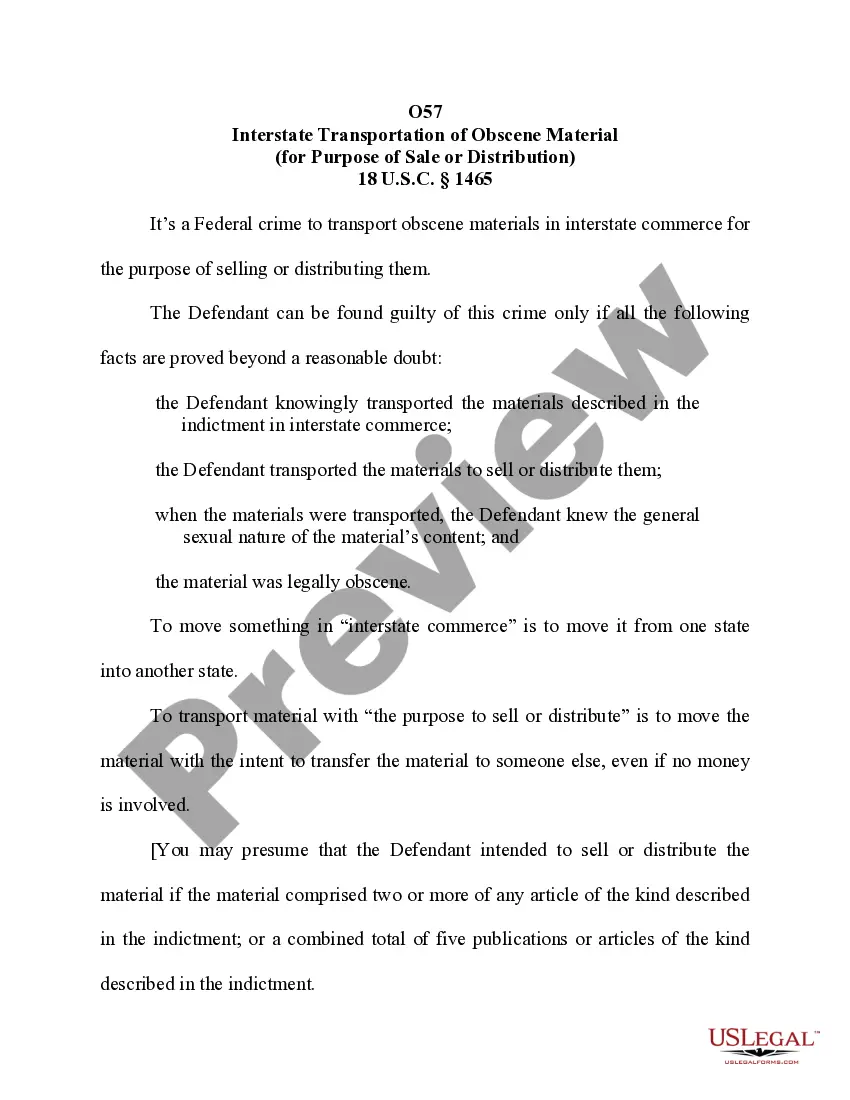
The Mailing Obscene Material form outlines the legal ramifications of using the United States mail to send obscene content, as defined under federal law. This form is crucial for understanding the parameters of what constitutes "obscene" material and helps in assessing legal responsibilities in related cases. It is distinct from other legal forms concerning obscenity as it centers around the transmission of such materials via mail, emphasizing federal standards rather than state-specific laws.
Key components of this form
- Definition of obscene material according to the law.
- Criteria for proving guilt beyond a reasonable doubt.
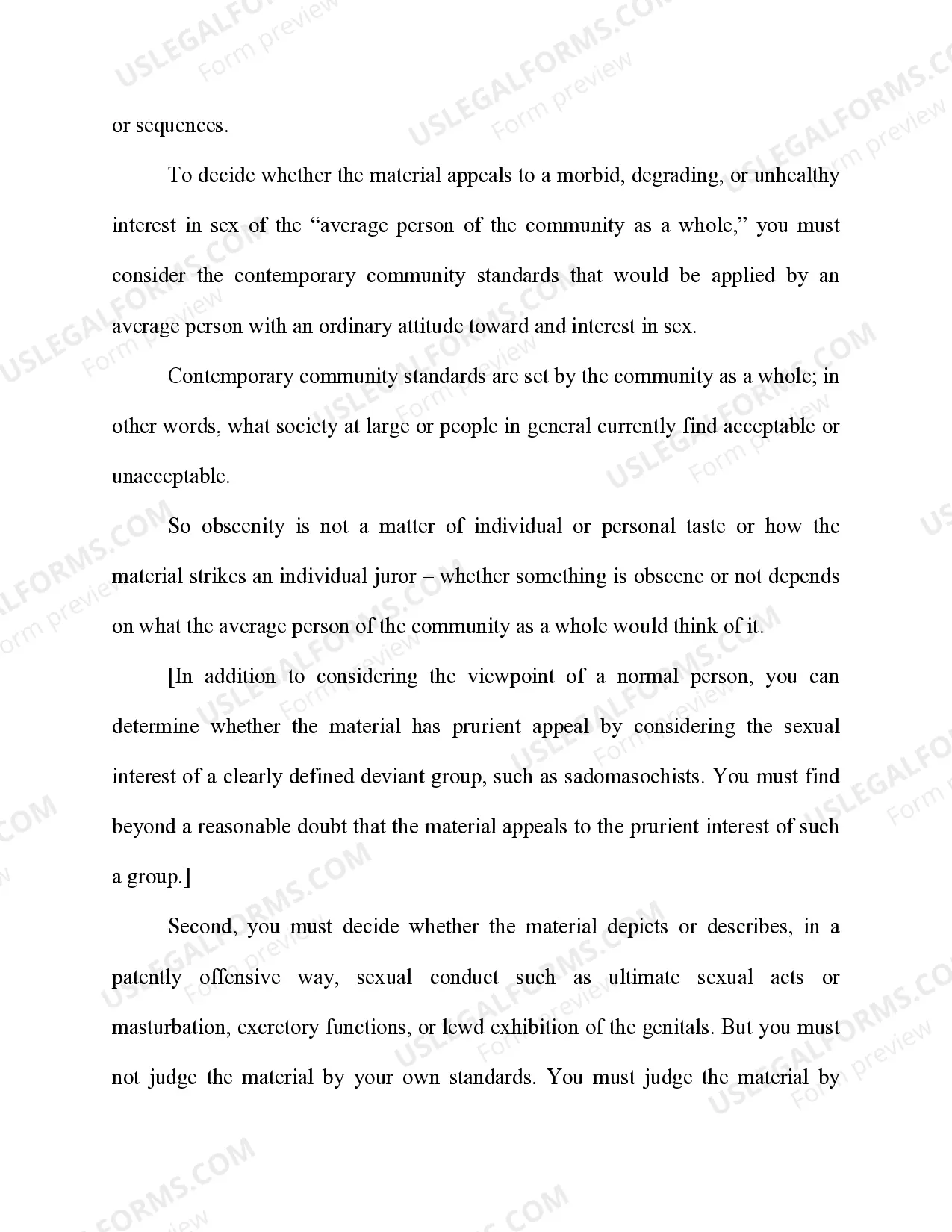
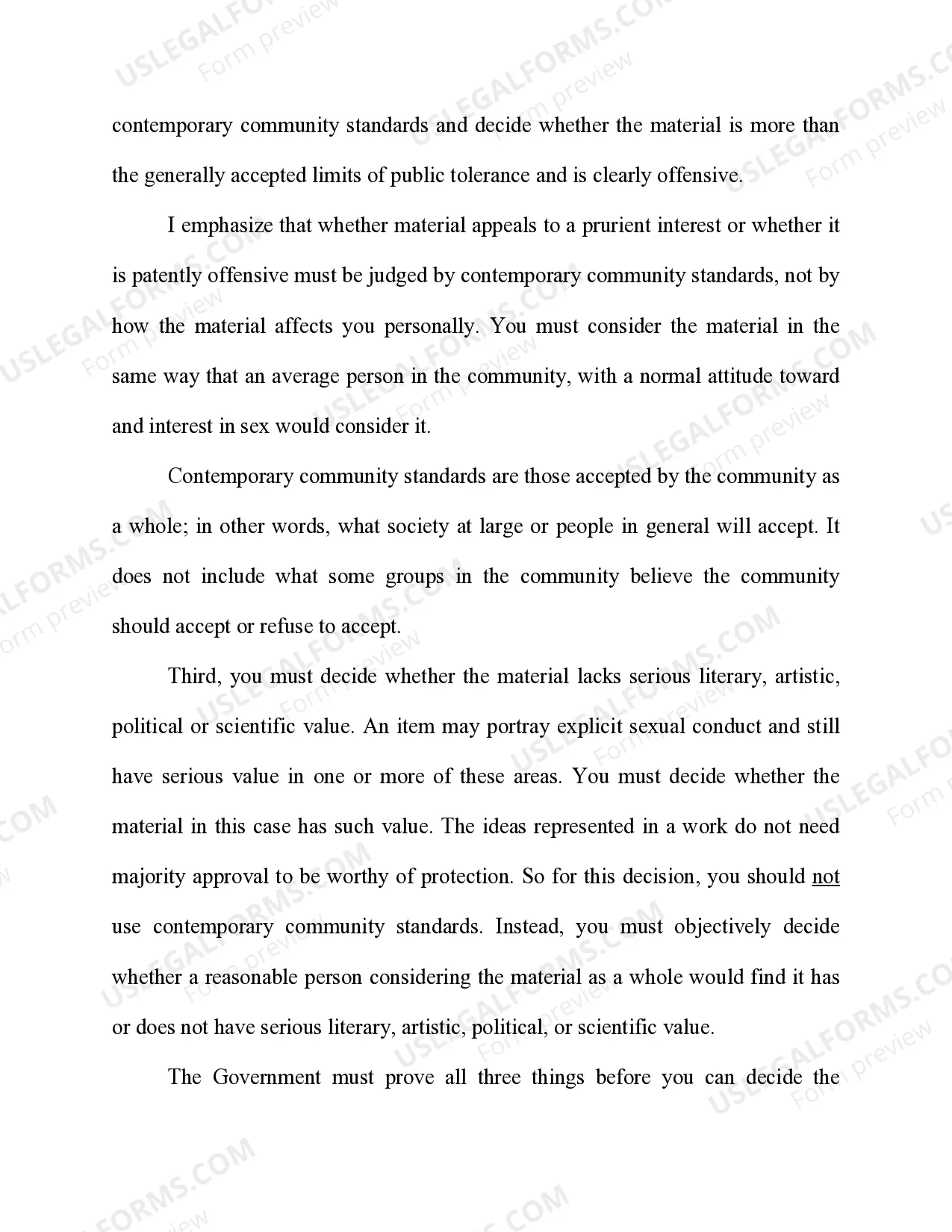
- Explanation of terms related to prurient interest and community standards.
- Requirements for assessing whether material lacks serious value.
When to use this form
This form is used in legal contexts where an individual or entity is accused of mailing materials deemed obscene. It provides a framework for legal defense or prosecution, ensuring that all aspects of obscenity under federal law are properly evaluated. Situations may include criminal charges, civil disputes regarding obscene content, or cases involving freedom of expression challenges.
Intended users of this form
- Legal professionals representing clients accused of mailing obscene materials.
- Defendants in criminal cases related to obscenity.
- Anyone seeking to understand their rights and limitations regarding the mailing of content deemed obscene.
How to complete this form
- Identify the specific material in question and ensure a thorough understanding of its content.
- Determine the intent behind mailing the material and gather evidence of knowledge regarding its nature.
- Assess the material against federal standards for obscenity to establish its legal status.
- Document all findings and prepare to articulate the basis for any claims or defenses regarding the material's classification.
Notarization requirements for this form
In most cases, this form does not require notarization. However, some jurisdictions or signing circumstances might. US Legal Forms offers online notarization powered by Notarize, accessible 24/7 for a quick, remote process.
Get your form ready online
Our built-in tools help you complete, sign, share, and store your documents in one place.
Make edits, fill in missing information, and update formatting in US Legal Forms—just like you would in MS Word.
Download a copy, print it, send it by email, or mail it via USPS—whatever works best for your next step.
Sign and collect signatures with our SignNow integration. Send to multiple recipients, set reminders, and more. Go Premium to unlock E-Sign.
If this form requires notarization, complete it online through a secure video call—no need to meet a notary in person or wait for an appointment.
We protect your documents and personal data by following strict security and privacy standards.

Make edits, fill in missing information, and update formatting in US Legal Forms—just like you would in MS Word.

Download a copy, print it, send it by email, or mail it via USPS—whatever works best for your next step.

Sign and collect signatures with our SignNow integration. Send to multiple recipients, set reminders, and more. Go Premium to unlock E-Sign.

If this form requires notarization, complete it online through a secure video call—no need to meet a notary in person or wait for an appointment.

We protect your documents and personal data by following strict security and privacy standards.
Mistakes to watch out for
- Failing to recognize federal versus state definitions of obscenity.
- Overlooking the requirement of proving knowledge of the general sexual nature of the material.
- Assuming that personal taste constitutes a valid standard for obscenity assessments.
Advantages of online completion
- Convenience of downloading and completing the form at your pace.
- Access to reliable legal definitions and criteria without the need for third-party consultations.
- Editability allows for customization to meet specific legal needs.
Legal use & context
- This form provides a clear understanding of the thresholds for what constitutes obscene material under federal law.
- It informs the user of their rights and potential defenses in cases alleging the unlawful mailing of obscene materials.
- Incorporates constitutional protections of freedom of expression while delineating boundaries with respect to obscenity.
Looking for another form?
Form popularity
FAQ
For adults at least, most ography ? material of a sexual nature that arouses many readers and viewers ? receives constitutional protection. However, two types of ography receive no First Amendment protection: obscenity and child ography.
Obscenity is not protected under First Amendment rights to free speech, and violations of federal obscenity laws are criminal offenses. The U.S. courts use a three-pronged test, commonly referred to as the Miller test, to determine if given material is obscene.
The three-part test asked whether the average person, applying contemporary community standards, would find the work appeals on the whole to prurient interests; describes sexual conduct in a patently offensive way; and lacks any serious literary, artistic, political or scientific value.
Is declared to be nonmailable matter and shall not be conveyed in the mails or delivered from any post office or by any letter carrier.
?(a) the dominant theme of the material taken as a whole appeals to a prurient interest in sex; (b) the material is patently offensive because it affronts contemporary community standards relating to the description or representation of sexual matters; and (c) the material is utterly without redeeming social value.?
Shall be fined under this title or imprisoned not more than five years, or both, for the first such offense and shall be fined under this title or imprisoned not more than ten years, or both, for each such offense thereafter.
C. Obscenity Provisions at 18 U.S.C. §§ 1460-1470. Federal law contains no outright ban on all obscenity; it leaves this to state law.
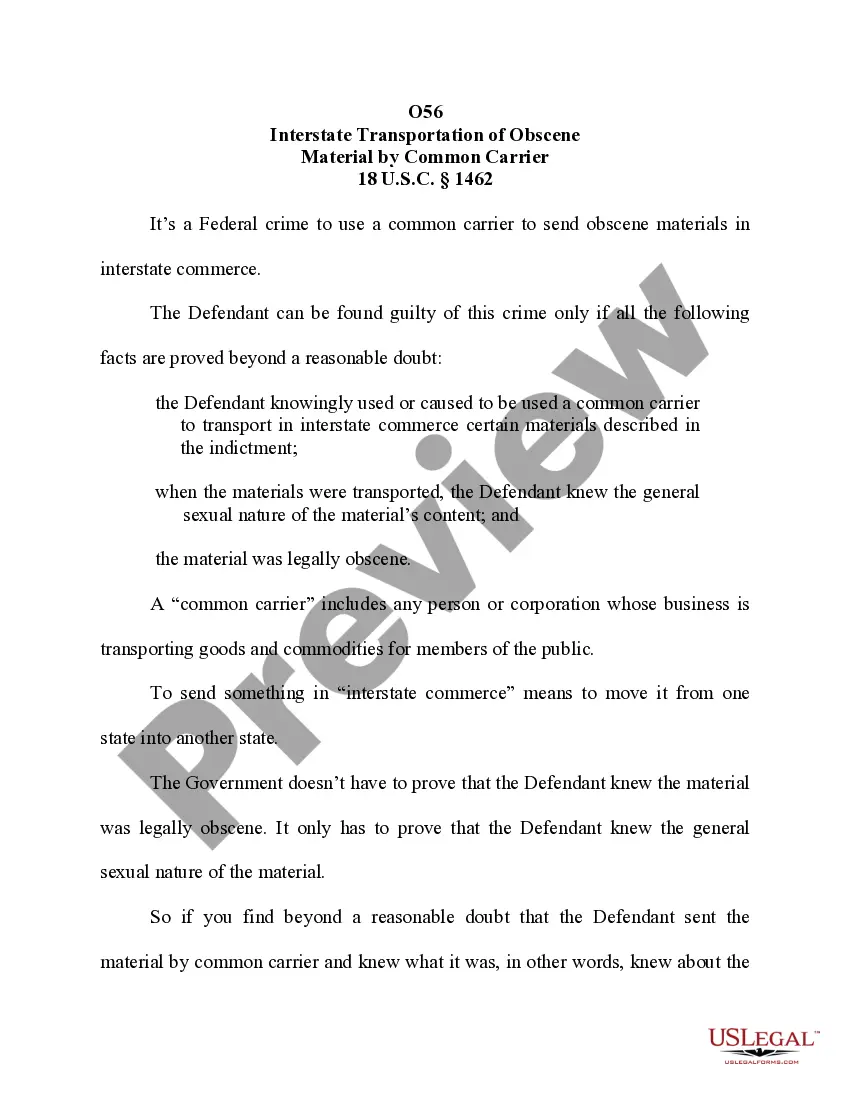
Federal law prohibits the possession with intent to sell or distribute obscenity, to send, ship, or receive obscenity, to import obscenity, and to transport obscenity across state borders for purposes of distribution.