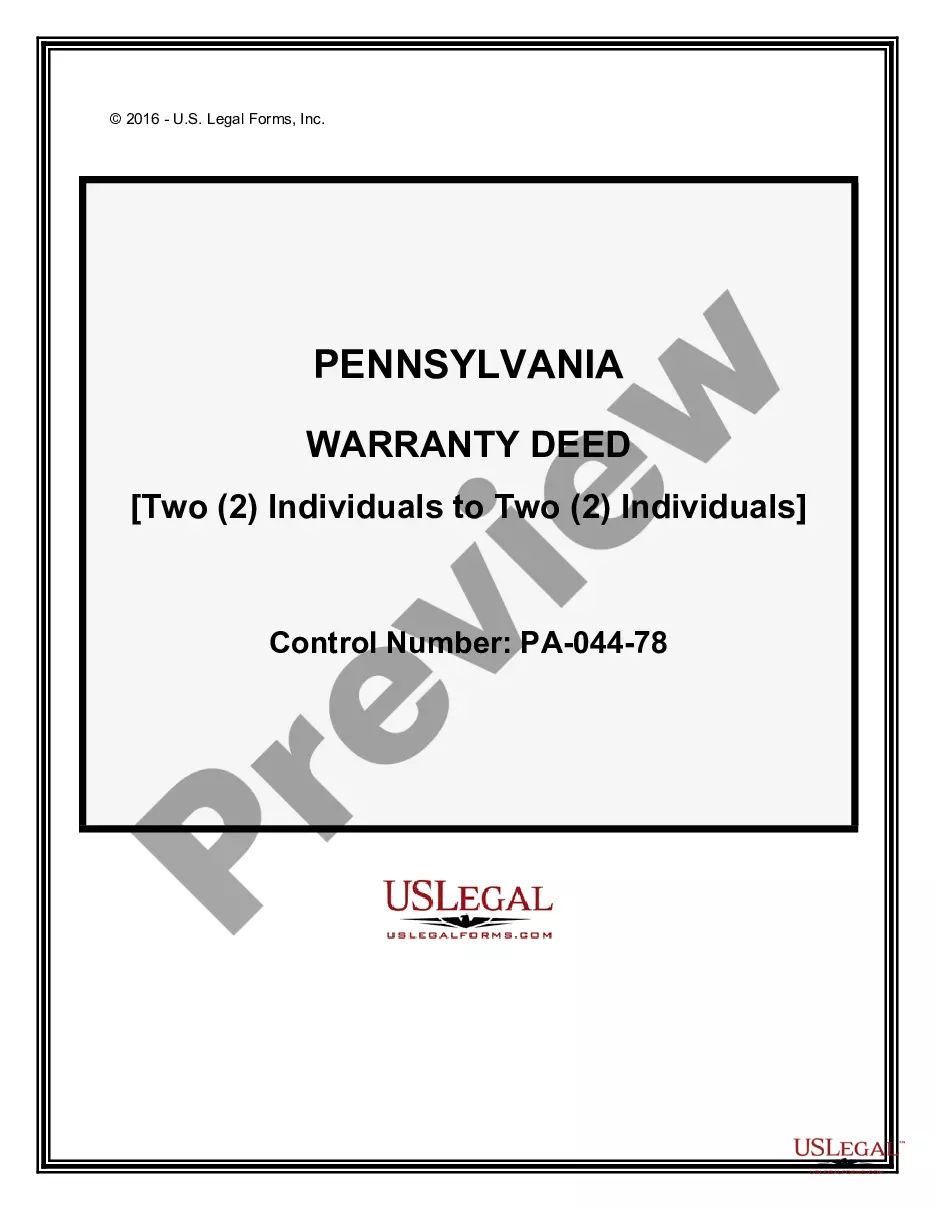
Pennsylvania Warranty Deed from Two Individuals to Two Individuals.
Overview of this form
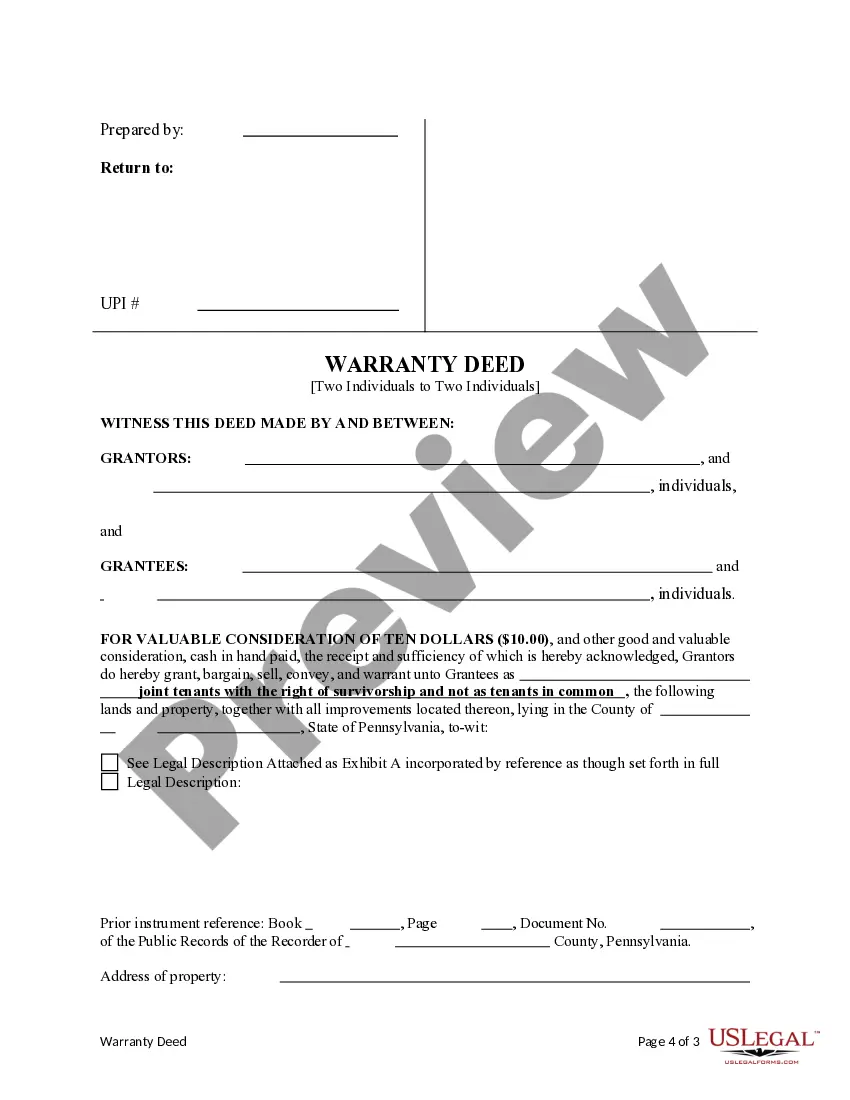
This Warranty Deed from Two Individuals to Two Individuals is a legal document used to transfer ownership of property between two grantors and two grantees. This form is designed to provide a warranty of title, meaning the grantors guarantee that they have the legal right to convey the property and that it is free from any claims. This form is particularly important in real estate transactions, distinguishing it from other types of deeds that may not offer such warranties.
Key components of this form
- Grantors: The individuals transferring the property.
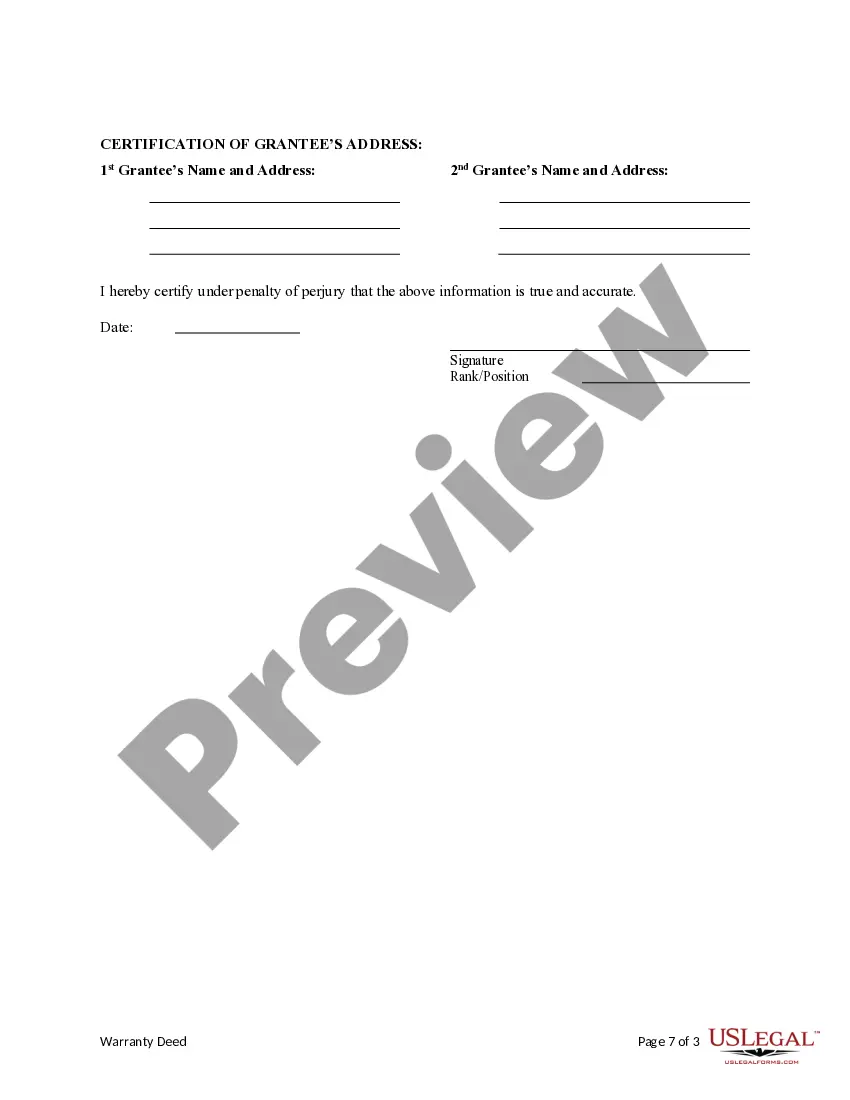
- Grantees: The individuals receiving the property.
- Property description: Detailed information about the property being transferred.
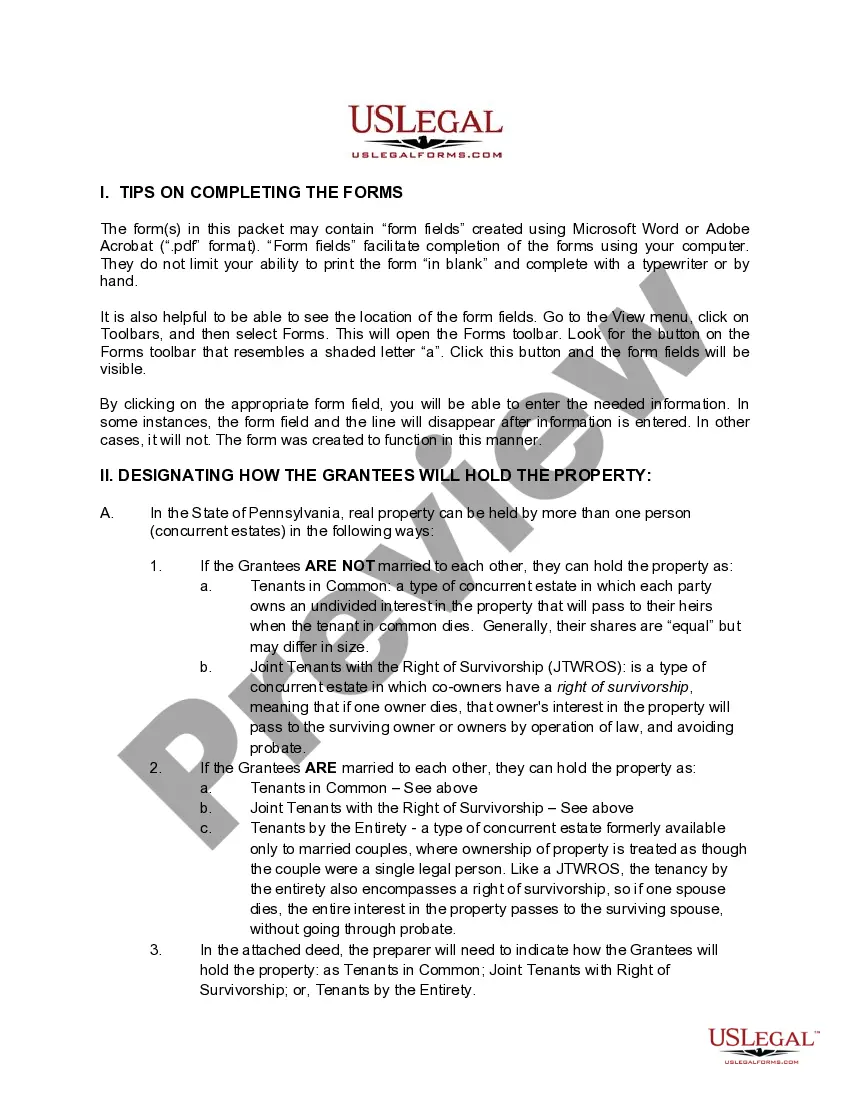
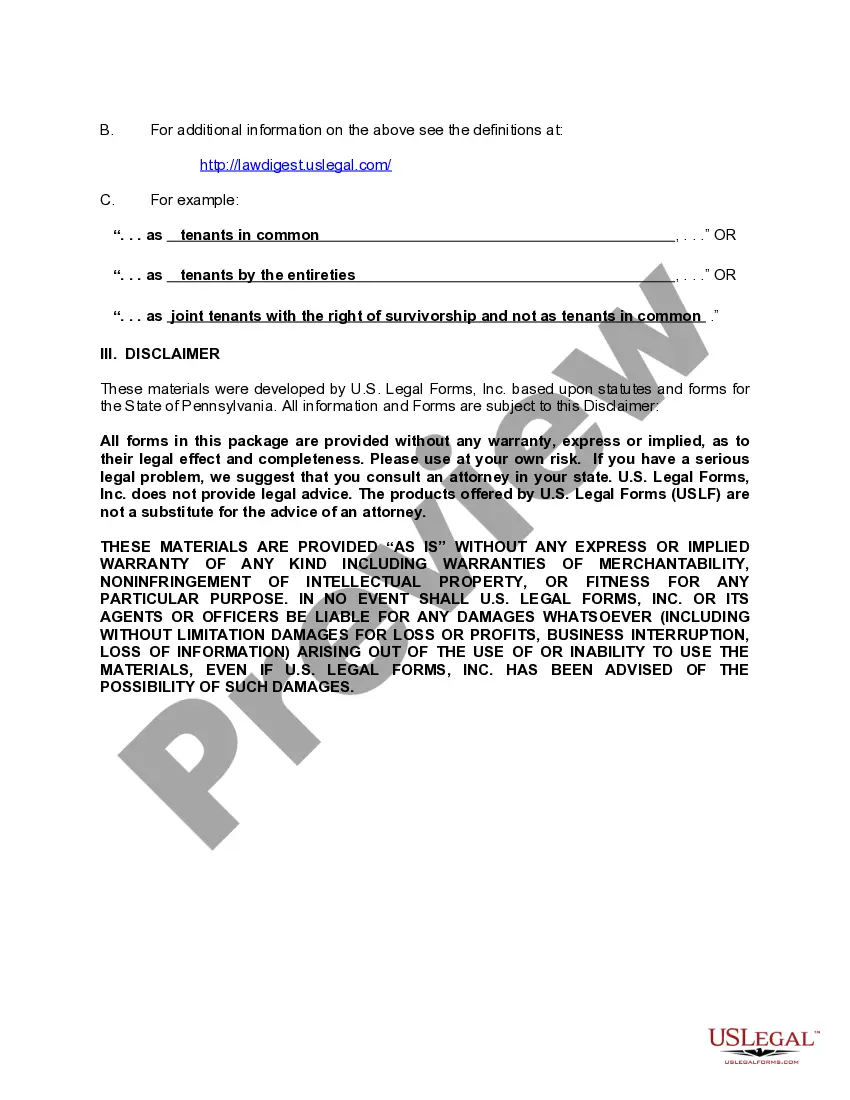
- Type of ownership: Specification of how the grantees will hold the property (e.g., tenants in common or joint tenants with right of survivorship).
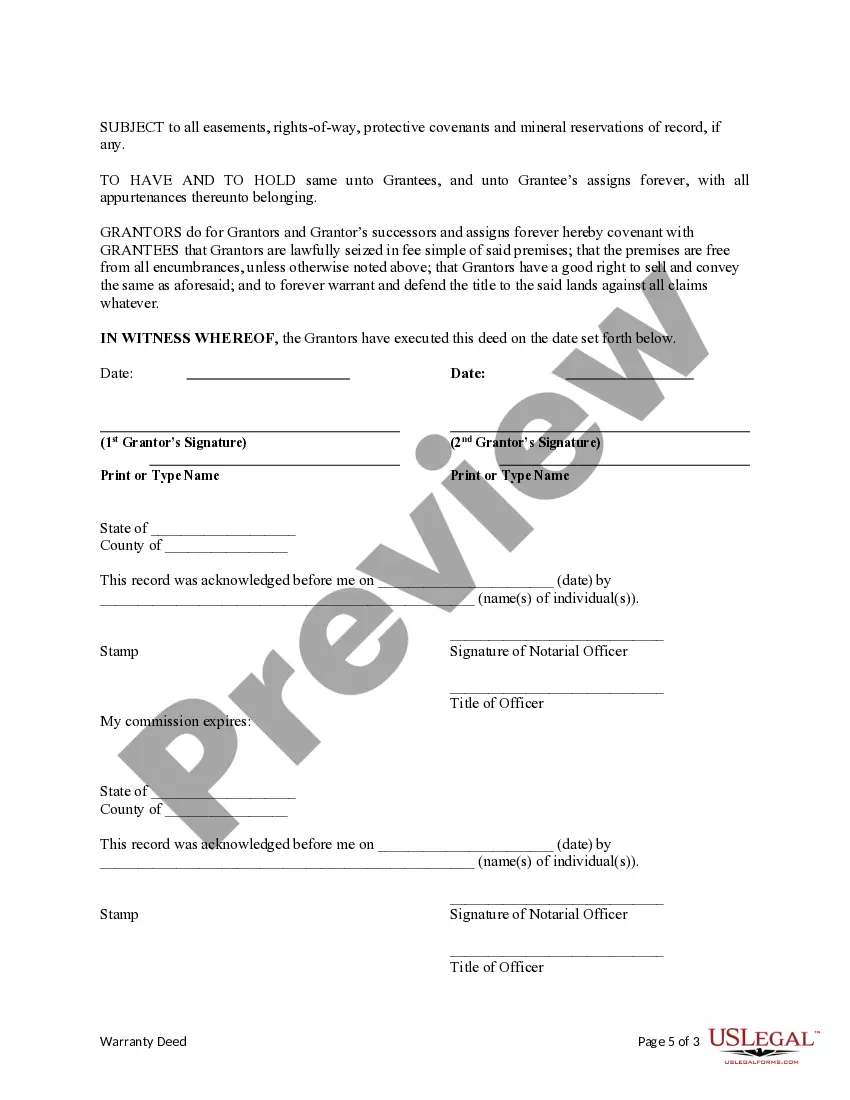
- Signatures: Required signatures from all grantors to validate the deed.




When to use this document
This form should be used when two individuals wish to transfer property ownership to another two individuals, especially when a warranty of title is necessary. It is applicable in scenarios such as family property transfers, sales between friends, or any situation where a formal declaration of ownership is required to protect the interests of the grantees.
Who should use this form
This warranty deed is appropriate for:
- Individuals engaged in a property transfer involving two grantors and two grantees.
- Parties looking for a legally binding document to secure their interests in a property transaction.
- Property owners who want to ensure the grantees receive full title to the property.
How to prepare this document
- Identify the parties: Specify the full names of the grantors and grantees.
- Describe the property: Provide a detailed description of the property being transferred.
- Choose the ownership type: Indicate how the grantees will hold the property (tenants in common, joint tenants with right of survivorship, or tenants by the entirety).
- Review state-specific requirements: Ensure the deed meets any additional requirements dictated by Pennsylvania law.
- Sign the document: All grantors must sign the deed to complete the transfer.
Does this form need to be notarized?
This form must be notarized to be legally valid. US Legal Forms provides secure online notarization powered by Notarize, allowing you to complete the process through a verified video call.
Get your form ready online
Our built-in tools help you complete, sign, share, and store your documents in one place.
Make edits, fill in missing information, and update formatting in US Legal Forms—just like you would in MS Word.
Download a copy, print it, send it by email, or mail it via USPS—whatever works best for your next step.
Sign and collect signatures with our SignNow integration. Send to multiple recipients, set reminders, and more. Go Premium to unlock E-Sign.
If this form requires notarization, complete it online through a secure video call—no need to meet a notary in person or wait for an appointment.
We protect your documents and personal data by following strict security and privacy standards.

Make edits, fill in missing information, and update formatting in US Legal Forms—just like you would in MS Word.

Download a copy, print it, send it by email, or mail it via USPS—whatever works best for your next step.

Sign and collect signatures with our SignNow integration. Send to multiple recipients, set reminders, and more. Go Premium to unlock E-Sign.

If this form requires notarization, complete it online through a secure video call—no need to meet a notary in person or wait for an appointment.

We protect your documents and personal data by following strict security and privacy standards.
Avoid these common issues
- Failing to provide an accurate property description, which can lead to disputes.
- Not specifying the type of ownership, causing confusion about rights after the transfer.
- Neglecting to have all grantors sign the document, which can render the deed invalid.
- Forgetting to check local legal requirements that might affect the deed's validity.
Benefits of completing this form online
- Convenience: Easily downloadable from US Legal Forms at any time.
- Editability: Complete the form electronically, eliminating handwritten errors.
- Compliance: Ensure the form meets state-specific legal standards as provided by licensed attorneys.
- Quick access: Get immediate access to necessary legal documents without delays.
Looking for another form?
Form popularity
FAQ
Failure to record a deed effectively makes it impossible for the public to know about the transfer of a property. That means the legal owner of the property appears to be someone other than the buyer, a situation that can generate serious ramifications.
In most states you can file a disclaimer or deed of disclaimer that says specifically you were placed in title without your knowledge or consent and disclaim the deed.
Yes you can. This is called a transfer of equity but you will need the permission of your lender. If you are not married or in a civil partnership you may wish to consider creating a deed of trust and a living together agreement which we can explain to you.
Fill in the deed form. Print it out. Have the grantor(s) and grantee(s) sign and get the signature(s) notarized. Fill out a Statement of Value form, if necessary. Get the Uniform Parcel Number (UPI) on the deed certified, if required by your county.
All deeds are to be signed in front of a Notary Public (just the Grantor) and the Grantee is to also sign the Certificate of Residency. Afterwards the deed may be filed with the Recorder's Office in the jurisdiction of the property.
To add a name to a house deed in Pennsylvania, a new deed is prepared. The owner can prepare his own deed or contact an attorney or document service to provide one. Using an attorney is the best route because the attorney ensures that the deed is prepared per the requirements of the state.
Special warranties allow the transfer of property title between seller and buyer. The purchase of title insurance can mitigate the risk of prior claims to the special warranty deed.
To transfer property in Pennsylvania, you'll need to prepare and execute a deed and record it in the county where the property is located. If the transfer was in exchange for money, you'll have to pay transfer tax.
A: A "special warranty" deed is the type of deed used most frequently in Pennsylvania real estate sales. It essentially represents that the seller did nothing to weaken the status of title from the time that he/she received it.A "quit-claim" deed is a deed that contains no warranties at all.