Florida Amendment of Residential Lease
About this form
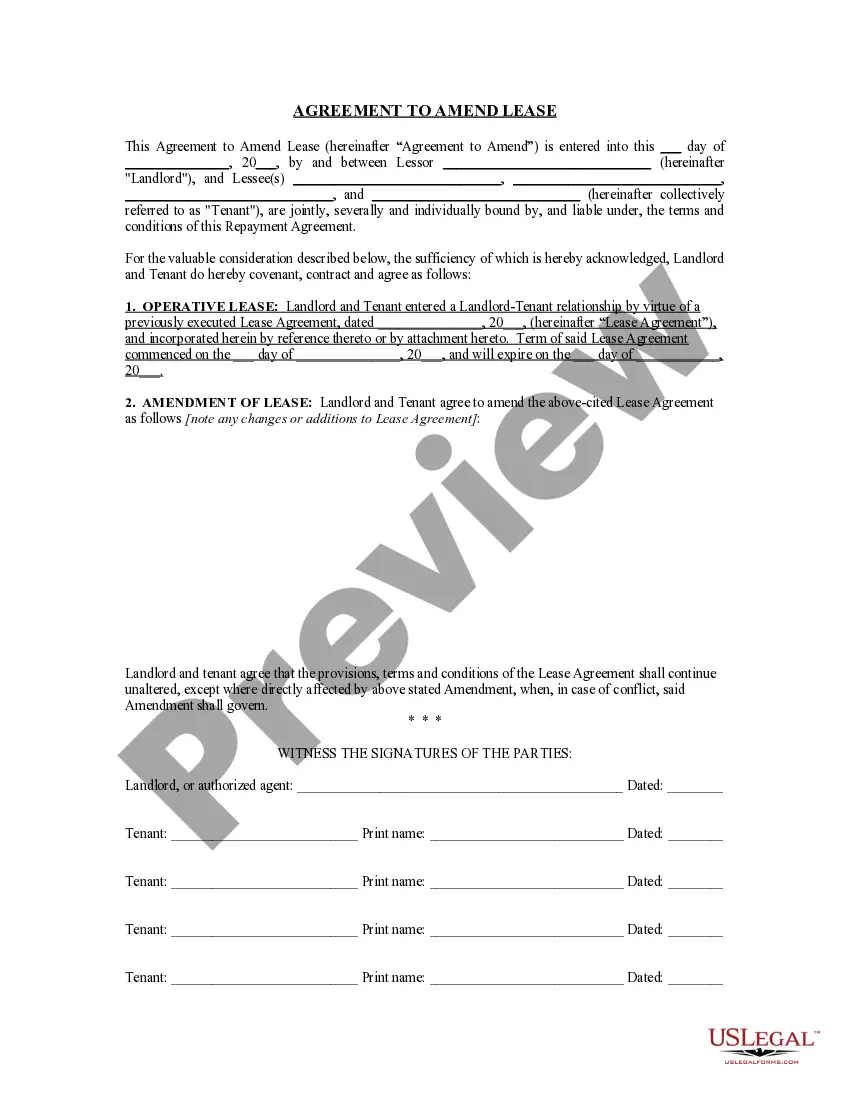
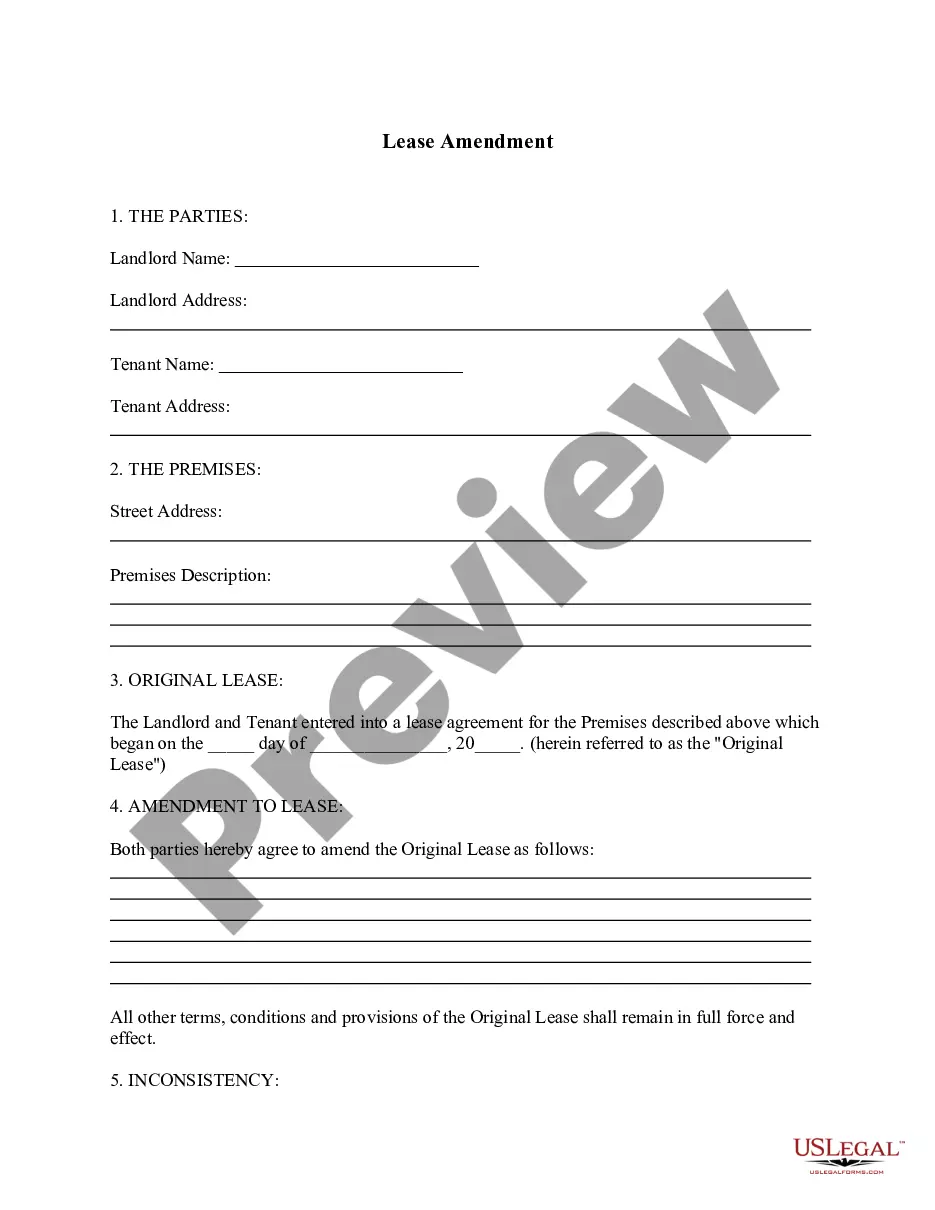
The Amendment of Residential Lease is a legal document used to modify the terms of an existing lease agreement between a landlord and tenant. This form allows both parties to incorporate changes, ensuring clarity and compliance with applicable state laws. Unlike standard lease agreements, this amendment specifically addresses modifications, making it easier to resolve any potential disagreements over changes.
What’s included in this form
- Identification of the landlord and tenant parties involved in the lease.
- Reference to the original lease agreement, including its start and end dates.
- Specific amendments being made to the original lease terms.
- Signature lines for both the landlord and tenants to confirm their agreement to the amendments.
- Date of the amendment to track changes over time.
When to use this form
This form should be used when the landlord and tenant mutually agree to change specific terms of their residential lease. Common situations include adjusting the rent amount, extending the lease term, or adding new tenants to the agreement. By using this amendment form, both parties can document their agreement and prevent future disputes regarding the changes made.
Intended users of this form
This amendment form is intended for:
- Landlords who wish to modify existing lease terms.
- Tenants looking to propose changes to their lease agreement.
- Property managers handling lease agreements on behalf of landlords.
- Anyone involved in a lease agreement who needs to formalize changes legally.
How to prepare this document
- Identify the parties involved: including the landlord and all tenants.
- Reference the original lease agreement by providing its date and terms.
- Clearly state the amendments being made, ensuring all parties agree.
- Enter the date of the amendment to establish when changes take effect.
- Collect signatures from the landlord and all tenants to validate the amendment.
Is notarization required?
This form does not typically require notarization unless specified by local law. However, notarization can add an extra layer of security and legality to the agreement.
Get your form ready online
Our built-in tools help you complete, sign, share, and store your documents in one place.
Make edits, fill in missing information, and update formatting in US Legal Forms—just like you would in MS Word.
Download a copy, print it, send it by email, or mail it via USPS—whatever works best for your next step.
Sign and collect signatures with our SignNow integration. Send to multiple recipients, set reminders, and more. Go Premium to unlock E-Sign.
If this form requires notarization, complete it online through a secure video call—no need to meet a notary in person or wait for an appointment.
We protect your documents and personal data by following strict security and privacy standards.

Make edits, fill in missing information, and update formatting in US Legal Forms—just like you would in MS Word.

Download a copy, print it, send it by email, or mail it via USPS—whatever works best for your next step.

Sign and collect signatures with our SignNow integration. Send to multiple recipients, set reminders, and more. Go Premium to unlock E-Sign.

If this form requires notarization, complete it online through a secure video call—no need to meet a notary in person or wait for an appointment.

We protect your documents and personal data by following strict security and privacy standards.
Avoid these common issues
- Failing to identify all tenants involved in the lease.
- Not referencing the original lease agreement correctly.
- Leaving out signatures, which can invalidate the amendment.
- Not including a date for the amendment, creating uncertainty.
Advantages of online completion
- Convenience of downloading and printing the form from anywhere.
- Easy customization to fit specific needs and changes.
- Access to reliable legal templates drafted by licensed attorneys.
- Time-efficient process, saving trips to legal offices.
Looking for another form?
Form popularity
FAQ
When you sign a lease in Florida, you gain certain rights that ensure your landlord adheres to the lease terms. You have the right to live in a safe and maintained space, and your landlord must keep common areas and facilities in good condition. Familiarizing yourself with the Florida Amendment of Residential Lease can help you understand these rights better and leverage them when necessary.
As a tenant in Florida, you have several legal rights that protect your living conditions. These include the right to habitable premises, the right to privacy, and the right to receive proper notice before any eviction. It's essential to know these rights, especially when dealing with lease agreements, so you can effectively navigate issues related to the Florida Amendment of Residential Lease.
Section 83.57 of the Florida Residential Landlord Tenant Act addresses the process of lease termination and the notice requirements landlords must follow. It mandates that landlords provide a written notice to tenants when intending to terminate a residential lease. Understanding this section is crucial for both tenants and landlords as the Florida Amendment of Residential Lease emphasizes clear communication during lease transitions.
In Florida, landlords cannot retaliate against tenants for exercising their legal rights, such as requesting repairs or reporting health and safety issues. Additionally, they cannot evict tenants without following proper legal procedures and must provide the required notice before termination of a lease. This is especially important under the Florida Amendment of Residential Lease, which outlines tenant protections against unlawful eviction.
Yes, you can add someone to your lease after signing in Florida, but it generally requires an amendment to the existing lease agreement. This process ensures that the new party is legally recognized and that all terms are updated. Utilizing resources like the Florida Amendment of Residential Lease can provide a structured way to make this adjustment seamlessly, protecting everyone's interests.
A lease addendum supplements the lease without altering its core terms, whereas a lease amendment modifies the existing terms of the lease itself. This distinction is crucial for landlords and tenants alike, especially in the context of a Florida Amendment of Residential Lease. Knowing when to use each allows for clearer communication and a smoother leasing process.
Yes, you can add an addendum to a contract after signing as long as both parties agree to the new terms. This flexibility is essential for adapting to changes in the leasing situation. For a Florida Amendment of Residential Lease, it’s important to ensure that all parties understand and consent to the new terms, maintaining a clear record of all changes.
A lease amendment changes the terms of an existing lease, while a lease addendum adds provisions to the original agreement without altering the existing terms. The Florida Amendment of Residential Lease is a formal way to revise specifics, such as rent or duration, ensuring both parties remain informed. Understanding these differences can help you effectively manage your lease agreements.
To write a letter adding someone to your lease, start with a formal greeting and state your intent to add the individual. Include their full name and relationship to you, along with any necessary details concerning the lease. Finish with a request for the landlord's approval and space for their signature. Resources available through US Legal Forms can assist you in drafting a clear and effective letter for this purpose.
The difference lies in their purpose and scope. A lease amendment alters the terms of the original lease in a significant way, while an addendum adds supplementary information or conditions without modifying the original agreement. Understanding these distinctions is crucial for properly managing rental agreements. For specific Florida regulations, consult resources like the Florida Amendment of Residential Lease.