Dog Control Ordinance
What is this form?
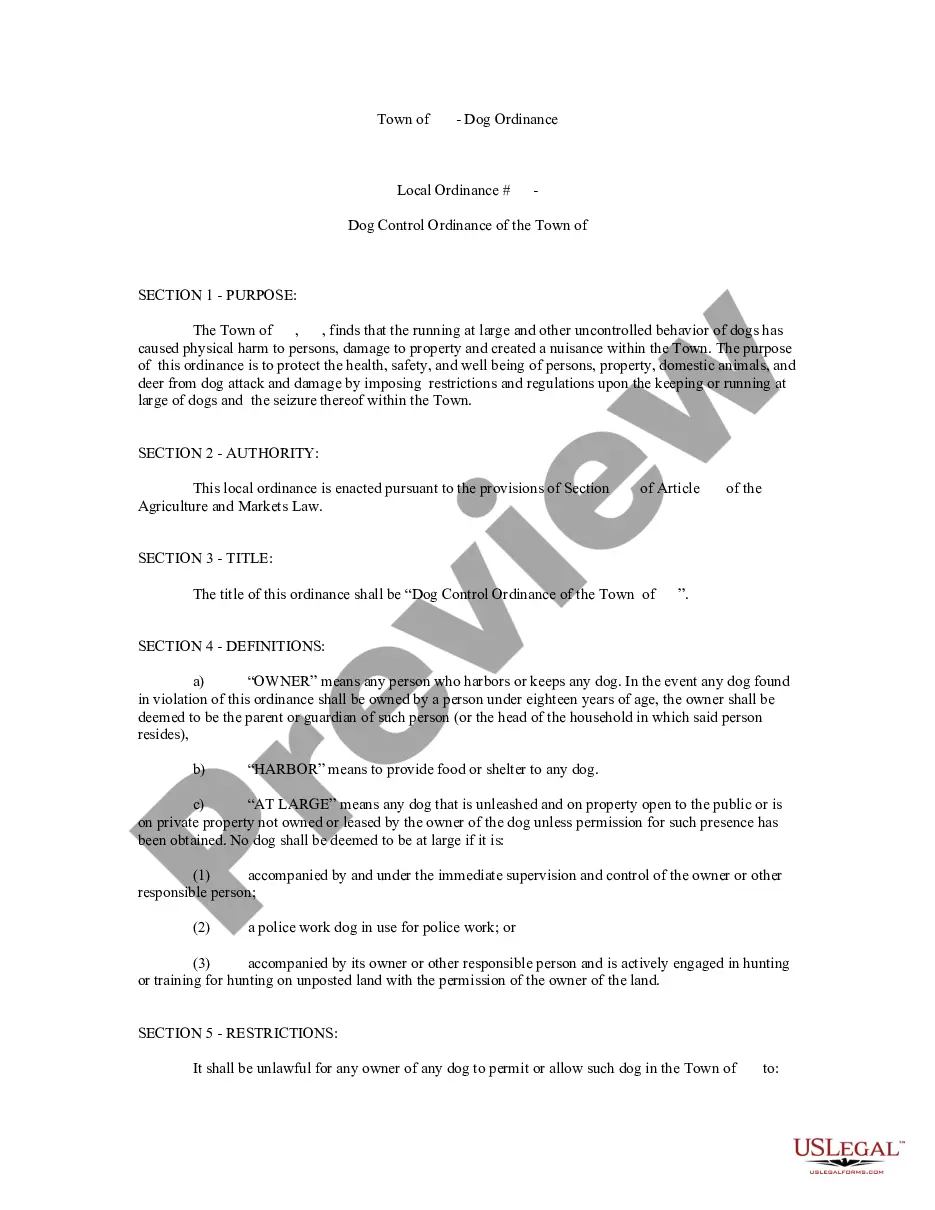
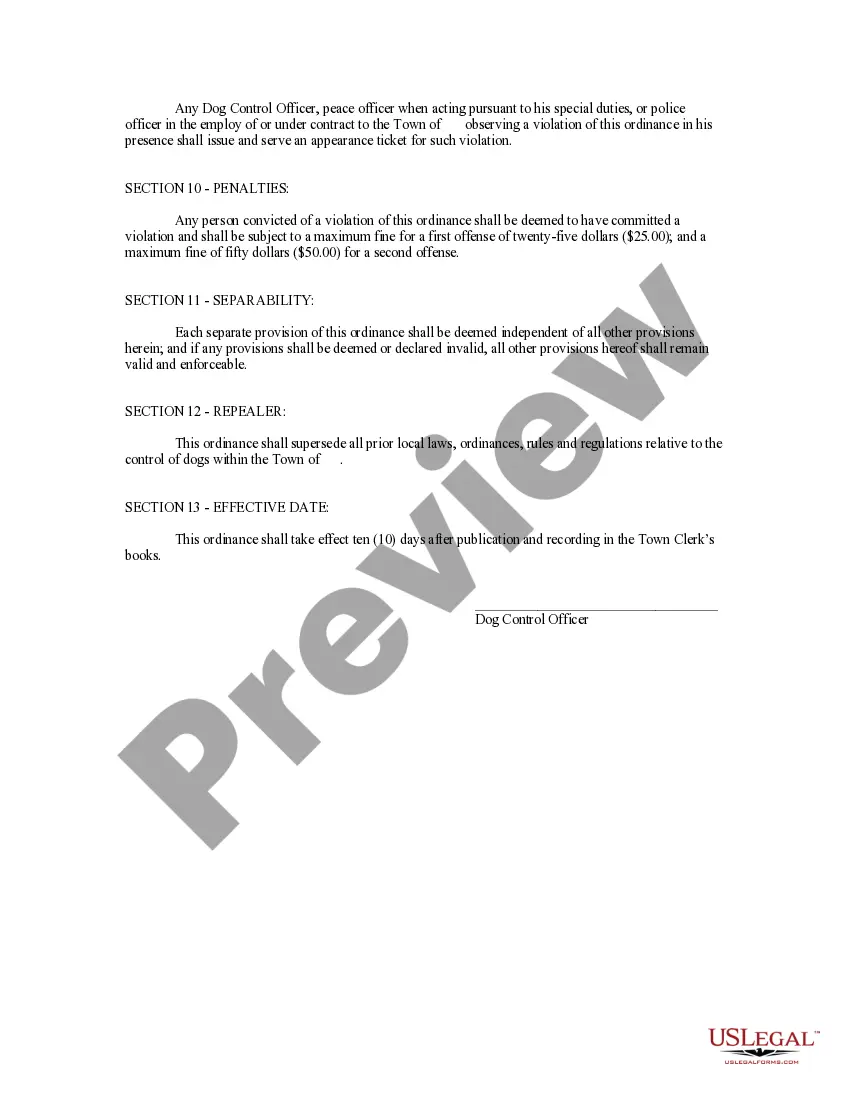
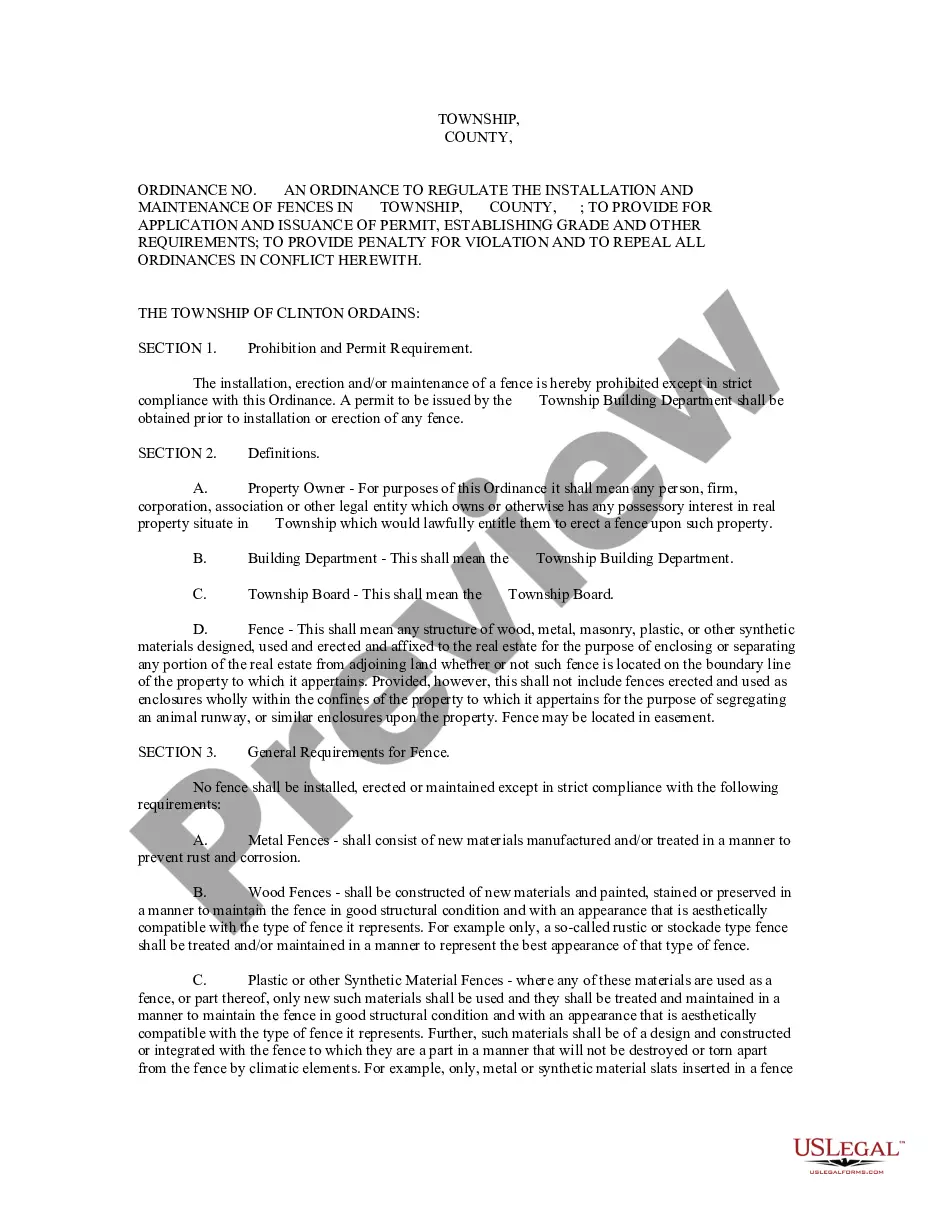
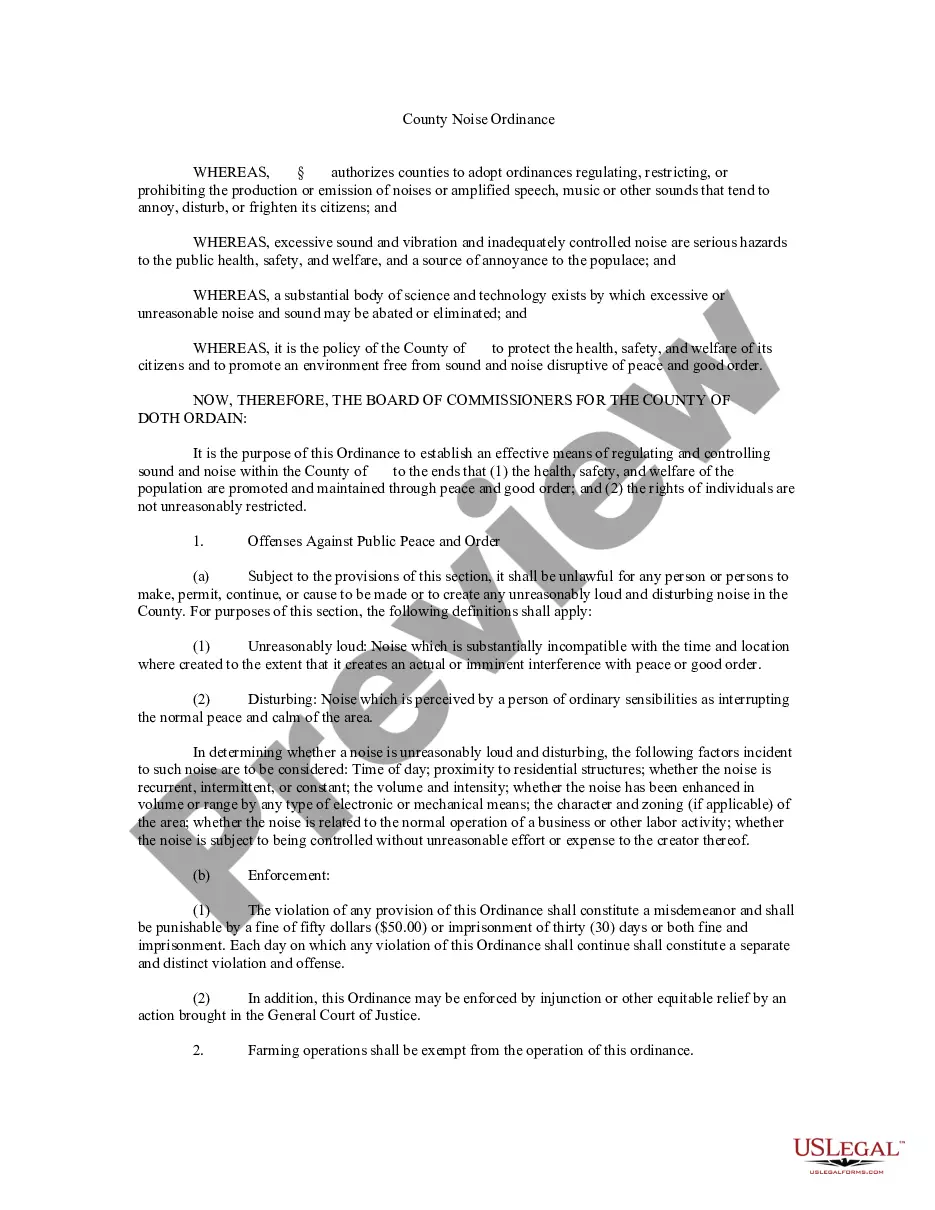
The Dog Control Ordinance is a legal form designed to establish regulations regarding the management and behavior of dogs within a municipality. This ordinance aims to protect public safety, property, and the wellbeing of pets and humans by setting clear definitions and restrictions on dog ownership and behavior. Unlike other forms that may address general animal control, the Dog Control Ordinance specifies the consequences for violations and the enforcement process, making it essential for local governments looking to manage dog-related issues effectively.
Form components explained
- Purpose: Protects public health and safety by regulating dog behavior.
- Authority: Based on specific provisions of the Agriculture and Markets Law.
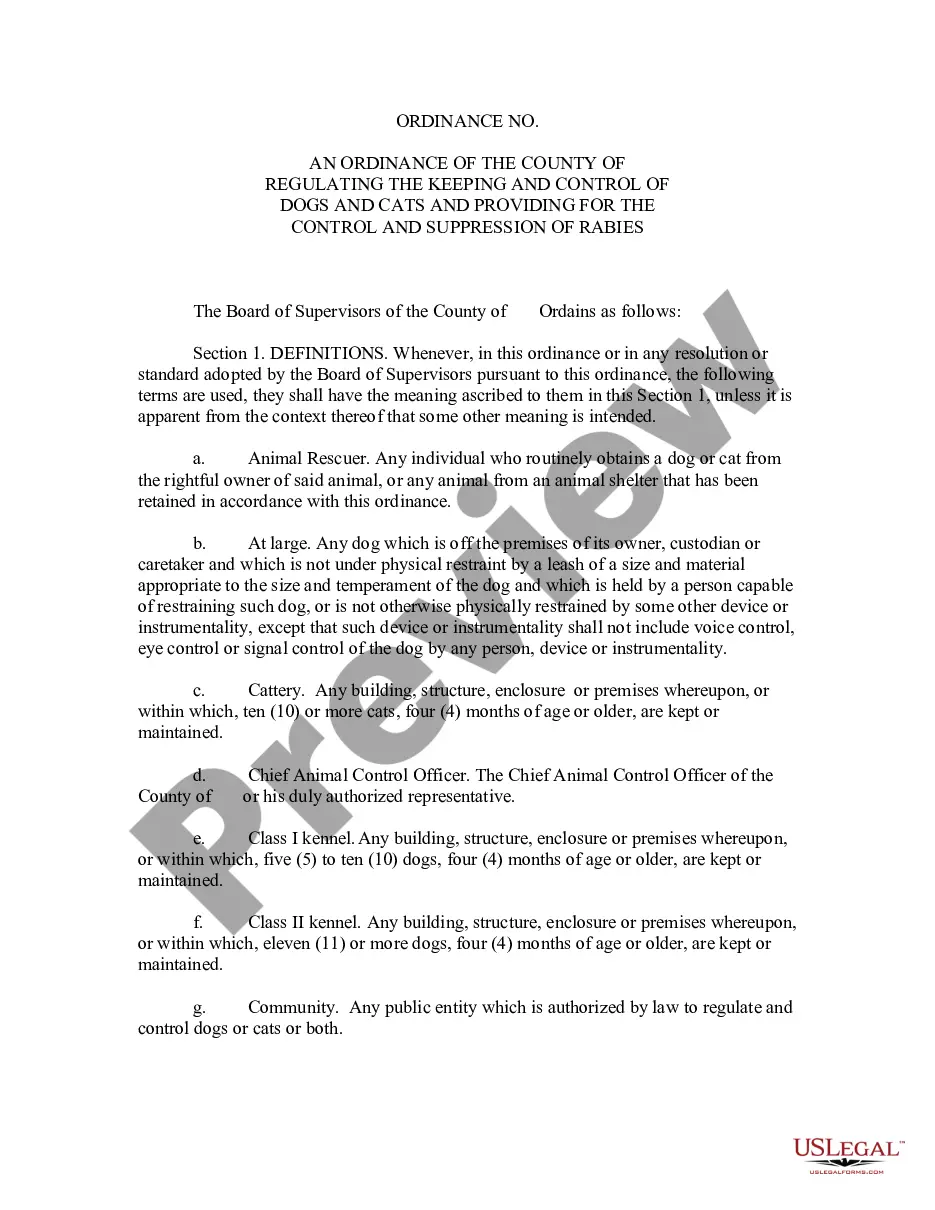
- Definitions: Clarifies terms such as "owner," "harbor," and "at large."
- Restrictions: Details unlawful dog activities, including being at large and causing nuisance.
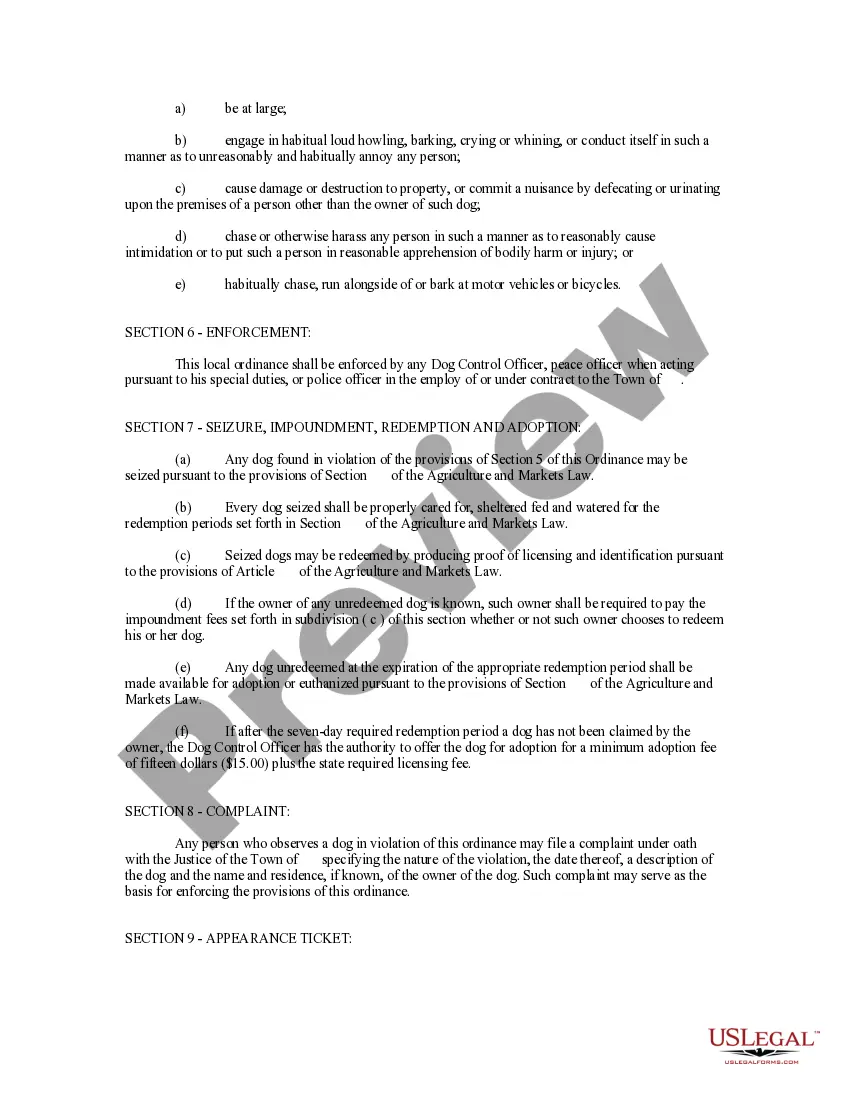
- Enforcement: Outlines who is responsible for enforcing the ordinance.
- Penalties: Specifies fines for violations and processes for dog seizure and adoption.
Common use cases
This ordinance should be utilized by municipalities that wish to implement structured regulations on dog ownership. It can be employed when there are increasing incidents of dogs running at large, causing nuisances, or endangering public safety. Local governments can adopt this ordinance to clarify responsibilities and enforce penalties related to dog behavior issues within their jurisdiction.
Who can use this document
- Local government officials or city councils looking to establish or revise dog control regulations.
- Dog Control Officers and law enforcement personnel tasked with enforcing dog-related laws.
- Community organizations advocating for responsible pet ownership and public safety.
- Civic leaders seeking to address local concerns regarding dog behavior and public nuisance.
Steps to complete this form
- Identify the specific municipality and fill in the town name where the ordinance will be applied.
- Clearly define the authority under which the ordinance is enacted, referencing applicable laws.
- Specify detailed definitions for key terms to avoid ambiguity in enforcement.
- Outline the restrictions on dog behavior and violations along with related penalties.
- Designate the enforcement officers responsible for upholding the ordinance and the procedures for impounding dogs.
Notarization requirements for this form
Notarization is not commonly needed for this form. However, certain documents or local rules may make it necessary. Our notarization service, powered by Notarize, allows you to finalize it securely online anytime, day or night.
Get your form ready online
Our built-in tools help you complete, sign, share, and store your documents in one place.
Make edits, fill in missing information, and update formatting in US Legal Forms—just like you would in MS Word.
Download a copy, print it, send it by email, or mail it via USPS—whatever works best for your next step.
Sign and collect signatures with our SignNow integration. Send to multiple recipients, set reminders, and more. Go Premium to unlock E-Sign.
If this form requires notarization, complete it online through a secure video call—no need to meet a notary in person or wait for an appointment.
We protect your documents and personal data by following strict security and privacy standards.

Make edits, fill in missing information, and update formatting in US Legal Forms—just like you would in MS Word.

Download a copy, print it, send it by email, or mail it via USPS—whatever works best for your next step.

Sign and collect signatures with our SignNow integration. Send to multiple recipients, set reminders, and more. Go Premium to unlock E-Sign.

If this form requires notarization, complete it online through a secure video call—no need to meet a notary in person or wait for an appointment.

We protect your documents and personal data by following strict security and privacy standards.
Typical mistakes to avoid
- Failing to adequately define terms, which can lead to confusion during enforcement.
- Not including enough detail about penalties, making it difficult to enforce compliance.
- Overlooking necessary updates to comply with state law amendments.
Benefits of using this form online
- Convenience of immediate access and time-saving from drafting the ordinance from scratch.
- Ability to customize sections easily to meet local legal requirements.
- Reliable templates created by legal professionals, ensuring compliance with existing laws.
Legal use & context
- The Dog Control Ordinance serves as an essential legal tool for municipalities to regulate dog ownership and behavior.
- Incorporating this ordinance provides a clear framework for managing disputes related to dog nuisances and safety concerns.
- Local adaptations of the ordinance can enhance its enforceability and effectiveness in addressing community-specific issues.
Main things to remember
- The Dog Control Ordinance is crucial for municipalities aiming to maintain community safety regarding dogs.
- Clear definitions and regulations help mitigate misunderstandings between dog owners and local authorities.
- Every municipality should tailor the ordinance to fit their specific environment and state laws for optimal results.
Looking for another form?

Form popularity
FAQ
Ordinances regulating pet ownership usually regulate based on numerical criteria. An ordinance that chooses to limit the number of pets to a certain number (i.e., three dogs per household) will be generally upheld even if it fails to distinguish dogs based on other factors (i.e., size or weight).
Michigan's law says a person has to have "just cause" to kill or intentionally injure an animal but doesn't define what justifies just cause.Yet the owners of dogs involved in vicious attacks on people or other animals are often vilified for not euthanizing their pets.
Although dogs are allowed in all countries without any definitive laws, the number of these dogs are controlled. In American, for example, if you live in a rural area, the amount of dogs you can own is not restricted. However, if you live in a city, there is a general rule of two to three dogs allowed per household.
No. There is no limit on the number of animals that a person can own, provided that the animals are properly cared for and do not pose a nuisance, health or safety risk to other members of the community.
Ordinances regulating pet ownership usually regulate based on numerical criteria. An ordinance that chooses to limit the number of pets to a certain number (i.e., three dogs per household) will be generally upheld even if it fails to distinguish dogs based on other factors (i.e., size or weight).
Generally, most people can comfortably own one or two dogs, although that's often a full-time job! Some folk who maybe have a large family, and live in a vast place with lots of indoor space and land outside may be able to balance four to six .
Shooting a dog in and of itself is not necessarily against the law.The law may regard animals as property, "like a toaster," Halstead said, but veterinarians are not required to put down an animal just because the owner wants it done, though the law recognizes the owners right to make that decision.