Pennsylvania Last Will and Testament for a Widow or Widower with Adult Children

Overview of this form
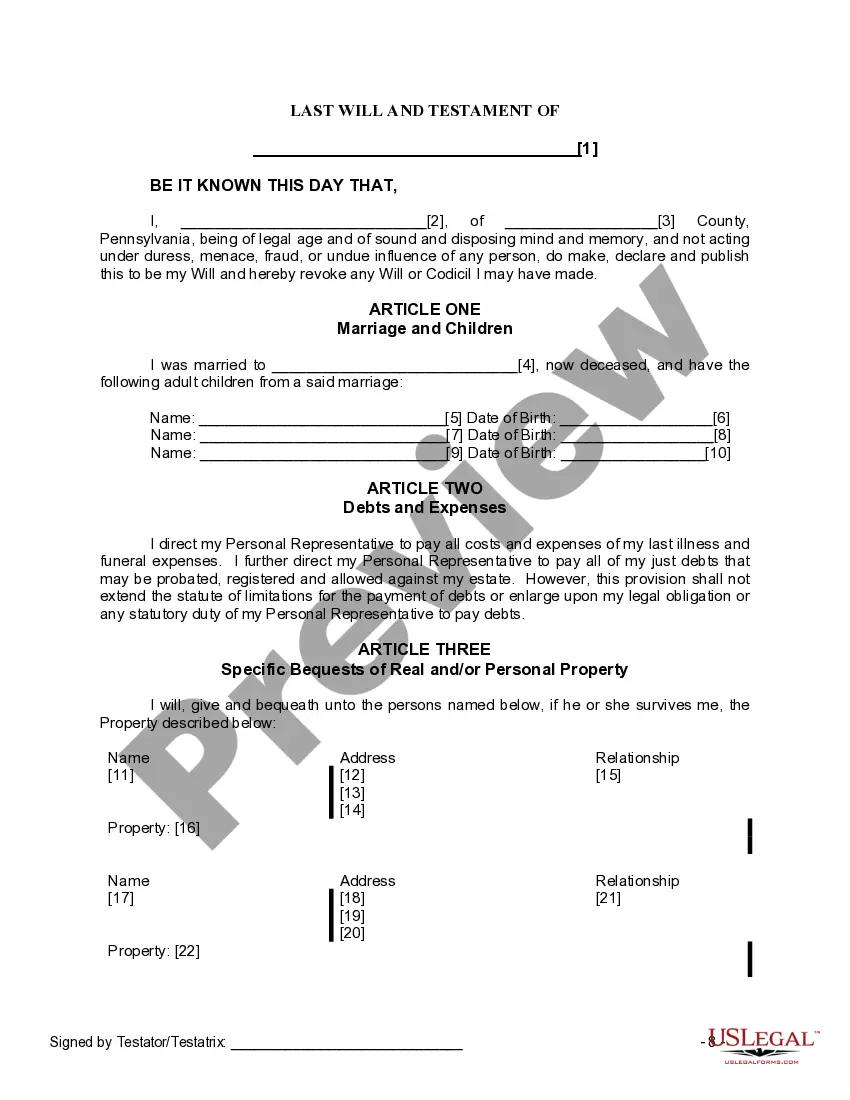
The Last Will and Testament for a Widow or Widower with Adult Children is a legal document that outlines your wishes regarding the distribution of your assets after your death. This specific will is designed for individuals who are widowed and have adult children, allowing them to designate heirs, appoint an executor, and specify how their property should be managed and distributed. This form differs from other wills by focusing on the unique circumstances of widowed individuals, accommodating both their needs and those of their adult children.
Main sections of this form
- Personal information, including the testator's name and county of residence.
- Identification of the deceased spouse and adult children, including their names and dates of birth.
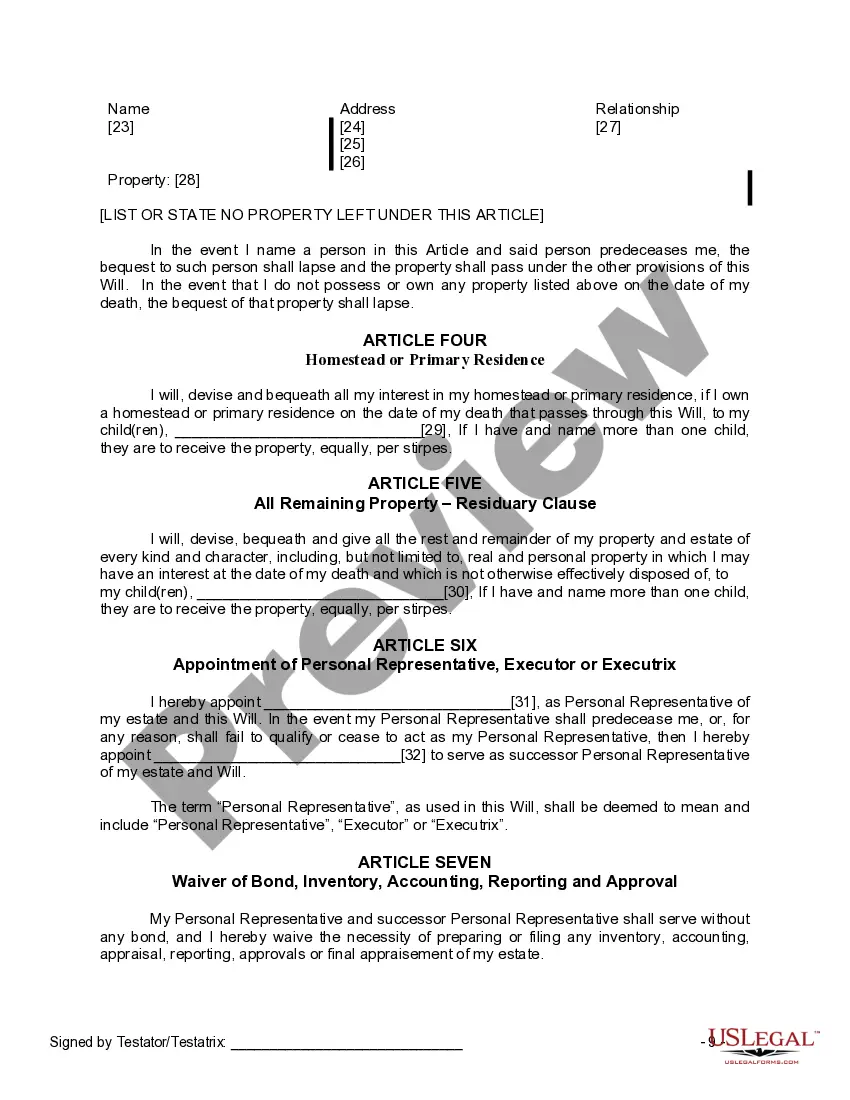
- Specific bequests, which allow you to designate specific property to named beneficiaries.
- Homestead provisions to ensure that your primary residence is addressed in your overall estate plan.
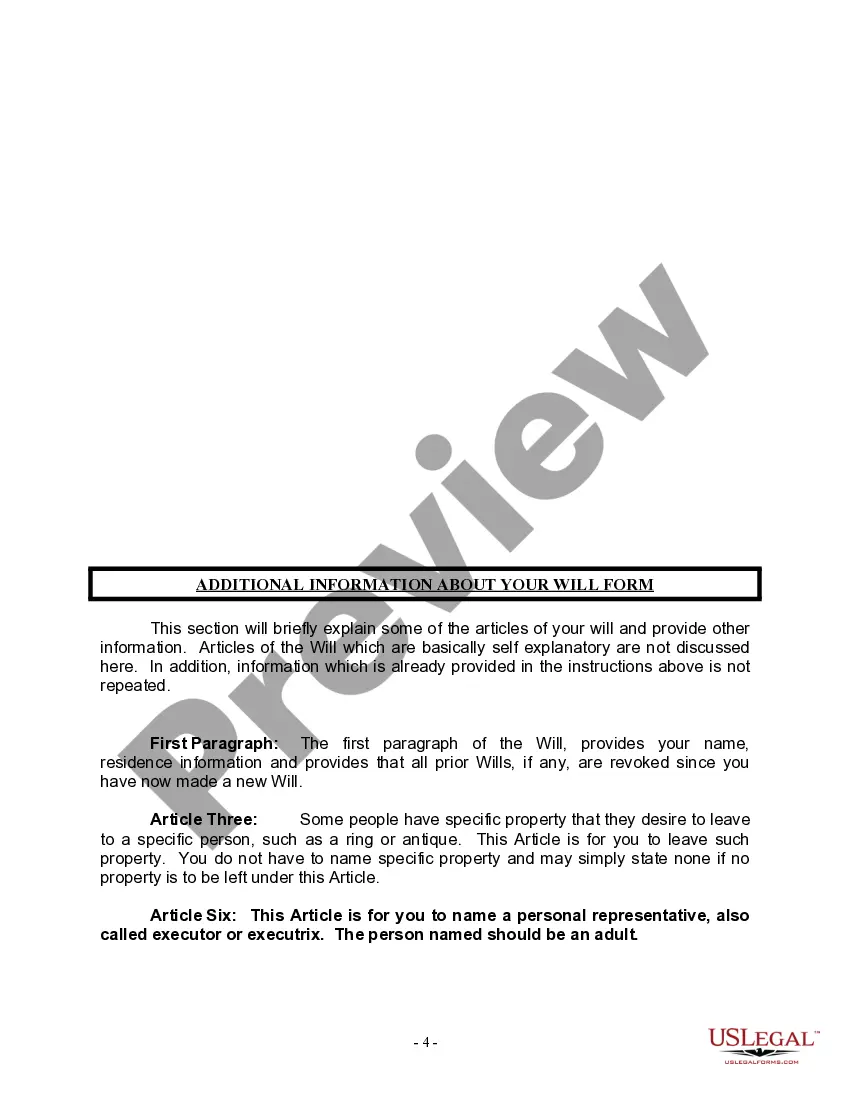
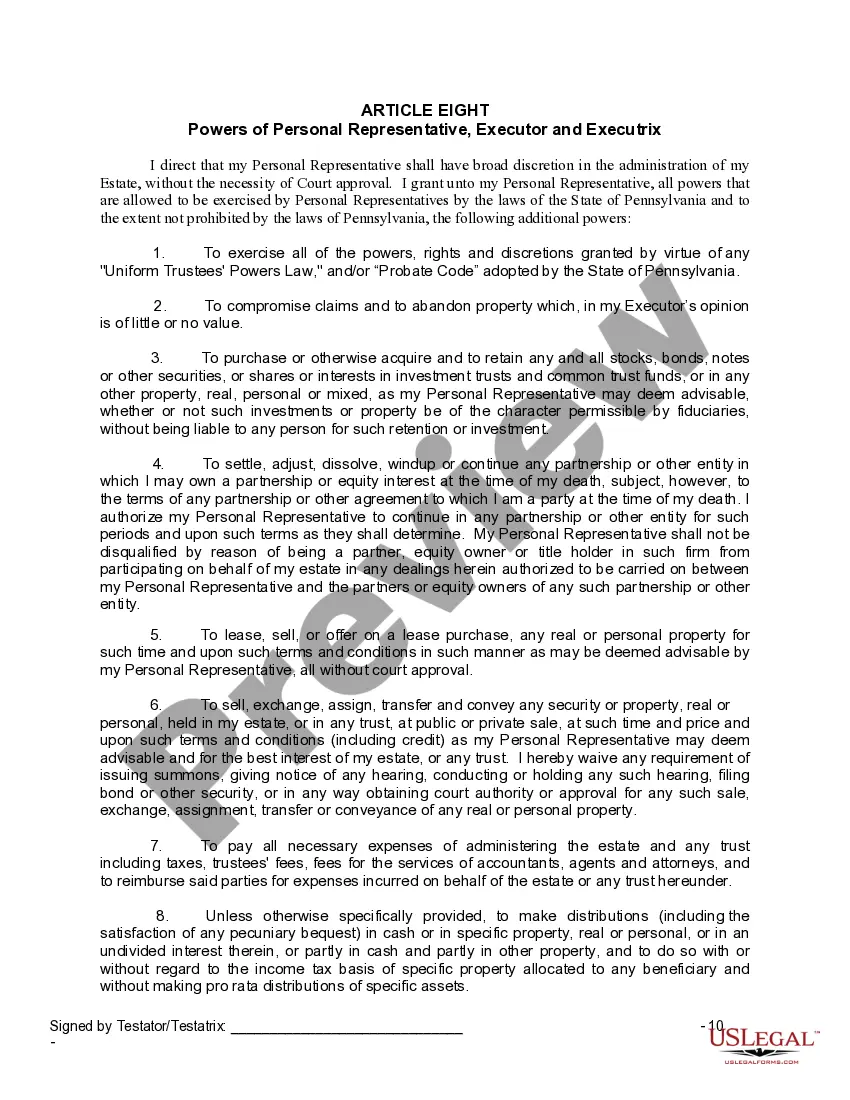
- Appointment of a personal representative (executor) to oversee the execution of your will.
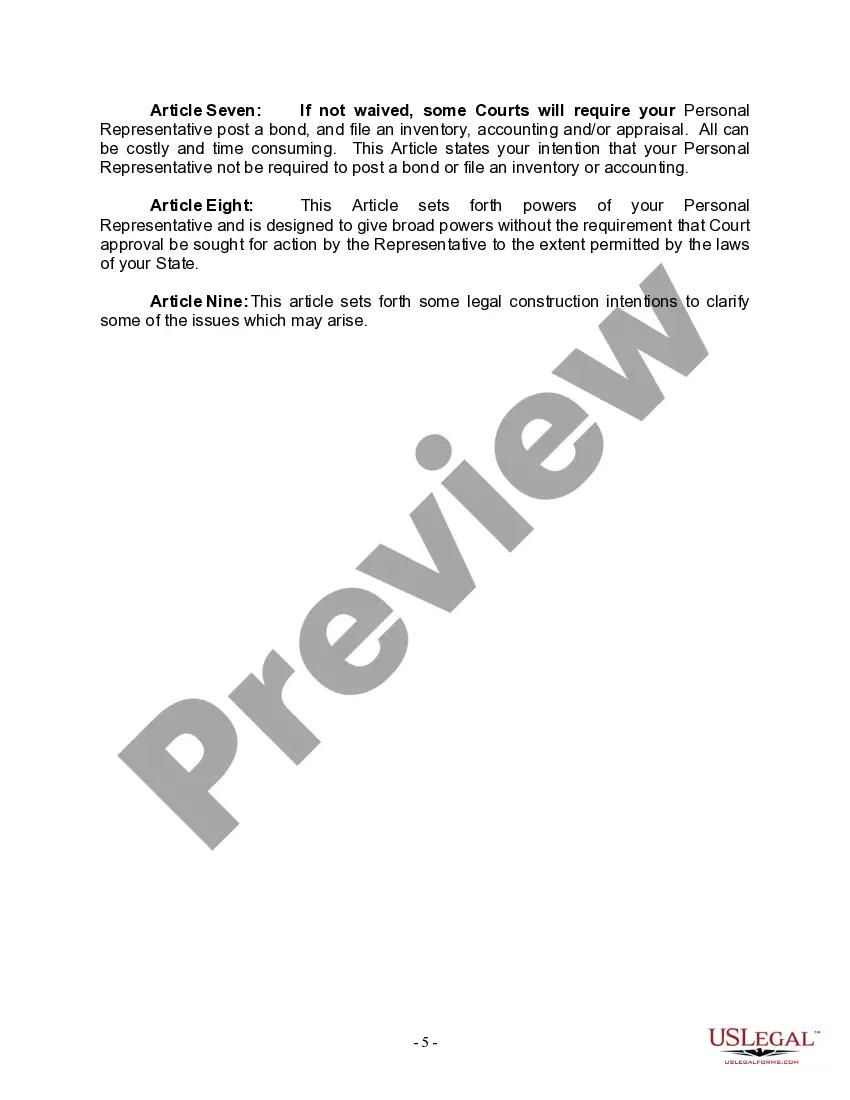
- Provisions for waiving the bond, which can reduce costs associated with estate administration.




When to use this form
This form should be used if you are a widow or widower and wish to create a legally binding document detailing how your assets will be distributed upon your death. If you have adult children and want to ensure they are included in your estate planning, this will helps you clearly specify your intentions and reduce the potential for disputes among heirs.
Who this form is for
- Individuals who are widowed with adult children.
- Those who want to dictate specific bequests to their children or other beneficiaries.
- Anyone looking to ensure the smooth administration of their estate while minimizing family disputes.
- Individuals who wish to appoint a trusted person as the executor of their estate.
Steps to complete this form
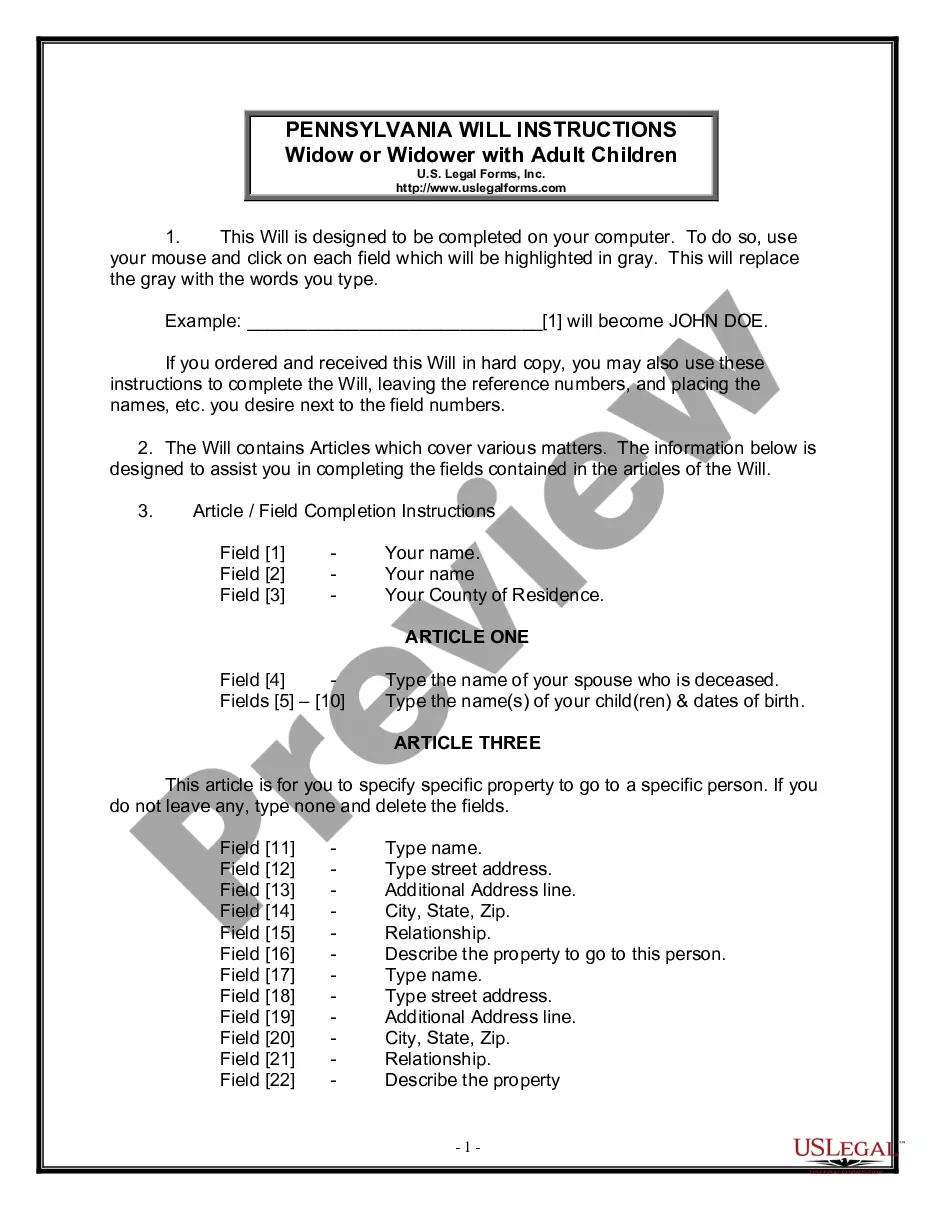
- Enter your full name and county of residence in the designated fields.
- Specify the name of your deceased spouse and provide details about your adult children.
- Fill in any specific property you wish to bequeath to named individuals.
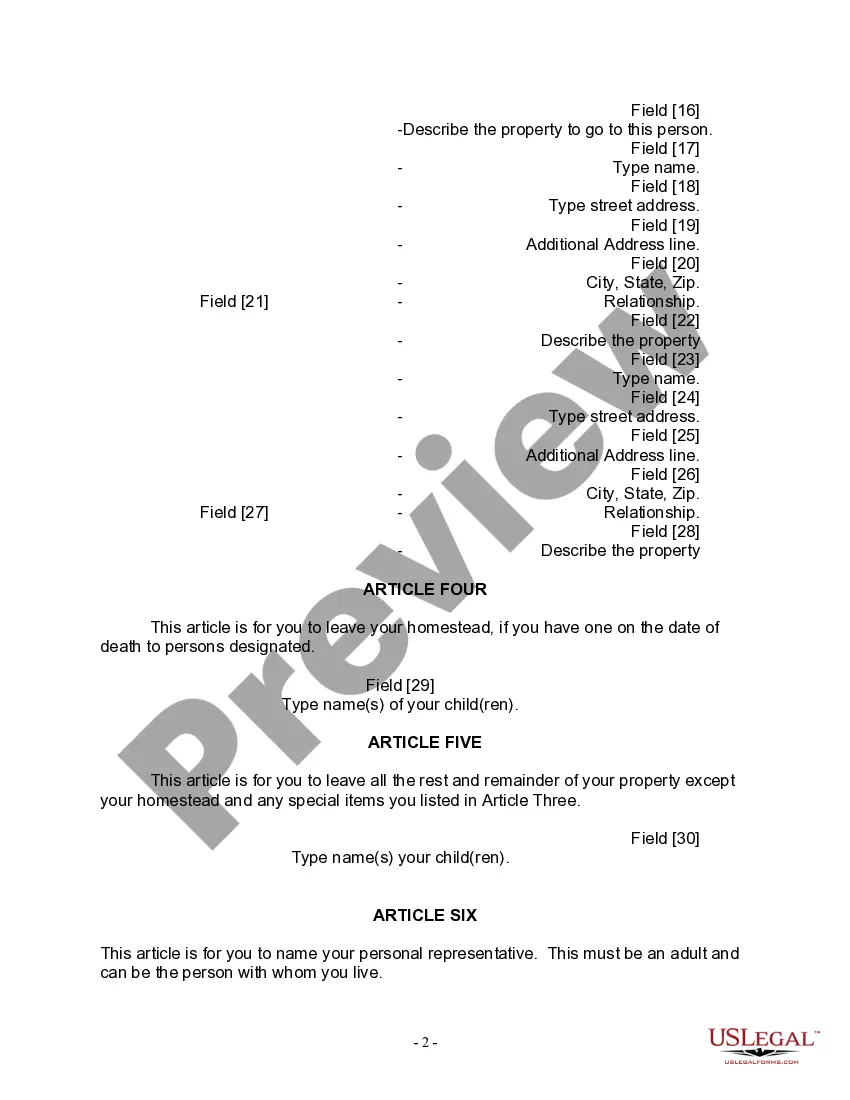
- Designate your homestead and indicate how you want it to be transferred upon your death.
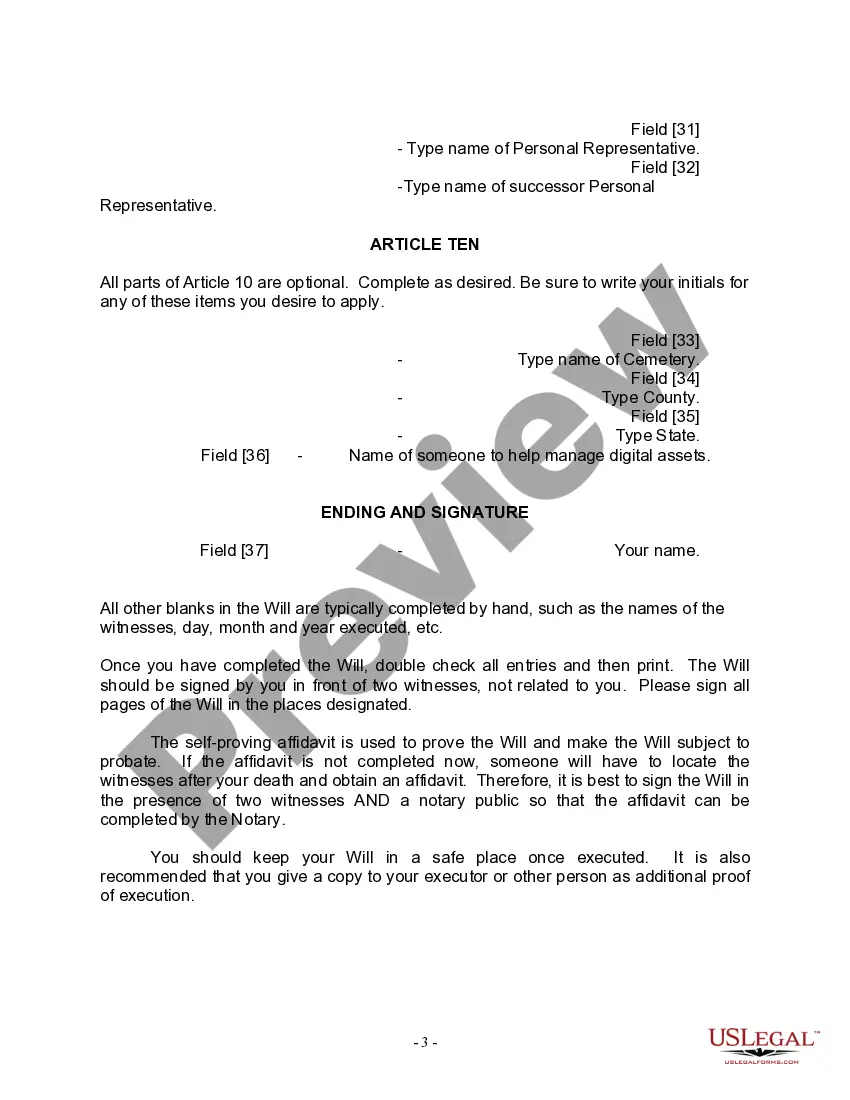
- Appoint a personal representative and provide their name and any successor responsible for handling your estate.
- Ensure to sign the document in the presence of two witnesses, who should not be related to you or beneficiaries in the will.
Does this form need to be notarized?
Yes, this form must be notarized to be legally valid. You will need to sign the will in front of a notary public, ensuring that all requirements for a valid will are met. This also allows for the completion of a self-proving affidavit, which can simplify the probate process.
Get your form ready online
Our built-in tools help you complete, sign, share, and store your documents in one place.
Make edits, fill in missing information, and update formatting in US Legal Forms—just like you would in MS Word.
Download a copy, print it, send it by email, or mail it via USPS—whatever works best for your next step.
Sign and collect signatures with our SignNow integration. Send to multiple recipients, set reminders, and more. Go Premium to unlock E-Sign.
If this form requires notarization, complete it online through a secure video call—no need to meet a notary in person or wait for an appointment.
We protect your documents and personal data by following strict security and privacy standards.

Make edits, fill in missing information, and update formatting in US Legal Forms—just like you would in MS Word.

Download a copy, print it, send it by email, or mail it via USPS—whatever works best for your next step.

Sign and collect signatures with our SignNow integration. Send to multiple recipients, set reminders, and more. Go Premium to unlock E-Sign.

If this form requires notarization, complete it online through a secure video call—no need to meet a notary in person or wait for an appointment.

We protect your documents and personal data by following strict security and privacy standards.
Typical mistakes to avoid
- Not including all required witness signatures, which can invalidate the will.
- Failing to update the will after significant life changes, such as remarriage or additional children.
- Neglecting to clearly outline specific bequests, leading to potential disputes among heirs.
Why complete this form online
- Convenience of completing the form from your own computer.
- Immediate access to download and print the document once completed.
- Easy to edit and customize according to your personal wishes and circumstances.
Legal use & context
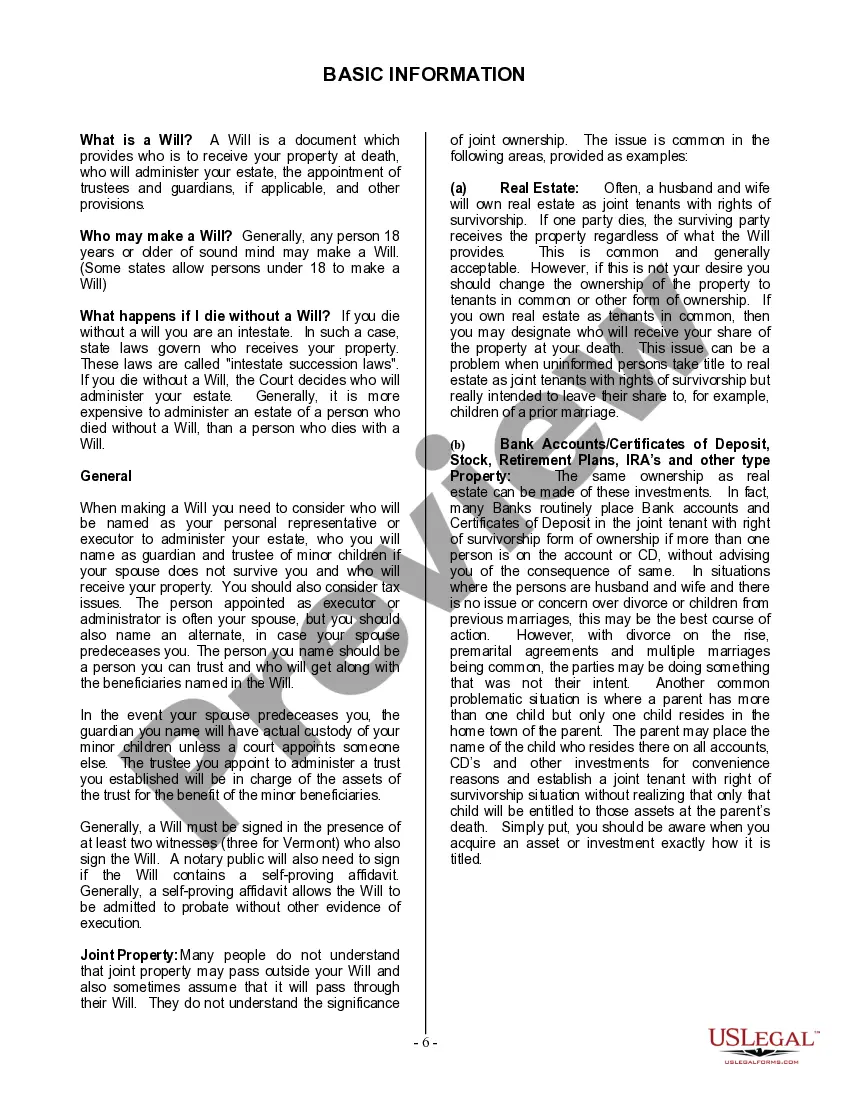
- This will serves as a legally binding document that outlines how your assets will be distributed after your death.
- It is important in avoiding intestacy, where the state determines how your estate is divided if no will exists.
- The will must be signed correctly to be enforceable and should comply with state laws regarding wills.
Quick recap
- The Last Will and Testament is essential for outlining how your assets should be distributed after your death.
- It is specifically designed for widows or widowers with adult children.
- Proper execution and notarization are crucial to ensure the will's validity.
Looking for another form?




Form popularity
FAQ
A widow's will must meet her state's standards in order to be considered legally valid. Typically, this means the will must be in writing and signed. States generally require the signatures of two neutral witnesses who watch the widow sign the document, and a notary may also be required.
No, in Pennsylvania, you do not need to notarize your will to make it legal. However, you must go to a notary to make your will self-proving, see above.
To create a valid will in Pennsylvania, the will creator (testator) must be 18 years of age and must possess a sound mind. Possessing a sound mind means that the testator is mentally competent and fully understands what property they own and who they are conveying their property to.
Yes, under some circumstances. If no consideration is provided for the mutual wills, except the mutual agreement of the spouses, either spouse can change the will prior to the death of the first spouse.After the first spouse dies, however, the surviving spouse cannot change the will.
To create a valid will in Pennsylvania, the will creator (testator) must be 18 years of age and must possess a sound mind. Possessing a sound mind means that the testator is mentally competent and fully understands what property they own and who they are conveying their property to.
It must be in writing. Generally, of course, wills are composed on a computer and printed out. The person who made it must have signed and dated it. A will must be signed and dated by the person who made it. Two adult witnesses must have signed it. Witnesses are crucial.
You can make your own will in Pennsylvania, using Nolo's do-it-yourself will software or online will programs. However, you may want to consult a lawyer in some situations. For example, if you think that your will might be contested or if you want to disinherit your spouse, you should talk with an attorney.
The Will must be filed with the Register of Wills in the county where the decedent lived. A Petition for Probate must be filed with the local probate court (the "Orphan's Court" ) as well.
Identify beneficiaries. One of the main purposes of a last will is distributing your assets to certain people upon your death. Perform an inventory of property. Decide who gets what. Designate a personal representative. Draft the final will.