Mississippi Petition to Find Defendant in Contempt
About this form
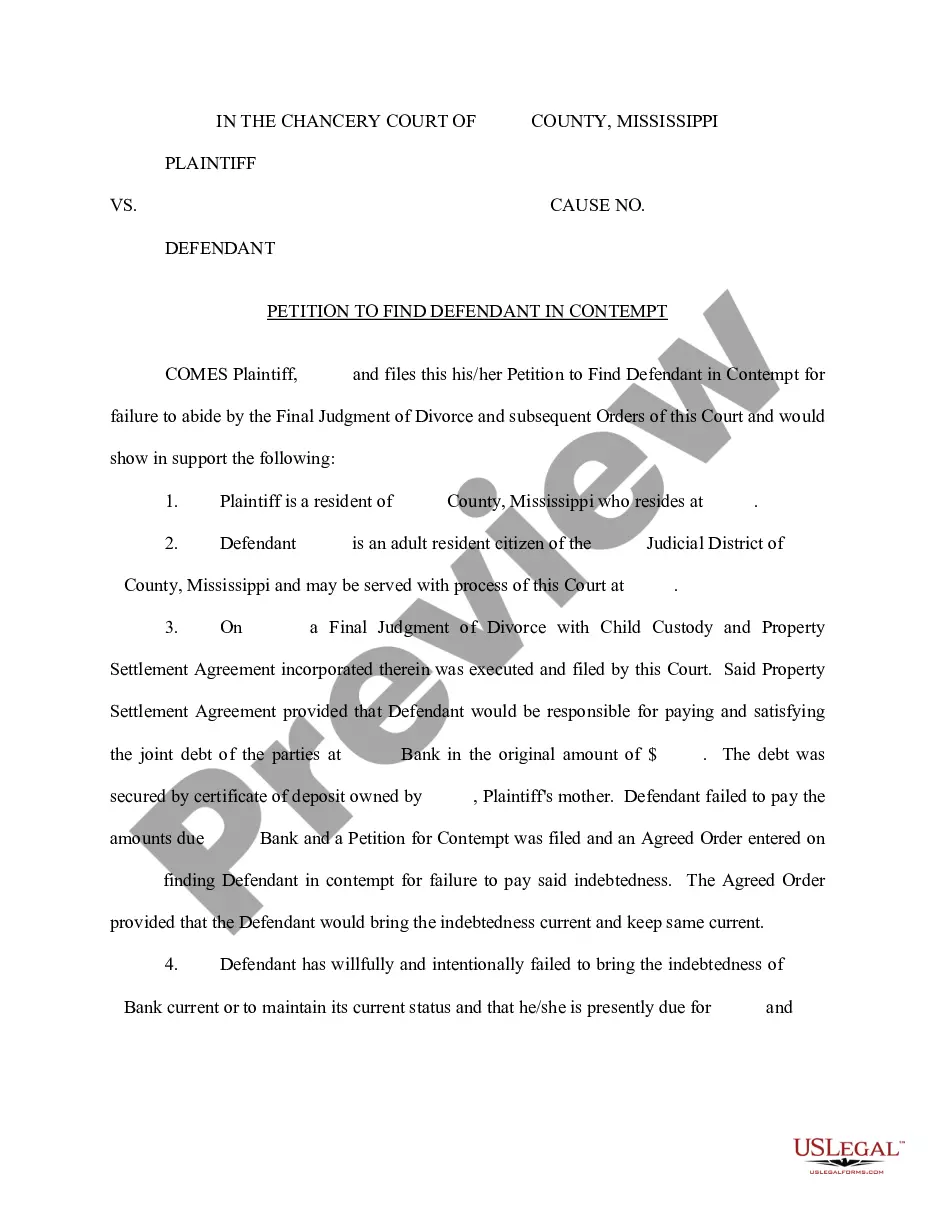
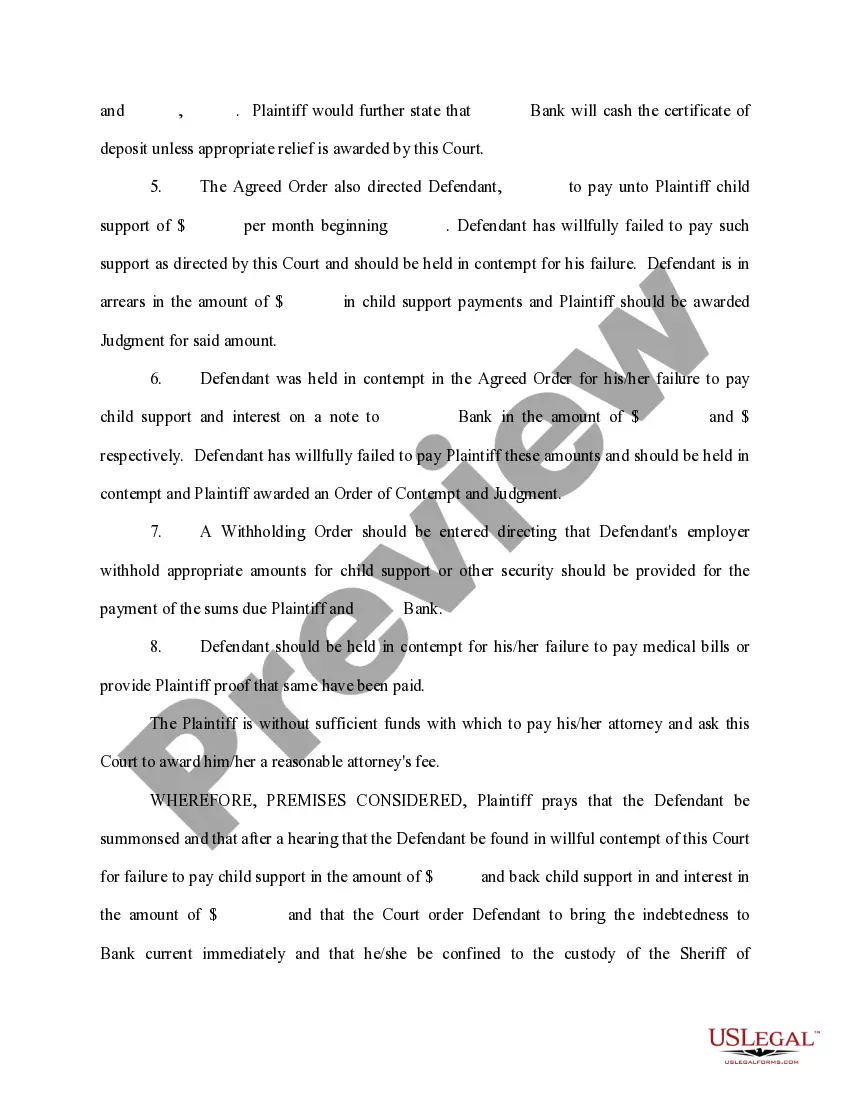
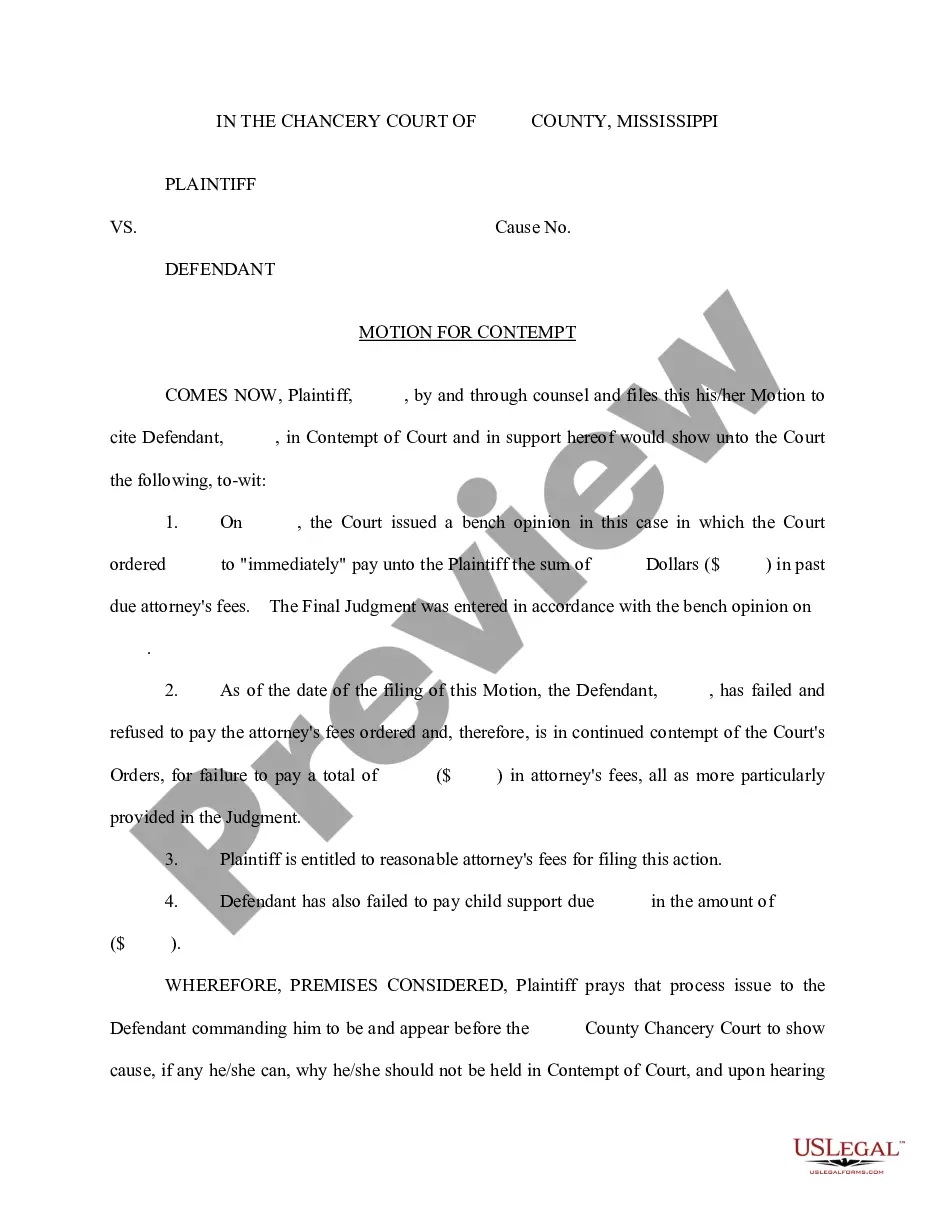
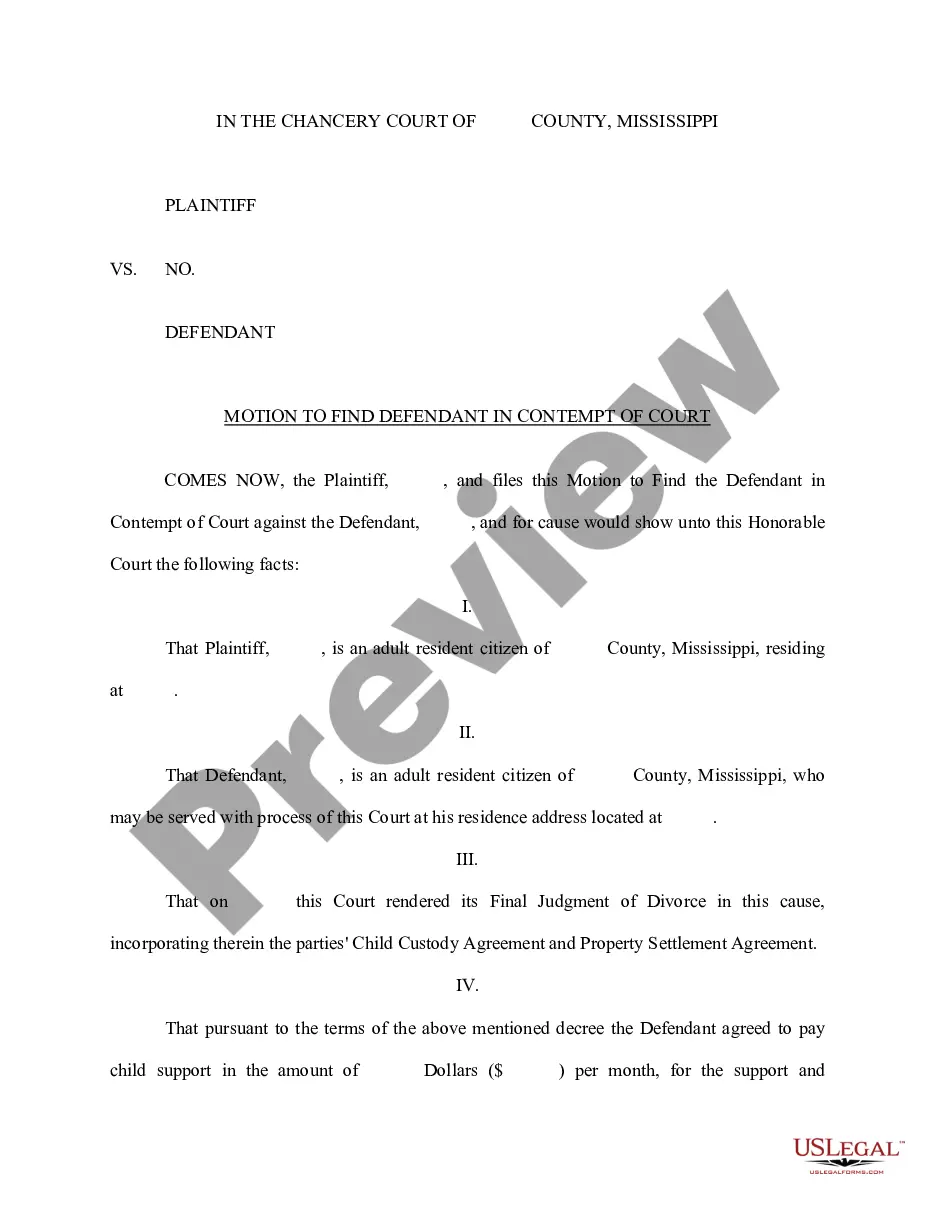
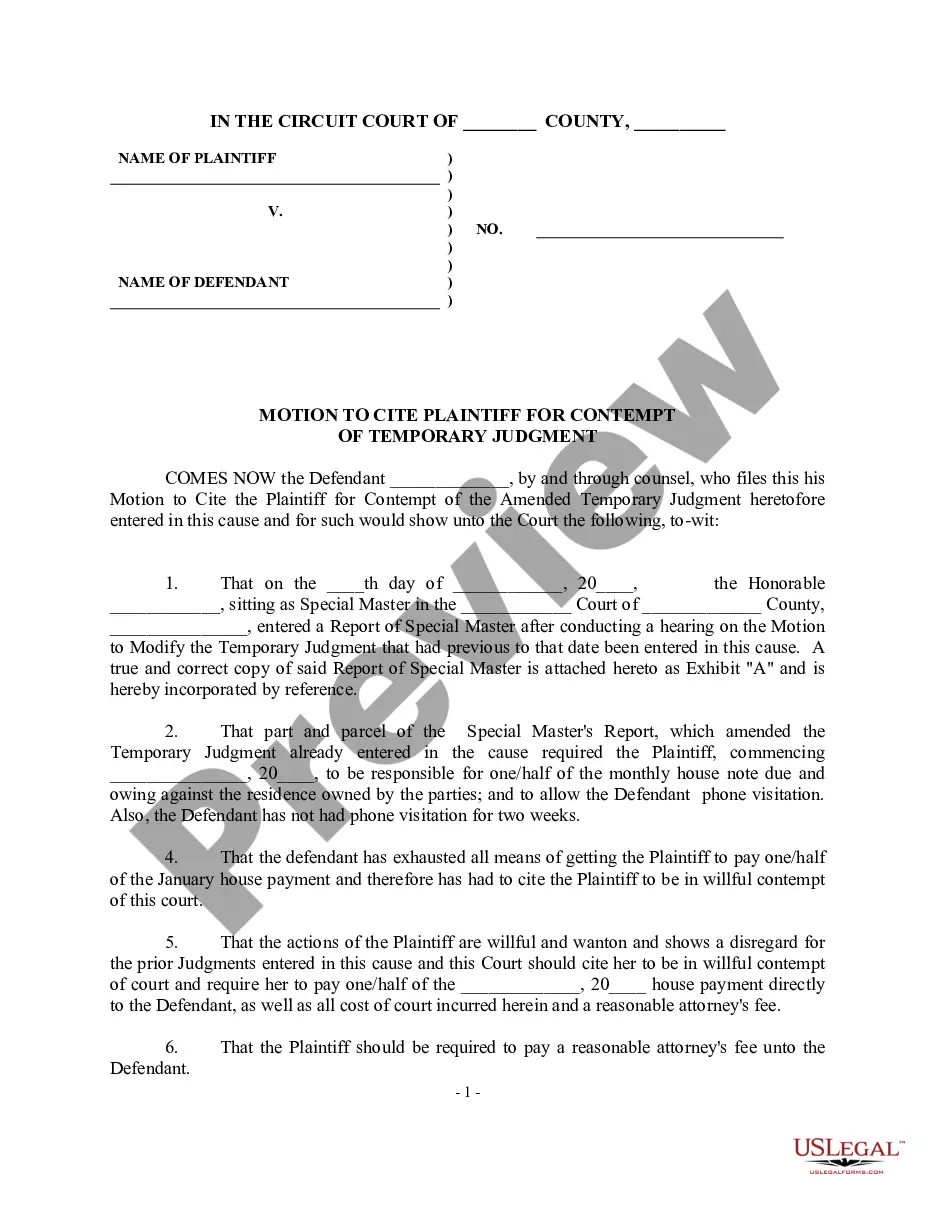
The Petition to Find Defendant in Contempt is a legal document used to request the court to determine whether a defendant has violated a court order. This form is specifically designed to help plaintiffs initiate contempt proceedings and seek appropriate legal remedies when a defendant disobeys a court order. Unlike other legal forms, this petition focuses on establishing contempt and can be tailored to specific situations.
Main sections of this form
- Captures the names and contact information of the plaintiff and defendant.
- Details the specific court order that the defendant allegedly violated.
- Includes a declaration explaining how the defendant is in contempt.
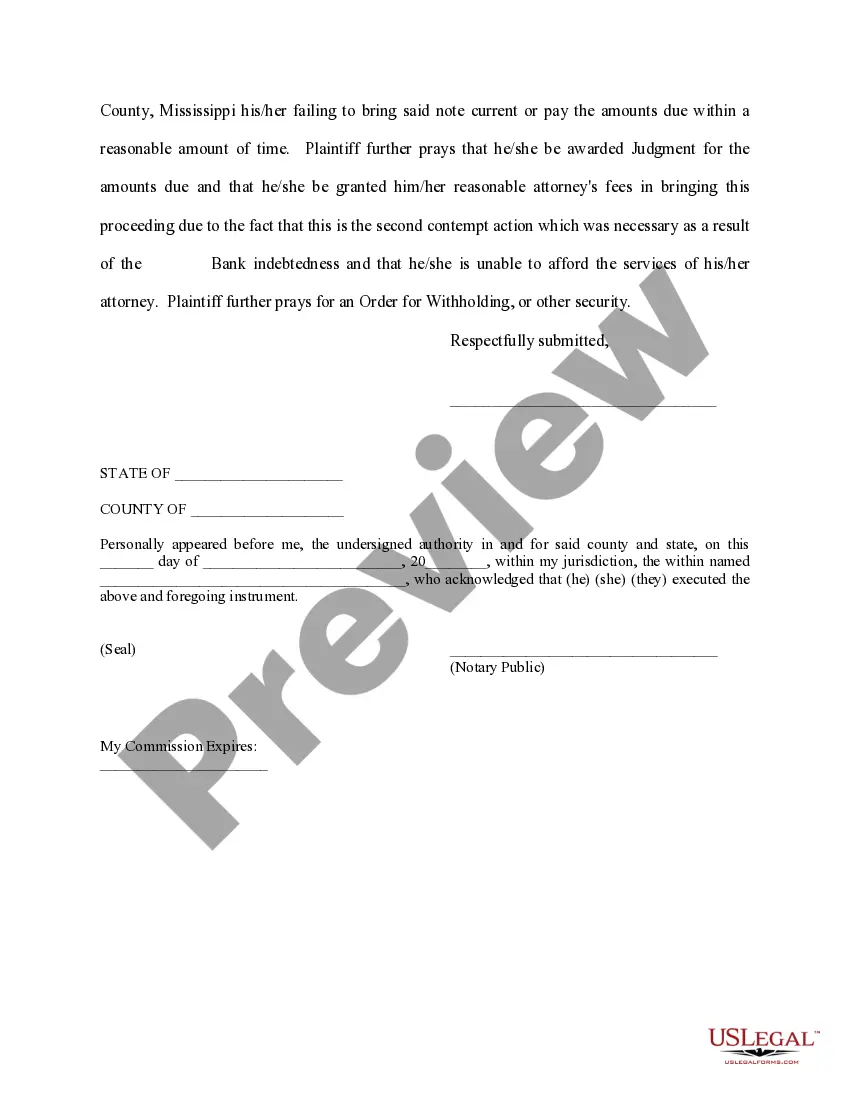
- Requests for any remedies sought, such as enforcement of the order or attorneyâs fees.
- Signature line for the plaintiff to confirm the accuracy of the information provided.
Situations where this form applies
You should use the Petition to Find Defendant in Contempt when you believe that a party has failed to comply with a court order. This may include cases involving child support, visitation rights, property division, or any other legal obligations established by the court. Filing this petition is necessary to enforce compliance and seek legal consequences for the violating party.
Who this form is for
This form is intended for:
- Plaintiffs who have a vested legal interest in the enforcement of a court order.
- Individuals who have already received a judgment from the court that the defendant is failing to follow.
- Parties seeking to hold the defendant accountable for non-compliance with legal obligations.
How to prepare this document
- Identify and fill in the names and addresses of the plaintiff and defendant.
- Clearly specify the court order that has been allegedly violated.
- Provide a detailed account of how the defendant has failed to comply with the court order.
- Complete any requests for relief, including possible attorneyâs fees.
- Sign and date the form to affirm the provided information is accurate.
Notarization requirements for this form
This form does not typically require notarization unless specified by local law. However, ensure you check any additional state-specific requirements that may apply.
Get your form ready online
Our built-in tools help you complete, sign, share, and store your documents in one place.
Make edits, fill in missing information, and update formatting in US Legal Forms—just like you would in MS Word.
Download a copy, print it, send it by email, or mail it via USPS—whatever works best for your next step.
Sign and collect signatures with our SignNow integration. Send to multiple recipients, set reminders, and more. Go Premium to unlock E-Sign.
If this form requires notarization, complete it online through a secure video call—no need to meet a notary in person or wait for an appointment.
We protect your documents and personal data by following strict security and privacy standards.

Make edits, fill in missing information, and update formatting in US Legal Forms—just like you would in MS Word.

Download a copy, print it, send it by email, or mail it via USPS—whatever works best for your next step.

Sign and collect signatures with our SignNow integration. Send to multiple recipients, set reminders, and more. Go Premium to unlock E-Sign.

If this form requires notarization, complete it online through a secure video call—no need to meet a notary in person or wait for an appointment.

We protect your documents and personal data by following strict security and privacy standards.
Common mistakes to avoid
- Failing to include the full details of the court order being violated.
- Not providing adequate evidence or explanation of the contempt.
- Overlooking necessary signatures or dates on the form.
- Using vague language instead of specific terms related to the alleged contempt.
Why use this form online
- Convenient access to downloadable legal templates tailored to your needs.
- Easy to complete online with clear instructions provided.
- Reliable forms drafted by licensed attorneys to ensure legal compliance.
Legal use & context
- The petition serves as a formal request for the court to intervene in enforcement issues.
- Used within civil court systems to maintain the integrity of court orders.
- Important for protecting the rights of those affected by non-compliance.
Quick recap
- The Petition to Find Defendant in Contempt is crucial for enforcing court orders.
- Proper completion and submission are essential for legal effectiveness.
- Understanding the specific requirements of your state will enhance the success of your petition.
Looking for another form?



Form popularity
FAQ
SCANDALIZING THE AUTHORITY OF COURT: INTERFERENCE WITH THE COURSE OF JUDICIAL PROCEEDINGS: INTERFERENCE WITH THE ADMINISTRATION OF JUSTICE:
Depending on the infraction, contempt of court consequences can include fines, compensatory visitation, a modification to the custody arrangement, and in some instances even jail time. In most cases, if someone is held in contempt, the court will first give them the opportunity to make amends for the violation.
In order to be found in contempt of court, there needs to be proof of willful disregard of a court order. Willful contempt means that the contemnor was aware of the court order, had the ability to follow the specifics of the order and chose not to without any mitigating circumstances.
File an action for contempt with the court. In contempt actions, you ask the court to enforce the order and make a finding that the other parent willfully disobeyed the court order. This is very complicated and can have serious consequences. Talk to a lawyer to get help with it.
Contempt of court, often referred to simply as "contempt", is the offense of being disobedient to or disrespectful toward a court of law and its officers in the form of behavior that opposes or defies the authority, justice and dignity of the court.
To get a contempt finding, you must usually file a court document called a "motion for an order to show cause." That puts the burden on the parent who isn't following the custody or visitation order to explain to the court the reasons why he or she should not be held in contempt.
There is a valid court order in effect. The other person knows about the court order. The facts show a plain violation of the order. You have given the person notice of the contempt hearing and a chance to be heard. Contempt is an appropriate remedy for the violation.
PETITION FOR CITATION FOR CONTEMPT OF COURT That the defendant is able-bodied, capable of earning adequate funds with which to comply with the orders of this Court, and that said defendant has willfully failed or refused to pay support as ordered by the Court.
You file a Complaint for Contempt. In a contempt case, you ask the court to decide that the other parent is in contempt. Contempt means not obeying the child support order even though you are able to.This decision is a Judgment of Contempt.