Mississippi Motion for Contempt
Understanding this form
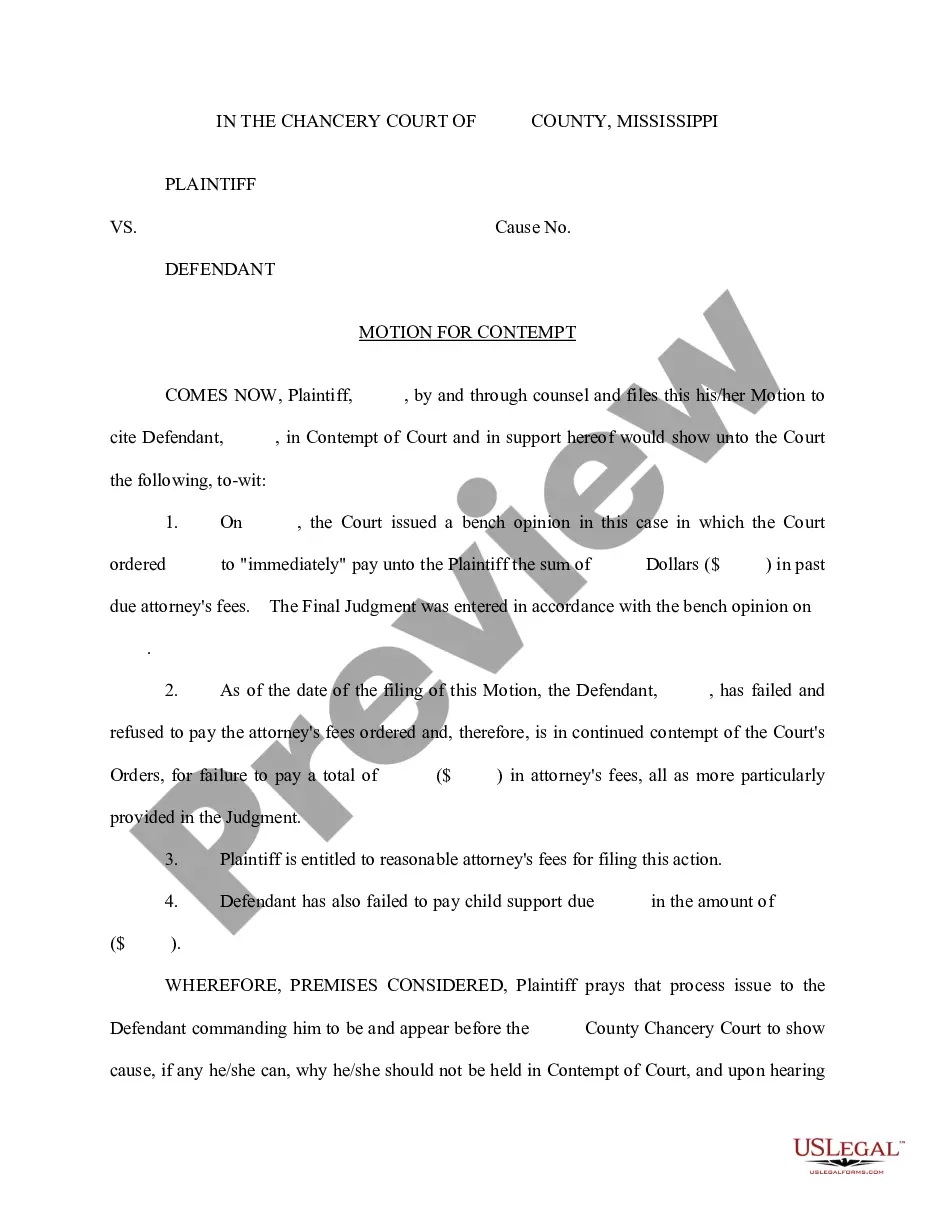
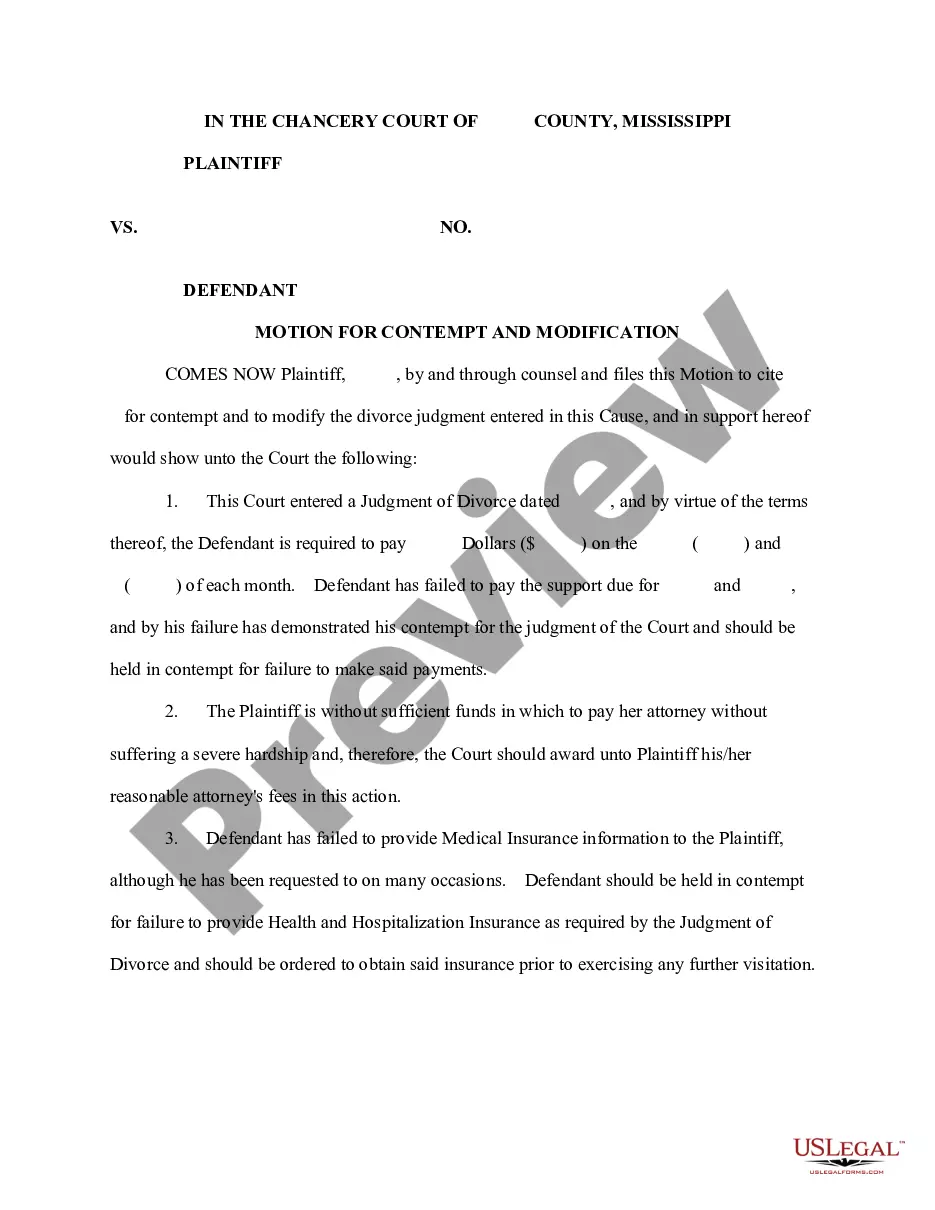
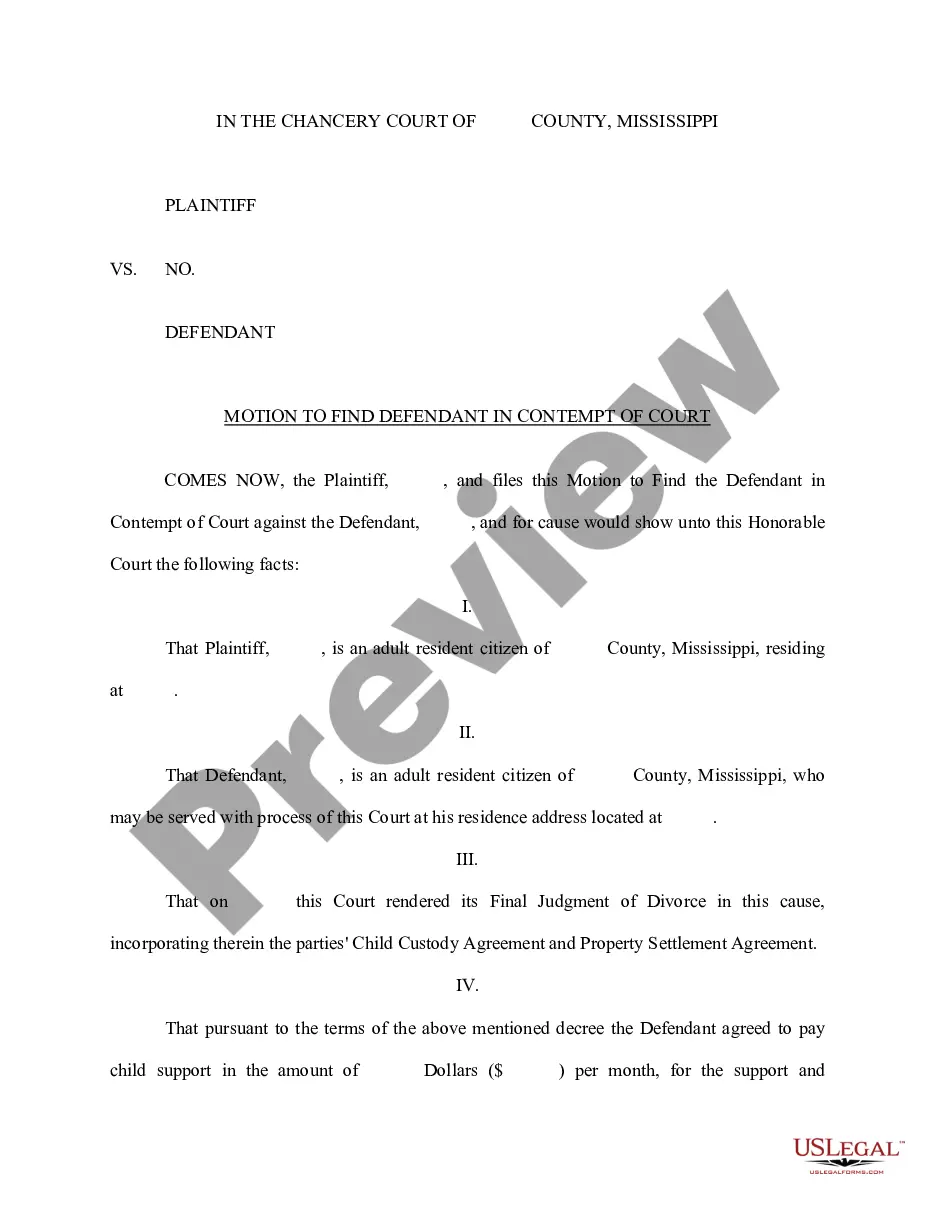
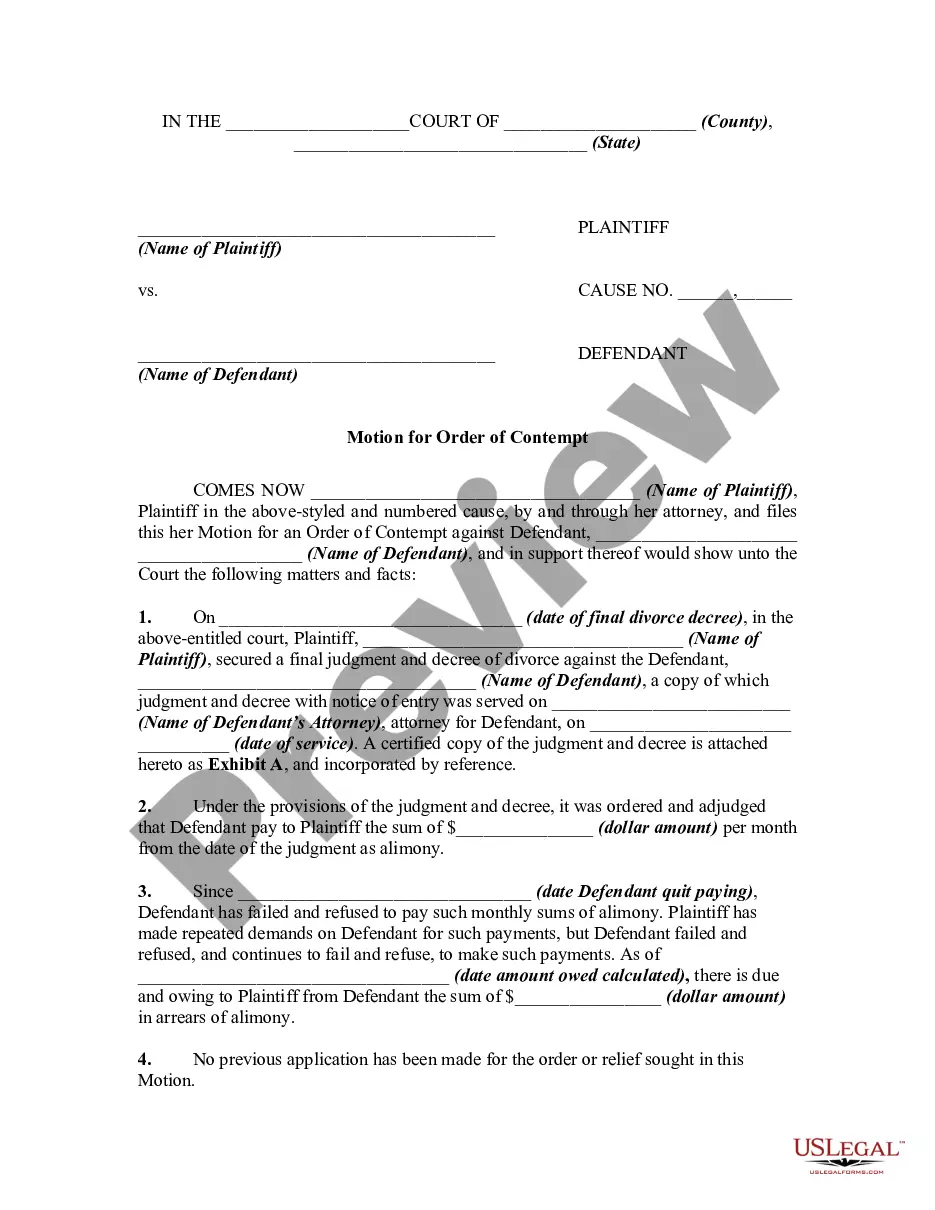
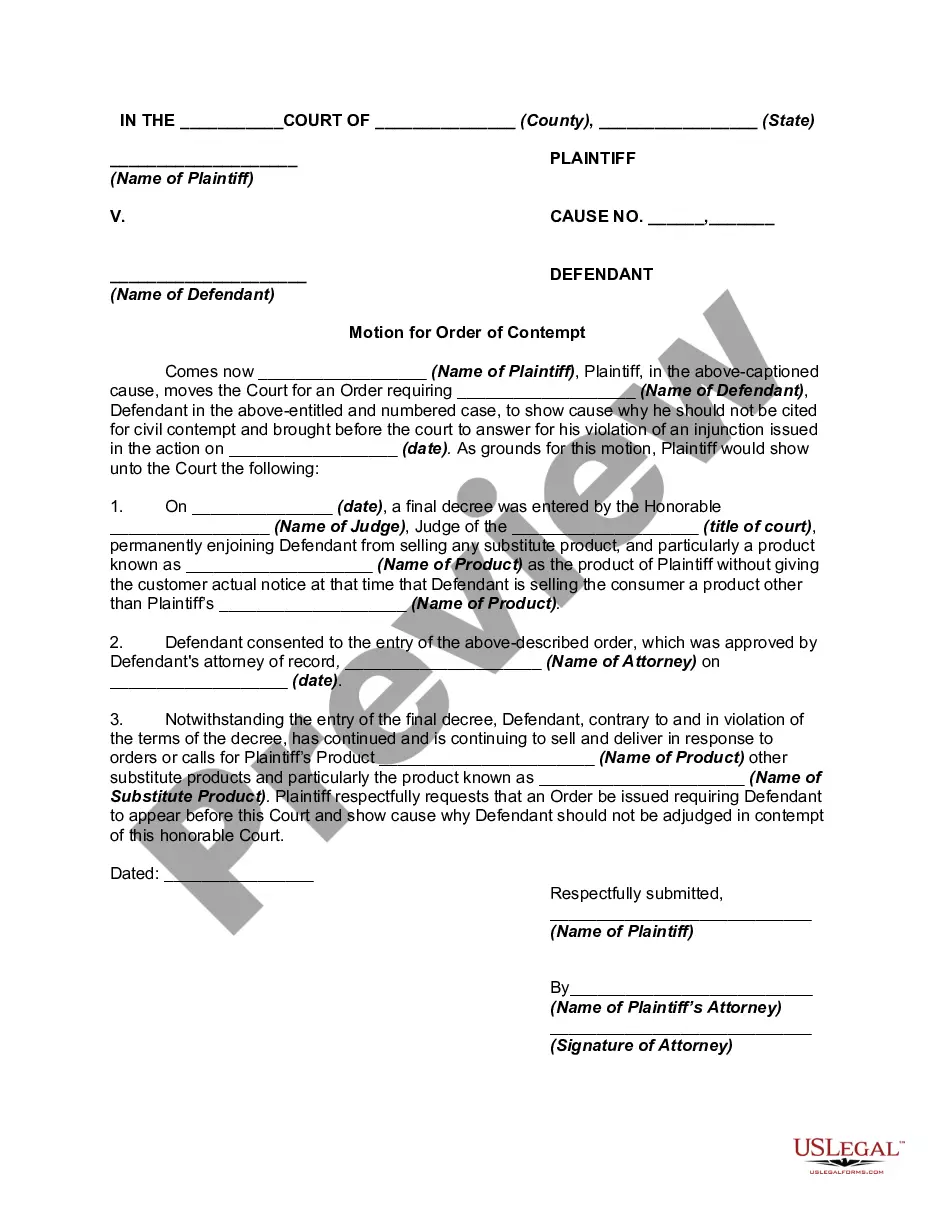
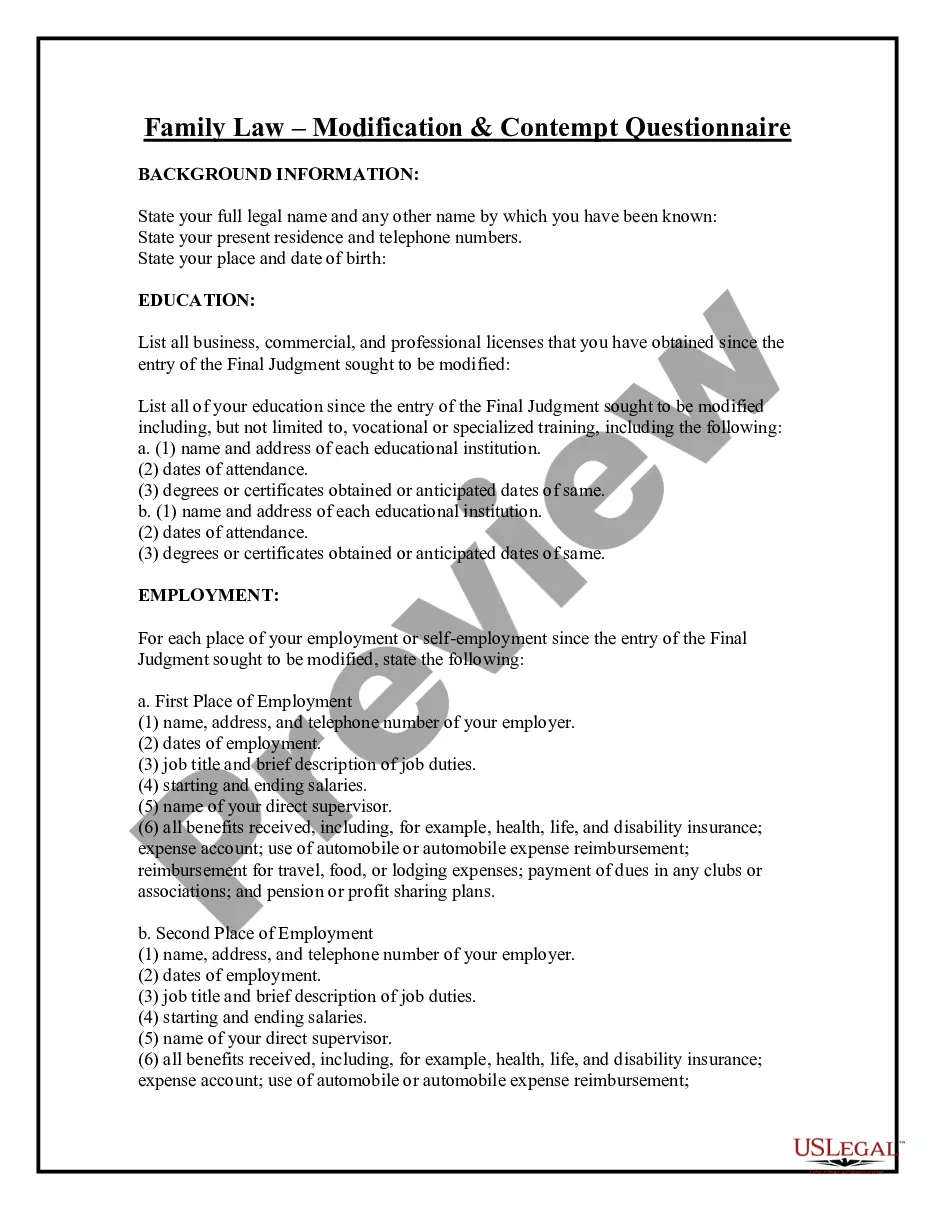
A Motion for Contempt is a formal request made to the court, asking it to enforce a previous order or ruling. This document is crucial for individuals seeking compliance from another party regarding court mandates, such as child support or custody arrangements. Unlike other motions, the Motion for Contempt specifically addresses violations of court orders and seeks to hold the non-compliant party accountable.
What’s included in this form
- Title section â identifies the motion and the parties involved.
- Statement of facts â outlines the circumstances that constitute the contempt.
- Request for relief â specifies what the movant is asking the court to enforce or impose.
- Signature block â confirms the authenticity of the motion with the movant's signature.

When to use this form
This form should be used when a party believes that another party has failed to abide by a court order. Common situations include non-payment of court-ordered support, refusal to comply with visitation schedules, or failure to adhere to any other judicial ruling. Filing a Motion for Contempt can prompt the court to intervene and ensure compliance.
Who should use this form
- Individuals seeking to enforce a court order related to child custody or support.
- Parties involved in divorce proceedings who require court-enforced obligations.
- Anyone needing to resolve issues surrounding compliance with a court ruling.
How to complete this form
- Identify the parties involved, including the movant and the respondent.
- Clearly outline the facts that demonstrate how the other party has failed to comply with the court order.
- Specify the actions you wish the court to take to enforce its original order.
- Include any supporting documentation, if applicable, to strengthen your case.
- Sign and date the motion to validate it before submission to the court.
Does this document require notarization?
This form does not typically require notarization unless specified by local law. Always check your local court rules to confirm any requirements.
Get your form ready online
Our built-in tools help you complete, sign, share, and store your documents in one place.
Make edits, fill in missing information, and update formatting in US Legal Forms—just like you would in MS Word.
Download a copy, print it, send it by email, or mail it via USPS—whatever works best for your next step.
Sign and collect signatures with our SignNow integration. Send to multiple recipients, set reminders, and more. Go Premium to unlock E-Sign.
If this form requires notarization, complete it online through a secure video call—no need to meet a notary in person or wait for an appointment.
We protect your documents and personal data by following strict security and privacy standards.

Make edits, fill in missing information, and update formatting in US Legal Forms—just like you would in MS Word.

Download a copy, print it, send it by email, or mail it via USPS—whatever works best for your next step.

Sign and collect signatures with our SignNow integration. Send to multiple recipients, set reminders, and more. Go Premium to unlock E-Sign.

If this form requires notarization, complete it online through a secure video call—no need to meet a notary in person or wait for an appointment.

We protect your documents and personal data by following strict security and privacy standards.
Avoid these common issues
- Failing to provide sufficient details about the contemptuous conduct.
- Not including a clear request for the specific relief sought from the court.
- Omitting required signatures or not signing in the appropriate area.
Why complete this form online
- Convenient access to legal forms anytime, allowing for timely filing.
- Editable templates that can be customized to fit your unique situation.
- Peace of mind knowing that the forms are drafted by licensed attorneys.
- A Motion for Contempt is enforceable in court, provided that it meets state legal standards.
- Failure to adhere to a court order can result in sanctions, thus underscoring the importance of this motion.
What to keep in mind
- A Motion for Contempt is used to enforce existing court orders.
- It is critical for ensuring compliance and upholding legal rights.
- Understanding how to complete this form accurately can enhance its effectiveness in court.
Looking for another form?

Form popularity
FAQ
Depending on the infraction, contempt of court consequences can include fines, compensatory visitation, a modification to the custody arrangement, and in some instances even jail time. In most cases, if someone is held in contempt, the court will first give them the opportunity to make amends for the violation.
To get a contempt finding, you must usually file a court document called a "motion for an order to show cause." That puts the burden on the parent who isn't following the custody or visitation order to explain to the court the reasons why he or she should not be held in contempt.
The Supreme, circuit, chancery and county courts and the Court of Appeals shall have power to fine and imprison any person guilty of contempt of the court while sitting, but the fine shall not exceed One Hundred Dollars ($100.00) for each offense, nor shall the imprisonment continue longer than thirty (30) days.
Contempt of court is essentially seen as a form of disturbance that may impede the functioning of the court. The judge may impose fines and/or jail time upon any person committing contempt of court. The person is usually let out upon his or her agreement to fulfill the wishes of the court.
If a person is found to be in contempt, the court is able to impose sanctions, which may include the following: jail time (usually 1-30 days) ordering the party held in contempt to pay the money owed. ordering the party held in contempt to pay the other party's attorney's fees.