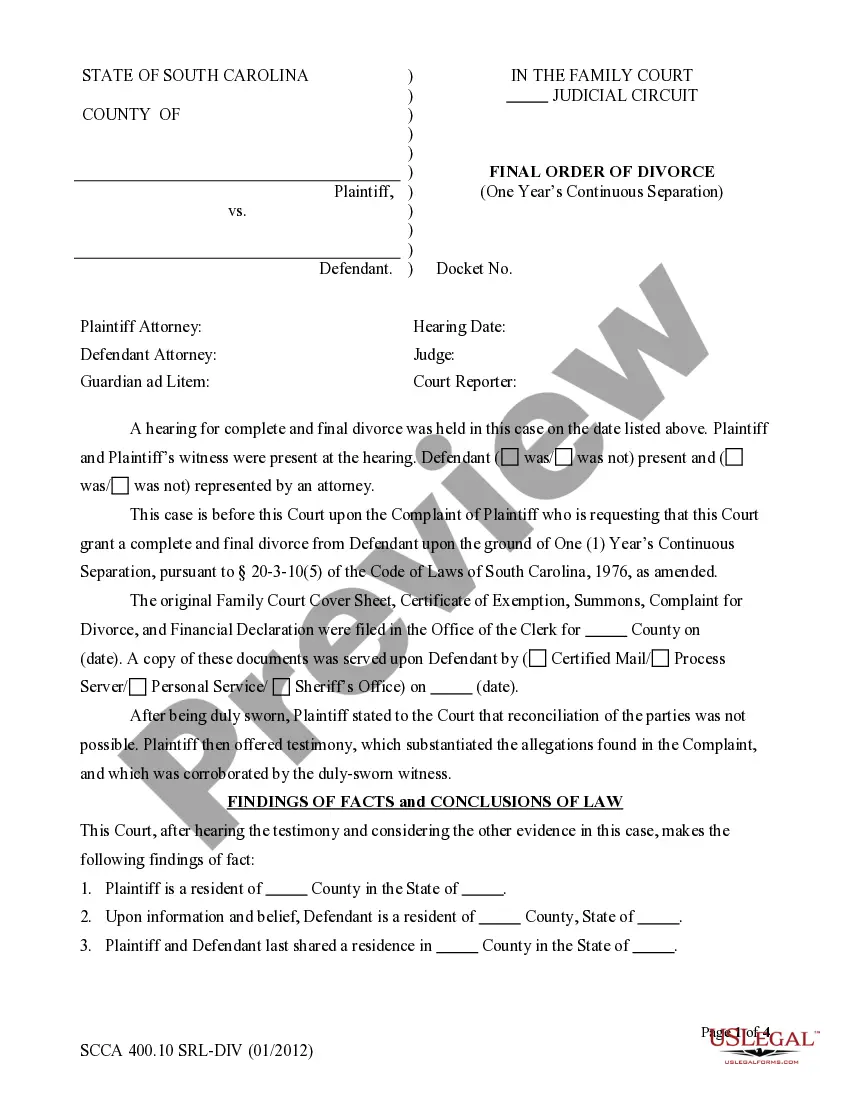
New Jersey Last Will and Testament for Married Person with Minor Children from Prior Marriage
What is this form?
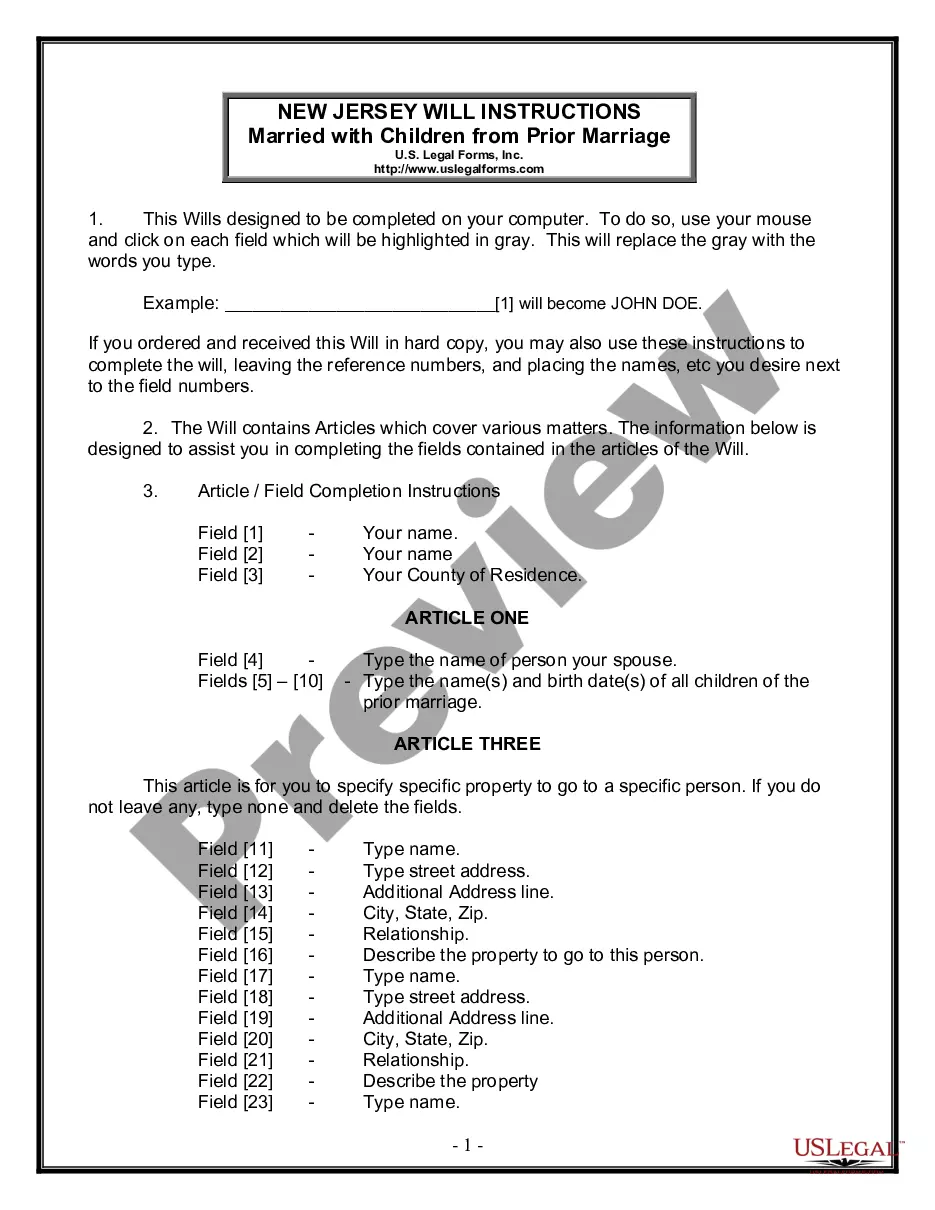
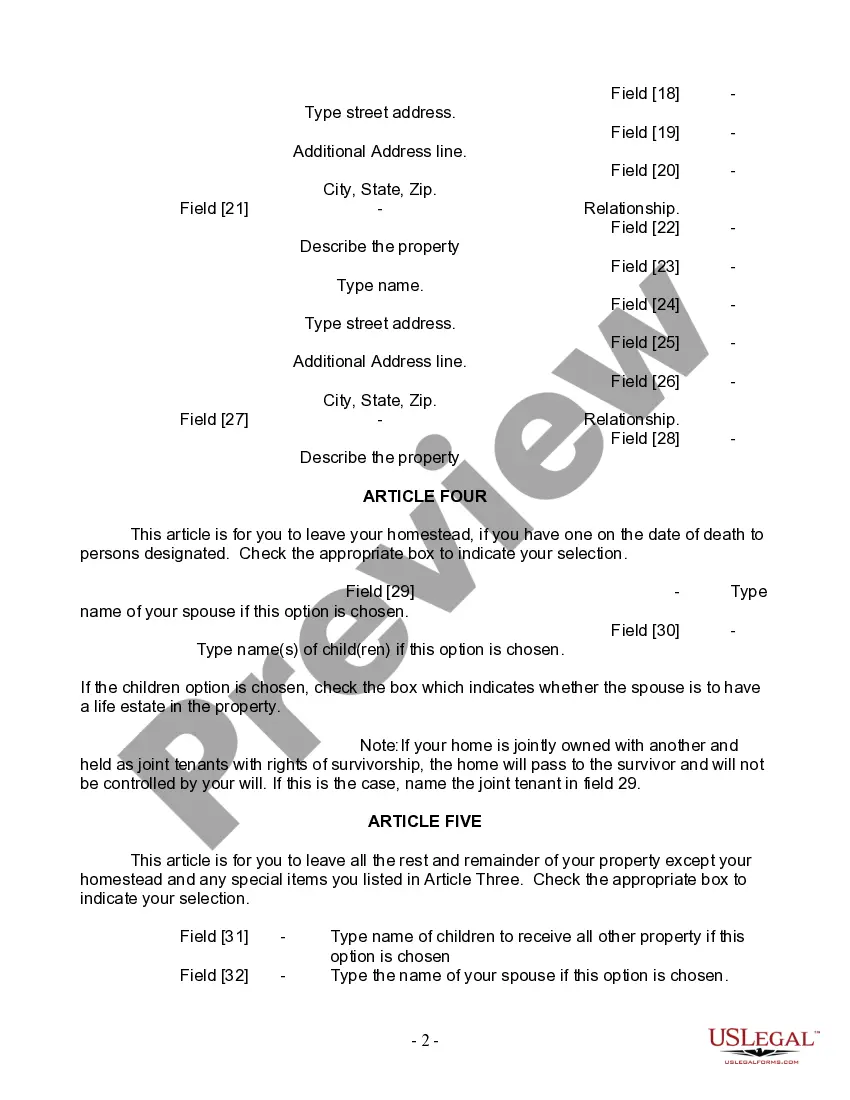
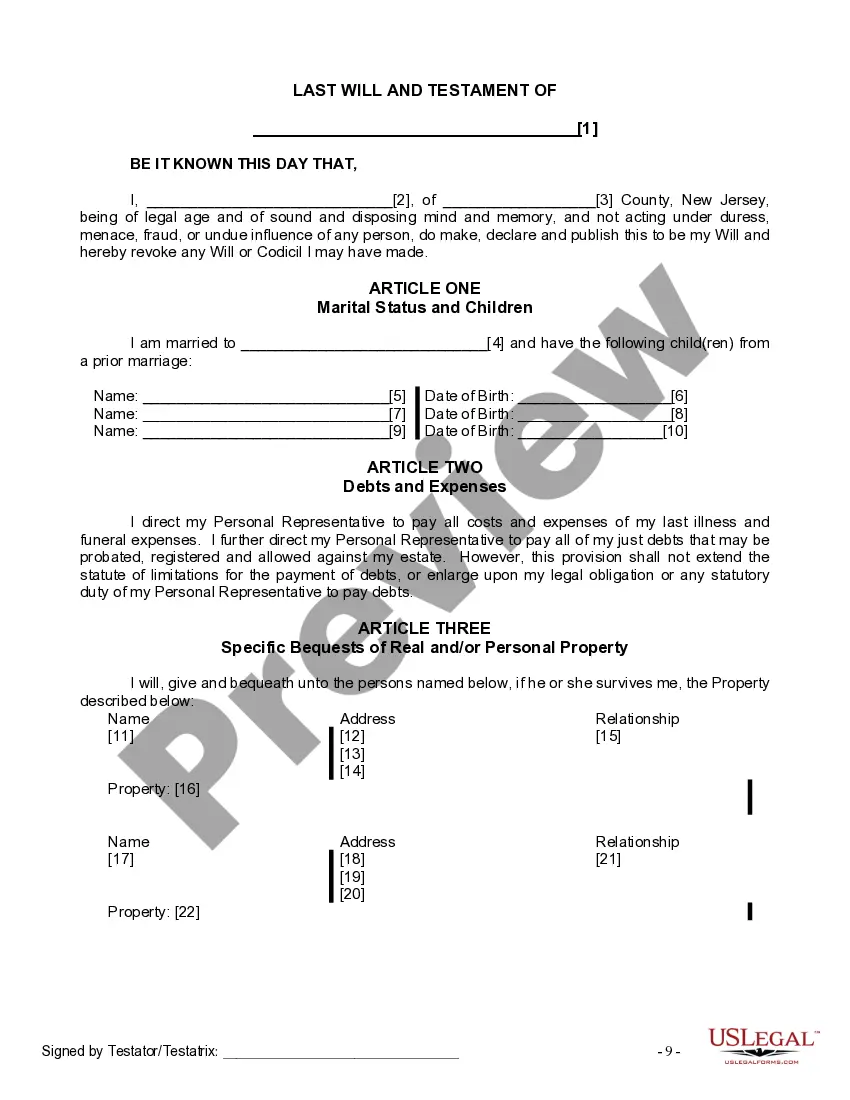
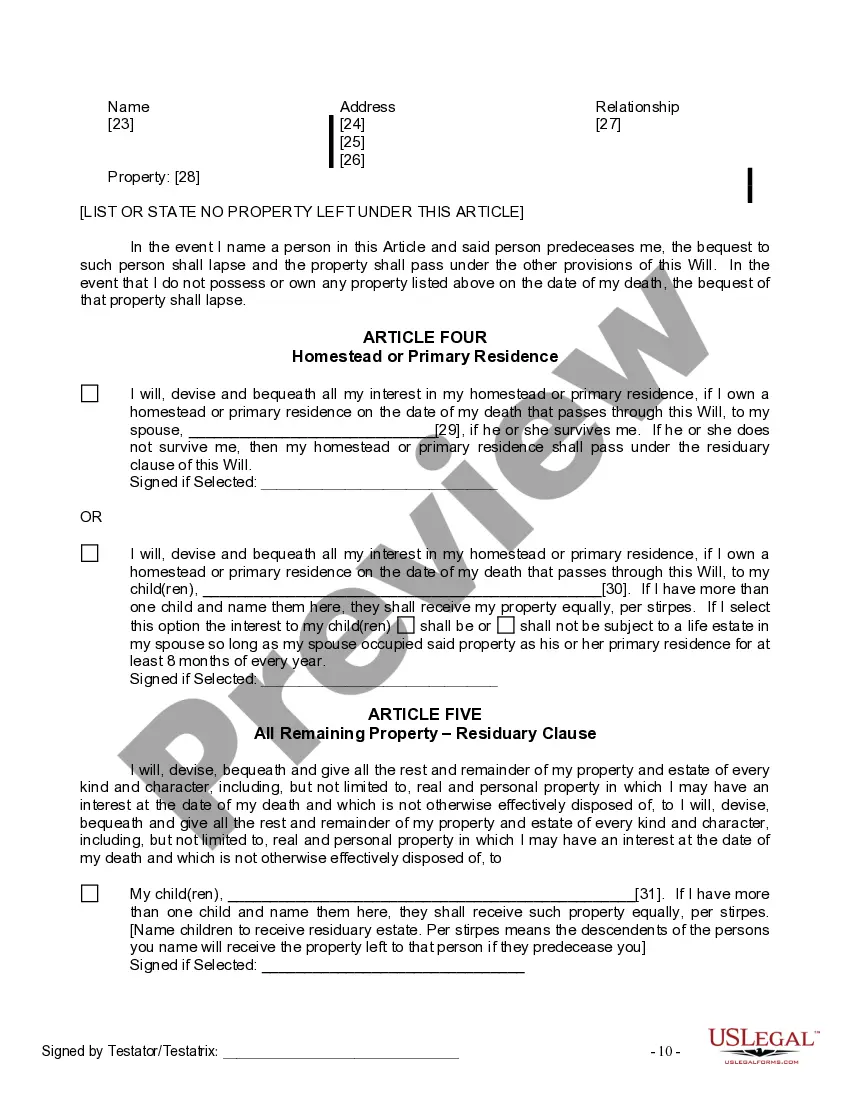
The Last Will and Testament for Married Person with Minor Children from Prior Marriage is a legal document that specifies how a married person with children from a previous marriage wishes to distribute their assets upon death. It uniquely addresses concerns related to minor children and ensures that both the spouse and previous children are considered in the estate distribution process. Unlike standard wills, this document includes clauses for appointing guardians and trustees for minor children, which is crucial in blended families.
Key parts of this document
- Personal details of the testator (the person making the will).
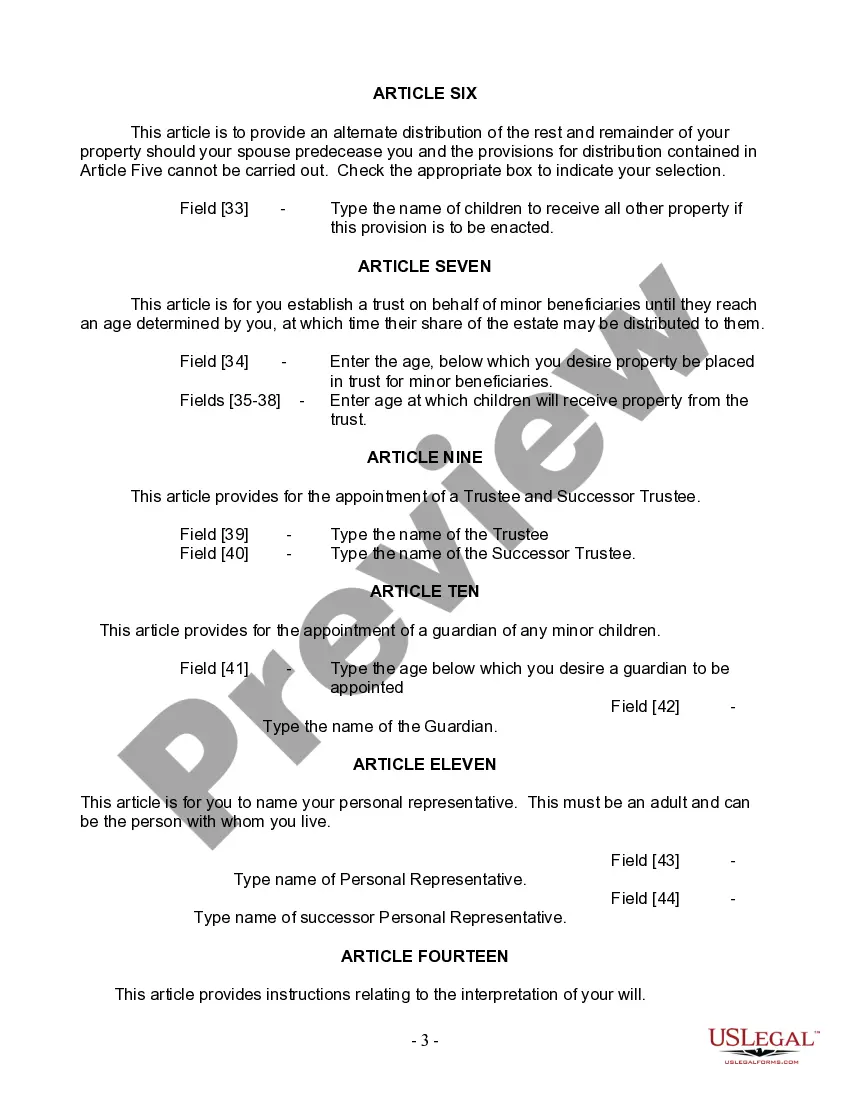
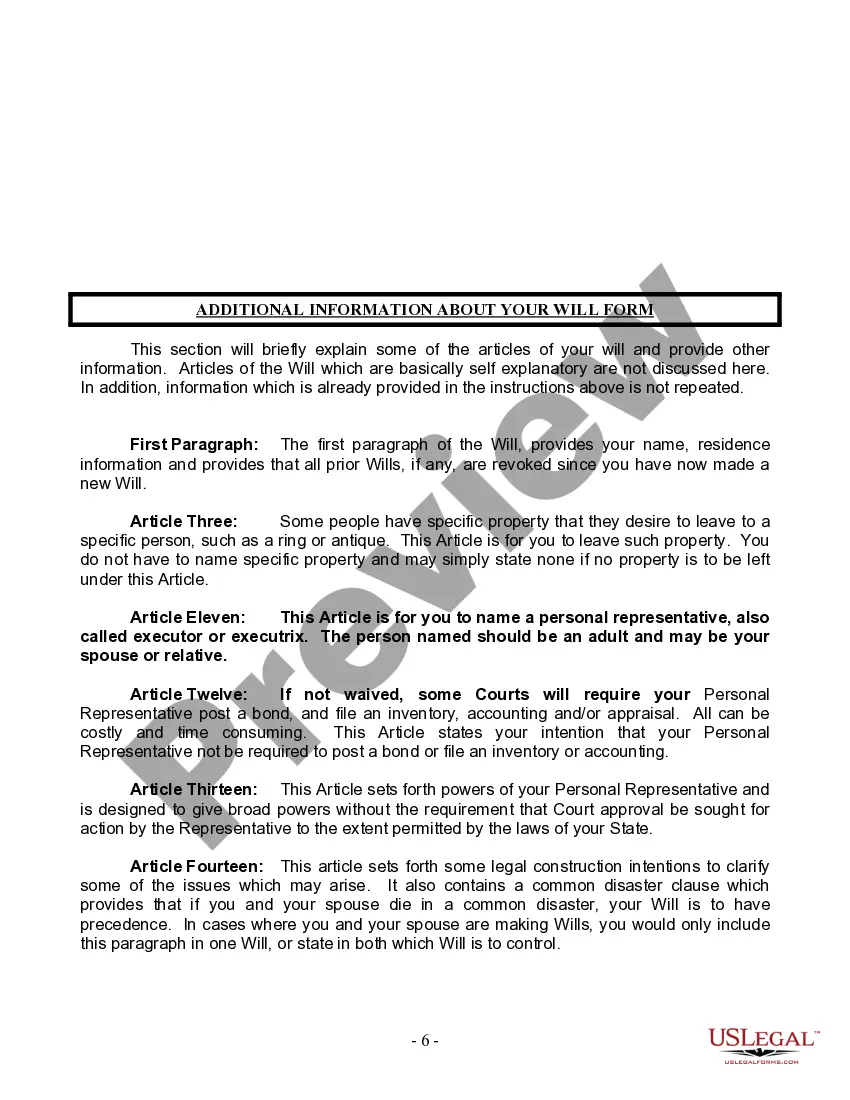
- Appointment of a personal representative or executor.
- Designation of beneficiaries, including share distribution for the spouse and children.
- Specific bequests of property and a residual clause for remaining assets.
- Appointment of a guardian for minor children if necessary.
- Trust provisions for minor beneficiaries until they reach a specified age.





When to use this form
This form should be used in situations where a married individual has minor children from a prior relationship and wants to ensure that both the spouse and previous children are adequately provided for in the event of their death. It is applicable when setting strategies for property distribution, appointing a guardian for minor children, and establishing trusts for their care and education.
Who needs this form
- Married individuals with children from a previous marriage.
- Couples looking to create a comprehensive estate plan that accommodates multiple family dynamics.
- Individuals wishing to make specific provisions for the well-being of minor children after their passing.
Steps to complete this form
- Enter your personal information, including your name and county of residence.
- Appoint a personal representative to manage the estate.
- Detail the beneficiaries, specifying what each person will receive.
- Designate a guardian and trustee for any minor children.
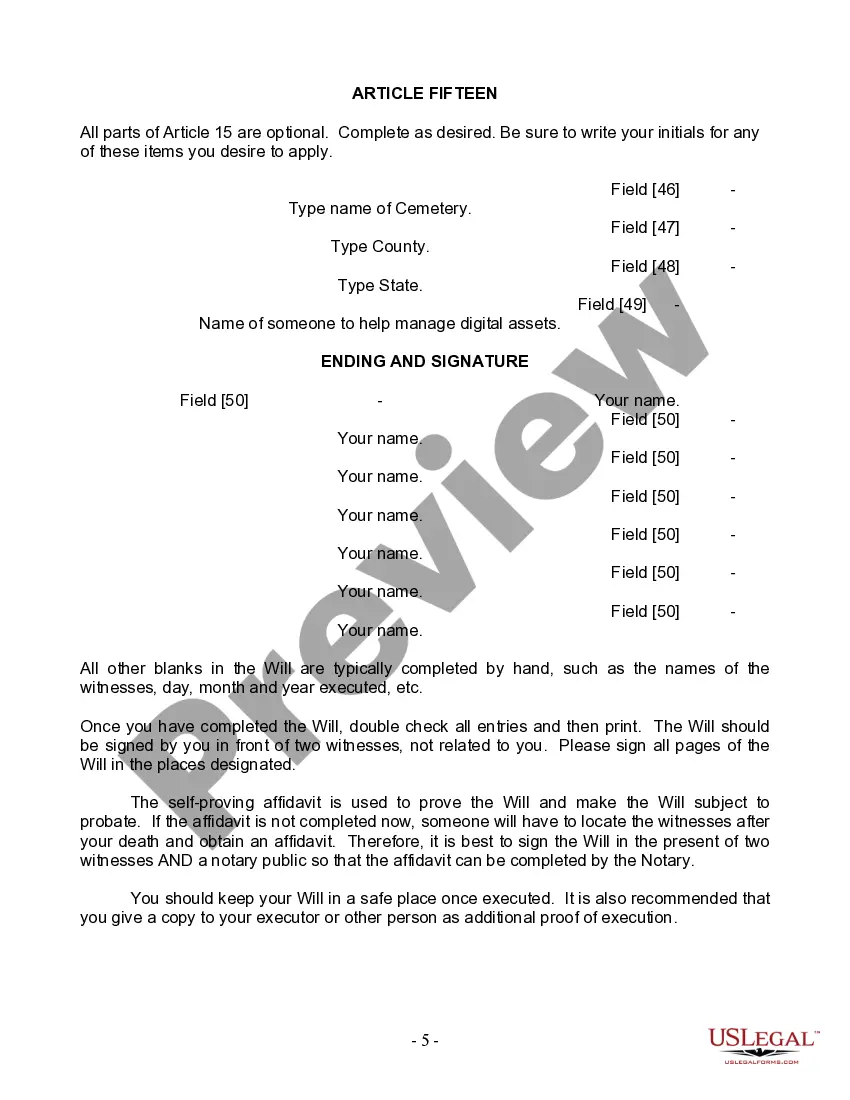
- Sign the will in the presence of two witnesses and, if applicable, a notary public.
Notarization guidance
Yes, this form must be notarized to be legally valid in many jurisdictions. Having the will notarized ensures that it can be admitted to probate without additional witness testimony, which simplifies the process for your heirs. US Legal Forms offers integrated online notarization services for added convenience.
Get your form ready online
Our built-in tools help you complete, sign, share, and store your documents in one place.
Make edits, fill in missing information, and update formatting in US Legal Forms—just like you would in MS Word.
Download a copy, print it, send it by email, or mail it via USPS—whatever works best for your next step.
Sign and collect signatures with our SignNow integration. Send to multiple recipients, set reminders, and more. Go Premium to unlock E-Sign.
If this form requires notarization, complete it online through a secure video call—no need to meet a notary in person or wait for an appointment.
We protect your documents and personal data by following strict security and privacy standards.

Make edits, fill in missing information, and update formatting in US Legal Forms—just like you would in MS Word.

Download a copy, print it, send it by email, or mail it via USPS—whatever works best for your next step.

Sign and collect signatures with our SignNow integration. Send to multiple recipients, set reminders, and more. Go Premium to unlock E-Sign.

If this form requires notarization, complete it online through a secure video call—no need to meet a notary in person or wait for an appointment.

We protect your documents and personal data by following strict security and privacy standards.
Common mistakes
- Failing to include all relevant beneficiaries, especially children from previous relationships.
- Not signing the will in front of the required number of witnesses.
- Neglecting to consider state-specific rules regarding wills and trusts.
Advantages of online completion
- Easy access and ability to complete the form from the comfort of your home.
- Editability allows you to make changes as your situation evolves.
- Comprehensive instructions guide you through each section of the form.
Main things to remember
- This Last Will and Testament is specifically designed for married individuals with prior children.
- Completing this will correctly protects the assets and welfare of all beneficiaries.
- It is crucial to follow legal requirements for signing and notarization to ensure validity.
Looking for another form?
Form popularity
FAQ
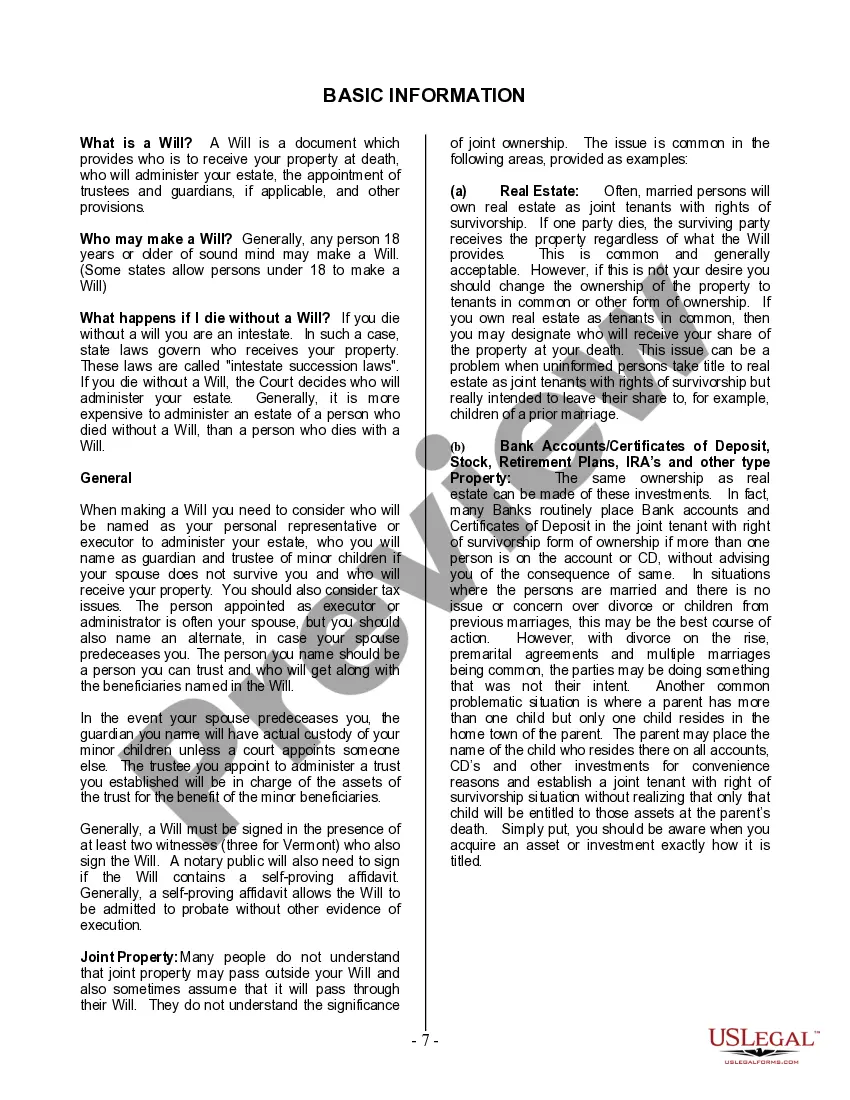
In New Jersey, the will must be in writing. You must sign your own will, witnessed by two individuals over 18 (You must be at least age 18 as well.)Notarized wills are not required, but they do help speed the process, since a probate court doesn't have to track down the two witnesses.
What makes a will valid in New Jersey? A person must be at least 18 years old and mentally competent to create a valid will. Generally, this means they understand the purpose of the will and know what they wish to happen to their property. The testator, as well as two witnesses, must sign a typed will.
Under New Jersey law, a handwritten Will can be valid as a writing intended as a Will if the material portions of the document are in the handwriting of the decedent and signed by the decedent.
It must be in writing. Generally, of course, wills are composed on a computer and printed out.The person who made it must have signed and dated it. A will must be signed and dated by the person who made it.Two adult witnesses must have signed it. Witnesses are crucial.
A will is legal in New Jersey if it is handwritten or typed by a competent adult and witnessed by two other people.
The Probate process is required by the state of NJ whenever someone dies. It is the government's way of making sure the assets of the deceased pass properly to their decedents. And of course to insure that any taxes or lien's owed to the state or other parties are fully paid.You still have to go through probate.
No, in New Jersey, you do not need to notarize your will to make it legal. However, New Jersey allows you to make your will "self-proving" and you'll need to go to a notary if you want to do that. A self-proving will speeds up probate because the court can accept the will without contacting the witnesses who signed it.