North Carolina Essential Legal Life Documents for Baby Boomers
Understanding this form package
This North Carolina Essential Legal Life Documents for Baby Boomers form package provides crucial legal documents for individuals in their later stages of life. Specifically tailored for Baby Boomers, this package includes state-specific forms designed to help you manage health and financial decisions, as well as your estate planning needs. The package offers more than just basic documents; with its comprehensive set of tools, it enables thoughtful planning for the future and protects both you and your loved ones.
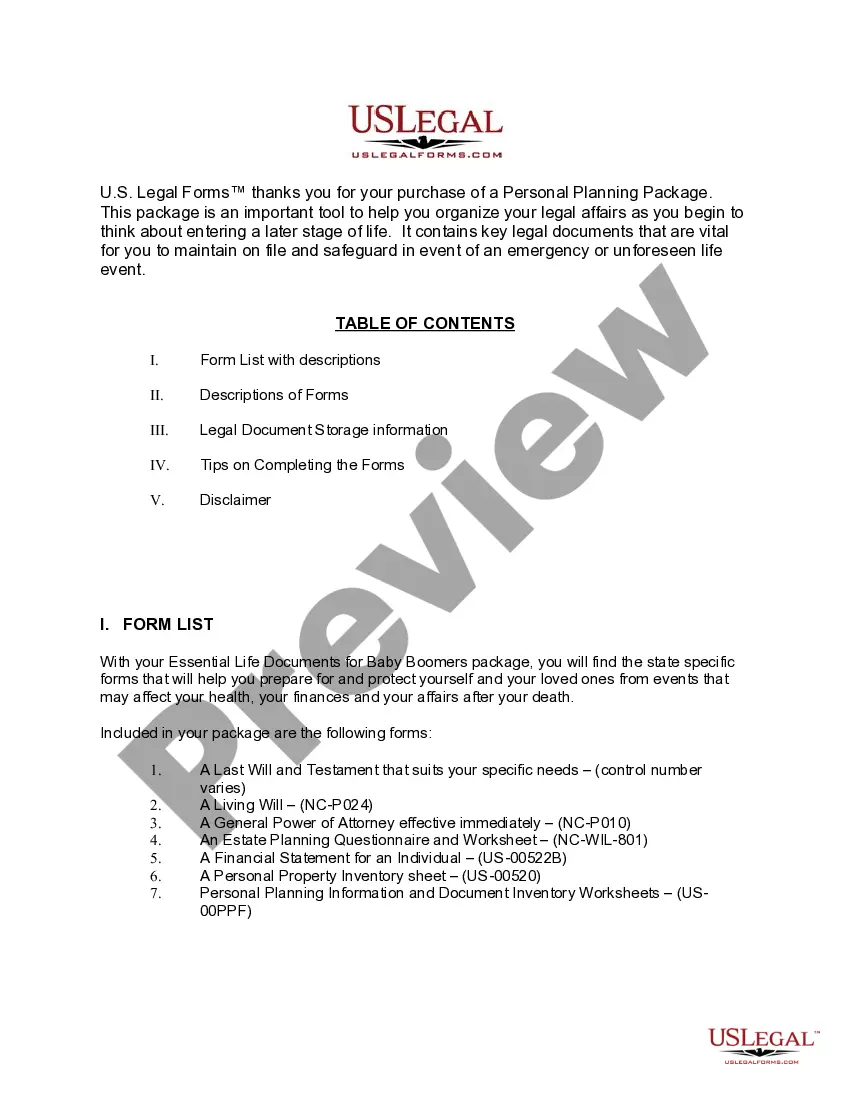
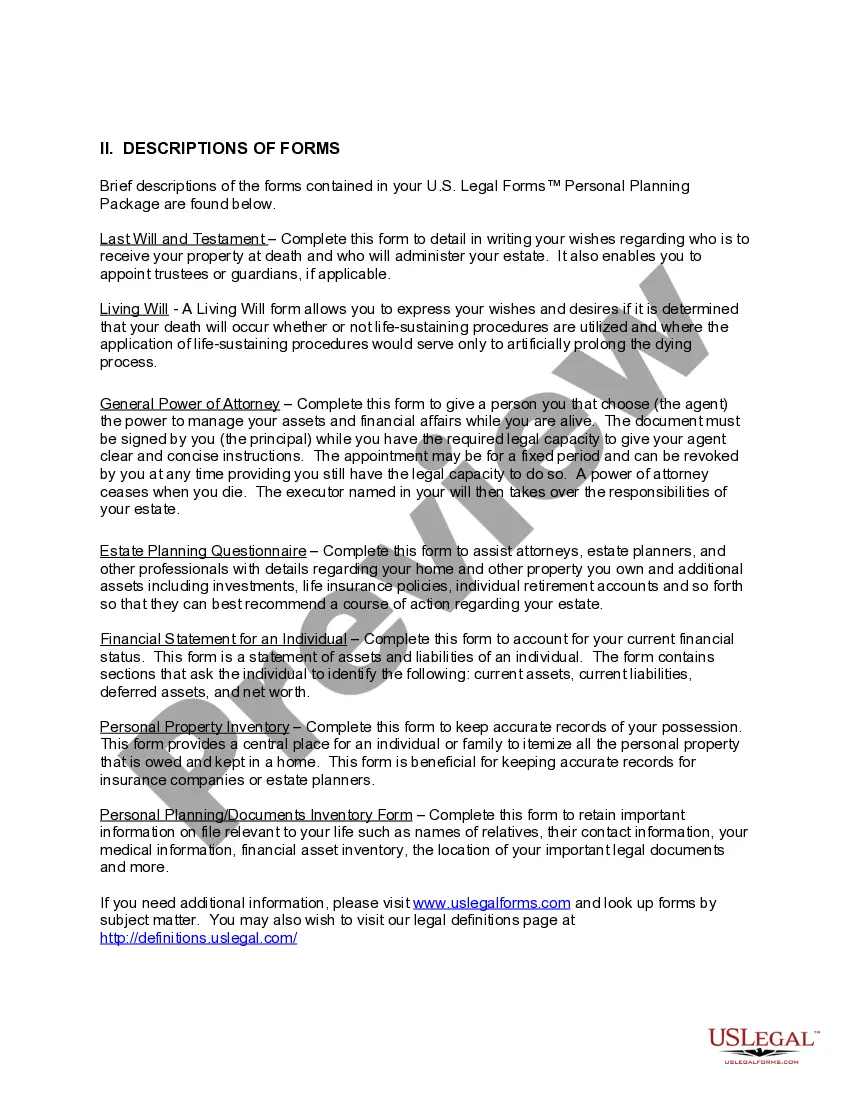
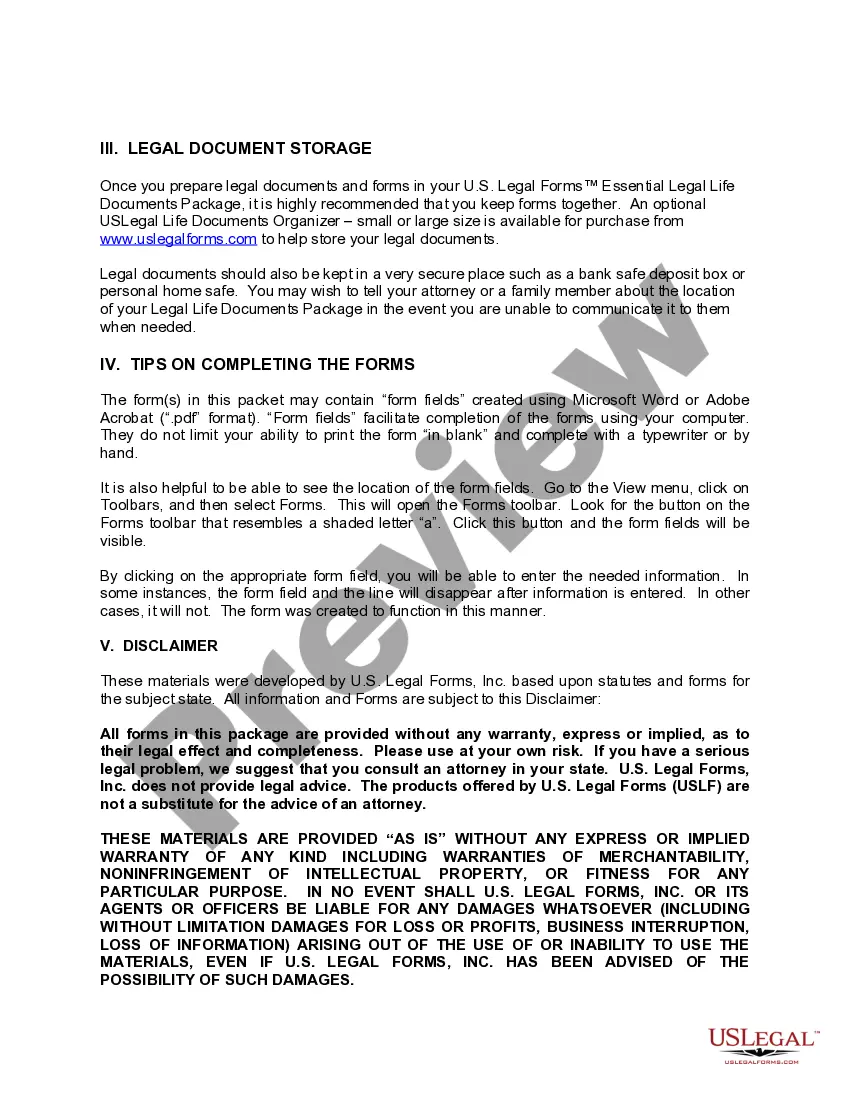
Documents contained in this package
- Statutory Short Form of General Power of Attorney
- Statutory Power of Attorney for Health Care
- Statutory Living Will - Advance Directive for a Natural Death
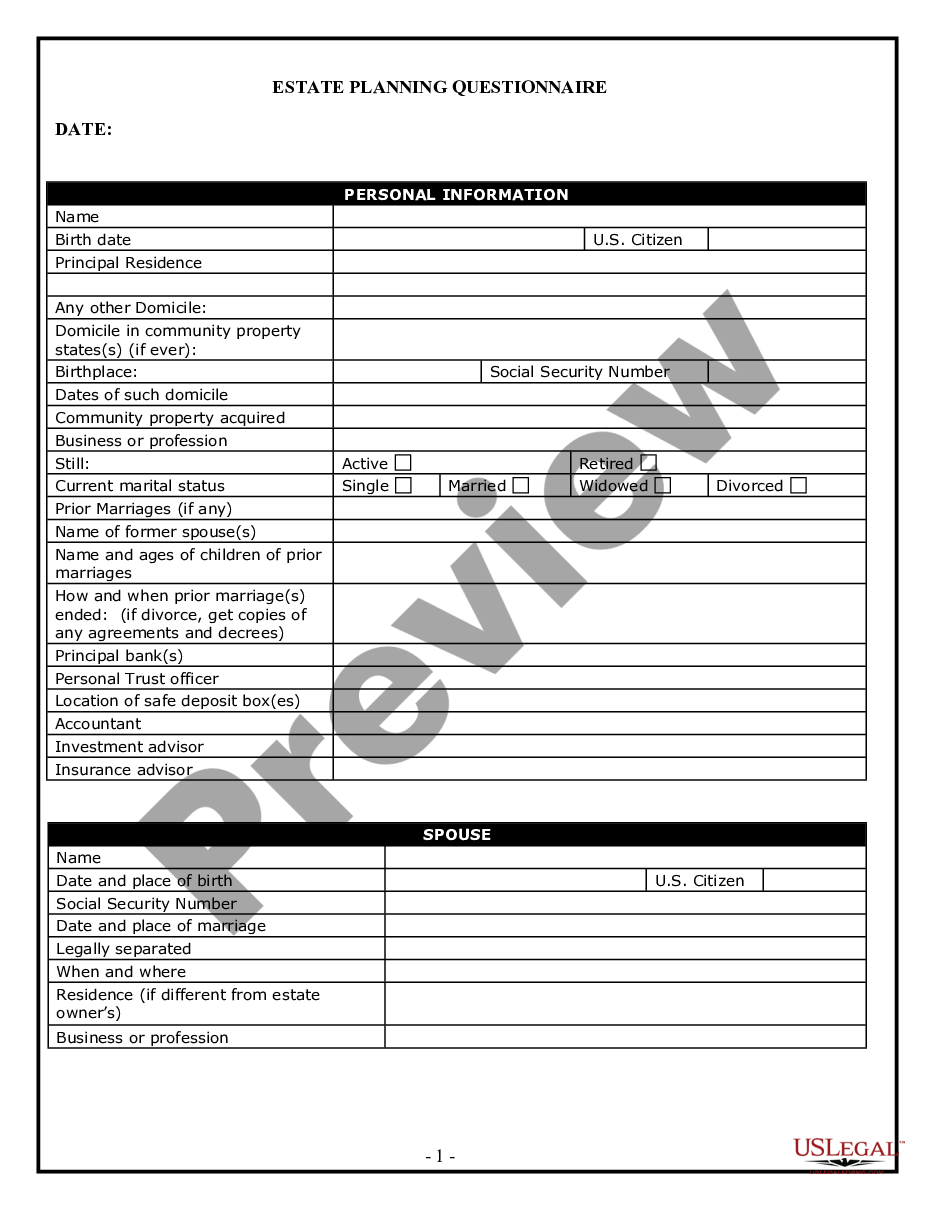
- Estate Planning Questionnaire and Worksheets
- Personal Property Inventory
- Financial Statement Form - Individual
- Personal Planning Information and Document Inventory Worksheets - A Legal Life Document


When to use this form package
This form package is ideal for situations such as:
- Planning for healthcare decisions in case of incapacitation.
- Establishing a financial power of attorney to manage your assets.
- Drafting a will to specify your wishes after death.
- Organizing personal property for insurance or estate planning purposes.
- Documenting your current financial situation for future reference.
Who this form package is for
- Baby Boomers planning for their later years.
- Individuals looking to manage healthcare and financial decisions.
- Anyone seeking to ensure their estate is handled according to their wishes.
- Families wanting to keep essential documents organized.
How to complete these forms
- Review the included forms and instructions thoroughly.
- Gather necessary personal and financial information.
- Fill out the forms, ensuring all required fields are completed.
- Sign the documents where indicated, preferably in the presence of a witness.
- Store all completed forms in a safe and accessible location.
Notarization guidance for this package
Certain documents in this package must be notarized for legal effectiveness. Our online notarization service, powered by Notarize, lets you verify and sign documents remotely through an encrypted video session, available anytime.
Get your form ready online
Our built-in tools help you complete, sign, share, and store your documents in one place.
Make edits, fill in missing information, and update formatting in US Legal Forms—just like you would in MS Word.
Download a copy, print it, send it by email, or mail it via USPS—whatever works best for your next step.
Sign and collect signatures with our SignNow integration. Send to multiple recipients, set reminders, and more. Go Premium to unlock E-Sign.
If this form requires notarization, complete it online through a secure video call—no need to meet a notary in person or wait for an appointment.
We protect your documents and personal data by following strict security and privacy standards.

Make edits, fill in missing information, and update formatting in US Legal Forms—just like you would in MS Word.

Download a copy, print it, send it by email, or mail it via USPS—whatever works best for your next step.

Sign and collect signatures with our SignNow integration. Send to multiple recipients, set reminders, and more. Go Premium to unlock E-Sign.

If this form requires notarization, complete it online through a secure video call—no need to meet a notary in person or wait for an appointment.

We protect your documents and personal data by following strict security and privacy standards.
Mistakes to watch out for
- Failing to sign or date the documents correctly.
- Not having the required witnesses present during signing.
- Overlooking details in the financial statement and inventory.
- Neglecting to update the documents as personal circumstances change.
Advantages of online completion
- Convenience of accessing and completing forms from home.
- Editability allows for customization to suit personal needs.
- Reliable legal forms drafted by licensed attorneys.
- Immediate download provides instant access to vital documents.
Legal use & context
- These forms can be used for effective estate planning and health care decisions.
- Each document complies with North Carolina legal statutes for enforceability.
- Properly completed and executed forms ensure your wishes are legally recognized.
Summary of main points
- The package includes essential legal documents tailored for Baby Boomers in North Carolina.
- It enables proactive planning for future health and financial situations.
- Completing these documents correctly ensures your wishes are honored.
Looking for another form?
Form popularity
FAQ
The national average cost for a living trust for an individual is $1,100-1,500 USD. The national average cost for a living trust for a married couple is $1,700-2,500 USD. Part of the reason for this range in prices is the range of services that are available from various estate planning attorneys.
Unless the Will provides otherwise, under North Carolina law, Executors or Administrators may claim a commission of up to 5% of the Estate assets and receipts, as approved by the Clerk of Court. Trusts should provide specific guidance regarding compensation.
It is true that in some states (such as California) probate administration can be lengthy and expensive. North Carolina is not one of those states. The maximum court cost that can be saved in North Carolina by using a funded living trust is $3,000, and those costs are generally much less in most estates.
Executor's Percentage Under North Carolina law, an executor may receive up to five percent of the value of the estate's receipts and disbursements" as compensation.
Administering a living trust after your death is not cost-free.Living trusts are much more expensive to set up and maintain than a will. Probate can often be avoided without using a living trust, by setting up "payable on death" accounts, making beneficiary designations, holding assets jointly, etc.
How Much Does a Living Trust Cost in California? A common question that people ask when they're considering if a living trust is right for their family is how much it costs. On average, a living trust costs between $1000 and $5000 to put together.
Figure out the type of trust you'll need. Are you single? Take inventory of everything you own. Pick your trustee. Draw up the trust document, either by yourself or with a lawyer. Sign the trust document in front of a notary. Fund the trust this means putting your property into the trust.
You should expect it to take a minimum of six months to a year to settle an estate because of the legal notice requirements and time that creditors have to submit claims against the estate. Creditors have 90 days from the first publication date of the notice of probate.
Unless the Will provides otherwise, under North Carolina law, Executors or Administrators may claim a commission of up to 5% of the Estate assets and receipts, as approved by the Clerk of Court. Trusts should provide specific guidance regarding compensation.