North Carolina Statutory Living Will - Advance Directive for a Natural Death
Overview of this form
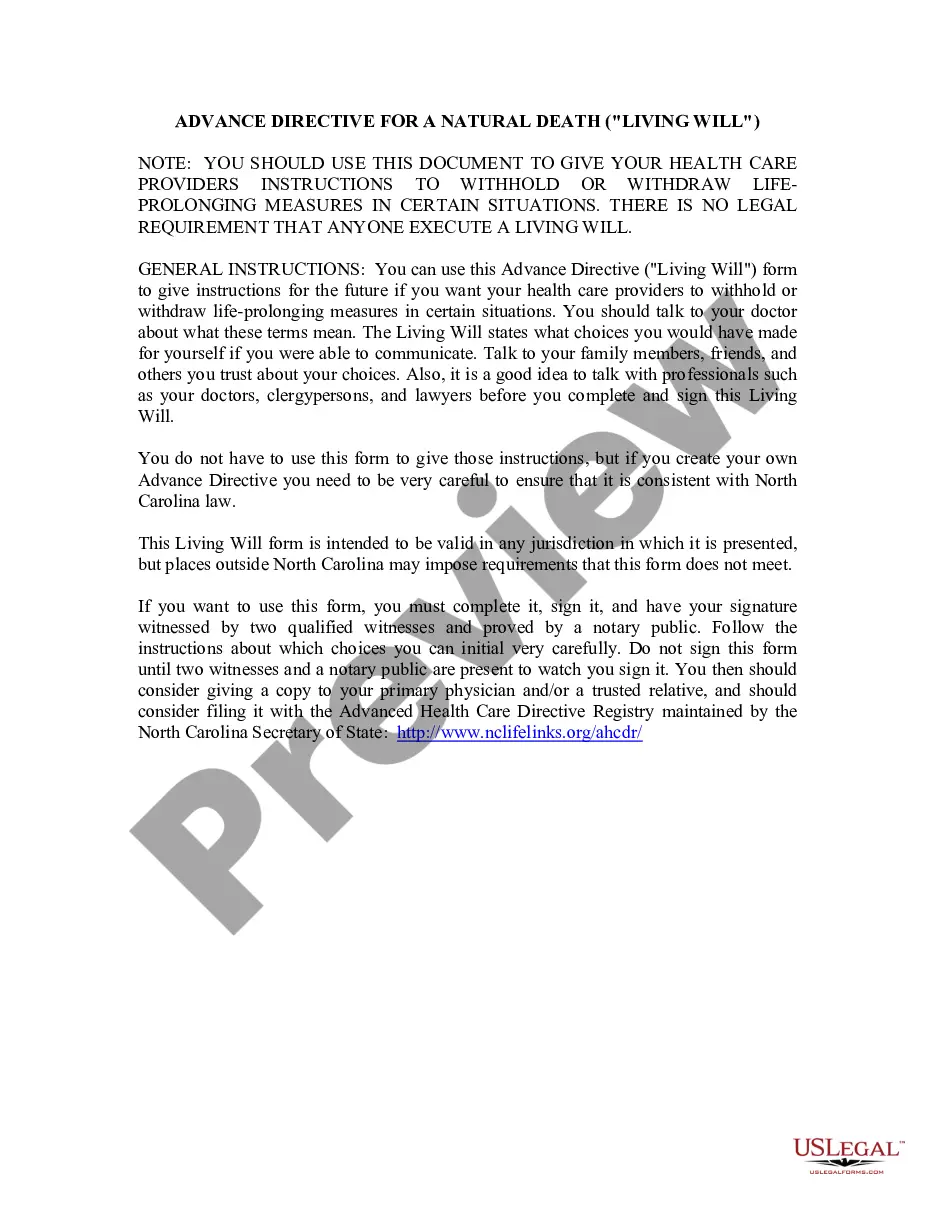
The Statutory Living Will - Advance Directive for a Natural Death is a legal document that allows you to express your preferences regarding life-prolonging medical treatments if you are unable to communicate your wishes due to a terminal condition, irreversible condition, or persistent vegetative state. This form ensures that your healthcare providers are clear about your desires when it comes to interventions that may prolong your life, distinguishing it from other types of advance directives.
Main sections of this form
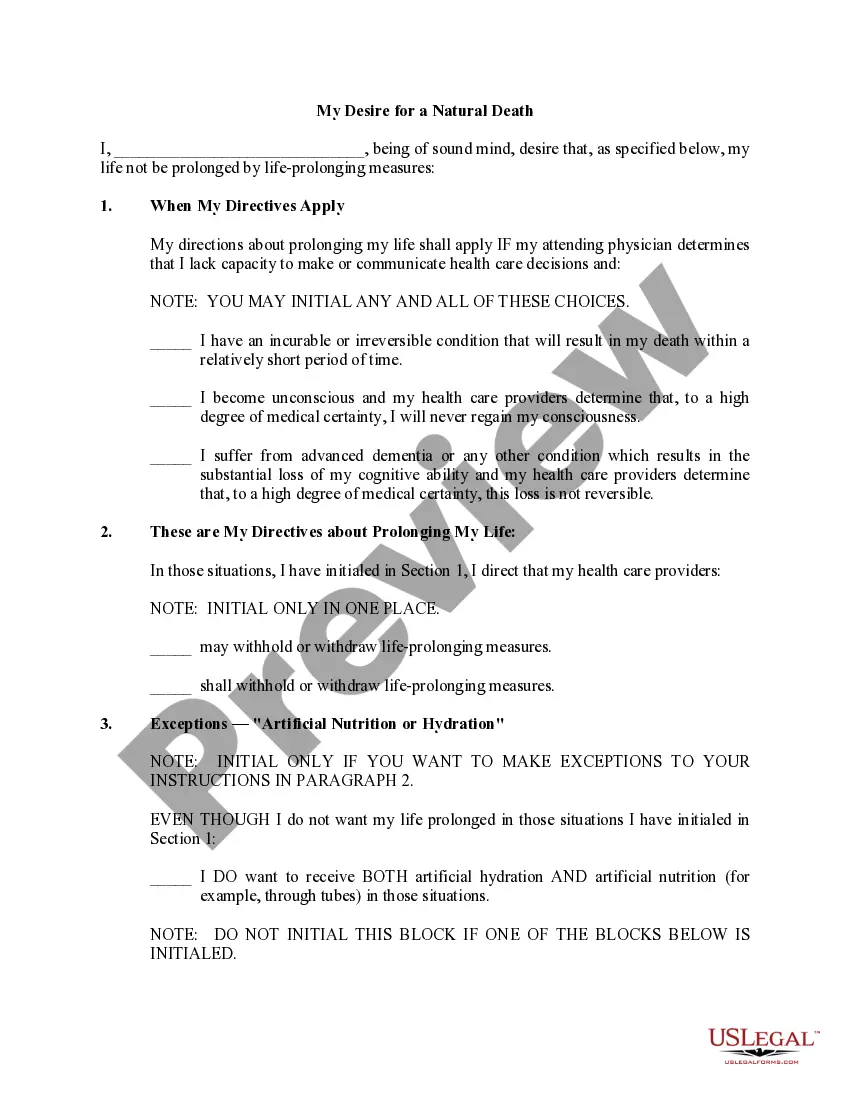
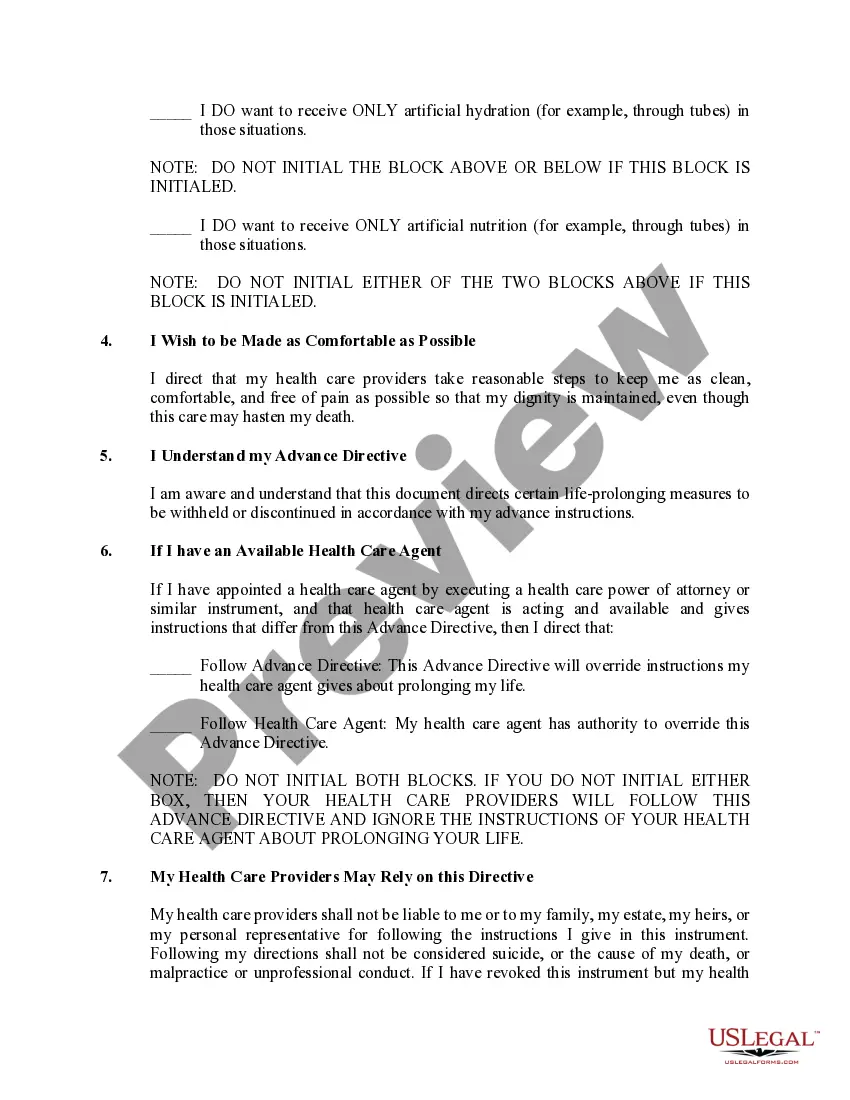
- Your desire regarding prolonging life in specific medical situations.
- Conditions that must be met before your directives apply.
- Instructions on whether to withhold or withdraw life-prolonging measures.
- Options for artificial nutrition and hydration settings.
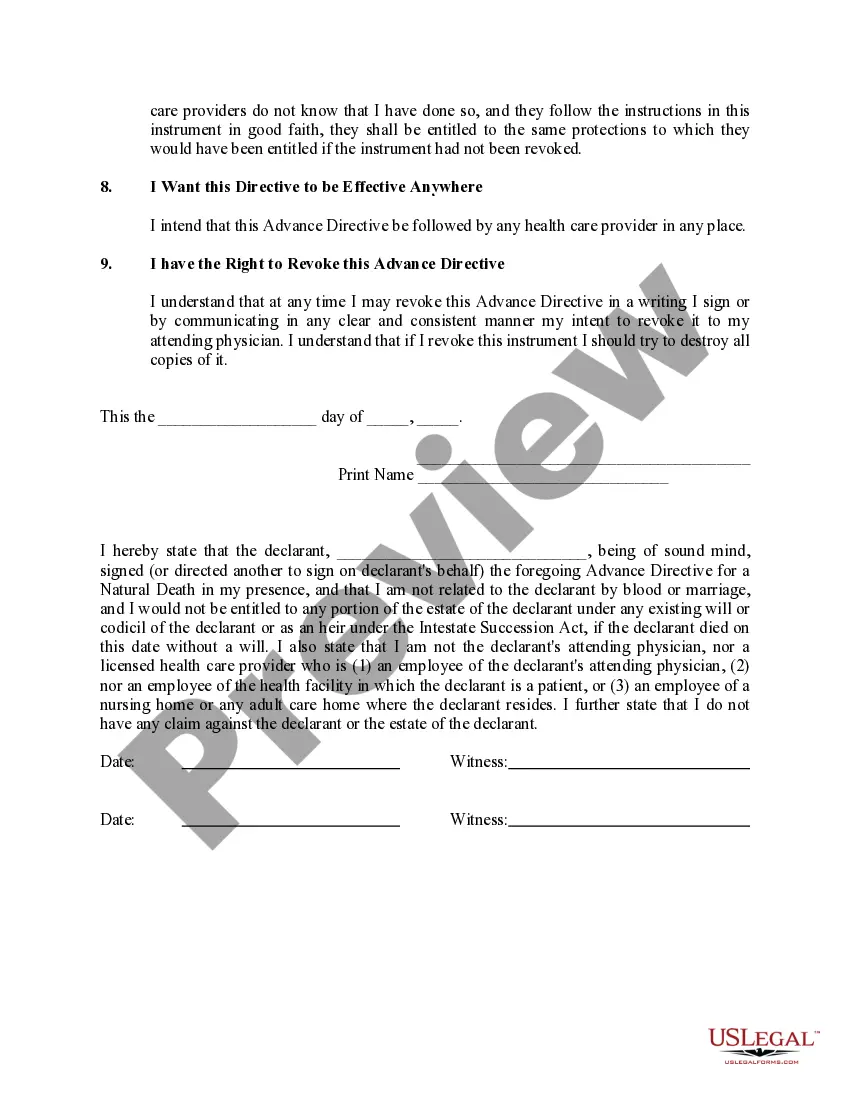
- Provisions for appointing a healthcare agent.
- Revocation rights and instructions for healthcare providers.
When this form is needed
This form is appropriate if you want to ensure that your medical preferences regarding the withholding or withdrawal of life-prolonging measures are honored, particularly when you cannot communicate. You may need this form in situations such as severe illness, severe brain injury, or advanced dementia, where a physician determines you have a diminished capacity to make healthcare decisions.
Who this form is for
- Individuals who want to document their wishes regarding end-of-life care.
- Anyone who may face a terminal illness or irreversible conditions.
- Patients who want to ensure their healthcare preferences are respected in medical emergencies.
- People who have discussed their wishes with family and healthcare professionals.
Steps to complete this form
- Begin by entering your full name at the top of the form.
- Read through the instructions carefully and discuss them with your healthcare provider.
- Initial the choices that reflect your wishes regarding life-prolonging measures.
- Complete the exceptions section if you wish to allow artificial nutrition or hydration.
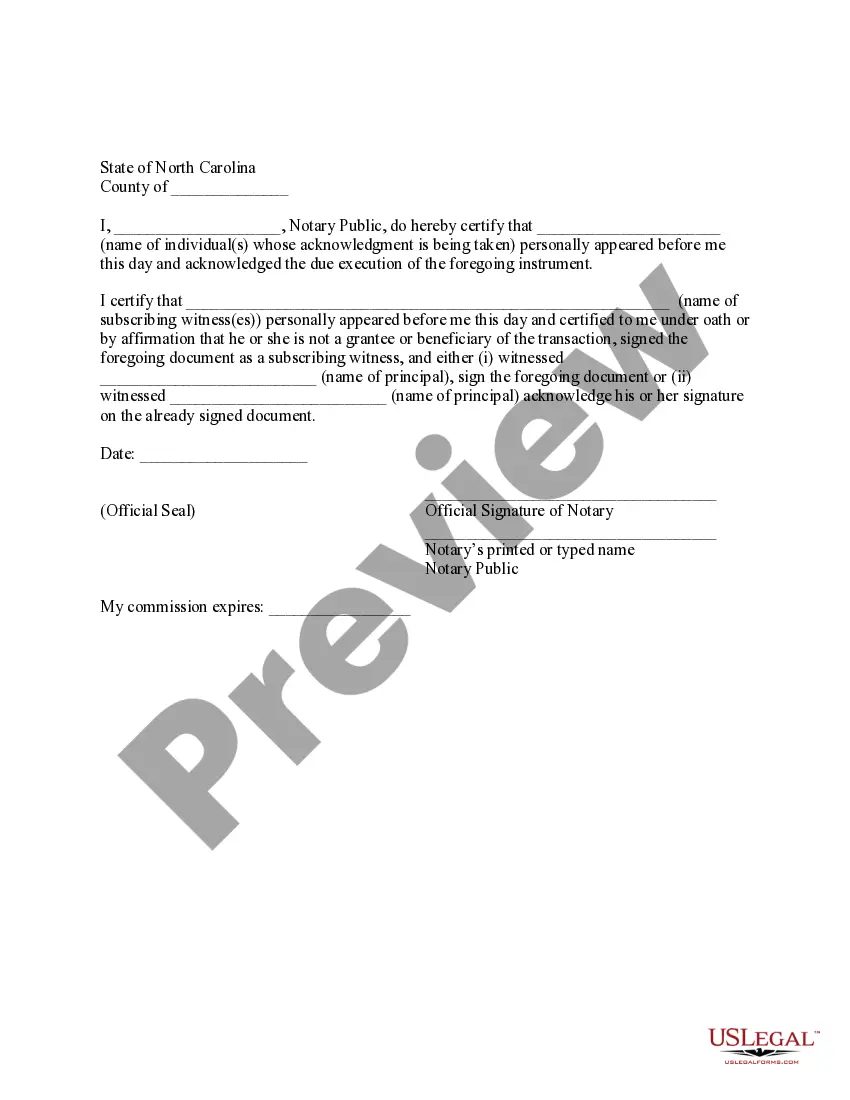
- Sign the form in the presence of two qualified witnesses and a notary public.
- Give copies of the completed form to your healthcare provider and trusted relatives.
Is notarization required?
Yes, this form must be notarized to be legally valid. It requires signatures from two qualified witnesses and the notarization process ensures your intentions are properly acknowledged and documented.
Get your form ready online
Our built-in tools help you complete, sign, share, and store your documents in one place.
Make edits, fill in missing information, and update formatting in US Legal Forms—just like you would in MS Word.
Download a copy, print it, send it by email, or mail it via USPS—whatever works best for your next step.
Sign and collect signatures with our SignNow integration. Send to multiple recipients, set reminders, and more. Go Premium to unlock E-Sign.
If this form requires notarization, complete it online through a secure video call—no need to meet a notary in person or wait for an appointment.
We protect your documents and personal data by following strict security and privacy standards.

Make edits, fill in missing information, and update formatting in US Legal Forms—just like you would in MS Word.

Download a copy, print it, send it by email, or mail it via USPS—whatever works best for your next step.

Sign and collect signatures with our SignNow integration. Send to multiple recipients, set reminders, and more. Go Premium to unlock E-Sign.

If this form requires notarization, complete it online through a secure video call—no need to meet a notary in person or wait for an appointment.

We protect your documents and personal data by following strict security and privacy standards.
Common mistakes to avoid
- Not discussing the contents of the form with family and medical professionals.
- Failing to have the form signed and witnessed correctly.
- Not providing copies to healthcare providers or family members.
- Signing the form before all required witnesses are present.
Benefits of using this form online
- Convenient access to legal form templates prepared by licensed attorneys.
- The ability to download and customize the form for your specific needs.
- Secure and easy storage of your documents for future reference.
What to keep in mind
- The Statutory Living Will allows you to set clear medical care preferences.
- It is crucial to discuss your wishes with healthcare professionals and family.
- Ensure the form is signed, witnessed, and notarized to uphold its validity.
- Keep copies for yourself and your healthcare providers to ensure your wishes are known.
Looking for another form?



Form popularity
FAQ
A living will is a vital part of the estate plan. You can alter it as your preferences and needs change over time.But your family cannot override your living will. They cannot take away your authority to make your own treatment and care plans.
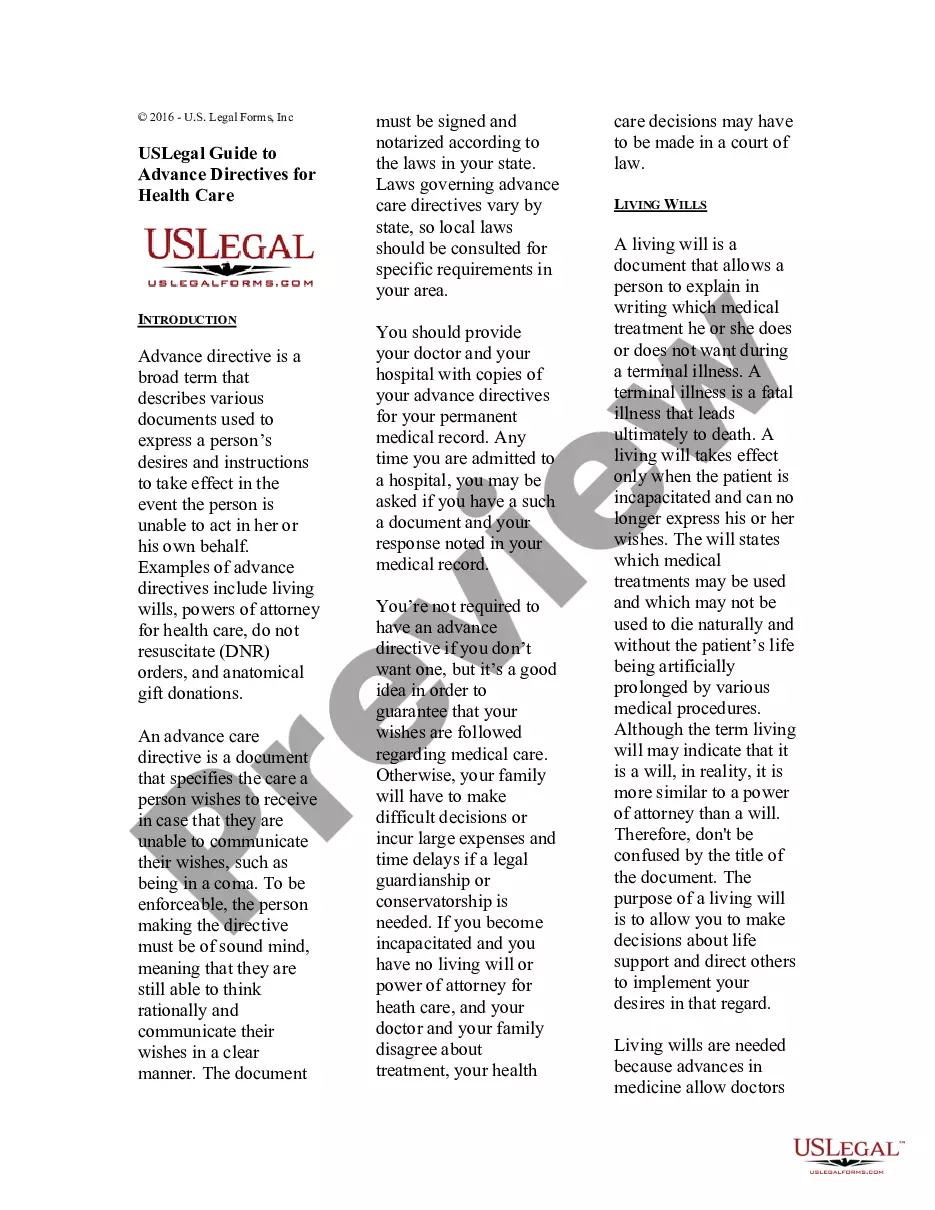
An advance directive is a set of instructions someone prepares in advance of ill health that determines his healthcare wishes. A living will is one type of advance directive that becomes effective when a person is terminally ill.
The name and contact information of your healthcare agent/proxy. Answers to specific questions about your preferences for care if you become unable to speak for yourself. Names and signatures of individuals who witness your signing your advance directive, if required.
A living will, also called a directive to physicians or advance directive, is a document that lets people state their wishes for end-of-life medical care, in case they become unable to communicate their decisions. It has no power after death.
A 2004 survey by , which provides online legal information, found that 36 percent of Americans have a living will. Even when people have filled out living wills, doctors often ignore them. Good deaths are fewer than bad deaths, says Rev. Dr.
An advance directive, alone, may not be sufficient to stop all forms of life-saving treatment. You may also need specific do not resuscitate, or DNR orders.You retain the right to override the decisions or your representative, change the terms of your living will or POA, or completely revoke an advance directive.
No, in North Carolina, you do not need to notarize your will to make it legal.A self-proving will speeds up probate because the court can accept the will without contacting the witnesses who signed it.
The living will. Durable power of attorney for health care/Medical power of attorney. POLST (Physician Orders for Life-Sustaining Treatment) Do not resuscitate (DNR) orders. Organ and tissue donation.
Advance directives generally fall into three categories: living will, power of attorney, and health care proxy.