House Sitting Agreement
What is this form?
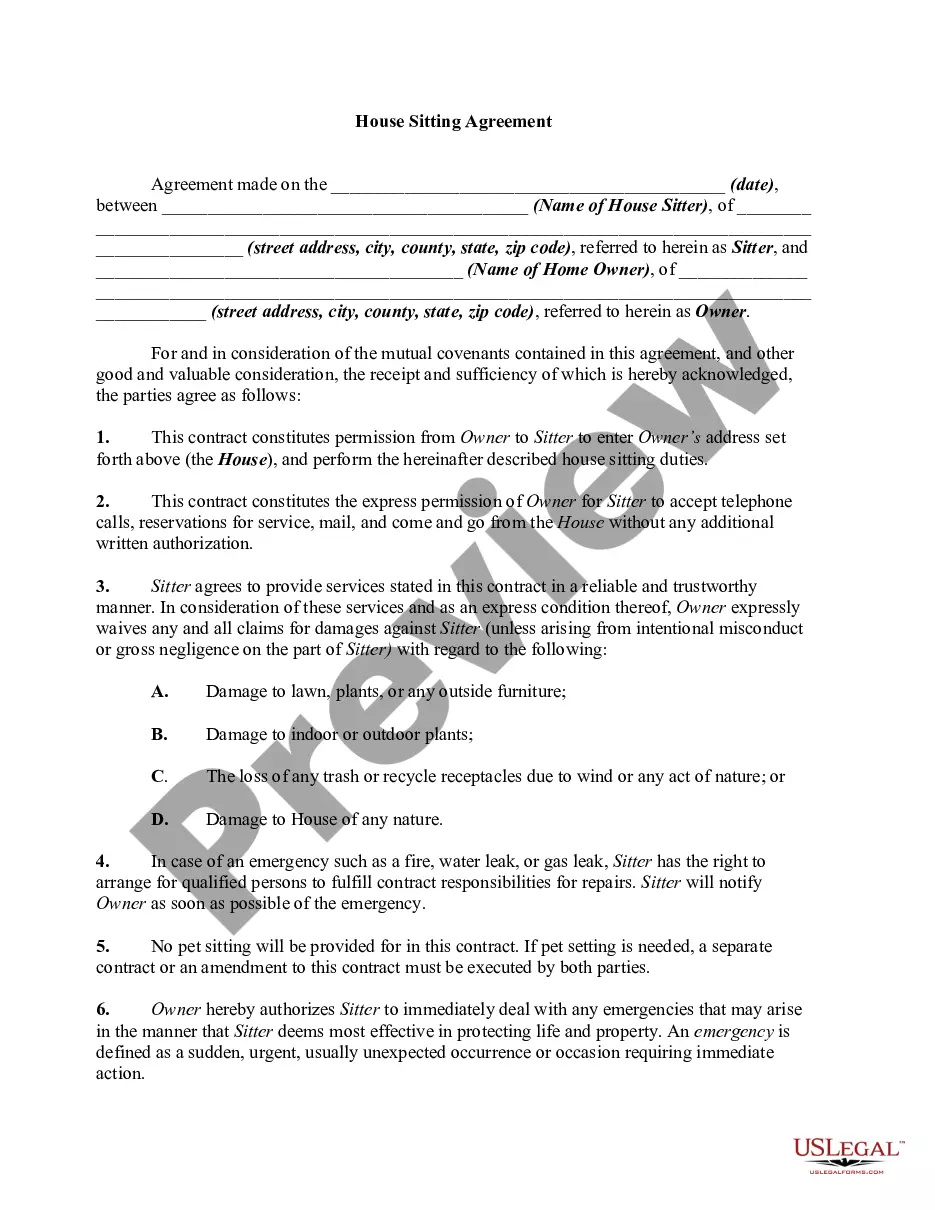
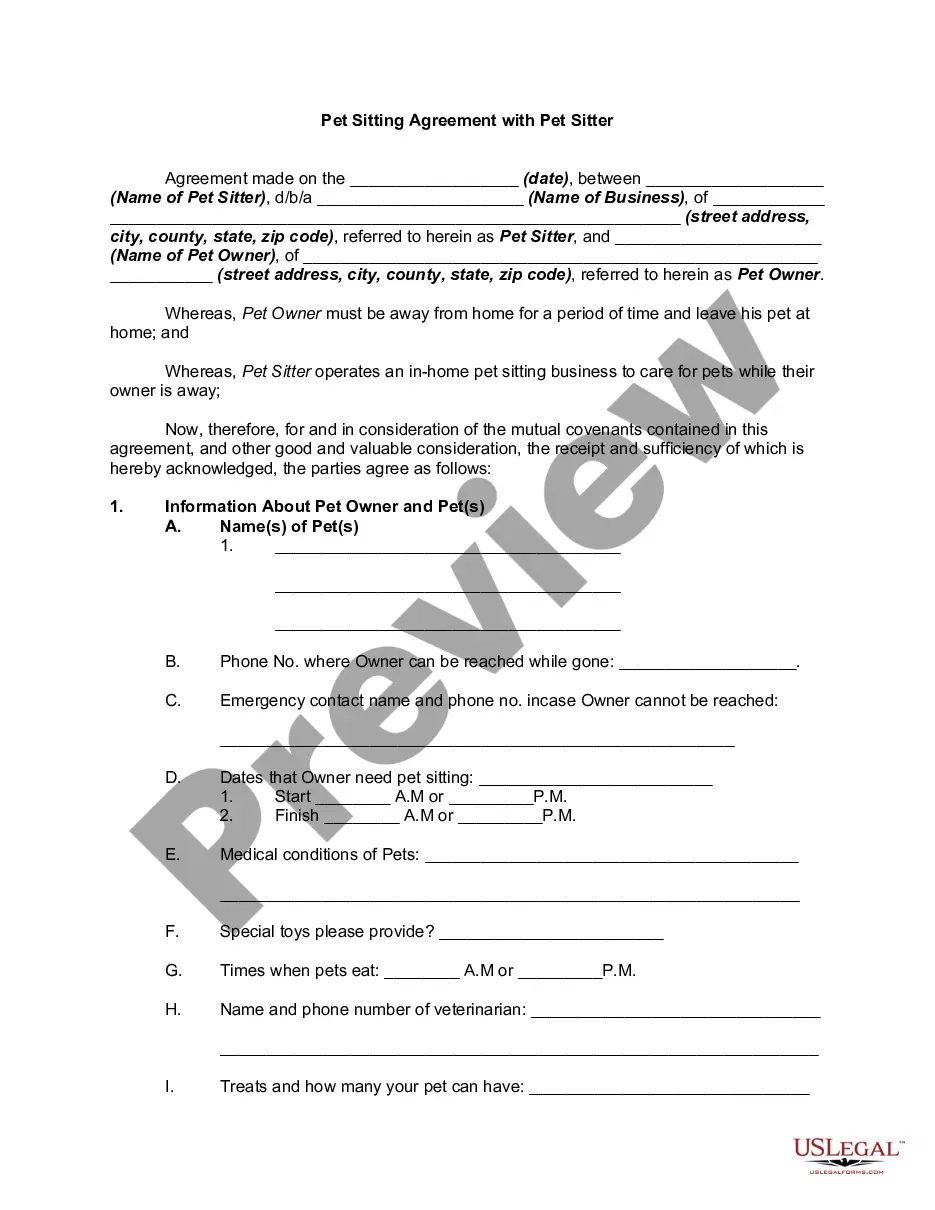
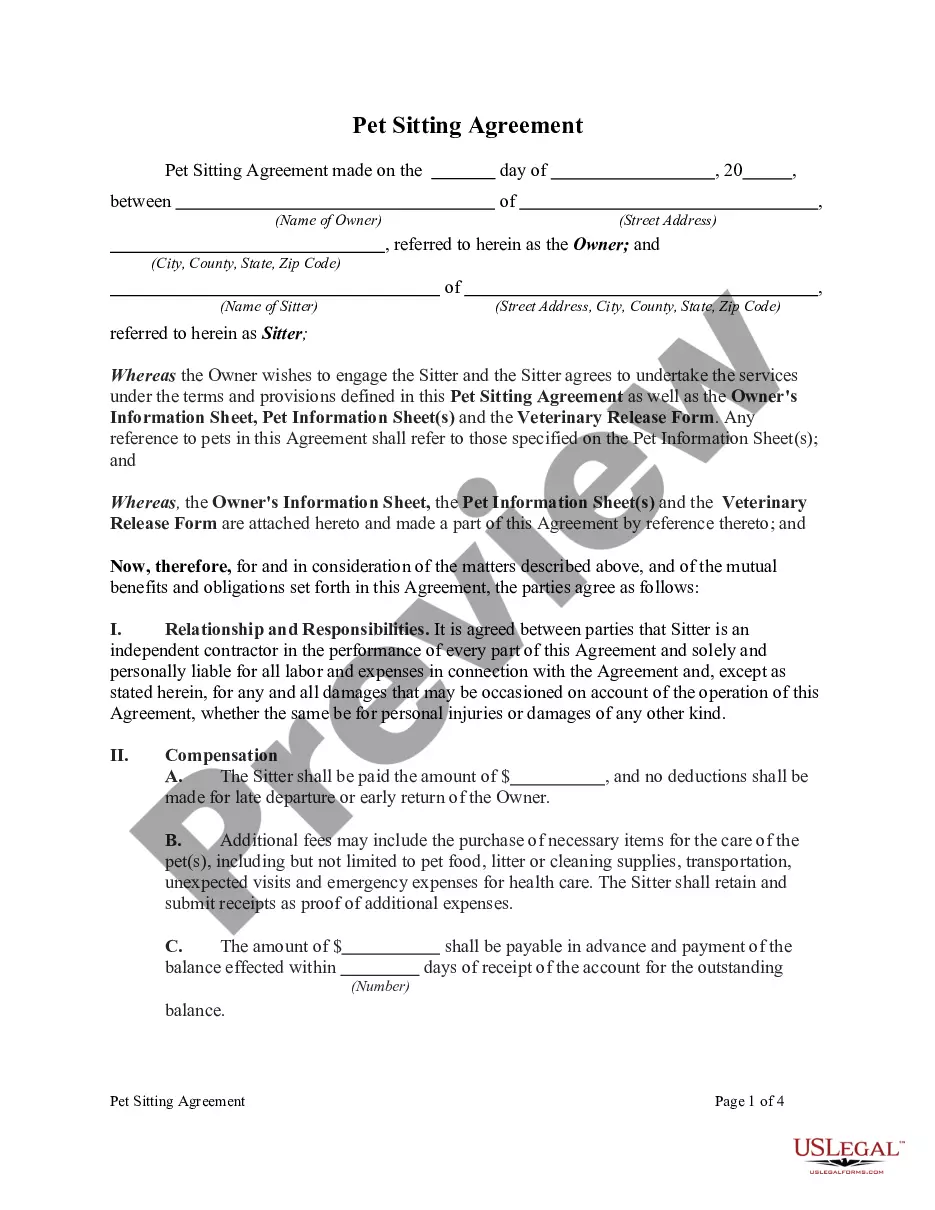
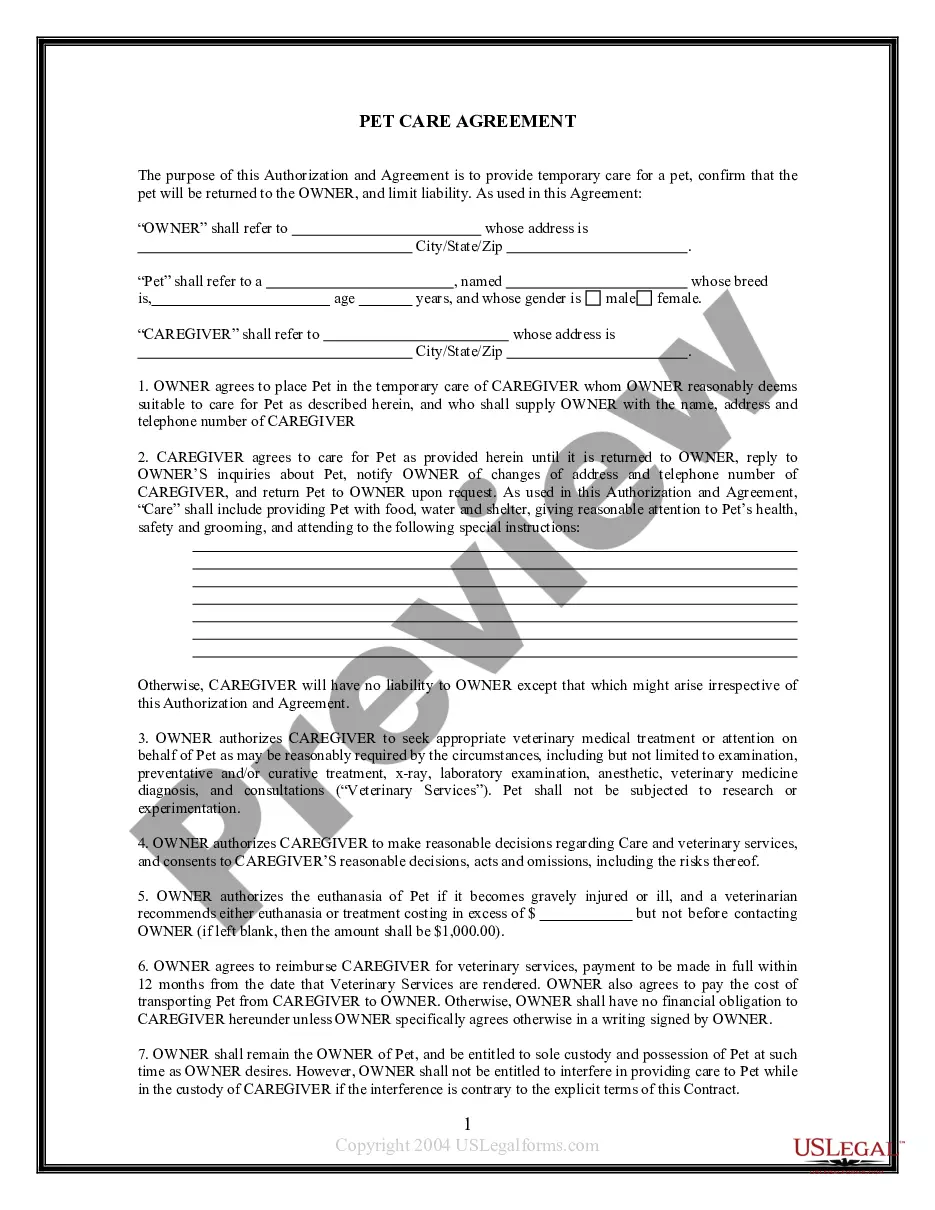
The House Sitting Agreement is a legal document that outlines the responsibilities and permissions for a house sitter while the homeowner is away. Unlike casual arrangements, this form formalizes the relationship, ensuring both parties understand their rights and responsibilities. It covers aspects such as access to the property, required services, and emergency protocols, providing a clear framework for house sitting duties.
Key components of this form
- The date of the agreement.
- Identification of the house sitter and homeowner, including addresses.
- Permission for the sitter to enter the property and perform designated duties.
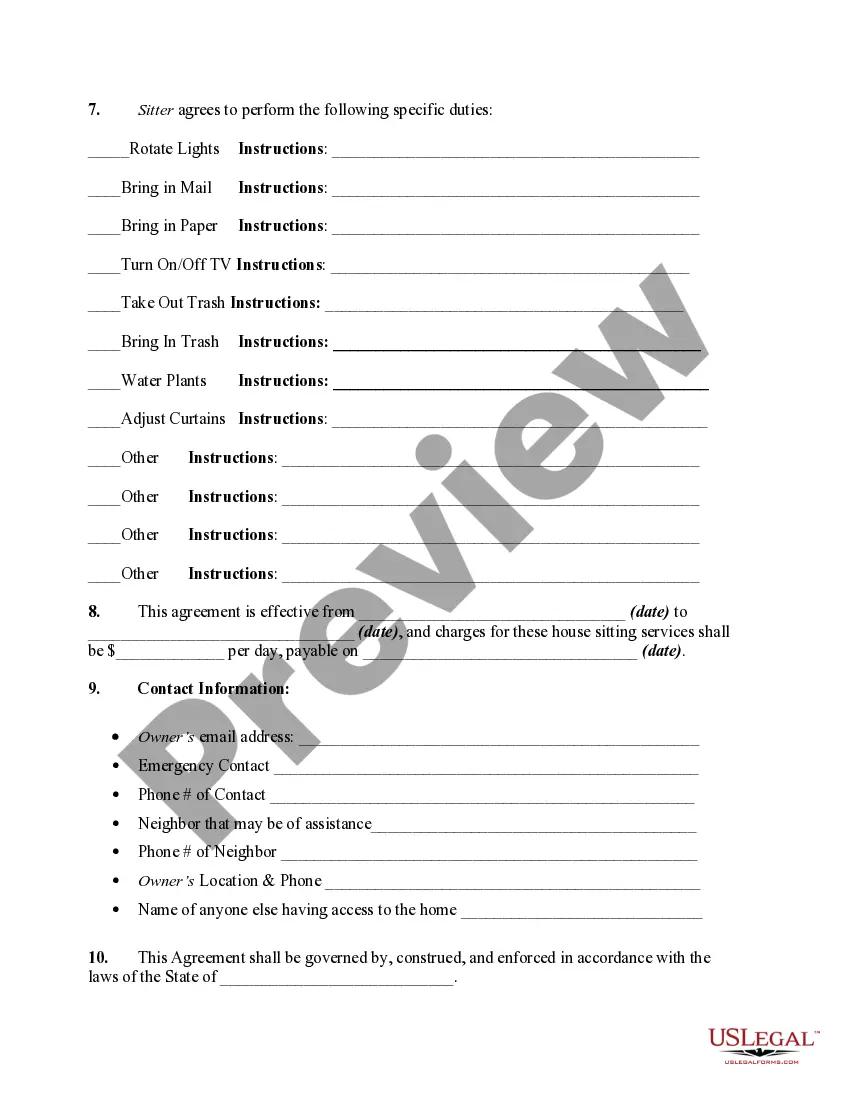
- Specific responsibilities of the sitter, including pet care and emergency protocols.
- Duration of the agreement and payment terms.
- Contact information for emergencies and assistance.
When this form is needed
Use this House Sitting Agreement when you will be away from your home for an extended period and need someone to care for your property. It is especially useful for maintaining security, managing deliveries, and ensuring that your home appears occupied to deter potential issues such as burglaries. This agreement is beneficial for both homeowners seeking peace of mind and house sitters looking for a formal arrangement.
Who this form is for
- Homeowners who plan to be away for a significant amount of time.
- Individuals seeking to hire a trusted house sitter.
- House sitters looking for a formal agreement outlining their responsibilities.
Steps to complete this form
- Identify the date of the agreement and include both parties' names and addresses.
- Specify the details of the house sitting duties, including any special instructions.
- Outline the duration of the agreement and the payment terms.
- Provide contact information for emergencies and any necessary third parties.
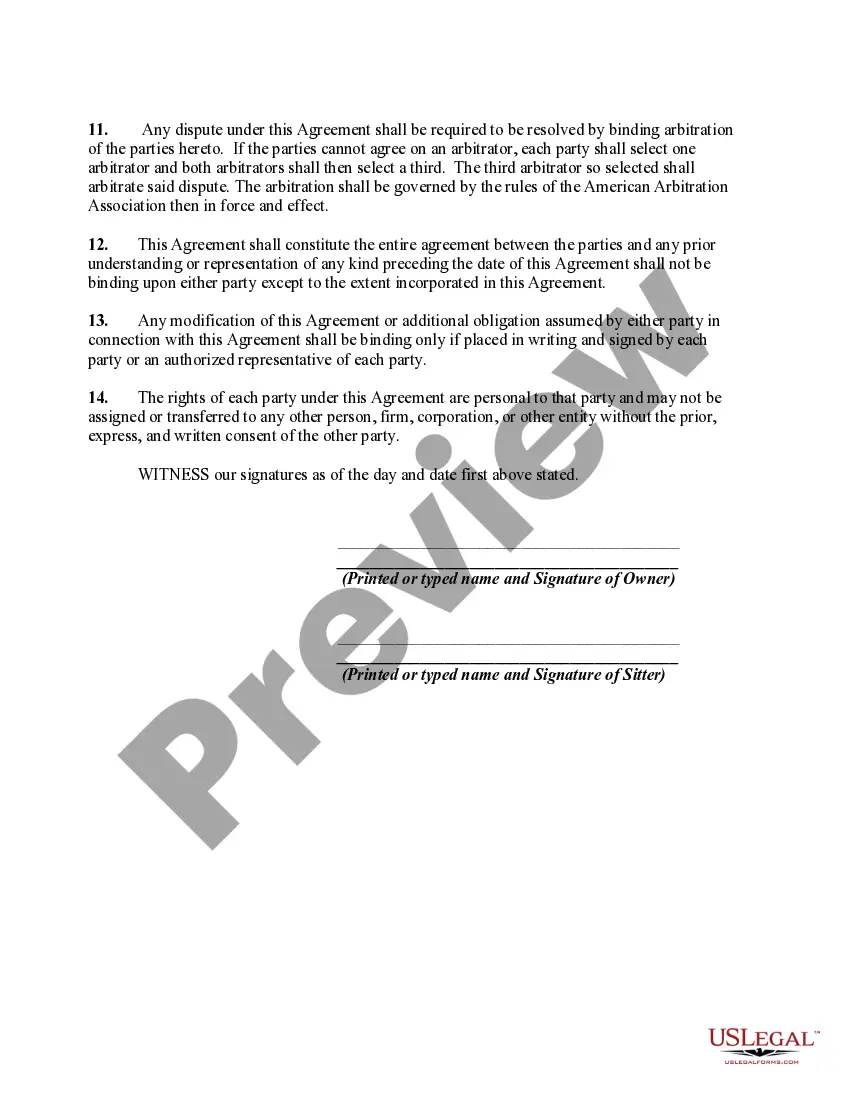
- Both parties should sign and date the document to formalize the agreement.
Does this form need to be notarized?
Notarization is not commonly needed for this form. However, certain documents or local rules may make it necessary. Our notarization service, powered by Notarize, allows you to finalize it securely online anytime, day or night.
Get your form ready online
Our built-in tools help you complete, sign, share, and store your documents in one place.
Make edits, fill in missing information, and update formatting in US Legal Forms—just like you would in MS Word.
Download a copy, print it, send it by email, or mail it via USPS—whatever works best for your next step.
Sign and collect signatures with our SignNow integration. Send to multiple recipients, set reminders, and more. Go Premium to unlock E-Sign.
If this form requires notarization, complete it online through a secure video call—no need to meet a notary in person or wait for an appointment.
We protect your documents and personal data by following strict security and privacy standards.

Make edits, fill in missing information, and update formatting in US Legal Forms—just like you would in MS Word.

Download a copy, print it, send it by email, or mail it via USPS—whatever works best for your next step.

Sign and collect signatures with our SignNow integration. Send to multiple recipients, set reminders, and more. Go Premium to unlock E-Sign.

If this form requires notarization, complete it online through a secure video call—no need to meet a notary in person or wait for an appointment.

We protect your documents and personal data by following strict security and privacy standards.
Mistakes to watch out for
- Failing to specify all house sitting duties and responsibilities.
- Not including emergency contact information, which can hinder response efforts.
- Leaving out details on payment terms or duration of the agreement.
Advantages of online completion
- Convenience of instant access and immediate download.
- Editability allows customization of the agreement to suit specific needs.
- Reliability with templates drafted by licensed attorneys, ensuring legal compliance.
Looking for another form?
Form popularity
FAQ
The House Sitter's responsibilities include collecting and organizing homeowners' mail, periodically turning house lights on and off, as well as monitoring surveillance footage to take note of and report any suspicious activity occurring around or outside of homeowners' houses.
Housesitting cost varies widely. Some house sitters will work for free in exchange for food and rent while others will charge $80 per day! Most house sitters charge $25 - $45 per day. Depending on your area and other factors this number might fluctuate.
24 hour house sitting, no pets: R 400 per calendar day. 24 hour house sitting, with 1 pet: R 450 per calendar day. 24 hour house sitting, add R 100 per extra pet above 1 pet per day.
Pay for long-term house sitters starts at £10 a day with Housesitters, plus A£7 food allowance and 40p per mile for fuel both of which are non-taxable. Small additional amounts are available if you care for a dog or cat while house sitting.
Provide Clear Directions. Make Sure The House Is Comfortable. Add Some Personal Touches. Be Ready For Their Arrival. Use The Welcome Guide. Introduce Your Sitter To Your Pets. Run Through Routines.
If you decide to pay your friends to pet sit, a fair rate of pay is 30-40% of what you would pay a professional service. For example, a quick 15-minute drop-in visit would equal about $6 $10 per visit. If your pets need longer visits, such as 45-60 minute visits, you should pay somewhere around $9 -$12 per visit.
As a starting point to keep in mind, typical house sitting rates are in the $25-30/day range, more (around $50) for overnight stays. But this is just a ballpark. We suggest taking the time to calculate a number based on your own house sitting expectations and needs.
You would report income that was paid for house sitting as self-employment income.
The following items are deemed nontaxable by the IRS: Inheritances, gifts and bequests. Cash rebates on items you purchase from a retailer, manufacturer or dealer. Alimony payments (for divorce decrees finalized after 2018)