Virginia New Resident Guide
Understanding this form
The New Resident Guide is a comprehensive informational document designed to assist individuals who have recently relocated to a new state. It highlights various state requirements essential for settling in, including voter registration, identification cards, driverâs licenses, and vehicle title and registration. This guide serves as a vital tool for new residents to navigate their legal obligations smoothly, setting it apart from other legal forms that may not cover these specific areas.
Key parts of this document
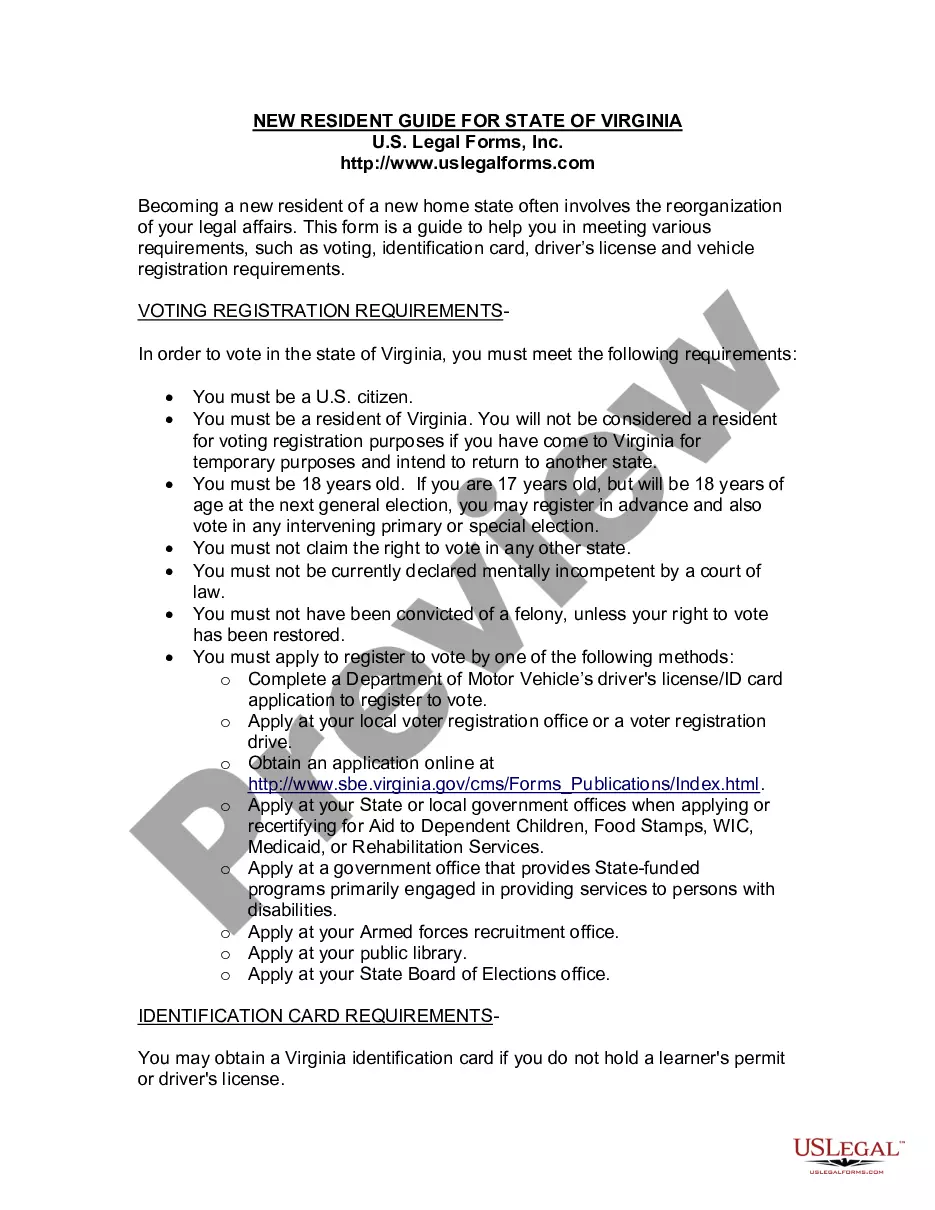
- Overview of voting registration requirements specific to the state.
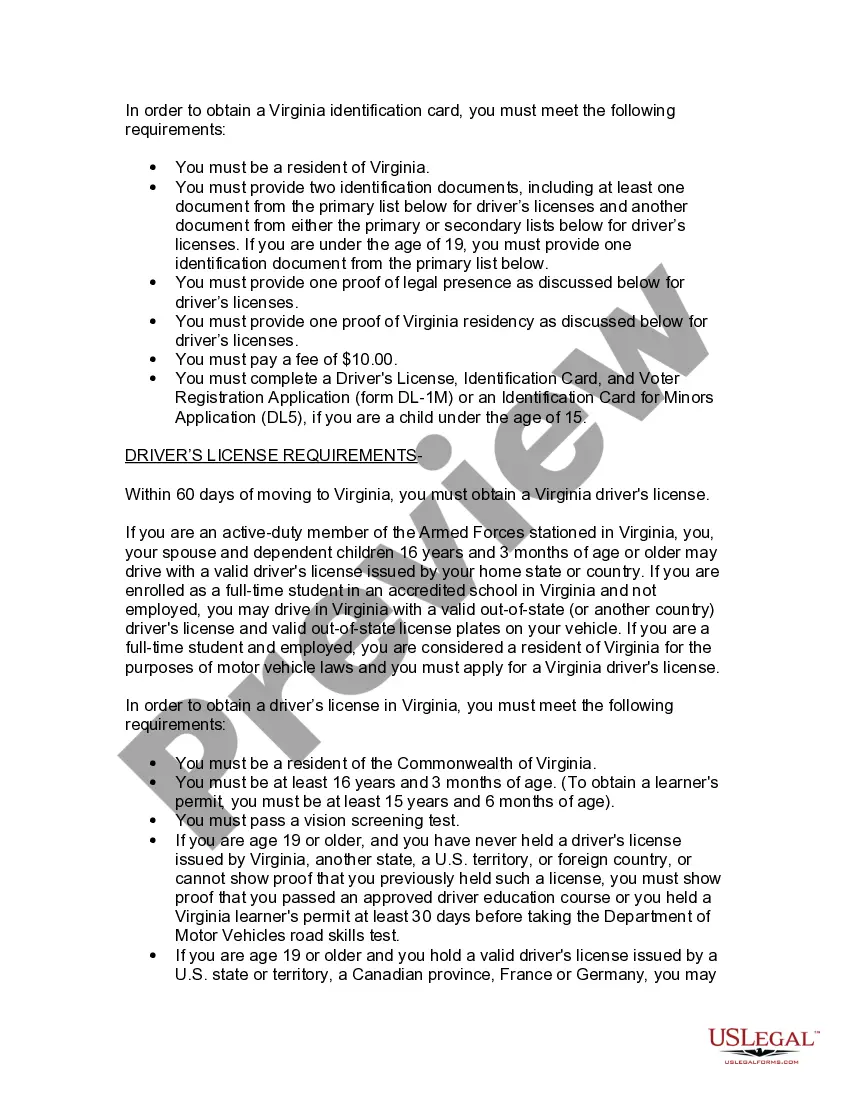
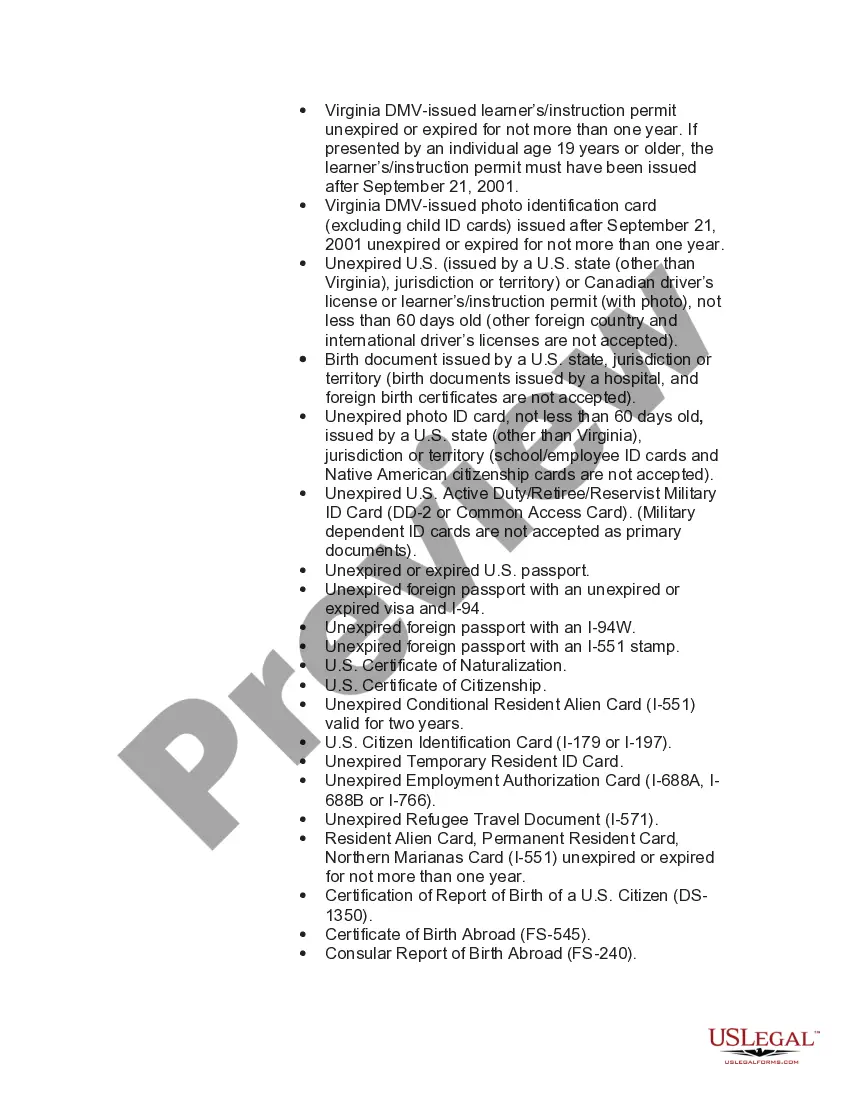
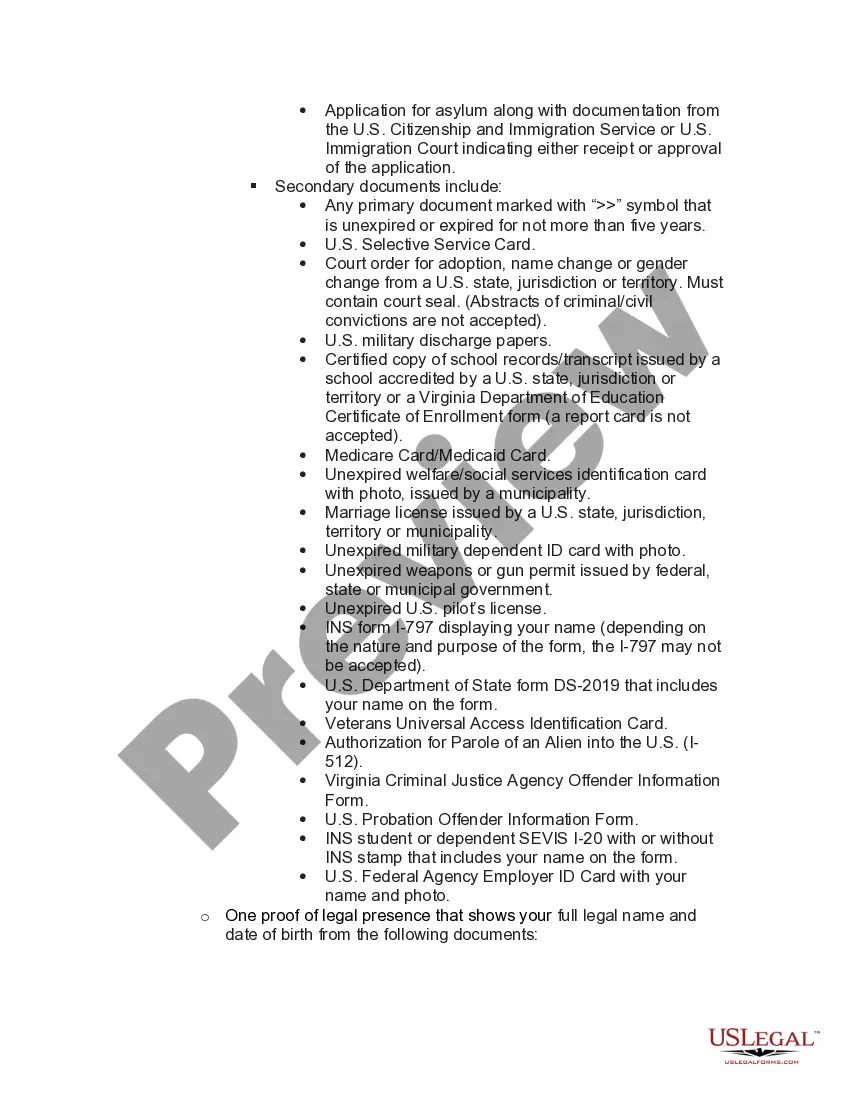
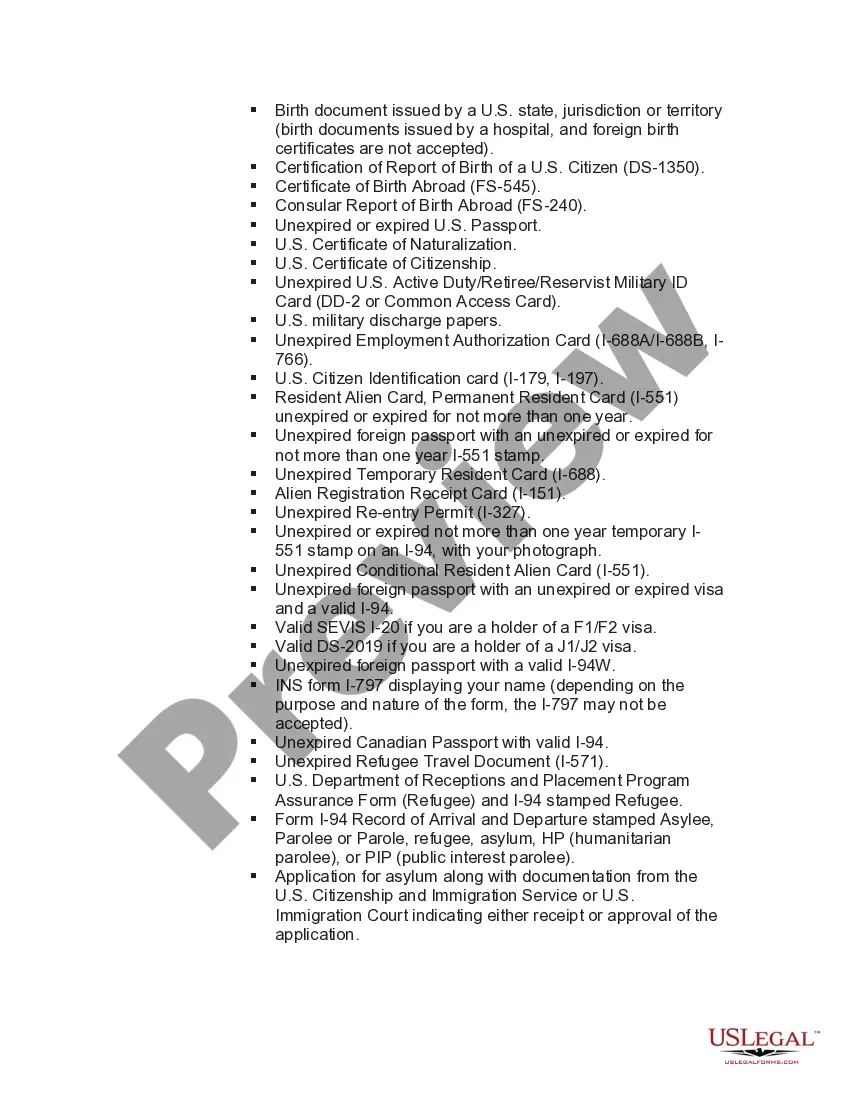
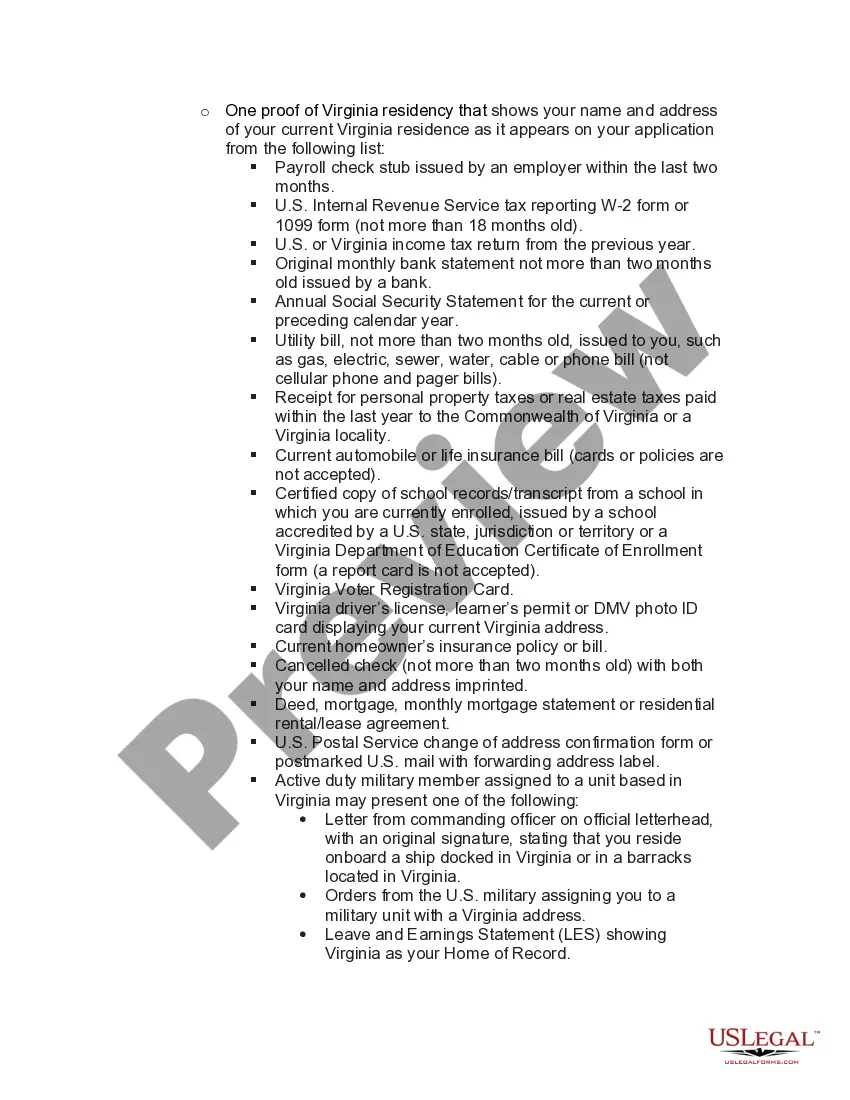
- Identification card requirements and necessary documentation needed.
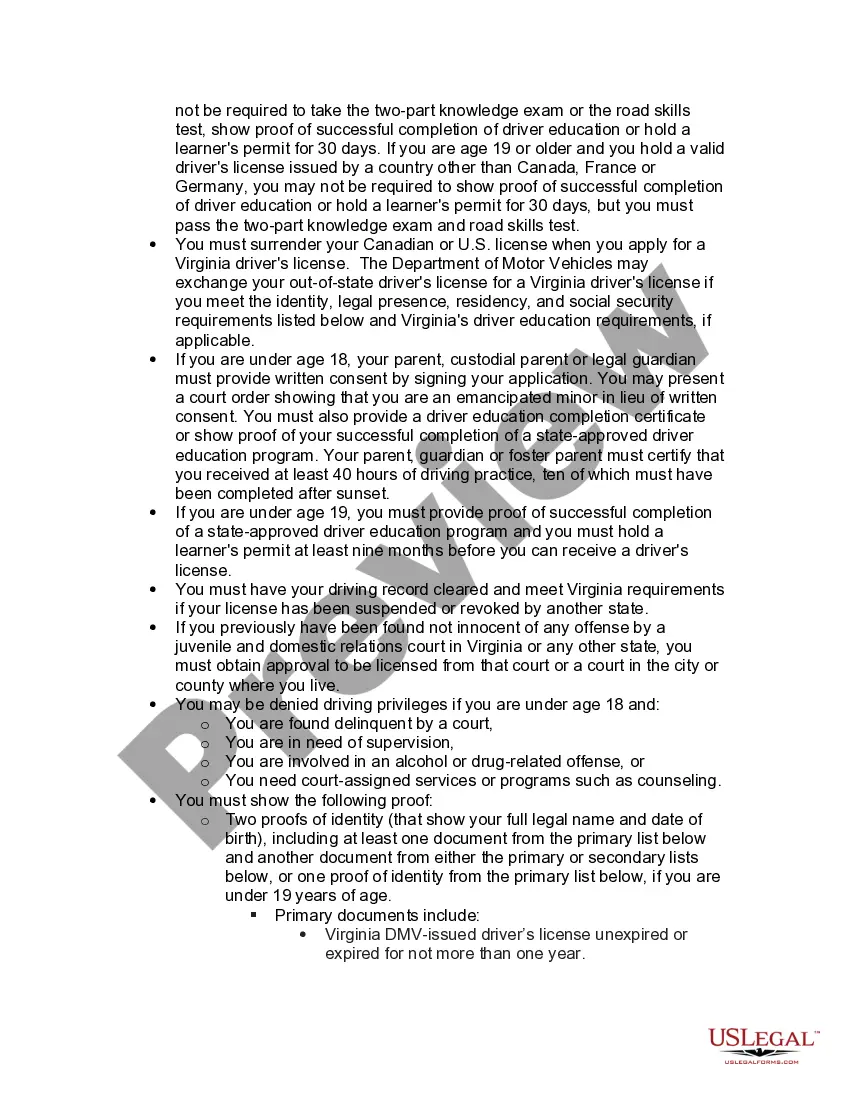
- Driverâs license application process and criteria for new residents.
- Vehicle title and registration steps after moving.
- Guidance on when and how to update residency status.

Situations where this form applies
The New Resident Guide should be used when you have recently moved to a new state and need to familiarize yourself with the legal requirements for residency. This includes situations such as starting a new job, enrolling in school, or changing your voting location due to your move. It is a valuable resource for ensuring compliance with state laws and making your transition as smooth as possible.
Who this form is for
- Individuals or families relocating to a new state.
- New residents who want to understand legal obligations regarding voter registration.
- Anyone needing guidance on obtaining state-specific identification documents.
- Newly moved individuals seeking to register their vehicles or apply for a driverâs license.
Instructions for completing this form
- Review the voter registration requirements specific to your new state.
- Gather necessary documents for identification and residency verification.
- Apply for your new state driverâs license within 60 days of moving.
- Complete the vehicle title application and register your vehicle upon moving.
- Stay informed about any local government requirements that may apply in your area.
Does this document require notarization?
Notarization is generally not required for this form. However, certain states or situations might demand it. You can complete notarization online through US Legal Forms, powered by Notarize, using a verified video call available anytime.
Get your form ready online
Our built-in tools help you complete, sign, share, and store your documents in one place.
Make edits, fill in missing information, and update formatting in US Legal Forms—just like you would in MS Word.
Download a copy, print it, send it by email, or mail it via USPS—whatever works best for your next step.
Sign and collect signatures with our SignNow integration. Send to multiple recipients, set reminders, and more. Go Premium to unlock E-Sign.
If this form requires notarization, complete it online through a secure video call—no need to meet a notary in person or wait for an appointment.
We protect your documents and personal data by following strict security and privacy standards.

Make edits, fill in missing information, and update formatting in US Legal Forms—just like you would in MS Word.

Download a copy, print it, send it by email, or mail it via USPS—whatever works best for your next step.

Sign and collect signatures with our SignNow integration. Send to multiple recipients, set reminders, and more. Go Premium to unlock E-Sign.

If this form requires notarization, complete it online through a secure video call—no need to meet a notary in person or wait for an appointment.

We protect your documents and personal data by following strict security and privacy standards.
Typical mistakes to avoid
- Not updating voter registration promptly after moving.
- Failing to gather all required identification documents before applying.
- Missing the deadline to obtain a new driver's license or register a vehicle.
- Overlooking local requirements in addition to state regulations.
Advantages of online completion
- Convenient access to essential information anytime, anywhere.
- Editable format allows for customization to your specific needs.
- Reliable resource drafted by licensed attorneys to ensure compliance.
- Cost-effective solution to navigate legal requirements without a lawyer.
What to keep in mind
- The New Resident Guide is essential for newcomers to understand their legal responsibilities.
- It simplifies the process of voter registration, acquiring identification, and vehicle registration.
- Timely completion of these requirements is crucial to avoid penalties.
- Consult the guide for specific procedures according to Virginia state law.
Looking for another form?
Form popularity
FAQ
Before you can get on the road with your motor vehicle, motorcycle, tractor truck, trailer or semitrailer, (Va.Your vehicle must pass an annual safety inspection and display a valid safety inspection sticker before it can be operated in Virginia.
Non-Residents. If you are a non-resident temporarily living in Virginia, you may drive with your home state or country driver's license and license plates for no more than six months. This does not apply to commercial vehicle drivers.
Resident -- A person who lives in Virginia, or maintains a place of abode here, for more than 183 days during the year, or who is a legal (domiciliary) resident of the Commonwealth, is considered a Virginia resident for income tax purposes. Residents file Form 760.
Step 1: Visit your nearest DMV office (optional: make an appointment!) Submit the required documents & ID. Pass the vision test. Surrender your out-of-state driver's license. Step 2: Receive your Virginia Class D driver's license via U.S. mail.
To get your Virginia drivers license, you will go through most of the same steps required to get your permit. The primary difference is you will have to take a road skills (behind-the-wheel) test. The minimum age to obtain a Virginia drivers license is 16 years and 3 months.
Residency (two proofs are required; e.g. valid Virginia driver's license, recent utility bills, mortgage or rental lease agreements displaying current residential street address, not a P.O. Box) Note: You may redact (blackout/whiteout) sensitive financial information.
Step 1: Visit your nearest DMV office (optional: make an appointment!) Submit the required documents & ID. Pass the vision test. Surrender your out-of-state driver's license. Step 2: Receive your Virginia Class D driver's license via U.S. mail.
If you want to change your address to a Virginia address, you must show proof of Virginia residency. If you have a non-Virginia address and want to provide proof that you qualify for an exception, you must show proof to support the exception.
Continuous residence in Virginia. State income tax payment. Driver's License or Identification Card. Motor vehicle registration. Voter registration. Military records. Additional information if required or requested.