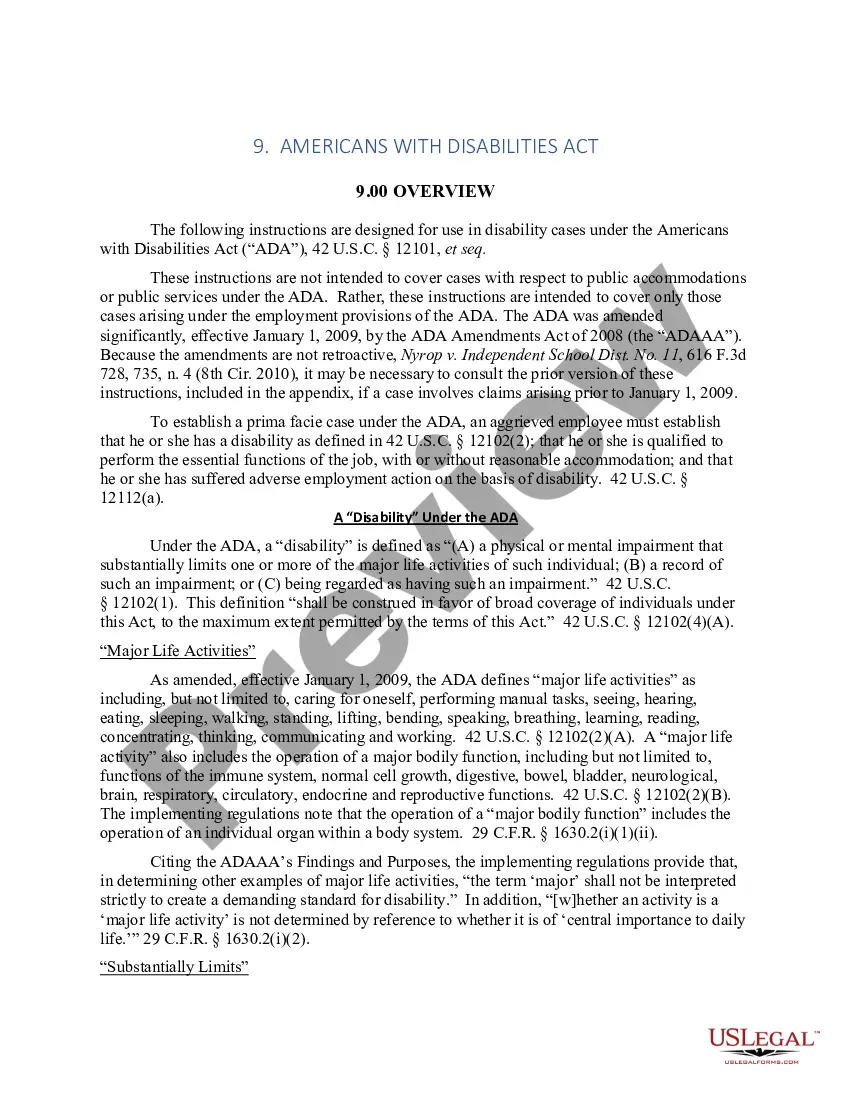
Virginia Aging Parent Package
About this form package
The Virginia Aging Parent Package is designed to assist individuals in organizing the legal affairs of their aging parents. This comprehensive package includes essential documents that provide protection and preparation for potential health, financial, and estate-related matters as parents enter a later stage of life. Unlike other generic form packages, this one is tailored specifically for Virginia and incorporates both state-specific and multi-state documents relevant to planning for the complexities of aging.
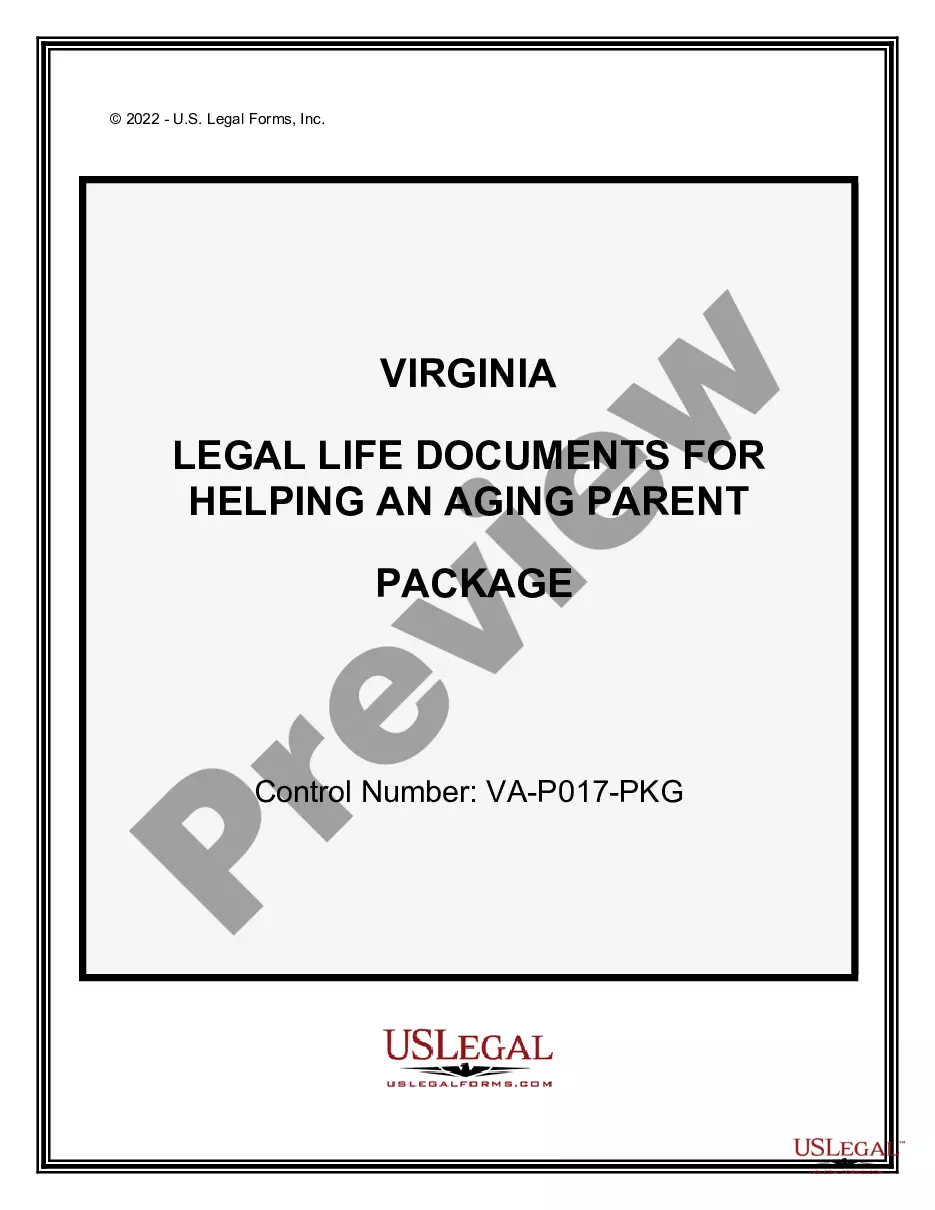
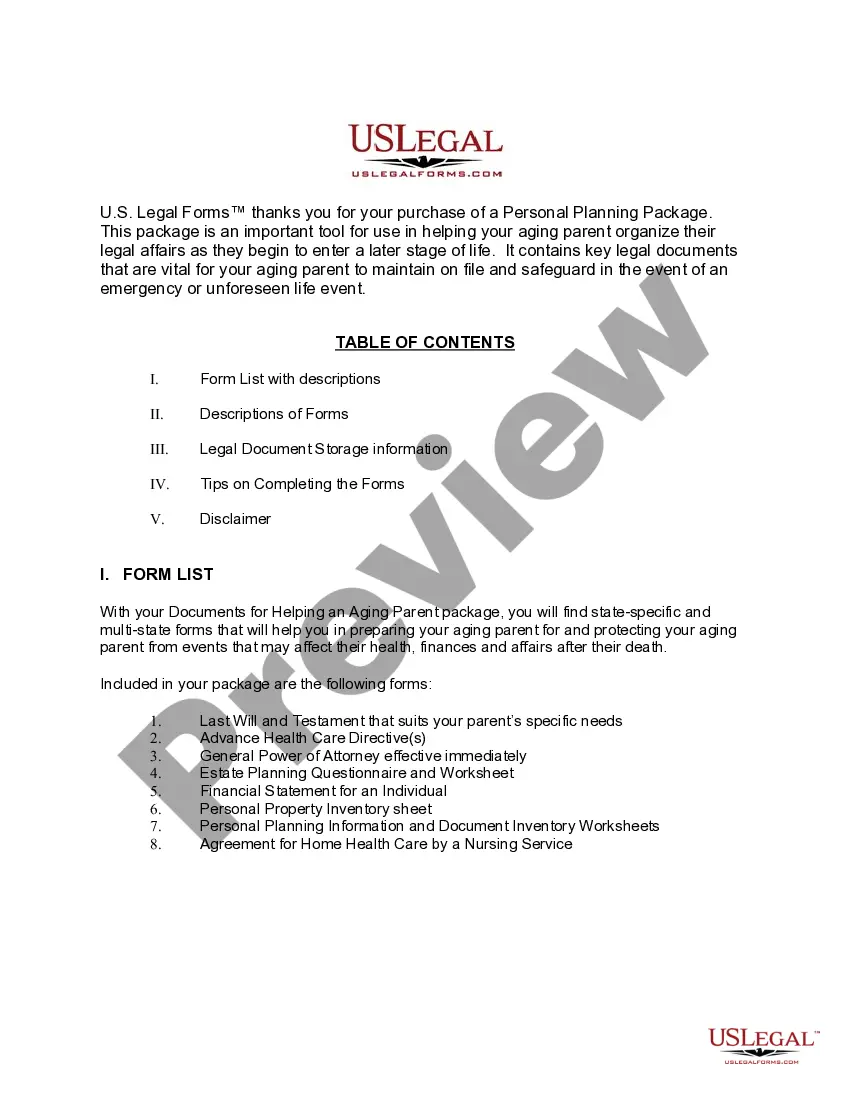
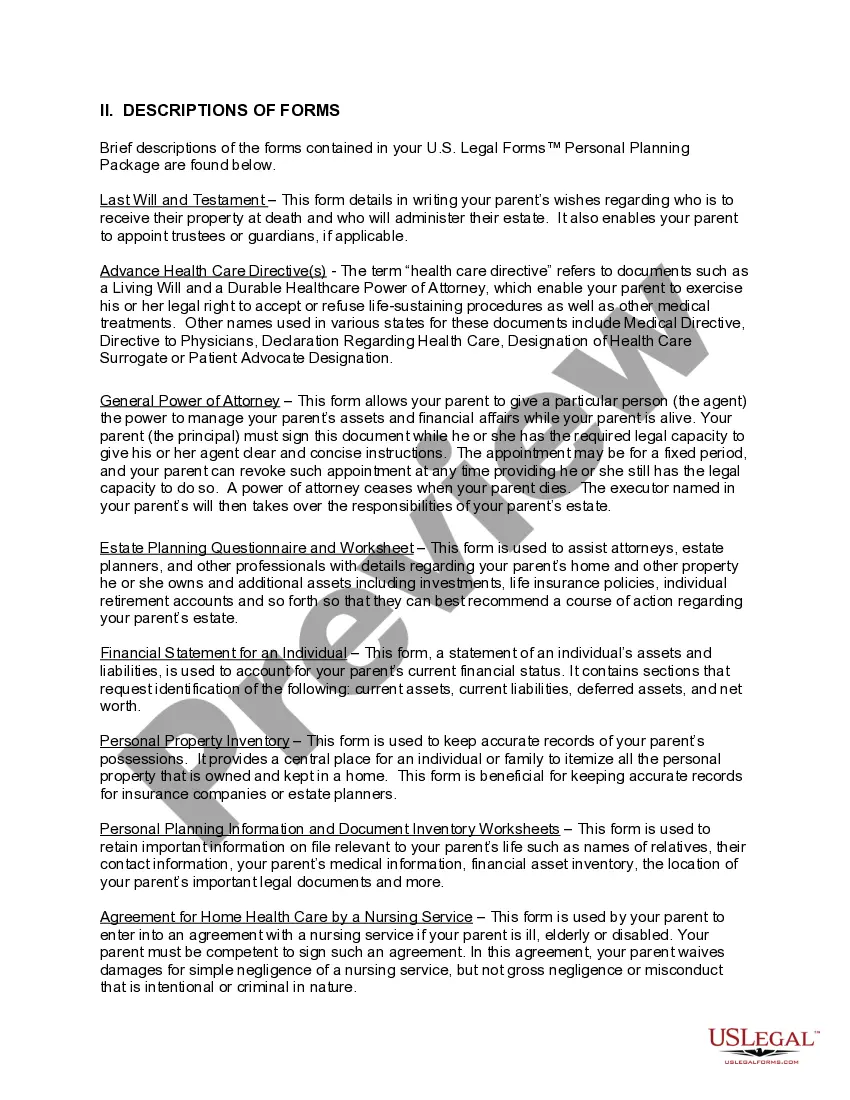
Documents contained in this package
- Last Will and Testament
- General Durable Power of Attorney for Property and Finances or Financial Effective Immediately
- Health Care Directive - Advance Medical Directive - includes Living Will and Health Care Decisions
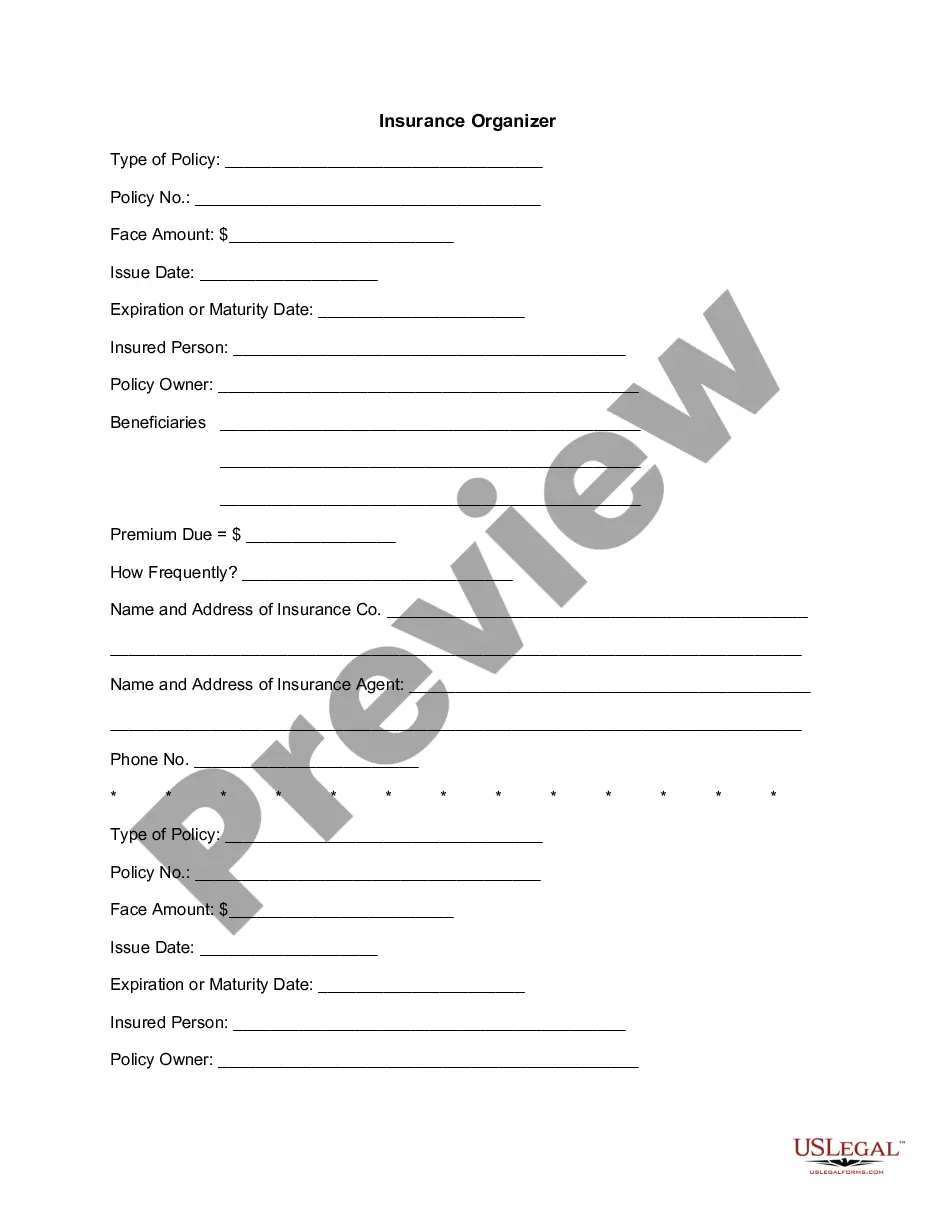
- Estate Planning Questionnaire and Worksheets
- Personal Care Agreement for Home Healthcare by a Nursing Service
- Personal Property Inventory
- Financial Statement Form - Husband and Wife Joint
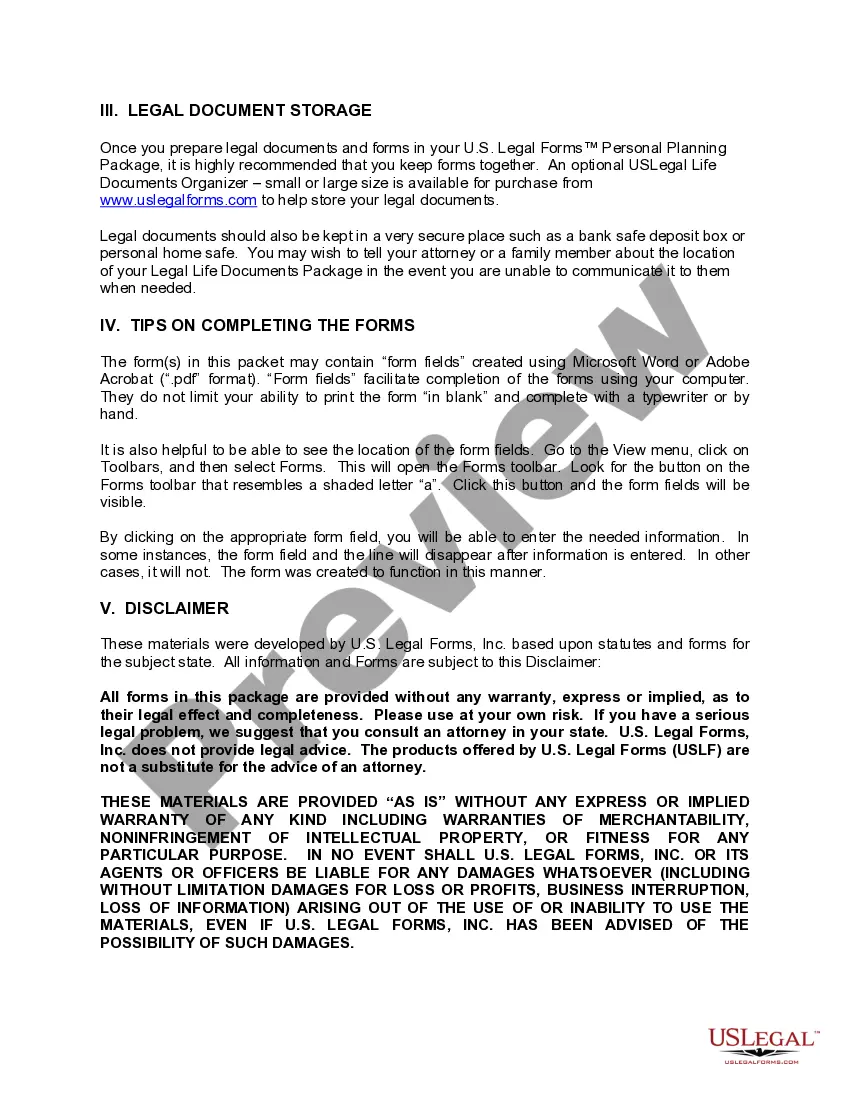
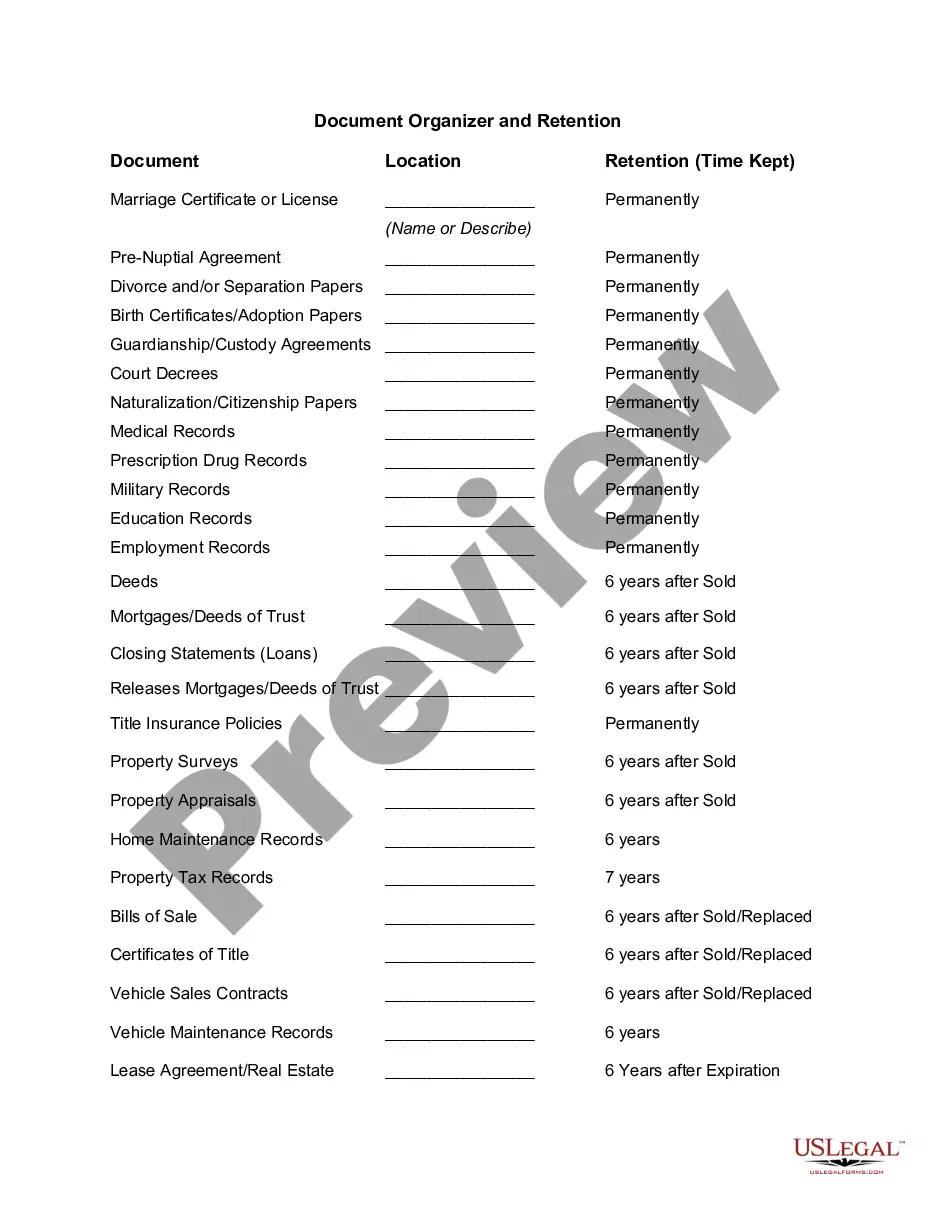
- Personal Planning Information and Document Inventory Worksheets - A Legal Life Document


When to use this document
This package is useful in scenarios such as:
- When your parent is facing health issues and requires clear instructions regarding their medical care.
- If your parent is considering estate planning or needs to update their Last Will and Testament.
- When your parent needs to assign a trusted individual to manage their financial affairs due to declining capacity.
- If you need to establish a comprehensive plan for possible home health care services.
Who can use this document
- Adult children or guardians managing their aging parents' affairs.
- Individuals helping elderly family members with health care and financial decisions.
- Anyone responsible for the estate planning of an aging parent.
- Caregivers or advocates concerned about the well-being of elderly individuals.
Instructions for completing these forms
- Review included forms and ensure you understand their purpose and requirements.
- Gather necessary information, including personal details and financial records of your aging parent.
- Enter the required information into the forms, making sure to follow the instructions provided.
- Have your parent, where applicable, review and sign the documents in the presence of witnesses or a notary, if required.
- Store the completed forms in a secure location and make copies for emergency access.
Notarization requirements for forms in this package
Forms in this package typically do not require notarization unless required by local law. However, some documents, like financial powers of attorney or health care directives, may benefit from notarization to enhance their validity. It is always best to consult local regulations to ensure compliance.
Get your form ready online
Our built-in tools help you complete, sign, share, and store your documents in one place.
Make edits, fill in missing information, and update formatting in US Legal Forms—just like you would in MS Word.
Download a copy, print it, send it by email, or mail it via USPS—whatever works best for your next step.
Sign and collect signatures with our SignNow integration. Send to multiple recipients, set reminders, and more. Go Premium to unlock E-Sign.
If this form requires notarization, complete it online through a secure video call—no need to meet a notary in person or wait for an appointment.
We protect your documents and personal data by following strict security and privacy standards.

Make edits, fill in missing information, and update formatting in US Legal Forms—just like you would in MS Word.

Download a copy, print it, send it by email, or mail it via USPS—whatever works best for your next step.

Sign and collect signatures with our SignNow integration. Send to multiple recipients, set reminders, and more. Go Premium to unlock E-Sign.

If this form requires notarization, complete it online through a secure video call—no need to meet a notary in person or wait for an appointment.

We protect your documents and personal data by following strict security and privacy standards.
Common mistakes to avoid
- Not having the documents reviewed by a professional, leading to potential legal issues.
- Failing to sign or date the forms appropriately, rendering them invalid.
- Overlooking the necessity of witness signatures or notarization when required.
- Not providing clear instructions for medical decisions in the Advance Health Care Directive.
Why complete this package online
- Convenience of downloading forms instantly from the comfort of your home.
- Editability that allows you to fill out forms digitally, ensuring accuracy and clarity.
- Access to professionally drafted documents tailored to your stateâs legal requirements.
- Time-saving as you can complete the forms at your own pace without needing to visit an office.
Legal use & context
- Each document serves a specific legal purpose in managing health and financial decisions for aging individuals.
- Forms are designed to be compliant with Virginia law, increasing their enforceability.
- Utilizing these forms can help prevent legal disputes among family members regarding estate management and healthcare choices.
Summary of main points
- The Virginia Aging Parent Package provides essential legal documents tailored for estate and healthcare planning.
- It is crucial for families to have open discussions and complete these documents accurately.
- Using this package ensures compliance with Virginia laws, safeguarding your parentâs wishes and welfare.
Looking for another form?

Form popularity
FAQ
Does Medicare Pay for Caregivers? Your Guide to At-Home Healthcare. Medicare typically doesn't pay for in-home caregivers for personal care or housekeeping if that's the only care you need. Medicare may pay for short-term caregivers if you also need medical care to recover from surgery, an illness, or an injury.
Medicaid. Medicaid offers a number of programs in different states that can be used to pay a family caregiver. Veteran Services. Tax Deductions. Local Resources. Long-Term Care Insurance Policies. Paid Leave. Remote Work.
Commonly, it is an adult child who is paid via Medicaid to provide care, but some states, such as Alabama, Arizona, California, Colorado, Delaware, Florida, Hawaii, Kentucky, Minnesota, Montana, New Hampshire, New Jersey, North Dakota, Oklahoma, Oregon, and Wisconsin, even provide funds for spouses to be paid
California.Additionally, California's Medicaid program offers an In-Home Supportive Services (IHSS) program that pays for services provided to qualifying older adults to enable them to remain in their own homes, such as housekeeping, meal preparation, laundry, grocery shopping, and personal care services.
Social Security benefits, though, can't be used to pay for a caregiver that you hire, it would simply be a way to help support you financially should you take on the responsibilities as a caregiver.
Medicare typically doesn't pay for in-home caregivers for personal care or housekeeping if that's the only care you need. Medicare may pay for short-term caregivers if you also need medical care to recover from surgery, an illness, or an injury.
Does Medicare Pay for Caregivers? Your Guide to At-Home Healthcare. Medicare typically doesn't pay for in-home caregivers for personal care or housekeeping if that's the only care you need. Medicare may pay for short-term caregivers if you also need medical care to recover from surgery, an illness, or an injury.
The first and most common Medicaid option is Medicaid Waivers.With this option, the care recipient can choose to receive care from a family member, such as an adult child, and Medicaid will compensate the adult child for providing care for the elderly parent.