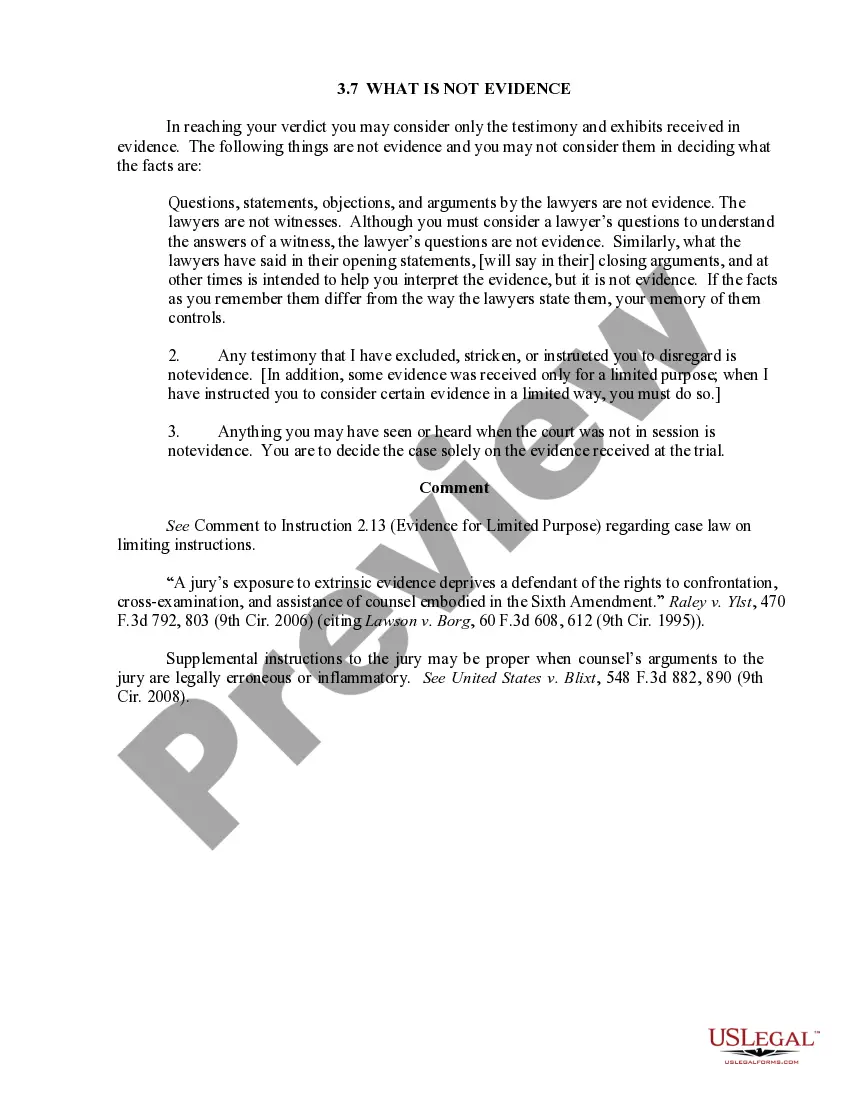
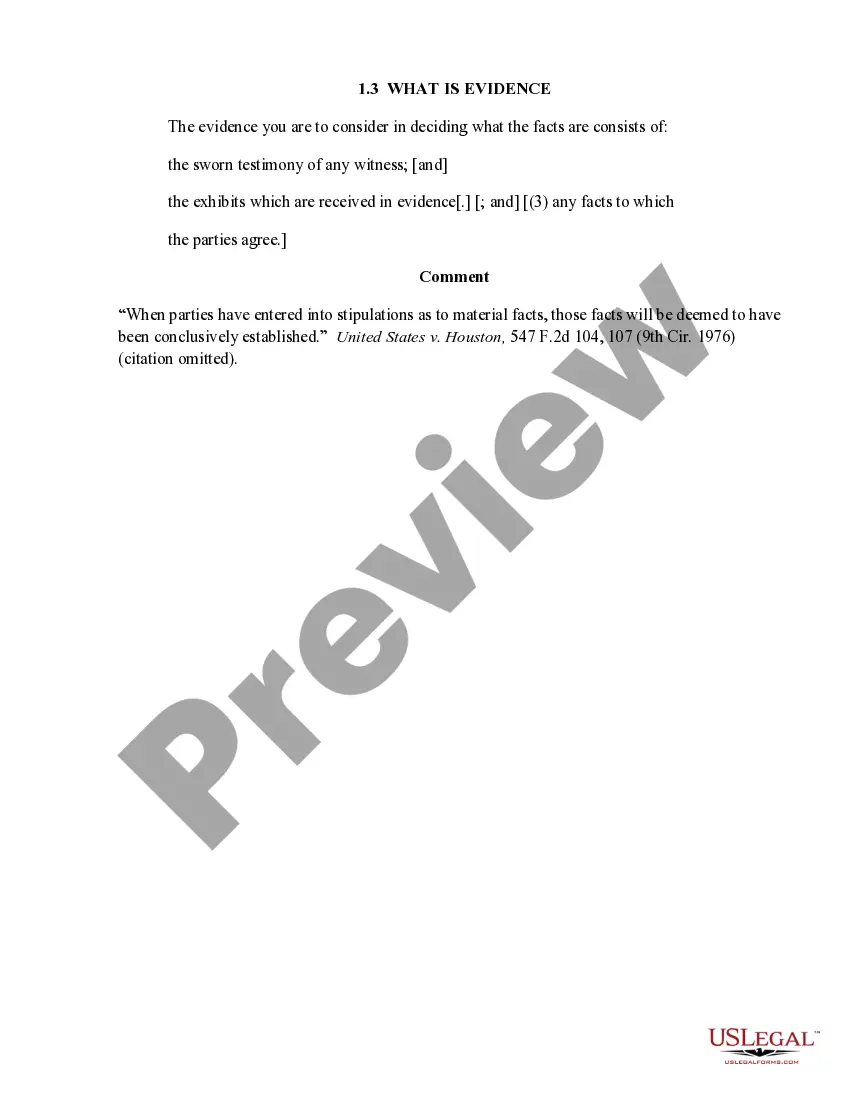
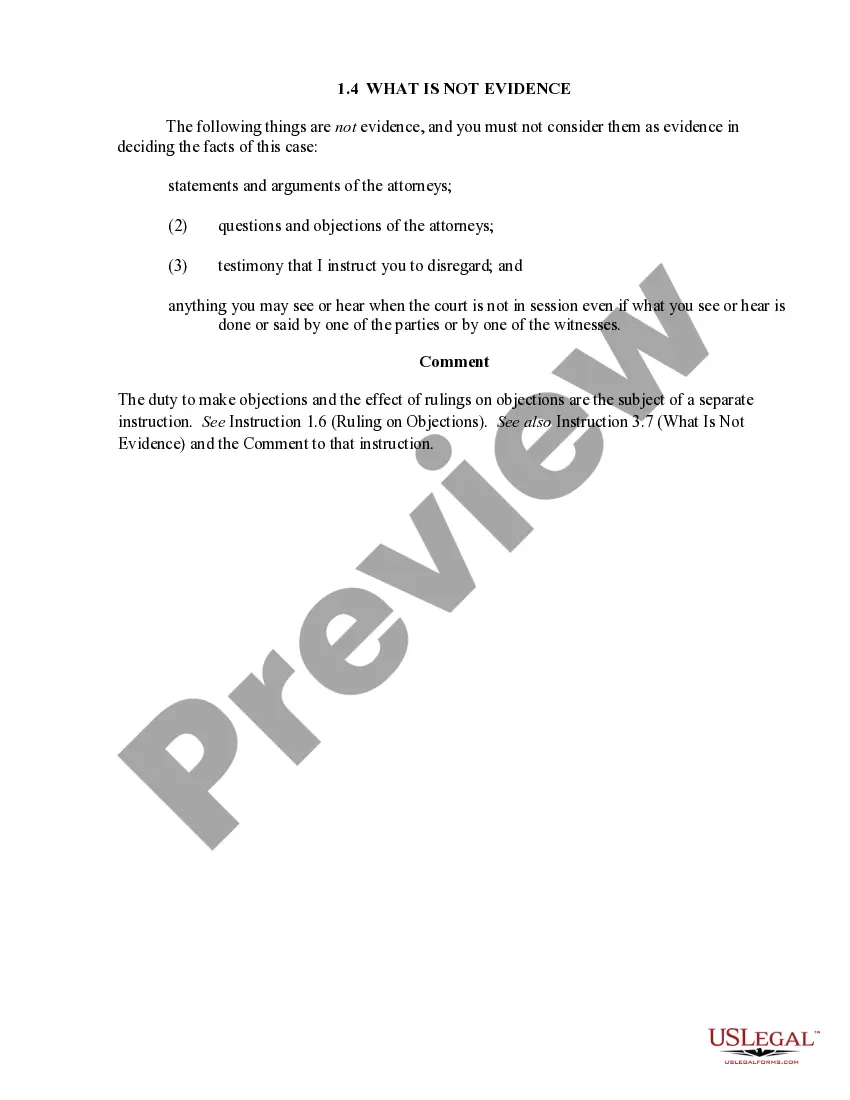
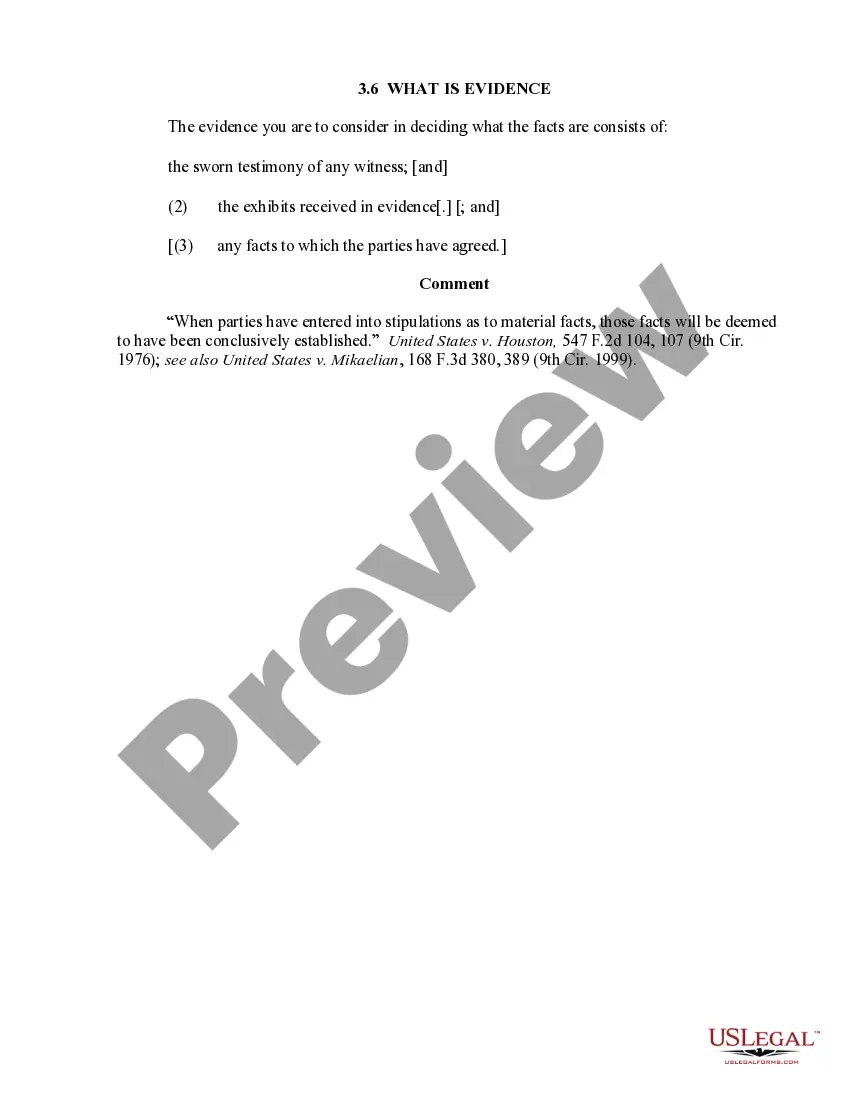
3.7 What Is Not Evidence.
Notarization requirements for this form
Notarization is generally not required for this form. However, certain states or situations might demand it. You can complete notarization online through US Legal Forms, powered by Notarize, using a verified video call available anytime.
Get your form ready online
Our built-in tools help you complete, sign, share, and store your documents in one place.
Make edits, fill in missing information, and update formatting in US Legal Forms—just like you would in MS Word.
Download a copy, print it, send it by email, or mail it via USPS—whatever works best for your next step.
Sign and collect signatures with our SignNow integration. Send to multiple recipients, set reminders, and more. Go Premium to unlock E-Sign.
If this form requires notarization, complete it online through a secure video call—no need to meet a notary in person or wait for an appointment.
We protect your documents and personal data by following strict security and privacy standards.

Make edits, fill in missing information, and update formatting in US Legal Forms—just like you would in MS Word.

Download a copy, print it, send it by email, or mail it via USPS—whatever works best for your next step.

Sign and collect signatures with our SignNow integration. Send to multiple recipients, set reminders, and more. Go Premium to unlock E-Sign.

If this form requires notarization, complete it online through a secure video call—no need to meet a notary in person or wait for an appointment.

We protect your documents and personal data by following strict security and privacy standards.
Looking for another form?
Form popularity
FAQ
Cross-examination is generally limited to questioning only on matters that were raised during direct examination. Leading questions may be asked during cross-examination, since the purpose of cross-examination is to test the credibility of statements made during direct examination.
Advocate-Witness Rule A witness is required to testify on the basis of personal knowledge, while an advocate is expected to explain and comment on evidence given by others. It may not be clear whether a statement by an advocate-witness should be taken as proof or as an analysis of the proof.
examination is the act of the opposing party questioning the witness during a trial. Generally, a witness is initially questioned by the party who called them to the stand on direct examination.
Here are some tips for doing a cross-examination: Ask leading questions.Don't ask narrative questions (questions that don't have a single answer).Don't ask questions that are really about opinions (for example, don't ask things like "Do you think he was wrong to forget the children?").
Search Legal Terms and Definitions Direct examination is interrogation by the attorney who called the witness, and cross-examination is questioning by the opposing attorney.
Here is an example of this type of cross-examination line of questioning where you first confirm what the witness said on direct and then point out inconsistencies: You: Didn't you testify that you saw me with my husband at the park on Saturday and that he did not hit me? Witness: Yes, that's what I said.
Start by asking the witness their name and address. If your witness is a professional, you should ask what their job is, what their educational degrees are, and how long they have been doing their job. The ask specific questions about what information they have about your case.
Rule 3.7 - Advocate: Lawyer as Witness (a) A lawyer shall not act as an advocate at a trial in which the lawyer is likely to be a necessary witness except where: (1) the testimony relates to an uncontested issue; (2) the testimony relates to the nature and value of legal services rendered in the case; or (3)