Mutual Non-Disclosure Agreement Dealing with Technical and Business Information
What is this form?
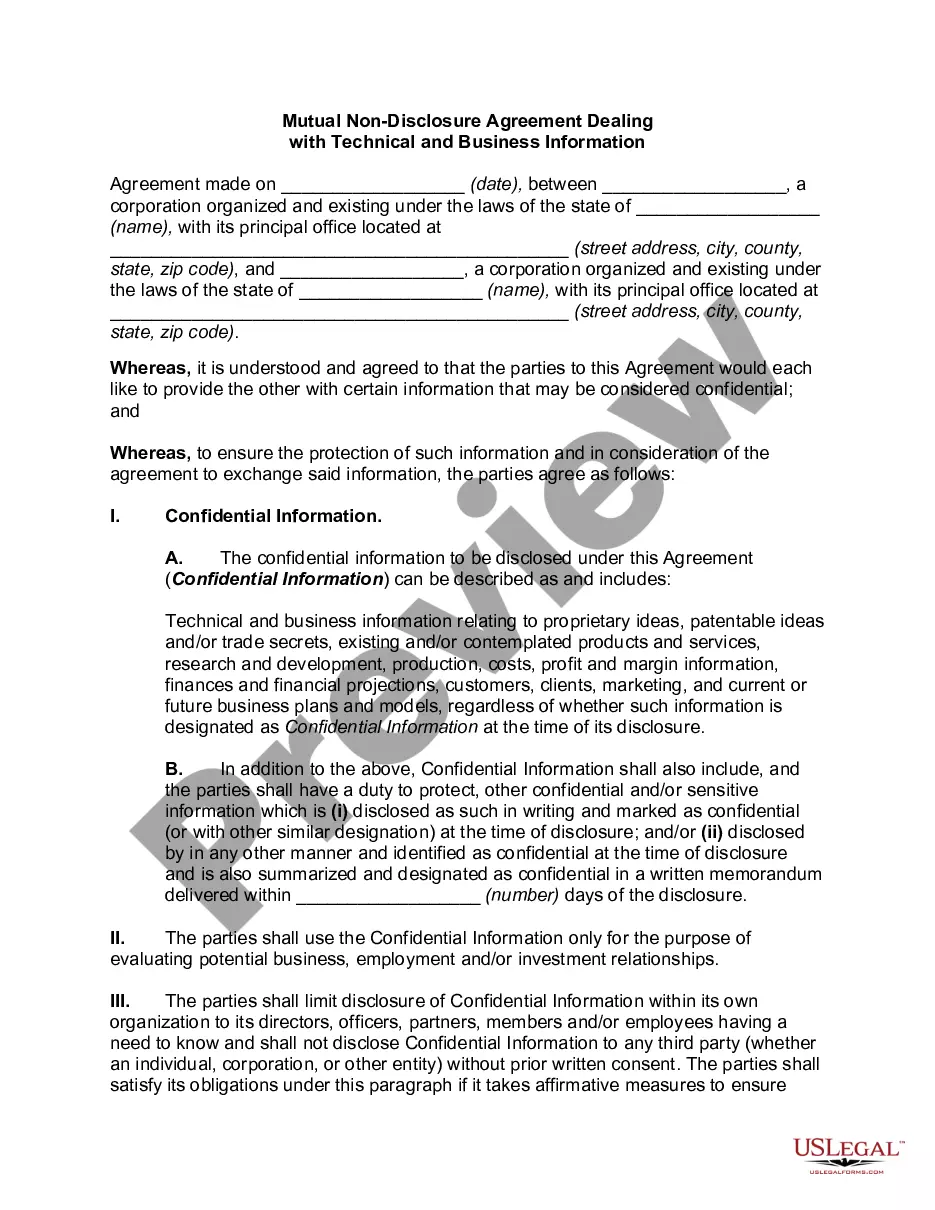
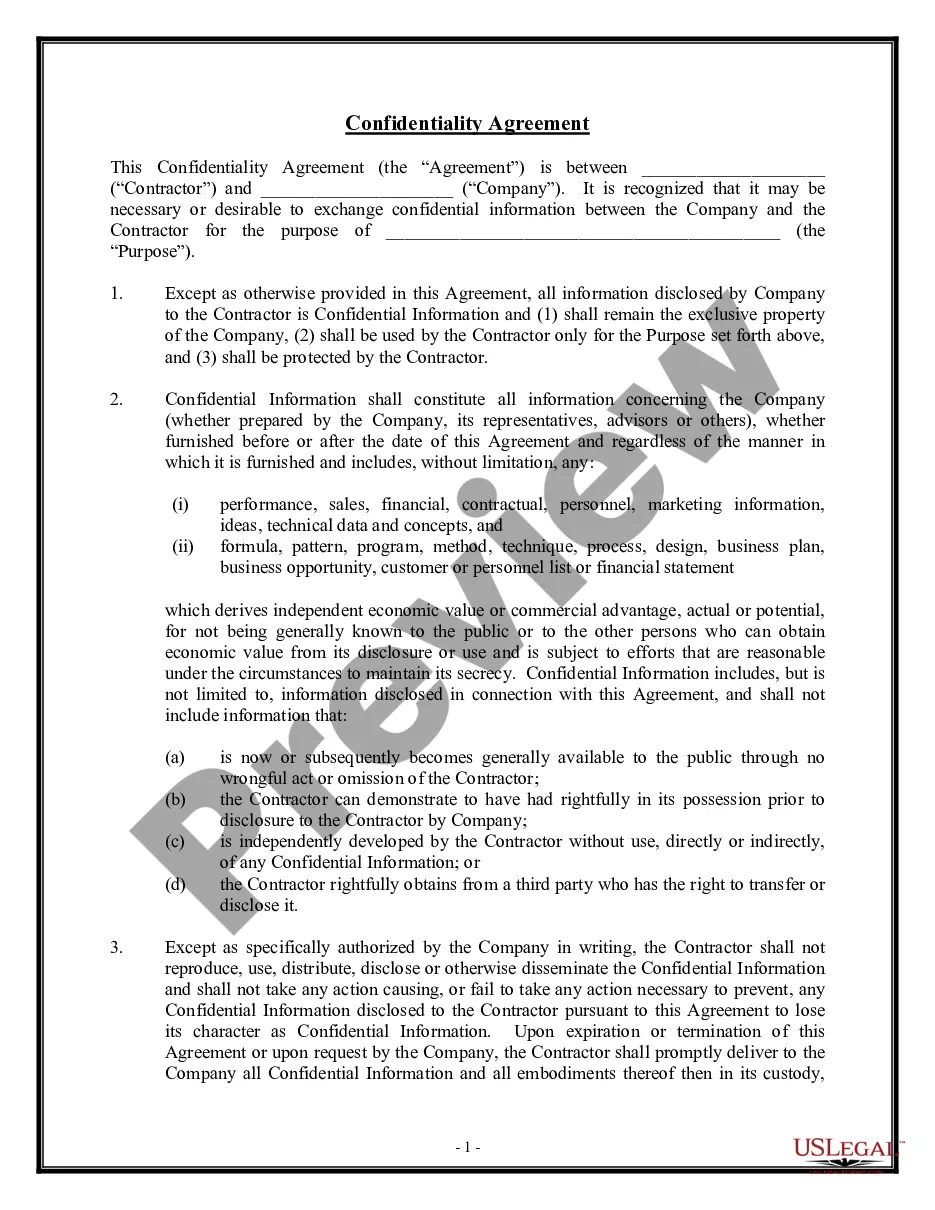
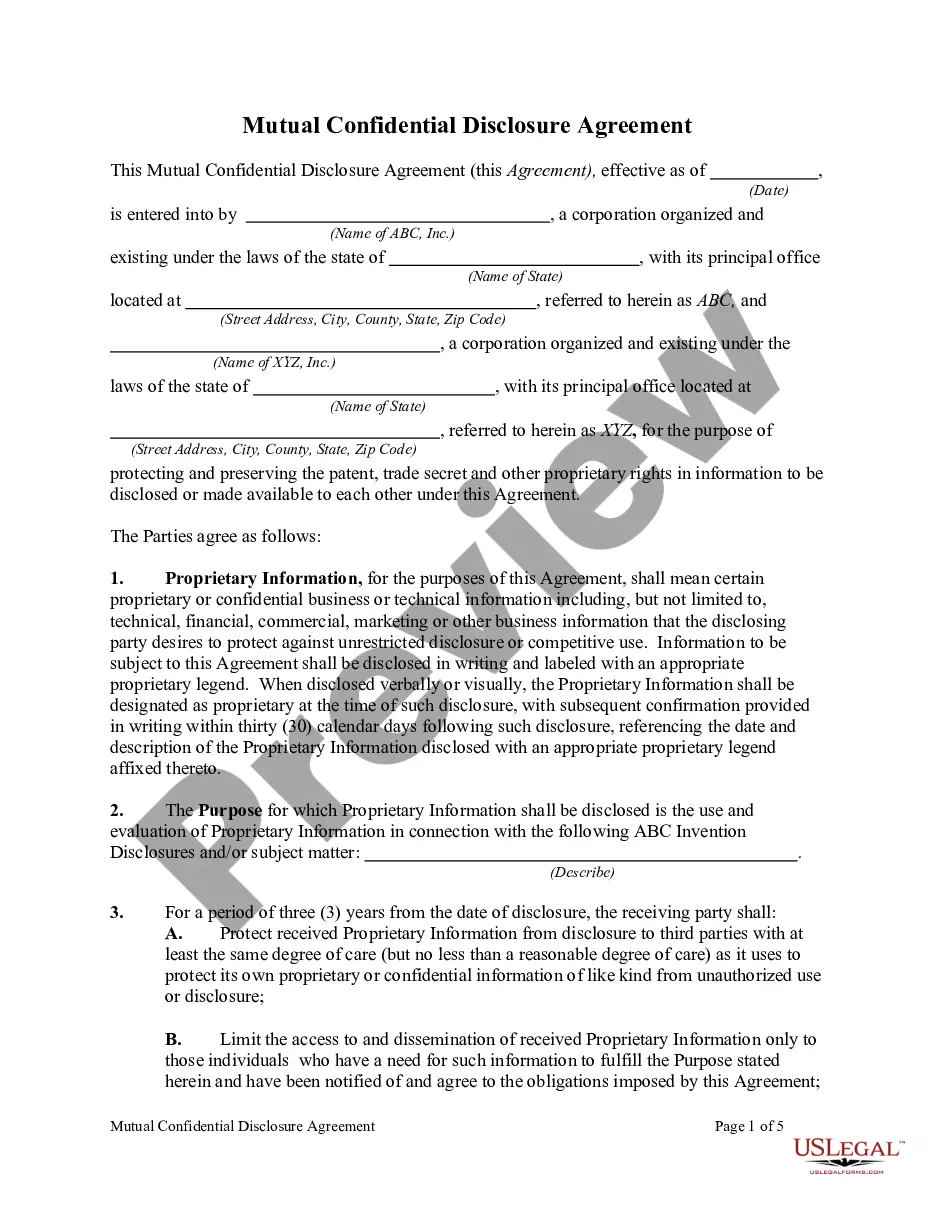
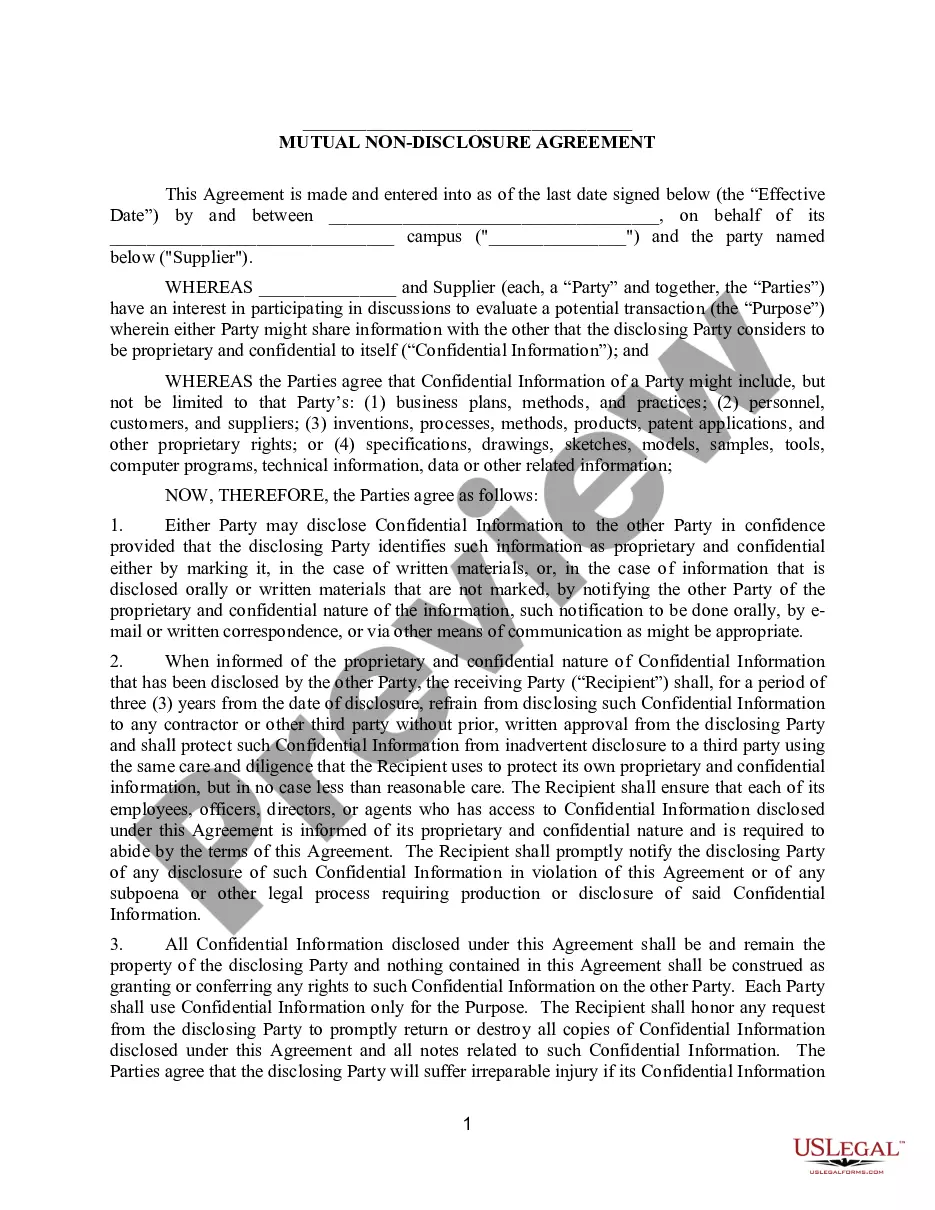
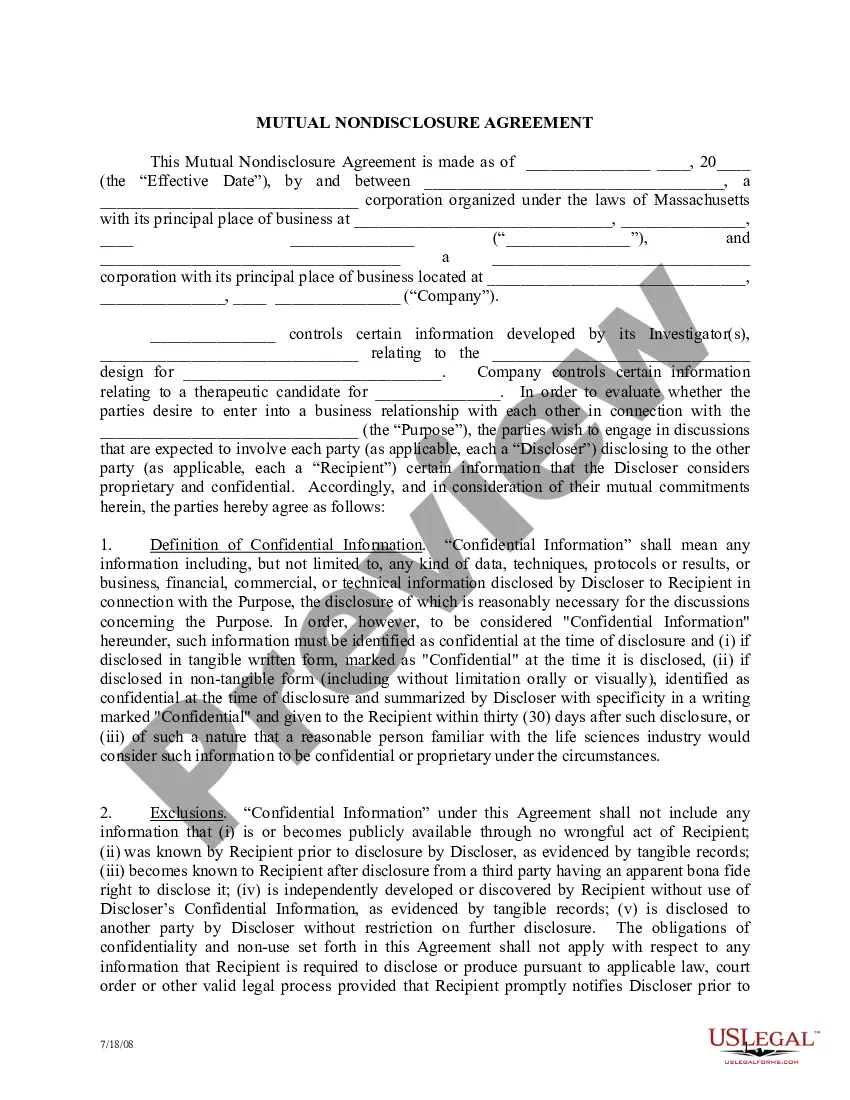
The Mutual Non-Disclosure Agreement Dealing with Technical and Business Information is a legal document that establishes a confidential relationship between two parties. By signing this agreement, both parties commit to not disclosing any confidential information shared during discussions related to business or technical matters. This form is essential for protecting sensitive information and ensuring that both parties can share ideas without fear of unauthorized dissemination, distinguishing it from unilateral non-disclosure agreements which involve only one party sharing confidential information.
Form components explained
- Definition of Confidential Information, including technical and business content.
- Permitted use of Confidential Information for evaluating business relationships.
- Restrictions on disclosure to internal personnel and third parties.
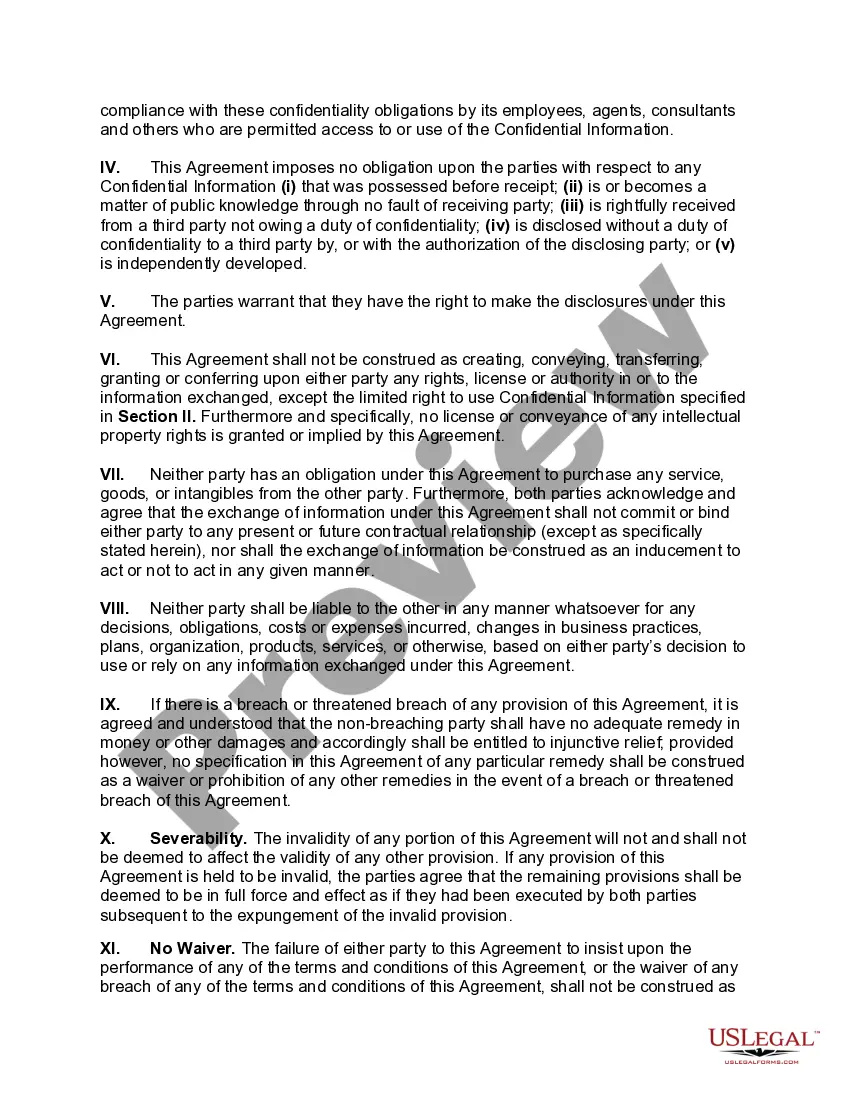
- Exclusions from the confidentiality obligations.
- Legal remedies in case of breach, including injunctive relief.
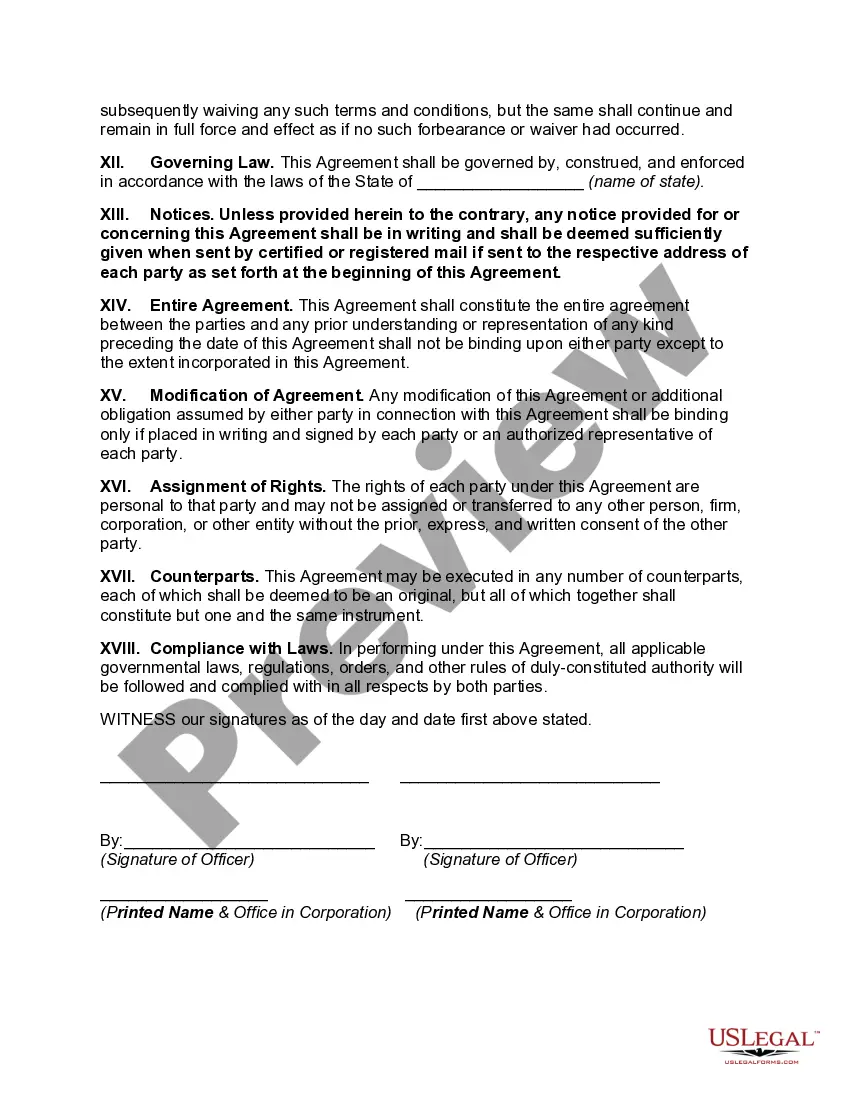
- Governing law specifications for the agreement.
Situations where this form applies
This mutual non-disclosure agreement is commonly used when two businesses or individuals are considering a partnership, investment opportunity, or joint project that involves exchanging sensitive technical or business information. It is crucial in situations where proprietary ideas, trade secrets, or unpublished financial data may be disclosed, helping to foster trust and collaboration between the involved parties.
Intended users of this form
This form is intended for:
- Businesses looking to share confidential information with potential partners.
- Investors assessing opportunities that require detailed insights into another party's operations.
- Contractors and clients entering into discussions involving sensitive business practices or technology.
- Anyone involved in joint ventures that require mutual protection of proprietary information.
How to prepare this document
- Identify the parties involved by entering their names and addresses at the beginning of the agreement.
- Specify the date of the agreement to establish the timeline for confidentiality terms.
- Fill in the definition of Confidential Information by detailing what information falls under this clause.
- Ensure both parties understand the limitations on use and disclosure of shared information.
- Both parties should sign and date the document to validate the agreement.
Notarization guidance
This form does not typically require notarization unless specified by local law. It is advisable for parties to check any specific state requirements regarding notarization to ensure the agreement's enforceability.
Get your form ready online
Our built-in tools help you complete, sign, share, and store your documents in one place.
Make edits, fill in missing information, and update formatting in US Legal Forms—just like you would in MS Word.
Download a copy, print it, send it by email, or mail it via USPS—whatever works best for your next step.
Sign and collect signatures with our SignNow integration. Send to multiple recipients, set reminders, and more. Go Premium to unlock E-Sign.
If this form requires notarization, complete it online through a secure video call—no need to meet a notary in person or wait for an appointment.
We protect your documents and personal data by following strict security and privacy standards.

Make edits, fill in missing information, and update formatting in US Legal Forms—just like you would in MS Word.

Download a copy, print it, send it by email, or mail it via USPS—whatever works best for your next step.

Sign and collect signatures with our SignNow integration. Send to multiple recipients, set reminders, and more. Go Premium to unlock E-Sign.

If this form requires notarization, complete it online through a secure video call—no need to meet a notary in person or wait for an appointment.

We protect your documents and personal data by following strict security and privacy standards.
Common mistakes to avoid
- Not properly defining what constitutes Confidential Information, leading to potential misunderstandings.
- Failing to include a timeframe for how long the confidentiality obligations will last.
- Overlooking to have all relevant parties sign the agreement, which may invalidate the protections.
- Neglecting to clearly specify exclusions to the confidentiality obligations.
Why use this form online
- Convenience of instant access and download, allowing for immediate use.
- Editability to customize the agreement as needed before signing.
- Reliability of professionally drafted content to ensure legal validity.
- Availability of additional resources for legal assistance if needed.
Looking for another form?
Form popularity
FAQ
The employee non disclosure agreement includes the proprietary, trade and other information to stay away from legal troubles such as: Confidentiality of trade services. Confidential information & material. Non-solicitation.
A non-disclosure agreement is a legally binding contract that establishes a confidential relationship. The party or parties signing the agreement agree that sensitive information they may obtain will not be made available to any others.In this case, it may be called a mutual non-disclosure agreement.
A mutual confidentiality agreement is also sometimes called a mutual non-disclosure agreement. It is a legal document and contract that requires both parties that sign the agreement to not disclose any information protected by the agreement.
The nondisclosure agreement should identify the parties to the agreement and which one is the disclosing party, or side sharing the information, and the recipient. Names and addresses of the parties should be included. The agreement should also identify other individuals who may be parties to the agreement.
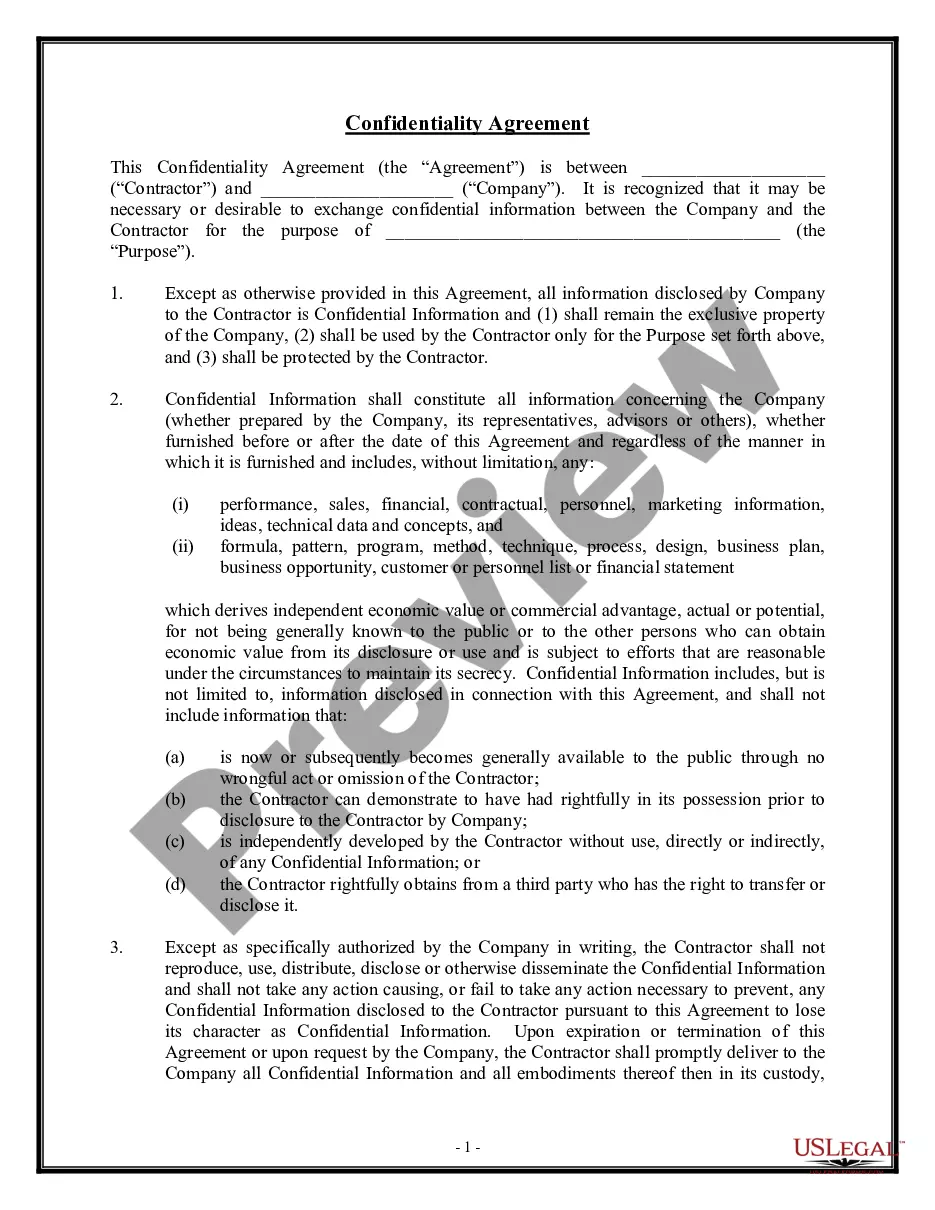
A non-disclosure agreement (NDA), sometimes referred to as a confidentiality agreement, is a written contract between two parties (people or organizations) that prohibits the sharing of confidential information that has been revealed to them.
A non-disclosure agreement may be unilateral, that is, one person is bound by the obligation to keep a secret, or it may be mutual, in which both parties have an obligation to keep the secrets of the other disclosing party. As in all contracts, both parties must receive a benefit; this benefit is called consideration.
NDAs are legally enforceable contracts, but they're now coming under increased scrutiny from lawmakers, attorneys and legal experts.Companies often use them as part of an employment contract or settlement agreement to protect sensitive information like trade secrets.
Non-disclosure agreements are an important legal framework used to protect sensitive and confidential information from being made available by the recipient of that information. Companies and startups use these documents to ensure that their good ideas won't be stolen by people they are negotiating with.
You can use an NDA with your employees to protect your company's confidential data. The NDA requires the Receiving Party of confidential information, in this case your employees, to maintain secrecy and not to misuse the information. Trust is like blood pressure.