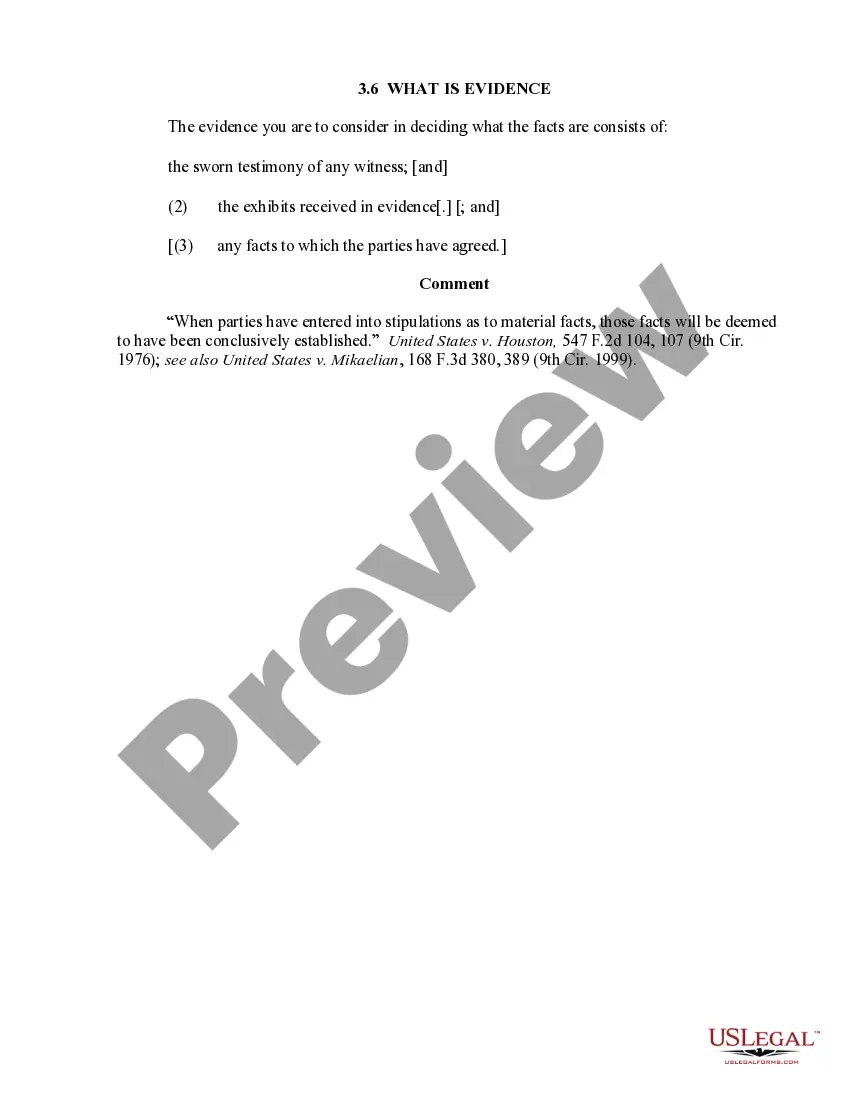
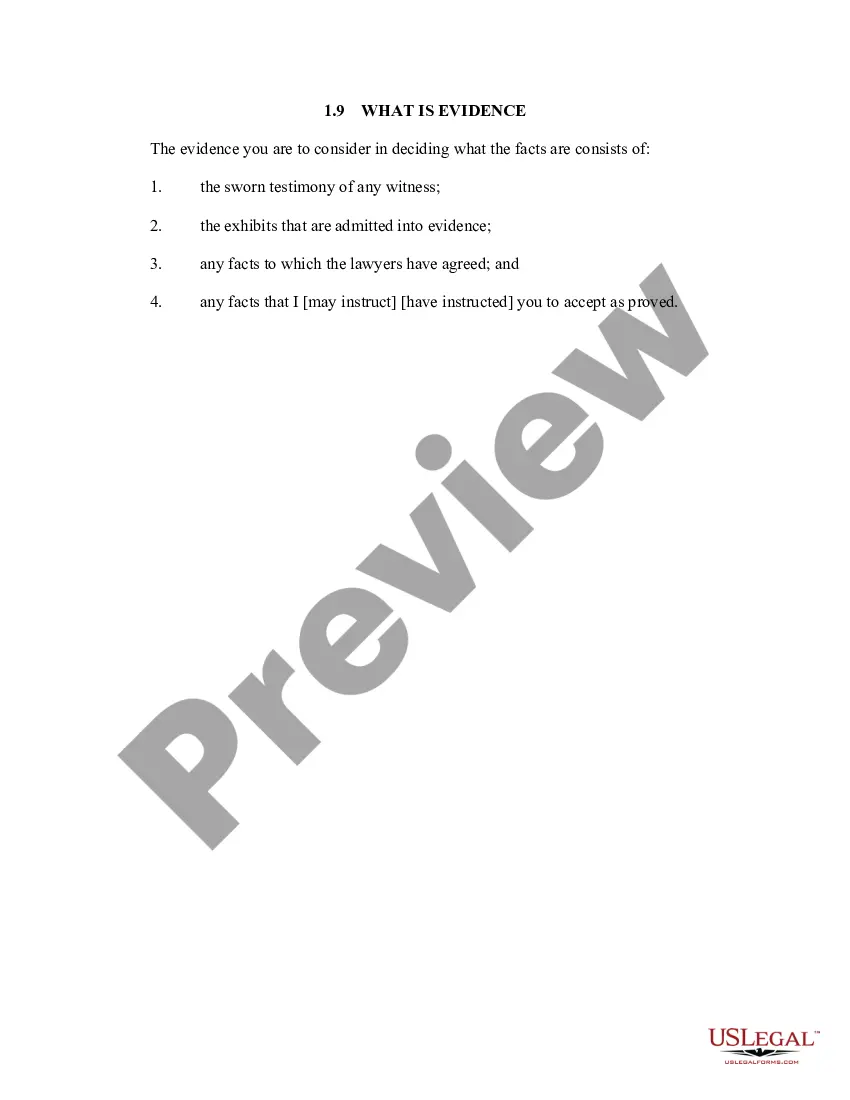
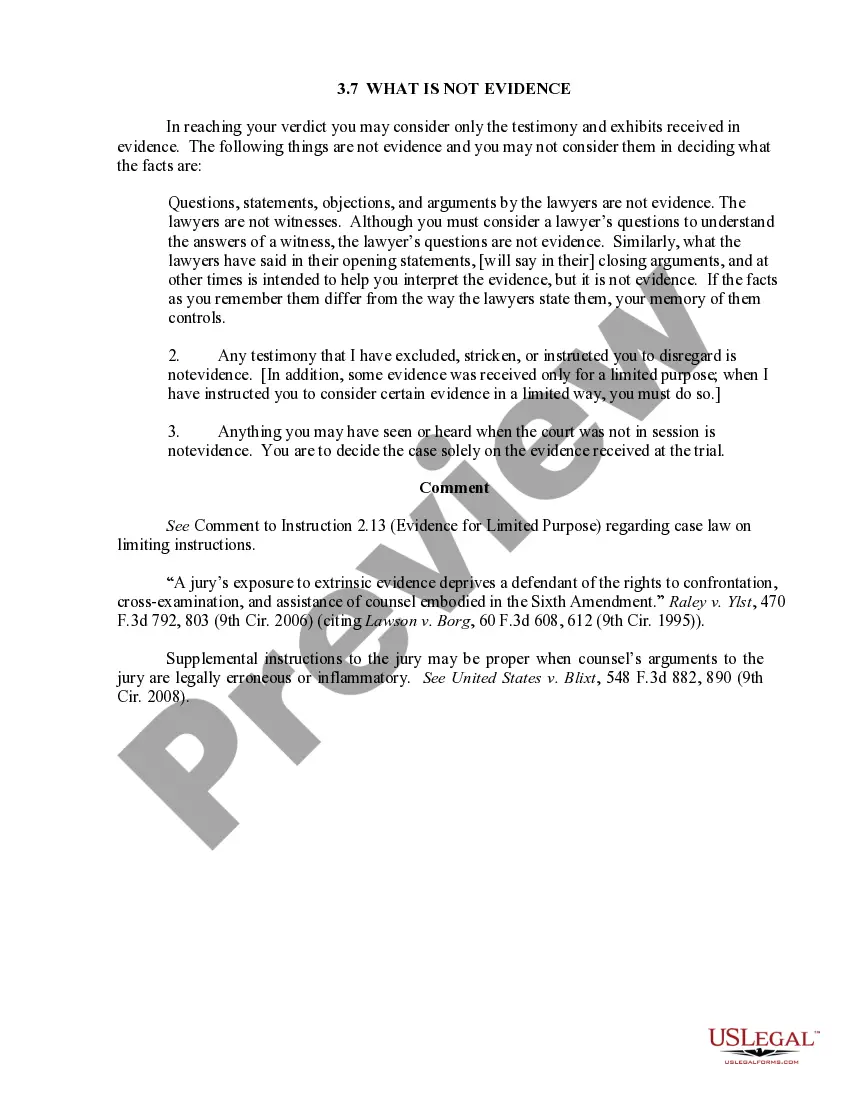
3.6 What Is Evidence.
Notarization guidance
In most cases, this form does not require notarization. However, some jurisdictions or signing circumstances might. US Legal Forms offers online notarization powered by Notarize, accessible 24/7 for a quick, remote process.
Get your form ready online
Our built-in tools help you complete, sign, share, and store your documents in one place.
Make edits, fill in missing information, and update formatting in US Legal Forms—just like you would in MS Word.
Download a copy, print it, send it by email, or mail it via USPS—whatever works best for your next step.
Sign and collect signatures with our SignNow integration. Send to multiple recipients, set reminders, and more. Go Premium to unlock E-Sign.
If this form requires notarization, complete it online through a secure video call—no need to meet a notary in person or wait for an appointment.
We protect your documents and personal data by following strict security and privacy standards.

Make edits, fill in missing information, and update formatting in US Legal Forms—just like you would in MS Word.

Download a copy, print it, send it by email, or mail it via USPS—whatever works best for your next step.

Sign and collect signatures with our SignNow integration. Send to multiple recipients, set reminders, and more. Go Premium to unlock E-Sign.

If this form requires notarization, complete it online through a secure video call—no need to meet a notary in person or wait for an appointment.

We protect your documents and personal data by following strict security and privacy standards.
Looking for another form?
Form popularity
FAQ
What Is Admissible Evidence? One admissible evidence definition is that admissible evidence is any document, testimony, or tangible, physical item, e.g. a murder weapon, that can be used to prove a fact at issue in a hearing or trial in a court of law under the rules of evidence.
To present a document in court and enter it as evidence you usually need someone, a witness or a party (this could be you), to introduce it to the court. They will need to swear that it is the authentic document and may be needed to explain the content of the document.
Best Practice Guidelines for a Well-Written Statement Write Chronologically and In First Person.What You Include In Your Report Is Key!Tell the Whole Story.Be Honest and Factual.Avoid Hearsay.Be Brief and Be Organized.Document Anguish, Emotional and Physical Pain.Avoid Abbreviations, Lingo, or Professional Jargon.
How Do You Prove Reasonable Doubt? The jurors must walk into the courtroom presuming the accused is innocent. Reasonable doubt exists unless the prosecution can prove that the accused is guilty. This can be achieved by supplying evidence and inviting people to testify on the stand.
This means that the prosecution must convince the jury that there is no other reasonable explanation that can come from the evidence presented at trial. In other words, the jury must be virtually certain of the defendant's guilt in order to render a guilty verdict.
Here's all you have to do: Pre-mark the exhibit. Show it to opposing counsel. Show it to the witness. Ask the right predicate questions. Ask the court to admit the exhibit (see below for magic terminology) Let the clerk mark the exhibit into evidence.
For the judge to consider your evidence, you usually need to file it with the court and give a copy of it to the other side (have it served) before the hearing. It's usually easiest to do this by including the documents with your Request for Order or Responsive Declaration. You can also file and serve it later.
When you go to court, you will give information (called ?evidence?) to a judge who will decide your case. This evidence may include information you or someone else tells to the judge (?testimony?) as well as items like email and text messages, documents, photos, and objects (?exhibits?).