Discovery - Sample Letter for service of Discovery Requests
Overview of this form
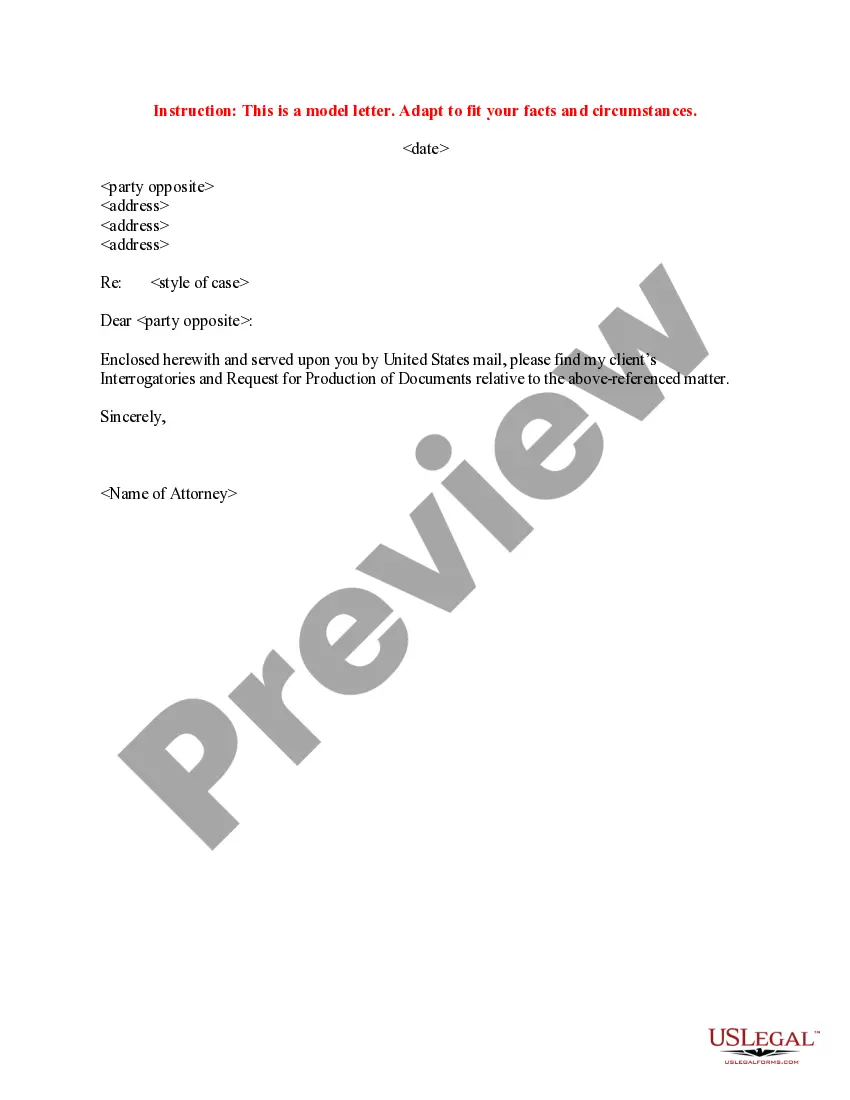
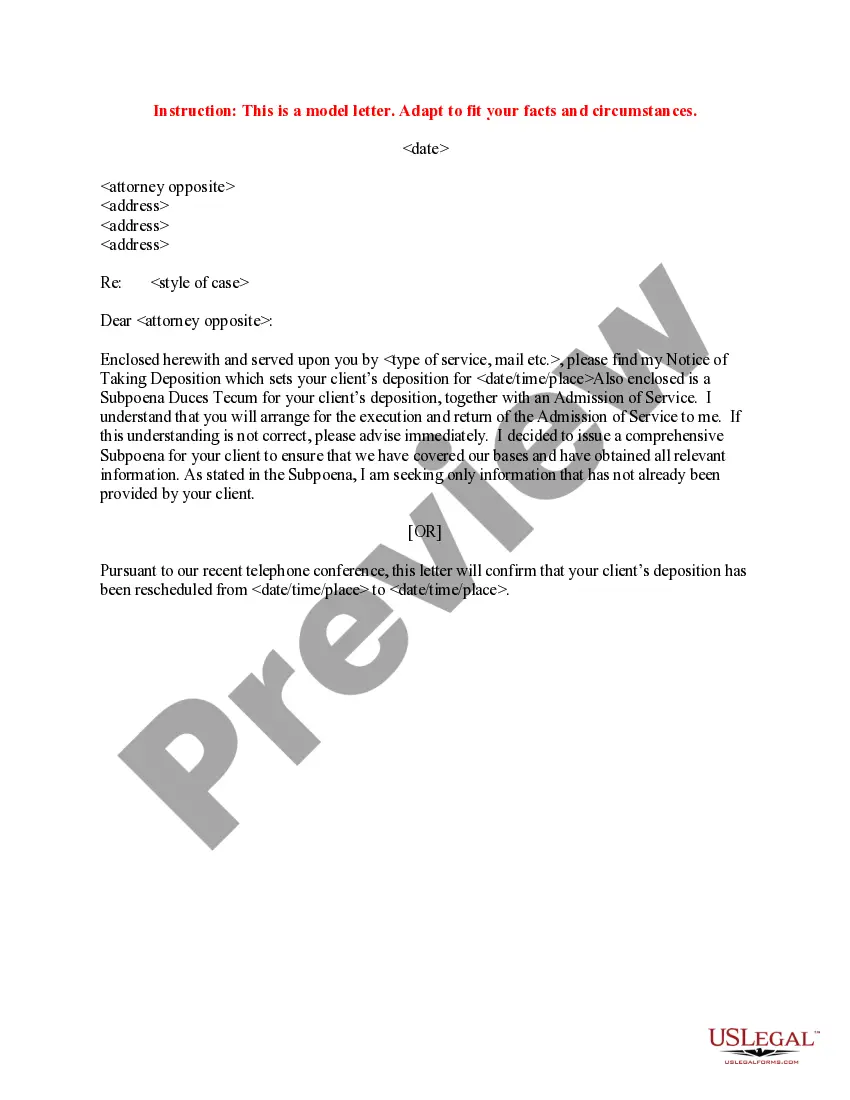
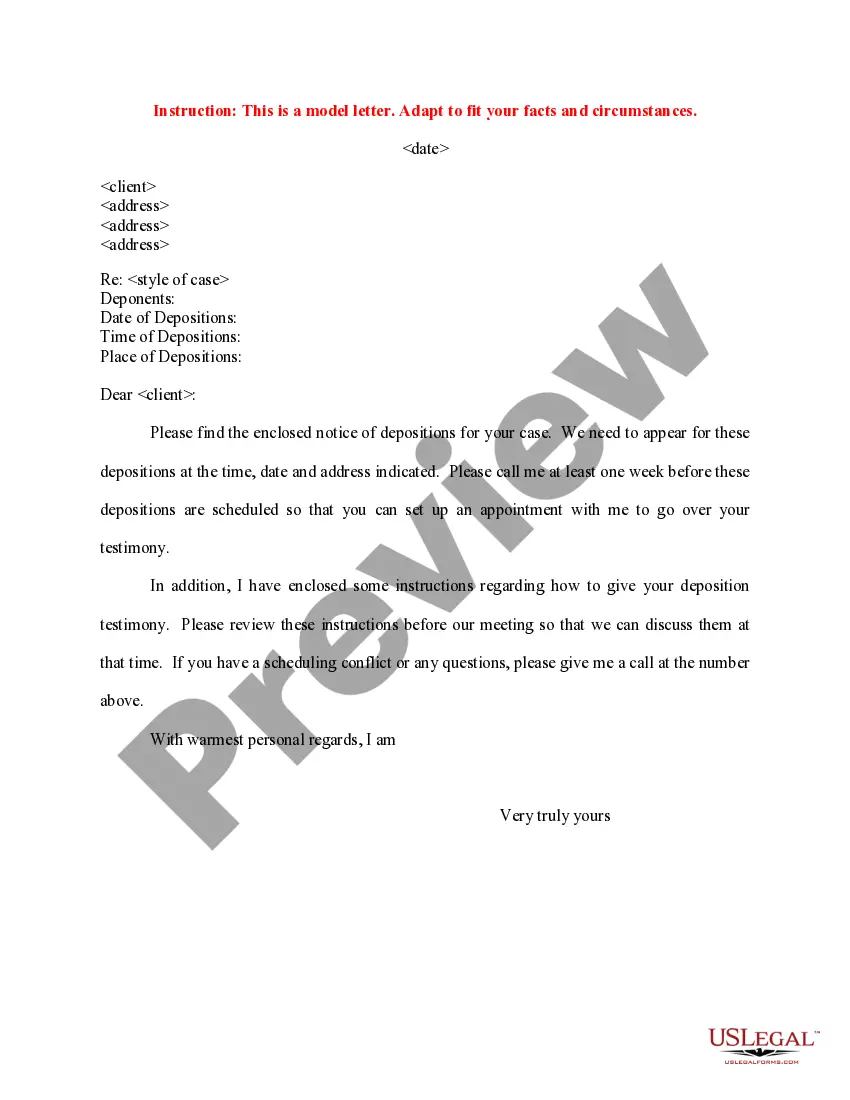
The Discovery - Sample Letter for Service of Discovery Requests is a template used to formally request information and documents from another party in a legal matter. This letter serves as a means to initiate the discovery process and is often utilized before proceeding with a trial or legal proceeding. It outlines specific information requests, including interrogatories and requests for document production, aiding in the collection of evidence necessary for a case.
Key parts of this document
- Date of communication.
- Information about the opposing party, including name and address.
- Subject line referencing the style of the case.
- A formal greeting addressing the opposing party.
- Enclosure notice for the accompanying interrogatories and requests.
- Signature block for the attorney sending the letter.

Situations where this form applies
This form should be used when you need to formally request additional information or documents from the other party involved in your legal matter. It is applicable in various legal scenarios, such as personal injury cases, divorce proceedings, or contractual disputes, where both parties are required to disclose relevant information to one another.
Who needs this form
- Attorneys representing clients in a legal dispute.
- Individuals who are self-represented in a court case.
- Legal professionals involved in the discovery phase of litigation.
- Any party that needs to gather information from the opposing side during a legal process.
Steps to complete this form
- Enter the current date at the top of the letter.
- Fill in the name and address of the opposing party to whom the letter is directed.
- Include the case style in the subject line to reference the specific legal matter.
- Write a formal greeting addressing the opposing party directly.
- Indicate that you are enclosing a set of interrogatories and document requests.
- Sign the letter, including your name and title as the attorney.
Notarization requirements for this form
Notarization is not commonly needed for this form. However, certain documents or local rules may make it necessary. Our notarization service, powered by Notarize, allows you to finalize it securely online anytime, day or night.
Get your form ready online
Our built-in tools help you complete, sign, share, and store your documents in one place.
Make edits, fill in missing information, and update formatting in US Legal Forms—just like you would in MS Word.
Download a copy, print it, send it by email, or mail it via USPS—whatever works best for your next step.
Sign and collect signatures with our SignNow integration. Send to multiple recipients, set reminders, and more. Go Premium to unlock E-Sign.
If this form requires notarization, complete it online through a secure video call—no need to meet a notary in person or wait for an appointment.
We protect your documents and personal data by following strict security and privacy standards.

Make edits, fill in missing information, and update formatting in US Legal Forms—just like you would in MS Word.

Download a copy, print it, send it by email, or mail it via USPS—whatever works best for your next step.

Sign and collect signatures with our SignNow integration. Send to multiple recipients, set reminders, and more. Go Premium to unlock E-Sign.

If this form requires notarization, complete it online through a secure video call—no need to meet a notary in person or wait for an appointment.

We protect your documents and personal data by following strict security and privacy standards.
Typical mistakes to avoid
- Failing to include complete contact details for the opposing party.
- Not specifying the case style in the subject line, which can cause confusion.
- Neglecting to enclose the necessary interrogatories and requests for production.
- Forgetting to sign the letter before sending.
Benefits of completing this form online
- Convenient access to a professionally drafted template.
- Editable format, allowing you to personalize the content as needed.
- Time-saving document preparation without the need for extensive legal knowledge.
- Confidence in using a form created by licensed attorneys.
Legal use & context
- This form is an important part of the discovery process in legal proceedings, where parties are required to share pertinent information.
- Using this sample letter helps ensure that requests are clear and formally communicated.
- It can strengthen your position by demonstrating your commitment to transparency and fairness in the legal process.
Key takeaways
- The Discovery - Sample Letter for Service of Discovery Requests is essential for initiating information requests in legal matters.
- By using this form correctly, you can ensure clarity in your communication with opposing parties.
- Understanding local rules regarding discovery is crucial for compliance and effectiveness.
Looking for another form?
Form popularity
FAQ
When a party to a civil case needs to get information from the other side, she can serve the other side with written requests called discovery requests. These requests might include:Requests for admissions, which are written requests that ask the other side to admit or deny certain facts about the case.
Your answers to the interrogatories should usually be short, clear, and direct and should answer only the question that is being asked. This is not the time to set out your entire case or defense to the other side. Take the time to make sure your answers are correct and truthful.
Filters. The section of a pleading or motion that certifies that the party filing the document has sent a copy of the document to the opposing party or his lawyer. noun.
1 attorney answer You may be referring to a "certificate of discovery" or a "Rule 5.2 Certificate". If so, this is a document filed with the clerk of court attesting to the fact that "discovery" has been served on the opposing side.
1 attorney answer You may be referring to a "certificate of discovery" or a "Rule 5.2 Certificate". If so, this is a document filed with the clerk of court attesting to the fact that "discovery" has been served on the opposing side.
Serving discovery simply means sending your verified discovery responses to the opposing sides. "Service" can be done by mail, personal delivery and sometimes fax or email.
Discovery is conducted by sending written requests in a proscribed form to the opposing party specifically listing the type of discovery sought, the manner in which it will be obtained, and the time for complying with the request. Check your state and local rules for the required form of these requests.
It is a document/pleading that the rules of criminal procedure require the parties to file with the court notifying the court and parties of certain things, like, for example, what defenses the defendant might present at trial etc.
Discovery is conducted by sending written requests in a proscribed form to the opposing party specifically listing the type of discovery sought, the manner in which it will be obtained, and the time for complying with the request. Check your state and local rules for the required form of these requests.