Uttering a Forged Writing to Defraud the United States
What this document covers
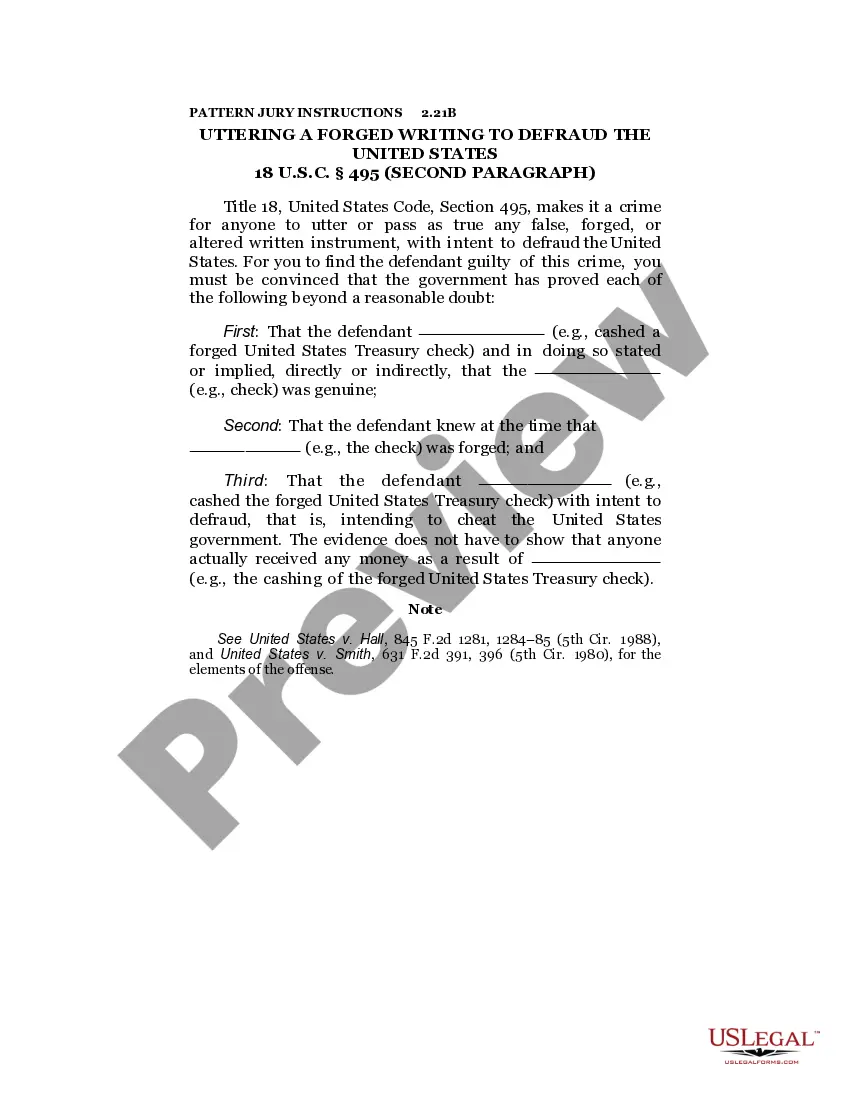
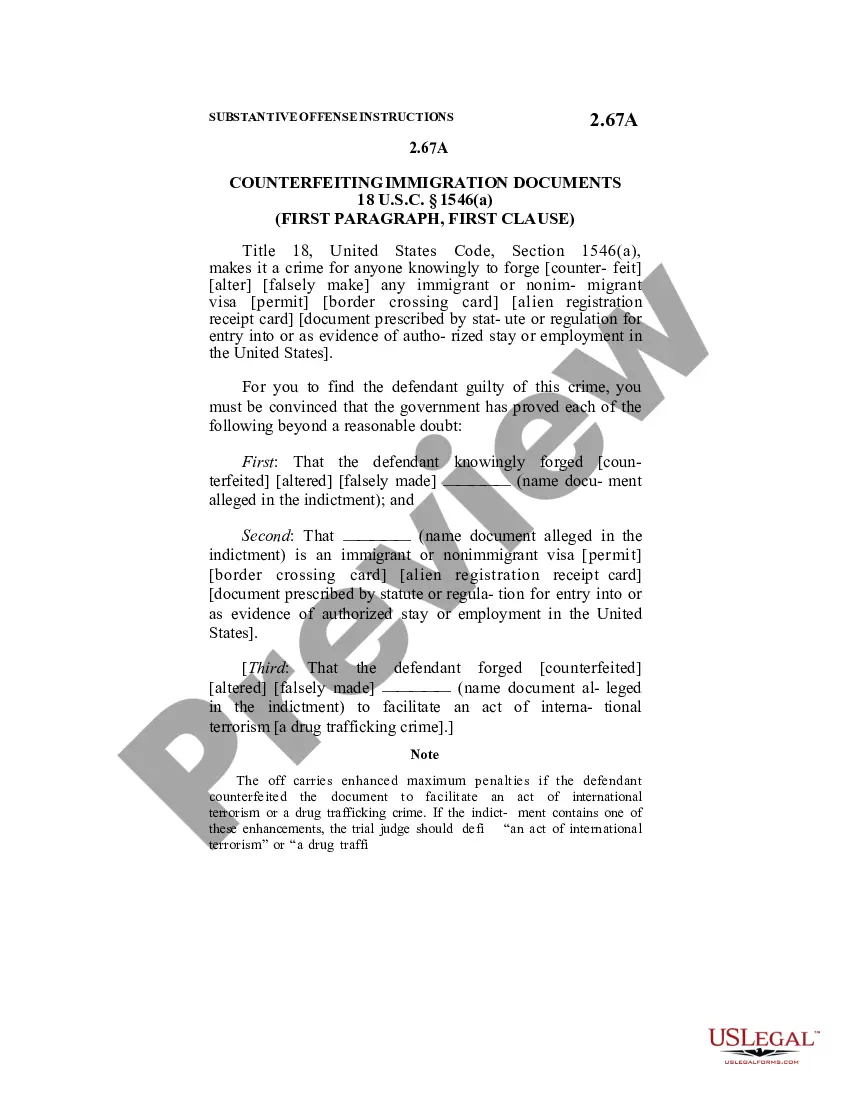
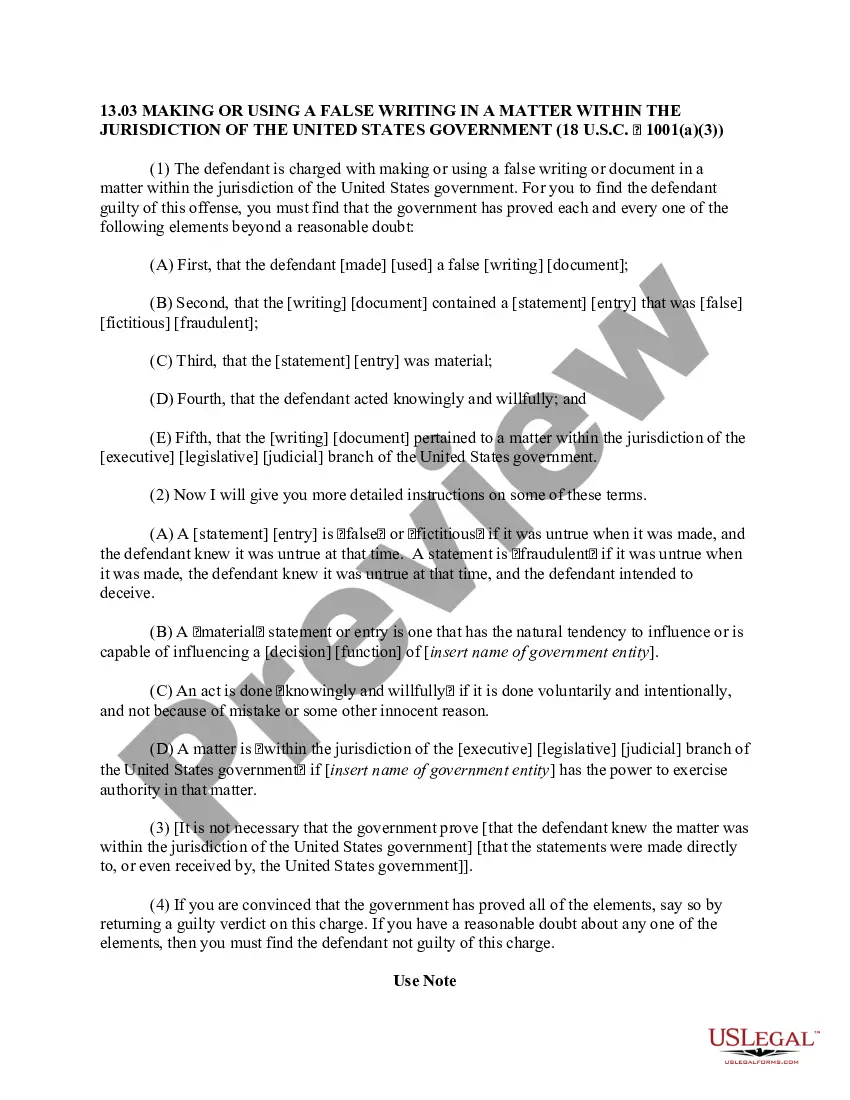
The form titled "Uttering a Forged Writing to Defraud the United States" is a legal document used to address the crime of passing or uttering a forged or altered written instrument with the intent to defraud the U.S. government. This form outlines the elements necessary for a prosecution under Title 18, United States Code, Section 495, distinguishing it from similar forms related to fraud and forgery. It is essential for those involved in such accusations to understand its implications clearly.
What’s included in this form
- Definition of the crime of uttering a forged writing.
- Key elements that must be proven: intent, knowledge of forgery, and action taken (e.g., cashing a check).
- Statement on the lack of requirement for monetary loss due to the act.
- References to relevant legal cases that illustrate the application of the law.
- Clear language specifying the necessary conditions for guilt concerning the charges described.
When to use this document
This form should be used when an individual is accused of or intends to defend against allegations of passing a forged document to defraud the United States. Situations may include attempts to cash a forged check or submit false claims to government agencies. This form provides the legal framework to understand the charges and prepare for defense or prosecution.
Who needs this form
- Individuals facing allegations of fraud against the United States.
- Legal professionals representing defendants in forgery cases.
- Government agencies pursuing legal action against fraudsters.
- Individuals seeking to understand their rights regarding accusations of forgery.
Completing this form step by step
- Identify the parties involved, including the defendant and any relevant governmental bodies.
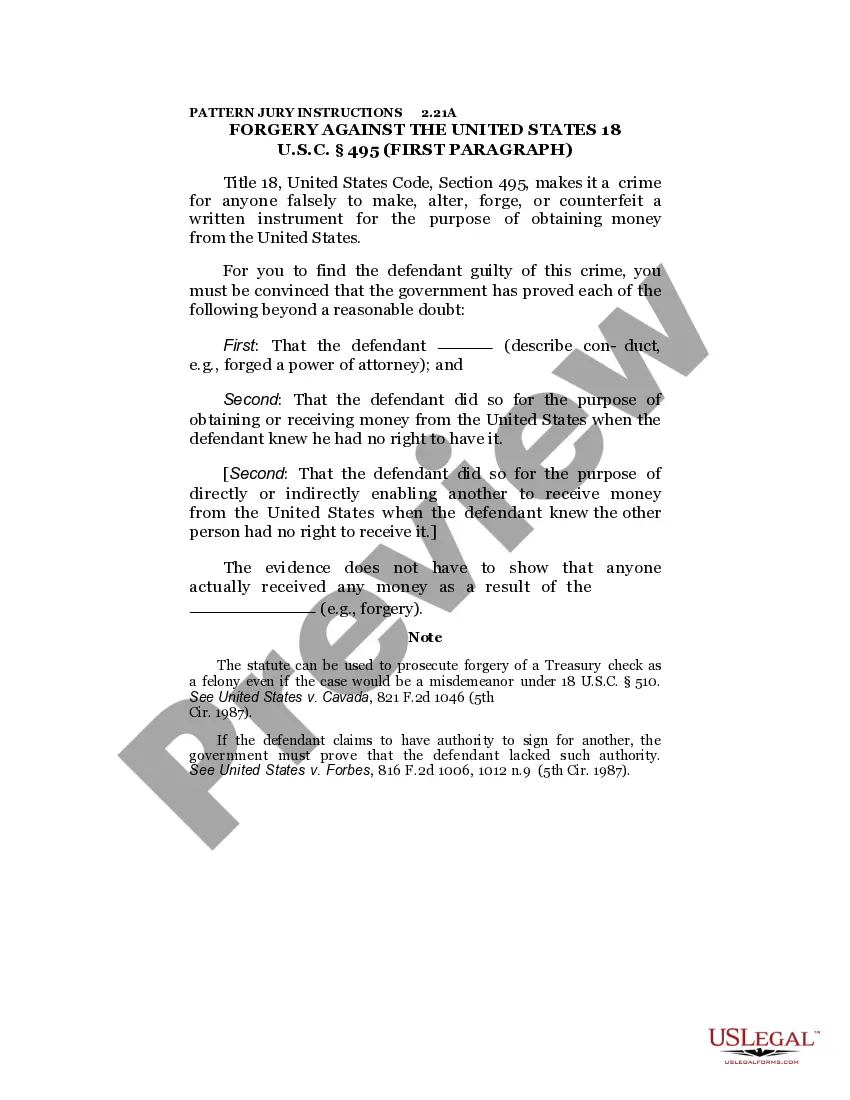
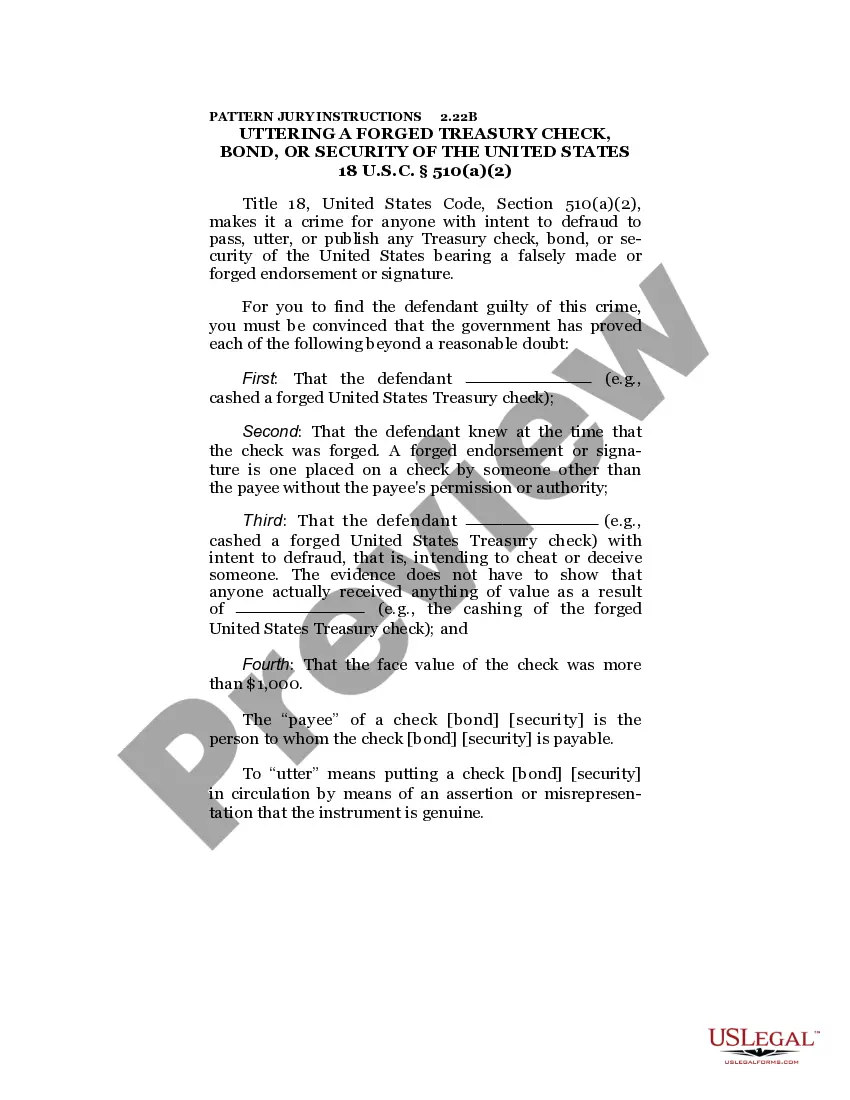
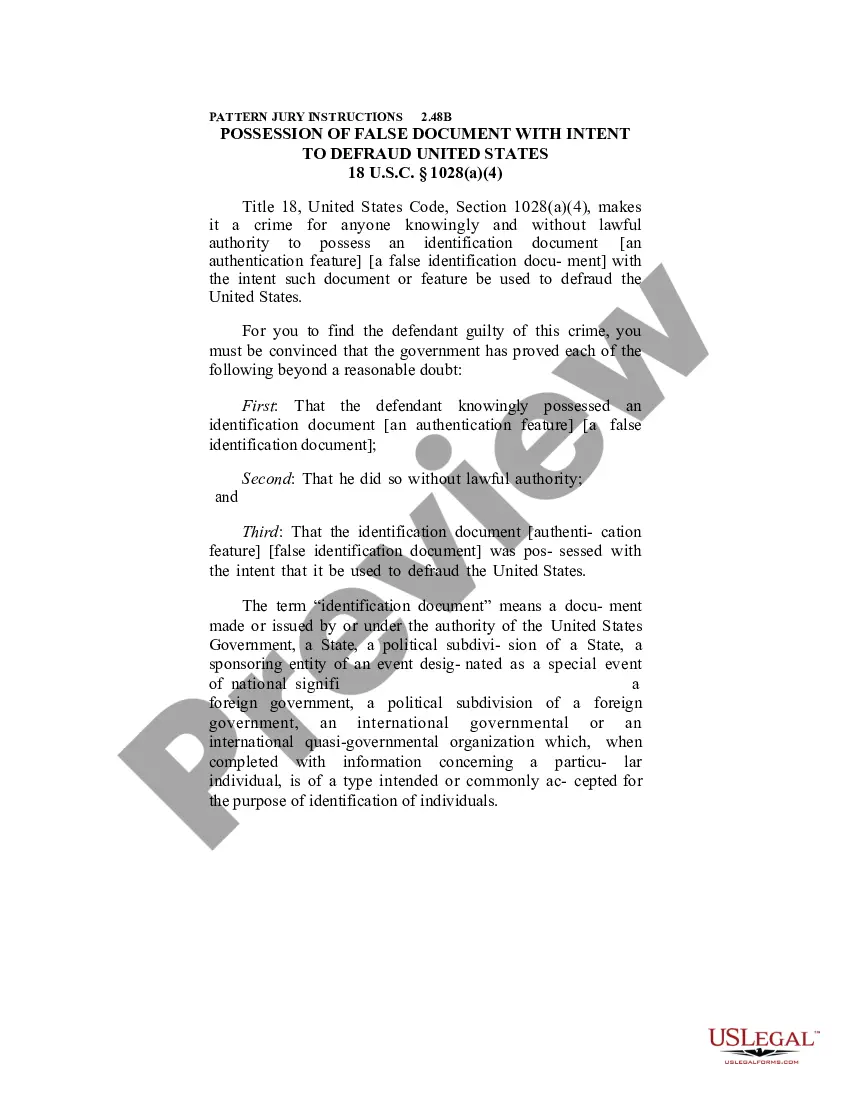
- Clearly state the nature of the alleged crime and the specific forged documents involved.
- Provide details of the actions taken by the defendant concerning the forged writing.
- Include any evidence or testimonies that support the case, if applicable.
- Ensure that all sections of the form are completed as per legal requirements.
Does this form need to be notarized?
This form usually doesn’t need to be notarized. However, local laws or specific transactions may require it. Our online notarization service, powered by Notarize, lets you complete it remotely through a secure video session, available 24/7.
Get your form ready online
Our built-in tools help you complete, sign, share, and store your documents in one place.
Make edits, fill in missing information, and update formatting in US Legal Forms—just like you would in MS Word.
Download a copy, print it, send it by email, or mail it via USPS—whatever works best for your next step.
Sign and collect signatures with our SignNow integration. Send to multiple recipients, set reminders, and more. Go Premium to unlock E-Sign.
If this form requires notarization, complete it online through a secure video call—no need to meet a notary in person or wait for an appointment.
We protect your documents and personal data by following strict security and privacy standards.

Make edits, fill in missing information, and update formatting in US Legal Forms—just like you would in MS Word.

Download a copy, print it, send it by email, or mail it via USPS—whatever works best for your next step.

Sign and collect signatures with our SignNow integration. Send to multiple recipients, set reminders, and more. Go Premium to unlock E-Sign.

If this form requires notarization, complete it online through a secure video call—no need to meet a notary in person or wait for an appointment.

We protect your documents and personal data by following strict security and privacy standards.
Mistakes to watch out for
- Failing to clearly establish intent to defraud.
- Omitting critical facts about the forged writing involved.
- Not providing sufficient evidence to support claims or defenses.
- Misunderstanding the applicable legal standards for guilt in forgery cases.
Benefits of completing this form online
- Convenient access to a professionally drafted legal template.
- Editability allows for customization based on specific needs.
- Time-saving download option for immediate use in legal proceedings.
- Reliable and legally formatted to meet standard requirements.
Looking for another form?
Form popularity
FAQ
The general conspiracy statute, 18 U.S.C. § 371, creates an offense "if two or more persons conspire either to commit any offense against the United States, or to defraud the United States, or any agency thereof in any manner or for any purpose. (emphasis added).
The maximum penalty for major fraud against the government in violation of 18 U.S.C. Section 1031 is 10 years' incarceration and/or a fine of up to $1,000,000.00. The maximum penalty for violations of 18 U.S.C. Section 287, the false claims statute, is 5 years in prison and/or a fine.
Forgery punishment is up to 10 years in prison, for example, when a person forges a patent document, whereas forgery punishment is up to 5 years for forging postage stamps. The potential prison punishment is worse under the Federal Crime of Counterfeiting Money, 18 US Code Section 471.
Whoever enters into any agreement, combination, or conspiracy to defraud the United States, or any department or agency thereof, by obtaining or aiding to obtain the payment or allowance of any false, fictitious or fraudulent claim, shall be fined under this title or imprisoned not more than ten years, or both.
Uttering a forged instrument is when you intentionally create a forged document or financial instrument and circulate it into the public. It can be a promissory note, check, bill, or draft or any other formal document that would lead to the payment of money.
Uttering is passing that document to someone with the intent to defraud. So, if you made a counterfeit $100 bill, that would be forgery. If you gave that counterfeit bill to a convenience store in exchange for groceries, that would be uttering.
To "convict someone under the 'defraud clause' of 18 U.S.C. § 371, the government need only show (1) he entered into an agreement (2) to obstruct a lawful function of the government (3) by deceitful or dishonest means and (4) at least one overt act in furtherance of the conspiracy." Id.; United States v.
666 says, ?whoever embezzles, steals, obtains by fraud, or knowingly converts to the use of any person misapplies, property that is valued at $5,000 or more, and is owned by, or under control of the government, or corruptly solicits for the benefit of anyone, anything of value, intending to be influenced or rewarded