Ohio Company Employment Policies and Procedures Package
What is this form package?
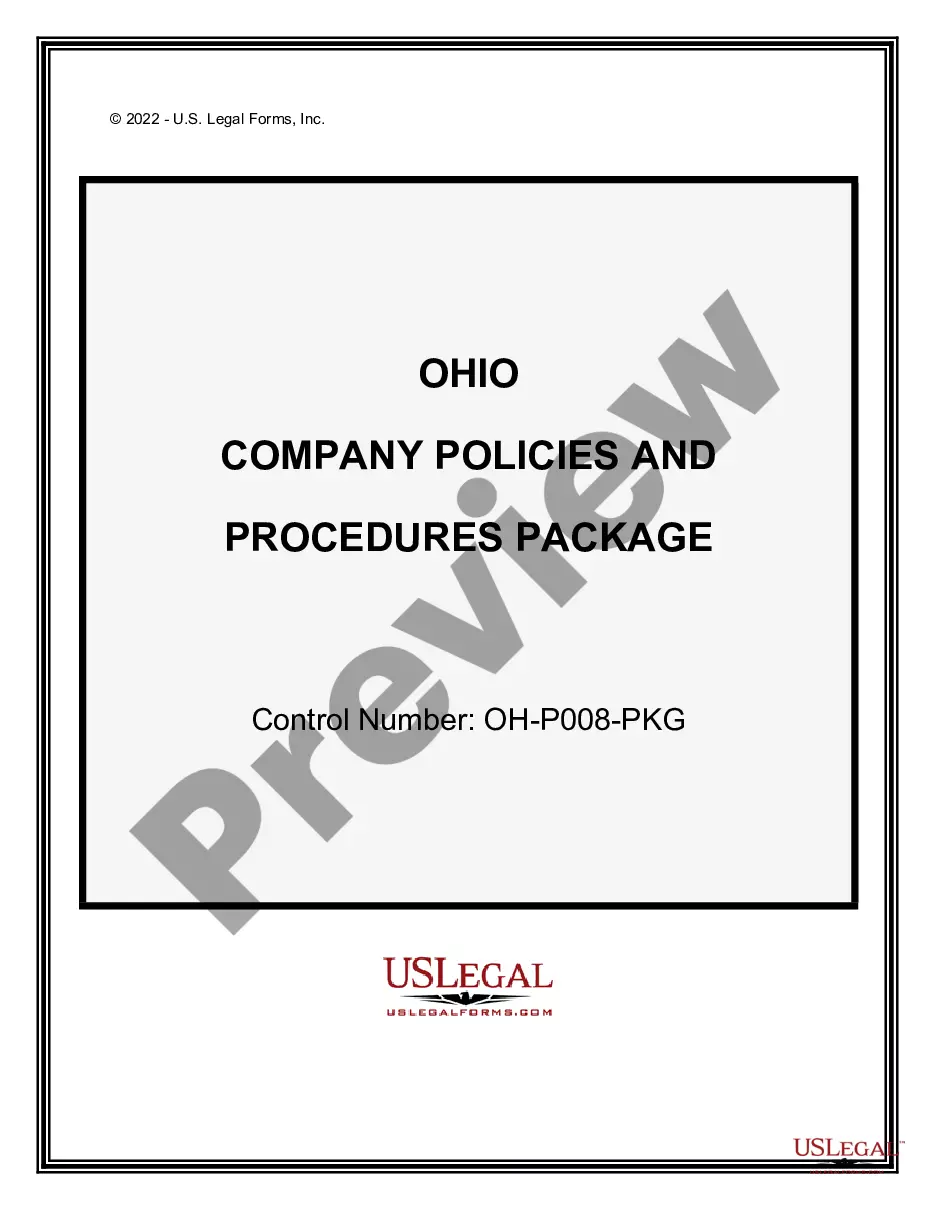
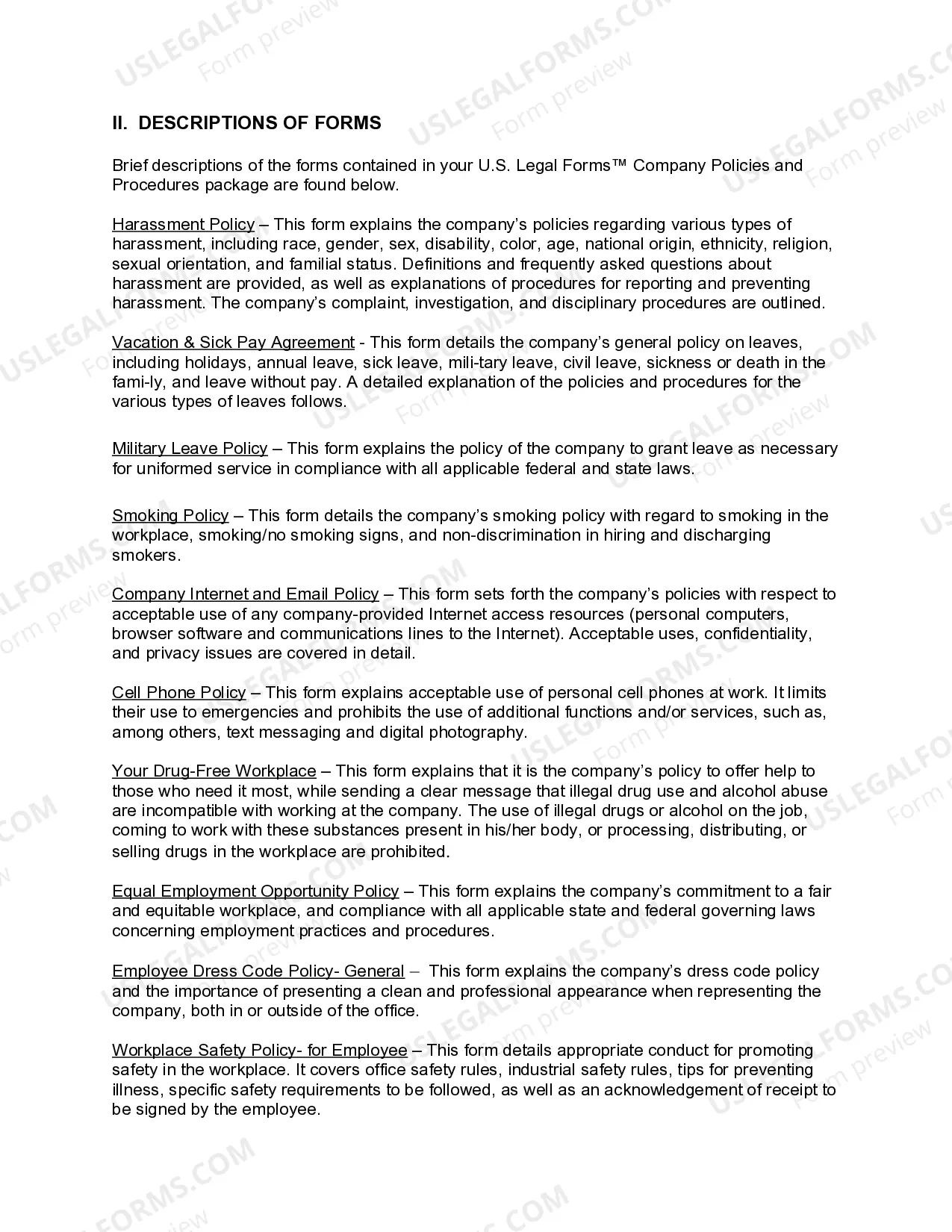
The Ohio Company Employment Policies and Procedures Package contains essential forms designed to establish a clear understanding of company policies among employees. This package stands out by ensuring that employees are well-informed about workplace expectations, thus helping to mitigate the risk of grievances. It includes comprehensive documents that serve as both an orientation guide for new hires and a reference manual for all employees.
What’s included in this form package
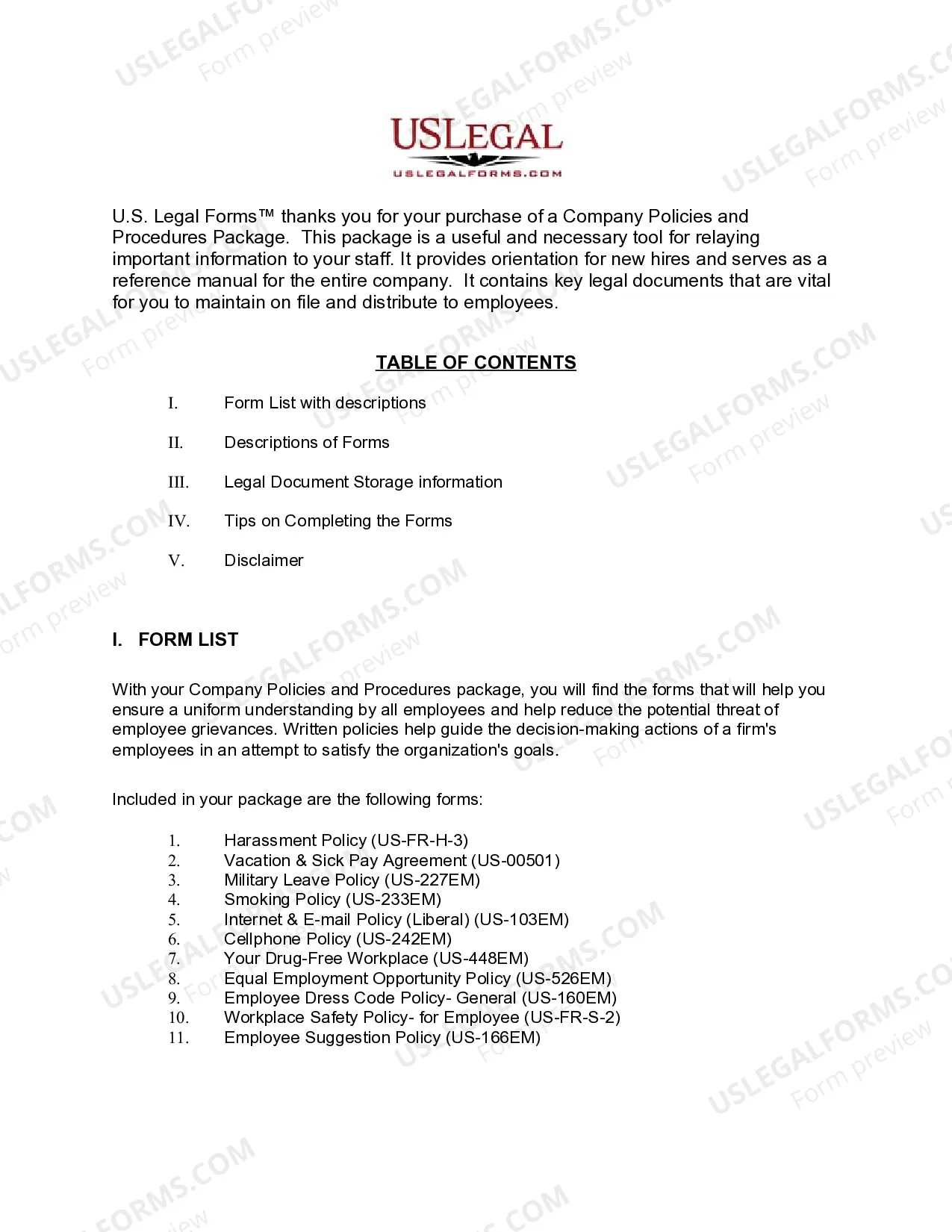
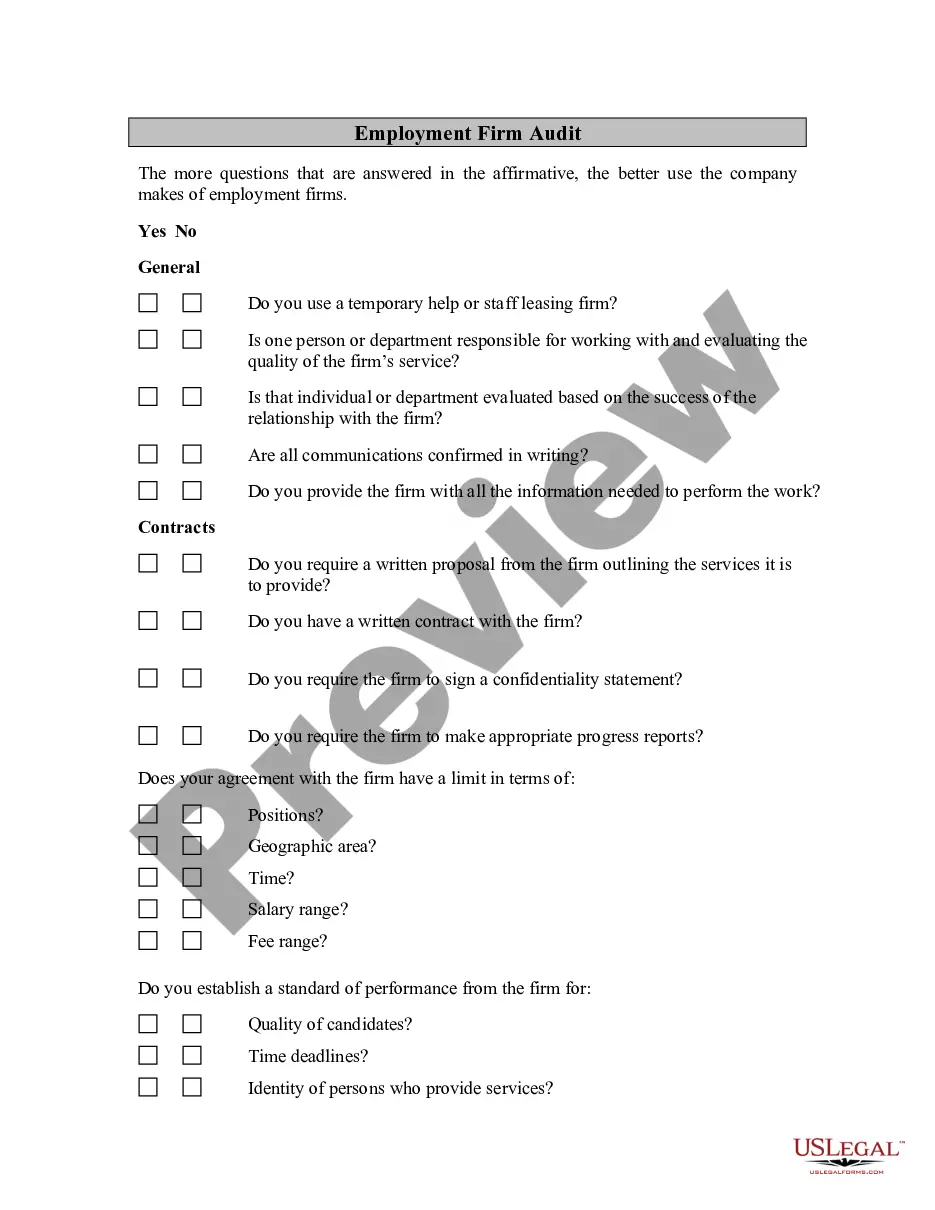
- Employee Agreement - Vacation and Sick Pay
- Company Internet and Email Policy - Liberal
- Employee Dress Code Policy - General
- Employee Suggestion Policy
- Military Leave Policy
- Smoking Policy
- Employee Cell Phone Usage Policy
- Your Drug-Free Workplace
- Equal Employment Opportunity Policy Statement
- Employee - Company Harassment Policy - Workplace
- Workplace Safety Policy - For Employee

Situations where these forms applies
This form package is helpful when:
- Your business is hiring new employees and needs to communicate company policies effectively.
- You want to implement or revise existing workplace policies to align with legal requirements.
- You need to create a standardized reference for employees regarding workplace behavior and conduct.
- You are looking to reduce the potential for employee disputes by clearly defining workplace expectations.
Who needs this form package
- Business owners and managers in Ohio.
- Human resources professionals looking to enhance employee understanding of workplace policies.
- Consultants assisting businesses with employee management strategies.
- Any organization seeking to formalize its employment policies for legal compliance and clarity.
Steps to complete these forms
- Review the forms included in the package to understand their purpose and content.
- Identify any specific details required for your company, such as employee benefits and conduct expectations.
- Customize the forms by entering relevant company information and policies.
- Ensure all employees are familiar with the policies by conducting training or orientation sessions.
- Distribute copies of the finalized forms to all employees and retain signed acknowledgments to confirm understanding.
Notarization requirements for forms in this package
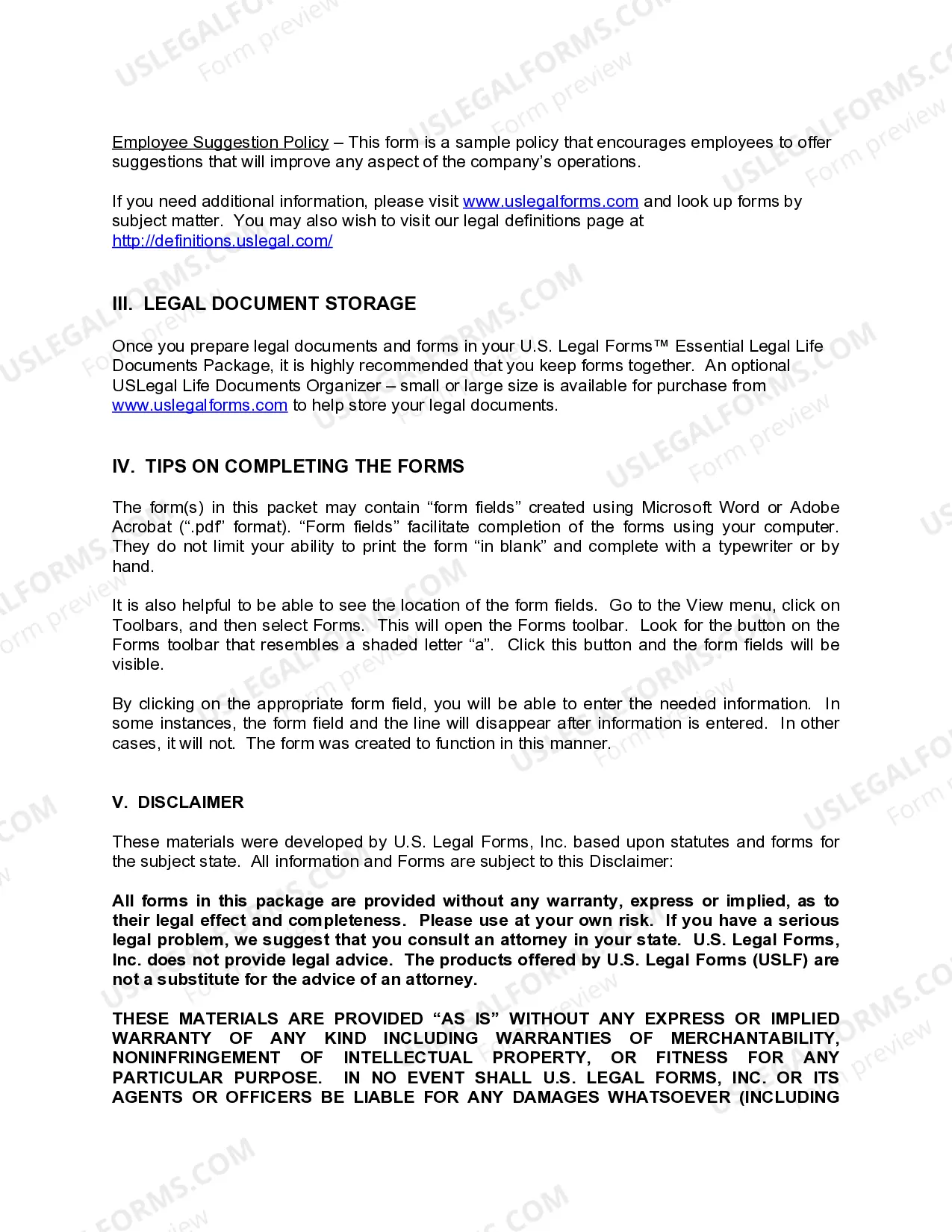
Most forms in this package do not require notarization. However, local laws or specific situations may demand it. Our online notarization service, powered by Notarize, lets you complete the process through a verified video call, available anytime.
Get your form ready online
Our built-in tools help you complete, sign, share, and store your documents in one place.
Make edits, fill in missing information, and update formatting in US Legal Forms—just like you would in MS Word.
Download a copy, print it, send it by email, or mail it via USPS—whatever works best for your next step.
Sign and collect signatures with our SignNow integration. Send to multiple recipients, set reminders, and more. Go Premium to unlock E-Sign.
If this form requires notarization, complete it online through a secure video call—no need to meet a notary in person or wait for an appointment.
We protect your documents and personal data by following strict security and privacy standards.

Make edits, fill in missing information, and update formatting in US Legal Forms—just like you would in MS Word.

Download a copy, print it, send it by email, or mail it via USPS—whatever works best for your next step.

Sign and collect signatures with our SignNow integration. Send to multiple recipients, set reminders, and more. Go Premium to unlock E-Sign.

If this form requires notarization, complete it online through a secure video call—no need to meet a notary in person or wait for an appointment.

We protect your documents and personal data by following strict security and privacy standards.
Mistakes to watch out for
- Failing to customize the forms to match specific company policies.
- Not training employees on the contents of the policies.
- Overlooking updates to employment law that may affect policy compliance.
- Neglecting to obtain employee signatures to confirm receipt and understanding of the policies.
Advantages of online completion
- Convenience of accessing and downloading forms at any time.
- Editability allows you to tailor documents to meet your company's unique needs.
- Reliability from documents drafted by licensed attorneys offering legal assurance.
- Cost-effective solution compared to hiring legal professionals for document preparation.
Looking for another form?
Form popularity
FAQ
Policy includes statements of rules or standards. Policies do not change frequently. Policies may not include procedures or supplemental information.
Company policies are rules that govern a company's code of conduct. They apply to both employees and employers, and they may govern conduct both within and outside the workplace. Company policies are usually written policies included in your business's employee handbook.
Choose a suitable title for the policy. Understand the motive behind writing a policy. Use very simple and clear language. Your policy and procedure should reflect the company's image. The HR policies needs to have a very clear outline. Make the HR policies kind of user friendly.
Prioritize a policy list. Keep in mind that you can't tackle every policy at once. Conduct thorough research. Take a look at your existing procedures to zone in on how things are currently done. Write an initial draft. After defining what you need to cover, you can begin your first draft. Validate the procedures.
Use the handbook as a communication tool. Employees can be full of legal agreements and notices, which important as they are, can be daunting. Safety and security. Get a legal review. Outline your expectations/Code of conduct. Hours, benefits, and compensation. Don't be redundant. Make it readable. Leave room for change.
Company History. While not required, a brief section discussing the company's history and its mission can help set the tone for an employee handbook. Paid Time-Off Policy. Employee Behavior. Pay and Promotions. Benefits.
Equal opportunity policy. Workplace health and safety. Employee code of conduct policy. Attendance, vacation and time-off policies. Employee disciplinary action policy. Employee complaint policies.
Step 1: Determine the Purpose and Intention of the Policy. Step 2: Assemble All Prior Writings and Practices on the Same or Similar Topics. Step 3: Obtain Information and Input from Relevant Stakeholders. Step 4: Conduct Research to Determine Status of the Law and Identify Trends.
Code of conduct. Attendance/vacation/time off policy. Equal opportunity and non-discrimination policies. Workplace safety. Alcohol, drug-free workplace, smoking, cannabis policies. Whistleblower policy. Anti-harassment policy. Privacy policy.