Maine Transfer on Death Deed or TOD - Beneficiary Deed for Two Individuals to Multiple Individuals
Overview of this form
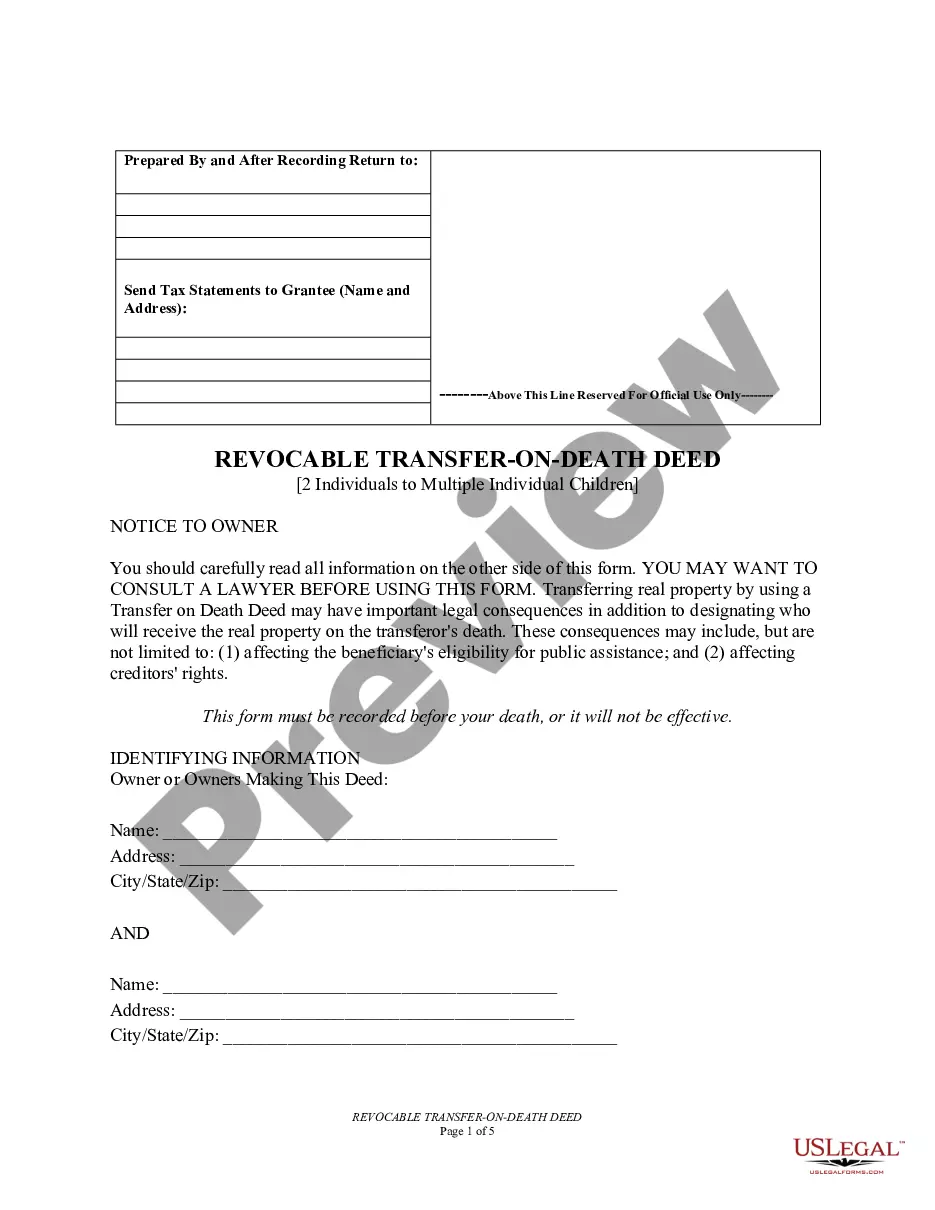
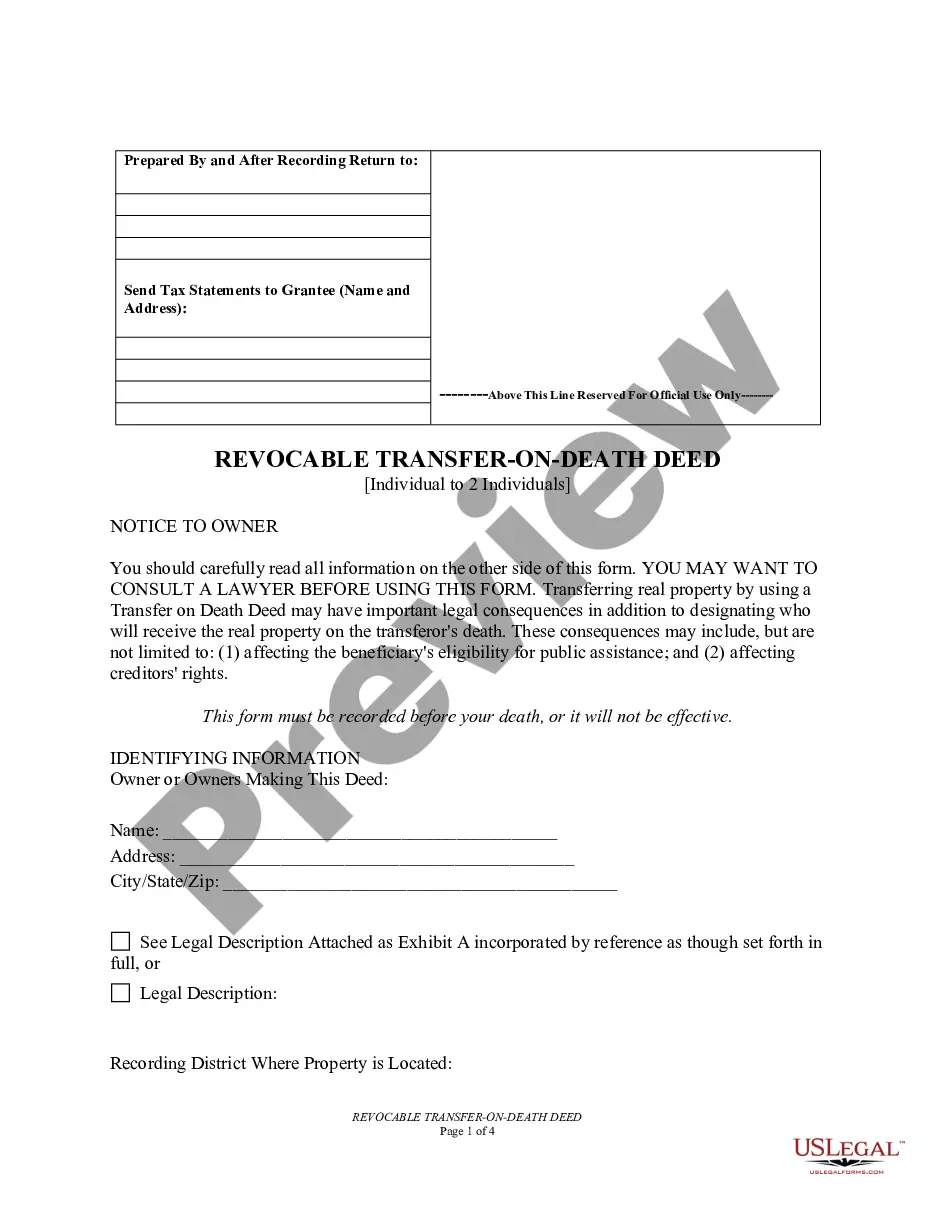
The Transfer on Death Deed (TOD), also known as a Beneficiary Deed, enables a property owner to transfer ownership of real estate to multiple individuals upon their death without going through probate. This legal form allows the grantor to retain full control of the property during their lifetime, as the deed can be revoked at any time. Unlike a traditional will, the TOD designates beneficiaries directly for the property title upon the grantor's death, bypassing the need for probate proceedings.
Key components of this form
- Identifying Information: Names and addresses of the property owners and recipients.
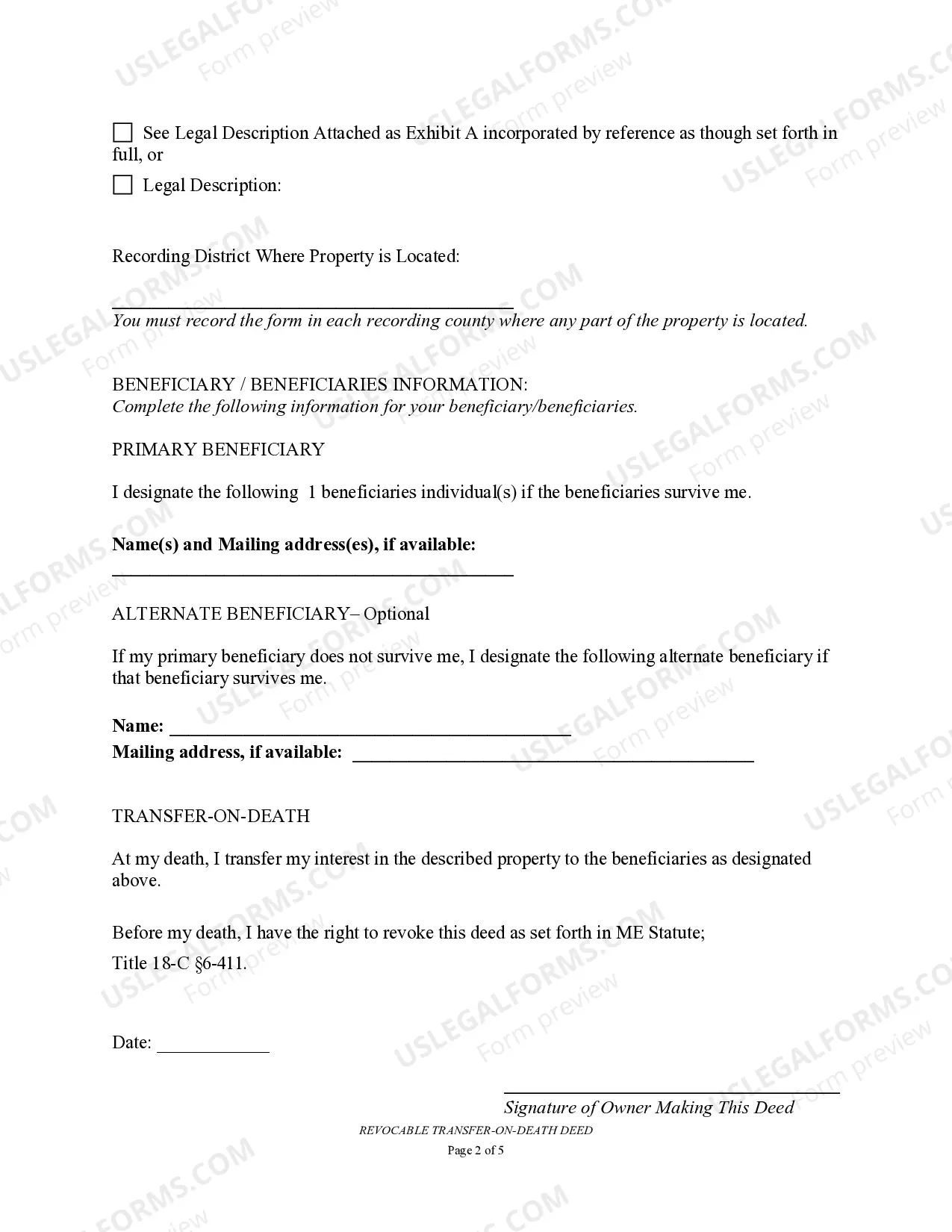
- Beneficiary Information: Sections for primary and optional alternate beneficiaries.
- Property Description: Legal description of the property being transferred.
- Revocation Clause: Details on the right to revoke the deed before death.
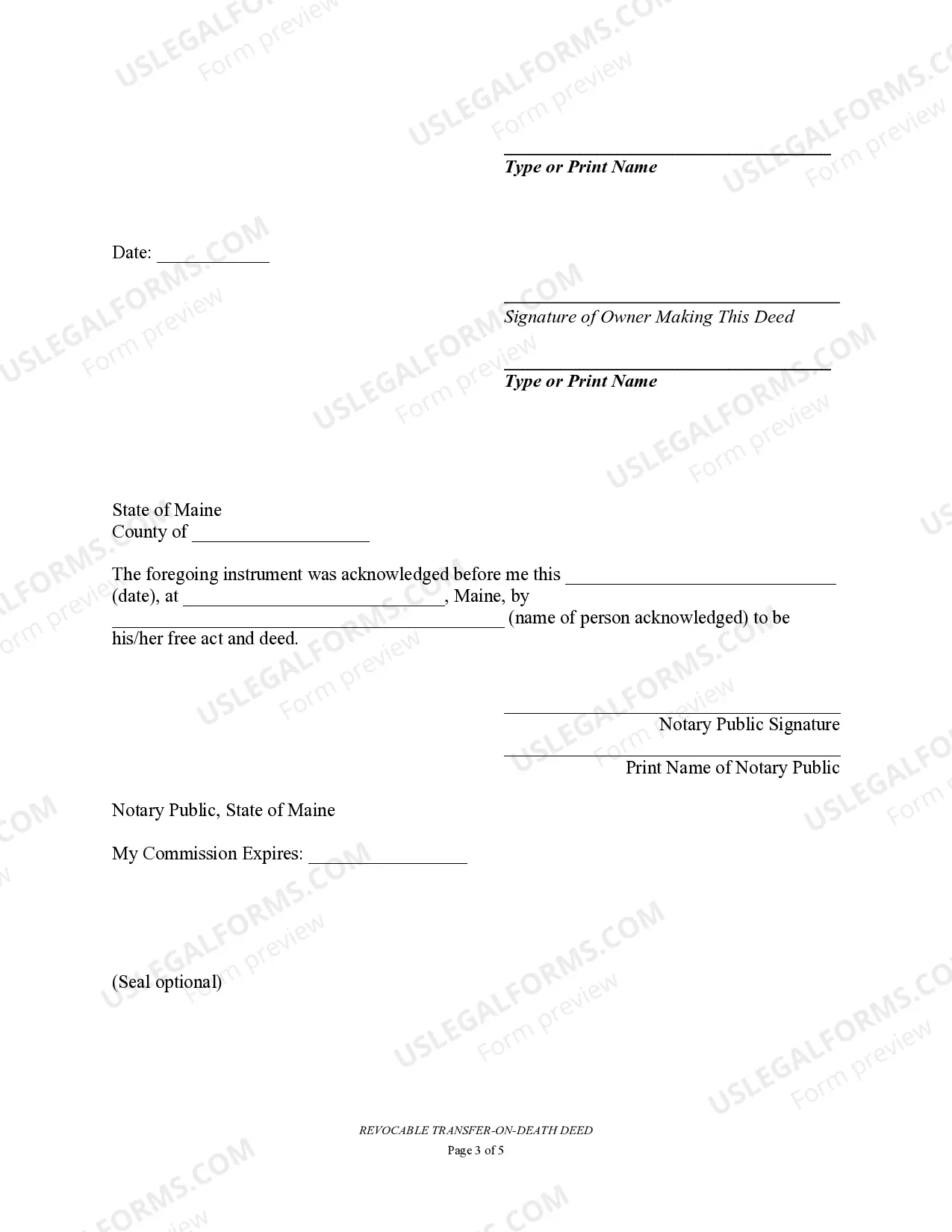
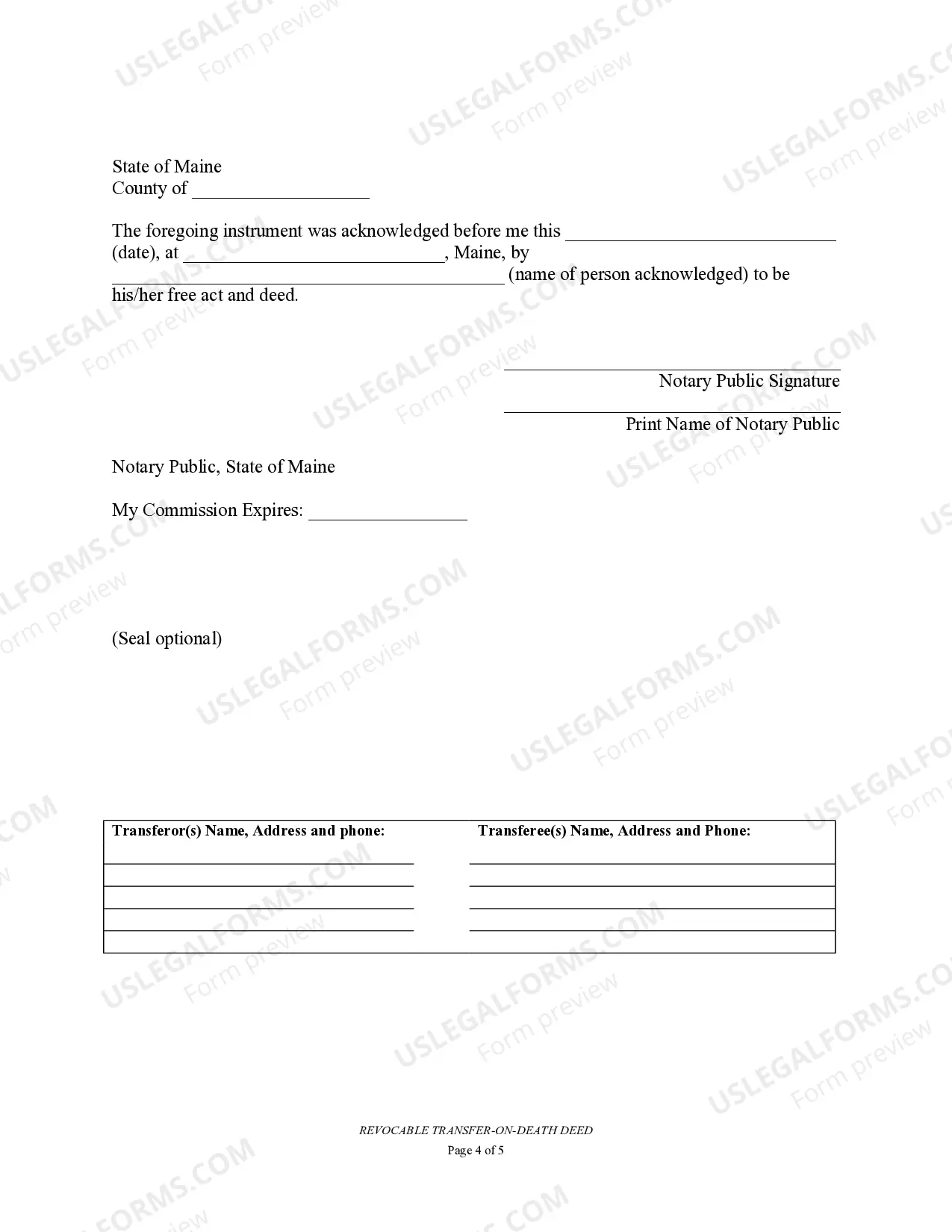
- Signatures: Required signatures of the property owners and notary acknowledgment.



Common use cases
This form is useful for individuals looking to ensure their property passes to specific individuals after their death without the hassle of probate. It is particularly relevant for parents wanting to transfer real estate to their children or for anyone wishing to clarify their property transfer wishes. If you have multiple beneficiaries or wish to name an alternate should the primary beneficiary not survive you, this form will suit your needs.
Who needs this form
- Individuals who own real estate and wish to transfer it to multiple beneficiaries.
- Property owners who want to maintain control of their property during their lifetime.
- Anyone contemplating estate planning to avoid probate issues in the future.
- Those seeking to designate specific beneficiaries for their real property upon death.
How to prepare this document
- Identify the parties: Enter the names and addresses of both property owners.
- Specify the property: Provide a legal description of the real property being transferred.
- Designate beneficiaries: Fill in the names and addresses of primary and alternate beneficiaries.
- Sign the deed: Both property owners must sign, indicating their agreement to the transfer.
- Notarize the deed: If required, have a notary public witness the signatures.
- Record the deed: File the completed deed with the local recording office to ensure it is legally binding.
Does this form need to be notarized?
Yes, this form must be notarized to be legally valid. Proper notarization provides evidence of the authenticity of the signatures. US Legal Forms offers integrated online notarization services available 24/7, allowing you to complete your paperwork securely and conveniently via a video call without needing to leave home.
Get your form ready online
Our built-in tools help you complete, sign, share, and store your documents in one place.
Make edits, fill in missing information, and update formatting in US Legal Forms—just like you would in MS Word.
Download a copy, print it, send it by email, or mail it via USPS—whatever works best for your next step.
Sign and collect signatures with our SignNow integration. Send to multiple recipients, set reminders, and more. Go Premium to unlock E-Sign.
If this form requires notarization, complete it online through a secure video call—no need to meet a notary in person or wait for an appointment.
We protect your documents and personal data by following strict security and privacy standards.

Make edits, fill in missing information, and update formatting in US Legal Forms—just like you would in MS Word.

Download a copy, print it, send it by email, or mail it via USPS—whatever works best for your next step.

Sign and collect signatures with our SignNow integration. Send to multiple recipients, set reminders, and more. Go Premium to unlock E-Sign.

If this form requires notarization, complete it online through a secure video call—no need to meet a notary in person or wait for an appointment.

We protect your documents and personal data by following strict security and privacy standards.
Typical mistakes to avoid
- Failing to record the deed before death, making it ineffective.
- Omitting details in the property description, leading to ambiguity.
- Not naming alternate beneficiaries, leaving property distribution uncertain.
- Incorrectly signing the form or failing to have it notarized as required.
Main things to remember
- The Transfer on Death Deed allows property to pass directly to designated beneficiaries upon death.
- This method avoids the lengthy probate process.
- It's essential to fill out the form correctly and record it in the appropriate jurisdiction.
- Consulting a legal professional can help avoid pitfalls and ensure proper execution.